Advertisement
Help Keep Boards Alive. Support us by going ad free today. See here: https://subscriptions.boards.ie/.
https://www.boards.ie/group/1878-subscribers-forum

Private Group for paid up members of Boards.ie. Join the club.
Hi all, please see this major site announcement: https://www.boards.ie/discussion/2058427594/boards-ie-2026

Solar for Beginners [ask your questions here]

1141142143145147

Comments

  • Registered Users, Registered Users 2 Posts: 409 ✭✭Eleusis


    It's a feat in itself to somehow have 68% of the 30k kwh on night rates.

    68% of 30k = 20400

    That means your taking in approx 56kwh every night no matter the time of year?

    What kva is your connection?

    As you don't have solar yet, does that mean your managing that without a battery too?

    Hats off. . That is load shifting to epic levels


  • Registered Users, Registered Users 2 Posts: 1,054 ✭✭✭Peppa Cig


    Hi, thanks for comments.

    16kVA connection.

    Big focus on load shifting to night time rate.

    No batteries installed. Open to battery only (no panels) too if it makes sense.


  • Registered Users, Registered Users 2, Paid Member Posts: 8,452 ✭✭✭deezell


    5000kwh at night to the EV, 25000kwh is your own annual consumption, of which 17000 is at night, 8000kwh by day. Thats huge. Is that due to a heat pump? 8000kwh annualy during the day only is nearly 3 times my annual 24 hour total consumption, cooking on electricity. If youre shoving 17,000kwh night + say 5000kwh of the day into a heatpump, thats €4100 on heating? Or have you a manufacturing business running, or a bitcoin farm, or a grow house? A domestic solar system would pay mostly by covering the daylight self usage. Time shifting night rate with a 10kwh battery would reduce daily costs by about 85% of the day/night difference, 13.6 cent, about €1.36 a day, maybe €500 in a year.


  • Registered Users, Registered Users 2 Posts: 1,054 ✭✭✭Peppa Cig


    Thanks for reply. Large house with heat pump. Another big night time consumer is old Electric heat storage Aga which consumes c.13000 kWh annually on night rate. So everything on electric. No other fuel sources.


  • Registered Users, Registered Users 2, Paid Member Posts: 8,452 ✭✭✭deezell


    So 13000 of the annual 25000 is night time storage heaters, presumably during the autumn to spring. At 15c per unit its fairly expensive heating. Why not turn it off and use your heat pump at night, if its operating efficiently, and can manage a COP of 3, it should produce 15000kwh for only 5000kwh consumption, effectively 5c/unit. You can also store some of this if you install a large buffer tank, to have a source of preheated hot water flow for when the day rate kicks in. Any kind of solar panels will help, but unfortunately, you'd need a huge array in winter to make any dent in that winter electricity bill. 13000kwh, early September to April, say about 240 days, about 54kwh per day. You'd need a field full of panels and a shed full of batteries to get that on average. Better spend your cash on pushing up the insulation.


  • Advertisement
  • Registered Users, Registered Users 2 Posts: 1,054 ✭✭✭Peppa Cig


    clear advice. Thanks very much for taking time to respond.


  • Registered Users, Registered Users 2 Posts: 12 Katie V


    Hi all, I’m looking at a 10 kW hybrid inverter (single-phase) with CT clamp export limiting to 6 kW. Official ESB docs suggest NC6 max is 6 kW, but technically the inverter im looking at can limit export. In practice, can installers put a 10 kW inverter on NC6, or does it always require NC7?
    Im getting very mixed advise on this so please please please only comment if you are 100% sure. Thanks for any real-world experience!


  • Moderators, Home & Garden Moderators Posts: 7,609 Mod ✭✭✭✭graememk


    Nc6 limit is 25 amps which is 5.75kW, no export limiting etc under a nc6. generally a 5kW inverter is used.

    For a 10kW it will need a NC7


  • Registered Users, Registered Users 2 Posts: 641 ✭✭✭idc


    I don't understand how so many people can't just google ESBN micro generation and download the actual official documentation

    What is micro-generation | ESB Networks

    And this document in particular
    Conditions Governing the Connection and Operation of Micro-Generation

    On the very first page after index

    Any installations with inverter capacity greater than Micro-Generation (6/11 kVA) are classified as MiniGeneration (up to 50kVA installed inverter capacity). There are no active Export Limitation Schemes available under the Micro-Generation ‘Inform and Fit’ process, as the inverter capacity itself, which shall be within the allowed Micro-Generation limits, is used to determine the export limits

    Active Export Limiting Schemes are, however, available under the Mini-Generation connection process.

    Note above is 6 kVA not 6 kW.

    and slightly below this

    This document applies to Micro-Generation installations in single customer premises with an inverter capacity, or non-inverter connected generation, not exceeding 25 A single phase (c. 6 kVA) or 16 A per phase three phase (c. 11kVA) in demand installations connected to the DSO LV network.

    Almost every current inverter on the market has built in export limitation but ESBN don't care as they likely know just because an inverter has built in export limitation, that will not stop the end user changing that setting after the installers have left hence the hard limit of 25 A.


  • Registered Users, Registered Users 2 Posts: 3 Arlo_Ab5
    Low Fade Haircut


    You’re actually understanding it quite well already. Batteries can be useful, but depending on the cost and your usage, sometimes using a night tariff and exporting excess during the day can work out just as well.


  • Advertisement
  • Registered Users, Registered Users 2 Posts: 12 Katie V


    Thanks you guys for your comments….very much appreciated! I’m trying to sort out a solar panel system for my new build house (which is around 400msq), with east/west facing roofs. Im trying to figure out the absolutely best system in terms if no. of panels, inverter size and of course batteries. Every installer is talk to (and ive spoken to almost 10), are all offering me slightly different set ups and at wildly different prices. It’s bamboozling 🤯!!!!


  • Registered Users, Registered Users 2 Posts: 12 Katie V


    One installer said that the 5kw inverter can charge the battery and export to the girl simultaneously. Is that possible????


  • Registered Users, Registered Users 2 Posts: 12 Katie V


  • Registered Users, Registered Users 2, Paid Member Posts: 8,452 ✭✭✭deezell


    If you want to max out panels above the 25A export limit, a hybrid inverter can charge the batteries simiul.. simmel.., at the same time. Also enquire about inverters with an off grid circuit, that can send maybe 2Kwh to an isolated set house circuits, without increasing the on grid feed in past 25a. This and baterry charging would allow you to avail of peak inverter output up to perhaps 9kwh, and feed back the battery for export or self consumption in the evenings. You'll also have ready made back up on the permanent off grid for essential loads such as fridge. lights, boilers if your allowed to put one in a new build.


  • Moderators, Home & Garden Moderators Posts: 7,609 Mod ✭✭✭✭graememk


    Yes, if you have say 8kW of solar, it can put 5 into the batteries and 3 to the house/grid.

    The max that can leave the inverter on AC is 5kW

    (Assuming a 5kW inverter)


  • Moderators, Home & Garden Moderators Posts: 7,609 Mod ✭✭✭✭graememk


    With the experience I've had with solis, sofar and Sunsynk/deye that is not the case.

    With the solis/sofar the backup output is only active when the inverter is off grid.

    With the deye/Sunsynk the load/backup is "on grid" when the inverter is on the grid, there's no extra ac capacity to the load/backup output unfortunately.

    On the deye there's three main terminals, Grid, Gen and load. And they all connect to the internal AC busbar via internal contactors.

    When the load and grid contactor is enabled, the load is effectively on grid.

    That is also why you need another relay to create the E-N bond if the grid is lost to keep N at 0v


  • Registered Users, Registered Users 2, Paid Member Posts: 456 ✭✭mjatkey


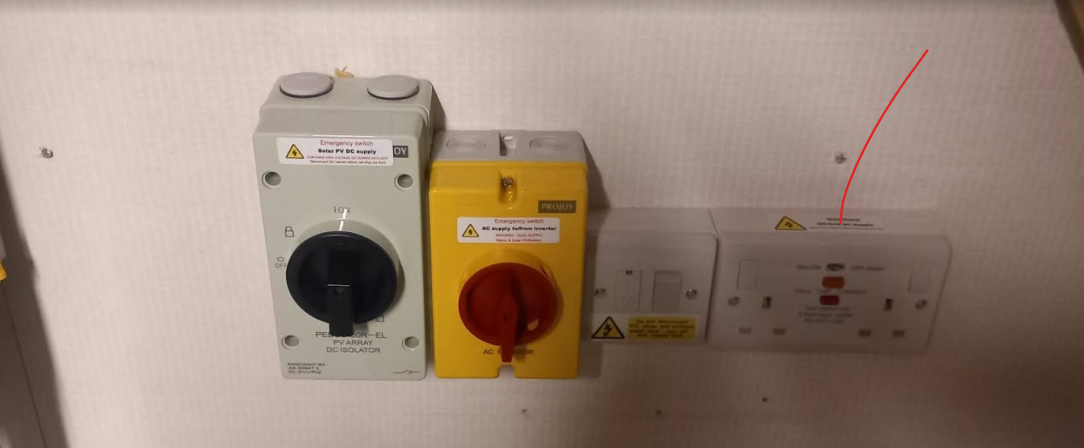
    With both my Solis hybrids the backup sockets are live regardless of the grid status, only thing is there is no earth, only thing I use them for is a 5G modem/router and a couple of ESP devices.

    🌞 6.96kWp PV System. West Dublin🌞


  • Moderators, Home & Garden Moderators Posts: 7,609 Mod ✭✭✭✭graememk


    Ah that's good to know. If you ever get the chance to test the voltage on it to see if it's the same as the grid voltage


  • Registered Users, Registered Users 2 Posts: 361 ✭✭Dr.Tom


    I’ll ask here and not clog the quote thread. Seems all the knowledgeable folk chill out here.

    Another company gave me the Sigenergy hard sell earlier and its AI and smart function capabilities.

    Is the worth the premium. How hard is it to self monitor another brand and adjust accordingly?

    Also are there other smart systems besides Sigenergy?


  • Registered Users, Registered Users 2 Posts: 9,788 ✭✭✭micks_address


    can this be connected to an earth circuit which goes back to the earth rod? mines the same.. just running the networking off mine


  • Advertisement
  • Registered Users, Registered Users 2, Paid Member Posts: 456 ✭✭mjatkey


    Hi graememk, yeap will do next time I get chance.

    🌞 6.96kWp PV System. West Dublin🌞


  • Registered Users, Registered Users 2 Posts: 8 HardcoR


    Hi, Looking for some advice - Currently have 6 panels with GoodWe GW2000-XS inverter and Zappi charger.
    I would like to add 10kW battery/s , I know I will have to replace inverter.
    The plan is to run house off the batteries during the day + whatever PV generates (at the moment I can get 'neutral' for most of the days during nice weather), then recharge the battery overnight at EV rate + charge car at the same time.
    Any recommendations for setup like this or am I dreaming and there is no point of wasting money?
    (Can't add more panels as there are 4+ years old , and no installer wants to touch )


  • Registered Users, Registered Users 2, Paid Member Posts: 456 ✭✭mjatkey


    I did some reading a while back and yeah I think that is the answer if you really want an earth, that said I've not checked with the grid down to see if any sort of switching takes place.

    🌞 6.96kWp PV System. West Dublin🌞


  • Registered Users, Registered Users 2 Posts: 13,206 ✭✭✭✭Calahonda52


    Are these socket circuits on a separate CU or what is the sets up?

    Thanks.

    “I can’t pay my staff or mortgage with instagram likes”.


  • Registered Users, Registered Users 2 Posts: 9,788 ✭✭✭micks_address


    I have an rcbo between the Solis output and socket


  • Registered Users, Registered Users 2, Paid Member Posts: 456 ✭✭mjatkey


    I just have the socket below wired (I assume) back to the backup port on the Solis, now you can disable backup on the inverter if you want.

    image.png

    🌞 6.96kWp PV System. West Dublin🌞


  • Moderators, Home & Garden Moderators Posts: 7,609 Mod ✭✭✭✭graememk


    Oh when your testing voltage, could you measure L to E and N to E when off grid too.


  • Registered Users, Registered Users 2, Paid Member Posts: 8,452 ✭✭✭deezell


    I noticed during a power cut that the LED on my automatic change over switch was indicating dimly on L1 ( grid), though power was out and I hadn't started the genny, on L2. I measured the voltage Live to N, surprised to see 6 volts across it, so either leakage from a failed line/ breaker or transformer, or else some PV connections were incorrectly and pointlessly pushing curren to the grid.


  • Moderators, Home & Garden Moderators Posts: 7,609 Mod ✭✭✭✭graememk


    Could even be some sort of induced voltage from anywhere. Power cuts due to storms/faults can act strange, I've seen what you are on about even with led lights in the house.

    It won't be PV though. And if someone was incorrectly trying to power the grid from a generator it would instantly overload it


  • Advertisement
  • Registered Users, Registered Users 2 Posts: 7,544 ✭✭✭witnessmenow


    I have a question around panels on less optimal roof sections

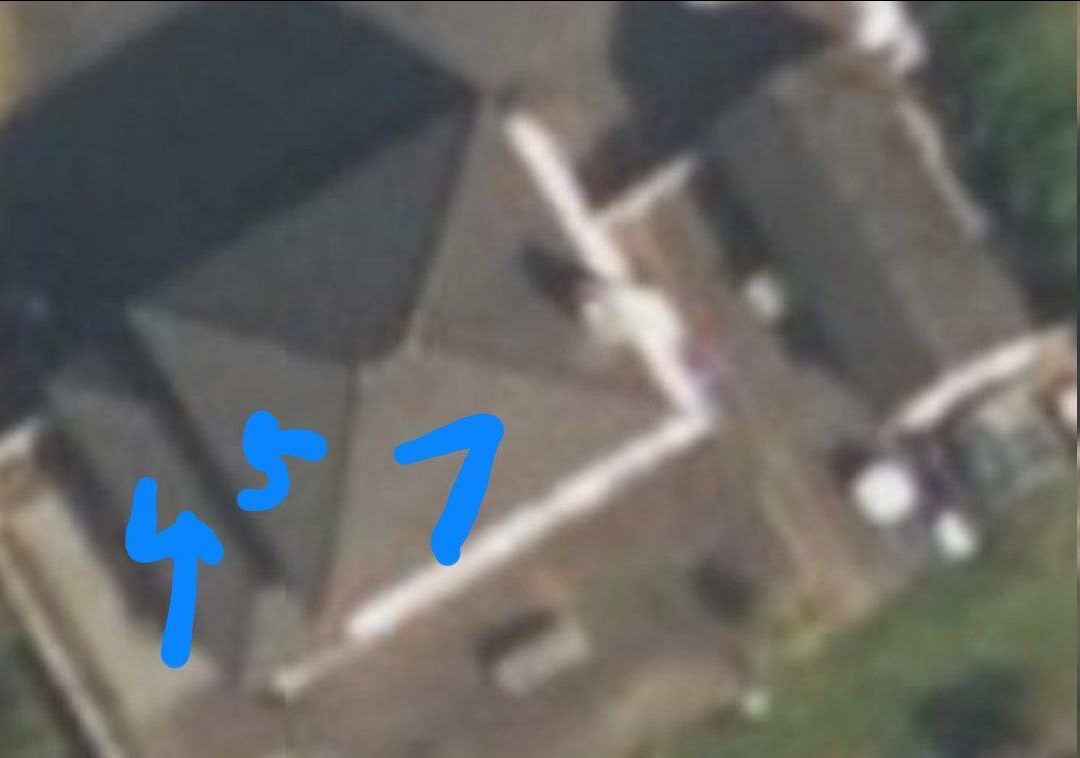
    We have a hipped roof. The back of the house is the best section, it faces South East.

    Second best is the South west section of the roof . There is also a single story garage area on this side, It's blocked by the house for the morning sun, but pretty clear for most of the day.

    If we only focus on the two best roof sections, including the garage, installers are estimating fitting 16 panels. 7 on the back, 5 on the south west house and 4 on the south west garage.

    image.png

    16 panels would be a good system for us, paired with 20kWh of batteries. We use 7000-8000kWh of electricity a year not including the EV. I estimate between off-setting our day usage to the batteries and selling what we can to the grid a 16 panel system including the batteries and change over would payback in 5 or 6 years.

    I'm also pretty certain that what ever we install will be our system for the forseable future, and I know the advice is to try fit as many panels as possible, I'm considering installing an additional 5 panels on the North East roof.

    According to the this site, 5 additional 460W panels there would generate 1340 kWh. 5 panels on the South East roof would be 1966 kWh, so the North East ones would be about 66% as efficient. Maybe a little less because there is a chimney there.

    Assuming they cost about €250 each and all require optimizers (€50 each?), thats €1500. And if you could sell all the generated power at 18c, it would pay it self off in 7 years.

    Do you think its worth the extra? Anything I haven't considered in the above? I cant image the 18c is going to last forever.


Advertisement
Advertisement