Advertisement
Help Keep Boards Alive. Support us by going ad free today. See here: https://subscriptions.boards.ie/.
https://www.boards.ie/group/1878-subscribers-forum

Private Group for paid up members of Boards.ie. Join the club.
Hi all, please see this major site announcement: https://www.boards.ie/discussion/2058427594/boards-ie-2026

Energy infrastructure

1224225227229230233

Comments

  • Moderators, Recreation & Hobbies Moderators, Science, Health & Environment Moderators, Technology & Internet Moderators Posts: 98,118 Mod ✭✭✭✭Capt'n Midnight


    I don't know. But I'd assume that if we had more transmission infrastructure there'd be less constraints.

    Unlikely but it is possible that depending on the timing and location of supply and demand here and in the UK we could be importing from Scotland and exporting to Wales or visa-versa. We still don't have great north-south links.

    During the gas crisis a few years back Germany was exporting gas to fuel French generators as the electrical interconnectors were maxed out.

    The weekly grid constraints are here - https://www.sem-o.com/publications/general-publications eg:

    There must be at least 7 machines on-load at all times across Ireland and Northern Ireland. Required for dynamic stability.

    Dublin Generation - Requirement for 3 units to be on load when Ireland System Demand is greater than 4700 MW. This operational constraint is required for load flow control in the Dublin area. This assumes EWIC is operational.

    Combined Ramp Rate of EWIC, Greenlink, and Moyle Interconnectors is limited to 15 MW/Min (ie. an hour and a half to ramp them all up or down)


  • Registered Users, Registered Users 2 Posts: 21,872 ✭✭✭✭cnocbui


    I was referencing the UAE example where the engineers specified 19 GWh of batteries, likely based on their cloud cover statistics. Which given your own figures would cost €1.9 B.

    1 GWh of battery storage can deliver 1 GW for one hour. The UAE example has 19 hours worth of storage at 1 GW of output. Lucky them to only require less than a days storage.

    The ESB calculation for a net zero Ireland as per EU requirements in 2050 would require 21 TWh of storage, which I think works out at €2.1 Trillion worth of batteries every 10 years, which is probably why they were panicking and advocating hydrogen for storage.


  • Registered Users, Registered Users 2 Posts: 21,872 ✭✭✭✭cnocbui


    Because that is Ireland's chosen path. Yes, we use storage, but the ESB calculate we will need slightly more storage than Turlough hill and some tiny battery packs can provide.

    Ireland energy storage needed for zero.jpg

    The Celtic interconnector is costing over €2 B for just 700 MW of capacity. I believe it's the only one where you can reasonably expect the imported energy is from low CO2 sources.

    Interconnectors are not substitutes for dispatchable power plants. There is no onus on France to always have sufficient zero CO2 capacity available whenever our grid is about to fall over, even if there were multiple connectors to increase the capacity substantially.

    The French tool they used to achieve net zero in 2023 is not allowed to be discussed in this thread.


  • Registered Users, Registered Users 2 Posts: 316 ✭✭tppytoppy


    Exporting electricity is the equivalent of exporting cattle on the hoof.

    French are adding value by converting cheap electricity to compute. Ireland are exporting expensive electricity.


  • Registered Users, Registered Users 2, Paid Member Posts: 15,602 ✭✭✭✭josip


  • Advertisement
  • Moderators, Recreation & Hobbies Moderators, Science, Health & Environment Moderators, Technology & Internet Moderators Posts: 98,118 Mod ✭✭✭✭Capt'n Midnight


    Who in their right mind would suggest today's batteries for seasonal backup ?

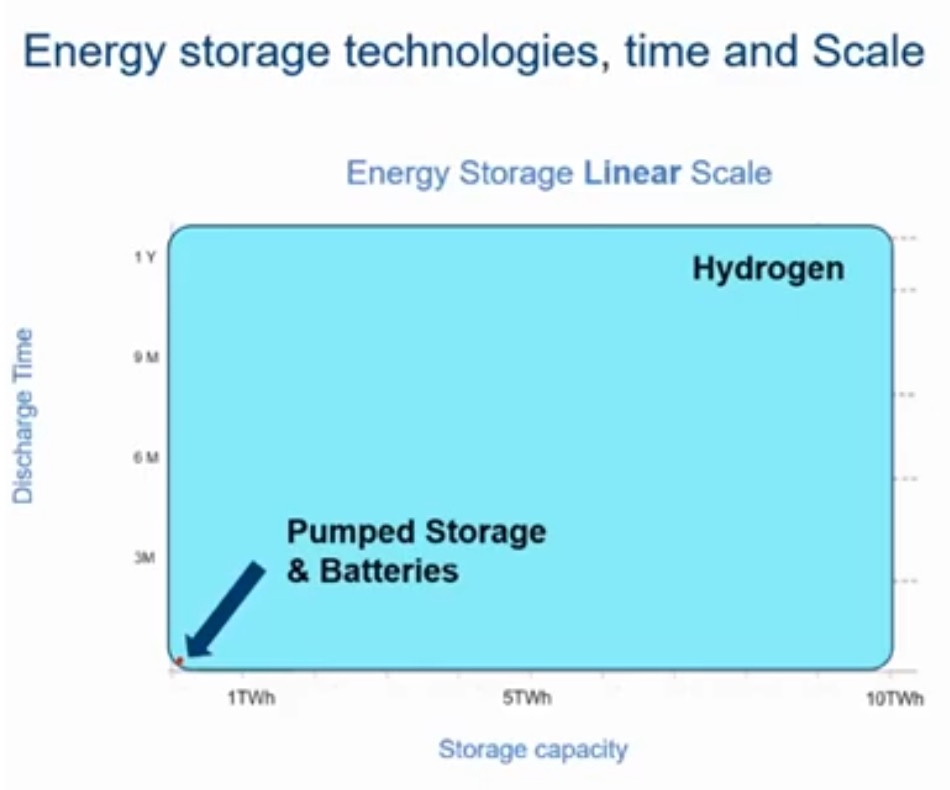
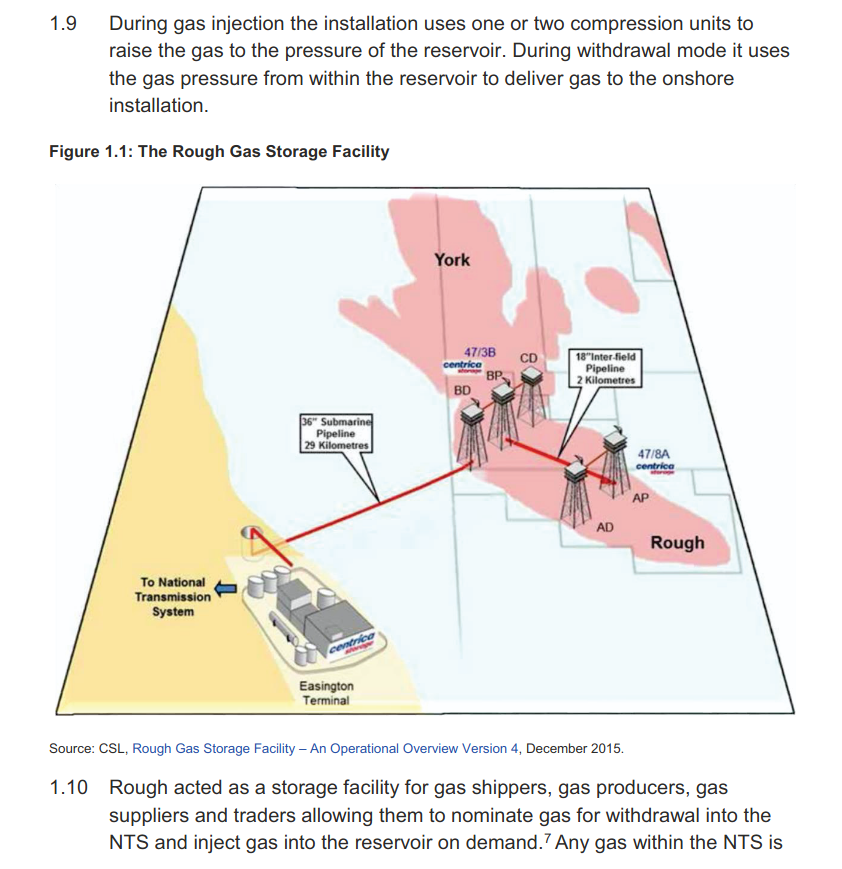
    The UK's Rough Storage Facility could handle well over 30TWh before they (Liz Truss) decided to not pay for maintenance in 2017.

    It would have cost £1Bn but it would have saved over £5Bn when the gas crisis hit a few years later. Centrica are now trying to get £2bn off HMG for repairs on a reactivated subset of it. It would have been so much cheaper to have kept as a going concern. Even at it's highest price it's three orders of magnitude cheaper that strawman batteries.

    image.png

    https://assets.publishing.service.gov.uk/media/5a30ff94ed915d2cf25281ac/rough-final-decision.pdf

    Our gas fields could be used the same way. With more hydrogen and hydrogen carriers over time.

    Interestingly enough if we stored the oxygen liberated by electrolysis and used that to burn methane and capture the heat for district heating then carbon capture would be so much easier.


  • Registered Users, Registered Users 2, Paid Member Posts: 14,397 ✭✭✭✭machiavellianme


    Duplicate

    Save boards.ie by subscribing: https://subscriptions.boards.ie/


  • Registered Users, Registered Users 2, Paid Member Posts: 14,397 ✭✭✭✭machiavellianme


    Interconnector flow is based on market prices. It flows from lower price zone to higher price zones. We currently don't have a coupled day ahead market (thanks Brexit) so are only coupled during the intraday auctions (at 6pm the evening before and again at 8am for blocks ranging from 11pm-11am and 11am-11pm)

    Save boards.ie by subscribing: https://subscriptions.boards.ie/


  • Registered Users, Registered Users 2 Posts: 19,259 ✭✭✭✭murphaph


    It's certainly easier and much, much cheaper to transport data through fibre optics for processing to Ireland than send electricity to France to use in French or German data centres. I guess the market would determine that it makes far more commercial sense to sent the data rather than the power.

    It doesn't matter at the end of the day though. Ireland will likely play an important role in EU energy independence. If only we could protect those undersea cables from nefarious operators but that's another day's discussion.


  • Registered Users, Registered Users 2 Posts: 924 ✭✭✭bored65


    We are one damaged pipeline away from destruction of economy and no electricity for months

    They state that Ireland is highly vulnerable to the impact of gas supply disruptions and notes that a Russian naval vessel loitered over the Gas Networks Ireland subsea interconnector last November.

    The documents predict that damage to a subsea gas pipeline would take six months to repair, and 250 big plants and campuses could lose gas supply.

    These include sectors such as pharma, food, beverages, dairy, and manufacturing, along with airports and universities.”

    since we don’t have storage either nor port facilities and grid completely relies on gas to backup unreliable renewables, this is an incredible report


  • Advertisement
  • Registered Users, Registered Users 2, Paid Member Posts: 14,397 ✭✭✭✭machiavellianme


    Great, publicise that and make sure every bad actor out there knows the impact of losing the gas connection. Why not post the kids-orca maps too!

    Save boards.ie by subscribing: https://subscriptions.boards.ie/


  • Registered Users, Registered Users 2 Posts: 924 ✭✭✭bored65


    They already know as per article, what you should be asking and worth discussing in a thread about energy infrastructure is;

    1. What are we doing about about security wise (increase in defence good, need more)
    2. Why is this critical vulnerability in our energy infrastructure not discussed (and who do we blame for getting us to such a vulnerable position)
    3. What exact steps if any are being taken to address this critical weakness (lng facilities, storage, more pipes, other sources that don’t depend on gas nor unreliable renewables)
    4. How the hell does the country prepare and survive 6+ months without electricity


  • Registered Users, Registered Users 2 Posts: 19,259 ✭✭✭✭murphaph


    The safest strategy going forward is to use the exhausted gas fields to store green hydrogen. The capacity would be enough to see us through a prolonged war, nevermind a dunkelflaute. That would provide multiple redundant and virtually impenetrable storage locations and are relatively close to shore so can be defended more easily than an interconnector (still required in normal times) in times of crisis.


  • Registered Users, Registered Users 2 Posts: 15,031 ✭✭✭✭Red Silurian


    Perhaps a greater degree of electrical security because you live nearer to a substation as well. Usually with these things you want them making landfall as close as possible to the location of generation. Generating off the Waterford coast and then considering Cork or Wexford for landfall would naturally cost more


  • Registered Users, Registered Users 2 Posts: 924 ✭✭✭bored65


    does this hydrogen technology exists and is in commercial use anywhere in the world today at anything approaching the magnitude of this country’s storage needs

    And what cost


  • Registered Users, Registered Users 2, Paid Member Posts: 14,397 ✭✭✭✭machiavellianme


    No, you want them making landfall as close as possible to the demand. Landfall in Waterford is almost useless as the grid there is already congested. s

    Save boards.ie by subscribing: https://subscriptions.boards.ie/


  • Registered Users, Registered Users 2 Posts: 15,031 ✭✭✭✭Red Silurian


    It could make landfall in Waterford and be transported from there to where the demand is. Surely it's cheaper to transport over/under land than underwater. You would obviously need new infrastructure to transport it etc


  • Registered Users, Registered Users 2, Paid Member Posts: 14,397 ✭✭✭✭machiavellianme


    Apologies, I meant Rté publishing it, not you. They shouldn't be allowed to especially with such clickbait titles, in the interest of national security.

    I agree with all of your points though.

    Save boards.ie by subscribing: https://subscriptions.boards.ie/


  • Registered Users, Registered Users 2 Posts: 19,259 ✭✭✭✭murphaph


    Not yet, but underground storage in depleted salt mines is happening today. Northern Ireland has the right geology (and indeed the largest salt mine in the UK & Ireland) near Kilroot. Even if depleted natural gas wells aren't an immediate option, we have a place where we can store very large quantities of hydrogen already. Germany is currently converting a depleted salt mine for this purpose.

    We have got to have several layers of redundancy anyway. We can't put all our eggs in one basket.


  • Registered Users, Registered Users 2 Posts: 924 ✭✭✭bored65


    So hydrogen storage tech is currently in realm of vapourware with no costs available with best storage location identified not even located in this country but in a neighbouring (nonEU) country whom oscillate between friendly and hostile to us depending on which strain of Brexiteers are at the steering wheel

    Post edited by bored65 on


  • Advertisement
  • Registered Users, Registered Users 2 Posts: 19,259 ✭✭✭✭murphaph


    Ok, what's your solution? Polish coal or what?


  • Registered Users, Registered Users 2 Posts: 19,259 ✭✭✭✭murphaph


    Oh wait, don't bother. You just joined here and virtually every post of yours is related to criticising renewables. You won't mind if I'm deeply sceptical of such profiles.


  • Registered Users, Registered Users 2, Paid Member Posts: 3,296 ✭✭✭KrisW1001


    Well, that person has an ideological opposition to anything wind or solar, but the project they were quoting included 19 GWh storage, not 1 GWh, and on your prices, this amount would cost €2+ bn once you include ancillary costs.

    That’s actually cheap, but battery technology is getting cheaper and cheaper, and I think for grid scale storage, which doesn’t need to be portable, lithium will be displaced for cheaper chemistries whose poorer energy density isn’t a problem.

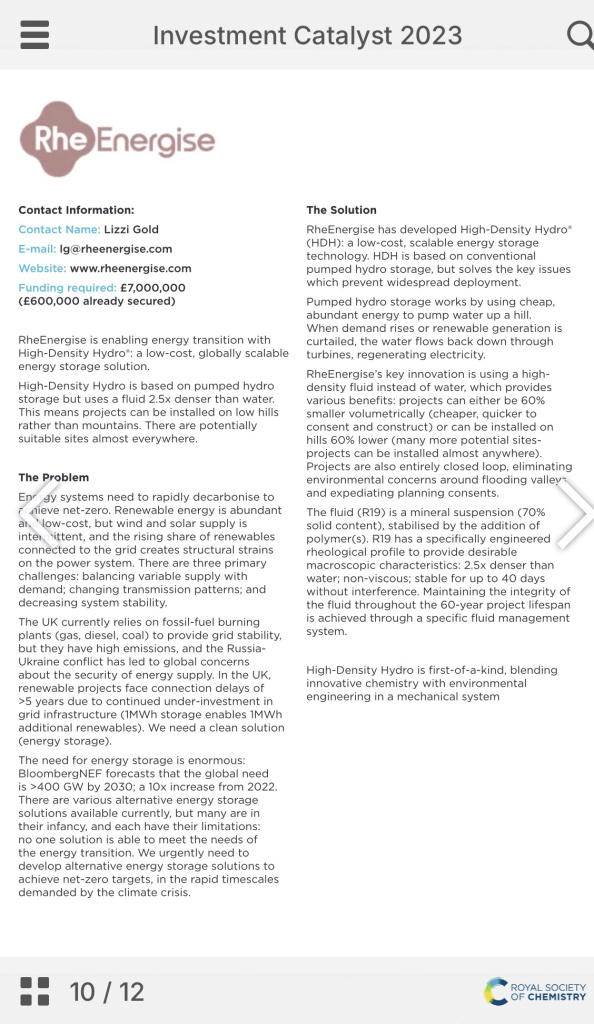
    In addition, and for longer, larger applications, pumped storage may also become a much more viable option based on recent events. UK company RheEnergise has just connected a pilot 500 kW pumped storage that uses a super-dense fluid instead of water to increase the system capacity by a factor of 2.5; this allows a viable pumped storage systems to be produced using smaller reservoirs or lower height difference. The pilot uses a reservoir of just 1300 cubic metres (1.3 million litres), a fall of just 200 metres and cost €10 million to build. Here’s an article from before the commissioning, which was yesterday: 500kW high-density hydro demonstrator in Plymouth presents new potential for future energy storage

    The much lower volume and fall requirements could make this a very useful technology for on-site storage at on-shore wind farms: most wind farms are on hills already, so adding the upper reservoir at the farm, and a power-house at the base of the hill could work well.

    Post edited by KrisW1001 on


  • Registered Users, Registered Users 2 Posts: 4,079 ✭✭✭hans aus dtschl


    Likely the latest iteration of "Gasoline Alley", "the 1922 committee", "Quantum technicial" etc. Really weird behaviour tbh


  • Registered Users, Registered Users 2, Paid Member Posts: 14,397 ✭✭✭✭machiavellianme


    Pilot or not, €20 million per 1MW is insane.

    Save boards.ie by subscribing: https://subscriptions.boards.ie/


  • Registered Users, Registered Users 2 Posts: 924 ✭✭✭bored65


    That’s silly, even the Poles don’t want burn coal

    I’m asking for realistic solutions such as higher defence spend for critical energy and infrastructure protection,

    so far one of the answers above is in the realm of fantasy especially if Reform get into power next door


  • Registered Users, Registered Users 2 Posts: 924 ✭✭✭bored65


    Interesting approach

    what exactly is this mystery “R-19” high density fluid they invented which is mentioned in the article and where are the environmental studies showing its not toxic if there is a leak in the system

    IMG_6537.jpeg


  • Registered Users, Registered Users 2 Posts: 21,872 ✭✭✭✭cnocbui


    One of the major problems with the hydrogen economy idea is that no other country has done it at scale.

    A critical deficiency seems to be electrolysers, wherein they are not being manufactured in significant quantity. I think I once calculated that the ESB master plan would require at least an entire years worth of the entire global production.

    Consider that most of the hydrogen produced in in the world is done so by processing natural gas, not via electrolysis, because the latter is problematic, and not cheap.

    Anyone who pays for expensive electrolysers usually employs them in a continuous operational configuration, for a couple of reasons; firstly to efficiently recoup their investment, and secondly, because they don't like being used intermittently.

    In other words, electrolysis of water to produce H is not well suited to intermittent energy. The idealistic idea that you use surplus power to generate hydrogen happens to be a poor fit to the technology.

    As if all that weren't enough, electrolysers require ultra pure water, which isn't trivial or cheap to produce.

    There is an equal problem when you try to convert the H back into electrical energy. If you use it in place of NG in gas turbines, you end up producing large amounts of NOx. Several companies have experimental gas turbine designs that mitigate or solve this problem, but it's really still being tested and if any workable products eventuates, they are likely to be expensive.

    Hydrogen is an absolute can of worms when you start looking into it.

    The idea of Ireland becoming a global innovator and leader in creating a hydrogen economy when there is no leading edge domestic industrial capability to facilitate things is just fanciful and ridiculous.

    Storage is the easy bit.

    When Germany goes from wanting to make H, to talking of importing it instead, anyone thinking Ireland can do this, is away with the fairies.

    However, an early green hydrogen hype in Germany and Europe has run into serious headwinds. Numerous projects have been cancelled, including by German companies. Production is expensive, transport complex, and the market trapped in a chicken-and-egg dilemma of demand and supply for the clean fuel.


  • Registered Users, Registered Users 2 Posts: 9,126 ✭✭✭Markcheese


    Hydrogen is far from the silver bullet , at the moment..

    But advancement in production, transmission and storage are progressing, ,so more than vapour wear but - less than fully developed..

    Slava ukraini 🇺🇦


  • Advertisement
  • Registered Users, Registered Users 2 Posts: 316 ✭✭tppytoppy


    With the limited scope for renewable energy onshore and offshore the most Ireland can hope for is self-sufficiency w.r.t. naturally occuring internal demand. Pitching Ireland as a Data center location to serve Europe without limit is foolhardy as the demand is insatiable. Let those blessed with nuclear plants or hydro or geothermal serve the market.


Advertisement
Advertisement