Advertisement
Help Keep Boards Alive. Support us by going ad free today. See here: https://subscriptions.boards.ie/.
https://www.boards.ie/group/1878-subscribers-forum

Private Group for paid up members of Boards.ie. Join the club.
Hi all, please see this major site announcement: https://www.boards.ie/discussion/2058427594/boards-ie-2026

Irish Weather Statistics

1323334353638»

Comments

  • Registered Users, Registered Users 2, Paid Member Posts: 14,658 ✭✭✭✭sryanbruen


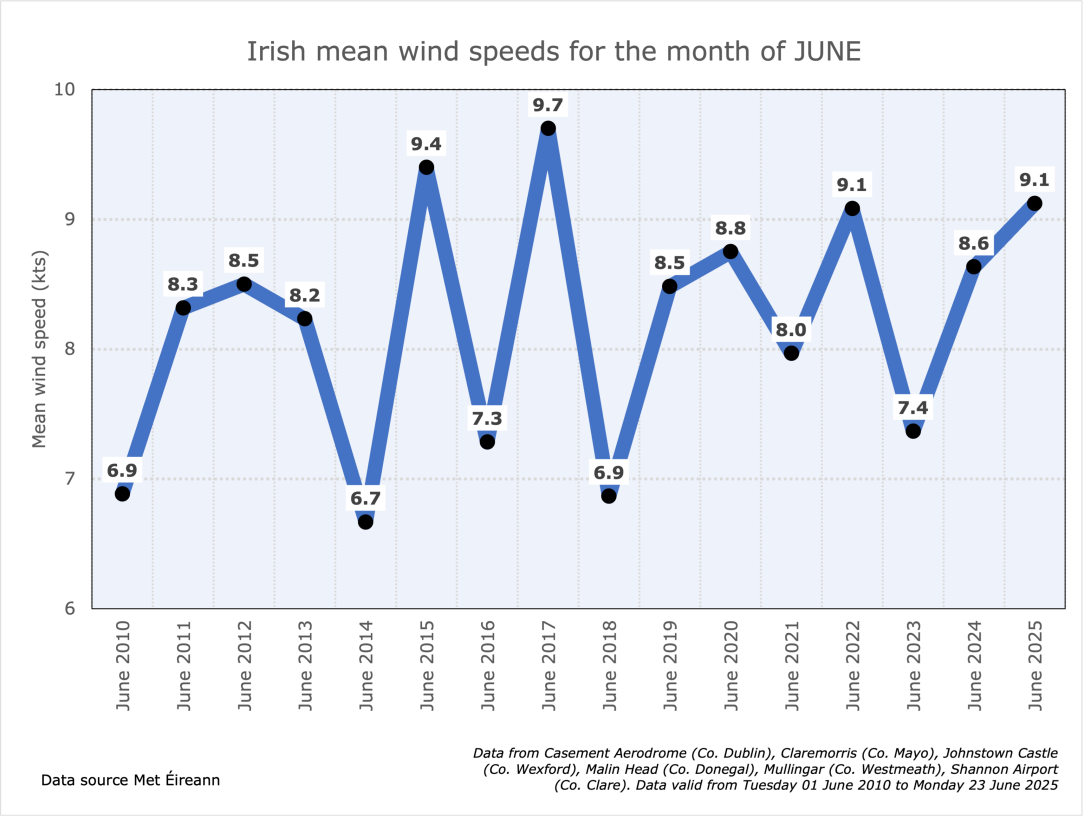
    I said in the summer thread that Casement was experiencing its windiest June in 31 years. On a more national level, it hasn't been as impressively windy but still windier than average. Currently it's comparable to June 2022 which was the windiest since 2017. Both were notably westerly Junes.

    Irish mean wind speeds for June.png

    Photography site - https://sryanbruenphoto.com/


  • Registered Users, Registered Users 2, Paid Member Posts: 14,658 ✭✭✭✭sryanbruen


    It is now 70 years since Ireland experienced its sunniest of any month on record, that being July 1955. I've mentioned this month many a time but I don't believe I ever did a proper historical post on it so this is going to be it.

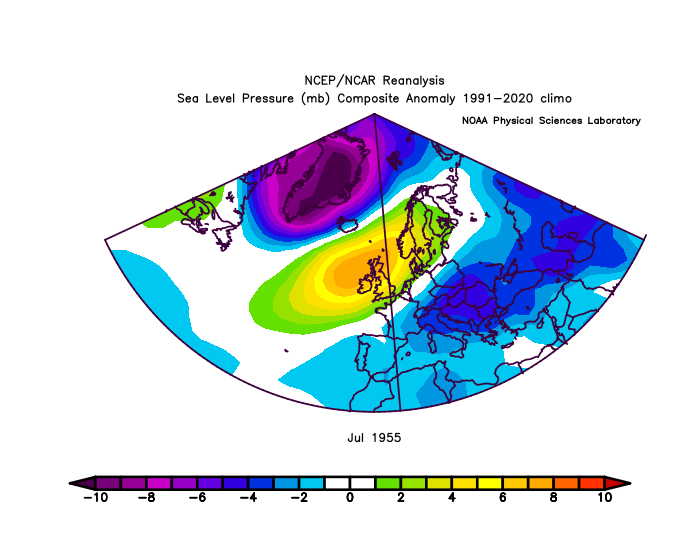
    It should be first mentioned that 1955 as a whole was known as a pretty blocked year with a cold winter including noteworthy snowfalls and a prolonged cold spell in February, a spring that was highly varied but at first very dry with record breaking sunshine in March followed by a very dry April and a wintry May. The blocked theme continued into much of the summer which was a warm and dry one after a poor June and then autumn similarly was rather blocked though September was westerly. December ended the year on a benign westerly, mild note.

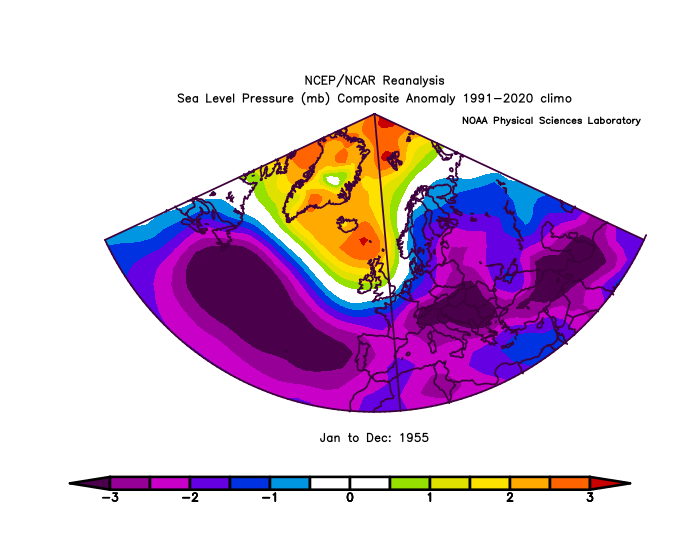
    The blocking theme of 1955 is illustrated below by NCEP Reanalysis for SLP anomaly across Europe with a strong signature for negative North Atlantic Oscillation (NAO) conditions indicated by well above average pressure over Iceland and deep low pressure over the Azores with a very southerly tracking jet stream. The year as a whole was cool but as mentioned, the summer was the exception with very warm conditions, especially in August. I consider it one of the more interesting weather years in our historic record up with 1947 and 1995.

    image.png

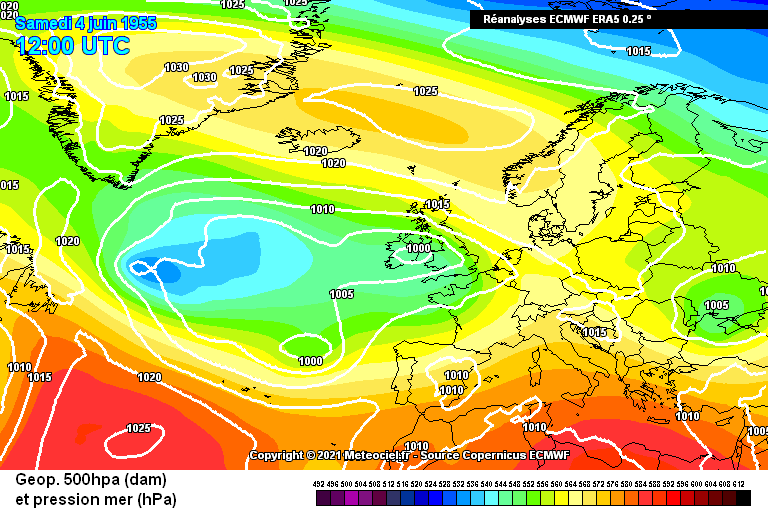
    The summer of 1955 did not start off on a good note. June 1955 was a poor month. The first week was very wet with a series of southerly tracking low pressure systems coming up against blocking to the northeast. Daily falls of 10mm+ were very common on a widespread basis and most in the south and east had reached more than their entire average June rainfall after the first week. Dublin Airport had 83.0mm of rain in the first 7 days of June, one of its wettest 7 day periods on record. Other stations had nearly 90mm in the same period including Balbriggan and Rathfarnham Castle. The highest total at lower ground I was able to find was at Garristown in North County Dublin which had 108.9mm fall in the first 7 days. Glencullen a bit higher up had 136.2mm in the same period and 156.2mm in the first 8 days. East Leinster was about the worst spot to be for this as the battle zone between the anticyclone and the low pressures was pretty much placed perfectly here. I can imagine a lot of run off in the Wicklow Mountains led to flooding but I don't have evidence of this. 100mm+ totals were common in a lot of Wicklow during this period.

    Nowhere escaped the rain with all places getting a dumping at some point. For instance, Malin Head which normally does well to avoid deluges when lows are southerly tracking still had a 23.2mm daily fall on the 7th June.

    image.png

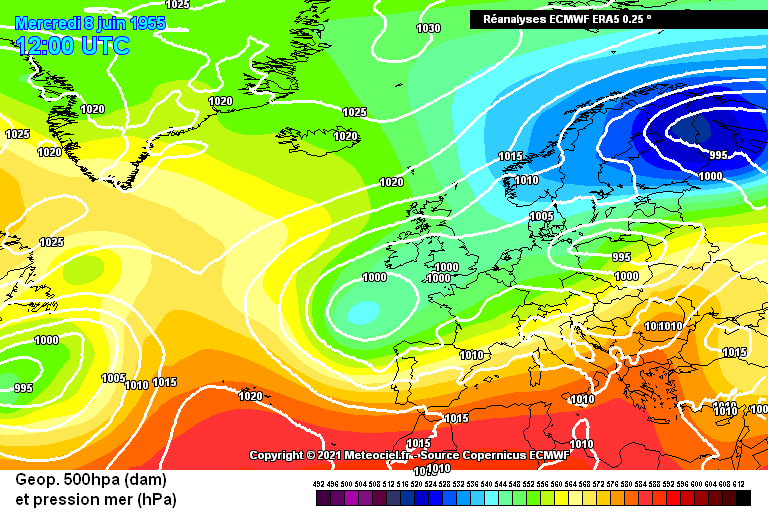
    The 8th June under a raw northeasterly flow was unusually cold for the time of year with maximum temperatures very suppressed as rain fell for much of the south and east. Dublin Airport did not get above 10.6C all day. Other poor maxima for this day included:

    Valentia, Kerry: 12.8C

    Clones, Monaghan: 11.6C

    Birr, Offaly: 11.5C

    Glasnevin, Dublin: 10.9C

    Future Junes in 1964, 1977 (especially) and 2009 would include significantly lower maximum temps across the nation but at the time, especially for Dublin, this was an exceptionally cool June day.

    image.png

    The rest of June 1955 continued in an unsettled vein but more traditional westerly, changeable affair rather than the southerly tracking lows of the first third. Any attempts at fine weather were very fleeting and the often sourced Atlantic air meant it was a cloudy month, a shocking contrast to the succeeding month. It is one of the cloudiest Junes on record as a matter of fact to present day. Sunshine data is very sparse however. CSO site I would usually use does not go back to 1955.

    Shannon Apt: 87.5 hrs (cloudiest June on record)

    Valentia: 108.2 hrs (3rd cloudiest June on record)

    Dublin Apt: 112.6 hrs (2nd cloudiest June on record)

    Malin Head: 124.0 hrs (5th cloudiest June on record)

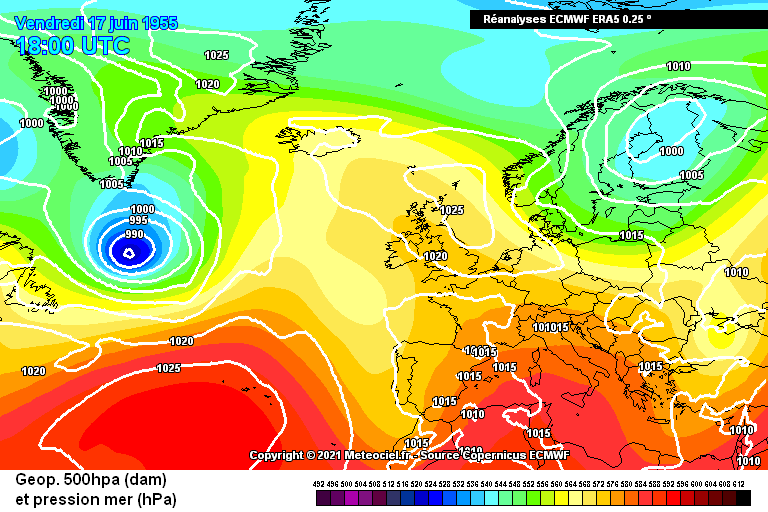
    The highest temp of June 1955 I can see is 22.4C at Valentia on the 17th during a brief ridge of high pressure drawing in a warmer easterly wind but this was not definitively the highest.

    image.png

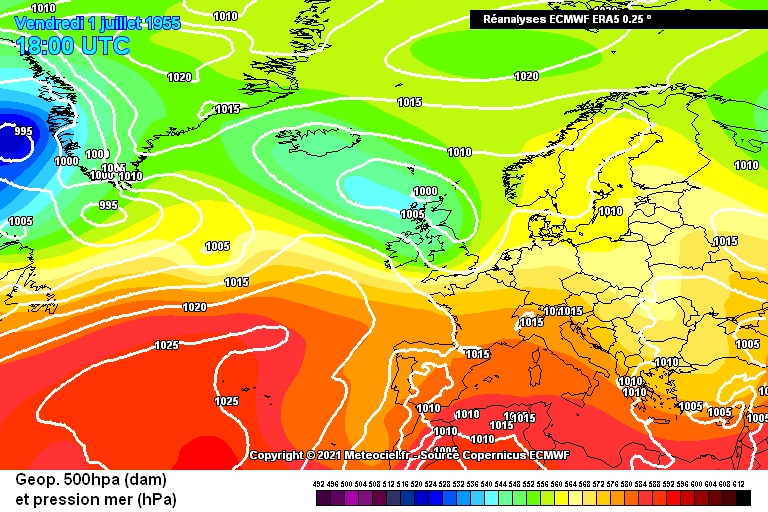
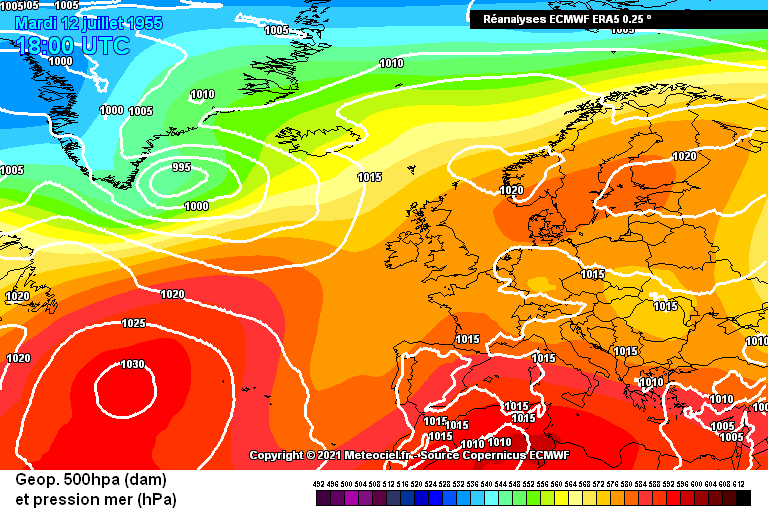
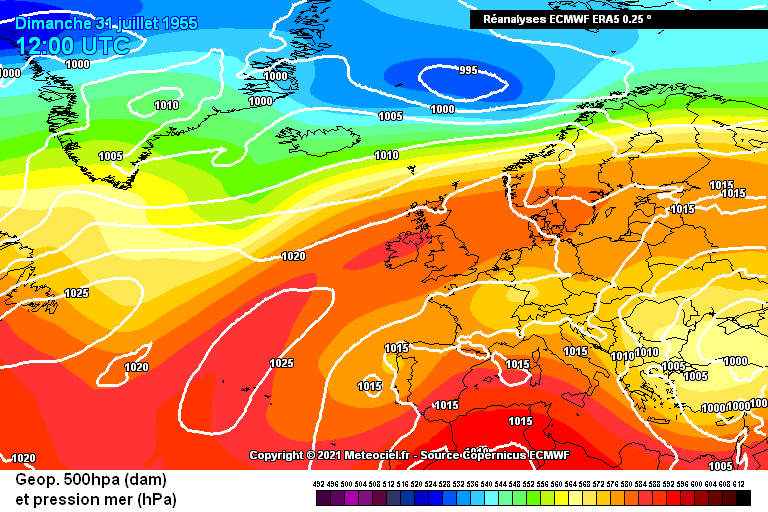
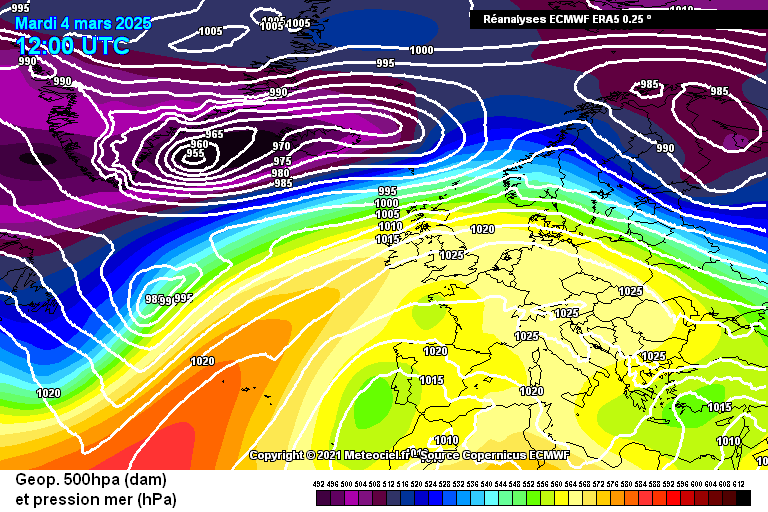
    The poor June would soon become a very distant memory with the arrival of July 1955. Looking at the synoptic on the very first day, it looks very benign with a flat westerly flow. The Azores High is at home, low pressure to the northwest of Scotland with an Atlantic airflow over Ireland. There was some wet conditions to the north of the country, especially on the 2nd but this would be the exception and for nearly all, 90% of their July monthly rainfall occurred on the 2nd alone. The month had as little as 1-3 wet days (days with 1mm or more) for nearly all stations. Cork had only 1 or 2mm of rain fall all month.

    image.png

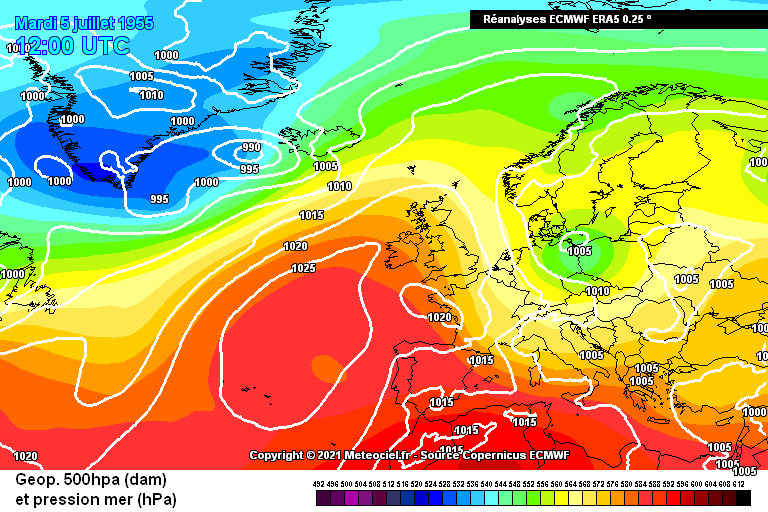
    Through the opening week, any low pressure fizzled out or cleared eastward with a ridge from the Azores building into the country. There was already good sunshine at times but it was soon to become very sunny widespread with unbroken sunshine for many day after day for almost a week.

    image.png

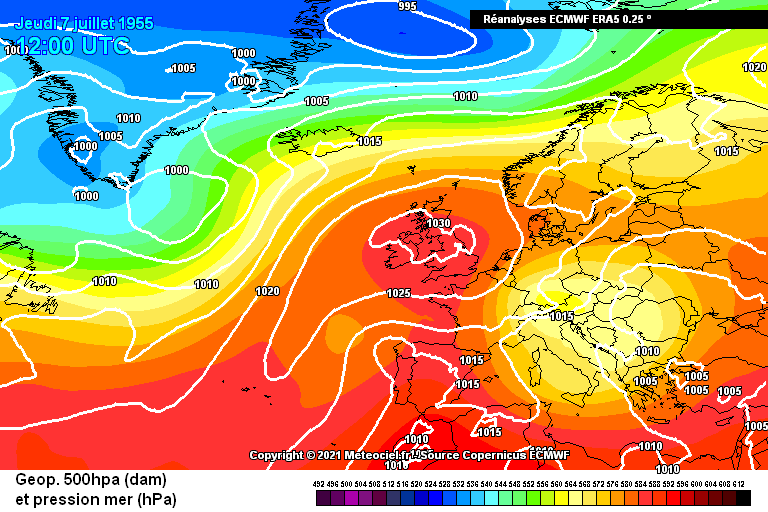
    A classic strong high pressure system right over top of the country on the 7th July with warmth building beneath due to air compression and cloud amounts decreasing.

    July 1955 as mentioned was Ireland's sunniest month on record, at least in terms of absolute extremes - we've likely had sunnier for the whole nation averaged including June 1957 and May 2025. Valentia Observatory recorded 308.3 hrs of sunshine which is the all-time record monthly sunshine total on the island - this represents 219% of its average of just 140 hours for July! It is also only one of three occasions that had a 300+hr total has been achieved in Ireland, the other two were June 1959 (only 4 years later amazingly) and May 2025. It was the sunniest month on record for Dublin Airport with 305.9 hrs and Birr too though I have no sun data available for it unfortunately. Other stations such as Malin Head (213.3 hrs) and Shannon Airport (255.3 hrs) have seen sunnier months.
    Shannon Airport had 24 consecutive days of 20C or more from 5th-28th July 1955 with a max of 27.6C on the 24th including official heatwave conditions from the 7th-11th July. There was no 30C recorded in July or indeed in 1955 as you'll find out later. This is likely down to a couple of reasons including the overall colder nature of sea surface temperatures back in this time, the lack of stations in operation that did not pick up on micro-climates and there was also not a lot of very warm or hot airmasses advected towards Ireland during July. Airmasses tended to be rather modest in nature with 12C at 850hPa tending to be the peak according to reanalysis whereas we've seen 850s above 20C recently in July 2022 that helped achieve 33.0C.

    The Met mentions that 29C was achieved on 8th July somewhere but I do not know where and I cannot find this value. The Shannon temp I mentioned is the highest out of the limited station data available in the public domain.

    image.png

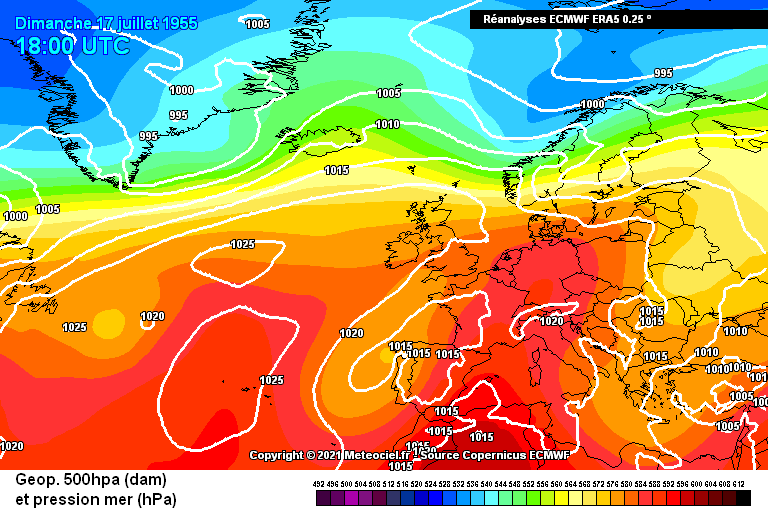
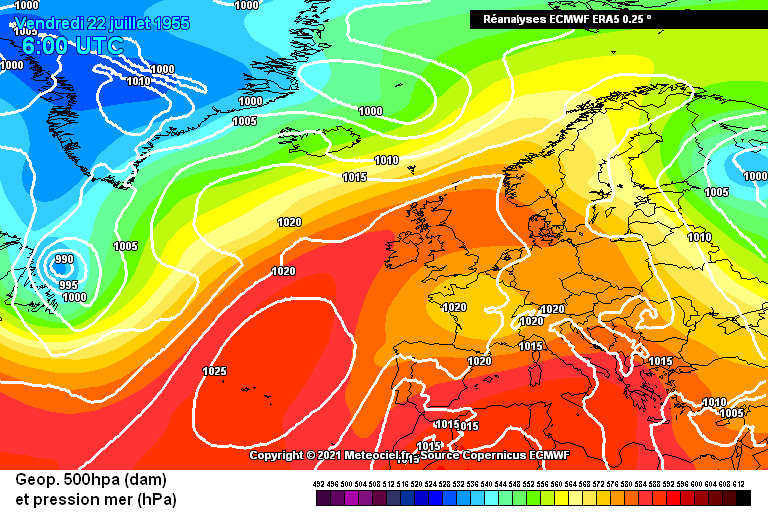
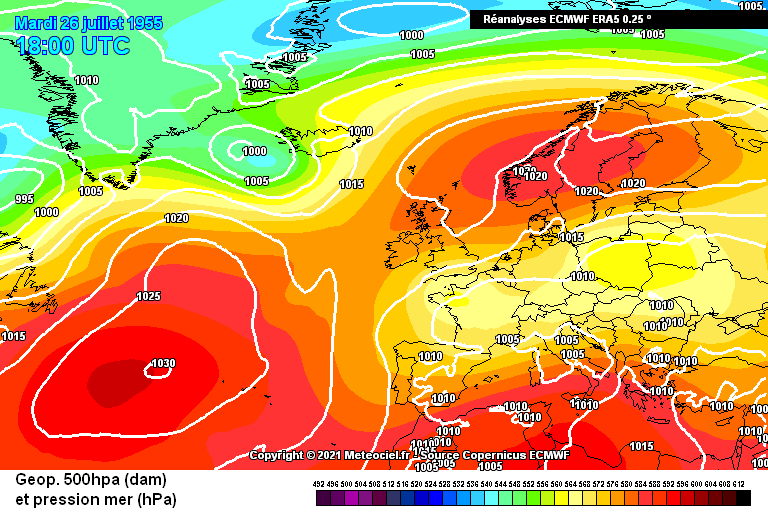
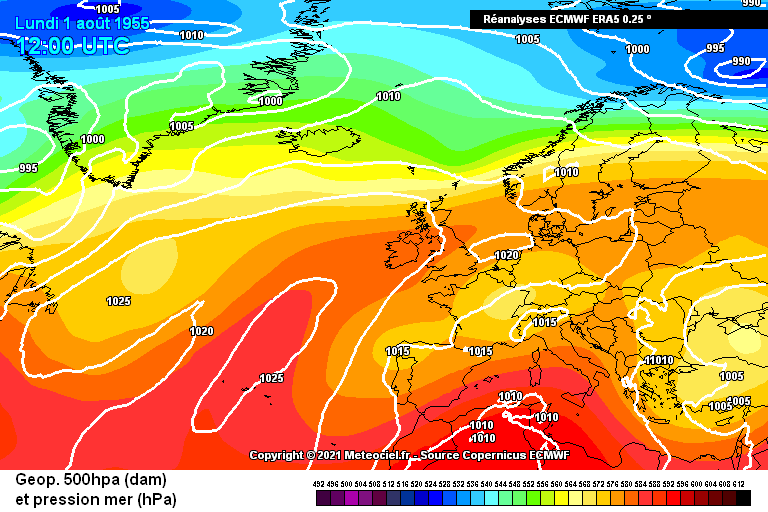
    The entirety of July 1955 was then dominated by Azores ridges. There was basically no break in the weather pattern for the rest of the month, remarkable. Any time the Azores ridges weakened or went east, another one just built.

    image.png image.png image.png image.png

    Even by the final day of July, we were still under the influence of a ridge from the Azores high. July is normally a very westerly month so to see one this blocked is phenomenal to be honest.

    image.png

    The Atlantic was well and truly blocked off with the jet stream pushed far to the north over Iceland through July. No spectacularly high temperatures recorded but I can see many days pushing to upper 20s or touching 30C if this month's evolution were to play out in a more modern climate.

    image.png

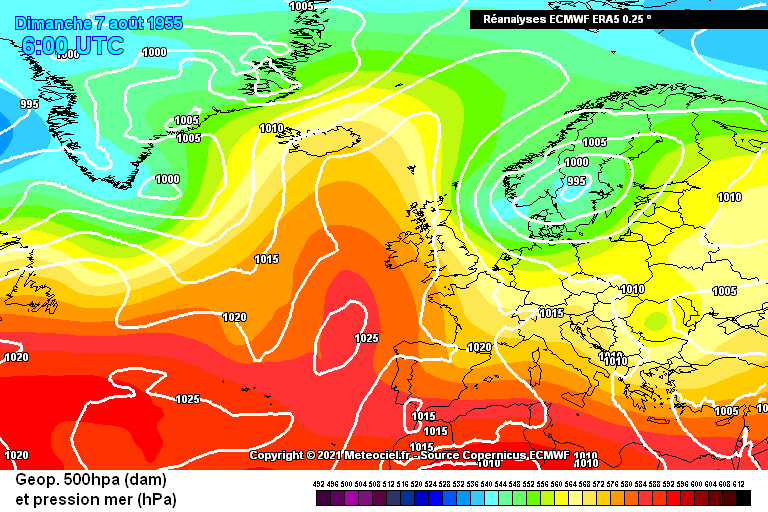
    The warm, dry summery conditions from July was to continue into August 1955 too which was actually hotter than July though not nearly as sunny or as dry.

    It wasn't as warm as August 1947 which until 1995 stood widely as the warmest August on record in Ireland. Nonetheless, places were still widespread over 2 degrees above their August means. Only 5 days failed to reach 20C at Shannon Airport which had a monthly mean of 17.6C - nearly 2 degrees above the modern average, never mind back then. The mean max at Birr was 22.3C which is nearly 3 degrees above average.

    The month started where July had left off with an Azores ridge influencing Ireland with variable warm sunny spells. Low to mid 20s maxima

    image.png

    It became fresher towards the end of the first week with the ridge forcing the wind to more of a northwesterly tilt decreasing temperatures back to the mid-teens for a time and fair amounts of cloud but continuing dry.

    image.png

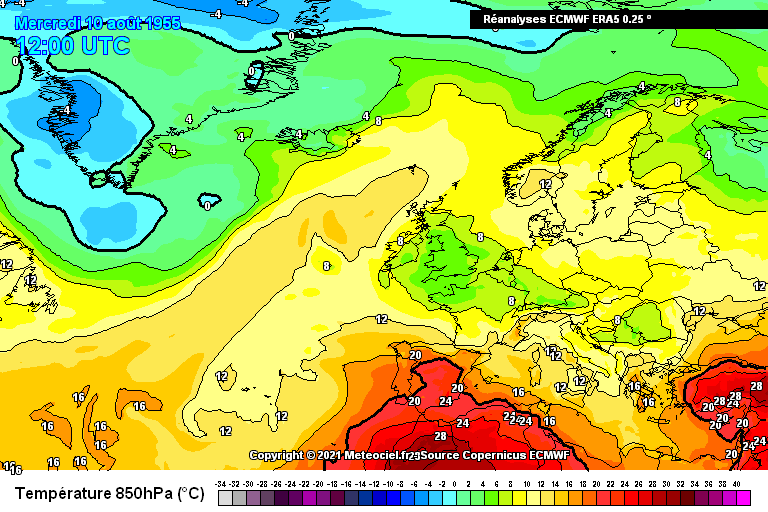
    This was temporary as more high pressure built right over top of the country. There was an interesting cooler pool aloft however in the easterly wind at first so it wasn't very warm by any means especially in the east where Dublin Airport had a disappointing max of 17C on the 10th. By the 13th it had warmed up everywhere when the air destabilised with possibly some thunderstorms but information limited.

    image.png image.png

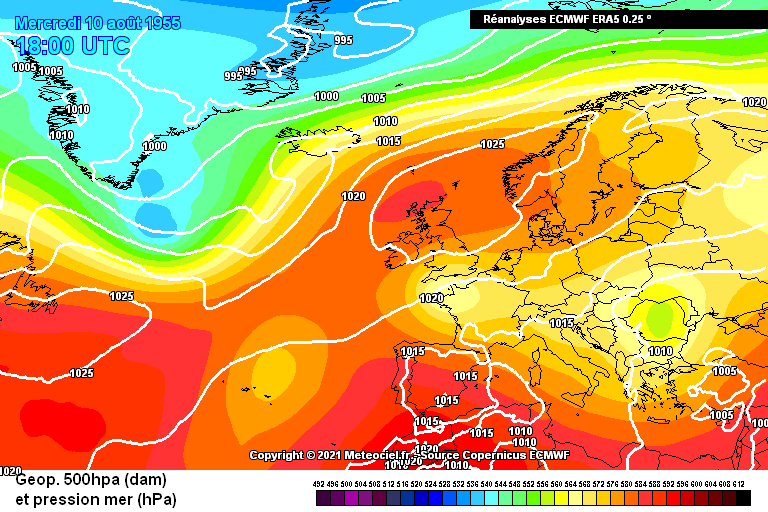
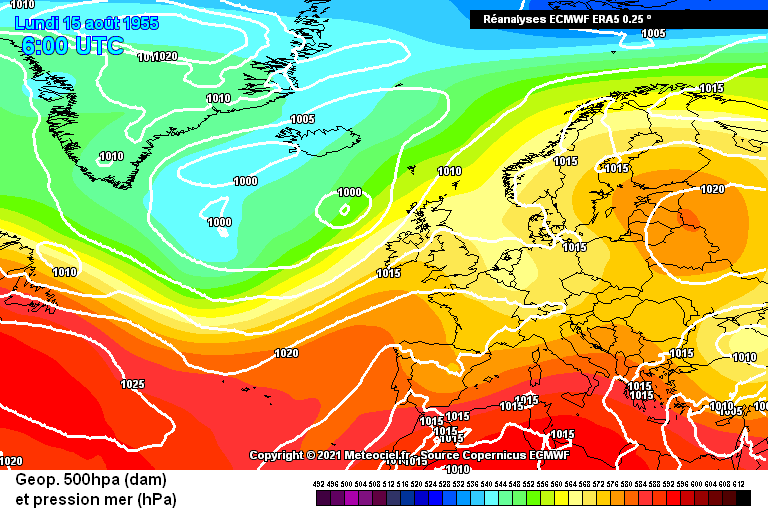
    Here's something that hadn't been seen since the end of June or start of July… a westerly flow! High pressure slipped to the south on 15th August bringing in low pressure off the North Atlantic. Some wet conditions out north and west but the heaviest falls tended to stay offshore whilst the east remained almost completely dry.

    image.png

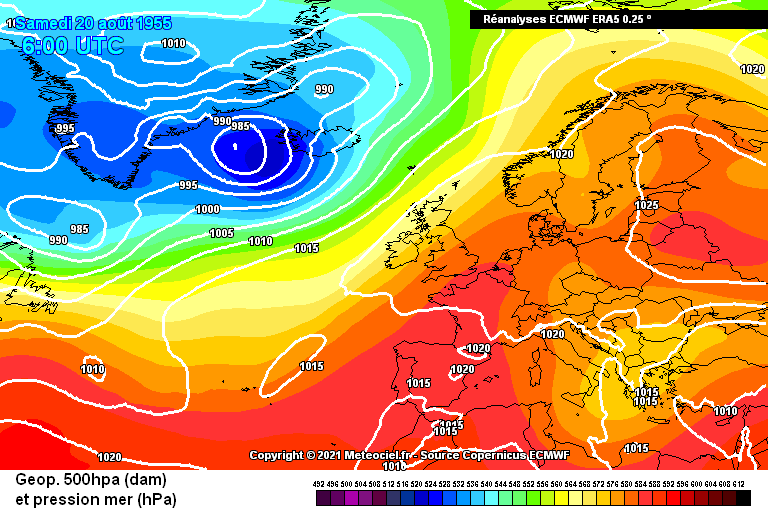
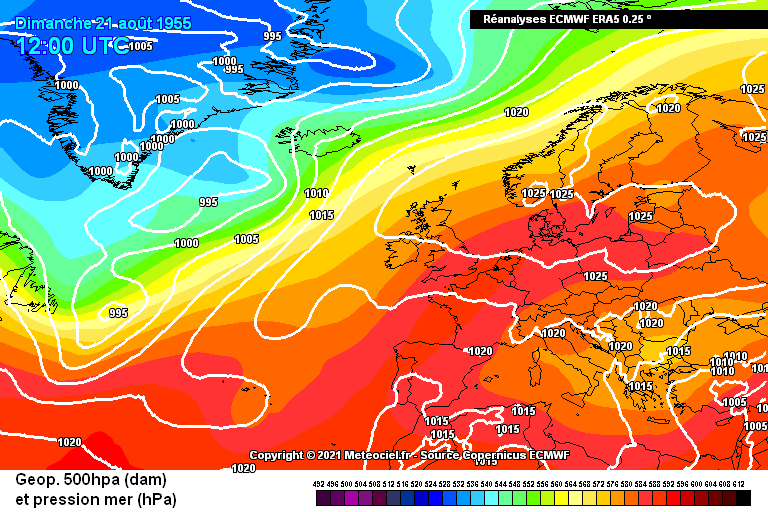
    By the 19th August, the Atlantic flow was already running out of steam with high pressure building from the Azores again and to the east. This would usher in the hottest part of the summer. It doesn't look like much but the warm air and slight kinks in the isobars was enough to bring severe thunderstorms to places. Dublin Airport had a daily fall of 54.4mm on the 21st August.

    image.png image.png

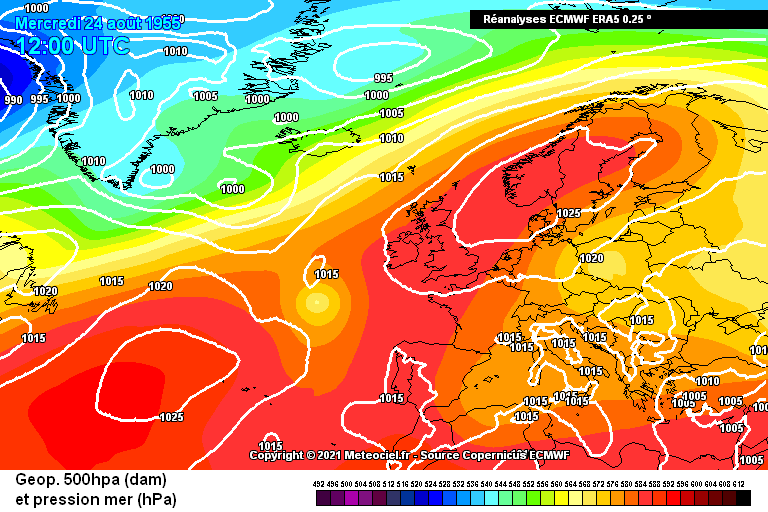
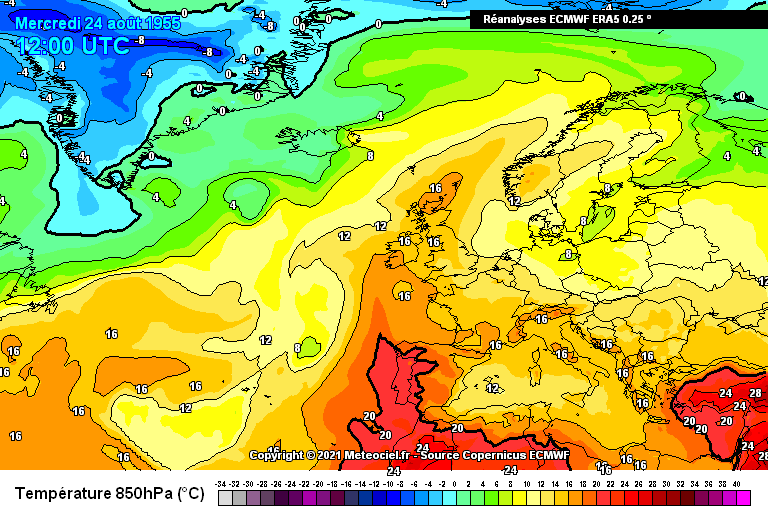
    Warm air advection inflated the ridge with a proper block over Scandinavia bringing in very warm southeasterly winds. Widely temperatures were reaching between 26 to 29C. The highest temperature was 29.8C at Valentia Observatory on this day 24th August 1955. This would stand as the August record for Ireland until 20 years later in 1975 and again another 20 years later in 1995 - funny how that worked out that way. It remains Valentia's highest August temperature on record to the present day.

    The warm, dry weather would see us out to the end of August when it gradually became more westerly leading us into a westerly September.

    image.png image.png

    That's the summer of 1955. I didn't give as much information as I would like to but unfortunately data is sparse and currently I do not have access to the newspaper archive either. But I hope you enjoyed it nonetheless and that it was an interesting enough summer to pick for a post like this.

    Photography site - https://sryanbruenphoto.com/


  • Registered Users, Registered Users 2, Paid Member Posts: 14,658 ✭✭✭✭sryanbruen


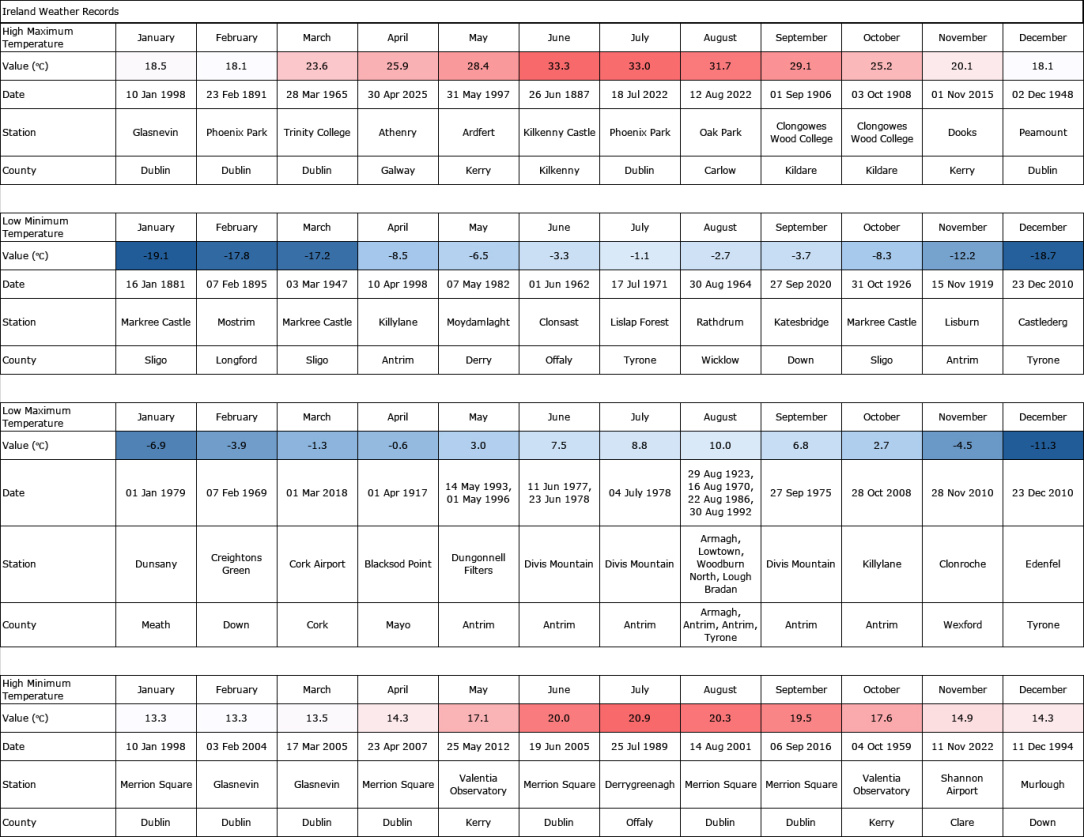
    Monthly temperature records for the whole island, including Northern Ireland.

    Ireland temperature records.jpg

    Photography site - https://sryanbruenphoto.com/


  • Registered Users, Registered Users 2, Paid Member Posts: 14,658 ✭✭✭✭sryanbruen


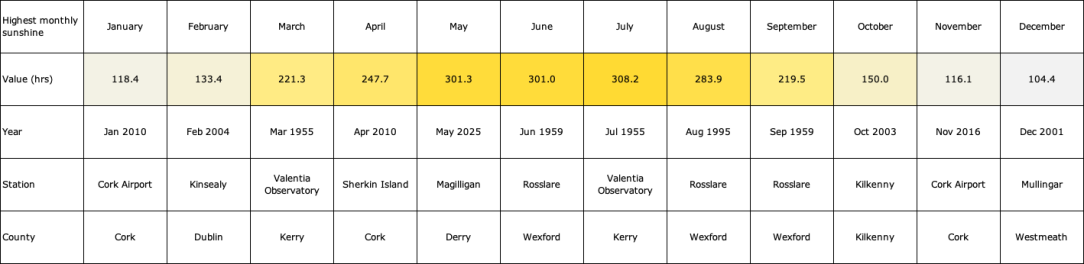
    Highest monthly sunshine totals on record can be found below for the island. I contemplated whether to include the Magilligan, Co. Derry value from May 2025 or not as it is an estimated value converted from Kipp & Zonen sensor to Campbell-Stokes for historical comparison. Modern automated stations in the UK use K&Z sensors for sunshine recordings whereas manuals use CS, I'm not sure about the Republic as I've never seen reference to K&Z sensors at Irish stations nor any recalculated figures.

    This Magilligan value is the only time I'm aware of that Northern Ireland has a higher record monthly sunshine total than the Republic. Even if not accurate or dubious, May 2025 still holds the record with 298.8 hours of sunshine at Johnstown Castle, Co. Wexford. In terms of national average, May 2025 is probably the sunniest month in Irish recording history with a MINIMUM total of 267.2 hours (Gurteen) out of 9 stations. Even in Northern Ireland, the lowest K&Z total was 259.3 hours at Thomastown, Co. Fermanagh which would likely be over 270 hours with a CS conversion. 9 stations is a very small amount but normally one or a few stations are closer to 200 hours like in May 2020 where the minimum total was 220.9 hours at Belmullet. And in July 1955, there was similar minimum totals despite both Valentia Observatory and Dublin Airport achieving over 300 hours. Basically, May 2025 was a historic sunny month.

    image.png

    The highest winter (December to February) seasonal total is likely 312.5 hours at Cork Airport in winter 2009-10. Whilst I cannot confirm if this is the absolute highest, it is pretty ridiculously high for a winter sunshine total in Ireland with no other record I'm aware of coming close. Dublin's sunniest winter is over 60 hours less! Given how extremely blocked winter 2009-10 was with a record negative North Atlantic Oscillation, perhaps it's no surprise it was this sunny.

    The highest spring (March to May) seasonal total is probably 649.7 hours at Malin Head in spring 2025. I'd be surprised if this was beaten as spring 2025 is by far and away the sunniest spring season on record nationally with nearly all stations setting records. The highest prior to this I'm aware of is 638.2 hours at Rosslare in spring 2007.

    The highest summer (June to August) seasonal total is definitely 796.8 hours at Rosslare in summer 1959. This is an average of 8.7 hours of sunshine per day, extreme for a whole season in Ireland and represents 56% of the potential sunshine which for a month would be notable but not extreme. For a whole season that is truly remarkable. There is no summer sunshine total that comes close to this even in Rosslare which unfortunately stopped recording in 2008 but was famous as the "sunny southeast". Johnstown Castle, its replacement since, doesn't catch as much sunshine. Its summer 1995 (its second sunniest summer) total is over 85 hours less than 1959. Some Irish summer months of the past haven't even recorded that much sunshine.

    I am nearly certain that the highest autumn (September to November) seasonal sunshine total was 427.6 hours at Rosslare also in 1959 after the remarkably sunny summer. What a year 1959 was for sunshine with a record-breaking sunny January too earlier in the year as you'll see below.

    I attempted to do the table for the lowest monthly sunshine totals on record but unlike the highest, Northern Ireland would probably hold a good bit more records here. I have no way of converting K&Z values myself to CS equivalent as I am not aware of the difference between the values. The UK Met Office don't make them public unless in extreme scenarios such as May 2025. Then there is also the fact Northern Ireland monthly sunshine totals are in general trickier to access. The record lowest Republic sunshine total for July is 54.7 hours at Newport, Co. Mayo in July 1998 whilst Magilligan reported 52.1 hours in July 2022 but the latter is a K&Z value. This makes it impossible to do a lowest sunshine records table with the current state of the historical database for the whole island.

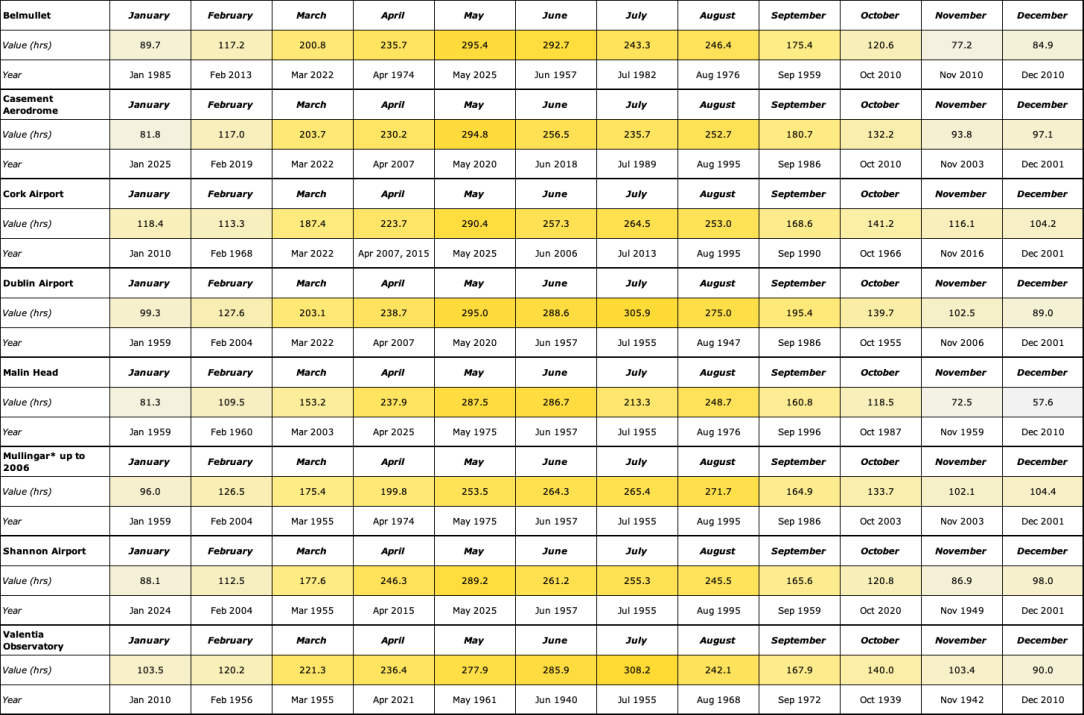
    So here's just a few stats on a limited number of Irish stations starting off with record monthly sunshine totals for highest. There are more sunshine recording stations than this but the Met don't make their data public for whatever unknown reason.

    Note Cork Airport has the unique characteristic of every month having a record of at least 100 hours. No other station currently does this but Mullingar only needs a record January of at least 4 additional hours to also achieve this. Quirky too that some stations have a higher December record than November and a higher August record than July. Things like this are why I love analysing the Irish climate as whilst its extremes may be boring on a global scale, it's full of novelties and quirks that are not what you expect.

    image.png

    Photography site - https://sryanbruenphoto.com/


  • Registered Users, Registered Users 2 Posts: 7,418 ✭✭✭Charles Babbage


    "Dublin Airport had a daily fall of 54.4mm on the 21st August" (1955)

    Irish Press 22 Aug 1955

    P.O. van ends in torrent HOMES FLOODED AFTER DUBLIN'S DAY OF RAIN

    IRISH PRESS Reporter THE thunder storm and torrential rain which hit Dublin yesterday left a trail of late-night flooding. At least four houses were flooded to a depth of one foot at Blackhorse Avenue; another danger point was the C.I.E. bridge at Sarsfield Road, where surface water gushed down the hill from the Inchicore side and flooded the road to a depth of seven feet six inches. Mr. T. Robinson, 8 Arbour Terrace, a Post Office van driver, had a narrow escape from drowning when he drove under the flooded bridge. The water and the nearness of another car checked his progress and the van came to a halt in over three feet of water. He had great difficulty in forcing the door open against the flow of the water rushing into the deep hollow under the bridge.

    He was hip-high in water as he scrambled to safety and in a very short time water completely submerged the van. Later Gardai, Corporation men and many voluntary workers freed the shores and the van was removed to dry ground. About 50 yards of the Nephin Road end of Blackhorse Avenue was flooded to a depth of two feet. Mrs. Annie O'Reilly, a widow, and her four children were flooded out in their cottage home at 184 Blackhorse Avenue. Although the water was a foot deep inside, she decided that she and her family would stay put.

    The O'Reillys' next-door neighbours, Mr. and Mrs. McCarthy are away on holidays and their home was also flooded. Garda Tom O'Brien, of Cabra Station, salvaged their carpets. Across -the road, Mr. David Reilly was flooded out of his cottage. Mr. Reilly, who has been flooded ten times in his low lying home, was in his bare feet trying to free shores when the Corporation men arrived. Other houses flooded were those of the Chamberlains and Lawlers.
    Cars were delayed for a long time at Blake's Cross on the main Swords-Balbriggan road, which was flooded to a depth of two feet.
    Buses to Ballyfermot were rerouted through Palmerstown.
    Some houses in Chapelizod were flooded to a depth of 18 inches.
    Other flood points were the Lucan road; the main road to Finglas at Glasnevin Cemetery; the Cappagh road beyond Finglas, where the floods were three feet deep, and the junction of Elgin Road and Clyde Road, Ballsbridge.Match off
    At Croke Park last night the heavy thunder storm, accompanied by a downpour, washed out the All - Ireland Senior Camogle Final between Cork and Dublin. The teams had taken the field when it was decided to call off the match.Meanwhile, temperatures were up in the west and south. Some maximum readings were: Valentia and Midleton, 72; Shannon, 68; Claremorris, Castlearchdale and Blacksod, 69.
    But Dublin's thunderstorm was shared by many places on the east coast and caused serious floods in some areas.


  • Advertisement
  • Registered Users, Registered Users 2, Paid Member Posts: 14,658 ✭✭✭✭sryanbruen


    Met Éireann have made a data rescue project to digitise rainfall observations which the public can contribute to in the link below.

    Photography site - https://sryanbruenphoto.com/


  • Registered Users, Registered Users 2 Posts: 10,184 ✭✭✭✭spookwoman


    Trying to get my head around it. Some of the records have extra data at the bottom with no explanation.


  • Registered Users, Registered Users 2, Paid Member Posts: 14,658 ✭✭✭✭sryanbruen


    I mentioned in the winter thread a while back that Dublin Airport is experiencing its sunniest year since 2010. This is the case for Cork Airport as well where it is the 5th sunniest year on record since 1963.

    A recap of the stats of 2025 in Ireland will be out soon.

    Photography site - https://sryanbruenphoto.com/


  • Registered Users, Registered Users 2 Posts: 1,271 ✭✭✭compsys


    Impressive seeing as we had around 12 entire days without a ray of sun in February.


  • Registered Users, Registered Users 2 Posts: 1,985 ✭✭✭Billcarson


  • Advertisement
  • Registered Users, Registered Users 2, Paid Member Posts: 14,658 ✭✭✭✭sryanbruen


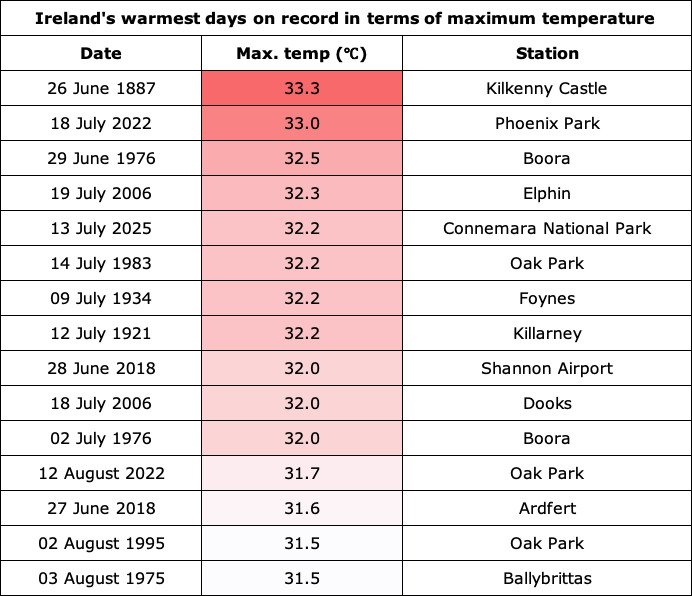
    In the 2025 statement, Met Éireann noted a max of 32.2C at the climatological station Connemara National Park on 13th July 2025. This makes it the equal 5th highest max temp on record in Ireland.

    image.png

    *Note 32.2C in July 1921 and July 1934 are converted from whole Fahrenheit. Also there was a 32.1C at Durrow in August 2022 which has been disregarded.

    Photography site - https://sryanbruenphoto.com/


  • Registered Users, Registered Users 2, Paid Member Posts: 14,658 ✭✭✭✭sryanbruen


    Retrospective on spring 2025 as one year has passed since it occurred.

    The spring of 2025 was dominated by a warm, sunny and mostly dry theme. In fact it broke all kinds of records for warmth and sunshine across the country. If it weren't for a couple wetter periods, it would have probably also contested the driest springs on record.

    March was the driest month of the season but also the least interesting of the three with not much in it. Generally the driest March in Ireland since at least 2012, even longer locally. It was the driest March on record for Dunsany whilst Dublin Airport had its driest March since 1990. Rainfall totals for the month were as low as 11.2mm at Dunsany. Anticyclonic influence varied from its placement through the course of March from the southeast in the first week to the west giving cooler conditions from the northeast in the second week backing to the east again through the third week with low pressure from the North Atlantic giving the wettest weather of the month on the 21st/22nd.

    image.png image.png image.png

    Ridging re-exerted its influence from the Azores High for the remainder of the month with only weak fronts to the north at times. High pressure properly built over the country in the final few days beginning the first very sunny period of the season. Mount Dillon had a max of 19.0C on the 31st in fine spring sunshine, a relatively high temperature value for March though not exceptional it was its highest for the month since 2012.

    image.png

    April 2025 was fascinating. It was exceptionally sunny across the whole country. Malin Head had its sunniest April on record with 237.9 hrs beating 1962's 233.0 hrs. Other locations had sunnier Aprils in 2007 and 2015 but it was in the upper echelon of climatology no matter where you were talking for April sunshine. This very high sunshine was primarily down to the first third which apart from one blip around the 4th was essentially universally sunny up to the 11th owing to some local variation of course from day to day. Malin Head had 135.1 hrs of sun in the first 11 days of April, an average of 12.3 hrs per day. That is insane for the time of year and is not far off the possible maximum. Belmullet had 120.5 hrs of sun in the same period, an average of 11.0 hrs per day.

    The 2nd stands out especially for the whole of Ireland being almost cloud free throughout the day.

    image.png

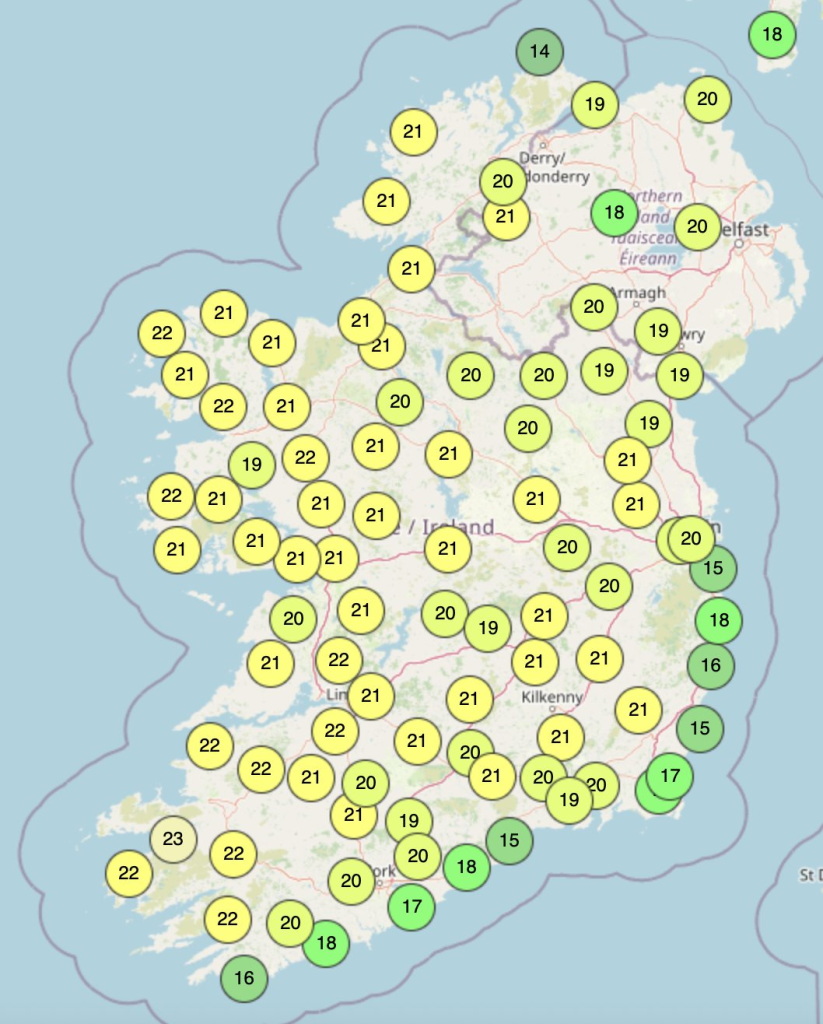
    The 8th brought the first 20C of the year in Ireland, the earliest since 2021 which occurred on 1st April. There would end up being 24 more days where 20C was reached somewhere in Ireland for the rest of the spring, I don't have historical context on if this is remarkable or not but anecdotally it seems a high figure.

    image.png

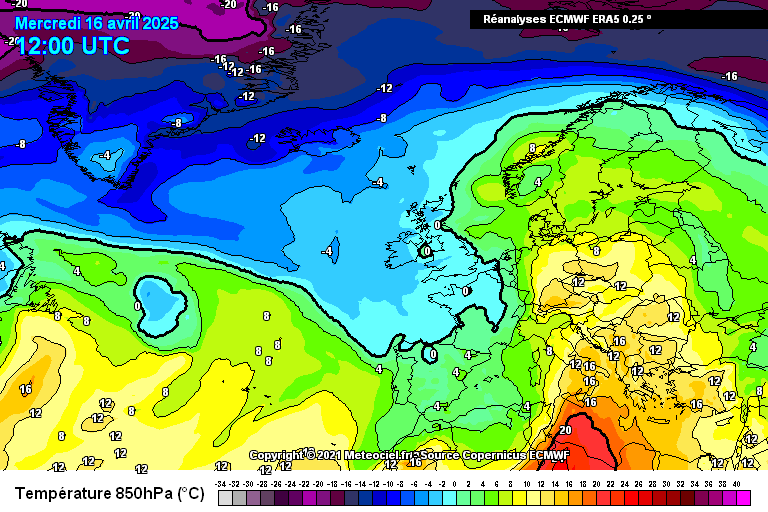
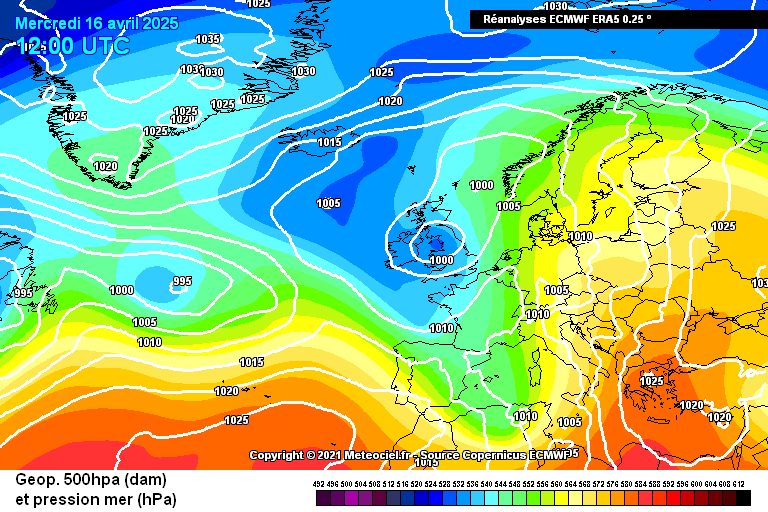
    Once the sunshine vacated the premises, we went into a much wetter spell through the middle third of April bringing genuine wet conditions. This spell ensured that April would end up wetter than average for nearly all places, significantly so for some despite the fine periods either side of it. Roches Point had 172% of its April average rainfall with 92.5mm falling in the 7-day period from the 18th-24th. What a flip. Dublin Airport had 75.1mm from the 16th-22nd April making this its wettest April 7-day period on record since 1942 and the wettest of any week since October 2023 at the time. It's unusual to see April as wet as this which is traditionally either the driest or 2nd driest month of the year with March on average.

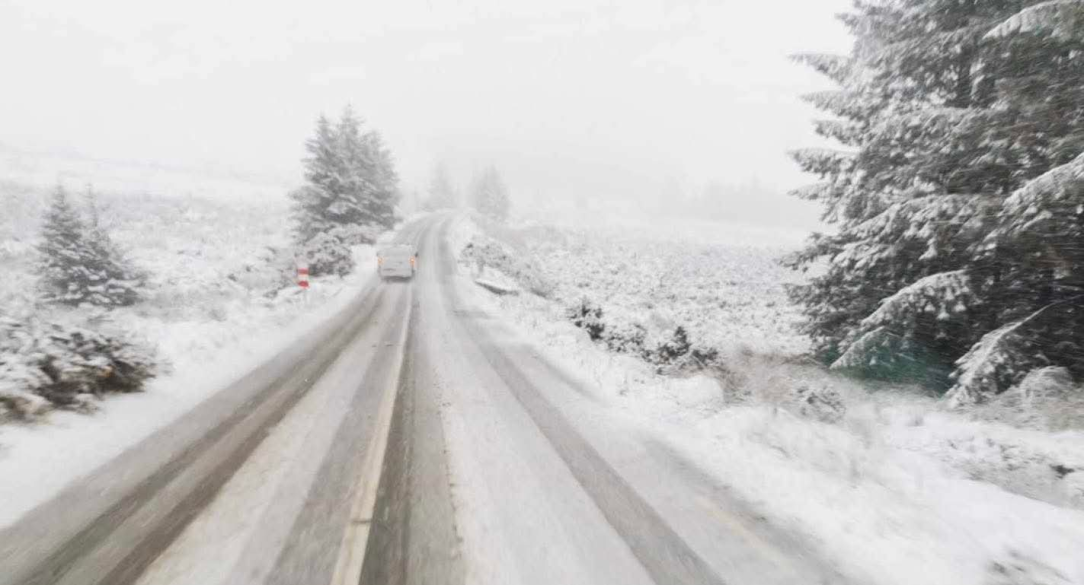
    The airmass contained within the low pressure on the 16th was cold enough for late season snowfall on upland regions with Wicklow getting some significant accumulations.

    image.png image.png image.png

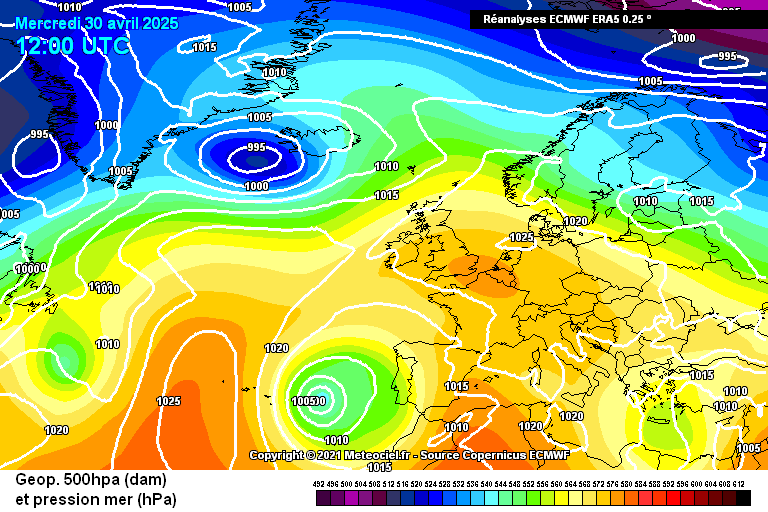
    April 2025 would not be finished being quirky with another trick up its sleeve. High pressure gradually built back in the final 4 days of April with increasing sunshine and rising temperatures from a gentle southeasterly flow off the continent.

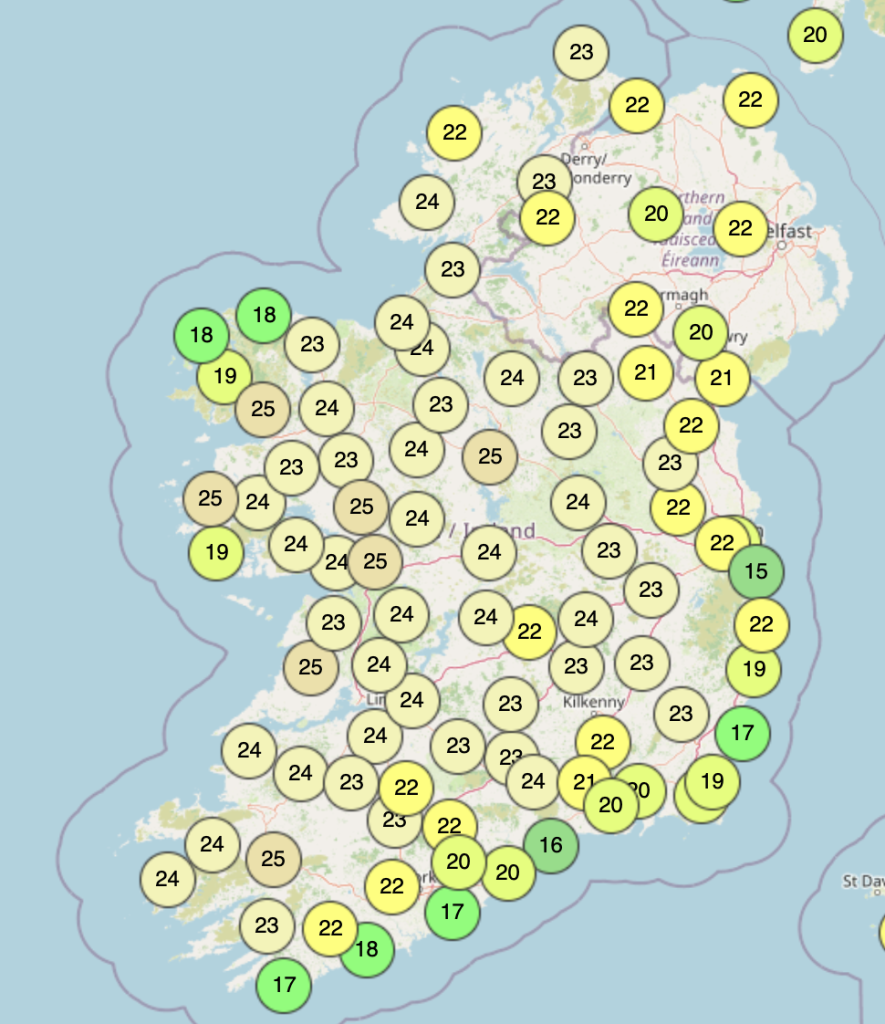
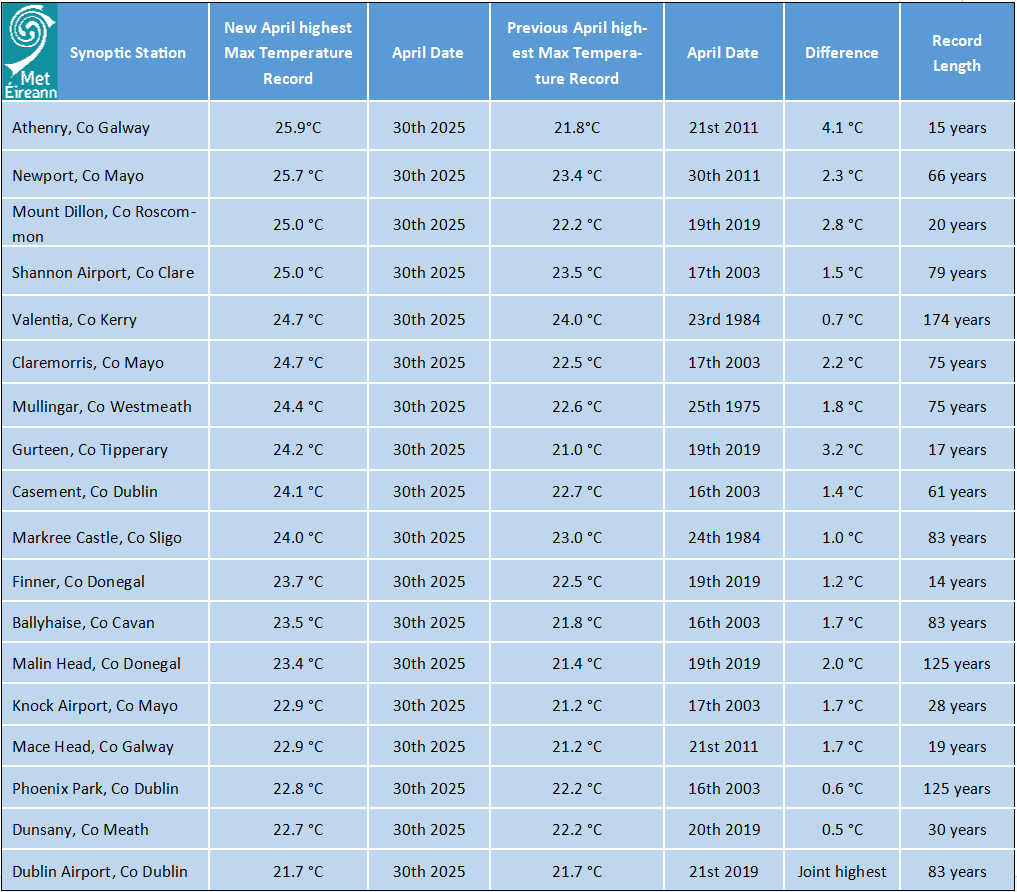
    Temperatures of 20C or above returned and this time on a nationwide scale on both the 29th and 30th April. Even parts of the normally cooler east coast got in on the 20C. Up until 2025, Dublin Airport had only 5 April days on record of 20C or above since 1942 then had two consecutive on these days - not the first time back to back this has happened as it also occurred on the Easter weekend in 2019 (20th/21st April).

    Malin Head is another station where April 20C is rarely achieved, it fell short by 0.2C on the 29th but smashed it on the 30th with 23.4C, over 2 degrees above its previous April record set on 19th April 2019. This was only the 8th time that it had achieved 20C in the month of April. Malin Head wasn't the only station that broke its April record, in fact 17 out of the 25 synoptic stations broke their April records. In many cases, the records were smashed. Most noteworthy of all, Athenry had 25.9C which was a new April national record for Ireland beating the old record of 25.8C at Glenties Hatchery on 26th April 1984. This is only the second April on record to have >25C somewhere in Ireland as well and third date with the first two being just in 1984.

    An additional note to add is Casement's 24.1C on 30th April meant the unique statistical quirk of County Dublin having a higher temperature record in March than April (which no other county had) was no longer applicable.

    Along with the warmth, it was also very sunny. Dublin Airport had its sunniest April day on record with 14.2 hrs which was the national highest of the month.

    April 2025 was up with 2007 and 2011 as the warmest Aprils on record in Ireland falling generally a little short of those two. However, Valentia and Belmullet had their equal warmest on record with 2011.

    Phew, what a month April was.

    image.png Screenshot 2026-05-09 at 10.31.04.png image.png image.png

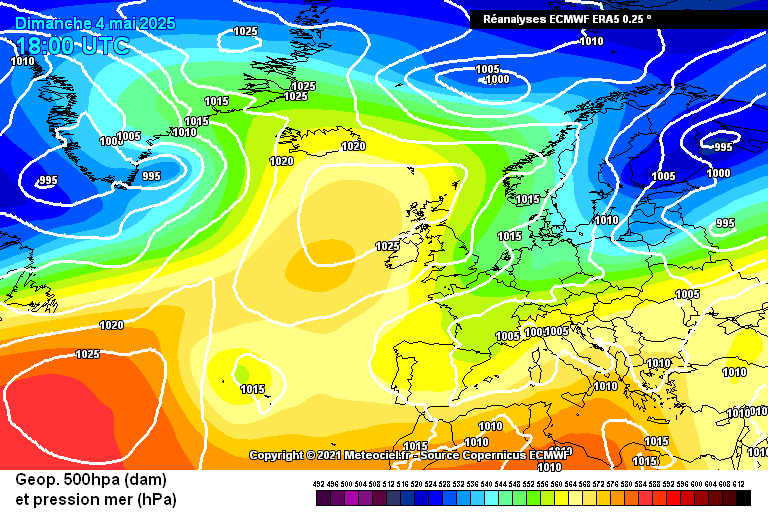
    The final month of spring 2025, May would result in even more records being broken. The month began with high pressure orientating itself around the country, slightly to the west. This brought plentiful dry weather and variable cloud cover with sunny spells. The first day was warm in the south with Sherkin Island having its highest May temp on record since 1982 of 22.6C.

    It was cooler than the end of April after the opening day of May as the wind veered to the northeast. It got cold at night under clear skies with localised frost on the 5th and 6th. High pressure then became more centrally located by the 6th/7th with compression beneath increasing the temperatures again in good sunshine.

    image.png

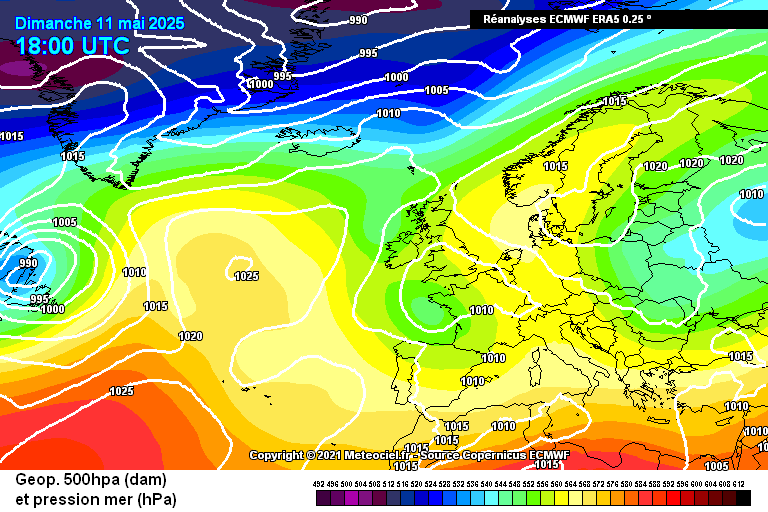
    It became slack from the 11th for a time as high pressure weakened bringing some scattered showers and thunderstorms but it remained dry for many or rainfall totals low.

    image.png

    High pressure re-intensified to the north of Ireland on the 13th bringing in dry, clear air from the east leading to prolonged sunshine for the next 6 days and even longer unbroken for some to the 22nd. This was the second exceptional sunny period of the season. Things became unstable again on the 19th/20th reintroducing scattered thunderstorms. Widespread sunshine returned on the 21st and 22nd before a definitive change occurred on the 23rd as the Atlantic flow finally broke through after what was nearly a month of blocked conditions.

    Belmullet had 143.6 hrs of sunshine from the 13th-22nd May 2025, an average of 14.4 hrs per day. Various stations had 15.2 hrs of sunshine on the 18th and 22nd.

    The highest temperature of May occurred on the 13th with 24.8C at Newport. Not a remarkable value and weirdly lower than April but the persistence of days over 20C was notable. Apart from the 12th, somewhere in Ireland had 20C or greater every day from the 7th-22nd May. It was always cooler on the east coast exposed to the easterly flow. This persistence of warmth led to 14 out of the 25 synoptic stations having their highest mean maximum temperature on record for May and even some including Shannon Airport had their warmest May overall on record. I suspect the clear nature of the skies this month meant for many that the mean minimum wasn't as high so there have been warmer Mays for the overall average including the previous year 2024 which had an extremely high mean minimum under a lot of cloud, a stark contrast to the record sunny 2025.

    image.png image.png

    Overall May was nationally the sunniest on record. Johnstown Castle had 298.8 hrs of sunshine. Even Gurteen, a notorious cloudy station occasionally with the lowest total in the country had as much as 267.2 hrs of sunshine. Our sunshine recording network is tiny of only 9 stations but I've not seen a month with as high of a minimum sun total as that in Ireland. Shannon Airport, Cork Airport and Belmullet all had their sunniest of any month on record. Valentia had a sunnier May in 1961 whereas Dublin had a slightly sunnier May in 2020. Magilligan had 301.3 hrs* (this figure is converted to CS equivalent from a KZ sensor which KZ sensors record lower sun values on avg than CS) making it only the third month on record to have a monthly sun total of 300 hrs and the first since June 1957. July 1955 was the other. I can't stress how remarkable this is. Magilligan didn't even reach 70 hrs on non-adjusted KZ value in July 2022, it is infamously cloudy.

    Spring 2025 was the warmest and especially sunniest on record for most of Ireland. 23/25 synoptic stations had their highest mean temperature on record for spring. It was the third consecutive warmest spring on record for some. 8/9 sunshine recording stations had their sunniest spring on record with Valentia the exception having its sunniest since 2010. Seasonal sun totals were as high as 649.7 hrs at Malin Head, sunnier than any meteorological summer there on record though only marginally so with 646.3 hrs in summer 1968 being the record. The very wet April period and to a lesser extent the final week of May skewed the spring wetter than it would have otherwise been. Even so, places had their driest spring for a good number of years, some since 2020 and others such as Valentia since 1997.

    I'm sure the spring of 2025 will live fondly in our memories for many years to come. It's unbelievable to me how we managed such a spectacular sunny spring so close to the lockdown spring of 2020 which in of itself was brilliant.

    Photography site - https://sryanbruenphoto.com/


  • Registered Users, Registered Users 2, Paid Member Posts: 14,658 ✭✭✭✭sryanbruen


    A couple of stats on the earliest and latest a max temp threshold has been achieved in Ireland. These are absolute, not rounded. *Denotes estimate, not 100% certain.

    Earliest

    20C: 8th March 1948

    21C: 9th March 1948

    22C: 26th March 2012

    23C: 8th April 2011

    24C: 17th April 2003

    25C: 26th April 1984

    26C: 17th May 1948 / 17th May 1980

    27C: 22nd May 2010

    28C: 25th May 2012 / 25th May 2026

    29C: 25th May 2026 (previously 26th June 2018 for ROI and 19th June 1989 including NI)

    30C: 26th May 2026 (previously 26th June 1887 for ROI and 19th June 1989 including NI)

    31C: 26th June 1887

    32C: 26th June 1887

    33C: 26th June 1887

    Latest

    20C: 4th November 1946

    21C: 22nd October 1971

    22C: 19th October 1997

    23C: 10th October 1969

    24C: 3rd October 1908*

    25C: 3rd October 1908*

    26C: 16th September 2003

    27C: 8th September 2023

    28C: 8th September 2023

    29C: 8th September 2023

    30C: 20th August 1995

    31C: 20th August 1995

    32C: 13th August 2022

    33C: 18th July 2022

    Photography site - https://sryanbruenphoto.com/


  • Registered Users, Registered Users 2 Posts: 1,985 ✭✭✭Billcarson


    Wonder is that June 26th 1887 a bit dodgy ? I mean the earliest in the year at the time to break the 30c barrier and it broke it by 3.3c


  • Registered Users, Registered Users 2, Paid Member Posts: 14,658 ✭✭✭✭sryanbruen


    Good thread of discussion here on it ~

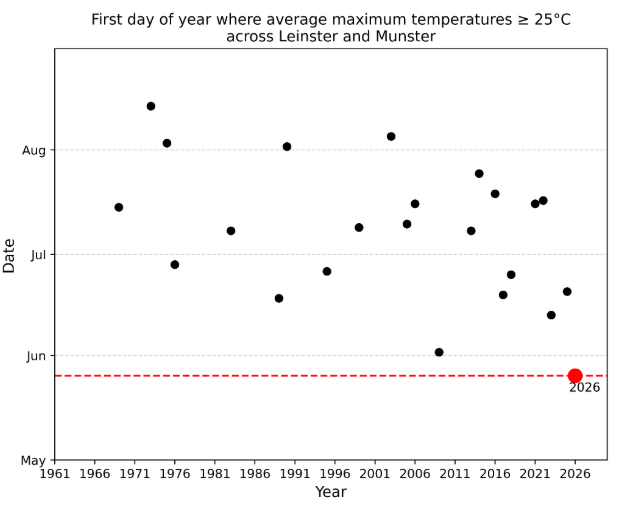
    Interesting new graph by the Met on the first day of the year where Leinster and Munster averaged over 25C - so does not include localised temps such as say the 1997 previous May record where most were under 25C.

    image.png

    Photography site - https://sryanbruenphoto.com/


  • Registered Users, Registered Users 2 Posts: 1,271 ✭✭✭compsys


    Yeah, it's hotly debated. I think it's the longest standing max temperature record in the world? Open to correction…

    Today the late-June average max temp is about 18.5º (getting close to 20º in July and early August).

    Back then the average late-June max would have been about 17.5º or slighly under. So that's almost 16º above normal.

    Even today, temps 16º above normal are still very rare. But in 1887 you'd think it was almost unheard of. Especially in Ireland.


  • Registered Users, Registered Users 2 Posts: 1,985 ✭✭✭Billcarson


    Think it's the longest standing record in Europe.


  • Registered Users, Registered Users 2 Posts: 1,985 ✭✭✭Billcarson


    Apparently there was what is an unofficial record of 33.5c taken at the Phoenix Park on July 16th 1876?


Advertisement
Advertisement