Advertisement
Help Keep Boards Alive. Support us by going ad free today. See here: https://subscriptions.boards.ie/.
https://www.boards.ie/group/1878-subscribers-forum

Private Group for paid up members of Boards.ie. Join the club.
Hi all, please see this major site announcement: https://www.boards.ie/discussion/2058427594/boards-ie-2026

MVHR Install - the final job

  • 11-12-2025 06:09PM
    #1
    Registered Users, Registered Users 2 Posts: 1,737 ✭✭✭


    Over the last 6-7 years we have been slowly upgrading our 2006 built, C rated bungalow as time and funds allow.

    The works so far have included:-

    - Attic insulation to 300mm, was easy for us to do as it is a bungalow. Was the standard 100mm blown insulation.

    - Replace open fire with an inset stove, later changed to a pellet stove. Again, carried out by ourselves.

    - Walls pumped with Walltite foam insulation.

    - 8.16kW solar pv and 5kW battery installed. There have been a few changes since.

    - New triple glazed windows and composite door.

    - New Viessmann ASHP and cylinder.

    This all brought us to an A1 rating at -2.57kWh/m2/yr and CO2 of -1.58kgCO2/m2/yr.

    With all that done we then spent a bit of time going round the house and filling any holes and voids with a view to having an airtightness test carried out. Current building regs require a max. 5.0 air changes/hr at 50pa, passive house is 0.6.

    Early last year we had a test carried out and achieved a rating of 1.376, surprisingly for the tester and us. He puts this down, partly, to the use of the walltite as this is applied in liquid format so therefore flows to fill all the holes and cracks. As a BER Assessor I rarely see a figure like this, even on new builds.

    It is recommended then to look at some form of mechanical ventilation if the airtightness is below 3.0 for a air quality and humidity point of view. Even though we are good at opening windows and ventilating we had started to notice a small bit of mould build-up and stuffiness. We also have no trickle vents in the windows.

    With this in mind we set off to one of the self build shows to get some information and prices. These ranged from €9-10k for an install, seemed expensive to us.

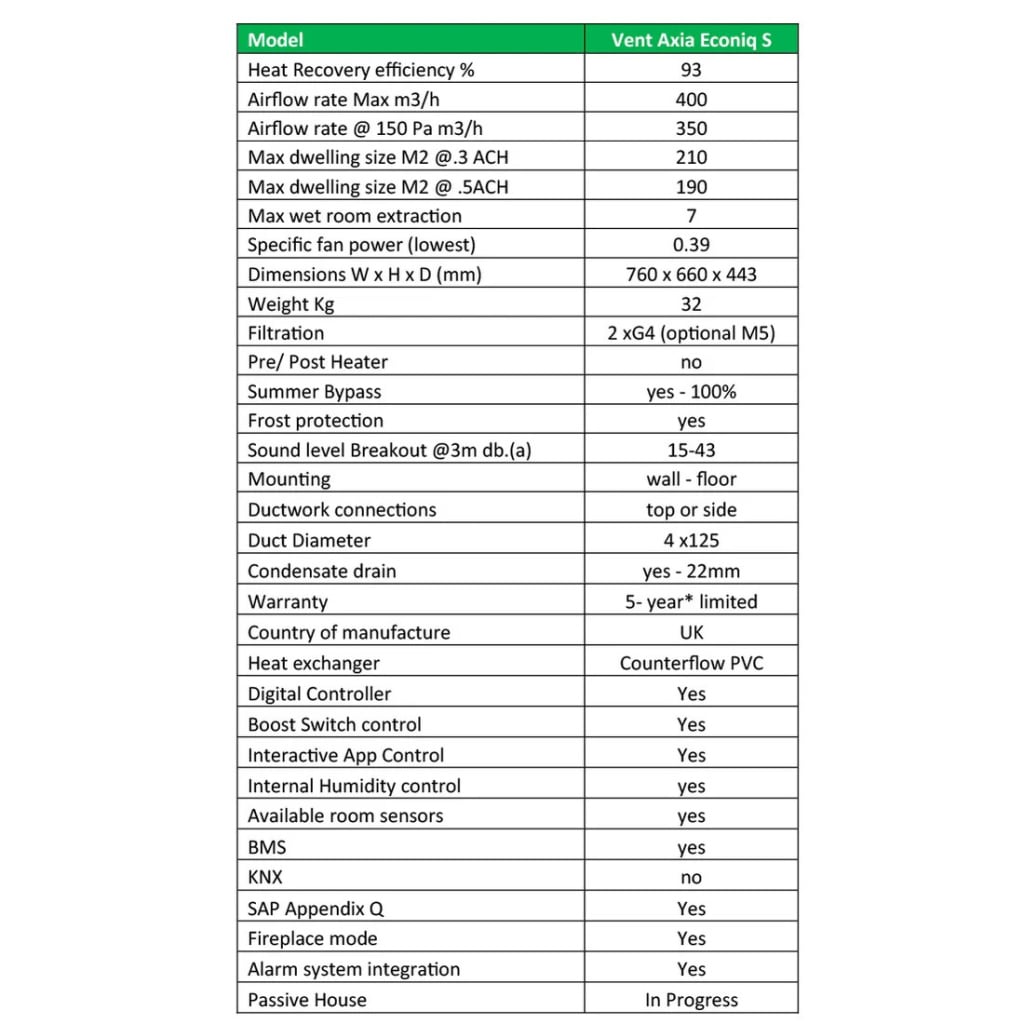
    Having a bit of knowledge as to what is involved I then did a bit of research about installing the unit ourselves and reached out to a few suppliers to get prices for the kit required. I had originally looked at the Zehnder and Brink units, as they are well reviewed, and also looked at the Vent Axia range as they are widely used here. Reading specs we decided on the Econiq range from Vent Axia as it offers better efficiency and features that the Kinetic range and is also about €2k cheaper than the Zehnder and Brink.

    econiq_s_tech_spec-80.jpeg

    We found BPC Ventilation to give us the best prices and were easy to deal with. A few emails back and forth with drawings etc. and a design and kit was agreed on. Once this is all done and paid a simple layout, flow rates and install instruction are supplied.

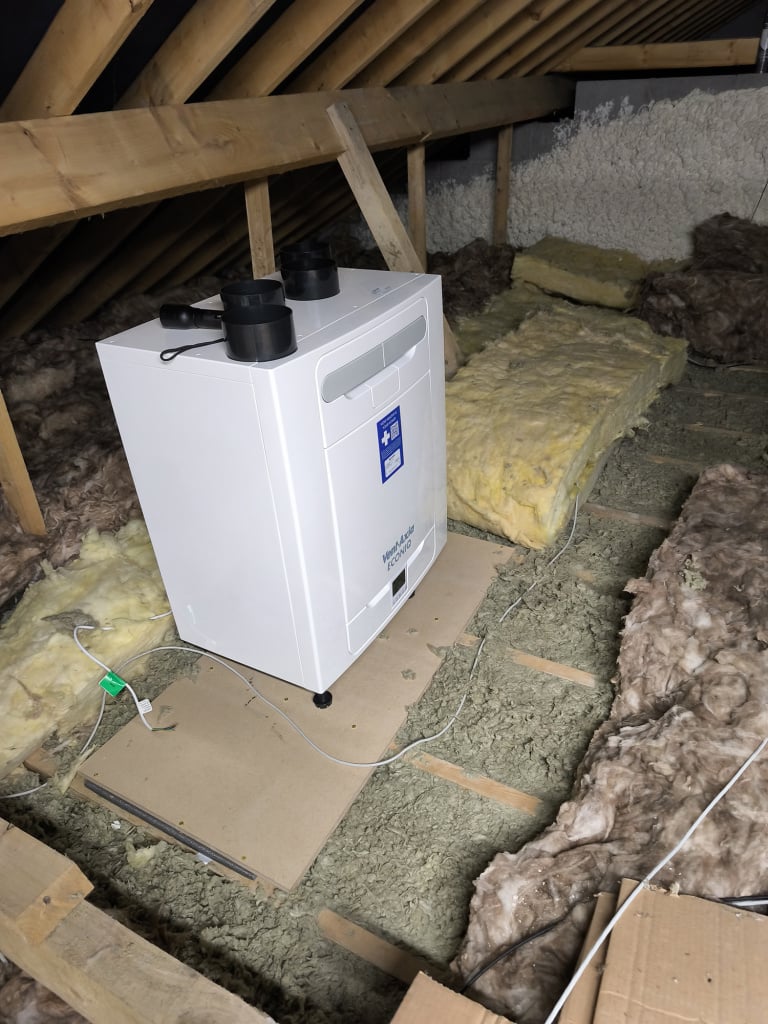
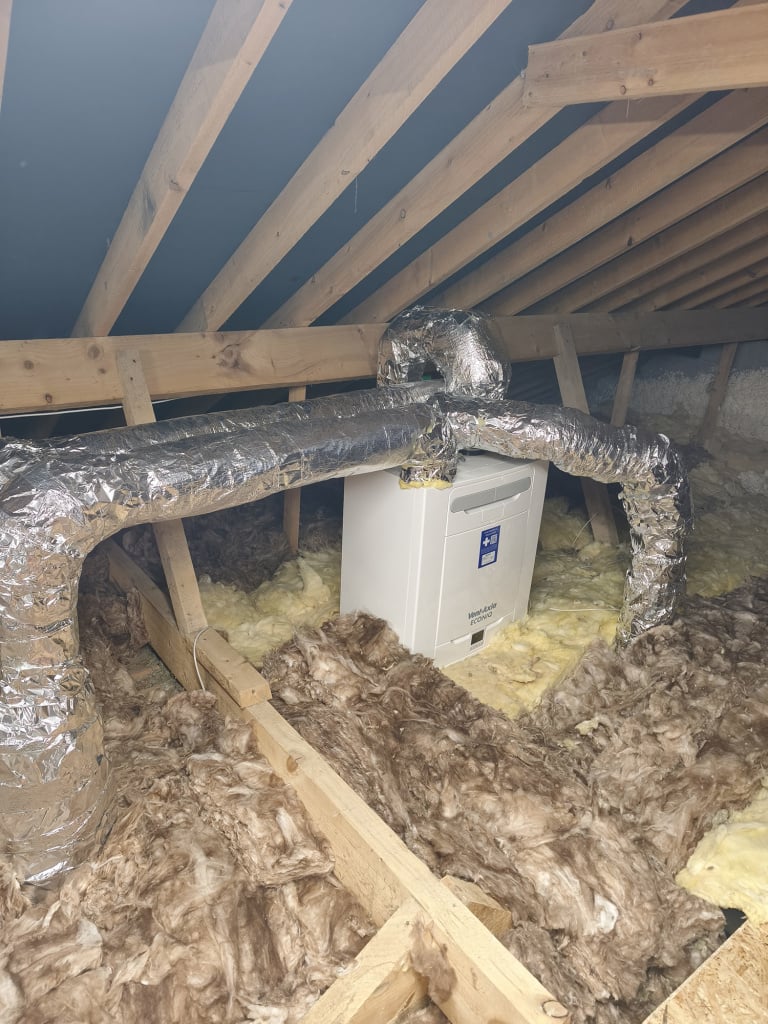
    Best practise would be to install the unit within the thermal envelop of the building, not something we could do easily so we then had to sacrifice a small bit of efficiency and install it in the attic. A platform was built and the unit put in place taking into consideration the distribution boxes for the extract and supply pipes. There are 5 extracts (kitchen, utility, bathroom and 2x Ensuites) and 6 supply (2x living/dining, 4x bedrooms).

    MVHRUnitInstall01.jpg

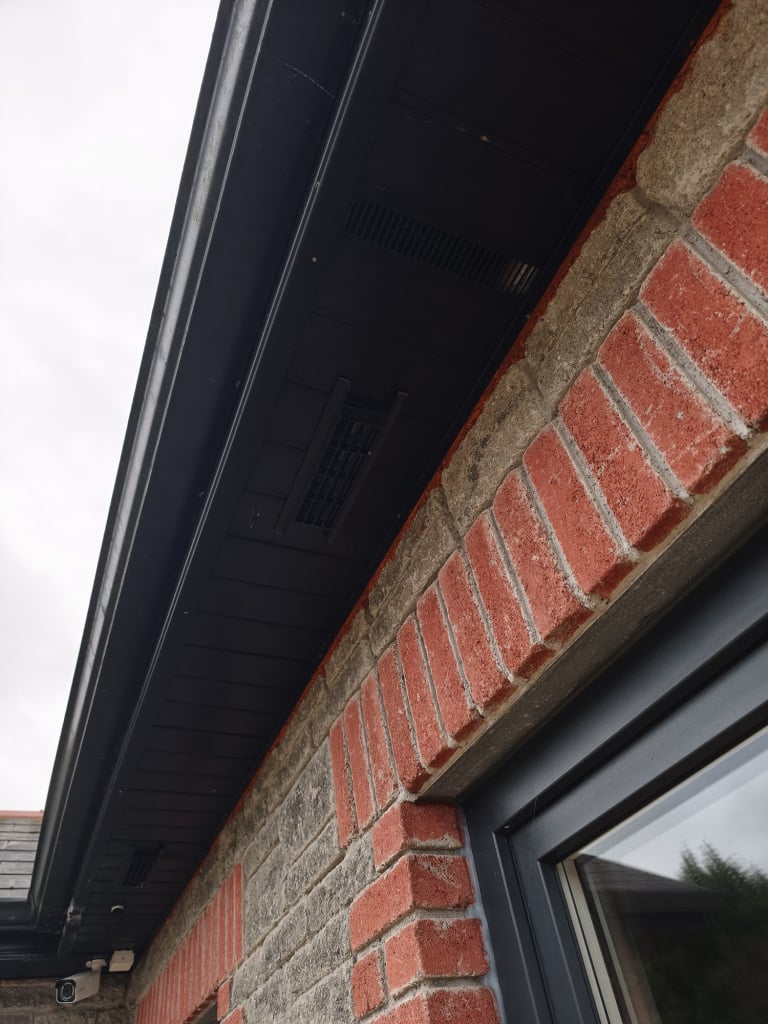
    We looked at the best place to install the extract and install vents. Solar panels are on the back of the house and putting vents on the front roof wouldn't look ideal. The gable wall is west facing into the prevailing wind which is not great from a balancing point of view so we decided to bring them out through the soffit on the front, more sheltered side. As part of the order we had included 204x60mm flat duct and adapters to the 125mm dia. duct as this would allow for the same flow rate and be easier to feed out through the eaves. With a couple of black vent covers these are disguised quite well. These are required to be a least 1500mm apart.

    SoffitVent.jpg

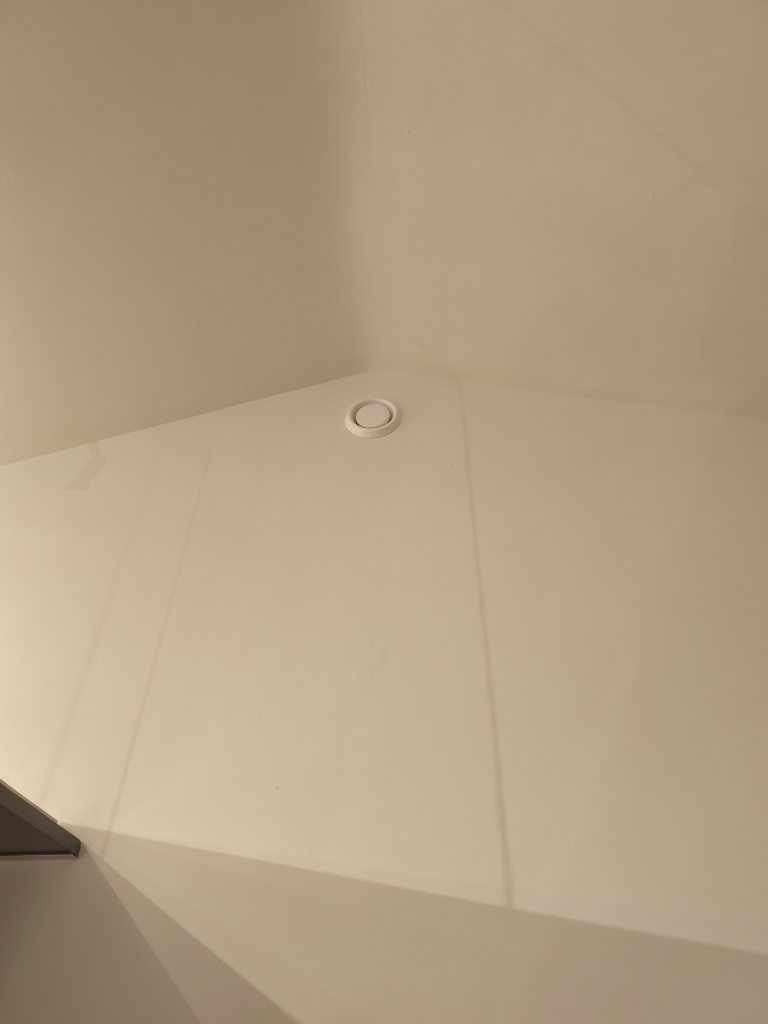
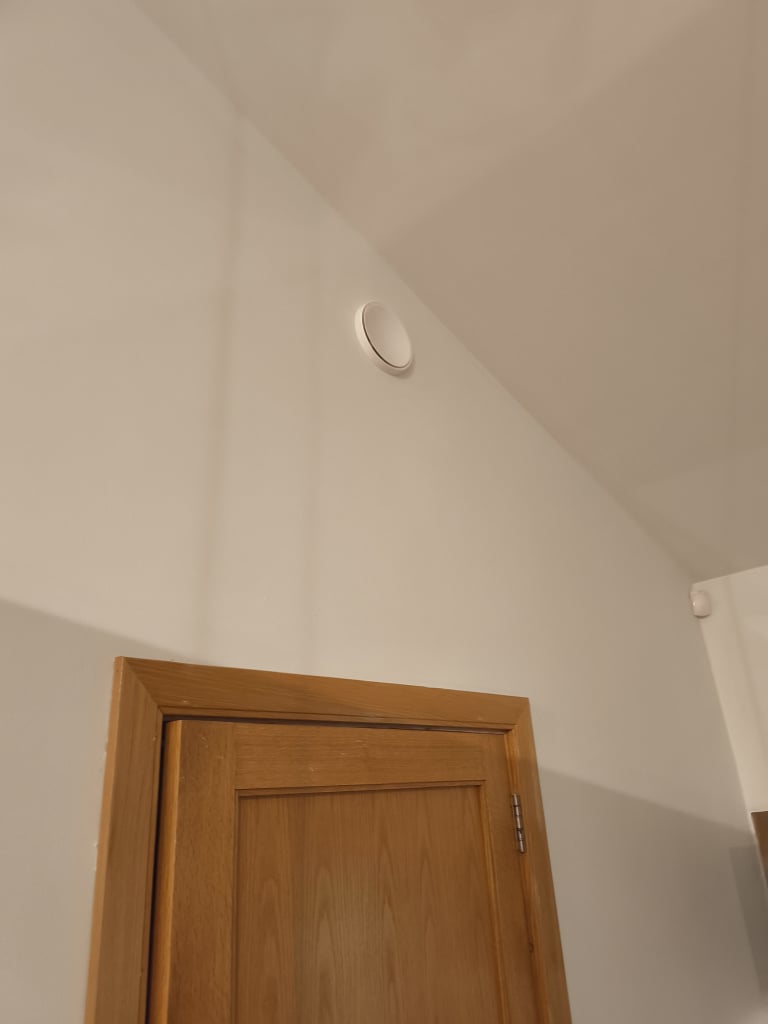
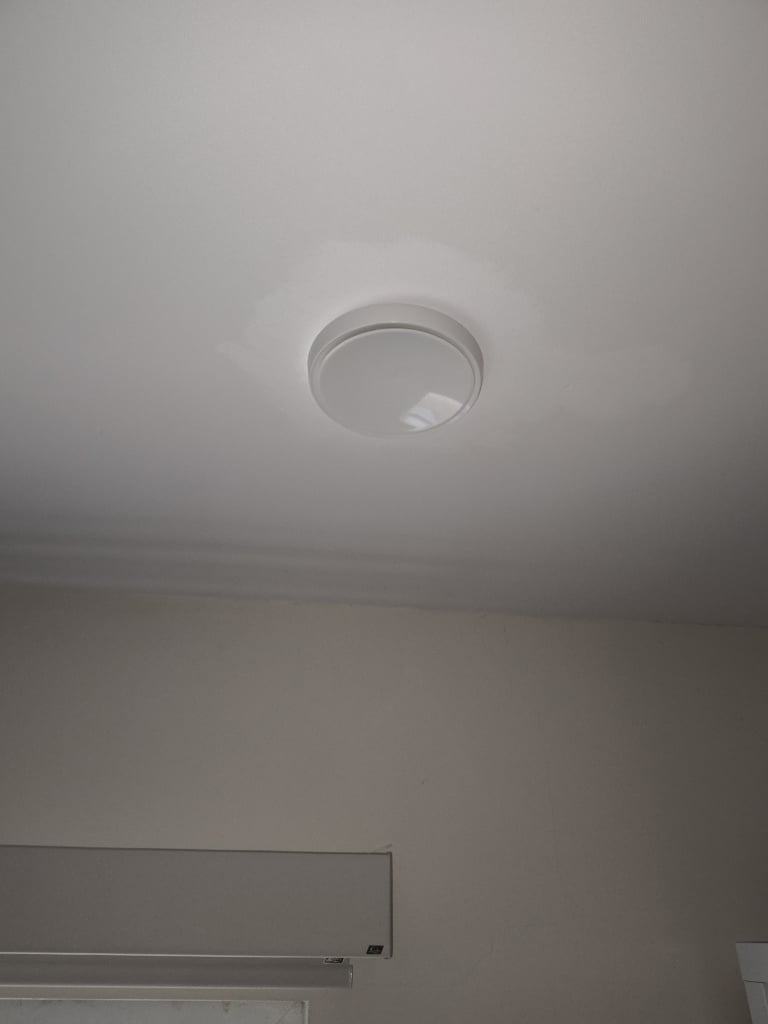
    Even though it is a bungalow the living, dining and kitchen are in one large open vaulted area with a block wall between the attic and room. With BPC it was recommended that there would be an extract for the kitchen and 2x supply for the living/dining through this wall. As hot humid air rises I put the extract at the top of the vault with the supply either side using a 127mm core drill bit.

    ExtractVent.jpg

    SupplyVent01.jpg

    Next is the laying of the radial pipe. This would be going on top of 100mm insulation and then all covered with 200mm insulation. This is the worst part of the job as it is hot, dusty and you are crawling about into the sides of the attic to run the pipe and mark holes for the plenums into the room below, I am getting too old for this…😀. Using a multitool the holes were cut and plenums fed through before being fixed in place. The plenum was then trimmed down with the multitool, filled around and the vent covers fitted. As part of the design there can be 1 or 2 pipes running to each plenum.

    SupplyVent02.jpg

    The radial pipes are then all connected to the plenums and distribution boxes with a simple sealing ring before being pushed in and held in place with a clip. Then all the duct work is connected between the MVHR unit and the distribution boxes before being all wrapped in insulation.

    MVHRUnitInstall03.jpg

    With the unit being in the attic this will be also be enclosed in insulation to help with the efficiency.

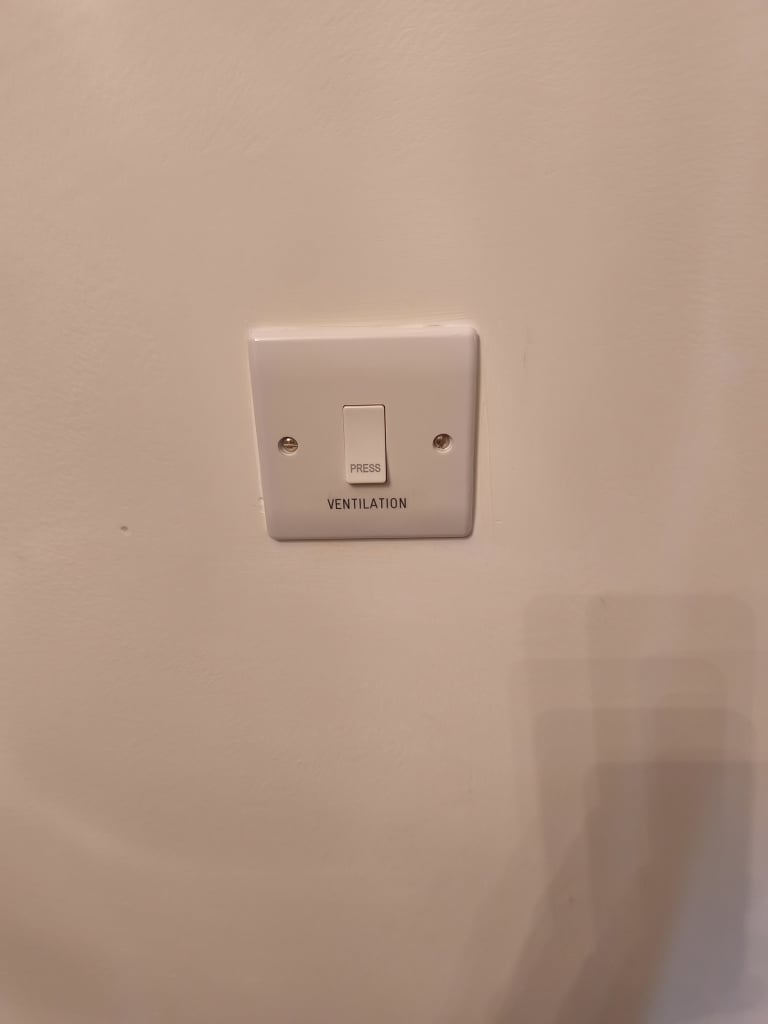
    As part of the kit there are 5x boost switches included. One of these I fitted utilising a redundant telephone point and ducting in case we need to boost after cooking etc.

    BoostSwitch.jpg

    All in all it was a doable job, having two people would help and make it a bit easier.

    Have a final bit of tidying up to do then looking to hire/borrow an anemometer to get it all balanced out.

    Looking at the manual there is modbus listed with all the registers but reaching out to Vent Axia it would appear that these have not been activated, more's the pity. I will hook up a modbus device and see if I can read any traffic passing through it.

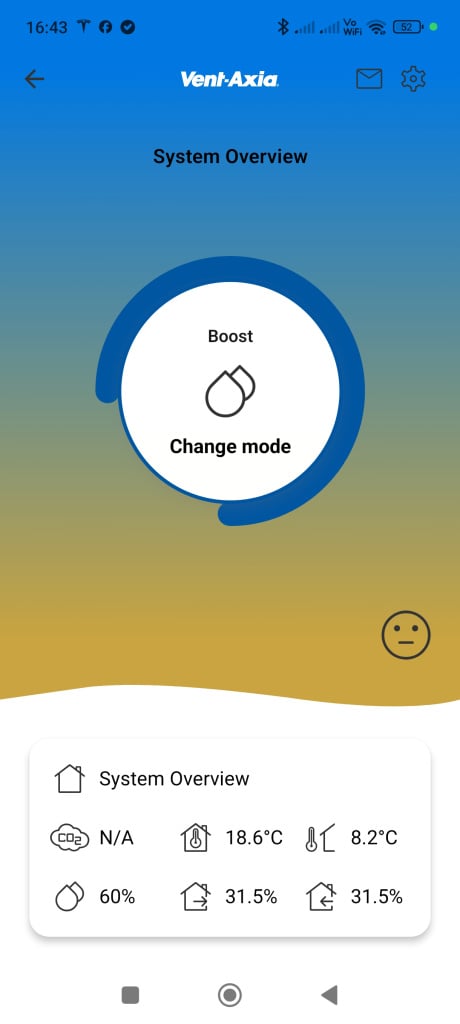
    Having had it running for about a week there does appear to be a fresher feel about the house. When a shower is running the increase in humidity is automatically detected and the unit ramps up the flow rates.

    AppDisplay.jpg

    All the kit was a bit less that €3.5k so saving in the region of €6k by installing it ourselves and took about 4 days to complete.

    It should also decrease our energy by another few kWh and lower our CO2 again.


«1

Comments

  • Registered Users, Registered Users 2 Posts: 444 ✭✭Biker1


    Did you get the correct flow rates calculated and set?


  • Registered Users, Registered Users 2 Posts: 1,737 ✭✭✭THE ALM


    Have the flow rates alright and just need to get hold of a anemometer to get them set.

    Also a few doors to take off and add a gap to the bottom of approx. 10mm as recommended


  • Registered Users, Registered Users 2 Posts: 2,986 ✭✭✭MicktheMan


    Any visible cracking since pumping in the Walltite?


  • Moderators, Home & Garden Moderators Posts: 7,609 Mod ✭✭✭✭graememk


    Great write-up. What brought ventilation into my mind after getting windows replaced was a co2 sensor I got and with the door closed it rises up quite a lot at night.

    Attic would be the install location for me too, but no vaulted ceilings to deal with.

    Might shoot BPC an email in the new year, I actually have the original blueprints for the house, although the kitchen has been extended.

    No access to the soffit in my house.. it's blocks right up to the rafters. I do have a gable wall for fresh air intake and venting though.


  • Registered Users, Registered Users 2 Posts: 1,737 ✭✭✭THE ALM


    It was a slight concern at the time but we had no issues whatsoever and that is 6 or 7 years ago


  • Advertisement
  • Registered Users, Registered Users 2 Posts: 1,737 ✭✭✭THE ALM


    We were certainly more airtight after the windows and doors so the natural progression was the ventilation. The option is there to add a CO2 sensor to the Econiq which I will look to do in the future.

    Found BPC very easy to deal with so no harm contacting them to get some suggestions.

    Because of the vaulted ceiling the other gable on the east was ruled out so the soffit was the easiest solution and there was a gap for natural ventilation that I could feed the ducting out.


  • Moderators, Home & Garden Moderators Posts: 7,609 Mod ✭✭✭✭graememk


    The west would be our prevailing wind but the east side of the house would be sheltered. (Can look out north west and theres basically a bog between me and Iceland 😂. Got v strong winds from Ewoyn.

    What we have noticed a big reduction in wind noise in the house since the triple glazing(old double was a patchwork of 25yrs + and 20ish years.

    Will be circling back to this in the new year. Id be DIYing too.


  • Registered Users, Registered Users 2, Paid Member Posts: 10,141 ✭✭✭✭10-10-20


    Yes, thanks for the write-up, I'm still on the fence as I have a two storey house and getting ventilation pipes out of the attic and into the ground floor just isn't an option.


  • Registered Users, Registered Users 2 Posts: 1,737 ✭✭✭THE ALM


    Certainly is the joys of single storey living.

    I think it is a DIY'able job with a bit of planning and physicality, there is a lot of pulling, dragging and rootin' about in an attic. The techinical side of it is the flow rates and balancing. BPC provided the flow rates and I hope, thanks to Mr Q on here, to have an anemometer to get it balanced. I tried the hire shops for one but that was a no go.

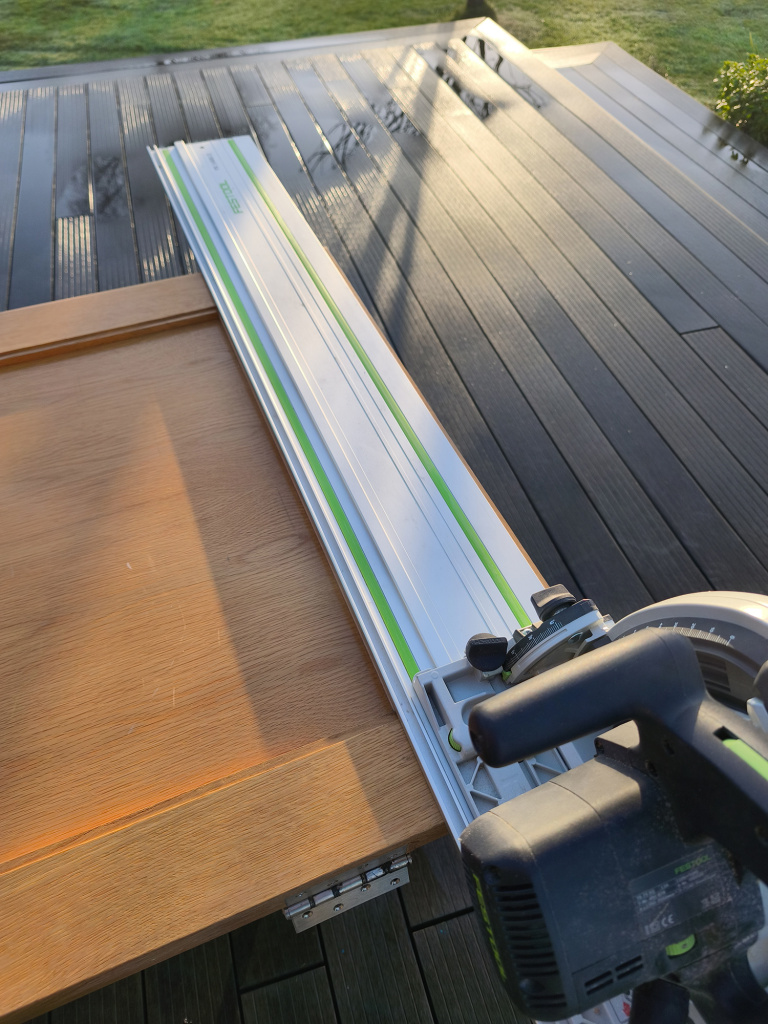
    Thankfully a nice day today so it is doors off and trimmed down to give me the 10mm gap.

    DoorTrim.jpg


  • Registered Users, Registered Users 2 Posts: 2,305 ✭✭✭Paul Kiernan


    Great write-up. Thanks. I used BPC as well and would recommend them.

    I think using an anemometer to set the "correct" flow rates is a bit of a red herring! The required ventilation is more dependent on how the room is used than on the size of it. For example a small bedroom with two people sleeping in it needs much more than a larger room with one person or a spare room that isn't slept in. We bought a combined CO2 and humidity sensor and found that we were practically suffocating every night in the master bedroom. We had to increase the overall flow rate massively at night and increase the room vent to keep the CO2 below 1000ppm. We then used the sensor in each room to work out what was needed to keep both CO2 and humidity under control at different times of day.


  • Advertisement
  • Registered Users, Registered Users 2 Posts: 1,737 ✭✭✭THE ALM


    I think if I could get the flow rates set and then increase/decrease in the most used rooms while keeping it balanced, would be the way to go.

    I'll certainly be picking up a CO2 sensor to monitor it, like you.

    It is a pity that Vent Axia don't implement the modbus so that it could be integrated into home assistant and the like. I know there is ESP8266 that works with the Kinetic range, as the Econiq doesn't use the wired remote I doubt it would work with it.


  • Registered Users, Registered Users 2 Posts: 955 ✭✭✭keno-daytrader


    Fantastic write and great job on the DIY, the attic can be pain full for that job!

    I installed a Vent Axia on our new build and it has given a few hiccups, the bypass door malfunctioned, the intake fan died, and 2 temp sensors died a few years in, but all was sent out to me under the 5 year warranty and I just replaced myself instead of someone coming down from the north. I used BPC also.

    Your airtightness result is superb and will save you loads of heating money over the years, congrats.

    ☀️ 8.2kWp ⚡4kWp south, ⚡4.20kWp west


  • Moderators, Home & Garden Moderators Posts: 7,609 Mod ✭✭✭✭graememk


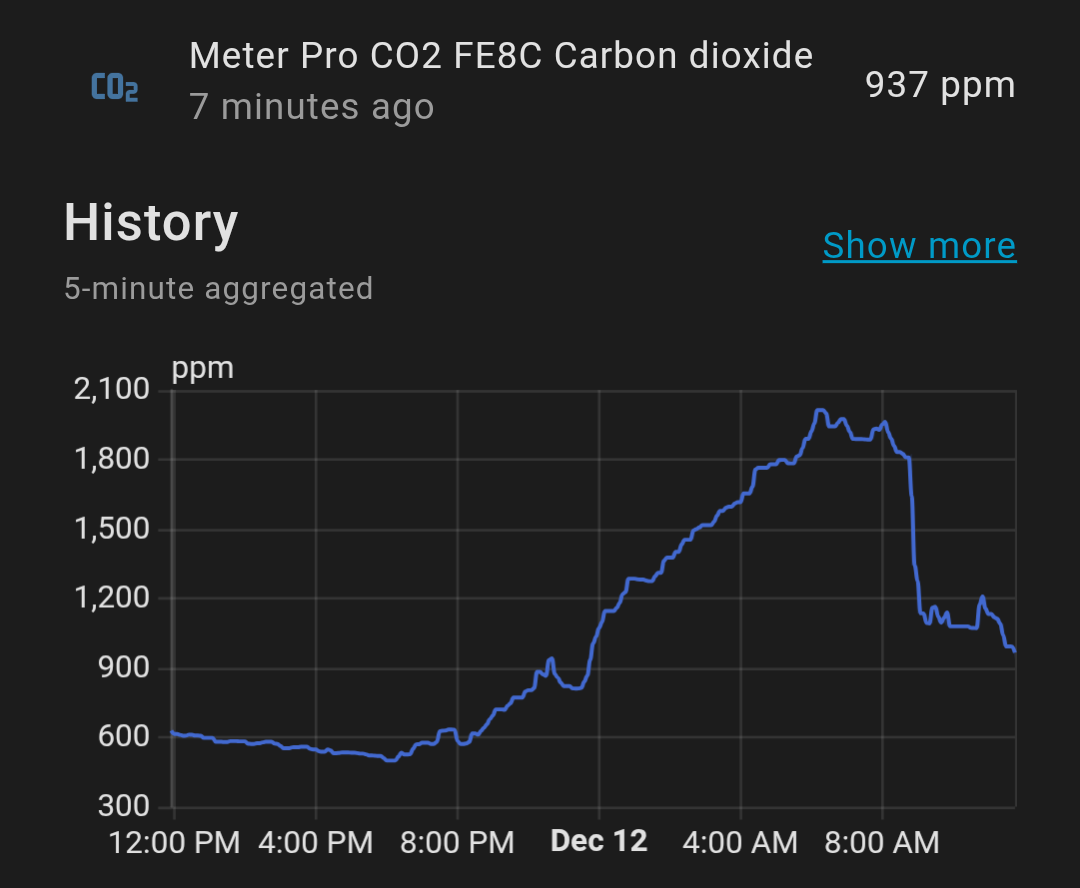
    I've got a switchbot co2 sensor, and a esp32 running esphome as a Bluetooth proxy to pull it into home assistant.

    Id love modbus integration as it wouldn't be hard to throw together a modbus board for esphome using a lilygo board.

    35924.png

    This is the door ajar too..


  • Registered Users, Registered Users 2 Posts: 1,737 ✭✭✭THE ALM


    Thank you. Has taken a bit of work and money but happy as to where we are at now.

    If I look at the last 12months electricity, as we are a fully electric house now, and taking into account pv imports and exports we have spent €173.03. There was a government credit of €125 on one of those bills, so taking that off we have spent €298.03. That is for all electricity, heating, hot water and all our driving.

    We upped our battery storage during the year and I hope to utilise that a bit better in the coming year.


  • Registered Users, Registered Users 2 Posts: 1,737 ✭✭✭THE ALM


    I was just looking at exactly this and building a co2 sensor with esphome.

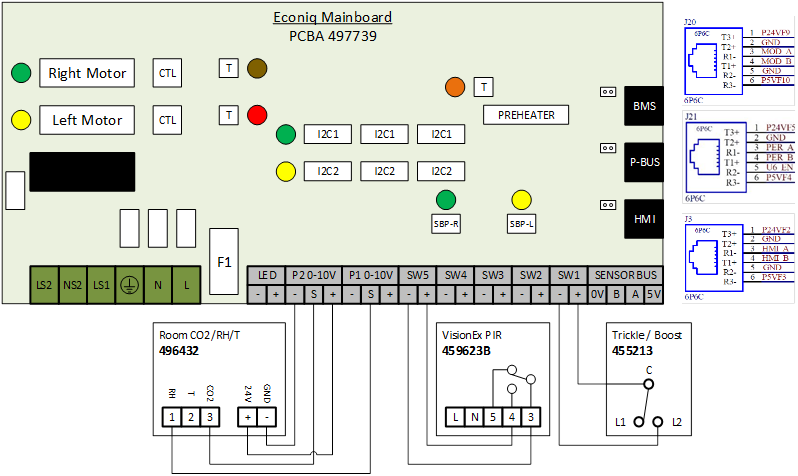
    If I knew the pinout and what type of connector that the Econiq has, not a R11 or RJ45, I could test if there is any output from it and see if they match any of the registers that are listed in the manual.


  • Registered Users, Registered Users 2 Posts: 1,737 ✭✭✭THE ALM


    Have that alright.

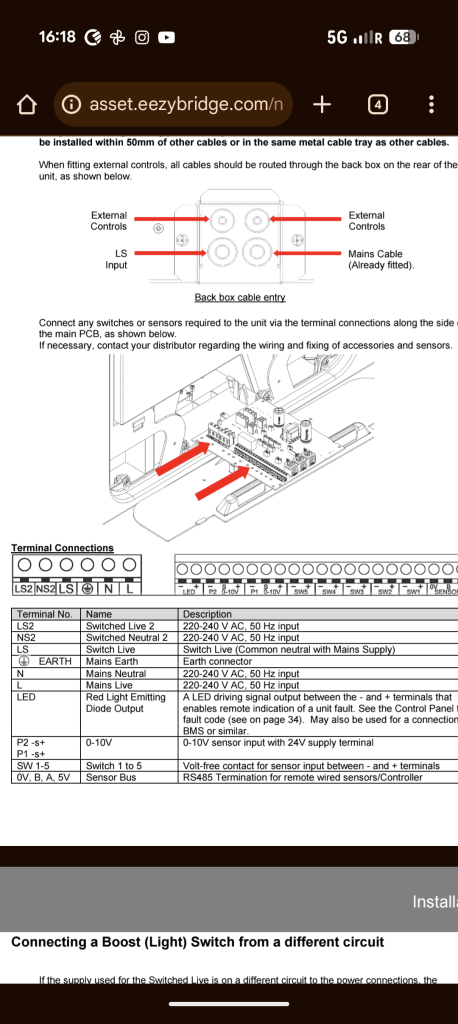
    There are 3 additional sockets, to the right on the diagram, one of which is labelled BMS. I assume this would be the one I would be looking to utilise. Hopefully get a bit of time to test it out.


  • Moderators, Home & Garden Moderators Posts: 7,609 Mod ✭✭✭✭graememk


    BMS is building management system in this context.

    The last terminals B and A along with 0v and 5v is the rs485, pretty cool that it provides 5v power too.

    There was an error displaying this embed.


  • Registered Users, Registered Users 2 Posts: 2,364 ✭✭✭red_bairn


    Is it possible to have a full system like this in 2 storey house? Or is it something that would have to be done at the start of the build?


  • Registered Users, Registered Users 2, Paid Member Posts: 10,141 ✭✭✭✭10-10-20


    In most or all circumstances it's not possible as the vents require boxing-in and running under floor-spaces, so it's only done from first build.


  • Advertisement
  • Moderators, Sports Moderators Posts: 18,873 Mod ✭✭✭✭slave1


    Well done, it's great to reach the end game of years of incremental efforts…comfort


  • Registered Users, Registered Users 2 Posts: 13,206 ✭✭✭✭Calahonda52


    Nice job😀

    Was the 127mm core drill dry diamond?

    “I can’t pay my staff or mortgage with instagram likes”.


  • Registered Users, Registered Users 2 Posts: 1,737 ✭✭✭THE ALM


    Not impossible, but very difficult or disruptive for a 2 storey retrofit.

    If you have the MVHR unit in the attic then the top floor is probably straight forward enough, you then have to look at getting the ducting to the downstairs rooms. Depending on the house layout you are looking extract vents in the kitchen, utility and any downstairs wc's and bathrooms and then supply vents to living, dining and bedroom areas.

    If you have the MVHR unit downstairs it is probably even more difficult because you will have to run the piping to all the rooms upstairs and down.


  • Registered Users, Registered Users 2 Posts: 1,737 ✭✭✭THE ALM


    Thank you.

    Yes, it is definitely a more comfortable house then when we bought it.


  • Registered Users, Registered Users 2 Posts: 1,737 ✭✭✭THE ALM


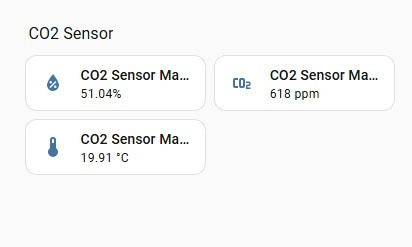
    Picked up a SCD41 and connected to an ESP32 so now have a CO2 sensor which I will monitor over the next few days.

    CO2Sensor.jpg

    Regarding modbus.

    Connected up a monitor on the sensor bus as per diagram above, no joy there.

    Having emailed BPC, who said it is not activated, I contacted Vent Axia Tech direct. I figured if the list of registers are in the manual then it must be a features that may be coming soon.

    They got back to confirm it is actually the BMS port that controls the modbus as per diagram.

    PCBLayout.png

    Connected to this and can confirm that I got a connection but only receive the same value for each registers i.e 32768 or -32768, so I am at a bit of a loss at the minute.

    I may rewire the connection to see if this changes anything once I can get another RJ11. I am using a Loxone modbus air which I may move into the MVHR unit, whereas at the minute I have that in a cabinet and running about 6-7m of cables from the unit to the modbus air. Doing it the other way around would mean only running the power from the cabinet to the modbus air which would then be connected to the mvhr with a short cable.

    If I could get the modbus running then I could feed the CO2 data back into the unit as the vent axia co2 sensor is over €300😮


  • Registered Users, Registered Users 2, Paid Member Posts: 553 ✭✭✭munsterfan2


    I have an anemometer if you would like to borrow let me know.


  • Registered Users, Registered Users 2 Posts: 1,737 ✭✭✭THE ALM


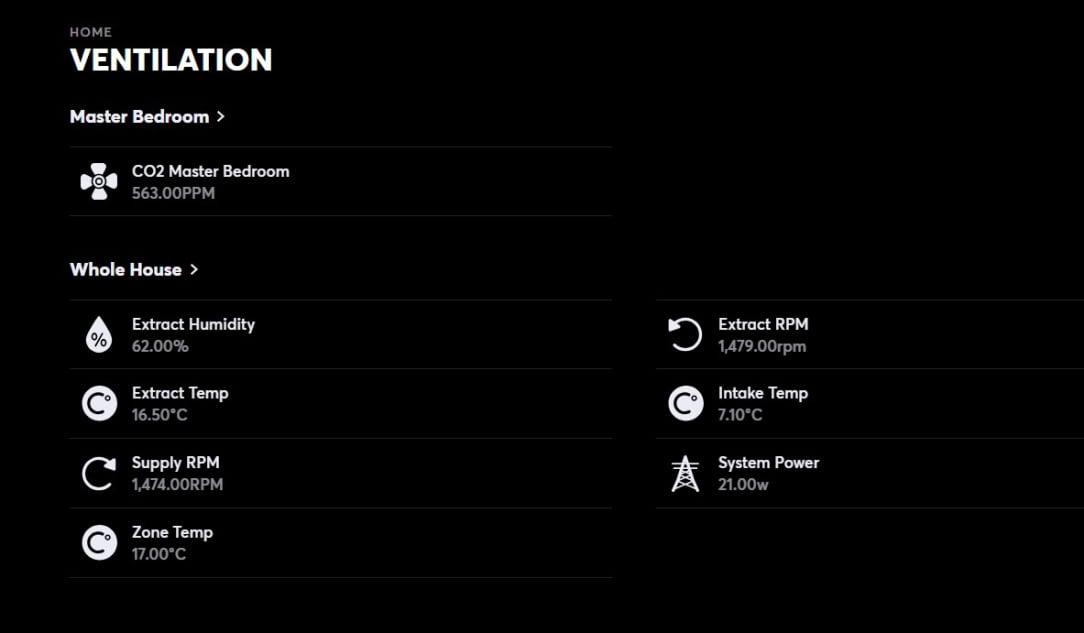
    Finally managed to get the modbus data through to loxone and the co2 level from the esp32 sensor. Not sure how I can feed the co2 level back to the MVHR or if possible, open to any suggestions. The Vent Axia CO2 sensor is over €300! so I am looking to avoid that.

    Lox_Vent.jpg

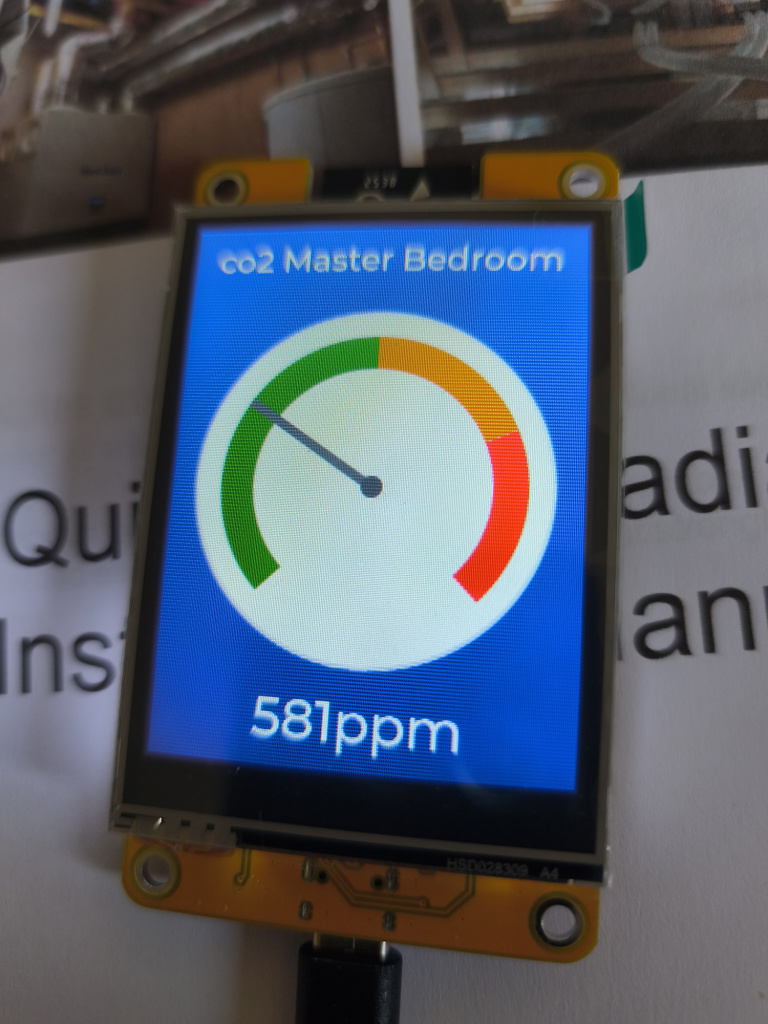
    Have also been playing around with an esp32 cyd to start visualising the data

    co2_cyd.jpg


  • Moderators, Home & Garden Moderators Posts: 7,609 Mod ✭✭✭✭graememk


    I skimmed the manual, I think you can input the sensor with an analogue input from 0-12v

    But the onboard is only 0-Vref(3.3v) on a esp32.

    There is i2c DAC you can get I think or some sort of pWm with a mosfet


  • Registered Users, Registered Users 2 Posts: 1,737 ✭✭✭THE ALM


    Thanks, I have a bit more research to do, so will look into it.


  • Advertisement
  • Registered Users, Registered Users 2, Paid Member Posts: 13,567 ✭✭✭✭the_amazing_raisin


    Hi folks, I'm trying to convince the missus that getting an MHRV as part of an attic conversion is a good idea

    The main thing I'd be interested in is improving indoor air quality. We've had issues with damp in the bathrooms despite having the fan on all day many days

    As well as that the house can get very stuffy when the heat is on and windows closed

    I'm wondering if anyone has had similar experiences and how they fared with the MHRV system?

    Also, how noisy would you say the system is? The ideal place for it in our house is probably above one of the bedrooms. I'm worried we'll hear the thing whirring during the night, so I might push for it to be moved over the office even if it means longer ducting runs

    "The internet never fails to misremember" - Sebastian Ruiz, aka Frost


Advertisement
Advertisement