Advertisement
Help Keep Boards Alive. Support us by going ad free today. See here: https://subscriptions.boards.ie/.
https://www.boards.ie/group/1878-subscribers-forum

Private Group for paid up members of Boards.ie. Join the club.
Hi all, please see this major site announcement: https://www.boards.ie/discussion/2058427594/boards-ie-2026

This whole mental health craze...

135678

Comments

  • Registered Users, Registered Users 2 Posts: 1,179 ✭✭✭oneilla


    Truly mentally ill people can be difficult to be around erratic, mood swings, anger, self centred to the extreme. Depression can make people not bath/shower for months on end, drink for days, be rude, aloof etc etc.
    How many celebs talking about it are truly candid about not getting out of bed for days and pizzing into a coke bottle as getting up is too much of an effort and whats the point?

    Leaving aside your no-true-Scotsman fallacy, yes some people who end up in the psychiatric services (if they can even access them) can be difficult to be friends with and can be difficult to be around. Eratic, unpredictable, focusing on obscure things related solely to them, hygiene and even the "pizzing into a coke bottle"url=https://thesecretlifeofamanicdepressive.wordpress.com/2014/07/23/on-being-lonely/]read the first line of this[/url are things that do indeed happen. And no, celebrities and the blather on radio shows and stuff from charities don't go into this detail. As I said before, mental health isn't defined and what is talked about in the mainstream is rather opaque.


  • Closed Accounts Posts: 889 ✭✭✭Murrisk


    He spoke candidly on TLLS about wanting to tear his face off. I believe he meant what he said. What's him being good looking got to do with it? Loads of good looking people don't feel too well on the inside.

    Yes, yes, he's always speaking candidly. There is something cynical about how he drip drip drips it all to the media and it makes him appear untrustworthy to me at least. It's a career for him now.

    The good-looking comment was because he probably imagines that he will make it all seem more accessible that a good-looking guy like him also has issues but I think it might make some sufferers feel even more useless and isolated.


  • Registered Users, Registered Users 2 Posts: 776 ✭✭✭Musefan


    It's an interesting time to be in as a mental health professional. The big leaps in public awareness is great, but services can't live up to the demand. I think the danger is mainly for younger people and the massive amounts of youtubers etc that discuss "mental illness". I think there is a tendency to pathologise normal anxieties, nerves and transient low mood etc as a mental illnesses and on the flip side, serious problems like self harm are normalised so that they seem almost an expected part of the repertoire of coping skills that a young person might have. The balance is hard to get.


  • Registered Users, Registered Users 2 Posts: 1,179 ✭✭✭oneilla


    Musefan wrote: »
    It's an interesting time to be in as a mental health professional. The big leaps in public awareness is great, but services can't live up to the demand. I think the danger is mainly for younger people and the massive amounts of youtubers etc that discuss "mental illness". I think there is a tendency to pathologise normal anxieties, nerves and transient low mood etc as a mental illnesses and on the flip side, serious problems like self harm are normalised so that they seem almost an expected part of the repertoire of coping skills that a young person might have. The balance is hard to get.

    Is it though? Is all of this awareness campaigning sending people towards the charities or state services eg psychiatric clinics which have to act in accordance with the mental health act?


  • Registered Users, Registered Users 2 Posts: 8,130 ✭✭✭Surreptitious


    Murrisk wrote: »
    Yes, yes, he's always speaking candidly. There is something cynical about how he drip drip drips it all to the media and it makes him appear untrustworthy to me at least. It's a career for him now.

    The good-looking comment was because he probably imagines that he will make it all seem more accessible that a good-looking guy like him also has issues but I think it might make some sufferers feel even more useless and isolated.

    I just don't see what his looks have to do with people having mental issues. When you are in a black hole you hate everything about yourself so I doubt he even thinks he's good looking. I can see that he is becoming some kind of icon for what not to do according to mainstream ideas about anxiety etc. Maybe he is feeding off it or maybe he wants to bring it out there more. The Rubberbandits do the same thing but nobody has mentioned them in this thread.


  • Advertisement
  • Registered Users, Registered Users 2 Posts: 776 ✭✭✭Musefan


    oneilla wrote: »
    Is it though? Is all of this awareness campaigning sending people towards the charities or state services eg psychiatric clinics which have to act in accordance with the mental health act?

    I meant interesting as in for me, in my work, I find it interesting to see the impact of the media conversations about mental health on the clients I see. Particularly in younger clients who strongly identify with Youtubers who experience mental health difficulties. the media also effects what people feel they SHOULD be doing to help with their difficulties eg mindfulness, when in reality, mindfulness is only effective in certain circumstances. It's sold as a panacea though.


  • Registered Users, Registered Users 2 Posts: 8,006 ✭✭✭_Whimsical_


    This post has been deleted.

    I agree with you and in some level I feel like the new "mental health craze" as the OP referred to it as does in some ways threaten to trivialise very serious conditions. The phrase "mental health issues" has come to encompass everything from being prone to feeling a bit nervous and panicky before a performance to full on psychotic episodes. There are then so many stories of people who overcame their mental health problems by running and mediating etc and I often wonder how it must feel to have this stuff bandied about if you or a family member are the much shaper end of the spectrum of these difficulties and probably needing compassion but getting advice on exercise and the latest celebrity who's talked about.

    I have a friend who's dad had 26 hospital admissions for psychosis by the time my friend was 16, the year I met him. No positive thinking, no quick trip down to the Dr was going to help him. I feel like his experience and my friends experience as a family member is completely ignored in the conversations we have about mental health at the moment. That seems a great shame. I don't think we should stop talking about it at all but it would be maybe wise to let the discussion mature to recognise that we are talking a huge spectrum of illness and experience here when we are talking mental ilhealth and it does need to be parsed out if its to genuinely helpful.


  • Registered Users, Registered Users 2 Posts: 1,179 ✭✭✭oneilla


    Musefan wrote: »
    I meant interesting as in for me, in my work, I find it interesting to see the impact of the media conversations about mental health on the clients I see. Particularly in younger clients who strongly identify with Youtubers who experience mental health difficulties. the media also effects what people feel they SHOULD be doing to help with their difficulties eg mindfulness, when in reality, mindfulness is only effective in certain circumstances. It's sold as a panacea though.

    You use the word 'client' so I'm guessing you're in counselling or psychology...

    Mindfulness is undoubtedly a fad. East Asian philosophy practices stripped of the philosophy... here, do these breathing exercises.

    Treatments of what is called mental health has lurched from one thing to another over many decades with few people willing - or brave enough - to say "nothing really properly works because our understanding of what is going on is so limited". So here we are with Al Porter waving his 10 milligrams of Citalopram over his head is seen as some big revelation.


  • Registered Users, Registered Users 2 Posts: 25,439 ✭✭✭✭One eyed Jack


    Murrisk wrote: »
    In many workplaces, there absolutely is still a stigma.


    It's impossible to quantify what you mean by 'many workplaces', particularly since the Employment Equality Act was introduced in 1998, which prohibits discrimination due to disability -


    The Employment Equality Act protects you against certain kinds of discrimination in relation to employment. This includes protection for when you are in employment, applying for a job, on work experience or doing vocational training. The Act includes protection from discrimination due to disability and mental health difficulties are recognised as a disability. You are protected by this law whether you currently experience mental health difficulties or if you did so in the past.

    And I did clarify what I was saying later on in saying that there isn't the stigma regarding ill mental health and mental illness in Irish society as a whole that there would have been in B_Wayne's fathers generation which would be up to about 20 years ago when suicide was decriminalised in 1993 and that's why we no longer use the term that someone 'committed' suicide, as it isn't a criminal offence. Instead it's suggested to use the term 'died by suicide', and that was one small change in terminology, but decriminalising suicide itself opened the floodgates for a national conversation around a number of issues if you were around in the mid-90's, 1993 of course also being the year that homosexuality was decriminalised which was another big deal which meant a lot more people could be more open, which also led to better mental health in Irish society.

    I don't believe it's necessary to get everyone talking about their mental health, I think it's better to encourage people to talk, and to encourage people to listen without judgement, but people should be aware too that the people they're talking to may have their own issues that they're dealing with, and not everyone deals with their issues in the same way. Some people just don't want to talk, and I don't think there's any amount of awareness campaigns could force people to talk when they simply don't want to or don't feel the necessity to open up to anyone about their mental health.


  • Posts: 25,909 ✭✭✭✭ [Deleted User]


    oneilla wrote: »
    You use the word 'client' so I'm guessing you're in counselling or psychology...

    Mindfulness is undoubtedly a fad. East Asian philosophy practices stripped of the philosophy... here, do these breathing exercises.

    Treatments of what is called mental health has lurched from one thing to another over many decades with few people willing - or brave enough - to say "nothing really properly works because our understanding of what is going on is so limited". So here we are with Al Porter waving his 10 milligrams of Citalopram over his head is seen as some big revelation.

    I remember someone suggesting mindfulness to me and all I could think was "Is that not just how everyone normally is?". :pac:


  • Advertisement
  • Registered Users, Registered Users 2 Posts: 776 ✭✭✭Musefan


    oneilla wrote: »
    You use the word 'client' so I'm guessing you're in counselling or psychology...

    Mindfulness is undoubtedly a fad. East Asian philosophy practices stripped of the philosophy... here, do these breathing exercises.

    Treatments of what is called mental health has lurched from one thing to another over many decades with few people willing - or brave enough - to say "nothing really properly works because our understanding of what is going on is so limited". So here we are with Al Porter waving his 10 milligrams of Citalopram over his head is seen as some big revelation.


    The whole client/patient/service user/consumer etc this is probably more service dependent than indicative of a particular profession in my experience!

    Mindfulness, when in its standardised, well researched and manualised format, is effective for certain things. It's popular at the moment, but what's readily accessible in the media about it etc is probably more akin to relaxation techniques than mindfulness.

    I think for some areas of mental health, my profession have pretty good talking therapy treatments with well researched efficacy. I can't speak for other pharmacological treatments. My experience is that the side effects can compound difficulties somewhat and the tablet represents an "anti" anxiety/depression/psychotic etc which alters people's expectation of what it's going to do for them. In reality, the tablets are usually sedatives or stimulants that produce altered states which, if you're lucky, are more tolerable than the mood you are in. But that's probably a debate for some other thread!


  • Registered Users, Registered Users 2 Posts: 1,179 ✭✭✭oneilla


    I remember someone suggesting mindfulness to me and all I could think was "Is that not just how everyone normally is?". :pac:

    Think about breathing: hey-ho, you've conquered mindfulness!

    The idea is something along the lines of, when you're thinking of different things that are wrapping you up in knots then you just redirect your focus on basic stuff like breathing in and out which helps to "centre your mind". Or something. They do grounding exercises (aural/name things you hear and physical/touch and name things) as well to deal with panic attacks, anxiety or whatever.


  • Closed Accounts Posts: 646 ✭✭✭koumi


    I was recently diagnosed as ASD (aspergers), I had to go privately as my gp has been reluctant to diagnose or offer solution to my concerns which have been ongoing for a number of years. I remember going to see a different gp over a decade ago when I felt I was suffering depression but he just encouraged me to talk to him when I asked for a referral. Since I was given the diagnosis I've been able to start putting my life back together and have been able to lay down the burden of trying to function where I have always felt I couldn't. It's been like a pressure valve has been released and while there are still some residual issues to deal with, I at least can stop going round in circles trying to figure my head out. I don't take medication, nor have I been offered it at any time but I know had I had diagnosis sooner I might not have to have gone through so many years of what I can only describe as torture.


  • Closed Accounts Posts: 1,801 ✭✭✭Jurgen Klopp


    That darkness into light thing actually kinda started me wondering along similar lines.

    Some people seemed to have more photos going up onto Facebook with nearly a couple dozen pics of themselves and everyone else rather than being there for the event.

    Myself and a couple friends were seriously wondering if there was a way to stop all cameras and phones from working at the event so there was no way of heureing oneself on social media how many would go


  • Registered Users, Registered Users 2 Posts: 1,179 ✭✭✭oneilla


    Musefan wrote: »
    The whole client/patient/service user/consumer etc this is probably more service dependent than indicative of a particular profession in my experience!

    Mindfulness, when in its standardised, well researched and manualised format, is effective for certain things. It's popular at the moment, but what's readily accessible in the media about it etc is probably more akin to relaxation techniques than mindfulness.

    I think for some areas of mental health, my profession have pretty good talking therapy treatments with well researched efficacy. I can't speak for other pharmacological treatments. My experience is that the side effects can compound difficulties somewhat and the tablet represents an "anti" anxiety/depression/psychotic etc which alters people's expectation of what it's going to do for them. In reality, the tablets are usually sedatives or stimulants that produce altered states which, if you're lucky, are more tolerable than the mood you are in. But that's probably a debate for some other thread!

    Don't care to talk about the efficacy of antidepressants no? Would anyone recommend talking therapy to a patient with a kidney issue? Diabetes? Of course not, but pills are the order of the day for what are called mental health issues. Why would talking to a stranger who pretends to be your friend for an hour help? How could feigned empathy help anyone when it's a lie? This is what counselling and therapy is - someone lying to you. It is clear as day.


    Fwiw, I think that the thoughts and emotions of people who believe they have some issue or are attending a service are all valid and real. It's the medical science aspect and those services that people end up in are what I've issue with.

    There are some online - and indeed in real life - who want to be the guardians of so-called "real" mental health issues/mental health disorders/mental illnesses and so on. These people are far more the sad cases than someone googling something and then saying "oh maybe that's me!". Take a trip to a so-called mental health HSE clinic and witness the blurring of lines yourself.

    Source: I've attended numerous psychiatric services for a number of years including psychotherapy and the usual ad-hoc charity outfits...


  • Closed Accounts Posts: 889 ✭✭✭Murrisk


    It's impossible to quantify what you mean by 'many workplaces', particularly since the Employment Equality Act was introduced in 1998, which prohibits discrimination due to disability -

    Yes, people don't silently judge people with mental health problems because legislation. :D All that means really is that some other reason will be given for the person not getting that promotion. The equality legislation only really comes into play if someone explicitly states that someone has been blocked on one of the grounds.


    And naturally, I was speaking my opinion. I'm not tacking an 'IMO' onto the end of everything. I believe mental health problems still put doubts in the minds of many on a person's ability to handle stress and an increased workload. And I have personal examples but I'm not elaborating here as I don't want to identify anyone.


  • Registered Users, Registered Users 2 Posts: 25,439 ✭✭✭✭One eyed Jack


    Murrisk wrote: »
    Yes, people don't silently judge people with mental health problems because legislation. :D All that means really is that some other reason will be given for the person not getting that promotion. The equality legislation only really comes into play if someone explicitly states that someone has been blocked on one of the grounds.

    And naturally, I was speaking my opinion. I'm not tacking an 'IMO' onto the end of everything. I believe mental health problems still put doubts in the minds of many on a person's ability to handle stress and an increased workload. And I have personal examples but I'm not elaborating here as I don't want to identify anyone.


    No, that's cool, I don't need you to elaborate, and I understood your opinion was likely based upon your experience. That's why given the number of employers in this country alone who are obliged to adhere to anti-discrimination legislation, I questioned your use of the word 'many'. You couldn't possibly make a judgement like that unless you'd actually either worked for every employer in the country, or you at least had done some research into the issue.

    Given that you determined people to be silently judging people with mental health issues, I would suggest it was impossible to make that determination, not to mention the fact that employers themselves are people too, who aren't immune from the same doubts and inability to handle stress as you assume their employees are experiencing.

    If employees want to hide their mental health history or indeed current issues from their employer because they're stressed about being silently judged, then that's their responsibility for adding to their own mental distress, and in fact it's they who are silently judging their employer and determining that they couldn't possibly understand. Who's really at fault there then - the employer, or the employee who has the full weight of the law behind them, yet silently judges their employer and forms the opinion that they wouldn't understand?

    Like I said, I don't mind that you're basing your opinion upon your own personal experience, but it's fairly easy to demonstrate that your opinion doesn't hold up to scrutiny when it's questioned. The answer then isn't to double down on how wrong you are, it's to examine whether the premise of your argument actually has any merit in the first place. Otherwise you can't expect anyone to take your opinion seriously, and they'll judge you for that, not the same as judging you for any difficulties with your mental health or the people whose mental health you may be aware of.

    You have yourself convinced you're right, and with that mindset, you can never be wrong. That mindset isn't exclusive to anyone for any particular reason either btw, people are generally given to believing what they want in the first place, and then looking for evidence to support their opinion. It's called prejudice, and nobody is immune from it.


  • Posts: 22,384 ✭✭✭✭ [Deleted User]


    RGDATA! wrote: »
    Who are you suggesting one would say "get a grip to" - people with mental health issues or the specific people you're giving out about like David Wolfe?

    Not people who have real conditions and issues, but people who seem to be swept up in the whole thing and embrace the idea of having mental health issues to excuse bad behaviour. In the past few months I've had had one client say he was sick of being prosecuted by the Gardai for driving and drugs offences and he was going to hang himself in the same place that another person had done it last year, and a former friend who in the course of me pointing out that some of her behaviour was simply not good enough casually announced that she was close to the edge and my criticism might push her over. Of course I told both they needed to seek professional help, privately I thought both needed a kick in the arse and told to cop on.


  • Registered Users, Registered Users 2 Posts: 22,088 ✭✭✭✭El_Duderino 09


    Permabear wrote:
    This post had been deleted.

    I think you're wide of the mark there. I've heard people say they have a migraine when they mean they have a headache. Migraine is fairly debilitating. Likewise I've heard someone say they're anxious when they mean nervous and depressed when they feeling down. I've never heard anyone say they've been diagnosed with a mental health problem as a fashion statement or something they're happy about. Have you honestly heard anyone with an actually diagnosis who thinks it's fashionable?

    The example I used above show how raising awareness has brought medical terminology I to everyday life and the lay man uses it out of context. They're just part of modern parlance in a way they couldn't have been in the past because of lack of information. I think it would be a mistake to say mental health problems are actually fashionable.


  • Moderators, Science, Health & Environment Moderators, Society & Culture Moderators Posts: 60,387 Mod ✭✭✭✭Wibbs


    Musefan wrote: »
    Mindfulness, when in its standardised, well researched and manualised format, is effective for certain things. It's popular at the moment, but what's readily accessible in the media about it etc is probably more akin to relaxation techniques than mindfulness.
    Actually mindfulness has little decent research behind it. Not uncommon in the field. What some early research has found is that it's of far more benefit to women than men. Which TBH doesn't surprise me so much. I've noticed down the years there are broad differences between how women and men I know react to stress and broad differences in emotional self awareness. I've found women to be much better at reading emotional states in others, but much more lacking in the ability to read their own at any one time.
    I think for some areas of mental health, my profession have pretty good talking therapy treatments with well researched efficacy.
    I'd agree, for some conditions. The conditions with clear external stressors for example. IE the mind got us into this mess, it can get us out of it type illnesses, where trained professional third party guidance can show how to do that and speed the process up. Where conditions present that are neurological in nature "talk therapy" is about as much use as tits on a bull IMH. Certainly not on its own. In my own life I've seen quite the number of people become worse with talk therapy. Particularly when it becomes a "lifestyle" thing and therapists are a constant chronic fixture in their lives(it can be a spiritual replacement for the chronically well and catnip to narcissists). They swap out the original issue for others. The placebo effect is strong in it too, though that can be applied to drug therapies too, in the milder depression/anxiety cases(plenty of research backs that up).
    I can't speak for other pharmacological treatments. My experience is that the side effects can compound difficulties somewhat and the tablet represents an "anti" anxiety/depression/psychotic etc which alters people's expectation of what it's going to do for them. In reality, the tablets are usually sedatives or stimulants that produce altered states which, if you're lucky, are more tolerable than the mood you are in.
    If you're describing pharmacologicals as "sedatives or stimulants", you really can't speak for it. That's quite simply wrong, unless we're discussing drugs from the 1960's.
    I've never heard anyone say they've been diagnosed with a mental health problem as a fashion statement or something they're happy about. Have you honestly heard anyone with an actually diagnosis who thinks it's fashionable?
    I certainly have. The allergy analogy that PB noted isn't a bad one IMH. They may not describe it as "fashionable", but they're "happy" they have a sharable label and to be part of a community of sufferers. A community that can be all too eager to egg each other on. They become their illness, it becomes a personal identifier, makes them feel special and a few I've known would be rudderless if tomorrow they were "cured". IMH it's a condition in of itself and one that is not looked at more closely. I would say the internet has really revved that kind of thing up, for obvious reasons.

    Taking your migraine analogy, I would 100% agree ED, a headache is not a migraine and too many confuse the two, just like with the range of mental health conditions. However it would be my humble that within mental health conditions a fair percentage claim "migraine" when it's a "headache" and the medical profession is all too quick to diagnose "migraine" meds where an aspirin or a snooze would be what's required. The number of people I've seen come out of a GP's office with a script for SSRI meds after a ten minute "consultation" beggars belief. Too many are handing them out the way they used to hand out antibiotics for the sniffles. This is not good. GP's are simply not sufficiently qualified to make such a diagnosis.

    Taking it from a different angle for a moment. When more provable therapies and therapists/doctors are applied to any condition, the incidence of said untreated condition goes down. Obviously enough. Antibiotics come along and deaths from bacterial infections fall off a cliff. However in the West we have never had so many therapies and medical help available for mental illnesses, yet the rates of mental illnesses are going up. Even when taking previously hidden conditions into account that just does not compute. We're missing a large piece of the puzzle here.

    Many worry about Artificial Intelligence. I worry far more about Organic Idiocy.


  • Advertisement
  • Registered Users, Registered Users 2 Posts: 8,809 ✭✭✭Hector Savage


    Anyone who describes themselves as a "life coach" is a complete tosser.
    There is no regulation in this field, any muppet could just rock on up start his or her own business and title themselves as a "life coach".

    This American BS needs to fuk back across the Atlantic ...


  • Moderators, Science, Health & Environment Moderators, Society & Culture Moderators Posts: 60,387 Mod ✭✭✭✭Wibbs


    Anyone who describes themselves as a "life coach" is a complete tosser.
    There is no regulation in this field, any muppet could just rock on up start his or her own business and title themselves as a "life coach".
    I've known a couple who were sound and genuinely wanted to help people, but I do take your point HS. IIRC in Ireland anyone can set themselves up as a therapist too.

    The question I would be asking is why do more and more people in our societies feel the need for something like a life coach or indeed a therapist? If we don't ask that question it's like handing out painkillers and antibiotics for a bad back tooth rather than pulling the bugger out. Papering over the cracks as it were.

    And again IMH it's worse it is going to get with some conditions. We've never been so connected as humans, but correspondingly more are becoming isolated avatars of themselves. The gamer pulling his pud to porn with a thousand "friends" on Arsebook and up vote records on Reddit who never leaves the house is the exaggerated stereotype, but there can be many more less obviously isolated people out there. T'is a conundrum.

    Many worry about Artificial Intelligence. I worry far more about Organic Idiocy.


  • Posts: 745 ✭✭✭ [Deleted User]


    I'd love to around in 50 or 100 years to see today's society from a more objective standpoint. Someone transported from 200 years ago would be scratching their heads wondering what that Darkness into Light thing was all about, "why are so many people killing themselves?". In the future, it could be so obvious to our descendants the many ways in which we were living life "wrong" but which we take for granted as being "just the way it is". Things like being so naive as to expect a pill to be useful in overcoming actual depression caused by realities about a persons life or depressive thought patterns they developed over years. Or the obvious harm caused to a persons mental state by being constantly connected to others via phones and by being overwhelmed with information, where you never really are switched off. Or the labelling as pathological and in need of fixing, every character trait that is a significant deviation from an arbitrarily decided-upon standard personality. Or just the many features of the way our lives are set up that aren't conducive to good mental health. Its a complex issue and this thread is a breath of fresh air on this site where normally these kinds of threads get shut down straight away by people claiming "you don't know what you're talking about <rolleyes>" even though the people writing have as much experience with depression as those claiming superior acquaintance with it. The fact that it is so talked about, treated, not taboo but the incidence is going up points to some trend or other happening - either incidence is really going up a lot, which requires the causes to be worked out and addressed, or the incidence has not increased hugely but the numbers of people who think they are not okay has increased hugely, again something which would requires addressing.


  • Registered Users, Registered Users 2 Posts: 2,558 ✭✭✭RoboRat


    The real problem is that it isn't a taboo any more, there isn't any stigma around mental health, in spite of what some people would want everyone else to believe. There's a difference between a subject that is taboo and a subject that people are simply sick of hearing about.

    They're not illnesses like any other illness either and I detest the comparisons and simplistic analogies drawn with physiological illnesses as if there's no difference between them. There is, and I'm glad they're not treated the same, because they aren't the same.

    If its not taboo, then try and walk into a job interview and tell your potential employers that you suffer from depression? I can guarantee that you won't get that job. It doesn't matter if you are taking medication and it has not been an issue for years and you are perfectly able to preform. It is still taboo and still very much frowned upon.

    To put this in context, I have been on anti depressants for over 6 years. I have a chemical imbalance in my brain which was brought on by stress & life events which all culminated in a lengthy bout of insomnia which triggered a reaction in my brain. The medication I take restores the chemical balance in my brain - I have not had any issues since I have been taking this.

    I can't understand why people think this is not the same as an illness like anemia which is another deficiency. It is not different and to say it's not a taboo subject and in the same breath say that it's not an illnesses like any other illness either is well, extremely contradictory.


  • Registered Users, Registered Users 2 Posts: 19,801 ✭✭✭✭suicide_circus


    We are undoubtedly in the midst of a metal health frenzy right now. It's very hard to know if our mental health is worse now or are we're just diagnosing more. There are a lot of special interest groups, charities, quangos not to mention drug companies all with the greatest interest in telling us we're out of our minds. The initial drive for awareness was positive but it's turned into a shītshow now.

    This is not confined to mental health. I kinda feel like everything is whipped up to catastrophic proportions by the 24/7 media device in everyone's pocket - OH SHĪT BREXIT, OH SHĪT TRUMP, OH SHĪT HOUSING CRISIS, OH SHĪT ISIS, OH SHĪT NORTH KOREA, OH SHĪT WE'RE ALL MENTAL. There is a distinct feeling of constant impending doom emanating from your phone and this is certainly not doing much good for people's heads.

    I'm not blaming technology for everything but I definitely feel there's an issue there around our ability to cope with it.


  • Registered Users, Registered Users 2 Posts: 19,801 ✭✭✭✭suicide_circus


    RoboRat wrote: »
    If its not taboo, then try and walk into a job interview and tell your potential employers that you suffer from depression? I can guarantee that you won't get that job. It doesn't matter if you are taking medication and it has not been an issue for years and you are perfectly able to preform. It is still taboo and still very much frowned upon.

    To put this in context, I have been on anti depressants for over 6 years. I have a chemical imbalance in my brain which was brought on by stress & life events which all culminated in a lengthy bout of insomnia which triggered a reaction in my brain. The medication I take restores the chemical balance in my brain - I have not had any issues since I have been taking this.

    I can't understand why people think this is not the same as an illness like anemia which is another deficiency. It is not different and to say it's not a taboo subject and in the same breath say that it's not an illnesses like any other illness either is well, extremely contradictory.

    Try going into a job interview and telling them you're planning on having 10 kids. Or telling them your in the early stages of MS or cancer. It's less a mental health stigma and more about a company not wanting to hire someone who is gonna be on sick leave all the time.


  • Registered Users, Registered Users 2 Posts: 4,978 ✭✭✭PandaPoo


    I've suffered with depression for 7+ years. I don't like to talk about it with friends and family and definitely not social media.
    The last few months suddenly all my friends have depression or anxiety. These same friends that would judge me for not leaving the house for a week, not showering for weeks, staying in bed for days on end and ignoring all their calls and texts.

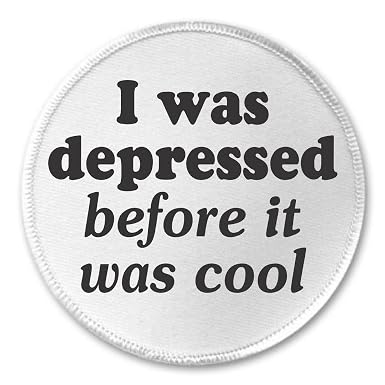
    The same ones that would tell me to just make an effort or tell me I'm not trying hard enough...now all of a sudden they have it too. I don't understand why it's suddenly cool to be depressed.


  • Posts: 21,740 ✭✭✭✭ [Deleted User]


    PandaPoo wrote: »
    I've suffered with depression for 7+ years. I don't like to talk about it with friends and family and definitely not social media.
    The last few months suddenly all my friends have depression or anxiety. These same friends that would judge me for not leaving the house for a week, not showering for weeks, staying in bed for days on end and ignoring all their calls and texts.

    The same ones that would tell me to just make an effort or tell me I'm not trying hard enough...now all of a sudden they have it too. I don't understand why it's suddenly cool to be depressed.

    I'm not sure that it is cool to be depressed. What may be happening is people suddenly rushing to assume they are mentally unwell. This might be a consequence of the huge upsurge in talk and awareness around depression and anxiety or it might be a new way for the self-absorbed and "poor me's" to get attention.

    Of course you don't actually know what's taking place inside of their heads.


  • Registered Users, Registered Users 2 Posts: 19,801 ✭✭✭✭suicide_circus


    61sbickKm5L._UX385_.jpg


  • Advertisement
  • Registered Users, Registered Users 2 Posts: 7,238 ✭✭✭Tombo2001


    ...have to say I am beginning to have more and more reservations as to whether it is an entirely good thing, as I see more and more take to social media, with apparently less and less idea of what they are talking about.

    I think it was good and healthy when certain celebrities first spoke about their battles. But as more have come forward, some of it almost seems like a fad now. And some of it is just nonsense peddled by people with no expertise or qualifications in the area at all, so you get complete chancers like David Wolfe telling us the bad traits of negative people (the division of people into positive and negative seems to be a popular aspect of this whole craze), while also telling the millions who hang off his word not to judge others.

    We seem to be almost talking ourselves into a pandemic, and there seems to be a lack of anyone saying (i) get a grip and (ii) if you have a genuine condition, forget the positive and negative people bs and mindfulness stuff hawked around the place by life coaches, get real help from qualified psychologists and psychiatrists.

    its one of those things OP that until it happens in your own family that it doesn't mean very much, and then when it does happen in your own family it means a huge deal.


Advertisement
Advertisement