Advertisement
Help Keep Boards Alive. Support us by going ad free today. See here: https://subscriptions.boards.ie/.
https://www.boards.ie/group/1878-subscribers-forum

Private Group for paid up members of Boards.ie. Join the club.
Hi all, please see this major site announcement: https://www.boards.ie/discussion/2058427594/boards-ie-2026

Irish rail fleet and infrastructure plans

1454648505153

Comments

  • Registered Users, Registered Users 2 Posts: 3,451 ✭✭✭Citizen  Six


    Live on the 14th at midnight. Previous night time tests had gone fine. Clonsilla couldn’t switch back in for local control either.


  • Registered Users, Registered Users 2 Posts: 4,541 ✭✭✭goingnowhere


    NTCC is cut in in phases

    Clonsilla and Greystones were staffed so moving them to central control was a first step.


    Signalling at Clonsilla is a mess it’s the 1976 relay locking towards Glasnevin, 1998 SSI to Maynooth which connects to Mini CTC and the 2010 SSI to M3 all wrapped up to appear as one system


  • Registered Users, Registered Users 2 Posts: 260 ✭✭OisinCooke


    Waiting for the train into town at Dalkey this morning and the train to Malahide wasn’t on the board but was on the TFI Live app as coming in 3 minutes. Lo and behold the signal turned green and the train came around the bend and then didn’t stop at all… 8500 series DART, 4 piece set, Malahide on the destination board and people on board, but didn’t stop at Dalkey… anybody know any possible reason???


  • Registered Users, Registered Users 2 Posts: 1,737 ✭✭✭p_haugh


    There were delays in Connolly earlier which in turn caused knock-on delays to dart services (northbound & southbound), so was probably skipping stops to make back time is my best guess.


  • Registered Users, Registered Users 2, Paid Member Posts: 146 ✭✭A1ACo


    I was on a late morning DART heading city-bound on that same day, and it was a combined 10-15 mins late arriving/ leaving Greystones. On arrival at Bray it announced that it would be going non-stop to Dun Laoghaire.

    This was the third time in recent months where this has happened while I was on; re non-stop DART Bray to Dun Laoghaire (and a non-stop Dun Laoghaire to Bray), and as a matter of interest they all went slowly in some parts, but with two trips of just under 13mins duration, and the other one just turned 16 mins trip time arriving into Dun Laoghaire.

    The timetable schedules show the normal DART trip time from Bray to Dun Laoghaire as 20 mins.


  • Advertisement
  • Registered Users, Registered Users 2, Paid Member Posts: 19,411 ✭✭✭✭LXFlyer


    Skip-stopping, while annoying for those passengers wanting to board or alight at intermediate stations is really the only way that, at times of disruption, the trains and drivers can be brought back to where they need to be, aside from cancelling services or curtailing them when you're running a service as intensely as DART at every 10 mins.


  • Registered Users, Registered Users 2 Posts: 4,541 ✭✭✭goingnowhere


    Running non stop Bray - Dún Laoghaire isn't worth it, bulk of the time saving is Bray - Dalkey


  • Registered Users, Registered Users 2, Paid Member Posts: 16,179 ✭✭✭✭loyatemu


    I assume this is to avoid curtailing the Greystones service which leaves a 1 hour gap at Greystones versus a 20 minute gap at the skipped stations.

    Put your money where yer mouth is... Subscribe and Save Boards!

    https://subscriptions.boards.ie/


  • Registered Users, Registered Users 2, Paid Member Posts: 5,389 ✭✭✭dowlingm


    hopefully ETCS will allow closer train spacing so that the train ahead can still stop and the train behind creep up behind and thus not lose quite so much time, but if it’s only Level 1 I wonder if there won’t be the level of position certainty and short enough block length to do that.


  • Registered Users, Registered Users 2 Posts: 4,541 ✭✭✭goingnowhere


    ETCS L1 has no change in capacity but its a lot better than the legacy ATP system

    Estimates suggest it could save over 90 seconds on current DART schedules Bray Greystones as it can handle the speed restrictions better, the current ATP can only set 50kph or 100kph in some cases the speed limits are greater than 50kph but the train only sees 50kph today


  • Advertisement
  • Registered Users, Registered Users 2 Posts: 423 ✭✭TranslatorPS


    All that ETCS L1 does – at its biggest simplification – is transmit the signal states and speed limits to the DMI in the cab well ahead of time so that the driver can see further ahead than just the signal they're approaching. Level 1 still merely takes data from the existing system, so as @goingnowhere said, the best it can do is allow for better speed limits and approaches in certain locations, because it still uses the exact same signalling block layout that's already in place – that's to say, to increase capacity they'd have to redesign the signalling system altogether anyway or go all out onto Level 2 with moving blocks.


  • Registered Users, Registered Users 2 Posts: 3,451 ✭✭✭Citizen  Six


    Level 2 was seen as being far too expensive for too little benefit.
    Level 1 will be an upgrade to ATP I guess, but won’t do much to speed up trains using the CAWS system.


  • Registered Users, Registered Users 2 Posts: 4,541 ✭✭✭goingnowhere


    Current ATP system is a weird compromise, as it actually uses the exact same codes as the CAWS system. Signal spacing and braking curves are setup for worst case scenario, so vacuum braked trains.

    In ETCS all levels the system takes in a number of parameters

    1. Braking performance of the train, in terms of reaction time and deceleration rate, DART braking distance is half a vacuum braked train at same speed in rough terms
    2. The distance to the next speed restriction or red signal (or block marker in L2)
    3. Track gradients

    On board computer does the math and works out when the train must brake to comply. Once ETCS L1 goes live a DART could be flying along at 100kph go past a yellow signal and comfortably pull up at the red signal ahead with a safety margin. Under current ATP the system would enforce a 50kph limit 200m from the yellow signal forcing the train to brake well ahead of where it really needed to, that eats capacity

    So effectively the only signals that will mater are red signals. All fleets will get ETCS L1 fitted and each will get a unique braking profile based on the characteristics of that train type

    Of course we should have installed LZB kit in the 1980's and have got effectively ETCS L1 capabilities 40 years ago


  • Registered Users, Registered Users 2 Posts: 1,533 ✭✭✭bikeman1


    A brilliant explanation.

    And to add, what happens in reality is the drivers actually brake early ahead of the ATP kicking in so they have control of the train. This in turn leads to slower driving and thus less capacity.

    It is why the DART just trundles along at no great pace.


  • Registered Users, Registered Users 2 Posts: 4,541 ✭✭✭goingnowhere


    Policy on DART changed at some point, in 1984 it was drive full speed and if/when the ATP beeps select neutral and let the ATP box do its thing and then reapply power once the brakes released. We then moved to a different model of brake before the ATP triggers.

    So with ETCS L1 you drive full speed and keep the speed at or below the hook on the speedometer, you get advanced warning of changes in speed limits and where you need to start to brake. A red signal is basically a speed limit of 0. So once you brake before or at the warning curve you are fine, the intervention curve is full brake and the emergency curve is obvious. Current DART ATP just has an intervention and emergency mode, no pre warning


  • Registered Users, Registered Users 2 Posts: 3,451 ✭✭✭Citizen  Six


    The driver often knows better than ATP, which doesn't take rail conditions into account. Over reliance on ATP resulted in a close call a few years back, with a train skidding through 2 red signals, and coming close to running into the back of another train.


  • Registered Users, Registered Users 2 Posts: 4,541 ✭✭✭goingnowhere


    Thats called professional driving, you drive for the conditions, that driver didn't and the black box read out showed it wasn't a once off. There was also a very nasty sequence of speed changes which made it a lot worse.

    Little was made of the performance of the wheel slide protection which should have stopped the train a hell of a lot sooner, the upgrade project to enhance it has been on the long finger…


  • Registered Users, Registered Users 2 Posts: 131 ✭✭BestWestern


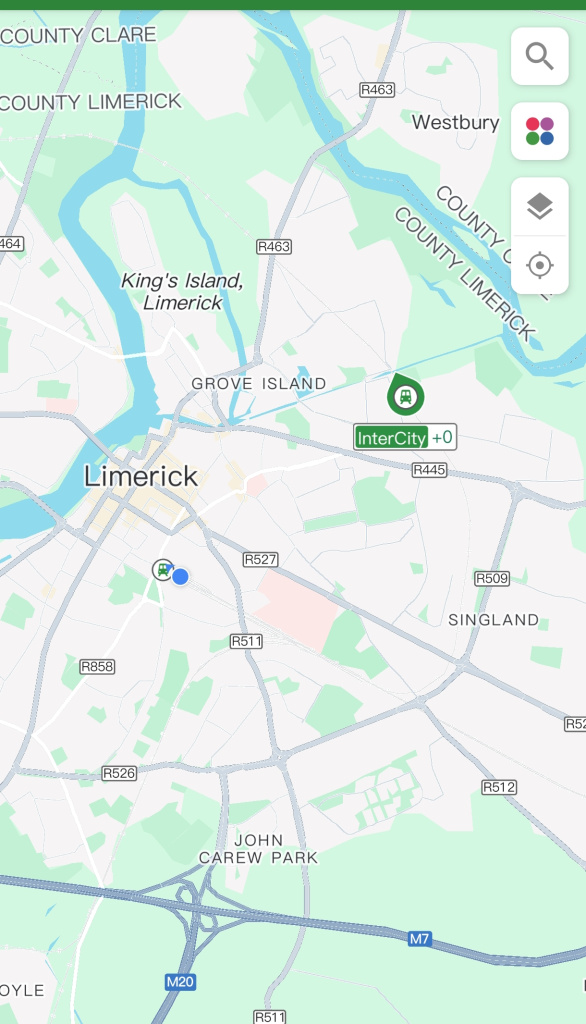
    Why does Irish Rail leave the diesel engines running in stations when the train isn't planning to leave for at least an hour.

    Surely the fumes are bad for staff and passengers alike? Limerick station this evening has a foggy haze owing to the fumes of three trains, and noticed the same in Heuston this morning.


  • Registered Users, Registered Users 2 Posts: 131 ✭✭BestWestern


    And what's up with the live map? They have the train well on its way to Galway, yet we haven't left limerick.

    1000027346.jpg

    They should call it 'liveish'


  • Registered Users, Registered Users 2 Posts: 29,790 ✭✭✭✭end of the road


    interesting i thought engines were shut down now if trains are stopped for a while but seems not.
    i think the 22s do automatically shut off after a certain amount of time but am open to correction on that, i don't know about the others but i suspect no in their case.

    29s over at connolly and the enterprise generator vans are very smokey but they will all be gone in the next few years.

    I'm very highly educated. I know words, i have the best words, nobody has better words then me.


  • Advertisement
  • Registered Users, Registered Users 2 Posts: 3,451 ✭✭✭Citizen  Six


    Irish Rail don’t care about the health of staff or passengers affected by diesel fumes.
    Make a complaint.


  • Registered Users, Registered Users 2, Paid Member Posts: 16,179 ✭✭✭✭loyatemu


    I've often thought I wouldn't fancy working in the coffee kiosk in Pearse for this reason. When they refurbished the roof they should have put in some extractor fans. I know Pearse is open at both ends but it's still very fumey at times.

    Put your money where yer mouth is... Subscribe and Save Boards!

    https://subscriptions.boards.ie/


  • Registered Users, Registered Users 2, Paid Member Posts: 40,085 ✭✭✭✭Hotblack Desiato


    I was reading an old (CIE days) accident report once where a train ran out of fuel and another one ran into the back of it, the first loco had been left idling all night and hadn't been refuelled, so that seems to have been normal practice at one time!

    Presumably due to difficulty / lack of confidence in the ability to restart them when needed, but crazy all the same

    I'm partial to your abracadabra
    I'm raptured by the joy of it all


  • Registered Users, Registered Users 2 Posts: 41,783 ✭✭✭✭Itssoeasy


    That sounds like Cheryville junction in the early 1980s. It’s the train running into to another that makes me think that. There was one where a train ran into the back of another in a tunnel in Dublin but that wasn’t because of an issue with fuel.


  • Registered Users, Registered Users 2 Posts: 3,451 ✭✭✭Citizen  Six


    Yeah, that was Cherryville Junction. There was a number of factors that lead to that disaster.

    It was normal to keep them running all the time, due to issues with starting them up again. The loco in that incident also had a faulty fuel gauge.

    There's strict rules now about fuel levels as a follow on from that incident.

    Most railcars now have auto engine shutdown after a set length of time, to preserve fuel.


  • Registered Users, Registered Users 2 Posts: 4,541 ✭✭✭goingnowhere


    The railcar fleet will auto shutdown after a period of time if the drivers key is not present.

    The locomotives well its thought better to leave them running as they can be a real pain to start from cold, if its running its running, if its dead it might not start up


  • Registered Users, Registered Users 2, Paid Member Posts: 40,085 ✭✭✭✭Hotblack Desiato


    Doesn't do anything for rail's environmental credentials does it.

    I'm partial to your abracadabra
    I'm raptured by the joy of it all


  • Registered Users, Registered Users 2, Paid Member Posts: 3,330 ✭✭✭Glaceon


  • Registered Users, Registered Users 2, Paid Member Posts: 59 ✭✭DrivingSouth


    Old tractors were often left running through the night. Diesel engines use very little fuel in idle and the start up of older diesels would often use such a glug of fuel and then add in the potential unreliability, it made sense. Maybe not in CO or NOx but in euro and time. And rail diesels are generally very old school designs. So 071 class, prob made sense. 22k class, you'd imagine the more modern engines would have improved enough to no longer need the practice though.


  • Advertisement
  • Registered Users, Registered Users 2 Posts: 3,451 ✭✭✭Citizen  Six


    Both 071 and 201 locos are fine to start from cold. No need to keep them running, apart from the odd one that gives trouble.


Advertisement