Advertisement
Help Keep Boards Alive. Support us by going ad free today. See here: https://subscriptions.boards.ie/.
https://www.boards.ie/group/1878-subscribers-forum

Private Group for paid up members of Boards.ie. Join the club.
Hi all, please see this major site announcement: https://www.boards.ie/discussion/2058427594/boards-ie-2026

BIK on N1 Commercial 5 Seater Discovery

2

Comments

  • Registered Users, Registered Users 2, Paid Member Posts: 7,830 ✭✭✭unklerosco


    As much as people would love to think they can get a discovery and pay 5% BIK they're living in dreamland. It's far clearer on the revenue website now that it was a couple of years ago (even at that it's still not that clear).

    This is a van
    400

    These are not
    01-Land-Rover-Discovery-front-large_trans++rWYeUU_H0zBKyvljOo6zlkYMapKPjdhyLnv9ax6_too.jpg

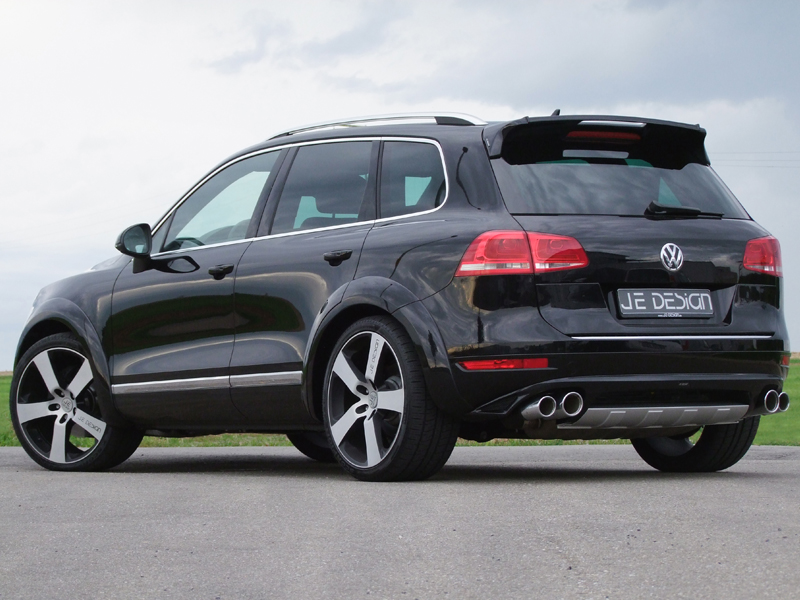
    JE-DESIGN-VW-Touareg-7P-schwarz-Alu-Felgen-22-Zoll2.jpg

    It's quite simple.. If you want a toureg or discovery and want to pay 5% BIK, take out the back seats, remove the windows, weld in a metal floor etc.

    50580512.jpg

    As much as I'd like to get a shiny nice new jeep and pay 5% BIK I for one won't be pissing off revenue... Anyways, I fount it easier to just claim mileage allowance on my own vehicle. Financially it worked out far better for me.


  • Registered Users, Registered Users 2 Posts: 972 ✭✭✭Mc-BigE


    I've heard of people trading in there 151 land rover's for a 161 Landrover before it's serviced. I suppose this would be expensive and suspicious to the revenue.


  • Registered Users, Registered Users 2 Posts: 972 ✭✭✭Mc-BigE


    Marcusm, you mentioned that you do a lot of travelling for work, what kind of travelling Kms to you do a year?
    if its 48001 or over, then you can buy any car, not just a N1 5 seater commercial.

    also the civil servants mileage and subsistence route would be something to look into, only if you are actually doing the mileage. ie can backup your expenses sheet with proof that you were actually here, visa statement, hotel bills, name of site or office and a contact for your meeting/surveying etc.

    Revenue have been all over this over the last few years.


  • Registered Users, Registered Users 2 Posts: 11,128 ✭✭✭✭Marcusm


    Mc-BigE wrote: »
    Marcusm, you mentioned that you do a lot of travelling for work, what kind of travelling Kms to you do a year?
    if its 48001 or over, then you can buy any car, not just a N1 5 seater commercial.

    also the civil servants mileage and subsistence route would be something to look into, only if you are actually doing the mileage. ie can backup your expenses sheet with proof that you were actually here, visa statement, hotel bills, name of site or office and a contact for your meeting/surveying etc.

    Revenue have been all over this over the last few years.

    I think you have me confused with someone else; I have been a man of leisure for half a decade but just about ready to get back to work. I did travel a lot for work but more like 250,000 miles a year in a thin tube!


  • Registered Users, Registered Users 2, Paid Member Posts: 8,220 ✭✭✭54and56


    I haven't made a purchase yet so am trying to get a clear understanding of this.
    Marcusm wrote: »
    there are clearly seats behind the drivers seat.
    I'm don't understand how that is relevant. Revenues definition of a van doesn't mention or prohibit having a second row of seats, see http://www.revenue.ie/en/tax/it/leaflets/benefit-in-kind/private-use-vans.html#section3. They quite specifically state that "Where a crew cab or other similar type of vehicle meets all of these criteria it would be regarded as a van rather than a car".

    The main question seems to be whether the vehicle meets the definition of being "designed or constructed solely or mainly for the carriage of goods or other burden". The inclusion of the term "other burden" seems to be quite discretionary. In my case "other burden" would be tools etc I need to carry out my job and if the vehicle has been certified as an N1 commercial by Revenue I fail to see how they can speak out of both sides of their mouth at the same time i.e. one section of revenue classify the vehicle as an N1 commercial vehicle for VRT purposes and another section of revenue treat it as a car for BIK purposes.

    If I do purchase one of these 5 seat commercial vehicles and only use it for commercial purposes away from my office 80% of the time I think I'd have a strong case to challenge any assessment of full BIK.


  • Advertisement
  • Registered Users, Registered Users 2 Posts: 972 ✭✭✭Mc-BigE


    Sorry Marcusm, wrong person , my bad.
    Je_suis_jean,

    from the revenues website (which i know you know already):
    "A van means a mechanically propelled vehicle which is designed or constructed solely or mainly for the carriage of goods or other burden,
    and has a roofed area or areas to the rear of the driver's seat,
    and has no side windows or seating fitted in that roofed area or areas."

    i see what your thinking, i.e. that the space behind the passengers seats at the back is the van section. and then from that defining the vehicle as a "Van"

    i would seek clarification from revenue before you spend your companies money and then if audited, get caught with a 15000ish euro BIK bill for each year you have it plus penalties.

    if they class the touareg 5 seater as a van then go for it.

    but i dont think they will give you a straight answer, just quote you the website definitions of "vans" and "cars" for BIK purposes

    let us know how you get on.


  • Registered Users, Registered Users 2 Posts: 11,128 ✭✭✭✭Marcusm


    I haven't made a purchase yet so am trying to get a clear understanding of this.

    I'm don't understand how that is relevant. Revenues definition of a van doesn't mention or prohibit having a second row of seats, see http://www.revenue.ie/en/tax/it/leaflets/benefit-in-kind/private-use-vans.html#section3. They quite specifically state that "Where a crew cab or other similar type of vehicle meets all of these criteria it would be regarded as a van rather than a car".

    The main question seems to be whether the vehicle meets the definition of being "designed or constructed solely or mainly for the carriage of goods or other burden". The inclusion of the term "other burden" seems to be quite discretionary. In my case "other burden" would be tools etc I need to carry out my job and if the vehicle has been certified as an N1 commercial by Revenue I fail to see how they can speak out of both sides of their mouth at the same time i.e. one section of revenue classify the vehicle as an N1 commercial vehicle for VRT purposes and another section of revenue treat it as a car for BIK purposes.

    If I do purchase one of these 5 seat commercial vehicles and only use it for commercial purposes away from my office 80% of the time I think I'd have a strong case to challenge any assessment of full BIK.

    There is a single roofed area behind ther driver seats; it contains further seats and windows as well as a space where goods can be carried. I am unsure if English is your first language but it is quite clear that the vehicles you are considering do not meet the requirements to be treated as a van.

    I think your confusion is caused by the VRT and motor tax requirements and the registration of an N1 vehicle. These are simply irrelevant.

    If your use is only 80% then you will have a full BIK charge subject only to mitigation by the amount of your business mileage. I suspect you will proceed and that it will only become an issue in the event that you are audited. It's not however in accordance with the Boards charters to continue that sort of discussion.

    I do not believe that you have a return filing position for the proposed approach in which event you will have personal issues if you sign the tax return.


  • Registered Users, Registered Users 2, Paid Member Posts: 8,220 ✭✭✭54and56


    Marcusm wrote: »
    There is a single roofed area behind ther driver seats;
    I'm not sure how you figured that out but you're wrong. There are two distinct areas behind the drivers seat. #1 is a roofed area with seats, side doors and windows in it. # 2 is a roofed burden carrying area totalling 580 litres with no windows, no seats and a top hinged rear door.
    Marcusm wrote: »
    I am unsure if English is your first language
    Ooohhh, who took the jam out of your doughnut? :o
    Marcusm wrote: »
    it is quite clear that the vehicles you are considering do not meet the requirements to be treated as a van.
    If it's as clear as you say why are revenue certifying 5 seat Touaregs and Discoveries as N1 commercial vehicles?
    Marcusm wrote: »
    I think your confusion is caused by the VRT and motor tax requirements and the registration of an N1 vehicle. These are simply irrelevant.
    How is the fact revenue themselves certify 5 seat Touaregs and Discoveries etc as N1 commercials not relevant?
    Marcusm wrote: »
    If your use is only 80% then you will have a full BIK charge subject only to mitigation by the amount of your business mileage.
    Is English your fist language Marcusm? I didn't say my use of the vehicle would be 80% I said I'd exclusively use it for work purposes only (for those who struggle with English as a first language "exclusive" in this context means 100% ;)) and I'd be away from my office 80% of the time.

    Despite your sarcastic comments and tone I do find your input useful, so thanks.

    It seems to me that in order to have a nice 5 seat vehicle for business use without incurring BIK there is a two step process to go through as follows:-

    1. Ensure the vehicle qualifies as a van. To do this it must

    - be designed or constructed solely or mainly for the carriage of goods or other burden and

    - have a roofed area or areas to the rear of the driver's seat, and

    - have no side windows or seating fitted in that roofed area or areas.

    My reading is that if a vehicle has been certified N1 commercial by revenue then it's a van and not a car.

    2. Although your 5 seat vehicle has been classified by revenue as an N1 commercial it doesn't mean you can swan around in it for personal/family use without attracting BIK. If you want your company to pay for the vehicle (it can reclaim the VAT) and pay all maintenance, insurance, diesel etc AND you want to avoid having to pay any BIK you must ensure you only use the vehicle for business purposes and you must ensure you adhere to the following criteria:

    - the van is supplied by the employer to the employee for the purposes of the employee's work, (I'll have a management meeting with myself and decide that all employees (me) must use company rather than clapped out personal cars for work purposes as this projects a better image of the company and is part of the companies marketing strategy. U]tick[/U

    - the employee is required by the employer to bring the van home after work (I'll have another meeting with myself and negotiate an agreement whereby employees (me again) will have to bring the van home after work as it will be safer parked in a residential home than in an empty unsecured office park. U]tick[/U)

    - apart from travelling from work to home and back to work, other private use of the van by the employee is forbidden by the employer, and there is in fact no other private use, (I'll only use the vehicle for work purposes and my old TT for personal use. U]tick[/U)

    - in the course of his or her work, the employee spends at least 80% of his or her time away from the premises of the employer to which he or she is attached. (Easily done. U]tick[/U)

    The above is my reading of the somewhat ambiguous guidance on revenue.ie.


  • Registered Users, Registered Users 2 Posts: 11,128 ✭✭✭✭Marcusm


    I'm not sure how you figured that out but you're wrong. There are two distinct areas behind the drivers seat. #1 is a roofed area with seats, side doors and windows in it. # 2 is a roofed burden carrying area totalling 580 litres with no windows, no seats and a top hinged rear door.

    Ooohhh, who took the jam out of your doughnut? :o

    If it's as clear as you say why are revenue certifying 5 seat Touaregs and Discoveries as N1 commercial vehicles?

    How is the fact revenue themselves certify 5 seat Touaregs and Discoveries etc as N1 commercials not relevant?

    Is English your fist language Marcusm? I didn't say my use of the vehicle would be 80% I said I'd exclusively use it for work purposes only (for those who struggle with English as a first language "exclusive" in this context means 100% ;)) and I'd be away from my office 80% of the time.

    Despite your sarcastic comments and tone I do find your input useful, so thanks.

    It seems to me that in order to have a nice 5 seat vehicle for business use without incurring BIK there is a two step process to go through as follows:-

    1. Ensure the vehicle qualifies as a van. To do this it must

    - be designed or constructed solely or mainly for the carriage of goods or other burden and
    - have a roofed area or areas to the rear of the driver's seat, and
    - have no side windows or seating fitted in that roofed area or areas.

    My reading is that if a vehicle has been certified N1 commercial by revenue then it's a van and not a car.

    2. Although your 5 seat vehicle has been classified by revenue as an N1 commercial it doesn't mean you can swan around in it for personal/family use without attracting BIK. If you want your company to pay for the vehicle (it can reclaim the VAT) and pay all maintenance, insurance, diesel etc AND you want to avoid having to pay any BIK you must ensure you only use the vehicle for business purposes and you must ensure you adhere to the following criteria:

    - the van is supplied by the employer to the employee for the purposes of the employee's work, (I'll have a management meeting with myself and decide that all employees (me) must use company rather than clapped out personal cars for work purposes as this projects a better image of the company and is part of the companies marketing strategy. U]tick[/U
    - the employee is required by the employer to bring the van home after work (I'll have another meeting with myself and negotiate an agreement whereby employees (me again) will have to bring the van home after work as it will be safer parked in a residential home than in an empty unsecured office park. U]tick[/U)
    - apart from travelling from work to home and back to work, other private use of the van by the employee is forbidden by the employer, and there is in fact no other private use, (I'll only use the vehicle for work purposes and my old TT for personal use. U]tick[/U)
    - in the course of his or her work, the employee spends at least 80% of his or her time away from the premises of the employer to which he or she is attached. (Easily done. U]tick[/U)

    The above is my reading of the somewhat ambiguous guidance on revenue.ie.

    Firstly, my inquiry with respect to language was not intended to be sarcastic (nor snide nor snarky); I should have realised that as you called yourself "Je suis Jean" rather than "Je m'appelle Jean" that your moniker was not to be taken as an indication as an indication of nationality, language etc. Now that you have made your position clear, permit me to be a little more blunt..

    A "van" is not synonymous with "N1 commercial vehicle classification" and that is simply a fact. Had it been intended that they be synonymous then there would simply be a common definition or the VRT and motor tax definition of a N1 vehicle would be used. It is not and you have no statutory authority to infer it. THere is a single roofed area behind the drivers seats in the vehicles you cite. This is not a Transit/MAster/Sprinter with a seated area and a segregated goods area. It is simply a 5 seater with a metal plate across the boot to make it flat. To suggest that it is otherwise is misguided.

    I do not think that there is any ambiguity with respect to the classification of a Discovery or Touareg with 5 seats, they are simply a car for BIK purposes. Simply put, the reason you will fail is that the purpose of the different percentages applying is to acknowledge the fact that private use of a vehicle with a limited number of seats (2/3 as opposed to 5 or more) by its nature means that such private use is inherently less valuable to the employee and thus the imputed income arising from such use should be measurably less.

    This is what has led to the current situation where radically different percentages apply. Historically, Revenue would have looked kindly on van drivers who had private use recognising that, as civil servants, they would not be see dead driving a panel van or converted Golf/Focus without rear seats. On the other hand, a 5 seater SUV (which up until recently would have been the usual number of seats for SUVs) would be exactly the sort of vehicle for which they would expect to extract the maximum amount tax on the imputed income.

    As regards your comments vis a vis home base, office and the meetings you will have with yourself, these will all be irrelevant in the event you are audited. They will not provide any evidence whatsoever. The real question is why the business would bear the cost of a 5 seater SUV other than for your convenience? It does not sound as if there are employees to ferry about. This will be a killer for you in any attempt to pull the wool.


  • Registered Users, Registered Users 2, Paid Member Posts: 8,220 ✭✭✭54and56


    Marcusm wrote: »
    The real question is why the business would bear the cost of a 5 seater SUV other than for your convenience?
    Because whilst it's acceptable for your plumber to arrive to a meeting in a Ford Transit it is not perceived to be acceptable (rightly or wrongly) for someone providing a ( ) service to arrive to a potential client or client in a Ford Transit. A "premium" SUV as they are often referred to projects confidence and that can land a lot of business thus paying for itself many times over.

    As long as I maintain my own personal/family car and use the N1 commercial for nothing other than business use away from the office 80% of the time how would an audit determine I was using it for personal use?


  • Advertisement
  • Registered Users, Registered Users 2, Paid Member Posts: 7,830 ✭✭✭unklerosco


    Marcusm wrote: »
    The real question is why the business would bear the cost of a 5 seater SUV other than for your convenience? It does not sound as if there are employees to ferry about. This will be a killer for you in any attempt to pull the wool.

    Was just about to say the same myslef, if you are a sole trader and it's just yourself you'll have a heck of a time justifying a 5 seat discovery over a 2 seat commercial discovery... Even if you're a director and you've another director you'd still have the same issue... Again, even if you employ 5 people but they're all office based you'd have the same issue..

    Now if you're a builder and you employ a couple of lads and you need to pick them up on the way to the jobsite each day you'd be far better able to justify the need for 5 seats...

    Regardless, if you want a definitive answer ring revenue


  • Registered Users, Registered Users 2, Paid Member Posts: 7,830 ✭✭✭unklerosco


    As long as I maintain my own personal/family car and use the N1 commercial for nothing other than business use away from the office 80% of the time how would an audit determine I was using it for personal use?

    Because Revenue aren't idiots...


  • Registered Users, Registered Users 2 Posts: 972 ✭✭✭Mc-BigE


    Sounds like you've made up your mind that you want a 5 seater utility regardless of the grey area of BIK.

    Would it not make more sense to double check with revenue first via email or phone (anonymously if you want)
    to see if the N1 5 seater is classed as a "van" for your own business circumstances


  • Registered Users, Registered Users 2, Paid Member Posts: 8,220 ✭✭✭54and56


    unklerosco wrote: »
    Was just about to say the same myslef, if you are a sole trader and it's just yourself you'll have a heck of a time justifying a 5 seat discovery over a 2 seat commercial discovery... Even if you're a director and you've another director you'd still have the same issue... Again, even if you employ 5 people but they're all office based you'd have the same issue..

    Now if you're a builder and you employ a couple of lads and you need to pick them up on the way to the jobsite each day you'd be far better able to justify the need for 5 seats...

    Regardless, if you want a definitive answer ring revenue
    That's a fair point and the reason I'd prefer the 5 rather than 2 seat version is that in my business I sometimes offer to collect and drive clients to meetings (this helps build the relationship) and that typically involves transporting more than one person so being limited to an ability to carry just one more person would be counter productive.


  • Registered Users, Registered Users 2, Paid Member Posts: 8,220 ✭✭✭54and56


    unklerosco wrote: »
    Because Revenue aren't idiots...

    I absolutely agree with you and I've no intention of treating them as such but I do want to know in what way I'd be liable to BIK if for the reasons I've already laid out I can show it is beneficial to the business for me to be driving a 5 seat SUV which I use exclusively for work and am away from the office 80% of the time?

    I assume that despite the fact Revenue make and enforce the rules they do in fact have to adhere to them and can't just infer personal use/benefit unless they can actually prove it. Maybe I'm wrong.


  • Registered Users, Registered Users 2, Paid Member Posts: 8,220 ✭✭✭54and56


    Mc-BigE wrote: »
    Sounds like you've made up your mind that you want a 5 seater utility regardless of the grey area of BIK.

    That would certainly be my preference rather than lashing out a higher amount of already tax paid money to purchase a passenger version of the same vehicle and then claim mileage as despite the fact I'm out of the office at least 80% of the time I don't actually do a huge amount of mileage annually, it's mostly around and within the M50 with the odd trips to Cork, Galway etc thrown in.
    Mc-BigE wrote: »
    Would it not make more sense to double check with revenue first via email or phone (anonymously if you want)
    to see if the N1 5 seater is classed as a "van" for your own business circumstances
    I didn't know you could get a definitive ruling from Revenue on an anonymous basis. Is there a special email or phone number for that service or is it the main contact number/email address?

    Also, the reason I'd like to do it anonymously is I'd be concerned that an overt enquiry would somehow result in a revenue audit shortly after and whilst I wouldn't be worried about the outcome I just don't need the time distraction or the cost of paying my Accountant to facilitate. I know revenue audits can happen at any time and that's life but I don't want to do anything which might precipitate one either!!


  • Registered Users, Registered Users 2 Posts: 86 ✭✭SRASE


    In my opinion it is a car as it has roofed seating to the back. The VRT rating is irrelevant as it is completely separate legislation that covers the VRT rating. VRT N1 rating does not certify there are no seats to rear of drivers seat.

    If the car is used exclusively for business purposes and any personal use was prohibited then BIK would not apply regardless of whether it was a car or a van. BIK applies where the car is made available to employee for personal use. Revenue do not have to prove actual personal use of car. Travel to and from your normal place of business would be considered personal use.


  • Registered Users, Registered Users 2, Paid Member Posts: 7,830 ✭✭✭unklerosco


    I didn't know you could get a definitive ruling from Revenue on an anonymous basis. Is there a special email or phone number for that service or is it the main contact number/email address?

    What I've done before is ring and just say I'm looking at starting a business and am wonder XYZ.. I've never been asked for any information. But be warned, getting a definitive answer of revenue ain't easy.. at least from my experience. No one ever want's to be responsible for giving out incorrect information so I've found they just give out incomplete information.. deliciously frustrating.


  • Registered Users, Registered Users 2, Paid Member Posts: 8,220 ✭✭✭54and56


    SRASE wrote: »
    In my opinion it is a car as it has roofed seating to the back. The VRT rating is irrelevant as it is completely separate legislation that covers the VRT rating. VRT N1 rating does not certify there are no seats to rear of drivers seat.
    I just don't get this, where in any of revenues guidance does it say that a van cannot have more than one row of seats? As far as I've been able to ascertain the guidance is totally silent in relation to the number of seats. It simply says that

    "A van means a mechanically propelled vehicle which –

    is designed or constructed solely or mainly for the carriage of goods or other burden, and
    has a roofed area or areas to the rear of the driver's seat, and
    has no side windows or seating fitted in that roofed area or areas.

    Where a crew cab or other similar type of vehicle meets all of these criteria it would be regarded as a van rather than a car – see Private Use of Company Cars regarding the meaning of 'car'."


    How does having a second row of seats invalidate the fact it has a roofed area to the rear of the drivers seat which has no side windows etc? If the legislation meant that the roofed area had to be immediately behind the drivers seat wouldn't it say that? How hard would it have been to add the word "immediately" into the guidance?
    SRASE wrote: »
    BIK applies where the car is made available to employee for personal use.
    Correct, so if the vehicle is not made available for the personal use of the employee then no BIK is payable.
    SRASE wrote: »
    Revenue do not have to prove actual personal use of car. Travel to and from your normal place of business would be considered personal use.
    Not true. The following is taken directly from revenue.ie


    "No taxable benefit will arise in respect of the private use of company van where all of the following conditions are met: -

    the van is supplied by the employer to the employee for the purposes of the employee's work

    the employee is required by the employer to bring the van home after work apart from travelling from work to home and back to work, other private use of the van by the employee is forbidden by the employer, and there is in fact no other private use

    in the course of his or her work, the employee spends at least 80% of his or her time away from the premises of the employer to which he or she is attached."

    Were you aware of the above when responding to the thread or is there some other guidelines you are relying on which I should be aware of? (genuine question)


  • Registered Users, Registered Users 2, Paid Member Posts: 8,220 ✭✭✭54and56


    unklerosco wrote: »
    getting a definitive answer of revenue ain't easy.. at least from my experience. No one ever want's to be responsible for giving out incorrect information so I've found they just give out incomplete information.. deliciously frustrating.
    Also deliciously ambiguous which leaves plenty of room for interpretation and isn't that (on a much grander scale) how leading tax advisors make their €'s by driving a horse and coach through carelessly or sloppily defined tax regulations??


  • Advertisement
  • Registered Users, Registered Users 2 Posts: 86 ✭✭SRASE


    The 5 seater vehicle has a roofed area behind the drivers seat. Part of this contains seats and part room for storage. If any part of the roofed area behind the drivers seat has seats then it does not qualify as a van. That is my interpretation of the legislation.

    I am not disagreeing with you on the provisions relating to a van. I am stating that if you wanted to show a car was not made available for personal use then travel to and from normal place of work would not be allowed.


  • Registered Users, Registered Users 2, Paid Member Posts: 8,220 ✭✭✭54and56


    SRASE wrote: »
    The 5 seater vehicle has a roofed area behind the drivers seat. Part of this contains seats and part room for storage. If any part of the roofed area behind the drivers seat has seats then it does not qualify as a van. That is my interpretation of the legislation.
    Hence the ambiguity. How do you define where the loaded area begins? My understanding (although I don't have the exact number) is that provided there is a roofed area behind the drivers seat which is at least X cubic centimetres or litres volume in size and doesn't have side windows or seating then it qualifies.

    In the 5 seat utilities the space starting behind the 2nd row of seats is the "roofed area" which meets the size requirement and other criteria to deem it to be a van.
    SRASE wrote: »
    I am not disagreeing with you on the provisions relating to a van. I am stating that if you wanted to show a car was not made available for personal use then travel to and from normal place of work would not be allowed.
    Ok got ya. I was referring to a van not a car.


  • Registered Users, Registered Users 2, Paid Member Posts: 7,830 ✭✭✭unklerosco


    Going by the idea of a roofed area behind the driver would a saloon car not be a closer match for their description.. The boot is purely designed for the carriage of goods, it's completely separate from the driver/passenger area, no windows, no seats.. Mercedes S class all the way!


  • Registered Users, Registered Users 2, Paid Member Posts: 8,220 ✭✭✭54and56


    unklerosco wrote: »
    Going by the idea of a roofed area behind the driver would a saloon car not be a closer match for their description.. The boot is purely designed for the carriage of goods, it's completely separate from the driver/passenger area, no windows, no seats.. Mercedes S class all the way!
    Don't think a boot is deemed to be a "roofed" area of the vehicle plus its not big enough, only 500 litres of space in the S class boot plus I believe there are some regulations about having lashing points in the roofed area etc which most SUV's have but cars don't.


  • Registered Users, Registered Users 2, Paid Member Posts: 8,220 ✭✭✭54and56


    Just to lighten the load (pun totally intended) in here a bit I thought I'd highlight how applying normal common sense to govt/tax regulations isn't always the right thing to do.

    It does "appear" obvious that a Ford Transit is a van and a comfy 5 seat VW Touareg is a car or SUV but most definitely not a van and if you asked 100 people on the street at least 99 would agree but strange things do happen when technical definitions are interpreted.

    Who would have thought that 2 spoons of tomato paste (puree for us Europeans) would be deemed to be a vegetable by the US Congress after lobbying by pizza manufacturers thus allowing the consumption of pizza as part of a healthy balanced diet in schools. http://www.thejournal.ie/us-congress-rules-that-pizza-is-a-vegetable-282033-Nov2011/

    You couldn't make $h1t like that up. It certainly makes interpreting the definition of where a roofed area begins and what constitutes a van Vs a car look like a baby infant stuff Vs what the esteemed US legislators are able to come up with :eek:


  • Registered Users, Registered Users 2, Paid Member Posts: 7,830 ✭✭✭unklerosco


    That's not news, sure everyone's known for years pizza is a vegetable.. Just like bulmers is fruit juice. Sure I had way more than my five a day on Sat night..


  • Registered Users, Registered Users 2 Posts: 875 ✭✭✭ucd.1985


    Yawlboy wrote: »
    I've asked my accountant to write to Revenue and get a formal ruling.

    Madness getting a ruling. There is only one way Revenue are going to rule. Your tax adviser should be strong enough to take a defendable position on it.


  • Registered Users, Registered Users 2 Posts: 972 ✭✭✭Mc-BigE


    It's amazing how one thread has got me looking at second hand discos on carzone lol.
    Talking to a friend in work who has one, as far as he is concerned it's a van. And his accountant has agreed. He has signed a declaration form to say the commercial vehicle is to be used for commerical purposes only, like every van driver has to do get 333 road tax. This is countersigned by the guards.

    Also surely if you do get an audit letter, couldnt the rear seat be removed?


  • Registered Users, Registered Users 2, Paid Member Posts: 7,830 ✭✭✭unklerosco


    Mc-BigE wrote: »
    Also surely if you do get an audit letter, couldnt the rear seat be removed?

    You have to weld in a metal floor, block off seat belt anchors (via welding) and blank off the windows.. Not sure if you'd need to get it certified after doing that.. you'd also need to contact your insurance as you've modified the vehicle.


  • Advertisement
  • Registered Users, Registered Users 2 Posts: 972 ✭✭✭Mc-BigE


    Sorry but we're does it say that you have to remove seat belts and weld anything when it comes to definition of a van for BIK only ?
    Added: also in every other classification I.e. motor tax, vat, vrt it's classed as an n1 commercial, category c ( I think) and not a private car.

    I know it's splitting hairs , but I'm sure it could be argued in court with a good solicitor


Advertisement
Advertisement