Advertisement
Help Keep Boards Alive. Support us by going ad free today. See here: https://subscriptions.boards.ie/.
https://www.boards.ie/group/1878-subscribers-forum

Private Group for paid up members of Boards.ie. Join the club.
Hi all, please see this major site announcement: https://www.boards.ie/discussion/2058427594/boards-ie-2026

Soldiers traumatised by war.

  • 28-11-2012 07:04PM
    #1
    Registered Users, Registered Users 2 Posts: 22,605 ✭✭✭✭


    I often hear of soldiers being traumatised by what they see during war yet doctors,nurses,ambulance staff see injuries and death everyday but appear to be able to cope with it,what's the difference?


«13

Comments

  • Registered Users, Registered Users 2 Posts: 10,572 ✭✭✭✭brummytom


    Most doctors don't shoot people in the head.


  • Closed Accounts Posts: 27,944 ✭✭✭✭4zn76tysfajdxp


    kneemos wrote: »
    I often hear of soldiers being traumatised by what they see during war yet doctors,nurses,ambulance staff see injuries and death everyday but appear to be able to cope with it,what's the difference?

    They don't see countless remorseless acts of murder every day. Soldiers at war do.


  • Registered Users, Registered Users 2 Posts: 28,787 ✭✭✭✭ScumLord


    kneemos wrote: »
    I often hear of soldiers being traumatised by what they see during war yet doctors,nurses,ambulance staff see injuries and death everyday but appear to be able to cope with it,what's the difference?
    Doctors don't live under the fear that they're going to be the next one blown up. Soldiers have to face the fact that they have to do to someone else what they've seen happen to their friends or they'll end up shot instead. Not really the same as a doctor knowing what's going to happen and knowing that the person will be better off at the end of it.


  • Registered Users, Registered Users 2 Posts: 10,758 ✭✭✭✭TeddyTedson


    Makakomi told me about this before. He might see this thread and be able to give some insight.


  • Registered Users, Registered Users 2 Posts: 553 ✭✭✭upstairs for coffee


    Soldiers contribute to the destruction and death of humans whilst nurses and doctors repair any destruction done to human bodies?

    Soldiers tool of death and injury, nurses and doctors tool for better health etc?


  • Advertisement
  • Closed Accounts Posts: 246 ✭✭loggedoff


    Soldiers contribute to the destruction and death of humans whilst nurses and doctors repair any destruction done to human bodies?

    Soldiers tool of death and injury, nurses and doctors tool for better health etc?

    So soldiers and doctors need each other then......:D


  • Banned (with Prison Access) Posts: 510 ✭✭✭LivelineDipso


    I worked with a Croat chap who was in the Yugo Civil War and he told me ke killed a guy close up in combat. The young lad he killed made eye contact and the look on his face never left this Croat guy. 10 years later he was still going to bed with speed metal playing all night on the stereo as it was the only way he could drown out the sound of the gunshots and stop thinking of the guy he killed.

    Troops are never trained for this. They are never even told about it. They are told to dehumanise the enemy and not to make eye-to-eye contact during close combat. But many troops do and this is what caused the PTSD. They get no councilling when they get home. They are just discharged and thrown on the streets.

    If a train driver has a suicide jumping in front of their train they get years of councilling. Soldiers are useless to the army once the war ends and nobody cares about them. There are still 1,000s of suicides a year in the USA from the Vietnam War. Guys in their 60's killing themelves out of guilt.


  • Closed Accounts Posts: 10,968 ✭✭✭✭Praetorian Saighdiuir


    Soldiers contribute to the destruction and death of humans whilst nurses and doctors repair any destruction done to human bodies?

    Soldiers tool of death and injury, nurses and doctors tool for better health etc?

    That's a very simplistic view.


  • Registered Users, Registered Users 2 Posts: 22,605 ✭✭✭✭kneemos


    brummytom wrote: »
    Most doctors don't shoot people in the head.

    Most of it is from a distance they just see the aftermath really.I know there's a big moral issue that could certainly play on peoples minds.


  • Registered Users, Registered Users 2 Posts: 5,818 ✭✭✭donvito99


    LIEUTENANT DAN!!


  • Advertisement
  • Registered Users, Registered Users 2 Posts: 4,930 ✭✭✭Jimoslimos


    They don't see and commit countless remorseless acts of murder every day. Soldiers at war do.
    Slightly amended that.


  • Registered Users, Registered Users 2 Posts: 906 ✭✭✭LiamMc


    kneemos wrote: »
    I often hear of soldiers being traumatised by what they see during war yet doctors,nurses,ambulance staff see injuries and death everyday but appear to be able to cope with it,what's the difference?

    You're right. The Military Staff are already weak-minded before they reach the front-lines. Because of the systematic abuse within their chosen industry. They have been deliberated mis-treated in their training programmes/programs as a way to make them more compliant.

    They are trained to mistrust and have an overtly narrow-view of the
    The medical staff come from a tradition of care and have a far more mature approach to their surrondings.

    Civilians on the other hand have to deal and tolerate both Military and Medical personnel in their environment.

    While Post-traumatic Stress Disorder (PTSD) is well documented.
    Doctors in Palestine have identified Continued-Traumatic Stress Disorder due to the Occupation,murder and duress the Palestinian Civilians face in their daily lives.
    http://dulwichcentre.com.au/palestinian-perspectives-on-trauma-and-torture.pdf


  • Registered Users, Registered Users 2 Posts: 2,386 ✭✭✭Killer Wench


    Those that I know speak about the fragmentation of roles they deal with on a regular basis. They are conducting patrols among the populace and they try - really try - to connect with them while still keeping their guard up. In addition, they are witnessing friends die before their eyes. I remember one story of a guy who was chatting with a fellow soldier then the next moment having that guy's brains splatter on his face. Then there sre those close calls on a daily basis.


  • Registered Users, Registered Users 2 Posts: 10,462 ✭✭✭✭WoollyRedHat


    Whenever I see the tirade of support our troops on the return from duty, the false sense of patriotism and nationalism that abounds from the public, media, and government, whatever about the moral aspects of war, the spectacle that is made is sickening hyprocrisy in the face of absolute neglect from soldiers who thought they were serving their country, sent back to a country that will not serve them. Ignored and forgotten.

    Back in World War II, I think it was, soldiers with PTSD, and there were many,that were treated as weak and sent away, rather than treating them properly. They haven't changed all that much, just that PTSD is recognized now.


  • Registered Users, Registered Users 2 Posts: 553 ✭✭✭upstairs for coffee


    benwavner wrote: »
    That's a very simplistic view.

    Care to elaborate?


  • Closed Accounts Posts: 13,029 ✭✭✭✭Chuck Stone


  • Posts: 26,920 ✭✭✭✭ [Deleted User]


    Doctors, nurses and ambulance staff never deal with anything like this -


    If that were me, I would absolutely piss myself.


  • Closed Accounts Posts: 10,968 ✭✭✭✭Praetorian Saighdiuir


    Care to elaborate?

    Would you care to explain your knowledge of the role of a modern soldier. Maybe outline distinct differences in various phases of combat, the seperation of wartime and peace time operations, the comparisons between peacekeepers, invading and defending forces?

    If you do not intimately understand any of the above statements, you are not qualified to state what a soldier indeed is.


  • Registered Users, Registered Users 2 Posts: 1,656 ✭✭✭somefeen


    I think there's also the problem that this aspect of an ambulance driver's job is well know and talked about but a lot of soldiers are still just youngfellas sold the job on account of the romantic aspects. Adventure, heroism etc. Look at the British Army's recruitment campaigns and you'll see what I mean.
    Sure they'll hear about other lads killed in the news, but they way its reported it makes a soldiers job out to be simply dangerous, like say commercial fishing. They real realities of the death are never really discussed and while we're forever hearing about disabled soldiers its actually rare you hear of one crippled by PTSD even though I'm sure there are many.

    Ambulance drivers, nurses and doctors are on average probably just that bit older that they might find it easier to cope aswell. Plus years of watching "Road safety" ads probably helps them to expect it.
    Imagine if recruitment ads for the army were as graphic?

    War is a load of ****.


  • Registered Users, Registered Users 2 Posts: 4,886 ✭✭✭JuliusCaesar


    This gives an introduction to post-traumatic stress, including a video made by a person who was on a bus blasted in the London bombings some years ago.
    Post-traumatic stress disorder (PTSD) is an anxiety disorder caused by very stressful, frightening or distressing events.

    The type of events that can cause PTSD include:

    military combat
    serious road accidents
    terrorist attacks
    natural disasters, such as severe floods, earthquakes or tsunamis
    being held hostage
    witnessing violent deaths
    violent personal assaults, such as sexual assault, mugging or robbery

    PTSD can develop immediately after someone experiences a disturbing event or it can occur weeks, months or even years later.

    PTSD can develop in any situation where a person feels extreme fear, horror or helplessness. However, it doesn't usually develop after situations that are simply upsetting, such as divorce, job loss or failing exams.


  • Advertisement
  • Registered Users, Registered Users 2 Posts: 5,513 ✭✭✭bb1234567


    They are not in any way comparable OP.


  • Registered Users, Registered Users 2 Posts: 435 ✭✭itac


    I (very briefly) went out with a marine when I was in the U.K. around 2005. He'd been in Afghanistan twice and Iraq once, had lost several friends in both places, and reckoned he'd killed at least 13 people himself in varying "kill or be killed" situations.
    The one that stayed with him most was killing a kid of about 10/12 yrs old because he though the kid was going to kill him. He himself was 23 at the time, and had joined the Marines when he was 17 in peacetime; never imagining that he'd see service like he did.

    Personally, I've seen someone being shot, and that's not an image I'd wish on anyone, even though as shootings go, it wasn't particularly vicious. Having to see that happen to your colleagues, or having to shoot at people on a daily basis and then carry on as if nowt's happened is not something I could ever contemplate dealing with though. An awful lot of soldiers feel they can't talk about what they've seen or what they've done because it's simply not understand by those outside the forces, and PTSD is only issue that can arise because of that. Full respect to soldiers, and all those affected by war.


  • Registered Users, Registered Users 2 Posts: 553 ✭✭✭upstairs for coffee


    benwavner wrote: »
    Would you care to explain your knowledge of the role of a modern soldier. Maybe outline distinct differences in various phases of combat, the seperation of wartime and peace time operations, the comparisons between peacekeepers, invading and defending forces?

    If you do not intimately understand any of the above statements, you are not qualified to state what a soldier indeed is.

    Why get so belligerent? I was merely answering the OP with an answer that was open to correction. When I politely asked you to expand on your statement you get all macho/defensive.


  • Registered Users, Registered Users 2 Posts: 14,650 ✭✭✭✭minidazzler


    kneemos wrote: »
    I often hear of soldiers being traumatised by what they see during war yet doctors,nurses,ambulance staff see injuries and death everyday but appear to be able to cope with it,what's the difference?

    Do you know the burnout rate of paramedics, Emergency room doctors and nurses? It's fcuking HUGE.

    Also, for doctors and nurses they are seeing people die. A lot of soldiers are seeing their mates die and know it could be them next.


  • Registered Users, Registered Users 2 Posts: 17,369 ✭✭✭✭Zillah


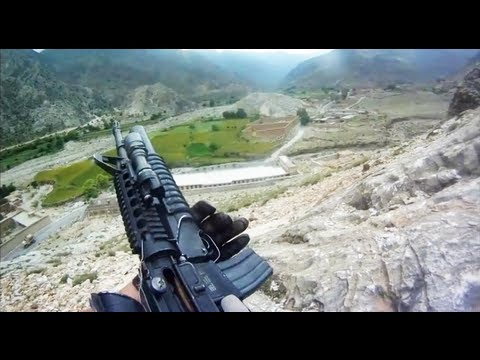
    Doctors, nurses and ambulance staff never deal with anything like this -


    If that were me, I would absolutely piss myself.

    Why did he stop in the middle of the slope with no cover when the bullets started landing around him? That seems so strange to me...


  • Closed Accounts Posts: 10,968 ✭✭✭✭Praetorian Saighdiuir


    Zillah wrote: »
    Why did he stop in the middle of the slope with no cover when the bullets started landing around him? That seems so strange to me...

    There would be a number of reasons. The rounds are landing close to him, if he moves he may be hit again. Fatigue plays a big part here also, coupled with the lack of knowledge of enemy location, strength and armaments. As far as he was concerned, he was already injured an attempt to move may be the last thing he does.

    Why get so belligerent? I was merely answering the OP with an answer that was open to correction. When I politely asked you to expand on your statement you get all macho/defensive.

    I'm not being macho or defensive, I was expanding as requested. You cannot simply say "Soldiers contribute to the destruction and death of humans.......Soldiers tool of death and injury". without full understanding.

    While it is widely accepted that a soldiers function is to kill if needed. It is not the sole purpose of a soldier. If you cannot distinguish between the variables I previously posted, then you clearly have no comprehension about the complex role of the modern soldier. That is why I deem your view as simplistic.

    Its as simple as that.


  • Registered Users, Registered Users 2 Posts: 4 J12345


    Funny this, I haven't been on boards in months and this is one of the first threads I see.

    I've just returned (about 7 weeks ago) from Afghanistan (Nahr-e-saraj). I was dismounted infantry, basically your joe blogs on the ground. I find it bizarre that people on this thread post so confidently on subjects they have no first hand experiences of. I spent 6 months in the Green zone (the name given to the agricultural area that straddles the Helmand river). I was involved in various incidents such as small arms contacts (around 40-60, I stopped counting), ied blasts and idf (indirect fire ie. mortars) attacks. The regiment I was with had over 100 guys casevacd off the ground and sustained 5 kia's and one kia who was attached to the unit. All in all, it was quite a kinetic tour.

    I have had similar conversations with friends of mine from school who are doctors now. The reoccurring points that are raised are the violence that has caused the injuries firstly. The wounds I saw and treated will be rarely, if ever, seen in your standard trauma department or a&e in Ireland (thank God!). Secondly, its the immediacy of the individual to the casualty. It could have happened a matter of meters, sometime inches from you. Thirdly, the injuries doctors see (which are undoubtedly gruesome on occasions) are dealt with in a controlled environment with modern equipment and well trained surgeons present. The injuries I dealt with were done in wadis or flooded opium/wheat fields.... all the time under contact from the enemy. The pressures are enormous.

    As for been hung out to dry by the military upon arriving home......... thats rubbish. In theatre when we saw something unpleasant or one of the lads got hit, we had Trim (google it)trained councilors chat with us. The aftercare now offered is far better than it was. In the UK there are various military charities that are devoted to tackling soldiers suffering from ptsd. Is it perfect... no, but it is getting better and better. It goes without saying that war at times is very unpleasant but I regret nothing about going over to Afghan! The mates you make are second to none and the craic can sometimes be brilliant!


  • Closed Accounts Posts: 5,073 ✭✭✭Pottler


    Doctors, nurses and ambulance staff never deal with anything like this -


    If that were me, I would absolutely piss myself.
    Trooper comes under sustained enemy fire, decides best course of action would be to traverse an open scrub slope, downhill, with no cover. Then gets shot. Not too surprising really and American troops have learnt nothing since Vietnam. There, they stunned the Vietcong by not doing what every soldier on earth does, ie diving for cover when fired upon. Instead, the GI's stood rooted and returned fire erratically. Lucky for America they have so many soldiers, no great surprise so many get shot and injured, traumatised. Learn to take cover ffs. Also lucky the enemy are generally such crap shots.


  • Registered Users, Registered Users 2 Posts: 3,324 ✭✭✭BillyMitchel


    An old American friend of mine who was ex marine and only early 20s. He done two tours of Iraq and suffered badly, everyday life he was OK but once he slept it was a complete different story. He'd wake up in violent rages thinking he was back there and he wouldn't have a clue what he was doing. Couldn't try snap him out of it because he'd try kill you. Really sad to witness.

    Even though he had left the marines he still washed and iron his uniform every night, one of the nicest people I've ever met. Loads of his friends died there and he'd have everyone in tears in a matter of minutes with stories of Iraq.

    It turned him very anti American and completely against the war.


  • Advertisement
  • Registered Users, Registered Users 2 Posts: 14,650 ✭✭✭✭minidazzler


    Pottler wrote: »
    Trooper comes under sustained enemy fire, decides best course of action would be to traverse an open scrub slope, downhill, with no cover. Then gets shot. Not too surprising really and American troops have learnt nothing since Vietnam. There, they stunned the Vietcong by not doing what every soldier on earth does, ie diving for cover when fired upon. Instead, the GI's stood rooted and returned fire erratically. Lucky for America they have so many soldiers, no great surprise so many get shot and injured, traumatised. Learn to take cover ffs. Also lucky the enemy are generally such crap shots.

    Can you see any cover in that video? I can't!

    And to be fair, the enemy weren't that crap of shots, they are shooting from at least 500 meters away and almost constantly hitting within 3-4 meters of him.


Advertisement
Advertisement