Advertisement
Help Keep Boards Alive. Support us by going ad free today. See here: https://subscriptions.boards.ie/.
https://www.boards.ie/group/1878-subscribers-forum

Private Group for paid up members of Boards.ie. Join the club.
Hi all, please see this major site announcement: https://www.boards.ie/discussion/2058427594/boards-ie-2026

Is Irelands neutrality stance in WW2 unfairly criticized? (see Mod note 217)

11011131516109

Answers

  • Registered Users, Registered Users 2 Posts: 6,540 ✭✭✭Francis McM


    Wrong. Dimbleby details how "Taoiseach Éamon de Valera maintained the Republic's neutrality, leaving Allied shipping vulnerable to German U-boats along the western approaches."


  • Registered Users, Registered Users 2 Posts: 5,125 ✭✭✭adaminho


    Why did the Russians veto our membership?

    Ireland’s application to join the UN in 1946 was rejected, and would be rejected repeatedly for a further nine years, courtesy of the Soviet veto. As one of the five permanent members of the Security Council, the USSR could prevent the accession of any applicant state. Ostensibly, the Soviets were displeased by our neutral policy during the Second World War, and falsely claimed that Ireland had been openly sympathetic to the Axis powers. They conveniently forgot that they themselves had formed the Molotov–Ribbentrop Pact with Hitler to carve up Poland in 1939. In reality, their opposition was part of the new Cold War power play, as they feared Ireland would likely align – and vote – with the Western powers at the UN Assembly.

    Reading over Mr. Churchill’s speech the average Irishman felt that the British Premier was at a loss for something to say which might direct atten tion from the real facts at the time, i.e. Britain was obtaining a first class trouncing on land and sea. Some excuse had to be put forward. Mr. Churchill did not favour in 1938 or at any time the surrender to the Government of Ireland of the Forts at Cork Harbour, Berehaven and Lough Swilly, and his speech on the 5th November could be interpreted as indicative of an ‘I told you so’ attitude. During the months of September and October British and allied shipping losses were very heavy.

    It was a tactic to deflect blame.


  • Registered Users, Registered Users 2 Posts: 6,244 ✭✭✭Sudden Valley


    The primary concern of De Valera was and should have been the people of Ireland not sailors of other countries. That was what he was elected for.


  • Registered Users, Registered Users 2 Posts: 17,555 ✭✭✭✭Flinty997


    He's wasn't the one who started the thread.

    People choose who they wish to engage with. If people are complaining who they are engaging with then, just stop.

    I think this thread is great craic and an interesting debate which is what forums are for.


  • Registered Users, Registered Users 2 Posts: 17,555 ✭✭✭✭Flinty997


    I'll have to read it.

    Maybe AI is hallucinating...

    "...

    In his historical account "The Battle of the Atlantic: How the Allies Won the War", historian Jonathan Dimbleby highlights the critical geopolitical tension created by Ireland’s neutrality. By denying the Allies access to vital Irish ports (such as Berehaven and Cobh), Éamon de Valera’s government significantly hampered the Royal Navy's anti-submarine capabilities.

    Key details from Dimbleby's analysis regarding Ireland's role:

    The "Atlantic Gap" (Air Gap): Because Ireland refused to allow British and Allied aircraft to patrol from its western shores, a massive "air gap" was created in the mid-Atlantic. U-boats used this blind spot to hunt Allied merchant shipping completely undetected by land-based air cover.

    Churchill’s Frustration: Dimbleby details how Winston Churchill was furious over the loss of these ports, viewing them as vital to the survival of the United Kingdom. He recognized that if the U-boats severed the Atlantic supply line, Britain would be starved out of the war.

    The "Donegal Corridor": While Southern Ireland remained officially neutral, a secret concession allowed Allied flying boats to traverse a narrow strip of Irish airspace in County Donegal. This allowed Allied aircraft to close part of the Atlantic Gap, a detail explored in broader historical contexts.

    Diplomatic Relations: The refusal of ports and the constant friction between London and Dublin during the naval campaign remain a focal point of Dimbleby's assessment of Churchill's wartime strategic struggles..."


  • Advertisement
  • Registered Users, Registered Users 2 Posts: 17,555 ✭✭✭✭Flinty997


    I think Ireland not wanting to break a nail while millions died isn't fondly remembered.

    I don't think much damage would have happened to Ireland. A bit sure. But Germany didn't have a heavy bomber force able to do much damage. One of the reasons the Blitz wasn't as destructive as it could have been.

    A long range bomber campaign against Ireland would have extremely vulnerable as it past within range of British air bases. It would have been torn to shreds.

    A population tired of civil war, and a war of independence is valid counter argument. Its seen as a bit lite internationally.


  • Registered Users, Registered Users 2, Paid Member Posts: 716 ✭✭✭myfreespirit


    Yes, of course. There's lots to criticise about the Fianna Fail government in power during WW2, not least DeValera's visit to Hempel, which was ill-advised, to say the least.


  • Registered Users, Registered Users 2, Paid Member Posts: 4,303 ✭✭✭Cyclingtourist


    Well if they were able to bomb Belfast why not Dublin and Cork.


  • Registered Users, Registered Users 2 Posts: 5,125 ✭✭✭adaminho


    Isn't fondly remembered by who? You said earlier that Sweden and Switzerland had more of a case to answer .

    Over 30 were killed in several accidental German bombings, they had the means to attack us.

    Bombing runs from North Western France would have completely bypassed Britain.


  • Registered Users, Registered Users 2 Posts: 6,244 ✭✭✭Sudden Valley


    Its not likely the only occasion we didn't intervene when millions died. Like many countries we didn't intervene in the Vietnam or Korean wars. I dont think a country should just intervene in any war just because they may not be remembered fondly because of it.

    Hindsight is a terrible weapon to use to criticise leaders of the past. Im sure thr allied leaders didn't like that allying with Soviet union left millions under the yoke of an authoritarian leadership for 50 years.


  • Advertisement
  • Registered Users, Registered Users 2, Paid Member Posts: 716 ✭✭✭myfreespirit


    Ireland was a detested little inward-looking backwater for that decade or two, make no doubt about it. We paid the price.

    Between 1949 and 1952 nearly half of all capital expenditure, including rural electrification, reforestation and land reclamation, came from Marshall Aid money.

    [Source: Ronan McGreevy, page 159 of his book, Sean Lemass]

    Funny that. A "detested" backwater getting lots of help from the USA.


  • Registered Users, Registered Users 2 Posts: 17,555 ✭✭✭✭Flinty997


    The question to ask is why was it only ever bombed one month in 1941.

    The reason was the Germans realised it was undefended (tested the defences) and navigation was easy due to the lights in the republic. The city had no guns no search lights and no RAF assigned to defend it, especially at night. Night fighters just coming online in the RAF. Not one fighter took to the air in it's defence.

    The opportunity (those perfect conditions) never arose again. Indeed night raids later in the war over Britain were done by fast fighter bombers and suffered heavy losses. RAf night fighters capability increased throughout the war.

    One summer day does not make a summer


  • Registered Users, Registered Users 2 Posts: 17,555 ✭✭✭✭Flinty997


  • Registered Users, Registered Users 2 Posts: 6,244 ✭✭✭Sudden Valley


    Is that your only criteria for entering a war? De Valera had to make what he thought was the best decision for the Irish people at the time, like every other country in the world that didn't ally with either warring faction. Its easy to suppose we would act differently if we were leader because we are risking nothing.


  • Registered Users, Registered Users 2 Posts: 17,555 ✭✭✭✭Flinty997


    I think you'll find allies air operations covered Northern a Western France and the French coast out into the Atlantic.


  • Registered Users, Registered Users 2 Posts: 17,555 ✭✭✭✭Flinty997


    I dunno why you mention Korea or Vietnam.

    The thread title is Irish Neutrality in WW2. That frame of reference would seem to exclude those wars.

    WW2 and in particular battle of the Atlantic was on Irish shores. It was a unique opportunity to contribute. Thats not the same for all wars especially those on the other side of the planet where Irish Ports are irrelevant.

    In my opinion Dev took one step forward and 3 backwards on many of things he did. He dragged Ireland with him.


  • Registered Users, Registered Users 2 Posts: 5,125 ✭✭✭adaminho


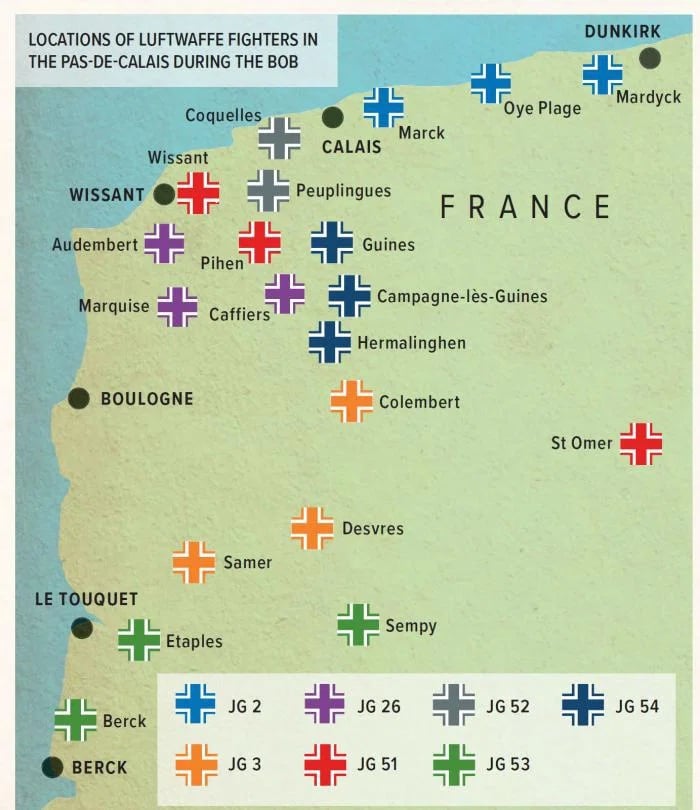
    There were plenty of German airfields in North-Western France in early 1940. It would have been easy to attack Berehaven and Spike Island ports as they were the main strategic targets in the country. It wouldn't have taken much to put them out of commision and the RAF would have been stretched thinner trying to protect both coasts.

    Bob.jpg


  • Registered Users, Registered Users 2 Posts: 6,244 ✭✭✭Sudden Valley


    I mention it as you mentioned the casualty figures as a reason why ireland would not be remembered fondly for not taking part.

    It was on our shores but it was between a German nation and a country that had occupied us for centuries.

    The neutrality that De Valera followed and we have followed since was perhaps the only good thing De Valera left us with.


  • Registered Users, Registered Users 2 Posts: 17,555 ✭✭✭✭Flinty997


    It wasn't bombed at all in 1940. So German airfields in 1940 are irrelevant. By end of 1941 German resources were focused on Russia for example.

    You'd have a point if Belfast a far more important target was bombed repeatedly. But it wasn't. It was bombed one month during the entire war.

    So you don't.


  • Registered Users, Registered Users 2, Paid Member Posts: 716 ✭✭✭myfreespirit


    The neutrality that De Valera followed and we have followed since was perhaps the only good thing De Valera left us with.

    That's a little unfair to De Valera, do you not think? I agree that he held back Ireland's progress for far too long, but his legacy is somewhat greater than military neutrality. The 1937 constitution, for example, is well regarded as a foundation of the rule of law and democracy in Ireland.


  • Advertisement
  • Registered Users, Registered Users 2 Posts: 17,555 ✭✭✭✭Flinty997


    I think you and Dev are there only people who believe Britain and Germany were the only countries involved in WW2.

    The Irish Neutrality League, and Irish Neutrality as a concept predated DeValera. Its argued that his role in the return of the ports ring fenced it.


  • Registered Users, Registered Users 2 Posts: 5,125 ✭✭✭adaminho


    I mentioned it as if we had joined the Allies in 1939 then by 1940 the main Southern ports would have been well within range of the Luftwaffe.


  • Registered Users, Registered Users 2 Posts: 6,244 ✭✭✭Sudden Valley


    Dev didn't believe that, nor do I. So you seem to be in favour of Neutrality now?


  • Registered Users, Registered Users 2 Posts: 17,555 ✭✭✭✭Flinty997


    The Luftwaffe were a bit busy in 1940 losing the Battle of Britain.


  • Registered Users, Registered Users 2 Posts: 6,540 ✭✭✭Francis McM


    And how did the people in other neutral countries in Europe invaded by the Nazis fare, do you think?


  • Registered Users, Registered Users 2 Posts: 6,244 ✭✭✭Sudden Valley


    Badly as did those counties colonised by Britain, France, Belgium, netherlands and the Soviet Union. We didn't fight for many countries who were colonised.


  • Registered Users, Registered Users 2 Posts: 17,555 ✭✭✭✭Flinty997


    It's literally what you said and I quoted.

    Neutrality isn't a choice. Ireland couldn't defend itself against paper aeroplanes.


  • Registered Users, Registered Users 2 Posts: 6,244 ✭✭✭Sudden Valley


    I didn't say they were the only participants and Dev never said that if you want to be pedantic.

    Neutrality is a choice we have chosen for decades. You just seem to want us to participate in wars on one side or another.


  • Registered Users, Registered Users 2 Posts: 5,125 ✭✭✭adaminho


    Stretching RAF coverage to the Irish southern coast would have tested their limits. As you said about the Belfast bombings an undefended coastline in Southern Ireland including the Treaty ports would have been an easy target and would have only taken one or two raids to put them out of action. These are all hypotheticals anyway, perhaps if Churchill had agreed to America arming us it would be moot.


  • Advertisement
  • Moderators, Society & Culture Moderators Posts: 17,874 Mod ✭✭✭✭Manic Moran


    Called a war crime by whom? It certainly had moral implications which is why acts like the Dresden or Tokyo Firebombings were made war crimes in the post-war era (Specifically the 1980 Convention on Certain Conventional Weapons, Protocol III, Art 2, S3) but was lawful under the rules which existed at the time.

    To answer the original question, it’s one of those instances where (actually, just like the above), practical realities and post-facto moral assessments don’t necessarily match up. Given Ireland’s history with the UK barely a generation prior resulting in a very nasty civil war, the practical reality was that Ireland could not risk its stability by politically aligning with the UK. On the other hand, there seems little question that staying out of it was morally deficient: A lot of people died in the effort to free Europe (including members of other neutral countries whose neutrality did not spare them) which who did not need to given the lack of coverage on the Atlantic crossing simply by allowing the use of Irish ports or airfields. It was not necessary to send Irish troops to fight, other nations which joined the Allies such as Mexico also did not contribute much by way of fighting troops. Ireland did pay for not being part of the war effort by being at the bottom of the global deliveries list for resources such as coal, and not getting the same Marshall Plan benefits.

    It may be instructive to compare the attitude of Ireland in WW2 to that of Ireland in 2022 and the public declaration that “Ireland is militarily neutral but not politically neutral.” (Which in itself is a particularly daft statement). At least in the current era Ireland is publicly taking a positional stand, even if rather a token one.


Advertisement
Advertisement