Advertisement
Help Keep Boards Alive. Support us by going ad free today. See here: https://subscriptions.boards.ie/.
https://www.boards.ie/group/1878-subscribers-forum

Private Group for paid up members of Boards.ie. Join the club.
Hi all, please see this major site announcement: https://www.boards.ie/discussion/2058427594/boards-ie-2026

Nuclear - future for Ireland?

1121122124126127142

Comments

  • Registered Users, Registered Users 2, Paid Member Posts: 24,076 ✭✭✭✭Akrasia


    I think a big part of this is tge size of new builds compared with the general housing stock. The last few years has seen mostly once off houses that tend to be on the bigger side. Bigger rooms and open plan designs are expensive to heat even if there is high efficiency and better insulation. Bigger windows even triple glazed are less thermal efficient than insulated walls.

    But retrofitting the million or so houses that already exist with better insulation and heat pumps should still have significant energy savings

    Ban billionaires


  • Registered Users, Registered Users 2, Paid Member Posts: 11,717 ✭✭✭✭John_Rambo


    No, Moneypoint makes more sense than Dublin because it already has major power infrastructure, deep seawater cooling access, industrial zoning, port facilities, strong grid connections, and decades of experience operating a large scale power station, all of which would massively reduce costs.

    It’s also far less densely populated, making safety and emergency planning much easier. Dublin Bay is crowded, environmentally sensitive, heavily developed, and politically far harder and more expensive to build on.


  • Registered Users, Registered Users 2 Posts: 1,799 ✭✭✭bored65


    Wrong again on this morning where we became the most expensive for electricity

    https://m.independent.ie/irish-news/ireland-now-the-most-expensive-country-in-the-eu-for-electricity/a1721751843.html


    in Europe and probably the world!

    IMG_6880.jpeg

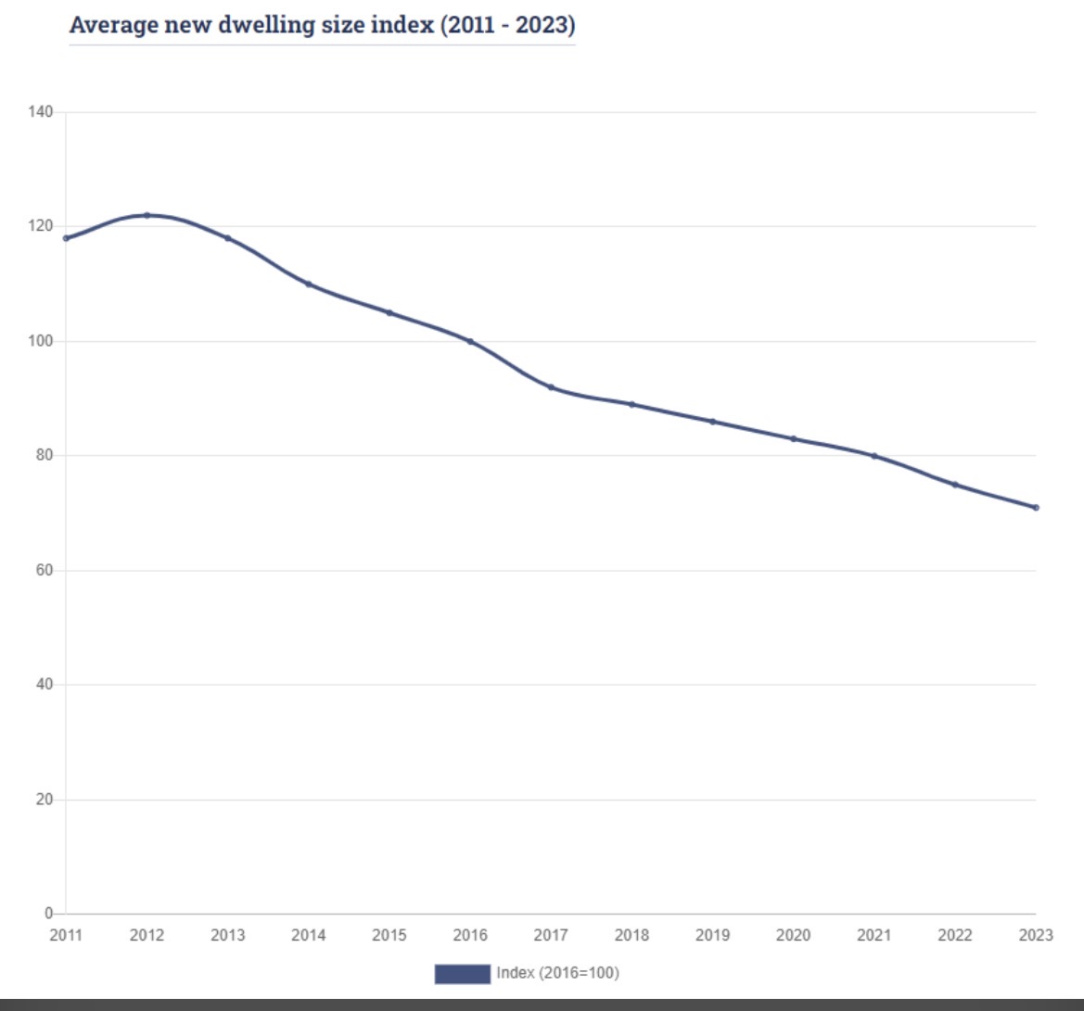
    average size of homes been dropping


  • Registered Users, Registered Users 2 Posts: 24,493 ✭✭✭✭ted1


    "At 40.42 cent per kilowatt-hour (including VAT and levies) prices here are almost 40 per cent above the EU average of 28.96 cent."

    Who is paying 40.2 c/kwh? Is there anyone paying this?

    How was this number derived at?

    when looking at PPS were are down to 5th.

    File:Electricity map 2025 2 V2.png - Statistics Explained - Eurostat

    i believe that something is skewed..

    can someone divide there last bill by no of units used? to get the price they pay.


  • Registered Users, Registered Users 2 Posts: 1,799 ✭✭✭bored65


    It’s 2026 now


    They are comparing the final prices after all the taxes and levies which go to subsidise whinge lobby who blatantly rip us off

    You can plaster your roof with solar panels and still face a bill with barely any consumption as we managed to sneak so many charges and taxes and levies onto each bill

    And you be shocked at prices businesses have to pay


  • Advertisement
  • Registered Users, Registered Users 2 Posts: 2,113 ✭✭✭PeadarCo


    But your point was cost and that the government had other things to spend things on. The government in 1926 and political realities are very different. Large parts of the country operated at substance levels. A few years later the country ended up in a trade war with it's only serious trading partner. To spend the equivalent today that the Irish government spent on Ardnacrusha is theoretically possible but politically forget about it. Which your post above has ignored.

    Also if you read my link Ardnacrusha provided enough energy to power the entire country not 20%. But that's a reflection of how rich Ireland has become and how energy intensive modern living is.

    The biggest issue with Nuclear is politics. One of the biggest reasons we have a housing crisis is due to NIMBYs and local politics. The government appears to be at least trying to make it easier to get planning approval for major infrastructure projects. But a nuclear reactor is very very different and is going to provoke a major public reaction which will impact politics.


  • Registered Users, Registered Users 2 Posts: 24,493 ✭✭✭✭ted1


    when i divide my bill by kwh consumer I don't get near 40c. What are other people here paying on average.

    I wouldn't be shocked with what what buisnesses pay..


  • Registered Users, Registered Users 2 Posts: 1,799 ✭✭✭bored65


    my bill (I have solar and battery and heavily use night rate for 2/3rds of consumption) worked out at 28.5 cent a kWh for April {134 euro for 471kWh}

    However only two months before (before the war btw) in February (a shorter month) it was 39c per kWh {168 euro for 431kWh}

    So yes it’s not hard to see how we are being fleeced


  • Registered Users, Registered Users 2, Paid Member Posts: 16,045 ✭✭✭✭josip


  • Registered Users, Registered Users 2 Posts: 1,799 ✭✭✭bored65


    They have to keep lights on in Germany?

    Not enough nuclear?

    They are also one of the most electric import dependent countries in world due to not enough capacity


  • Advertisement
  • Registered Users, Registered Users 2 Posts: 16,965 ✭✭✭✭charlie14


    I think there is a bit of confusion. Possibly my doing in how I phrased my post.

    My reply to the OP whose post suggested that the State had a lot less priorities when building Ardnacrusha than now was that with it being a new state it did not, and had as many if not more pressing priorities than now.

    I know your post said Ardnacrusha generated enough electricity to provide the entire county for a cost of 20% of the country`s then GDP. That was my point when I said that compared like for like, now 5 x 1.25 GW reactors @ €14 Bn each would provide our present demand for €70 Bn. which is 12.5% of our current GDP.

    Everything when it comes down to state expenditure is political, but is it not time we had a proper public debate on how much it would cost for this current plan and where we would end up by continuing to follow it as it is not going to come even close to the 2030 emissions target when we will start paying fines. Or to the 2050 targets either where nuclear could, and cost less.

    Nobody, government or those that favor this current plan, can give a cost for it or what the end result of that cost would be. Personally I do not believe as a state where the taxpayer always foot the bill, we should be blindly following a plan based on a how long is a piece of string..


  • Registered Users, Registered Users 2, Paid Member Posts: 3,517 ✭✭✭KrisW1001


    You’re on the right track.

    The graph looks strange, with low-rated homes using less energy. That’s because low-rated housing stock is dominated by old urban houses, a lot of which are now in the private rental market. Those houses tend to be smaller with lower occupancy, so despite their poor per-square-metre efficiency, their absolute energy use is still lower than a better-rated—but more populated—larger house. Retrofitting these dwellings will reduce the nation’s overall energy demand, but it won’t dramatically reduce the energy cost for any individual dwelling - if your bill is only 100 a month, why turn a place upside-down (and, for landlords, churn a tenancy, then have to invest more to redecorate and modernise after) if the electricity saving is only about twenty quid a month. To fix these, efficiency upgrades would have to be a free and mandatory scheme - free alone isn’t worth the hassle.

    The effect of one-off housing is seen in the lowest bar on that graph, where you can see that “detached” has a very high energy use. This isn’t because detached houses are so much less efficient, but rather that detached houses in this country tend to be one-off rural housing, where the average size is around 250 square metres (add a zero if you think in feet): compare that with 100 square metres for suburban semi-detached or terraced housing. Even if both are A-rated, the larger area means higher energy use. The average is dragged upward a little by older rural buildings with low energy ratings, but not by so much: poor quality rural housing stock tends to be either abandoned or renovated, as there’s no private rental market to keep bad stock in use, so those poor-performing houses tend to improve or fall out of the surveyed set.

    bored65’s graph is correct, but misleading (here’s the source, as they didn’t provide it: NDA07 - Average New Dwelling Size - Dataset - data.gov.ie).

    2011 is an unfortunate year to begin collecting data on new dwelling sizes, as it was the height of the property crash: the only completions at this time were one-off self build housing. You can see a peak in 2012 (at 204 square metres), which was the worst year for multiple-house developments, and the trend-line in the graph since then shows the slow return of estate and apartment developments, which have always been smaller than one-off housing: the size of a 3-bed semi-detached house here has been in and around 100 square metres for the last 60 years, but one-offs now regularly hit 300 square metres.


  • Registered Users, Registered Users 2 Posts: 24,493 ✭✭✭✭ted1


    my February bill worked out at 19.4c/kWh including charges for 1,222 units


  • Registered Users, Registered Users 2 Posts: 1,799 ✭✭✭bored65


    1222kWh used in a month! Average for this country is like 4000-5000 per year

    Whatever you growing pass it along 😂


  • Registered Users, Registered Users 2 Posts: 1,799 ✭✭✭bored65


  • Registered Users, Registered Users 2 Posts: 24,493 ✭✭✭✭ted1


    5 of us in the house, but the EV was the main user @ 550kwh (all night rate) in April. Roughly 20kwh/100km so 2750km (pretty accurate). so about €55.

    The equivalent car (ID4 V Tiguan) would do 10l/100km so €1.90*270 = €513


  • Registered Users, Registered Users 2 Posts: 16,965 ✭✭✭✭charlie14


    It may have been getting 45% from nuclear in the past, but that is now down to ~34% due to them shuttering nuclear plants from 2023 on-wards with there then policy of phasing out nuclear from their 2003 ban on building new plants. Last year they revoked that ban by a parliamentary vote of 102 in favor, 8 opposed and 31 abstaining.They are presently looking at extending the lifespan of those plants shuttered in the last few years and adding a further 4GW of new nuclear.

    Interesting thing about that shuttering and perhaps why they are looking at reopening and adding new nuclear generation.

    2023 their emissions were 107 g/kwh, 2024 156 g/kwh, 2025 185 g/kwh. A 73% increase in emission over those years where they were shuttering nuclear plants.


  • Registered Users, Registered Users 2 Posts: 1,799 ✭✭✭bored65


    well done but you are clearly an outlier

    the figures you are questioning comes from Eurostat

    Ireland now has the most expensive electricity in Europe (slow clap) thanks to renewables, while remaining day after day in the top 3-5 for co2 emissions to add further insult to injury (at time of this post only Poland, Czechia and Germany are dirtier than us)

    And people can’t even blame the last war as the rises occurred before it!

    “As a result, the average household in Ireland is paying around €480 a year more for its electricity compared to the EU average.

    The figures show Irish electricity prices jumped by 32.7% between July and December 2025, when compared with the same period in 2024.”


    2026 is gonna be even worse for us


  • Moderators, Recreation & Hobbies Moderators, Science, Health & Environment Moderators, Technology & Internet Moderators Posts: 99,467 Mod ✭✭✭✭Capt'n Midnight


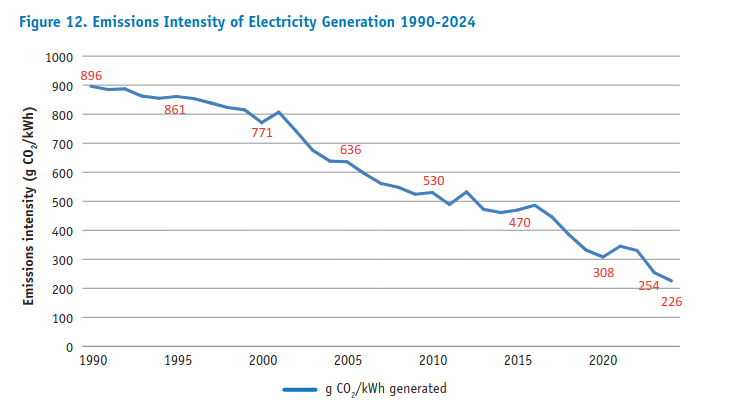
    image.png

    Is what failure looks like ? Page 20 Source : epa.ie

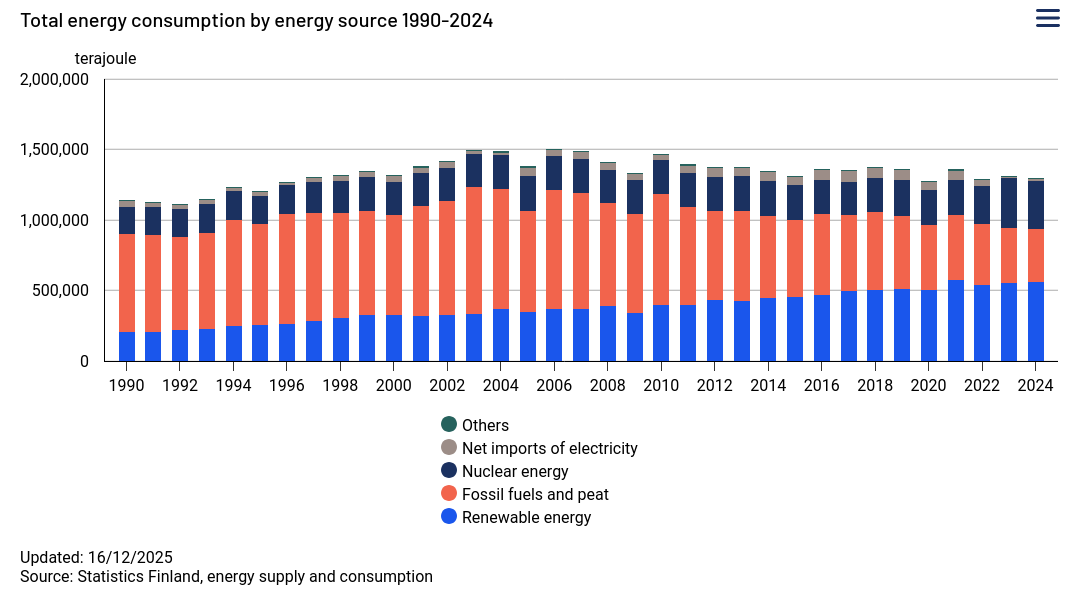
    image.png

    The rise and rise of renewables in Finland.

    Finland's nuclear program got derailed by delays with OLK-3 which had the knock on effect of delaying the next project which being Russian got dropped like a hot potato.

    Luckily wind project is delivering twice the TWh that OLK-3 belatedly does and their low emissions is not a nuclear success story./


  • Registered Users, Registered Users 2 Posts: 16,965 ✭✭✭✭charlie14


    Finland generates 40% of it`s electricity from nuclear. The equivalent of 80% of our present demand. Of that 13% provided by OL3 (~26% of our current demand)

    Prior to OL3 they imported 18 TWh - 24 TWh annually (20% - 30%) of electricity. Last year they imported 3TWh ~ 4% despite rising demand. Last year we imported 14.6%

    Prior to OL3 5.5% of there generation was from gas. Last year it was 0.9%. Last year gas provided 40% of our electricity.

    Prior to OL3 emissions were 101 gCo2. Last year 40 gCo2. Ireland last year 292gCo2 after importing 14.6% of our electricity.

    We are now officially the most expensive country in the E.U for domestic electricity. Finland one of the most inexpensive.

    Yeah, we really are blessed we are not Finland.


  • Advertisement
  • Registered Users, Registered Users 2 Posts: 9,235 ✭✭✭Markcheese


    Thats true - but - the polish 42 billion to 46 billion isnt yet a firm figure ,thats a current estimate, (obviously its inflation linked too ,but everything is , )

    The Polish government are both underwriting and financing the project .. if it goes wildly over thats largely going to be on the polish government..

    The UK government have agreed an inflation linked strike price for Hinkly C , effectively EDF and the French government are funding and underwriting the development, any overruns are on EDF ,

    Slava ukraini 🇺🇦


  • Registered Users, Registered Users 2 Posts: 9,235 ✭✭✭Markcheese


    Why the costs of Poland’s first nuclear plant could spiral https://share.google/9cigyVnNpvLnajxjB

    This is probably a bit alarmist in Polands case ,

    Ireland on the otherhand doesn't really have a history on Keeping Costs under control ,

    Slava ukraini 🇺🇦


  • Moderators, Recreation & Hobbies Moderators, Science, Health & Environment Moderators, Technology & Internet Moderators Posts: 99,467 Mod ✭✭✭✭Capt'n Midnight


    "Prior to OL3 they imported 18 TWh - 24 TWh annually (20% - 30%) of electricity. Last year they imported 3TWh ~ 4% despite rising demand. Last year we imported 14.6%"

    OLK-3 was supposed to have opened in 2009 and produce 14 TWh a year. It's why they had to import for a very long time. It's not a nuclear success story.

    13 years late and OLK-3 only produces 10 TWh a year. It doesn't do what is says on the tin. It's not a nuclear success story.

    Wind produces 20 TWh and is the main reason they import less now.


  • Registered Users, Registered Users 2 Posts: 9,235 ✭✭✭Markcheese


    We are , development costs , and construction costs,and grid connections seem to have a lot to do with it ,

    If we get those under control then nuclear would be a lot more viable, as someone else said - we could bring in emergency legislation to fast track planning and approval - and prevent unnecessary court challenges..

    Of course that piece of legislation its self would be challenged in the courts , probably to the supreme court , likely several times if the challengers know what they're doing, and then likely go through the planning system again as currently - and then that in itself would be challenged..

    But - but ,just say that planning and approval could be sped up , grid connections approved , and throw in government financing or guarantee of financing brought in to keep the cost of financing to nearer government borrowing costs ..

    All that could apply to renewables too, making those far quicker and cheaper to build as well ,

    I'd imagine committing to borrowing over 100 billion quid ( in todays money) for 7 reactors would likely seriously affect our national credit rating, pushing up all the nations borrowing and debt cost

    Slava ukraini 🇺🇦


  • Registered Users, Registered Users 2 Posts: 16,965 ✭✭✭✭charlie14


    I`m not sure, but I seem to recall the U.S. State Departrment or such like was heavily involved in swinging that contract for Westinghouse from the cheaper South Korean bid and are involved in the financing of that development


  • Registered Users, Registered Users 2 Posts: 16,965 ✭✭✭✭charlie14


    OL3 generated 10.4 TWh in 2025 when it was offline for 58 days for refueling and maintenance. Had it not been it would have generated ~13 TWh so doing pretty much what it says on the tin. One third of our total generation for 2025 for €11 billion and one of the cheapest countries in Europe for domestic electricity.

    But yeah their price of electricity, the drop in their imports of electricity, their reduction in gas usage and the drop in their emissions since OL3 became operational having nothing do do with OL3. Like French electricity exports it`s all due to renewables 🙄


  • Registered Users, Registered Users 2 Posts: 16,965 ✭✭✭✭charlie14


    Just read through that article based on the Polish Economic Institute and there conclusion was it would cost €45.5 Bn. Not a million miles away from the present figure.

    That €45.5 Bn would mean a 1GW installed capacity costing ~ €12 Bn, which, when you consider their relative lifespans and their capacity factors, would still leave nuclear way ahead of offshore wind when it comes to cost.


  • Moderators, Recreation & Hobbies Moderators, Science, Health & Environment Moderators, Technology & Internet Moderators Posts: 99,467 Mod ✭✭✭✭Capt'n Midnight


    But it didn't produce 13 TWh in any year.

    The three full years production so far were IIRC 10.37 TWh 9.97 TWh and 10.38 TWh. Not 14 TWh or close to.

    Wind alone produced twice as much power as OLK-3 in 2024 19.98 TWh

    It's not a one-off, Flamanville-3 will be going down for a year in September and the Chinese ones are worse if anything. Add in the Hinkley-C delays and it's every single one so far.

    Late , insanely over budget and with so much downtime they would be a burden on an low carbon grid.

    Cheap, Fast, Good ? Pick two ? EPR's have delivered none. On the other had AP1000's in the US have a 50% failure rate and insane but not quite as insane as EPR cost increases and delays are only seven years or forever depending on how you look at it.

    https://www.tvo.fi/en/index/production/plantunits/ol3/ol3productionchart.html what happened on Thursday 23/4 ?

    https://umm.nordpoolgroup.com/#/messages?publicationDate=all&eventDate=all&units=44W-T-YV-0000042&units=44W-T-YV-100007Q&areas=10YFI-1--------U OLK-3 ups and downs and reduced output. eg: will be offline from 8/3/28 to to 2/5/28 (1 month 24 days) so won't make 85% uptime in 2028 , same for this year when it's offline in Sept-Oct.


  • Registered Users, Registered Users 2 Posts: 9,235 ✭✭✭Markcheese


    So , just read that yes the polish government is putting up 15 billion euro , but its largely being funded by westing house and the US , paid for with a CFD , so no production of electricity - no payment,

    Which was always one of my concerns, who pays if/when there are delays , and it seems there are always delays.. but if the US is underwriting the lions share of the risk..

    Slava ukraini 🇺🇦


  • Advertisement
  • Registered Users, Registered Users 2, Paid Member Posts: 16,045 ✭✭✭✭josip


    I would be surprised if this was completely unrelated.

    image.png


Advertisement
Advertisement