Advertisement
Help Keep Boards Alive. Support us by going ad free today. See here: https://subscriptions.boards.ie/.
https://www.boards.ie/group/1878-subscribers-forum

Private Group for paid up members of Boards.ie. Join the club.
Hi all, please see this major site announcement: https://www.boards.ie/discussion/2058427594/boards-ie-2026

John Collison on why Ireland can't do infrastructure

1456810

Comments

  • Registered Users, Registered Users 2 Posts: 2,691 ✭✭✭MayoSalmon


    And so did Morocco yet our economy dwarfs them even with our tiny population.

    FFS up until 2007 it would take ya 6 bloody hours to get from Dublin to Galway...and if you started from Baggot street in town on a Friday evening it would take ya an hour and half just to get out of Dublin itself.

    Big pat on the back for the civil servants who had the bright idea to put a motorway down alright.


  • Registered Users, Registered Users 2 Posts: 830 ✭✭✭PixelCrafter


    Some of that also comes down to the Common Law traditions in the approach to a lot of things to do with land ownership and property title, and it's reenforced by the Irish Constitution, which gave very firm property rights, and also by how that was interpreted in case law by courts through the lens of the older traditions.

    If you look at Britain, or more particularly England, while it has more dense infrastructure, it is riddled with many very familiar problems that are extremely challenging to overcome - very tight country roads, many older 'A roads' without hard shoulders in some areas e.g. parts of Eastern England etc etc. It's even why the high speed projects in England are ludicrously expensive compared to France. Even though French property rights are very strong, English landowners can demand enormous money and make life extremely difficult for any major project with enormous rights to judicial review etc.

    It's also even why the English railways are often so twisty and narrow compared to continental Europe, even though they'd pioneered railways, back in the 19th century, the companies that built them had to thread their way around landowners to avoid enormous costs - the result was squeezing railways into much narrow dimensions and routes that made high speed challenging due to twists and turns.

    A lot of those issues are baked into law in both jurisdictions for centuries. I think we need to understand that our legal underpinnings are completely at odds with what happens elsewhere in Europe in a whole load of areas - some of which are very positive, some aren't.

    Then you've also had an issue where in Ireland we've adopted planning legislation that seems to be more about granting endless rights to object and review, rather than having anything to do with planning anything. I mean, look the outcomes of the planning system here? Nothing's actually planned in the sense that it works effectively or is coordinated with transit / roads etc. It's just this gargantuan system of permitting that satisfies a political demand to be able to object.


  • Moderators, Category Moderators, Arts Moderators, Sports Moderators, Paid Member Posts: 56,288 CMod ✭✭✭✭magicbastarder


    re the UK and railways; here's an article about why HS2 is proving to be such a mess:

    https://www.bbc.com/news/articles/cx2l8kq52y8o

    "There has always been a fundamental problem in this country with the cost of building anything," the surveyor says, "because we live on a small, highly populated, property-owning, democratic island."


  • Registered Users, Registered Users 2 Posts: 2,691 ✭✭✭MayoSalmon


  • Moderators, Sports Moderators, Paid Member Posts: 33,951 Mod ✭✭✭✭Podge_irl


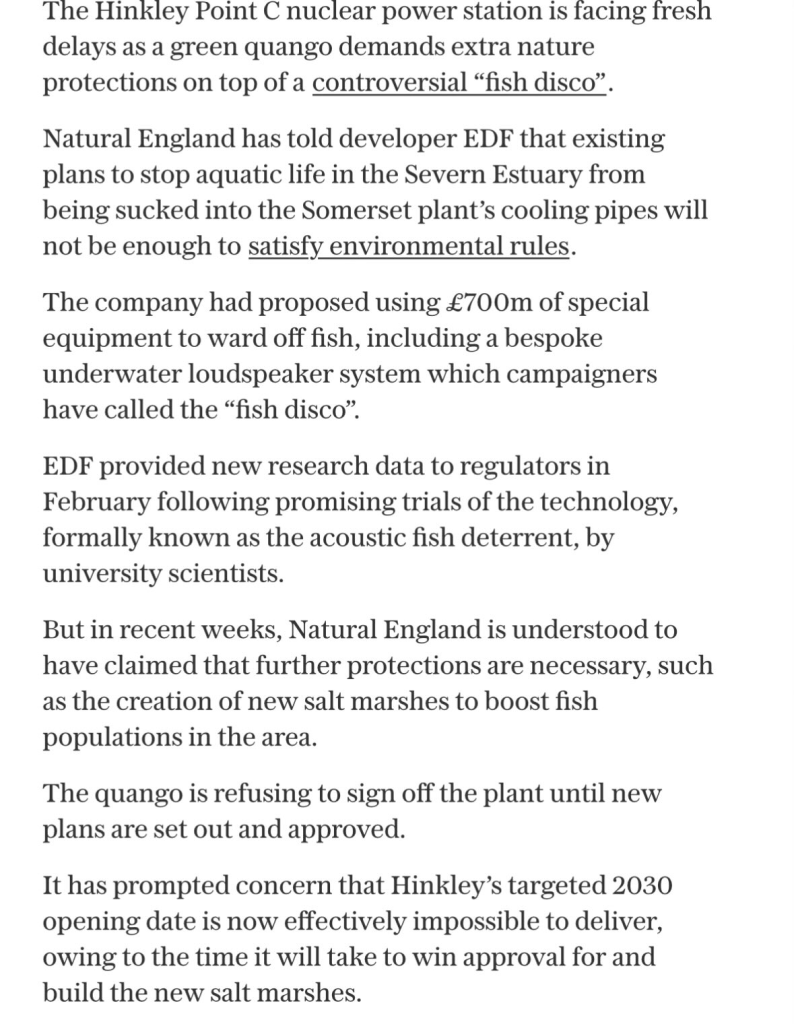
    I appreciate this is England, but we face many similar problems and this is exactly the kind of thing Collison was on about. Natural England have a very specific remit and are doing zero calculation of the tradeoffs. This whole affair is a farce - a very, very expensive one. They are now going to waste the guts of a billion pounds for absolutely no good reason.

    image.png


  • Advertisement
  • Registered Users, Registered Users 2, Paid Member Posts: 15,661 ✭✭✭✭Igotadose


    I took from her substack that we in Ireland are indeed good at coping - we buy health insurance to stay in the private system, where it takes 5 days rather than the 55 weeks to get an MRI (that seems like an insane number to me.) Yet, nothing from any government. As for outcomes, well, is the HSE measuring them? Because if so, you have to be pretty darn skeptical.

    Her point that buying insurance is a fail of the government is correct. Can we afford to provide a system that doesn't force people to go outside of it? With our revenues? We run a surplus. If we were concerned about losing this surplus, we'd be saving/paying down debt/investing in infracture while have the money. Yet, we'd rather just bury our heads in the sand and hope the cheques will still keep coming.

    As for rail, well, why no Luas direct to Dublin airport? Apparently nearly 50 million spent on studies some time ago, and no results?

    We Irish cope, and we offload the government from any responsibility or accountability.


  • Moderators, Category Moderators, Arts Moderators, Sports Moderators, Paid Member Posts: 56,288 CMod ✭✭✭✭magicbastarder


    On the topic of MRIs - I was talking to someone at the weekend who has a chronic health condition. He was recently on a ward with another chap who was waiting five days for either an MRI or CT scan; they needed it to discharge him. But because he was not in any urgent need of it (they figured he was fine to leave but the scan was just to confirm this), he kept getting bumped off the list for the scan. For five days. And the scanner was shut down ever day at 5pm.

    One bean counter was obviously in charge of the scanner and wasn't going to pay staff overtime to keep it running late, or (god forfend) 24/7. But they weren't talking to the other bean counters, who now had a chap 'blocking' a bed for five days for no benefit.

    It's almost like we have deliberately baked in 'the urgent drives out the important' into our systems.


  • Registered Users, Registered Users 2, Paid Member Posts: 15,661 ✭✭✭✭Igotadose


    I think this is an example of 'no consequences' rather than a resourcing issue.

    My best example of this - the Boston Marathon bombing in the USA, took place at a time of 'shift change' at most of the hospitals in the area. Doctors had headed home.

    They all turned around when they heard the news and came back, and many lives and limbs were saved as a result.

    A similar event here? You wouldn't see that behaviour.

    As I recall, there was a news item about a young woman dying because doctors wouldn't come in to work due to bad weather one winter, as transiting was difficult. She'd been injured in an accident.

    No consequences of course. LIkewise, Savita's doctor is still 'practicing obstetrics.'

    My point is, it's the no consequences that cause this, not lack of resources. It's a character failing pervasive in Irish society.


  • Moderators, Sports Moderators, Paid Member Posts: 33,951 Mod ✭✭✭✭Podge_irl


    The staff don't necessarily have any interest in doing overtime either and they are generally very reluctant to move to shift work.


  • Moderators, Sports Moderators, Paid Member Posts: 33,951 Mod ✭✭✭✭Podge_irl


    They all turned around when they heard the news and came back, and many lives and limbs were saved as a result.

    A similar event here? You wouldn't see that behaviour.

    This is nonsense and insanely disparaging. Doctors already work huge numbers of unpaid overtime hours during the normal course of events.


  • Advertisement
  • Registered Users, Registered Users 2 Posts: 1,960 ✭✭✭csirl


    We have a budget surplus.

    We have good universities.

    We have loads and loads of school leavers wanting to study medicine.

    The shortage of doctors should be easy to solve.


  • Registered Users, Registered Users 2, Paid Member Posts: 15,661 ✭✭✭✭Igotadose


    Surgeons? Consultants? My bombing anecdote is well known and documented.

    Have you got statistics about the insane hours put in by high-level surgeons in Ireland?


  • Registered Users, Registered Users 2, Paid Member Posts: 15,661 ✭✭✭✭Igotadose


    What's missing is the character in the citizenry to do something about it. A Harvard-educated graduate had to write a piece about it, and here, she's attacked. No one in Ireland would've written that piece.


  • Registered Users, Registered Users 2, Paid Member Posts: 9,861 ✭✭✭Gloomtastic!


    The nitpickers.

    Two bye-elections going on at the moment. I bet not one candidate is proclaiming to reform the civil and public services. Why not? Because the unions are a vested interest and their block vote is a deciding factor whether you get elected or not.

    I was at a public meeting with Peader Tobin once where he said he’d bring accountability into the civil service. When I tackled him about taking on the civil service unions, he back tracked and said he’d only bring it in at Secretary General level. What a cop out!

    No accountability. No change.


  • Moderators, Sports Moderators, Paid Member Posts: 33,951 Mod ✭✭✭✭Podge_irl


    No one is questioning your anecdote about Boston. The incredibly damning made up notion about what would happen in Ireland in the circumstances is, however, bullshit.


  • Registered Users, Registered Users 2, Paid Member Posts: 15,661 ✭✭✭✭Igotadose


    Really? Aoife Johnston's family might disagree with your verdict of 'bullsh1t.'

    https://www.irishtimes.com/crime-law/courts/2024/04/24/aoife-johnston-inquest-teenager-waited-15-hours-before-she-was-given-antibiotics-to-treat-sepsis/

    Among other things from this article:

    'The inquest heard that on the night of December 17th, nursing staff – amid a “chaotic” and war zone-like environment in the emergency department – contacted two consultants to inform them of significant overcrowding. An emergency consultant refused to attend the hospital following a request from the staff, the inquest heard.'

    '

    Patricia Donovan, assistant director of nursing at the hospital, who told clinical nurse manager Katherine Skelly to contact on-call consultants with concerns about overcrowding, said she was “not surprised, but disappointed” that the emergency consultant did not attend when requested.'

    Just like what didn't happen in Boston…. I'm sure the consultant got a firm talking-to and is still in their position, much like Savita's OBGYN who killed her.

    '

    Fiona Steed, who was general nursing manager and the “executive on call” on the weekend in question…

    Ms Steed did not attend the hospital on the evening in question, stating that it was not normal practice for her to do so.'

    etc. So, here we have bad weather causing problems, the person in charge of the hospital didn't arse themselves to go in, the consultants didn't, either… and you think my point is b*llshit? Give me an example when Ireland's medical service rose to the occasion.

    And, again, this isn't about the HSE; it's about character, and consequences, two things severely lacking here and in many of the examples given in the substack and the article linked above. Nitpick the data all you want, it's the character failure that's the problem.


  • Moderators, Category Moderators, Arts Moderators, Sports Moderators, Paid Member Posts: 56,288 CMod ✭✭✭✭magicbastarder


    Etc.

    Etc. ?

    You've posted a single example of a single consultant.

    And said consultant stated the gravity of the situation was not explained to them.


  • Registered Users, Registered Users 2, Paid Member Posts: 15,661 ✭✭✭✭Igotadose


    There was plenty of character failings in that article I linked to. Not just one consultant.

    I doubt any consequences were felt by any of the individuals whose failures to assist that poor girls caused her death. No doubt some of them felt sad, their poor feelings aintitashame.

    As for the consultant to whom the situation wasn't explained, what kind of defense is that? This is a consultant, that defense should get them stricken off.

    With no consequences there'll be no change.


  • Moderators, Category Moderators, Arts Moderators, Sports Moderators, Paid Member Posts: 56,288 CMod ✭✭✭✭magicbastarder


    you have completely and utterly failed to prove the point you were trying to make.

    if i could find (and don't worry, i'm not going to bother trying) a single similar example from the states, would that somehow prove that the same culture exists there?


  • Moderators, Category Moderators, Arts Moderators, Sports Moderators, Paid Member Posts: 56,288 CMod ✭✭✭✭magicbastarder


    as good a place as any to put this:

    https://www.irishtimes.com/opinion/editorials/2026/05/31/the-irish-times-view-on-one-off-housing-changes-populism-trumps-planning

    When full details of the new proposals are published, they may prove to be the most blatant example yet of an administration willing to trade long-term damage for short-term political relief, dressing up a capitulation to planning populism as a solution to the housing crisis.


  • Advertisement
  • Registered Users, Registered Users 2 Posts: 117 ✭✭thosewhoknow


    One-off housing is such a disastrous policy I have no idea how it is still allowed. Look at almost any country in Europe and you’re not allowed build houses outside villages/towns and they save a fortune in not having to maintain electricity/sewage/water/broadband to each individual property. So many rural pubs and schools wouldn’t have to close if they were serving actual villages instead of wide tracts of low population density land. If the govt planned villages around existing infrastructure with clustered houses instead of long rows down every road people wouldn’t complain about the "decline of rural Ireland" so much.


  • Registered Users, Registered Users 2 Posts: 7,418 ✭✭✭Charles Babbage


    The above is largely false, the schools have the same declining number of children whether the houses are in the village or not. Electricity and broadband is widely distributed and one house more makes little difference.

    But there is a broader point, if there is wish for people to build in villages then ensure that there is an adequate supply of houses in villages. Local authorities could acquire land, provide services, commission a few houses and make other sites available. But of course they never do this, but instead try and intimidate people who are making an effort to provide their own house. This initiative is not so much wrong as unbalanced as there will be no effort to do the former, which is bleeding obvious.


  • Moderators, Sports Moderators, Paid Member Posts: 33,951 Mod ✭✭✭✭Podge_irl


    What? Supplying electricity and broadband to one off housing is monstrously more expensive.


  • Registered Users, Registered Users 2 Posts: 7,418 ✭✭✭Charles Babbage


    it is more expensive in the aggregate sense. But any new house is only a few metres from an existing line then it makes little difference. Nobody is proposing increasing the dispersion of the population, only maintaining existing patterns.


  • Moderators, Category Moderators, Arts Moderators, Sports Moderators, Paid Member Posts: 56,288 CMod ✭✭✭✭magicbastarder


    Ireland has approx one fifteenth the population of the UK but something like one third or one quarter the number of electrical transformers - because of the population patterns. Maintaining those, especially after bad weather, is ruinously expensive.

    An post have stated that letter delivery is four times more expensive for them in rural areas than it is in urban ones.

    My father in law used to regularly be on to eir about his broadband because of tractors or trees taking down cables. A single repair job probably wiped out any profit they got from his custom for a year.

    People complain about the cost of living in Ireland. One of the factors is the rest of us subsidising one off houses.


  • Registered Users, Registered Users 2, Paid Member Posts: 1,736 ✭✭✭Consonata


    Local authorities don't have the resources you're describing. They barely have enough to provide maintenance on existing housing stock.

    Electricity is not broadly distributed, new connections in rural areas always cost way more than in exurban areas. Building out a mainline to service one house rather a dozen or more is costly, and that isn't getting into the maintenance costs involved


  • Registered Users, Registered Users 2, Paid Member Posts: 3,517 ✭✭✭KrisW1001


    The long distance between rural connections on the low-voltage distribution network is a source of power loss in the grid. (You lose more power over a 10 km span on a 240 volt AC line than on a 10 kV one - it’s the reason why high-power transmission lines run at higher voltages). You can’t charge for energy that doesn’t reach a consumer, but you still had to generate it, so that loss becomes a monetary cost too. This, plus the higher maintenance costs of such a long rural distribution lines is one factor in our high energy prices, and it’s one that cannot be fixed by any kind of change in generation.

    Rural domestic customers pay a higher standing charge than urban, but both pay the same unit rates. In effect, urban customers subsidise the electricity costs of rural customers. I don’t necessarily think this is “wrong”, but it is the truth.

    One-off housing itself is not the problem; the problem is the practice of building these houses as far away from each other as the land permits. If these one-off builds clustered into natural “villages” there wouldn’t be as much of a problem, but the kind of ultra-low density we actually have makes it extremely hard (and this expensive) to provide any kind of services.


  • Moderators, Category Moderators, Arts Moderators, Sports Moderators, Paid Member Posts: 56,288 CMod ✭✭✭✭magicbastarder


    one thing i hated about the rural broadband plan - paid for by the taxpayer - was that eligibility should have ended say 500m or 1km from a village. people who made the conscious decision to move out beyond economic provision of services were suddenly having those services subsidised again.


  • Registered Users, Registered Users 2, Paid Member Posts: 3,517 ✭✭✭KrisW1001


    I really disagree. There are many people in this country who have lived for generations beyond this limit - they are still citizens of this country, and entitled to the same access to infrastructure. The whole point of having a nation state to even out these differences in costs and accessibility for the benefit of everyone living here. Should we also stop funding green spaces in cities because people chose to live far away from the countryside?

    (I live in a city; I grew up in a city; my ancestors going back as far as the 1850s are all from cities too… this isn’t me taking a position of self-interest)


  • Advertisement
  • Moderators, Category Moderators, Arts Moderators, Sports Moderators, Paid Member Posts: 56,288 CMod ✭✭✭✭magicbastarder


    my wife grew up 5km from the outskirts of the nearest town. her parents still live in the same house. the majority of people who live along the road there don't have a connection to the land.

    i've no problem with farmers benefitting from rural broadband, but not people who live out there simply because they wanted a half acre lawn.


Advertisement
Advertisement