Advertisement
Help Keep Boards Alive. Support us by going ad free today. See here: https://subscriptions.boards.ie/.
https://www.boards.ie/group/1878-subscribers-forum

Private Group for paid up members of Boards.ie. Join the club.
Hi all, please see this major site announcement: https://www.boards.ie/discussion/2058427594/boards-ie-2026

Energy infrastructure

1232233235237238

Comments

  • Registered Users, Registered Users 2 Posts: 1,799 ✭✭✭bored65


    And the report is out renewables brought down Spanish grid due to “rapid voltage fluctuations” a year ago


  • Registered Users, Registered Users 2, Paid Member Posts: 3,517 ✭✭✭KrisW1001


    Oh what a surprise…

    That report says that renewables were not the cause of the grid failure. This might shock those who believe in easy answers, but it was a combination of human factors, loose tolerances, delays in control paths, poor control specifications and inadequate monitoring of commercial private generators.

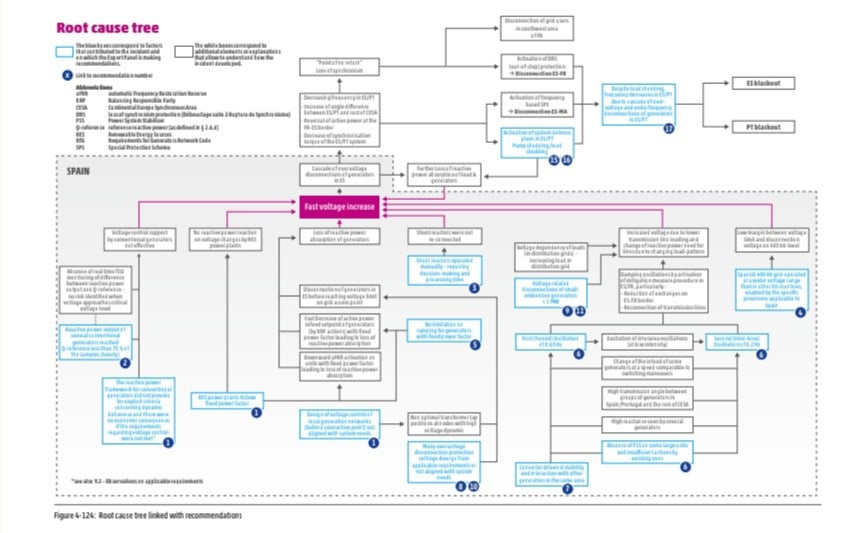
    The final report, link below, gives a root cause analysis, and it cites multiple weaknesses in the grid’s control and management systems. A major contributor was not renewables, but the effect of private on-site generation on grid stability - these installations do not report much data back to the grid operator, but can cause dramatic shifts in load if they are switched in suddenly. Also, conventional power generation plants did not provide detailed enough data about their voltage regulation which resulted in a voltage oscillation not being detected until it had hit dangerous levels. Page 332 of the document below graphs the multiple causes of the failure for those who are interested:

    Grid Incident in Spain and Portugal on 28 April 2025 » ICS Investigation Expert Panel » Final Report » 20 March 2025

    (I can’t reproduce it here as it becomes illegible even at the largest size)

    Since then, Spain has added more renewable energy to its grid, at a rate faster than in 2024-2025. The usual suspects might believe this was down to wind and solar, but the people with a clue who run the Spanish and Portuguese energy system seem to think otherwise.


  • Registered Users, Registered Users 2 Posts: 1,390 ✭✭✭Exiled Rebel


    Screenshot_20260429-105945~2.png

    Excellent synopsis Kris. I tried inserting the root cause tree which makes fascinating reading. Well worth others having a look at to see how the cascade occurred.

    I wonder how does our grid compare.


  • Registered Users, Registered Users 2 Posts: 1,799 ✭✭✭bored65


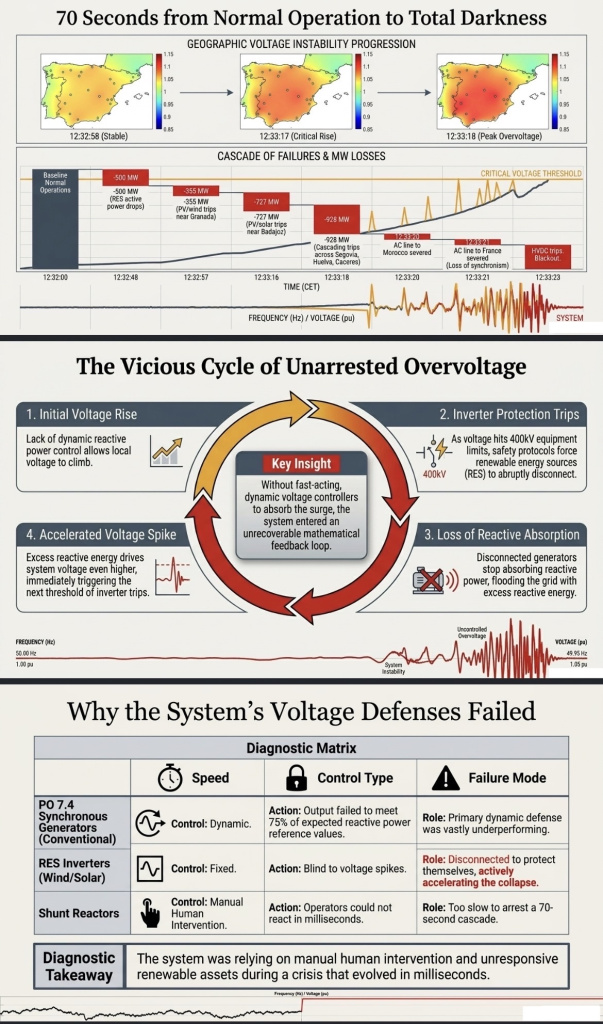
    The pdf linked in center on page clearly outlines (start on page 14) how renewables led to over voltages and fluctuations and then in 70 seconds brought the grid down by rapidly (beyond human control) cascaded and tipped the system over

    here is an infographic of the timeline

    IMG_6839.jpeg

    A major contributor was not renewables, but the effect of private on-site generation on grid stability”

    And what generation technology where these “private” operators using?

    Sound to me like an attempt has already began to put a positive spin (hahahaha pun!) on the events and do everything to distract from the root causes


  • Registered Users, Registered Users 2, Paid Member Posts: 16,046 ✭✭✭✭josip


    image.png

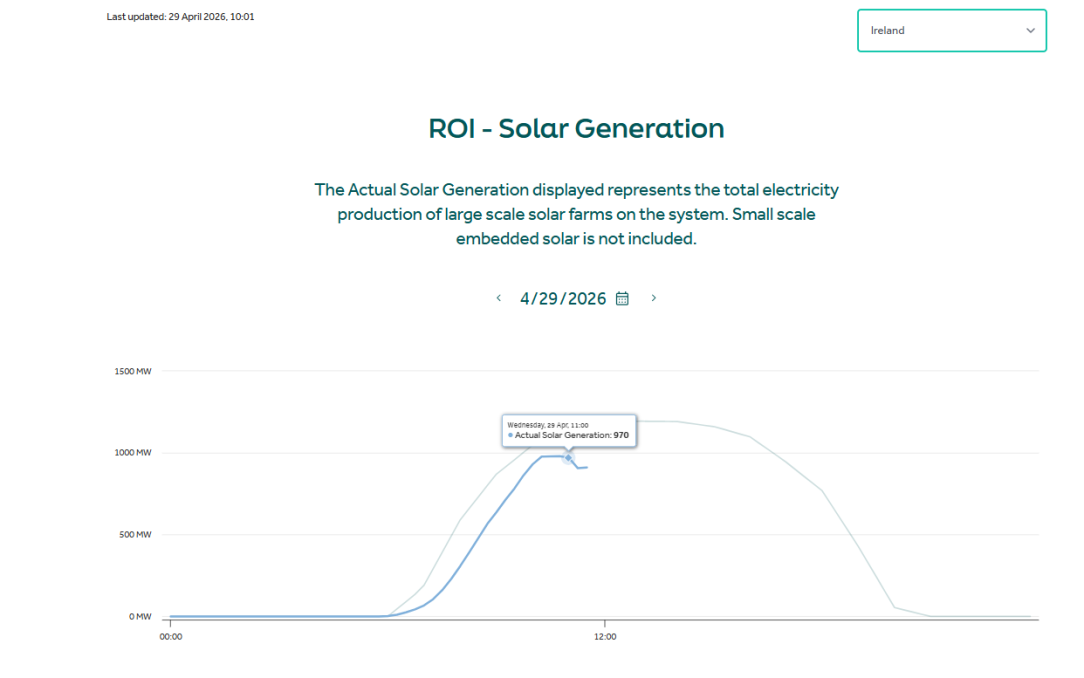
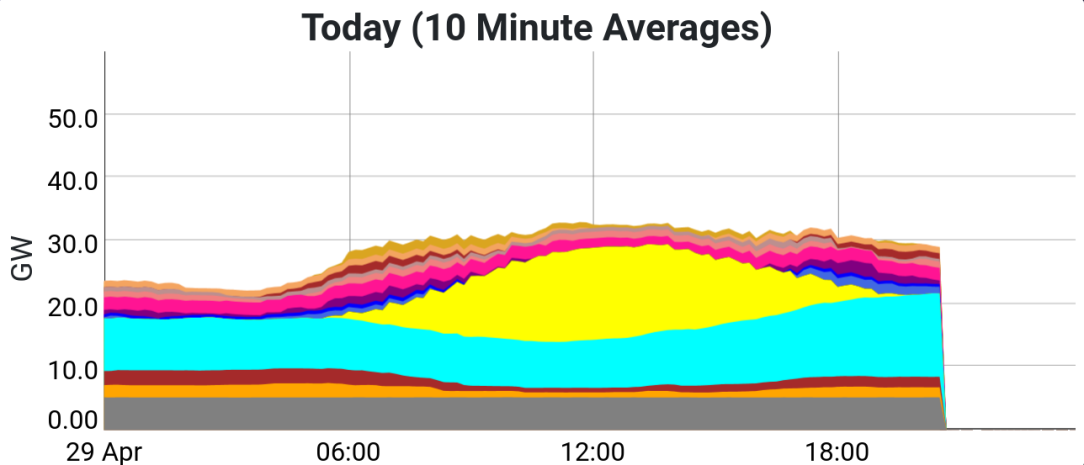
    Looks like 'clipping' today to me. Do we need bigger inverters :) ?


  • Advertisement
  • Registered Users, Registered Users 2 Posts: 1,799 ✭✭✭bored65


    it’s a good thing Ireland is famously sunny for 350+ days of the year

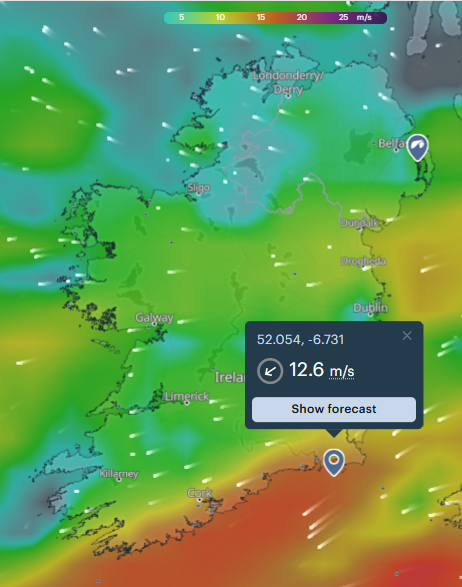
    Meanwhile 7GW of wind is only producing 1GW again


  • Registered Users, Registered Users 2, Paid Member Posts: 16,046 ✭✭✭✭josip


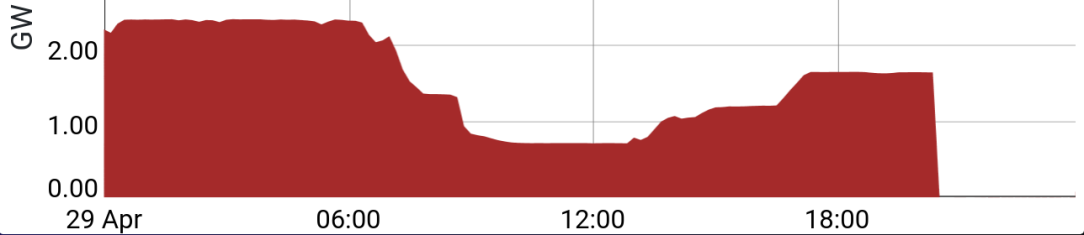
    You're right, we really could do with that offshore wind today.

    image.png


  • Moderators, Motoring & Transport Moderators, Technology & Internet Moderators Posts: 24,360 Mod ✭✭✭✭bk


    Yes, looking at the GB data was very interesting, in March this year their average gas share dropped to just 22% compared to 30% last year, pretty big drop.

    Interestingly we saw a big drop in our CO2 intensity during the same period, from 330 March last year to 240 for March this year. That is a very dig drop for a single year. Looks like thanks to a big jump in wind power from 34% share to 41.6% share and also a doubling in interconnection, I assume thanks to Greenlink coming online.

    Good progress, but obviously lots more to do.


  • Registered Users, Registered Users 2, Paid Member Posts: 3,517 ✭✭✭KrisW1001


    You do not understand the information you are posting, if that’s the conclusion you’ve drawn. Yes, the disconnection of renewable generation (step 2 on your middle infographic) was one step in the cycle that repeated to cause the problem, but renewable generation itself did not trigger this issue: the grid was stable with renewables connected before the event, but became further destabilised when they were removed. The report I linked to has the details, and a series of recommendations to avoid a similar collapse in future.

    …and private on-site generation is predominantly gas-fired combined heat and power systems.


  • Moderators, Science, Health & Environment Moderators Posts: 15,097 Mod ✭✭✭✭marno21


    SNSP has been at 74-75% since 10:30 this morning. Both solar and wind actual generation are quite a bit lower than forecast. Interconnectors also running at full whack.

    Would be a good time to have a Silvermines type storage system in place for days like this.

    UK currently running at 3% fossil fuels (3% gas, 40% solar, 33% wind, 15% nuclear, 3% biomass, 10% net import and -4% to pumped storage)


  • Advertisement
  • Registered Users, Registered Users 2 Posts: 1,799 ✭✭✭bored65


    Here you go

    1. Lack of Reactive Power Support (Fixed-Power-Factor Mode)

    Most renewable generators in Spain were operating in a "fixed-power-factor" control mode. This meant that during the rapid voltage rise, these plants were unable to adjust their output to provide the reactive power support needed to stabilize the system.  

    Section 4.1.2.3 (referenced on Page 220): Describes how RES generators followed this fixed mode and were thus "unable to respond to voltage fluctuations".  

    Section 4.1.3.3 (Page 220): Summarizes this as one of the concurrent factors that caused the loss of voltage control.  

    2. Unexpected and Early Disconnections

    A critical factor was the "premature" disconnection of renewable plants before they reached their technical or regulatory voltage limits.  

    Section 3.2.1.3 (Page 147): Details "Event 4a" and "Event 4b," where large amounts of RES generation tripped in Spain due to overvoltage.  

    Section 4.1.2.7 (Page 215): Notes that some plants disconnected even while voltage was technically within limits, which removed the reactive power they were absorbing to keep voltage down, causing the voltage to rise even further.  

    Section 4.6 (Page 332): The Root Cause Tree explicitly identifies "Disconnection of generators in ES before reaching voltage limit" as a key factor leading to the blackout.  

    3. Impact of Small-Scale PV (<1 MW)

    The incident highlighted the significant impact of small-scale distributed energy resources (DER), such as rooftop solar, which are often not directly observable by the transmission system operator (TSO).  

    Section 4.3 (Pages 278, 287–289): Analyzes the behavior of units under 1 MW. It found that a large volume of these units disconnected during initial oscillations and then attempted to automatically reconnect approximately 4 minutes later.  

    Section 4.3.3.2.2.3 (Page 287): Explains that this reconnection added active power back into a destabilized system, contributing to the severe load-generation imbalances.  

    4. Influence on System Damping and Oscillations

    The shift from conventional rotating machines to inverter-based resources (IBRs) like wind and solar reduced the system's natural "inertia" and "short-circuit power".  

    Section 2.4 (Page 50) and Section 2.5 (Page 54): Discuss how low-inertia conditions made the system more susceptible to the oscillations observed on the day.  

    Section 4.2.5.4 (Page 276): Concludes that the presence of static generators (renewables) instead of conventional ones increased the "electrical distance" and made it harder for the system to dampen the 0.63 Hz and 0.2 Hz oscillations.  

    5. Role During the Restoration Process

    During the recovery phase, the variable nature of renewables presented a challenge for re-energizing the grid.  

    Section 5.8 (Page 390): Explains that in both Spain and Portugal, renewable plants were initially kept disconnected or their connection was strictly controlled to avoid destabilizing the fragile "islanded" systems during the black-start and restoration sequences.


  • Registered Users, Registered Users 2, Paid Member Posts: 3,517 ✭✭✭KrisW1001


    Again, you do not understand what it is that you’re reading, if you even read it at all; you are just lifting whatever text that looks like it says “renewables bad” and presenting the fragments without context as if this can prove anything.

    If renewables were such a problem, and were the cause of Europe’s only large-scale blackout in the last 50 years, surely the Spanish operator would limit new renewable connections into the grid? They haven’t. Renewable generation is increasing at a faster rate than before the collapse.


  • Moderators, Recreation & Hobbies Moderators, Science, Health & Environment Moderators, Technology & Internet Moderators Posts: 99,467 Mod ✭✭✭✭Capt'n Midnight


    image.png

    Looks like Solar in the UK on a good day is displacing Biomass eg DRAX and gas and imports (note different scales)

    image.png

    image.png

    Gas in the UK Today on a grid roughly 10 times ours.


  • Moderators, Motoring & Transport Moderators, Technology & Internet Moderators Posts: 24,360 Mod ✭✭✭✭bk


    Great news, Ireland on its own has now blown way passed 1GW of solar generation, 1,132MW for just Ireland and 1,224MW for all Island.

    Keep in mind this doesn’t include another 1GW or so of roof top solar.


  • Registered Users, Registered Users 2, Paid Member Posts: 16,046 ✭✭✭✭josip


    Our high domestic electricity prices does make home PV a no-brainer. The government appears to be in a bit of a bind, of its own making, to miss the 2030 targets by as little as possible and not have to spend billions buying carbon credits.

    National-scale projects in Ireland just take too long to get started and delays are too easily accepted. The Celtic interconnector supposedly missed the summer window 2 years ago delaying commissioning until 2026 at the time but now we've got a further 2 years of delay due to cable manufacture issues outside their control.

    The longer projects take, the more opportunity there is for them to be beset by further delays.

    Offshore wind probably won't be operational until 2033 at best, let's be realistic.

    On shore wind will see some incremental increase in the next 5 years with repowering of older farms, but it's not going to make as big a dent in our emissions as offshore wind.

    Synchronous condensors will hopefully allow us get to 80% SNSP and beyond, but how far beyond? 95% is often mentioned but will the condensors currently being installed allow us to get all the way there?

    The only game in town at the moment that I can see is domestic solar and the government are likely to keep it highly subsidised with grants and zero VAT. The problem I have with this is that investing in private domestic infrastructure by way of grants benefits those already well enough off to own their own homes. It also encourages housing development over apartments and the resulting urban sprawl will bring with it its own infrastructural issues.

    I would like to see the government investing more in national-level energy infrastructure that benefits everyone equally.


  • Registered Users, Registered Users 2, Paid Member Posts: 6,404 ✭✭✭roosterman71


    I'm just back from a meeting with the IDA discussing the repurposing of an existing IDA building and the building of a new one. Neither include rooftop solar and there are no plans to add it to the plans. Both buildings are pencilled in for office and software companies. And there's ~2500sqm of roof across both buildings. Isn't that bullshit?


  • Moderators, Motoring & Transport Moderators, Technology & Internet Moderators Posts: 24,360 Mod ✭✭✭✭bk


    Yes, the outlook is mixed and it is looking like we might miss our 2030 goal, with 2032 looking more likely.

    The SNSP is looking pretty good, we already hit the current 75% goal on time and work seems to be going well on the 95% by 2030. A second hybrid battery and sync con went lively in shannonbridge a few weeks ago and a bunch more are making good progress to come on line over the next two years.

    They seem to be going more straightforward as they are slotting into existing power plants and don’t face the usual nimby issues.

    Solar seems to be going well, we have already meet the original 2030 goal of 2.5GW of solar (including rooftop), so that is pretty good and notable, 4 years early. Now having said that that original goal was increased to 8GW by 2030. Will we get there by then, maybe, it is a bit of a stretch, however I suspect we won’t be too far off. Solar is relatively quick and easy to install and prices continue to drop.

    Obviously the delay to the Celtic interconnector is disappointing, however it does sound like it should be there before 2030 anyway.

    Onshore wind, isn’t just repowering, there are some new farms awarded as part of both RESS 4 and 5, but of course a fraction of what we are expecting from offshore wind.

    As you say the biggest concern would be off shore wind, it seems to be stuck in ACP planning hell, just like Metrolink was! As a result, it is looking unlikely for 2030, hopefully if ACP finally clear them, then 2032 or so might be doable, fingers crossed.

    I suspect we will also see a lot more BESS over the next few years with the falling prices.

    of course the other big story is what is happening behind the meter, rooftop solar, home batteries and industry investing in BESS and renewables directly.

    BTW I totally agree with your point about apartments, I live in one myself (though well off) and it is frustrating not being able to participate.

    I’d like to see the government legislate for balcony solar and at home batteries and perhaps legislation and schemes to encourage apartment buildings and offices etc. to put up panels on the roof, etc.

    we are also probably need some sort of scheme to promote upgrades to insulation and the creation of shared energy systems in apartments.

    Like my apartment is B3, but uses gas central heating. I don’t think I’d be allowed by the management company to install a heat pump system or make outside insulation changes. The government will need to tackle that for older buildings.


  • Registered Users, Registered Users 2 Posts: 1,808 ✭✭✭Busman Paddy Lasty


    That's insane. There are grants available and if they wanted to push the boat out could have a containerised battery with 1 or 2 days capacity.

    IDA might want the tenant do this however.


  • Registered Users, Registered Users 2 Posts: 442 ✭✭tppytoppy


    Commercial solar adoption has considerably reduced in Germany in the last quarter. If it weren't for home solar it would be much worse. The domestic panels and storage options still make it worthwhile in the home.

    https://www.cleanenergywire.org/news/germanys-solar-installations-drop-while-new-battery-storage-hits-record

    Remember that Germany has a much better solar resource than Ireland.

    Denmark which is a similar country to Ireland in terms of climate and energy policy is wrestling with the problems of datacentres

    https://www.cnbc.com/2026/05/04/denmark-data-centers-moratorium-grid-pause-power-demand.html


  • Registered Users, Registered Users 2 Posts: 9,236 ✭✭✭Markcheese


    You'd think these days every new build , domestic and commercial,should be built at the very least with solar in mind ,

    I can see though that here'd be a disconnect between a property owner and tennants , if its my warehouse - and my roof , it pretty much my solar resource , so my tennant wouldn't have the right to put solar on the roof for their benefit..

    Slava ukraini 🇺🇦


  • Advertisement
  • Moderators, Motoring & Transport Moderators, Technology & Internet Moderators Posts: 24,360 Mod ✭✭✭✭bk


    That is exactly the issue, why would the landlord invest in putting solar panels up when it is the tenant who normally pays the electricity bills and would thus benefit from reduced electricity costs.

    Same problem in the residential rental market. Normally the renters pay the electricity bill, so the landlord doesn’t see the benefit in investing in panels.

    There is a disconnect in the economic benefit.

    And it isn’t just solar panels, insulation, heat pumps, more energy efficient doors and windows, he’ll even LED lights.

    No point in the landlord investing in any of these when the tenants/renters get stuck with the energy bill.

    I’m not sure what the answer to this is, I suppose for new builds and major refurbs the government can simply require that the roof be covered in solar panels or you don’t get planning permission. That would be a start, but it is a wider problem with existing buildings.


  • Moderators, Motoring & Transport Moderators, Technology & Internet Moderators Posts: 24,360 Mod ✭✭✭✭bk


    This is the relevant bit:

    “Residential solar installations dropped 21 percent and commercial rooftop installations fell 33 percent, while large-scale ground-mounted solar grew 20 percent, bringing total new solar capacity to 3.5 gigawatts. ”

    If you spend any time in Germany then you’d know they are WAY ahead of us on solar. Driving around pretty much almost every home and building already has solar panels. Hell they even put them on the balconies of apartment buildings!

    I suspect they have simply saturated the market for rooftop solar.

    Now all those people with solar on their roofs are now rushing to add cheap batteries to their setup. Get even greater benefit from it.

    Keep in mind Germany were leaders in Solar, they use to even manufacture solar panels and were once the world leader.

    Germany has 117 GW of solar! We have about 2.5 GW. Even taking into account population differences, that is like 3 times Ireland per capita.

    I look forward to the day that solar installations start to slow down here because we have saturated the market like Germany!


  • Registered Users, Registered Users 2, Paid Member Posts: 16,046 ✭✭✭✭josip


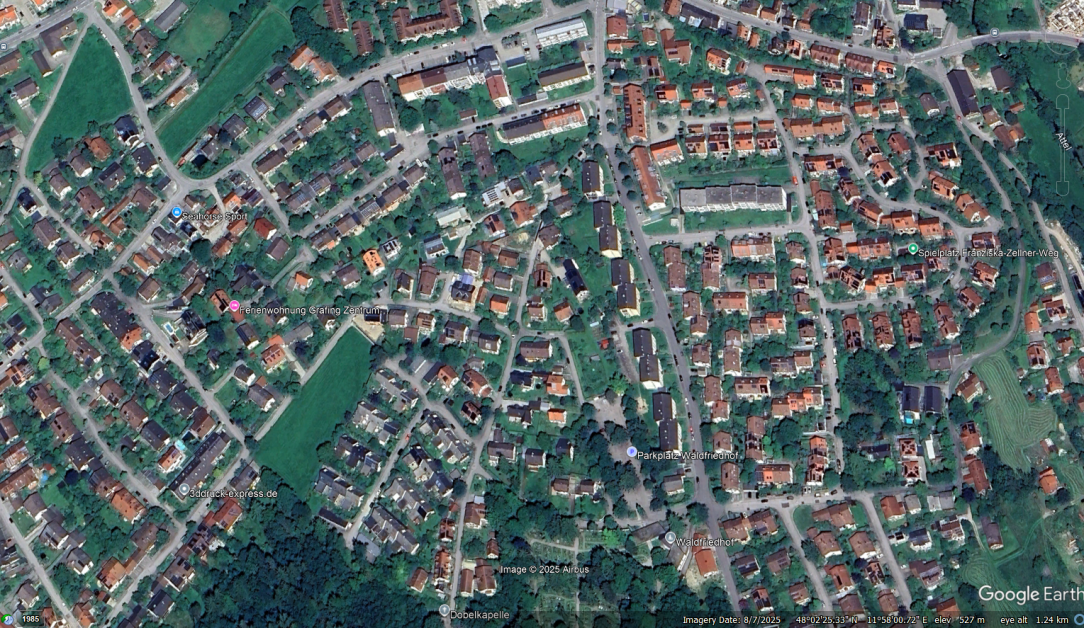
    What percentage of rooftops would be considered saturated and how would it vary from south to north? There are still a lot of unused rooftops. This is a random village in Bavaria, Aug 2025.

    image.png


  • Moderators, Motoring & Transport Moderators, Technology & Internet Moderators Posts: 24,360 Mod ✭✭✭✭bk


    Keep in mind my previous post about Landlords not being interested in installing solar. Germany has the same issue I mentioned above of landlords not being interested in installing solar for their tenants. That is why balcony solar is so popular, a renter can just plug it in and when they leave unplug it and take it with them, no landlord involved.

    So when I say saturated, I mean people who own their own home, live in a house rather then an apartment and have the upfront cash to drop on solar. The market for people who can easily put up solar and can afford to do so has largely been satisfied, those same people now are adding to it by heavily investing in adding batteries to their home.

    That isn’t to say every home has solar, but now you are largely out of the “free market” and more into an area where you need government intervention. Legislation needed to force landlords to put up solar, interest free loans for low earners, etc.

    We will end up facing the same challenges in time, but we are still very much in the early stage where homeowners can do it on their own homes.


  • Registered Users, Registered Users 2, Paid Member Posts: 3,517 ✭✭✭KrisW1001


    In a market with adequate supply, the presence of solar panels is something that would command a premium, as letters would prefer most efficient properties to rent, and properties without would command a lower price. However, in the Irish market right now, landlords don’t have any incentive to spend €7-10k on solar when any kind of property at all will command a high rent simply by existing.


  • Registered Users, Registered Users 2 Posts: 442 ✭✭tppytoppy


    Tenants know their costs as both warm rent and cold rent are known to them.


  • Registered Users, Registered Users 2, Paid Member Posts: 3,517 ✭✭✭KrisW1001


    “Warm rent” and “cold rent” are German concepts that are meaningless in the Irish market. Here, the price advertised for the property is the price that will be paid by the tenant - there is no concept of Nebenkosten on tenancies here. Even where heat or electricity are included (a very rare situation), there will be no breakdown by the landlord of how much of the monthly rent is going to fund these services. The lessee pays to live in the property, and they then separately pay for whatever the landlord didn’t include.

    The landlord almost always pays property taxes, building service fees and things like lift or structural maintenance, but that’s also not broken out in the tenancy pricing: the rent is only ever presented as a total, and the tenant decides to pay it or not.

    But that’s a diversion from the point: the economics of letting mean that there is no incentive for any landlord to invest in improving a property until the lack of that investment affects the ability to let the property.


  • Registered Users, Registered Users 2 Posts: 24,493 ✭✭✭✭ted1


    its a funny one, i assume that the IDA will be landlords, so do you expect them to provide free electricity or do you expect them to charge via meter adn at what price? what if they end up exporting? The regualtor needs to reguate it before you expect the IDA to susbideis private companies electricity usage.


  • Registered Users, Registered Users 2, Paid Member Posts: 3,517 ✭✭✭KrisW1001


    It would not have been a subsidy, because the tenant would pay for the use of the solar power facility as part of their rent, much as they pay for efficient air conditioning, insulation or triple-glazed windows: it feeds into a lower running cost. If there’s only one tenant in the building, it would be relatively straightforward to manage.

    I can see two reasons, though: one technical, and the other legal.

    First, the technical: not all of IDA’s buildings are rented exclusively to one tenant, and managing shared solar in a multi-tenancy commercial building gets awkward: each company has its own metering point and its own electricity bill. So divvying out the solar power to each customer within the building would require a relatively complex power management system, which could still result in under-used solar generation.

    The alternative is that solar is used for the common building services (AC, lifts, light in lobbies and access areas), and the owner just collects the feed-in tariff from the surplus, but that’s not the best return on capital, not least because there’s an upper limit on feed-in (50 kW DC) for businesses that an installation of this size could easily exceed - 50 kW is only about 400 square metres of roof area. Okay, IDA could do a deal outside of the microgeneration scheme, but that raises the second problem: if it does so across its buildings, then it’s engaging in energy generation and sales, something it has no legal remit to do.

    That feed limit is a big problem for a 9-to-5 occupation, as in summer time there will still be large amounts of energy being produced with nobody in the building to use it. Batteries can help, but batteries are a much poorer return on investment than just using the energy somewhere else.

    There was a proposal to fit all schools with rooftop solar, so that the surplus during spring/autumn evenings and in the summer when schools are closed would result in a lower overall energy bill for the state’s property portfolio, but I suspect it has been caught up in the same legal problem: the scale of the project and its surplus would make the government a significant electricity supplier, at a cost that would undercut every other generator, given that it’s financed by sovereign debt.

    Personally, I think we should just legislate to allow such uses of what is, after all, our own property, so that it becomes the norm that government-owned buildings have solar power - the money saved from buying electricity gets to be used in other areas, so we as a nation will benefit.


  • Advertisement
  • Registered Users, Registered Users 2, Paid Member Posts: 4,434 ✭✭✭MacDanger


    Our local national school (40+ years old) has been fitted with solar panels in the last 18 months so that's proceeding in some areas at least


Advertisement
Advertisement