Advertisement
Help Keep Boards Alive. Support us by going ad free today. See here: https://subscriptions.boards.ie/.
https://www.boards.ie/group/1878-subscribers-forum

Private Group for paid up members of Boards.ie. Join the club.
Hi all, please see this major site announcement: https://www.boards.ie/discussion/2058427594/boards-ie-2026

Plug in solar

24567

Comments

  • Registered Users, Registered Users 2 Posts: 15,050 ✭✭✭✭mrcheez


    Just hearing of these… explain like I'm 4

    I plug an inverter into my plug and the solar is getting sunshine on it, then I turn on my lights.

    How does the electricity from the inverter get used before it starts to pull from the grid? Or is it that the electricity I generate gets sent to the grid and offsets my bill?


  • Registered Users, Registered Users 2 Posts: 2,849 ✭✭✭bullit_dodger


    It's magic! lol

    The answer is actually straightforward. If you grid is coming into your house (and to the microinverter) at say 230v, the micro-inverter will produce a voltage of a little bit higher….say 235v. This power goes back to your consumer board (fusebox) and devices hanging off that will take the electricity from the highest voltage first. Since in this case your Micro-inverters are giving out 235v, your fridge/TV/xbox/etc will take and use that first before the grid power. That's a little simplistic, but it's essentially what happens


  • Registered Users, Registered Users 2 Posts: 70 ✭✭dessertspoon


    Or another way of explaining it is that electricity, like water, takes the path of least resistance. If there is a demand for power from your fridge, the electricity will take that path rather than to your neighbour’s fridge (ie export to grid).


  • Registered Users, Registered Users 2 Posts: 15,050 ✭✭✭✭mrcheez


    Interesting… though I have Powerline Adapters for my network (i.e. using the internal electricity cables to act as ethernet), does the incoming power do anything funky to those?


  • Registered Users, Registered Users 2 Posts: 2,849 ✭✭✭bullit_dodger


    It shouldn't. Those ethernet over power devices place a signal on the wires which is different from the normal 50hz sine wave of your standard single phase electricity. It sort of just piggy backs on the wires. Biggest thing which will affect those are things like microwaves, or fridge motors which introduce noise on the lines.

    Aside: Have you looked at mesh wifi 7.0?. The speeds they have now are impressive….


  • Advertisement
  • Registered Users, Registered Users 2 Posts: 486 ✭✭17larsson


  • Registered Users, Registered Users 2 Posts: 2,849 ✭✭✭bullit_dodger


    ESB Networks (the guys who own the electricity distribution)


  • Registered Users, Registered Users 2, Paid Member Posts: 5,911 ✭✭✭blackbox


    ESB networks should be encouraging these plug in solar panels rather than blocking them.


  • Registered Users, Registered Users 2 Posts: 845 ✭✭✭bunderoon


    Probably no where near as easy as this looks on the face of it.


  • Registered Users, Registered Users 2 Posts: 486 ✭✭17larsson


    What specifically are ESB blocking or not approving?


  • Advertisement
  • Registered Users, Registered Users 2 Posts: 7,859 ✭✭✭SteM


    I've been enjoying this guys videos on the subject over the last few weeks.


  • Registered Users, Registered Users 2 Posts: 845 ✭✭✭bunderoon


    I think the issue isnt that 1 of those 400w or 800w microinverters are the problem, but no way to control now many could be used and not just in the same property, but also possibly on the say circuit inside that property.

    I asked our digital friend for a breakout of that thought:

    Example 1: 20 A radial in 2.5 mm² twin-and-earth

    Assume:

    • a 20 A MCB protects a socket radial
    • sockets are laid out CU → A → B → C
    • someone plugs:
      • plug-in solar 1 into A = about 3.5 A
      • plug-in solar 2 into B = about 3.5 A
      • kettle into C = about 13 A

    An 800 W microinverter at 230 V is about 3.48 A.

    In that exact moment, the current in each section is roughly:

    • B → C: kettle current minus Solar 2
      about 13 - 3.5 = 9.5 A
    • A → B: kettle current minus both solar units
      about 13 - 7 = 6 A
    • CU → A: again about 6 A

    So in that one arrangement, nothing looks terrible.

    But now change only one thing.

    Same radial, but kettle at A and both solar units farther away

    Now imagine:

    • kettle at A = 13 A
    • Solar 1 at B = 3.5 A
    • Solar 2 at C = 3.5 A

    Then:

    • CU → A may only see the net import, around 6 A
    • but the section A → B can have solar current flowing back toward A
    • and B → C can have solar current flowing back toward B

    That is where the IET concern comes in: the protective device at the consumer unit only sees the net current at the origin, not the current in every bit of the final circuit. Their March 2026 warning specifically highlighted risks of overload or backfeed on final circuits with plug-in solar.

    Where Ireland gets uncomfortable

    For ESB Networks, the issue is not just “can one kettle be partly fed by nearby solar.” Their microgeneration policy is built around a known generating installation with a declared total capacity. They explicitly assess aggregate generating capacity and, where multiple inverters exist on one site, the combined inverter rating matters.

    So from an Irish network / compliance point of view, the red flags are:

    • uncontrolled aggregation
      one 800 W unit becomes two, then three, without the site’s declared inverter total being clearly managed.
    • final-circuit uncertainty
      nobody can trust that end users will keep the “good” arrangement you described instead of moving plugs around.
    • non-designed connection method
      Irish electrical compliance is based around regulated electrical works and certification by a Registered Electrical Contractor for applicable works, not ad hoc generation plugged into random sockets.
    • standards / anti-islanding / interface compliance
      ESB’s microgeneration rules also require compliant generating equipment operating in parallel with the public network.

    Very practical Irish “bad day” example

    Say a person has a normal socket circuit and thinks:

    • “I’ll put one 800 W balcony solar in the kitchen”
    • “another in the utility”
    • “another in the box room”

    Now somebody else in the house later plugs in:

    • kettle
    • toaster
    • portable heater
    • extension lead

    Even if each plug-in solar unit is “small,” the house wiring is no longer being used the way it was designed or verified. The breaker may not necessarily trip in the way a layperson expects, because it is only seeing the net current at the board, while some local sections of circuit and some accessories can still be stressed. That is exactly the sort of uncontrolled scenario the IET is warning about, and it fits very neatly with why ESB Networks would prefer declared, fixed, assessed generation rather than casual plug-and-play additions.

    So in plain English

    What would ESB Networks likely dislike most?

    Not being able to trust that:

    • the total inverter capacity on the premises is known,
    • the wiring arrangement is sensible,
    • the generation is connected in a controlled way,
    • and the user will not keep adding more units or moving them around.

    That is why your instinct is good:
    “What stops people going mad and plugging multiples into one radial?” is not the whole Irish objection, but it is absolutely in the middle of the practical problem.


  • Moderators, Home & Garden Moderators Posts: 7,732 Mod ✭✭✭✭graememk


    Every inverter, under microgeneration has to be be registered with ESBN. Generally under a notify and fit with an nc6 form.

    There is nothing stopping anyone from getting an electrician to fit a 800w micro inverter and sending off the nc6 form.

    The plug in solar in Germany and soon UK, there is no plug in.


  • Registered Users, Registered Users 2, Paid Member Posts: 5,911 ✭✭✭blackbox


    I haven't heard of them causing lots of house fires in Germany.

    I also don't hear about lots of electrocutions in countries where sockets and switches are permitted in the bathroom.


  • Registered Users, Registered Users 2 Posts: 35,304 ✭✭✭✭zell12


    When these panels are allowed, how much would the standard one cost a citizen? UK charges £400


  • Registered Users, Registered Users 2 Posts: 282 ✭✭olympicweights


    Yes I watched him last week and now an ecoflow stream micro inverter is on it's way. A couple of panels from done deal and the whole setup could cost as little as €220. I'm going to get bifacial panels so I can do a bit of experimenting on placement but even at that the total cost should be circa €283.


  • Registered Users, Registered Users 2 Posts: 845 ✭✭✭bunderoon


    CT Electrics have panels (~450w bi-facial) for about 80e.


  • Registered Users, Registered Users 2, Paid Member Posts: 19,930 ✭✭✭✭ELM327


    A point to note, ESB do not own the wiring inside your house and cannot dictate what you can and cannot do, past the consumer unit. The only "weapon" they have is their grid connection.


  • Registered Users, Registered Users 2 Posts: 967 ✭✭✭Delboy5


  • Registered Users, Registered Users 2, Paid Member Posts: 1,910 ✭✭✭DayInTheBog


    For putting on the side of the house, you'd probably need some sort of ground mount to attach it to


  • Advertisement
  • Registered Users, Registered Users 2 Posts: 845 ✭✭✭bunderoon


    I had called into my local CT and they gave me that price. Looking to buy 6 of them in the next week or two. Wont want to leave it too late as demand grows as we get closer to summer.


  • Registered Users, Registered Users 2 Posts: 845 ✭✭✭bunderoon


  • Registered Users, Registered Users 2 Posts: 7,582 ✭✭✭witnessmenow


  • Registered Users, Registered Users 2 Posts: 845 ✭✭✭bunderoon


    Including VAT


  • Registered Users, Registered Users 2 Posts: 845 ✭✭✭bunderoon


    Its 120e for a bulk delivery. Same price if you buy 6 or even 12.

    They're not going to ship it for free but you are free to collect it yourself if you can


  • Registered Users, Registered Users 2 Posts: 2,849 ✭✭✭bullit_dodger


    Just to go back to the question "Why would ESB networks be against it?" - well I think there's actually a number of reasons.

    I'm of the personal opinion myself that 1x microinverter with 800w of panels (should) be a relatively safe operation. The issue that I would have with plug in solar ….is that "people being people" will do things which will make their installation unsafe, not to give the finger to the utilities, but because they don't know any better. Sometimes you need to save people from themselves. LOL

    For example, the temptation is there that since they are good for reducing utility bills, that someone will plug 2 or 3 or more of these things into an extension cable down at the bottom of the garden and basically place loadings on cables which were never designed for it, with shoddy cabling etc insufficient breakers/fuses/etc

    Currently a solar install in Ireland is completed by a spark, usually isolating the solar installation onto it's own (bi-directional) RCBO circuit breaker. Older houses in Ireland don't have these bi-directional devices as they were never a requirement originally.

    I guess currently, we hope, there is some competence over-seeing the installations as opposed to random lunatics setting up adhoc installs thinking "it'll be grand" :-)

    Again, I'd be a fan in general of plugin solar….


  • Registered Users, Registered Users 2 Posts: 1,352 ✭✭✭Sleamhain


    ESB own the network and not the wiring in people's homes.

    ESB only want to know what the inverter capacity is in terms of generation/inverters.

    While I agree with what you are saying, there will be people who have no clue and plug one into every socket, there needs to be a bit of awareness of the risks. Whether people listen is another story.…but same goes for any kind of appliance or extension cord you can pick up in the middle aisle, there will already be people who have electric heaters plugged in all over the place, daisy chained extension cords etc .…they will likely behave in the same way.

    Its probably the responsibility of Safe Electric (and maybe the HSA) primarily to get the message out there on safety risks


  • Registered Users, Registered Users 2 Posts: 2,849 ✭✭✭bullit_dodger


    While what your saying is right, that being that ESB networks own the network and not the wiring…..unfortunately it's a little more complicated than that. One of the problems with solar on grids is the "balancing of phases" back at the substations. Your typical estate will have every third house on a separate phase. With NC6 connections, ESB networks gain an understanding of what's going on in an area. Opening that up to people doing as they will, you lose that insight and you could potentially create issues.

    Now with the relatively modest generation capacity of say 800w on a plugin solar installation, that will basically be absorbed (mostly) by base load of the house in question or the next doors at most - but if a few people go "a bit nuts" and the phases get out of sync…..you could have some issues.

    Again, I'm hoping that there's a good way forward here. I'd be a fan of getting as many people on a green path as we can. We need that. Maybe there could still be a way to do an "fit and inform" (similar to an NC6) so that a householder can install it, and voluntarily fill out the details on a website. Least there'd be some insight of what's happening, even if compliancy wasn't 100%


  • Registered Users, Registered Users 2 Posts: 1,352 ✭✭✭Sleamhain


    As it stands currently, NC6 would still apply I reckon. Its an inverter and should be notified before being connected. Also, as it stands currently, people could be lashing in much larger inverters and generation without doing an NC6 at all.

    The rules are there right now and as always, some will follow them, some wont.

    Phase balancing is all based on assumptions anyway. Sure every third house could just as easily be empty or consume very little, or consume a lot - peoples plug in solar could just as easily rebalance phases as put them out of whack. That would be the least of the concerns I think, reverse power flows causing voltage rise, inverters causing harmonics and feeding back into faults - but I think the risk to the grid is low in terms of the volume being so high that it causes issues, as you mention it in most cases will just consume baseload and reduce demand (assuming an 800w limit) - which is a good thing for the grid. The number of people who go overboard would be low, smart meters could also give the game up very easily if you are exporting when you shouldnt be!

    The bigger risk is definitely within the home and around the house wiring, protection etc


  • Advertisement
  • Registered Users, Registered Users 2 Posts: 282 ✭✭olympicweights


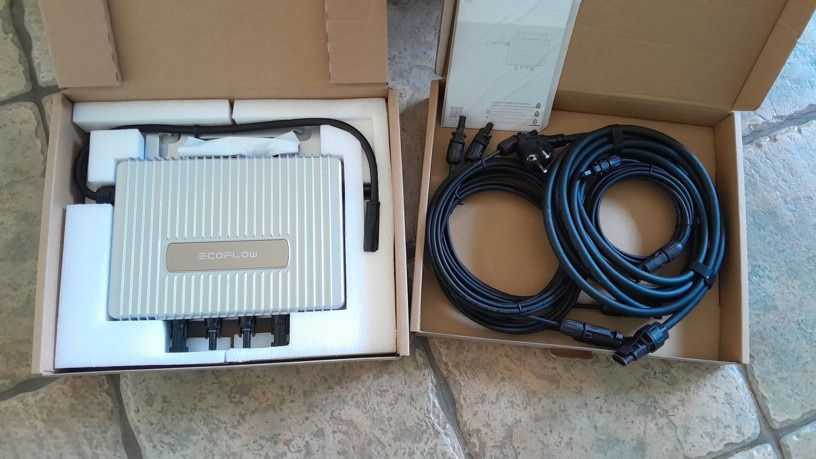
    Ecoflow stream arrived. Bought 2 x 530W damaged panels for €20. Total cost €138.40.

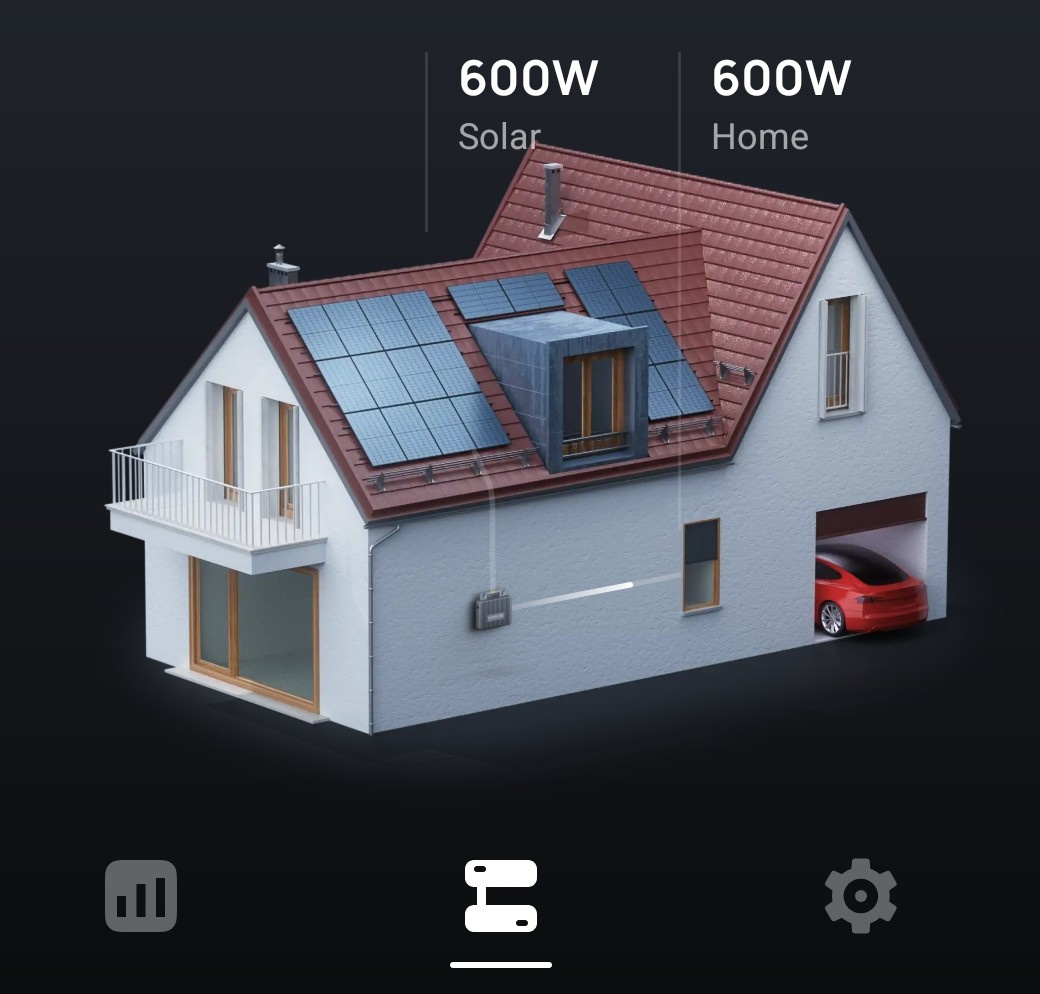
    Ecoflow is outputting 600W max. (capped for some reason - plenty of posts online).

    20260423_113516.jpg

    Screenshot_20260423_135929~2.jpg


Advertisement
Advertisement