Advertisement
Help Keep Boards Alive. Support us by going ad free today. See here: https://subscriptions.boards.ie/.
https://www.boards.ie/group/1878-subscribers-forum

Private Group for paid up members of Boards.ie. Join the club.
Hi all, please see this major site announcement: https://www.boards.ie/discussion/2058427594/boards-ie-2026

Undersink Water Heater

  • 30-03-2026 08:29AM
    #1
    Registered Users, Registered Users 2 Posts: 1,924 ✭✭✭


    Hey,

    Had a tiny shower room put into a new garden room build out the back. They ran a pipe from beside the outdoor tap under the garden and into the bathroom.

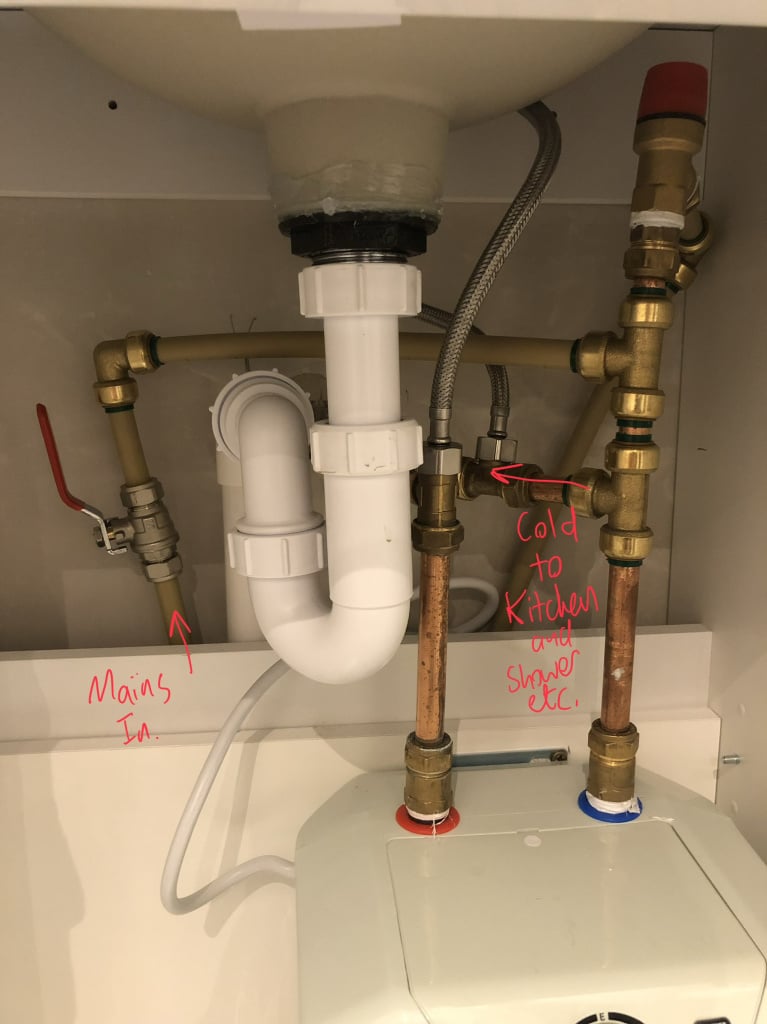
    We've had some issues with debris from the heater and they've been back to replace it: but I also have some concerns with the way they've plumbed in the heater.

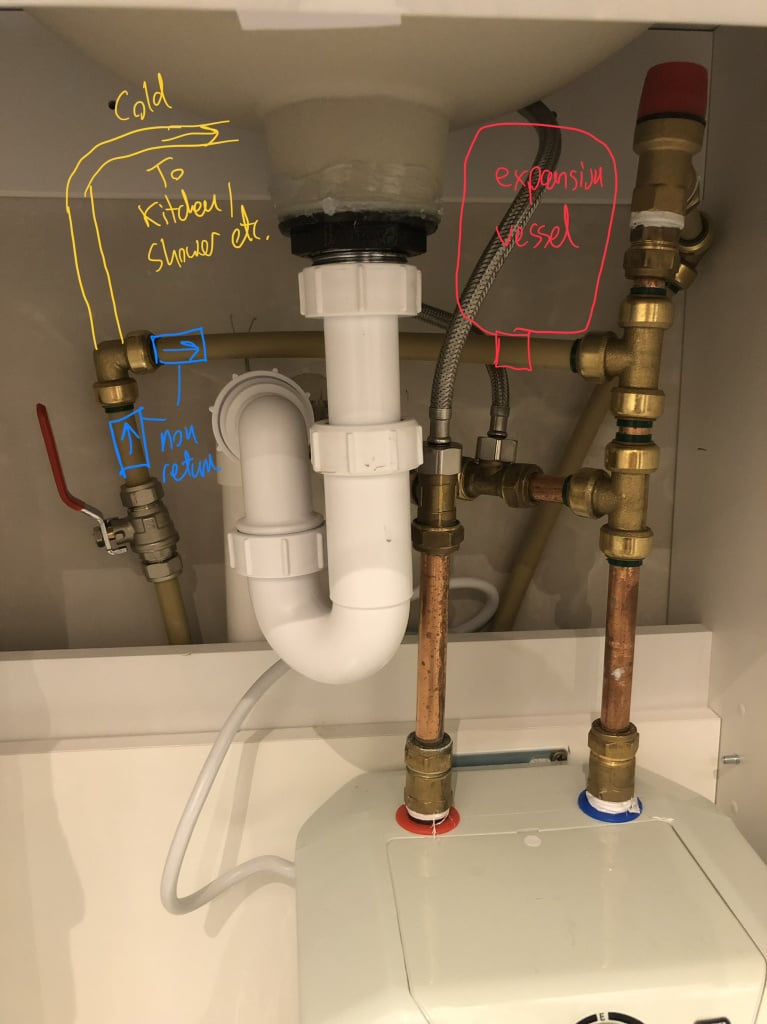
    Firstly they have added no expansion vessel, nor any non-return valves whatsoever. The instructions for the heater require the non-return valve; and I've been in touch with the manufacturer who recommended the expansion vessel.

    Here's a picture of the setup:

    IMG_0871.jpeg

    And here's what I reckon it should look like:

    IMG_0871 (1).jpeg

    Obviously I'm no plumber, but I definitely don't want the debris coming of what I presume to be the sacrificial anode getting into my drinking water. Probably not great for the electric shower pump either.

    Am I being unreasonable here?

    Thanks!


Comments

  • Registered Users, Registered Users 2, Paid Member Posts: 5,759 ✭✭✭blackbox


    If your shower has a pump it would be better to have an independent direct feed from the attic tank, especially as it's only a half inch feed.

    The pump could potentially cause suction from the other taps in the area, drawing in air if they are opened.


  • Registered Users, Registered Users 2 Posts: 1,924 ✭✭✭ronivek


    There's no attic tank; that's mains water (2.5bar or so) coming direct into the quarter turn valve from underground.

    My concern is how they're feeding the cold supply from a T just above the cold inlet for the heater to both the electric shower and the drinking water tap in the kitchen.

    And also the lack of any backflow protection both from the heater to the kitchen cold supply and from the garden room back to the main house.


  • Registered Users, Registered Users 2 Posts: 3,916 ✭✭✭John.G


    You don't require a NR valve or EV on undersink heaters up to, I think 10 or 15L as long as the nearest cold water drawoff is a specified distance from the heater cold water inlet, this distance must be able to accomodate the expanded vol of water to stop it reaching the nearest drawoff, but there can't be any NR valve anywhere right back to the mains, the water must have unrestriced room for expansion.

    A 5L heater will expand 0.1L in heating from say 10C to 65C, so the nearest drawoff on a 1/2 ins pipe must be at least 0.81M, 2.7FT away, a 10L, 1.62M, 5.3FT, etc, by calculation.


  • Registered Users, Registered Users 2 Posts: 2,375 ✭✭✭Lenar3556


    There should be a non return valve on the incoming cold supply. It’s usually supplied with the water heater.

    Expansion Vessel - I would tend to fit, but the hot water pipework run may be sufficient if there is enough length. Check the manual for the heater you have.

    You should have a mains fed electric shower which has no pump.


  • Registered Users, Registered Users 2 Posts: 3,916 ✭✭✭John.G


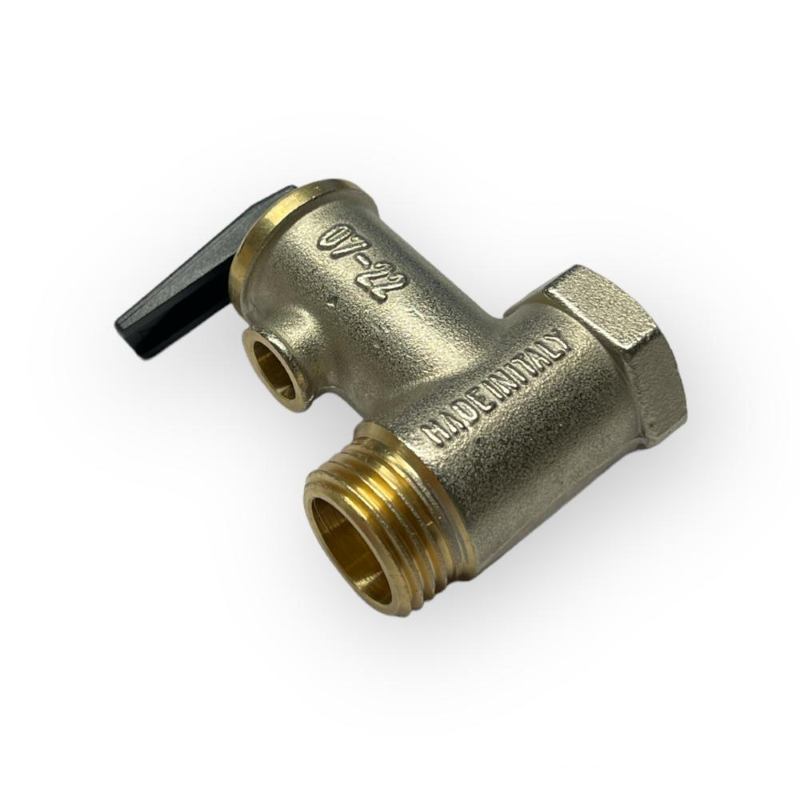
    Some were fitted with a combined NRV&PRV, below, one neighbour's kept lifting the NRV every time he heated the 10L heater, he just had a container under it and emptied it every few weeks, its not a good idea to expect the hot outlet pipe, no matter how long, to accomodate the expansion volume of incompressible water

    image.png


  • Advertisement
  • Registered Users, Registered Users 2 Posts: 2,375 ✭✭✭Lenar3556


    I agree John, but the capacity of these things is small - Pure water isn’t compressible, but air bubbles in the fresh water help a lot. Pipework will also expand minimally to give you just enough to get by in practice. Most of the manufacturers permit it.


  • Registered Users, Registered Users 2 Posts: 3,916 ✭✭✭John.G


    Years ago, I tested the lifting pressure on one of those combined valves above, it was 8.5bar.


  • Registered Users, Registered Users 2 Posts: 2,375 ✭✭✭Lenar3556


  • Registered Users, Registered Users 2 Posts: 3,916 ✭✭✭John.G


    The one I tested was a Ariston 571730, think its advertised with that set, 8.5bar, pressure. When I took it apart I found that there was/is a smaller NRV inside in the main NRV but which I'm nearly sure opens the other way, ie, outwards from the cylinder rather than the main one which (obviously) opens inwards to the cylinder, that doesn't sound right though because this small NR will just relieve the pressure back through the mains, maybe acts as a anti syphon valve if the mains becomes depressurized? as it will need some differential head to open it and stop the full cylinder contents from draining down?. (if its opening inwards which I was pretty sure it wasn't like the main one then don't know what purpose this serves either. Of course it may have no "NR" function and is simply a antisyphon vave (with a PRV) that wide opens easily to give a unrestricted flow through the cylinder but still retains a little anti sypon back pressure?.

    Post edited by John.G on


Advertisement
Advertisement