Advertisement
Help Keep Boards Alive. Support us by going ad free today. See here: https://subscriptions.boards.ie/.
https://www.boards.ie/group/1878-subscribers-forum

Private Group for paid up members of Boards.ie. Join the club.
Hi all, please see this major site announcement: https://www.boards.ie/discussion/2058427594/boards-ie-2026

Nuclear - future for Ireland?

1899092949599

Comments

  • Registered Users, Registered Users 2 Posts: 21,872 ✭✭✭✭cnocbui


    Published Jan 13, 2026

    The state-run Korea Hydro & Nuclear Power Co. (KHNP) plans to boost the use of its nuclear power plants to the highest level in 15 years as part of efforts to lower electricity rates and respond to rising power demand, the climate ministry said Tuesday.

    The KHNP told the ministry in a policy briefing that it will increase the nuclear plants' capacity factor, which indicates the proportion of total capacity in actual use, to 89 percent this year, up 4.4 percentage points from 84.6 percent in 2025.

    The company said it plans to resume operation of the Kori-2 nuclear reactor in March, following the nuclear safety watchdog's recent approval of a 10-year life extension of the reactor, noting it will push for lifespan extension of other nuclear reactors as well.

    That implies that the lower capacity factor in recent years was not due to reliability or refuelling issues, but deliberate idling of capacity, so once again, the Korean example for the 'reliability' of nuclear - something you endlessly claim it isn't - holds true.

    image.png

    Which might explain why the US energy Department says 'and it's not even close'

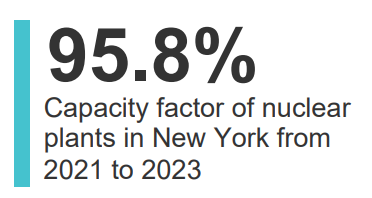
    The latest edition of the yearly report, produced by World Nuclear Association, also recorded that the average capacity factor increased to 83% - the capacity factor is how much electricity is produced as a percentage of what could be produced if a power plant was operating at full power non-stop for the entire year.

    That 83% figure applies where a lot of the existing fleet are 30+ years old. Newly built reactors will tend to have even higher capacity factors.

    Nuclear reactors are not unreliable, they are the most reliable generally available power source there is.


  • Moderators, Recreation & Hobbies Moderators, Science, Health & Environment Moderators, Technology & Internet Moderators Posts: 98,124 Mod ✭✭✭✭Capt'n Midnight


    The actual figures for Korea (from the International Atomic Energy Agency) https://web.archive.org/web/20251201000000%2A/https%3A//pris.iaea.org/PRIS/WorldStatistics/ThreeYrsUnitCapabilityFactor.aspx

    2024 79.6%

    2023 80.2%

    2022 81.7%

    2021 74.9%

    2020 76.9%

    2019 68.4%

    2018 64.8%

    2017 71.4%

    2016 82.2%

    2015 84.8%

    It doesn't matter how you try to spin it, Korea's nuclear plants had several years in a row with reduced output.

    Nuclear is simply not as dependable as you like to suggest.

    NY has closed 40% of it's nuclear reactors since 2020. That's not a ringing endorsement.

    As for newly built reactors. If a reactor doesn't provide power when it's supposed to you have to pay to get the power via other means (usually fossil fuel). A Chinese EPR was offline for a year. Flamenivlle III only reached 100% output recently. While you might like to suggest that new reactor are more reliable the evidence just isn't there.

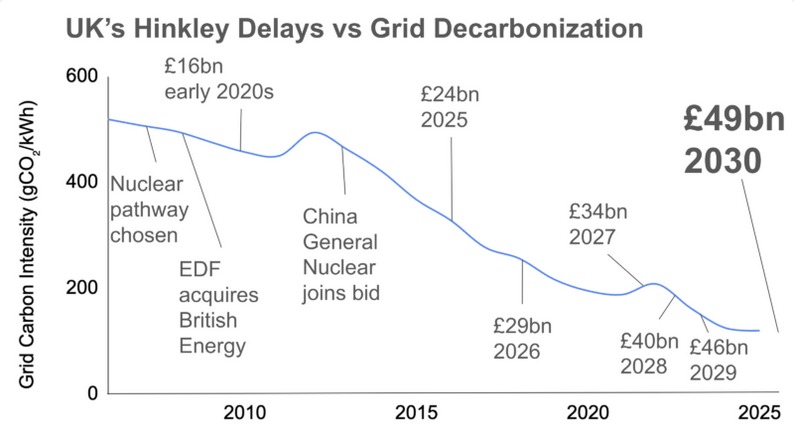
    Hinkley-C was supposed to produce power by Christmas 2017. Since it won't produce any power until at least 2030 there's 13 years of ZERO % capacity factor. But it's OK , the UK gets a similar amount of power from the environmental disaster that is DRAX.


  • Registered Users, Registered Users 2 Posts: 9,127 ✭✭✭Markcheese


    Source: New Civil Engineer
    https://search.app/cuGWt

    Article on the fish return pipe for the cooling water at Hinckley, theyre currently putting in a tunnel boring machine,

    Theres also a proposal to install an artificial wetland , at a cost of aprox 3/4 of billion pounds, to alleviate stress to fish ,

    Those are likely all worthwhile things - but emphasize why building reactors in Britain or Ireland is likely a disaster.. I'd imagine for the "next " reactor edf will want the uk tax payer to pick up the tab for services and issues off site ..

    Slava ukraini 🇺🇦


  • Registered Users, Registered Users 2 Posts: 9,127 ✭✭✭Markcheese


    New wetland proposed near Hinkley Point C - World Nuclear News https://share.google/K2FKWjBVFJnuvPMhk

    Slava ukraini 🇺🇦


  • Registered Users, Registered Users 2 Posts: 16,595 ✭✭✭✭charlie14


    Environmental protection requirement aren`t solely an issue for nuclear plants though.

    They are also an issue for wind farms, solar farms, inter-connectors etc. for not just marine life but also for birds, amphibians, hares, ground water etc.

    We have seen here how such requirements from either being ignored, not enforced or inadequate for wind farms, especially some of those those built on bogs, have wiped out fish stocks in rivers that may never fully recover.


  • Advertisement
  • Registered Users, Registered Users 2 Posts: 9,127 ✭✭✭Markcheese


    You're right , and a new 1.6 gw coal plant would likely have similar cooling requirements to a new nuclear facility, presumably a gas plant would also have similar requirements,

    And , building on bogs , especially on degraded bogs on sloping sites , is probably one of the biggest environmental feic ups going,

    I'm presuming its not possible to build wind turbines on rewetted bogs ,

    Slava ukraini 🇺🇦


  • Registered Users, Registered Users 2 Posts: 16,595 ✭✭✭✭charlie14


    I`m not sure what the situation is for rewetted bogs, but I caught the tail end of a programme on RTE last week where as far as I could tell from what I heard it was to do with Bord na Mona pumping water off a wind farm site beside the River Shannon.


  • Moderators, Recreation & Hobbies Moderators, Science, Health & Environment Moderators, Technology & Internet Moderators Posts: 98,124 Mod ✭✭✭✭Capt'n Midnight


    image.png

    This reduction in emissions happened despite UK Nuclear falling from over 12GW to under 6GW during this time.

    A nuclear power station can't offset emissions when renewables are already doing that. Nor can it offset emissions from the peaking plant it's reliant on to load balance seasonal or daily demand.

    https://www.ucl.ac.uk/news/2025/oct/wind-power-delivers-ps104-billion-net-benefit-uk-consumers from 2010 to 2023, How much more could have been saved in Hinkley-C wasn't soaking up funds like a money-pit ?


  • Registered Users, Registered Users 2 Posts: 9,127 ✭✭✭Markcheese


    Its not the UK taxpayer on the hook for hinkley-C

    its the French taxpayer , so currently the French are subsidising the uk economy,

    At some point, the plant will be in full , production, and thats when the French start getting paid back , at a set fixed rate - that was set in about 2012 or something,

    So in one way, hinkley is actually helping subsidize wind farm construction , in the UK , and the future saving from the wind-farms will help pay for hinkley-C - although the French are going to be taking a bath on the deal ..

    Slava ukraini 🇺🇦


  • Registered Users, Registered Users 2 Posts: 9,127 ✭✭✭Markcheese


    The strike price was £ 92.50 per mwh in 2012 ..

    It was £128/ mwh in 2023 , ive no idea what itd be today , locked in for 35 year from commissioning,

    Slava ukraini 🇺🇦


  • Advertisement
  • Registered Users, Registered Users 2, Paid Member Posts: 15,602 ✭✭✭✭josip


    Will Hinkley C cancel out 10 years of French nuclear profits ? Or will the high strike price mean that EDF will eventually (not in our lifetimes) recoup its costs?


  • Registered Users, Registered Users 2 Posts: 9,127 ✭✭✭Markcheese


    I'd imagine it'll depend on how well it runs , and how long they can run it for ,

    No one knows what the inflation adjusted electricity price will be in 35 years time , but we know that edf will be getting their £92.5 per mw hour + inflation , right up to 35 years after commissioning.

    The interest payments are gonna be staggering,

    Slava ukraini 🇺🇦


  • Registered Users, Registered Users 2 Posts: 21,872 ✭✭✭✭cnocbui


    Using the Hinkley C logic, no country should ever build a large childrens hospital, considering Irelands monumental balls-up.

    Somehow, the Netherlands doesn't seem perturbed by Irish Hinkley C logic. They have formed a state owned company to build an initial two reactors, with another two to follow.

    Former Climate Minister Sophie Hermans justified this course of action with the need for security of supply. She stated: “Nuclear power plants in the Netherlands contribute to a stable and sustainable energy supply, making us less dependent on foreign countries.” This reduced dependence is a key motivation behind the strategy, as energy imports carry more political and economic weight.

    https://blackout-news.de/en/news/the-netherlands-are-getting-serious-a-newly-founded-state-owned-company-is-to-build-new-nuclear-power-plants/

    Quite a contrast there, Ireland is intentionally basing it's future energy strategy on complete dependence on the whims of other countries and eschewing independence.

    A large hostile oil tanker dragging it's anchor in the Irish sea could really mess this country up, especially once we get to that 15% reliance on interconnectors figure.


  • Moderators, Recreation & Hobbies Moderators, Science, Health & Environment Moderators, Technology & Internet Moderators Posts: 98,124 Mod ✭✭✭✭Capt'n Midnight


    AFAIK the UK taxpayer isn't paying the direct costs at the moment but are on hoc for billions in guarantees etc. And yes £'s will be extracted if/when it starts up and the cost of wind or solar are below the CPI indexed strike price from the Start Date of Reactor One to 35 years after the Start Date of Reactor Two.

    The UK govt let EDF off the hook when they extended the original "long-stop date" where the CFD price drops from 2029 to 2033 when the contract could be cancelled and EDF would have to accept market rates , which would include wind and solar that were no longer on CfD contracts and essentially only have O&M costs.

    Flamanville 3 was to have cost €3.3Bn , in 2022 EDF said €13.2Bn, last January the French Court of Auditors estimated €23.7Bn including interest.

    With nuclear the cost of financing the project is insane. Look at the interest rates governments can get for bonds and compare that to the interest rate that nuclear projects require because of the risks. Last time I bothered it was something like 2% vs 8% and thanks to the magic of compound interest over 10 years that difference works out at 1.22 vs 2.16 times the original value. Which matches the rule of thumb that nuclear costs double every decade.

    The opportunity cost of investing in nuclear also includes having to keep old thermal plants open that could have been shut down.


  • Registered Users, Registered Users 2 Posts: 16 on the bog


    Speaking of destroying bogs for wind farms

    https://www.irishtimes.com/environment/2026/03/15/ireland-doesnt-have-time-for-wind-farm-battles/


  • Registered Users, Registered Users 2 Posts: 16,595 ✭✭✭✭charlie14


    The inflation adjusted prices apply to wind as well, and we know what the base rate it will be calculated on for the next 35 years for nuclear. That cannot be said for wind. We know it will be at the current cfd for 20 years, but after that it will be based on a new cfd price.

    That new contract will also necessitate a new very large capital expenditure on wind which will not be required for nuclear as the capital costs are a one off.

    In fact wind will require at least two further capital cost investments during the lifespan of a nuclear plant, so those interest payments could easily be more staggering than those for nuclear.


  • Moderators, Recreation & Hobbies Moderators, Science, Health & Environment Moderators, Technology & Internet Moderators Posts: 98,124 Mod ✭✭✭✭Capt'n Midnight


    Hinkley-C is in the UK. So similar legal and regulatory systems and the same sub-contractors for the most part.

    Apart from Canada I believe I've shown in the last week and in reply to your posts that nuclear in most of the world is nowhere near as reliable as claimed, nor can it be delivered on time and on budget, except in places where economics are secondary to politics.

    We need children's hospitals. But we shouldn't ever employ contractors with an abysmal history of failure to complete things on time and on budget. Especially not ones that abandon jobs half the time. Or ones that cheat on safety standards or would likely hold us to ransom later on for economic or political reasons.

    Besides we don't need nuclear we just need electricity. And we need it now.

    Even if we decided to go all in on Nuclear and even if it was completed and completed on time and on budget we'd still need to electricity to power the country for the two decades it would take to go from tender to the completion of plants.

    And unless and until you can show how we can keep the lights on until a fleet of nuclear plants arrives I can only assume you are a sock puppet for the fossil fuel industry. And even then remember that fleets of nuclear plants in France , Japan and Korea went off line for diverse reasons so having large numbers of reactors doesn't insulate from systemic failures.

    Note UAE and Iran both have said the reason for nuclear is so they can export more fossil fuel.


  • Registered Users, Registered Users 2 Posts: 16,595 ✭✭✭✭charlie14


    It`s a bit more nuanced for the French taxpayer than it might appear as to who is subsidising whose economy.

    For around 45 of the last 46 years France has been net exporters of electricity to the U.K. 2024 French net exports were 89 TWh for which they earned €5 Bn. 33.3 TWh was to the U.K. Worth €1.87 Bn for 2024 alone to the French taxpayer, and over the last few years the U.K. has been importing ever increasing volumes to fulfill their requirements. 15.4% for 2024, 11% of which was from France with the rest most likely coming from Norway. But with Norway cheesed off with both the U.K. and Denmark draining their supply resulting in higher prices for Norwegians when the wind don`t blow, the likelihood is that the U.K. will be looking to France to supply even more electricity which would again further benefit French taxpayers.

    The really bizarre element of the U.K.s imports of 15.4% is that we in 2025 imported 14.6% of our requirements from the U.K. Other than it being a bit of an under the table shuffle concerning our emissions I do not see what else it could be for. But even at that it doesn`t say much for our current plan or our energy security that the best we can hope for of the 51% 2030 reduction requirement is 23%, where from 2030 we will be paying billions in fines annually for that failure.

    There is also an anomaly in what the percentage of electricity generated in the U.K. is compared to the nuclear generated they use, and it`s quite a large anomaly. 2024 the U.K. generated 14% of their electricity from nuclear, but they also imported 11% of their requirements from France, so in reality nuclear provided 25% of their requirements in 2024.


  • Registered Users, Registered Users 2 Posts: 15,034 ✭✭✭✭Red Silurian


    Do we ever stop to think of the costs of Nuclear

    The most recent one that comes to mind is the 3,260MW station in Hinkley Point which is coming in at a cost of £35bn. We could build more than 140 Galway Wind Parks for that price and have over 24GW added to the grid as a result


  • Moderators, Recreation & Hobbies Moderators, Science, Health & Environment Moderators, Technology & Internet Moderators Posts: 98,124 Mod ✭✭✭✭Capt'n Midnight


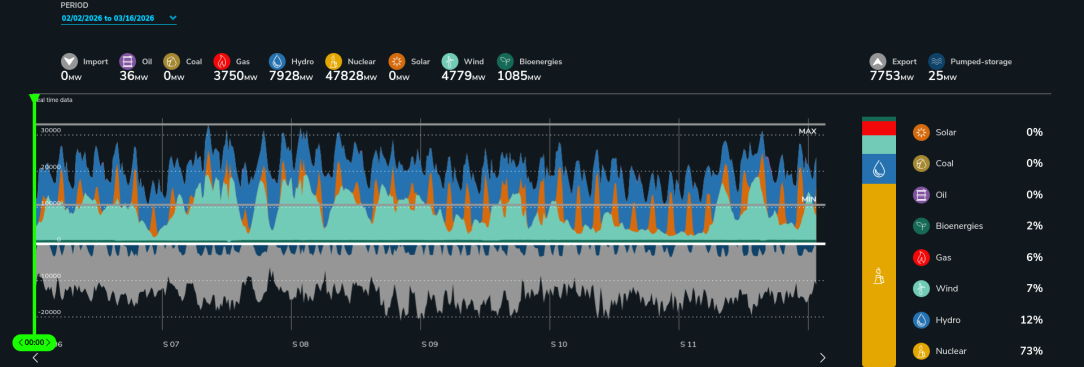
    It's a bit more nuanced, as French renewables produce more power than France exports. And exports peak and dip depending on wind.

    image.png

    https://www.rte-france.com/en/data-publications/eco2mix/power-generation-energy-source# - Without nuclear or gas.

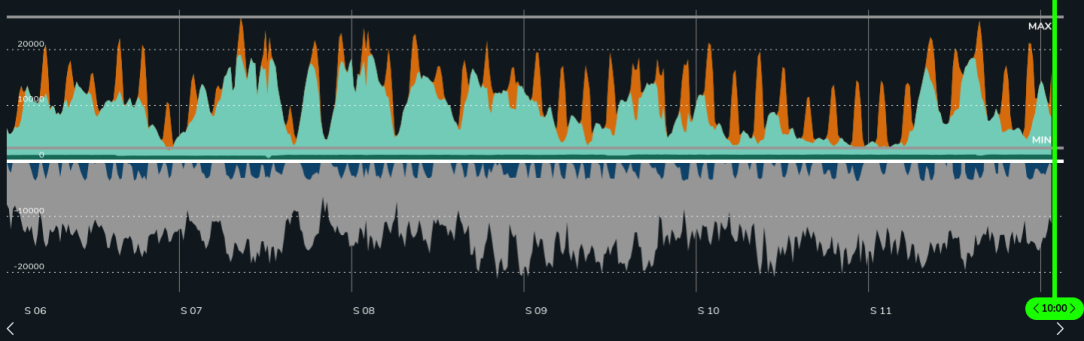
    image.png

    Same graph with exports vs, wind and solar almost all of which was installed during Flamanville's construction and eventual delivery of full power on 14th December 2025.

    With nuclear the more you look the worse it gets. I looked up the the full power date and oh-boy it's worse than I thought. Snippets below from Flamanville 3 news from EDF. (translated)

    This Monday, February 9, 2026, at 19:28, the unit n°3 of Flamanville has been reconnected to the national electricity grid.It was shut down on January 10, 2026, following the passage of Storm Goretti. - So already missed 90% capacity factor for 2026.

    27/01/2026 – Declaration of a significant safety event (SSE) due to the unavailability of a last-back generator for 2 hours

    On January 26, the teams conducted a periodic test on one of the two ultimate rescue generators. During the preparation of the test, a shunt necessary for the realization of it was placed on the wrong electric relay. It was immediately brought back into conformity.

    27/02/2026 – Declaration of a significant security event (SSE) due to non-compliance with a repair deadline for one of the main generators

    From February 8 to 19, the EPR is in production. Work is being carried out under preventive maintenance in power* on one of the four main generators. At the end of the power-effective preventive maintenance niche on February 19, the main generator cannot be put back into service. The general operating rules prescribe a period of 7 days to repair the equipment. This deadline was not met, the main generator set was put back into service on 28/02/2026.

    https://www.edf.fr/la-centrale-nucleaire-de-flamanville-3-epr/les-actualites-de-la-centrale-nucleaire-de-flamanville-3-epr/actualite-de-l-unite-de-production-ndeg3-de-flamanville

    Friday, March 13, 2026 at 7:40 a.m., the No. 3 production unit of the Flamanville power plant was disconnected from the electrical grid following the automatic triggering of the turbine protections. The power of the reactor was reduced to 20%.

    After carrying out the necessary checks, the teams of the plant reconnected the unit No. 3 to the national electricity grid on March 13 at 6 p.m. The event had no impact on the safety of the facilities.

    Nuclear is absolutely dependent on backup and spinning reserve. 80% power loss covering business hours on a Friday.

    Flamanville 3 is still having teething problems so maybe next year it might deliver on it's 90% uptime ?

    Nope there's a 350 day outage scheduled from Sept 26 2026. (And it's not the first EPR to have a year long shutdown after commissioning and I suspect it won't be the last.)

    And that means capacity factor for 2027 is totally stuffed too, even if the outage doesn't get extended. Probably isn't cheap either.

    Maybe in 2027 , twenty years after the concrete for the reactor's base was first cast, it will have a chance to deliver the promised uptime ? (But it will need refuelling in 2027 / 2028 so don't get too excited)


  • Advertisement
  • Registered Users, Registered Users 2 Posts: 9,127 ✭✭✭Markcheese


    I dont think anyone is suggesting ireland go with an epr .. ( if we ever were to build nuclear, which i know isnt really on the cards )

    I guess the other option would be following the polish example, and basically a Westinghouse design, which is what france ditched in the 80s in favour of epr ,

    Slava ukraini 🇺🇦


  • Registered Users, Registered Users 2 Posts: 9,127 ✭✭✭Markcheese


    The Polish plan is for 3 Westinghouse ap 1000 reactors , so 3gw in total ( although each reactor is rated 1.25gw so go figure ) , construction starting in 2028 , and costed as of a year ago at 45 billion , first power expected to be produced around 2037 ..

    Slava ukraini 🇺🇦


  • Registered Users, Registered Users 2, Paid Member Posts: 9,942 ✭✭✭SeanW


    I have one question for those promoting renewables instead of nuclear in Ireland: Assuming that Ireland continues building windmills and solar panels, and assume for the sake of argument that grid scale battery technology improves by enough of a margin that it can help smooth out the unreliable output of these renewables …

    What happens if Ireland should suffer a repeat of the extreme anti-cyclone of Christmas to New Years in 2010? That was a really nasty week of temperatures going down to -17C and there was no wind, at least as I recall. How would Ireland handle not just the loss of output from windmills and solar panels, but the increasing demand for energy for heating, alongside the usual demand for transport etc?

    https://u24.gov.ua/
    Join NAFO today:

    Help us in helping Ukraine.


  • Moderators, Recreation & Hobbies Moderators, Science, Health & Environment Moderators, Technology & Internet Moderators Posts: 98,124 Mod ✭✭✭✭Capt'n Midnight


    One week is about 2% of annual demand so we are good until ~2048 because we'll be allowed burn fossil fuel although that's only in the case that ALL other generators and interconnectors are offline and there's no other storage available. ( By limiting when it's used fossil fuel can act like last resort storage. )

    And for the Nth time no one is looking at batteries for long term storage despite your repeated strawmaning. We already have Hydro, Biogas , Biomass, CHP and incinerators. By 2048 we will also have Fuel to energy , Tidal and possibly Geothermal and a lot more offshore wind which has a greater capacity factor and wider geographical spread.

    Besides to go nuclear we'd need to massively increase renewables because we'd need to provide power during the ~20 years it would take to get a nuclear plant up and running. Doing that would eliminate demand for nuclear.

    In order to prepare for nuclear you have to prove you don't need it.


  • Registered Users, Registered Users 2 Posts: 16,595 ✭✭✭✭charlie14


    It`s funny that the most recent nuclear plant that comes to some minds is the most expensive they can find, but never think of the cost of wind turbines that have less than half the the capacity factor of nuclear, and that`s for offshore - for onshore it`s less than one third - or the lifespan of turbines. If they are lucky offshore turbines will have a lifespan of 25 years as opposed to a nuclear plant`s 60 years.

    A fixed turbine offshore wind farm recently in the news was the U.S. Empire 1. Initial cost was $3Bn. for an installed capacity of 810MW. Documents submitted to a New York court this year show that the construction cost to date is $4Bn. with an estimated further $2Bn. to complete. Double the original cost. With a capacity factor of 42% it will generate 340MW for that $6Bn. That is $17.65Bn. (€15.35Bn.) per GW.

    Hinkley Point`s 3260MW plant with a capacity factor of 94% will generate 3064MW. For £35Bn. that is £11.42Bn. (€13.22Bn.) per GW.

    For capacity factor alone per GW, Hinkley Point is €2.13Bn.cheaper. And it gets even worse for offshore wind. Hinkley Point will have a lifespan of 60 years for that £35Bn. capital cost. Offshore turbines, if they are lucky, will have a lifespan of 25 years. That would require a further 1.4 X capital spend on top of the original €6Bn. And that is without factoring in inflation for a like for like comparison to Hinkley Point.

    Even for the most expensive nuclear plant those opposed can find, offshore wind has priced itself out of the market.


  • Registered Users, Registered Users 2 Posts: 16,595 ✭✭✭✭charlie14


    Westinghouse build their own reactors, so while the name of that particular type of reactor might at first sight suggest they each have an installed capacity of 1 GW I would look on it as just the name of the reactor rather than its installed capacity. At €45Bn. allowing for the capacity factor that would be €12.77Bn. per GW.

    €2.58Bn. per GW less than the Empire 1 offshore wind farm before the further capital expenditure that a wind farm would require is taken into consideration due to its lifespan of 25 years, compared to nuclear`s up front 60 year capital cost.


  • Registered Users, Registered Users 2, Paid Member Posts: 15,602 ✭✭✭✭josip


    And the cost of decommissioning the NPPs and turbines? Or is that usually not included and left to the next generation?


  • Moderators, Recreation & Hobbies Moderators, Science, Health & Environment Moderators, Technology & Internet Moderators Posts: 98,124 Mod ✭✭✭✭Capt'n Midnight


    Hinkley Point`s 3260MW plant with a capacity factor of 94% will generate 3064MW. For £35Bn. that is £11.42Bn. (€13.22Bn.) per GW.

    It's now £49bn ( €56.7Bn / €18.5Bn per GW ie. already more than your wind farm ) and they've already lined up another £1bn if it's delayed yet another year.

    Besides your costs are way off because the operating EPR's don't operate at 94% capacity factor or anything close to it. 85% might be a better target even if it's only been reached in 1 in 4 years of operation.

    94% capacity factor in any reactor is a pipe dream except if you measure 12 months in middle of an 18 month fuelling cycle. When you take maintenance and refuelling into account no reactor can do that more than three years in a row. Add in unplanned outages or delays in restarting and there's a reason why NPP's only average ~80% globally. And that doesn't include construction delays or early shutdowns.

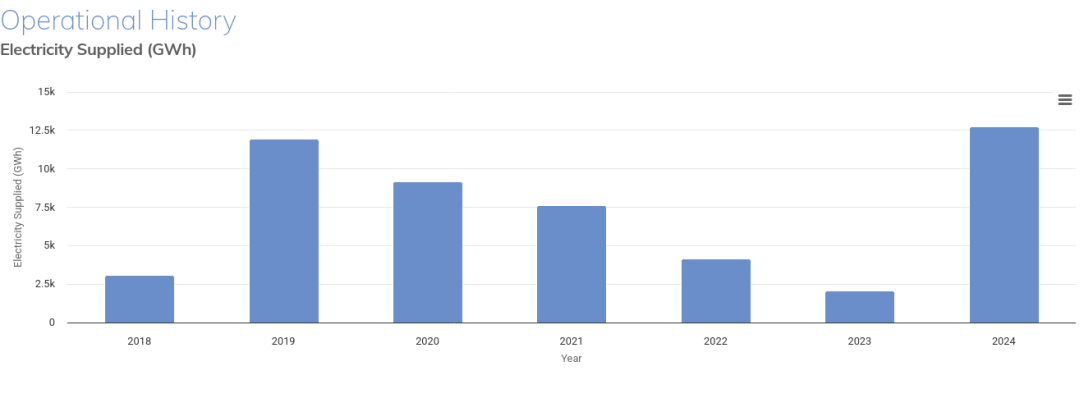
    94% ? The reality is that 50% of the EPR's completed so far have year long outages after commissioning. Flamanville 3 will be off line for a year (350 days) from 26th September.

    Taishan-1 started operation in 2018 and was then taken offline from June 2021 to August the following year.

    image.png

    which still doesn't explain the 4.113 TWH and 2.068 TWH supplied by Taishan-1 in 2022 and 2023

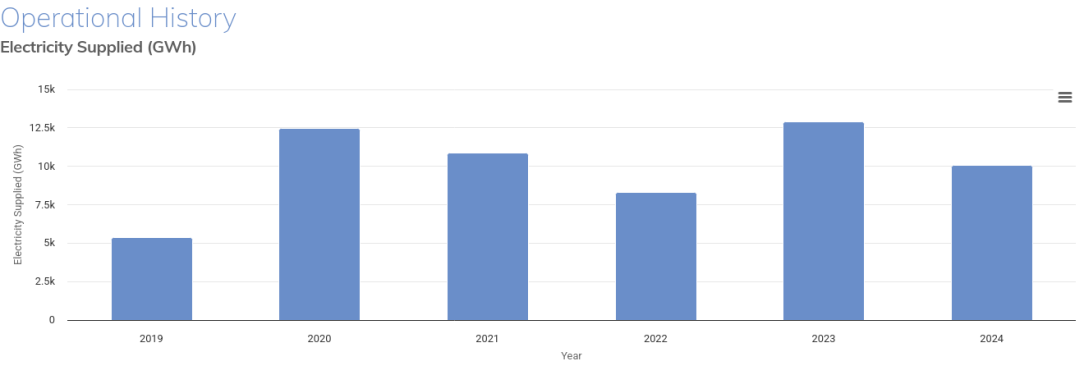
    A 1.6GW reactor should produce 14TWH a year. OL3 isn't remotely close to 94% - In 2025, the total production of Olkiluoto 3 was 10.38 TWh, showing an increase over the previous year (9.69 TWh). ( 74% and 69% )

    Please explain how you could even get 94% when there's outage times like this ???? The annual outage at OL3 did not take as long as originally planned. The outage was scheduled to take 63 days and continue until 2 May. The actual duration was 59 days and 10 hours.

    image.png

    The other completed EPR is Taishan 2 - World Nuclear Association it doesn't produce 14THw per year or anything like 94% of that every year either


  • Moderators, Recreation & Hobbies Moderators, Science, Health & Environment Moderators, Technology & Internet Moderators Posts: 98,124 Mod ✭✭✭✭Capt'n Midnight


    AFAIK for gas plant you can probably cover the decommissioning costs by selling off the plant and land.


  • Advertisement
  • Registered Users, Registered Users 2 Posts: 16,595 ✭✭✭✭charlie14


    Had you read - or not ignored - the full post you would know that the capital cost per GW for Empire 1 was based on its present 25 year capital cost. Your Hinkley Point`s capital cost of £49Bn. is the 60 year capital cost.

    Empire 1 will require a further 1.4 times its original estimated €6Bn. + inflation, to compare on a like for like basis to Hinkley as to the cost of providing 1GW.

    That leaves the true capital cost of Empire 1 in today`s money at $14.4Bn. without even factoring in inflation. Giving Empire 1 a generous 42% capacity factor that is $34.29Bn.per GW.(€29.75Bn.). Without inflation being included, over double your figure of €13.22 per GW for the most expensive nuclear you could find. If Hinkley Point generated nothing for 6 months of the year giving it a capacity factor of 50% it would still generate 1GW cheaper than Empire 1 operating for the full year

    For long term security of supply, economically offshore wind does not come even close.

    I said I was being generous with a 42% capacity factor for fixed bottom wind farms, and you are well aware that new reactors have a capacity factor of 94% or greater, but if you are going to just pick whatever nuclear plant suits your agenda then perhaps I should stop being generous and do the same.

    Baltic Wind eu 2025 report gave the global weighted capacity factor of fixed bottom offshore wind farms at 34%. July 2022 of the 42 U.K. fixed bottom offshore wind farms 20 had a capacity factor of less than 35%


Advertisement
Advertisement