Advertisement
Help Keep Boards Alive. Support us by going ad free today. See here: https://subscriptions.boards.ie/.
https://www.boards.ie/group/1878-subscribers-forum

Private Group for paid up members of Boards.ie. Join the club.
Hi all, please see this major site announcement: https://www.boards.ie/discussion/2058427594/boards-ie-2026

Energy infrastructure

1225226228230231233

Comments

  • Registered Users, Registered Users 2 Posts: 9,127 ✭✭✭Markcheese


    As to whats in R-19 fluid , who knows , they're claiming its an environmentally benign fluid - likely is - but as with many common substances dose counts ,

    But could be a valuable addition to energy storage.

    Slava ukraini 🇺🇦


  • Registered Users, Registered Users 2 Posts: 316 ✭✭tppytoppy


    What realistic solution are you proposing that doesn't leave Irish Consumers/taxpayers picking up the bill through cross accounting. Don't give them the idea of justification on the basis of Defence as that will just give them excuse to tap another vein of funding from the Irish taxpayer.


  • Registered Users, Registered Users 2 Posts: 316 ✭✭tppytoppy


    I thought most pumped hydro are reaching their limits due to seismic events e.g. earthquakes. If the fluid is over 2 times heavier then it will stress the installation twice as much.


  • Registered Users, Registered Users 2, Paid Member Posts: 3,297 ✭✭✭KrisW1001


    @bored65 “mineral suspension” is a technical term for mud. Some more attention needs to be paid to what exactly the “polymer stabiliser” is, but the advantage of using such a dense, gloopy fluid is that it’s unlikely to get very far in the time it would take to detect a leak.

    @machiavellianme €10m for 0.5 MWh isn’t bad for such a small capacity pilot: there’s a big fixed cost in excavation, trenching, construction, pipework, pumps and power house, and this looks like they build the smallest reservoirs they could - the photo on the article I linked should give an idea, but for reference, an Olympic swimming pool is almost twice as big (2500 cubic metres of liquid) as the reservoir for this project (1300 m³). There’s no way the next 0.5 MWh would cost another €10 million.

    For reference, conventional water-based pumped storage hydro comes in around €3~5 M per megawatt-hour (but there are so few recently-built plants that it’s hard to estimate this), but by using a much heavier liquid, this company’s system doesn’t require such challenging geography (i.e., the large height differential) as conventional hydro storage using water. For Ireland, a country with lots of hills, lots of wind, but few real mountains suitable for pumped-storage hydro, this technology may be something to keep an eye on.


  • Registered Users, Registered Users 2, Paid Member Posts: 14,404 ✭✭✭✭machiavellianme


    Why are you halving it? Most people reference price per MW, not per 500kW. It is prohibitively expensive.

    Save boards.ie by subscribing: https://subscriptions.boards.ie/


  • Advertisement
  • Registered Users, Registered Users 2 Posts: 924 ✭✭✭bored65


    first time I heard of it so interesting find alright

    Back of envelope calculation for a turlough hill type setup with the claimed 2.5x storage capacity by using this mystery fluid

    Turlough Hill 22m pounds in 1974 that’s 300m euro inflation adjusted today

    1590 MWh storage capacity with water that falls out of sky

    3975 MWh storage capacity with unknown “dense” liquid of unknown cost and lifespan and toxicity (which would have to be trucked up a mountain)

    So a third of a billion for just under 4GWh of storage at absolute minimum, obviously there are unknown costs here and questions not answered by press release

    Now how many GWh would Ireland need in a week where there’s little to no wind or sun in winter?

    Once we have that we can get minimal cost and try to find similar hills


  • Registered Users, Registered Users 2, Paid Member Posts: 3,297 ✭✭✭KrisW1001


    I’m not “halving” it; I’m giving the only figure for which there’s proof. It cost them €10 m (£8.5 m) for a 0.5 MWh pilot plant. You cannot just double that figure and go “yeah, so a megawatt-hour would be twice that”, because that’s not how any kind of system scales from such a low base. That €10 million will be dominated by the fixed overhead costs of just building any kind of hydro plant, with the actual capacity accounting for only a tiny fraction of that cost.

    This pilot exists to prove the technology in the real world. You don’t just jump from a lab-based proof of concept to a grid-scale product in one leap. If this plant works out, I’m sure they’ll come up with a design offering hundreds of megawatts, with a proper cost estimate, and then we can talk about whether it’s expensive or not.


  • Moderators, Recreation & Hobbies Moderators, Science, Health & Environment Moderators, Technology & Internet Moderators Posts: 98,141 Mod ✭✭✭✭Capt'n Midnight


    I doubt it's this. But maybe.

    https://www.uky.edu/KGS/coal/coal-prep-seperation-tech.php

    In this technology, a suspension of ultra-fine magnetite (specific gravity = 5.2) is made in water. The density of the mixture (the medium) can be adjusted by adding or removing specific amounts of the magnetite powder.


  • Registered Users, Registered Users 2 Posts: 1,260 ✭✭✭Exiled Rebel


    Fascinating. Half of the cost was spent on R&S and the other half constructing it...so €5m for the prototype.

    I'm looking forward to seeing the first commercial variant in operation.


  • Registered Users, Registered Users 2 Posts: 924 ✭✭✭bored65


    whatever this mysterious “R-19” fluid is it’s ringing alarm bells for me

    What would happen if this gets into waterways by accident or deliberately

    Think heavy crude oil tanker spills where parts of the crude oil are only slightly denser than water sink (while less dense float) and cause havoc, this is is claimed to be much denser than that

    fracking fluids and fracking for gas was banned almost Europe wide and that fluid for most parts uses water with sand suspension and “polymers”


  • Advertisement
  • Registered Users, Registered Users 2 Posts: 316 ✭✭tppytoppy


    You are worried about the spill. I am worried about engineering the container or vessel to contain it. Even if it was plain mud it would be an environmental catastrophe.


  • Registered Users, Registered Users 2 Posts: 9,127 ✭✭✭Markcheese


    Norwegian Timber Ship Will be First to Use Wartsila’s Ammonia Engine https://share.google/45n7bGqmNj74VMXIZ

    Slightly sideways , but ammonia is probably an easier energy store than hydrogen, definitely easier to transfer , and the equipment to transfer it and convert hydrogen to ammonia already exists

    There are trials going on in Australia i think ,to synthesise ammonia directly from water - without going to hydrogen first -

    Slava ukraini 🇺🇦


  • Moderators, Science, Health & Environment Moderators Posts: 20,712 Mod ✭✭✭✭Sam Russell


    Whether the storage is using ammonia or hydrogen will be decided by the science and he economics. Hydrogen is not easy to handle, and like nuclear fusion, the methodology or costs are not there yet.


  • Moderators, Recreation & Hobbies Moderators, Science, Health & Environment Moderators, Technology & Internet Moderators Posts: 98,141 Mod ✭✭✭✭Capt'n Midnight


    The costs of green hydrogen are higher than grey hydrogen produced from natural gas.

    Small scale hydrogen isn't as easy to handle or store as things like ammonia and propane that can be liquefied under pressure or things like methanol which is already a liquid.

    IIRC the UK and Germany use about 20TWh of hydrogen a year mainly in refineries and chemical plants.


  • Registered Users, Registered Users 2 Posts: 19,259 ✭✭✭✭murphaph


    What's happening at Marino Point these days? Is the site still derelict? It would be fantastic if we restarted ammonia production there using renewables. We might even see the rebirth of a domestic fertiliser industry which would be a good way to export excess green energy with added value. Ireland has obviously got great sea access and fertiliser is a bulk cargo ideally shipped by sea. Electricity in, fertiliser out, providing employment in the coastal communities. The dreadful Aughinish Alumina site might some day be repurposed into such a plant.


  • Registered Users, Registered Users 2 Posts: 21,872 ✭✭✭✭cnocbui


    Good luck with that.

    the current achieved round-trip efficiency of electricity-ammonia-electricity ranges from 18.71 to 33.03 %.

    https://www.sciencedirect.com/science/article/abs/pii/S0360319925037838

    You wouldn't be value adding, you would be losing it vs selling the original electricity or finding a more efficient use for it. All this talk of ammonia as an energy carrier is likely to evaporate over time, just as the H hype has. It's a really rotten fuel and energy store. The best thing to do with it is to make ammonium nitrate. However, even that is likely to come unstuck when the economics hits the road. If the resulting fertiliser ends up being more expensive than making it from other sources, your taxes are either going to have to increase to subsidise the cost to farmers or the cheaper option will prevail.

    Making ammonia from excess green electricity isn't a done thing as a normalised commercial industrial process so the chances of this happening are zero unless that changes.

    Look at France. They have more excess green electricity than any other country in the EU. They do the obviously sensible thing and sell it to other countries, generating billions in income every year.


  • Registered Users, Registered Users 2 Posts: 24,108 ✭✭✭✭ted1


  • Registered Users, Registered Users 2 Posts: 924 ✭✭✭bored65


    The EU countries bordering the med for some reason have a knack for delivering all sorts of infrastructure projects (not just energy)

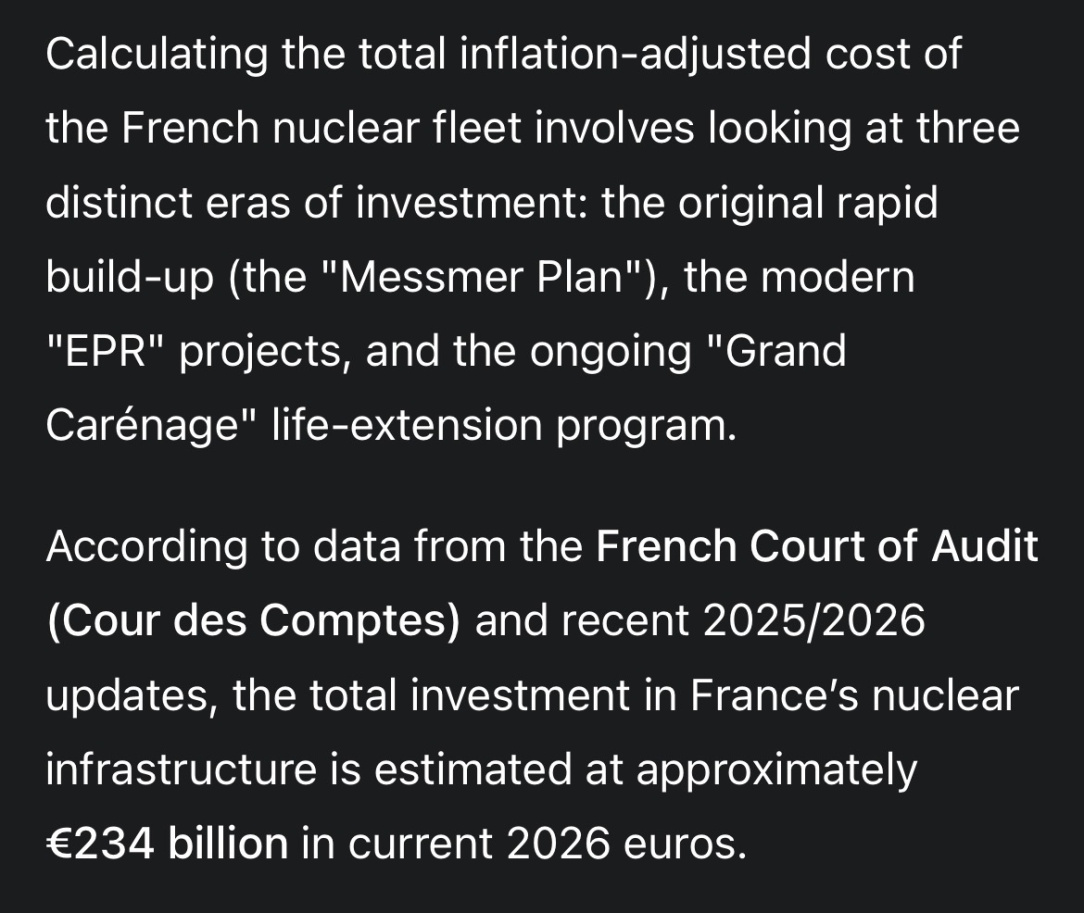
    Compare France

    IMG_6543.jpeg

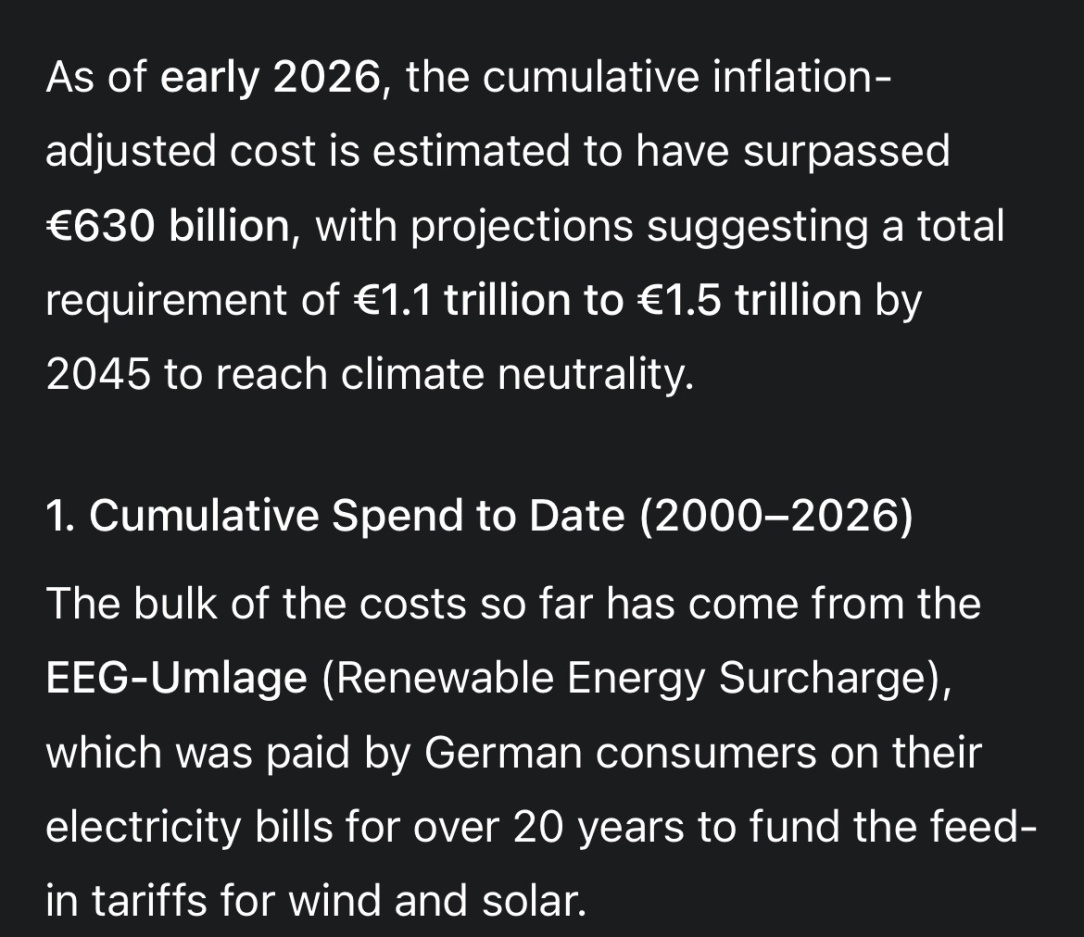
    Against similarly sized Germany whom have to buy heavily from France and whose energy co2 production is still multiple times higher than France despite spending multiples of France on “Energiewende”

    IMG_6544.jpeg

    as can be illustrated live right here


  • Registered Users, Registered Users 2 Posts: 9,127 ✭✭✭Markcheese


    The site is still there , largely empty,

    the guts of the plant were sold decades ago , ( Chilean fertelisr company - i think )

    Dont really need ,the port facility , rail facility , or the natural gas line ..

    Slava ukraini 🇺🇦


  • Registered Users, Registered Users 2, Paid Member Posts: 3,297 ✭✭✭KrisW1001


    Marino Point in Cork was offered to Goulding Chemicals in exchange for that company’s site in the Cork Docklands, currently earmarked for a major residental development. Unfortunately planning was refused late in 2024 due to a lack of road capacity, which is funny as the IFI plant operated with even less road capacity available to it. ABP wanted Goulding to use rail freight, but that’s not really an option given that the rail line in question is now a commuter railway, and the factory would need to shift product out all day, not just in the six hours of the nighttime when the railway is free from commuter trains.


  • Advertisement
  • Moderators, Recreation & Hobbies Moderators, Science, Health & Environment Moderators, Technology & Internet Moderators Posts: 98,141 Mod ✭✭✭✭Capt'n Midnight


    The nuclear thread is over there —>

    Suffice it to say that today's cost of providing France's 63GW using the current price of EPR2 reactors is now €458 Bn (2020), a 40% increase since 2022 and the earliest possible date to fully finish the pair of proposed French plants is now 2042.

    When comparing prices you also need to factor in the costs of keeping the lights on until a new generator comes on line. Solar is faster than Wind while large Hydro and nuclear are for a generation away.


  • Registered Users, Registered Users 2 Posts: 924 ✭✭✭bored65


    So still cheaper than Germans we are emulating here, whom have been at it for 2.5 decades now and still emit multiples of CO2 per unit in of electricity while having to import energy and have some of the highest prices in world

    IMHO we should be learning from French, Italians and Spanish all about how to build infrastructure be it clean and cheap electricity (or metro systems or high speed rail) instead of trying to replicate German failures in Ireland


  • Moderators, Recreation & Hobbies Moderators, Science, Health & Environment Moderators, Technology & Internet Moderators Posts: 98,141 Mod ✭✭✭✭Capt'n Midnight


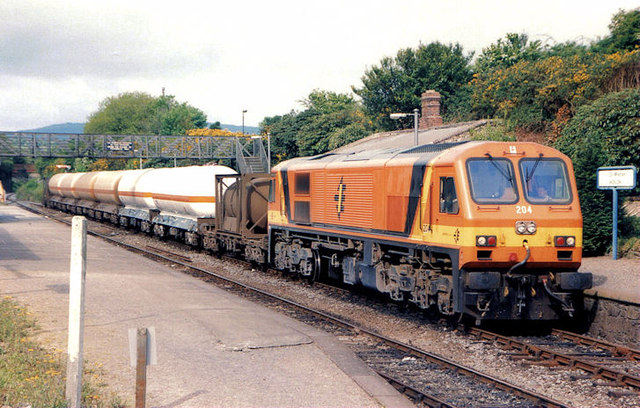
    image.png

    The trains from there to Sligo used to scare me. Pic.

    Some history - they changed to using ships.


  • Registered Users, Registered Users 2 Posts: 19,259 ✭✭✭✭murphaph


    Germany had the small matter of reunification to pay for, the single largest transfer of capital in human history. West Germany essentially had to completely rebuild a country with three times the population of Ireland, all by itself and while remaining the largest contributor to the EU budget to help rebuild all the other Eastern European states decimated by communism. This consumed Germany's focus and resources. There simply wasn't any more money available for energy projects which is probably why lignite is still being burned in Germany. Let's say they had their hands fairly full.


  • Registered Users, Registered Users 2 Posts: 169 ✭✭fael


    Some interesting research published about the longevity of PV panels.

    80% of performance left after 30-35 years. On average you lose about 0.25% of the initial performance.

    Three decades, three climates: environmental and material impacts on the long-term reliability of photovoltaic modules - EES Solar (RSC Publishing)


  • Registered Users, Registered Users 2, Paid Member Posts: 15,602 ✭✭✭✭josip


    AM55s were around 67W per sq m I think? Latest panels at around 240 W per sq m.

    I wonder what the price per kW change is over those 30 years.


  • Registered Users, Registered Users 2 Posts: 2,384 ✭✭✭Mefistofelino


    Trains never went from there to Sligo - the trains from Marino Point took ammonia to the IFI plant in Arklow to keep the plant there running. (The original Arklow NET plant used fuel oil).

    The trains to Sligo were probably those bringing acrylonitrile from Dublin port to the Asahi plant in Killala.


  • Registered Users, Registered Users 2, Paid Member Posts: 15,602 ✭✭✭✭josip


    Have there been any official announcements yet that Ireland won't meet its 2030 electricity renewable generation target of 80%?

    Renewables as a percentage of demand has been relatively static for the past 3 years around the 40% mark.

    There won't be any offshore wind operational before the early 30s. The only significant piece of infrastructure coming on line by 2030 is the 700MW Celtic interconnector which could meet 10% of our expected demand.

    Are there any large onshore wind farms due before 2030. I've heard of a few hundred MW of solar getting energised in 2026 but that will probably only tread water at 40%.

    So the only sector that can be incentivised by the government to reduce those 2030 fines is home solar?

    Or will the govt hope that 2030 gets deferred to 2035 and there won't be any fines levied? I think a lot of other EU countries are on track for 80% zero carbon generation, so why would they agree to postponing the fines?

    Post edited by josip on


  • Registered Users, Registered Users 2 Posts: 24,108 ✭✭✭✭ted1


    There's probably more than 700 MW of Commercial Solar coming online this year. Money point has stopped burning coal, and will only come online burning HFO as a last option


  • Advertisement
  • Registered Users, Registered Users 2, Paid Member Posts: 15,602 ✭✭✭✭josip


    With a capacity factor of 11% and an average hourly demand of just under 6,000MW, that 700MW of commercial solar will address around 1.2% of our annual demand? Or have I done the sums wrong?


Advertisement
Advertisement