Advertisement
Help Keep Boards Alive. Support us by going ad free today. See here: https://subscriptions.boards.ie/.
https://www.boards.ie/group/1878-subscribers-forum

Private Group for paid up members of Boards.ie. Join the club.
Hi all, please see this major site announcement: https://www.boards.ie/discussion/2058427594/boards-ie-2026

Lessons from storm Chandra

  • 28-01-2026 11:00AM
    #1
    Registered Users, Registered Users 2, Paid Member Posts: 8,820 ✭✭✭


    TBH compared to previous weather events, I was barely aware of this one. Yet, it was the worst floods around my house and on the (impassable) roads around it, that I've ever seen.

    It seems to have exposed an extraordinary institutional lacuna/gap that nobody ever noticed before. Met Eireann predicts the weather in terms of what is going to fall out of the sky, and the strength of winds etc. but without (much) reference to the state of the ground before hand.

    Should Met Eireann be given responsibility for broader aspects of "disaster prediction and management" or some other agency? I'd be loathe to create a new agency though.

    “The opposite of 'good' is 'good intentions'”


«1345

Comments

  • Registered Users, Registered Users 2 Posts: 3,071 ✭✭✭crusd


    Meteorology is their competance, not topography, hyrodology or flood defence. You would not ask the OPW to implement fisheries policy.


  • Registered Users, Registered Users 2 Posts: 7,653 ✭✭✭eightieschewbaccy


    Ya I've been hit by major flooding. The cause was pretty much a confluence of factors and I really wouldn't be placing the blame on meteorology. 99% of the issue was lack of long term planning and preparation by the council.


  • Registered Users, Registered Users 2, Paid Member Posts: 8,820 ✭✭✭plodder


    Exactly and I was careful not to blame them for what happened. The question is, if not Met Eireann, then who is (or should be) responsible for warning the public about this?

    One notable thing about the TV reports was the absence of sand bags in the houses that were likely to be flooded. Your heart would go out to those people. A lot of the groundwork towards flood prediction has already been done by the LAs.

    “The opposite of 'good' is 'good intentions'”


  • Registered Users, Registered Users 2, Paid Member Posts: 19,322 ✭✭✭✭elperello


    Both ME and OPW have the necessary expertise.

    Getting them into closer cooperation could pay dividends.

    Some discussion on this thread also.

    STORM CHANDRA - Page 10 — boards.ie - Now Ye're Talkin' https://share.google/bTYntZcourOlJaUCg


  • Registered Users, Registered Users 2 Posts: 19,148 ✭✭✭✭Del2005


    In all the forecasts I heard they where saying that as the ground is already soaked expect flooding. What more could they have said?


  • Advertisement
  • Registered Users, Registered Users 2, Paid Member Posts: 8,820 ✭✭✭plodder


    Ultimately, it's about creating awareness of the dangers and what can be done to mitigate (eg sand bags) or advice to stay at home.

    I'm in a quiet rural area yet I saw at least two cars that had to be abandoned within 2km of home. Probably those drivers had no idea what they were heading into as it was still dark at the time.

    Maybe the exact definitions of the yellow/orange/red warnings need to change, because it nots just about danger to life. The economic damage can be enormous too.

    Both ME and OPW have the necessary expertise.

    Getting them into closer cooperation could pay dividends.

    That's what I would have expected alright. ME probably should be the public face of these warnings even if the information/expertise is coming from other agencies.

    “The opposite of 'good' is 'good intentions'”


  • Registered Users, Registered Users 2, Paid Member Posts: 8,463 ✭✭✭MrMusician18


    I'm fairly sure MetE have a flood forecasting division.


  • Registered Users, Registered Users 2 Posts: 2,482 ✭✭✭witchgirl26


    Aparently they do but the information is sent to local councils and not released to the public like weather reports or warnings.

    Realistically this was on the councils in the areas to know that there had been a lot of rain, there was a fair bit forecasted and that drains etc would need to be cleared. But there's not a huge amount of pro-activeness in clearing out of drains so that it only gets done when there is a problem.


  • Registered Users, Registered Users 2, Paid Member Posts: 8,820 ✭✭✭plodder


    “The opposite of 'good' is 'good intentions'”


  • Registered Users, Registered Users 2 Posts: 1,528 ✭✭✭Yeah Right


    Damned if they do, and damned if they don't.

    After every single weather event, or non-event, in this country you get the same moany windbags giving out yards about RTE/Met Éireann/Martin King, looking to make it all about themselves. If nothing happens, then "what were all the warnings about". If there's some consequences, then it's "where were all the warnings!!!?!"

    Same as always.


  • Advertisement
  • Registered Users, Registered Users 2 Posts: 810 ✭✭✭SVI40


    Councils clearing the drains would go along way to prevent flooding. I remember as a kid on the '70 the council coming around an actually opening the drains and digging the leaves and compressed crap out of the drains. Last time I saw them, they were using a suction hose which only got the loose leaves out, didn't make the slightest impression on the compacted crap. A total waste of time and resources.


  • Registered Users, Registered Users 2, Paid Member Posts: 8,820 ✭✭✭plodder


    It's not just moany windbags though. Lessons should be learned. If the general warning is yellow it should be okay to drive to work with caution. Saying "local flooding is possible" like they do every time it rains, is not good enough.

    “The opposite of 'good' is 'good intentions'”


  • Registered Users, Registered Users 2 Posts: 3,071 ✭✭✭crusd


    Local flooding is always possible if there is heavy rain. Depending on conditons on the ground, current river status, blocked drains, etc. None of which information is in the purview of met eireann. Would you prefer 200+ yellow flood warnnings every year?


  • Registered Users, Registered Users 2 Posts: 909 ✭✭✭GSBellew


    Silly question, did you not notice that the ground was saturated and deduce that flooding was a likely result of a storm in such circumstances? It has barely stopped raining all month.

    There were yellow weather warnings issued, it was on the news, on the weather.

    I do not know where you are based, here in Louth the council were pro-active in advising the public and making sandbags available in areas prone to flooding.


  • Registered Users, Registered Users 2, Paid Member Posts: 8,439 ✭✭✭facehugger99


    The usual moaning from people looking for the State to mammy them through their lives.

    We'll end up with Red warnings every time there's a stiff breeze at this rate.


  • Moderators, Category Moderators, Arts Moderators, Sports Moderators, Paid Member Posts: 55,556 CMod ✭✭✭✭magicbastarder


    met eireann produce daily reports on soil moisture deficit, FWIW.

    from today's report:

    All poorly drained soils and moderately drained soils are waterlogged, while all other soils are saturated. With unsettled conditions over the coming week, there will be little to no improvement to soil conditions, though some moderately drained soils could see an improvement in soil moisture deficits.

    https://www.met.ie/forecasts/farming

    (note in the maps provided two of the soil types show a negative figure - that's a negative of a deficit, i.e. it's showing an excess, and -10mm is the max the scales go to)


  • Registered Users, Registered Users 2, Paid Member Posts: 8,820 ✭✭✭plodder


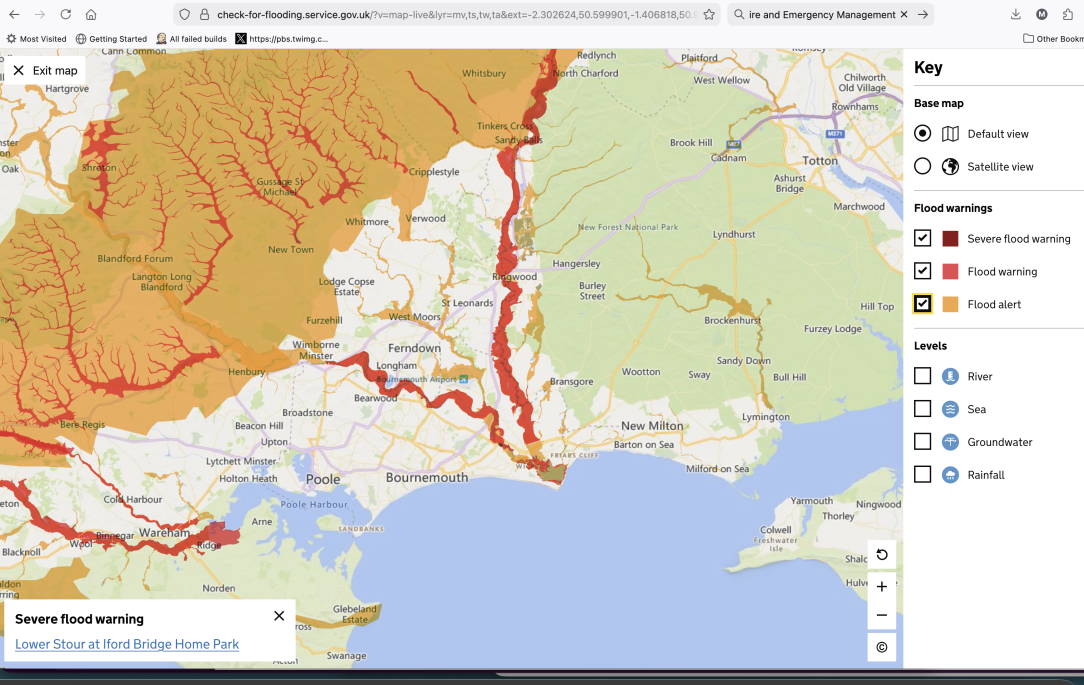
    Maybe I wasn't specific enough. What I think is needed is (at least) a map on met.ie showing yellow/orange/red areas smaller than counties based on risk of local flooding. Text notifications based on Eircode should be possible as well, for orange/red. ME should be working with the OPW to produce this data. Static flood risk maps already exist. They have accumulated rainfall stats. That's just from the transportation point of view. Water ingress into buildings is a whole different kettle of fish.

    “The opposite of 'good' is 'good intentions'”


  • Registered Users, Registered Users 2 Posts: 7,584 ✭✭✭Glebee


    I was listening to the radio earlier and the reporter said that more weather was expected later in the week 🤣🤣 . I hope she read the script wrong.


  • Registered Users, Registered Users 2 Posts: 3,071 ✭✭✭crusd


    That is not what meteoroligists do. All they can do is say a certain amount of rain is likely to fall in a certain area in a partcicular timeframe and provide that informaiton to people who do have the on the ground knowledge to provide more local warnings. Which they already do with the councils.

    It falls to the councils, and probably the likes of OPW and Waterways Ireland to use that information to assess flood risk.

    It is much easier for them to sit back, do nothing, and watch everyone blame Met Eireann


  • Moderators, Category Moderators, Computer Games Moderators, Society & Culture Moderators Posts: 8,821 CMod ✭✭✭✭Sierra Oscar


    It's down to the Local Authorities to provide warnings and prepare for flooding. They are the agency lead on flooding, not Met Éireann.

    Met Éireann provide information to the Local Authorities from their Flood Forecasting Centre but they have no authority or responsibility to issue warnings regarding flooding. That firmly rests with the Local Authorities, something Minister Browne should be aware of as Minister for Local Government.

    The director National Directorate for Fire and Emergency Management has come out and contradicted Minister Browne by stating that Met Éireann did in fact share warnings to the Local Authorities in advance of the storm regarding the elevated risk of flooding. Time and time again we see the Local Authorities do **** all with the information they are given and do little to warn the public or prepare for flooding.

    I remember the debacle in 2010 when the Local Authorities failed to stockpile salt and grit despite Met Éireann warning that we were facing into one of the worst cold spells in decades. They didn't start ordering supplies until they ran out. Snow ploughs were left in storage instead of being distributed. Many national and primary routes were impassable for weeks. It was unbelievable mismanagement and not that much has changed.


  • Advertisement
  • Registered Users, Registered Users 2, Paid Member Posts: 8,820 ✭✭✭plodder


    I don't dispute any of that and I'm talking about road conditions specifically here. So say you're commuting from Navan to Dublin City centre. Do you really want to be checking three different LA websites for whether it's safe to travel or not?

    So, I'm just suggesting how things might be done better in future. A single point of reference for weather conditions related to travel would be good.

    “The opposite of 'good' is 'good intentions'”


  • Moderators, Category Moderators, Computer Games Moderators, Society & Culture Moderators Posts: 8,821 CMod ✭✭✭✭Sierra Oscar


    Sorry, not meaning to have a go at you - more so frustration with the current process. You're right, it does have serious deficiencies but at the end of the day its the Local Authorities responsibility until it's changed not Met Éireann.

    There have been suggestions to have some sort of national body to co-ordinate flood warnings and responses but the Government has decided to keep it between the National Directorate for Fire and Emergency Management and Local Authorities. Probably because serious flooding is infrequent, relatively speaking compared to wind damage caused by storms and so on. It also does then beg the question, what are Local Authorities actually doing? They all have Emergency Management Unit's.

    Each of the Local Authorities also have a fantastic voluntary resource at their disposal via the Civil Defence, but they're usually activated retrospectively. They had the information about flooding, they could have been activated to help put in place flood defences.


  • Registered Users, Registered Users 2 Posts: 1,528 ✭✭✭Yeah Right


    So they warned you that it might flood, and it did, and you're unhappy with that because………..they warned you it might flood some other times during the year and it didn't happen? I'm sorry but that's straight down the 'moany windbag' checklist.

    I genuinely don't know what you're looking for here. Do you want more warnings? Fewer warnings? Warnings that are specific to just your area? A time machine to let you know when it's definitely gonna flood?

    I suspect what you're after is more ACCURATE warnings, which isn't gonna happen. They don't know the conditions on the ground, they cannot tell for certain that X is gonna happen, so they issue warnings based on probability. Which is what happened this time. But you're don't think that was sufficient this time.

    Like I said, damned if they do and damned if they don't. I guarantee you there are people who were unaffected by this current storm who are giving out about all the warnings and are too myopic and self-centred to realise that the weather report isn't just for them, specifically. Even while you're complaining that there wasn't enough of a heads-up, there are others out there who think there was too much palaver over it all. Guaranteed. They cannot win.


  • Registered Users, Registered Users 2, Paid Member Posts: 8,820 ✭✭✭plodder


    Then get them to publish the data that they provide to the LAs. Let other people interpret it, if they don't think it can be made more precise than a four level scale per county. I wasn't joking (or exaggerating) when I said this was possibly the worst flooding in 30 years where I am.

    “The opposite of 'good' is 'good intentions'”


  • Registered Users, Registered Users 2 Posts: 323 ✭✭MadeInKerry


    Just got a Yellow warning now with flood warning on it too. So there you go. Wait for the moans now if there are no floods.


  • Registered Users, Registered Users 2 Posts: 19,851 ✭✭✭✭kippy


    I don't agree on a few fronts: People need to appreciate, as with this warning, that a lot of local and not necessarily weather variables also come into play.

    Driving to work with caution under a yellow warning, of course, doesn't take into account unsecured items that may blow over, trees that were loosened up in the last storm, trees at different times of year covered in leaves, trees in very wet groups - all leading to a higher chance of those trees falling over - even in "yellow" level winds.

    In relation to flooding - it's been said already, but there are a number of factors that determine whether a specific area will flood or not - I don't believe ME can get down to a granular level to analyse the state of local draingage, the water table, the changes that have been made over the years to the water table levels, the changes made to drainage due to new buildings, new roads, redirection of drainage ditches on farm land etc etc.

    The lessons learned are pretty much the same lessons we learn from almost all flood events.

    1. Rivers need to be dredged. This needs to be done every few years. This was a major contributor to some localised flooding in Galway here circa 2011 - rivers were dredged - haven't had the problem since - that said there's been significant development in these areas over the past few years and I don't believe river has been dredged since so next major rain event will be interesting.
    2. Drainage ditches, gullys and similir infrastructure needs to be kept well maintained. This can be difficult with leaves/rubbish etc covering gullys and getting into soakways and pipes etc.
    3. Most controversially - don't build on historic floodplains or too close to water courses. We have done this with consistency in this country over the past two decades and I believe it still continues. Not only could this impact on the houses that are built in these areas themselves, it also has the capability to impact on other houses, that may not necessarily have had flood issues in the past, due to the changes in water table as a result, and potential amendmend of flood land for the river. County councils continue to issue planning to these developments, usually with a "flood report" requirement. Having seen how these are put together and what they take into account, I wouldn't be too confident of anything in those reports.
    4. If a house is getting flooded consinuously, perhaps that house needs to be abandoned/knocked and some scheme enacted to help the homeowner (also controversial)

    As a nation however, we tend to but a push on on improving some of these things in the short term after an "event" but let it slide then, leading to these issues every few years.


  • Registered Users, Registered Users 2, Paid Member Posts: 8,820 ✭✭✭plodder


    Oh well. Can't be done, fair enough….

    Screenshot 2026-01-28 at 15.53.05.png

    https://check-for-flooding.service.gov.uk

    “The opposite of 'good' is 'good intentions'”


  • Registered Users, Registered Users 2 Posts: 19,851 ✭✭✭✭kippy


    Do you reckon that's 100 percent accurate?

    Does it take into account the dip on a country road that gets flooded for the past year or so due to a farmers drain being blocked?


  • Registered Users, Registered Users 2, Paid Member Posts: 8,820 ✭✭✭plodder


    Holy mother. I said nothing about accuracy. I said more fine grained precision below the level of county which is what the Brits seem to be able to do. Don't let perfection be the enemy of the good. You don't need to know exactly which dips in the road are going to be flooded - just what areas to avoid or whether even getting out of bed at all is a good idea.

    “The opposite of 'good' is 'good intentions'”


  • Advertisement
  • Registered Users, Registered Users 2 Posts: 19,851 ✭✭✭✭kippy


    I personally think that kinda thing is a complete waste of time. I'd wager all it does is track the rivers and rainfall data. It's not exactly rocket science and going by how we always complain this the country, it'd be ignored. At best it's just a colour coded map, who really knows what actual data goes into its make up outside of following historic data and river flood plains.

    To most here, local knowledge will give you a fair idea of where the floods will be variable dependant, the issue really is what the species does to make these flooding issues far worse. We dont seem to want to learn from past mistakes or in the event of constantly flooding property, come up with a scheme to ensure that property isn't lived in again (assuming remediation works don't work)


Advertisement
Advertisement