Advertisement
Please note that it is not permitted to have referral links posted in your signature. Keep these links contained in the appropriate forum. Thank you.

https://www.boards.ie/discussion/2055940817/signature-rules
Help Keep Boards Alive. Support us by going ad free today. See here: https://subscriptions.boards.ie/.
https://www.boards.ie/group/1878-subscribers-forum

Private Group for paid up members of Boards.ie. Join the club.
Hi all, please see this major site announcement: https://www.boards.ie/discussion/2058427594/boards-ie-2026

Random EV Thoughts 2 - The Jimnying

1363739414247

Comments

  • Registered Users, Registered Users 2 Posts: 22,145 ✭✭✭✭Cyrus


    Interesting article on charging and whether limiting to 80 percent is important , spoiler, not really

    https://www.geotab.com/blog/ev-battery-health/


  • Registered Users, Registered Users 2 Posts: 6,577 ✭✭✭creedp


    Well I suppose if you ignore the parts relating to the impact of high state of charge like the couple of pieces of text below you’d be right.

    • Operating state of charge: Keeping the charge between 20% and 80% minimises strain.

    How to keep an EV battery healthy and extend its life
    Avoid leaving vehicles with a full or empty charge; keeping the battery’s state of charge between 20% and 80% is ideal, particularly for extended periods of inactivity. If available, use adjustable buffer settings to automate this process and reserve full charges for long-distance trips


  • Registered Users, Registered Users 2, Paid Member Posts: 13,567 ✭✭✭✭the_amazing_raisin


    Regardless of the argument for or against the 80% rule, it's worth remembering that your EVs battery warranty may be voided if you leave the battery over 80% for an extended period

    Personally I think the 80% rule is more of a guideline, but I also don't want to give the manufacturer any wiggle room to deny a warranty claim

    "The internet never fails to misremember" - Sebastian Ruiz, aka Frost


  • Registered Users, Registered Users 2 Posts: 1,260 ✭✭✭Exiled Rebel


    You're overthinking it. Extended period is measured in weeks.

    If you're overly concerned at the outset just charge it to 60-80% until you're comfortable with the EV.


  • Registered Users, Registered Users 2 Posts: 3,885 ✭✭✭eagerv


    Just drive it when you want and charge it when you want to 100%. The LFP Battery is very forgiving.


  • Advertisement
  • Registered Users, Registered Users 2 Posts: 6,577 ✭✭✭creedp


    Personally if there is something that could be in any way positive for the longevity of my EV battery and doesn’t inconvenience me in any way I’ll gladly adhere to it. 80% hours a fine for my EVs for most days. If I need more the following I’ll simply slide the slider over to 100% on the app. Couldn’t be easier


  • Moderators, Society & Culture Moderators Posts: 42,155 Mod ✭✭✭✭Gumbo


    Over thinking it.
    tour answer is in the text you posted.

    Charger to 100% whenever and at least once a week.

    Charge any EV to 100% daily, once you are using the car daily. Don’t charge to 100% and leave it parked at the airport for a month. In that case leave it at 80%.

    ABC

    Always Be Charging.

    Too many people scared that manufacturers sit there and will void a warranty because you charged to 100%. Ridiculous.


  • Registered Users, Registered Users 2, Paid Member Posts: 13,567 ✭✭✭✭the_amazing_raisin


    Same view here, charge to 100% as needed

    There's been a few cases where plans changed and the car was at 100% with no long journey ahead

    I didn't bat much of an eyelid, just drove the car as normal then charged a few days later. I wouldn't be conjuring reasons to go driving just to get the battery below 80%

    "The internet never fails to misremember" - Sebastian Ruiz, aka Frost


  • Registered Users, Registered Users 2 Posts: 22,145 ✭✭✭✭Cyrus


    If you are driving regularly then charging to 100 percent is no issue, leaving it at a high start it charge for long periods isn't good but who does that ?


  • Moderators, Sports Moderators Posts: 18,873 Mod ✭✭✭✭slave1


    100% whenever you want to, there is a large buffer so you are never actually charging to 100%


  • Advertisement
  • Registered Users, Registered Users 2 Posts: 6,577 ✭✭✭creedp


    When I had my low range L30 I charged it to 100% each day as I would need most of its available range daily. However, with up to 300km at 80% Soc I’ve no need to charge to 100% and so just charge to 80% which covers 95% of my journeys.
    In any case my charger is located beside where car is parked and I often plug it in whether it needs charging or not. It’s almost a muscle memory thing at this stage Each to their own of course


  • Registered Users, Registered Users 2 Posts: 22,145 ✭✭✭✭Cyrus


    Sure and if that's what you feel comfortable with go for it, the point being that there is no real need to limit it to 80 percent if you are driving it daily .


  • Moderators, Sports Moderators Posts: 18,873 Mod ✭✭✭✭slave1


    ABC< always be charging


  • Registered Users, Registered Users 2 Posts: 7,512 ✭✭✭MojoMaker


    A - B - C


  • Registered Users, Registered Users 2 Posts: 6,577 ✭✭✭creedp


    Apologies for being like a dog with a bone on this but here’s another report that references higher SOC impacting battery degradation over time.


    After early life aging, degradation mainly comes from two factors. High resting charge levels stress the positive electrode, while very low charge levels stress the negative electrode. This explains why keeping an EV battery near the middle of its charge range works well for daily use.

    Other Ways to Extend Your Overall Battery Life

    Beyond the Stanford study, there are several ways that EV owners can extend the overall life of their car’s battery. One of the most effective ways is to manage charge levels thoughtfully. Keeping the battery somewhere in the middle of its range for daily driving helps reduce long term wear. Charging to 95% is fine for road trips, but doing it every day adds unnecessary stress. Letting the battery sit at very low levels can also accelerate aging, so plugging in before it drops too far is a smart habit.


    I think opinion on this issue divides the EV driving population into 2 cohorts, those who buy new and change every couple of years have no concern for degradation or looking after the battery as they will have flipped the car before any issue become evident and those who buy older EVs and plan to hold onto them for an extended period. The latter cohort will be far more interested in ensuring degradation is minimised during their ownership of the car.

    My personal experience with EVs hasn’t been great. My 2016 L30 battery has collapsed, car off the road and will probably be scrapped while my 2021 M3 battery has also failed and had to be replaced (thankfully) under warranty.

    Please, please new EV owners, look after your batteries for me and have a battery health report available when I’m buying my next used EV🤣

    https://www.torquenews.com/18004/mustang-mach-e-owner-learns-aggressive-acceleration-good-his-battery-sites-stanford-study


  • Registered Users, Registered Users 2 Posts: 2,194 ✭✭✭innrain


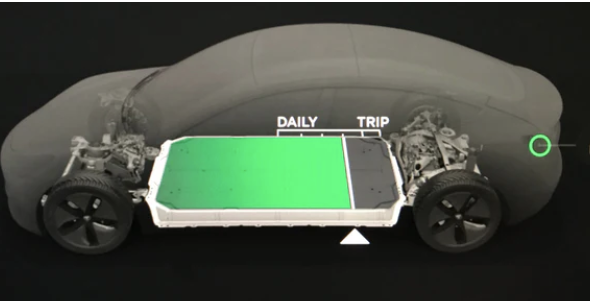
    The Tesla software will display a daily recommended limit for the other chemistry

    image.png

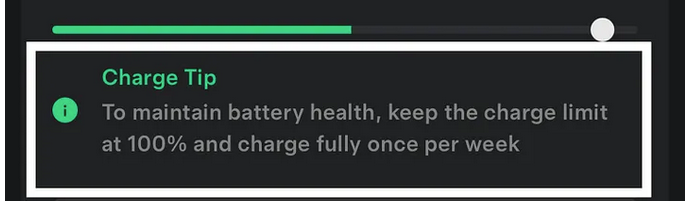
    With the LFP is not there as there is no need.

    image.png

    The once a week full charge rule, has nothing to do with the strain on the battery, but with the need to be fully charged in order to estimate/measure it's capacity. So if you don't charge fully for a long time that range estimate might not be as accurate as you'd like. So set it to 100% and forget about it. Except when you go on holidays for two weeks, don't charge the night before unless you drive to the Airport and you're not living in Swords :)


  • Registered Users, Registered Users 2 Posts: 6,577 ✭✭✭creedp


    I’ve too much time on my hands today🤣 but there is research that claims maintaining/cycling LFP batteries at a high SOC causes increased degradation, albeit less so than with NMC batteries.

    Again probably of limited interest to new car owners but maybe of increasing interest to owner of older cars as the year pass. It may also be the case that cars that so very low mileage but are constantly topped up to 100% may be most affected? Time will tell I suppose.

    However, a new study published last week in the Journal Of Electrochemical Societycontradicts what automakers have been saying about LFP charging patterns. The study states that repeated charging cycles at a higher state of charge can harm LFP cells over time. The study specifies how this happens on the most granular level. But kudos to YouTuber Jason Fenske of Engineering Explained for breaking it down for us.

    If you’re not driving your EV for extended periods, leaving the battery in a lower state of charge can help, as reduced voltage doesn't harm in the long run. “Cycling near the top of charge (75–100% SoC) is detrimental to LFP/graphite cells. Our results show a correlation between the average SoC of battery operation and capacity fade rate, meaning that the lower the average SoC, the longer the lifetime…,” the study stated. “Therefore, the time spent cycling at high states of charge is critical to minimize.”

    https://insideevs.com/news/731210/lfp-battery-health-degrades-full-charge-study-finds/


  • Moderators, Society & Culture Moderators Posts: 42,155 Mod ✭✭✭✭Gumbo


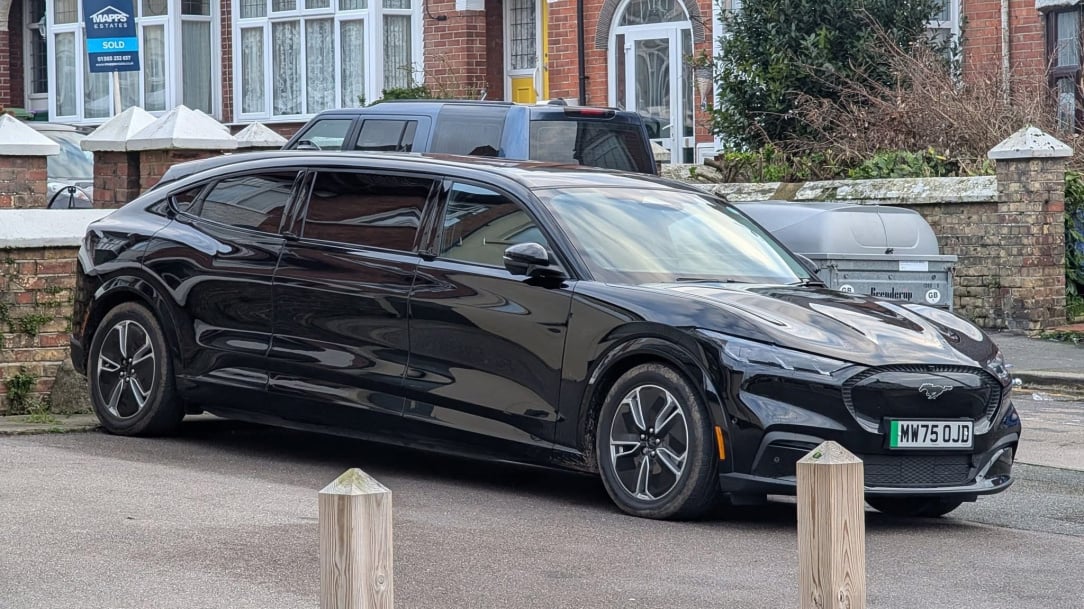
    Random alright!

    IMG_3971.jpeg


  • Registered Users, Registered Users 2 Posts: 3,564 ✭✭✭JohnC.


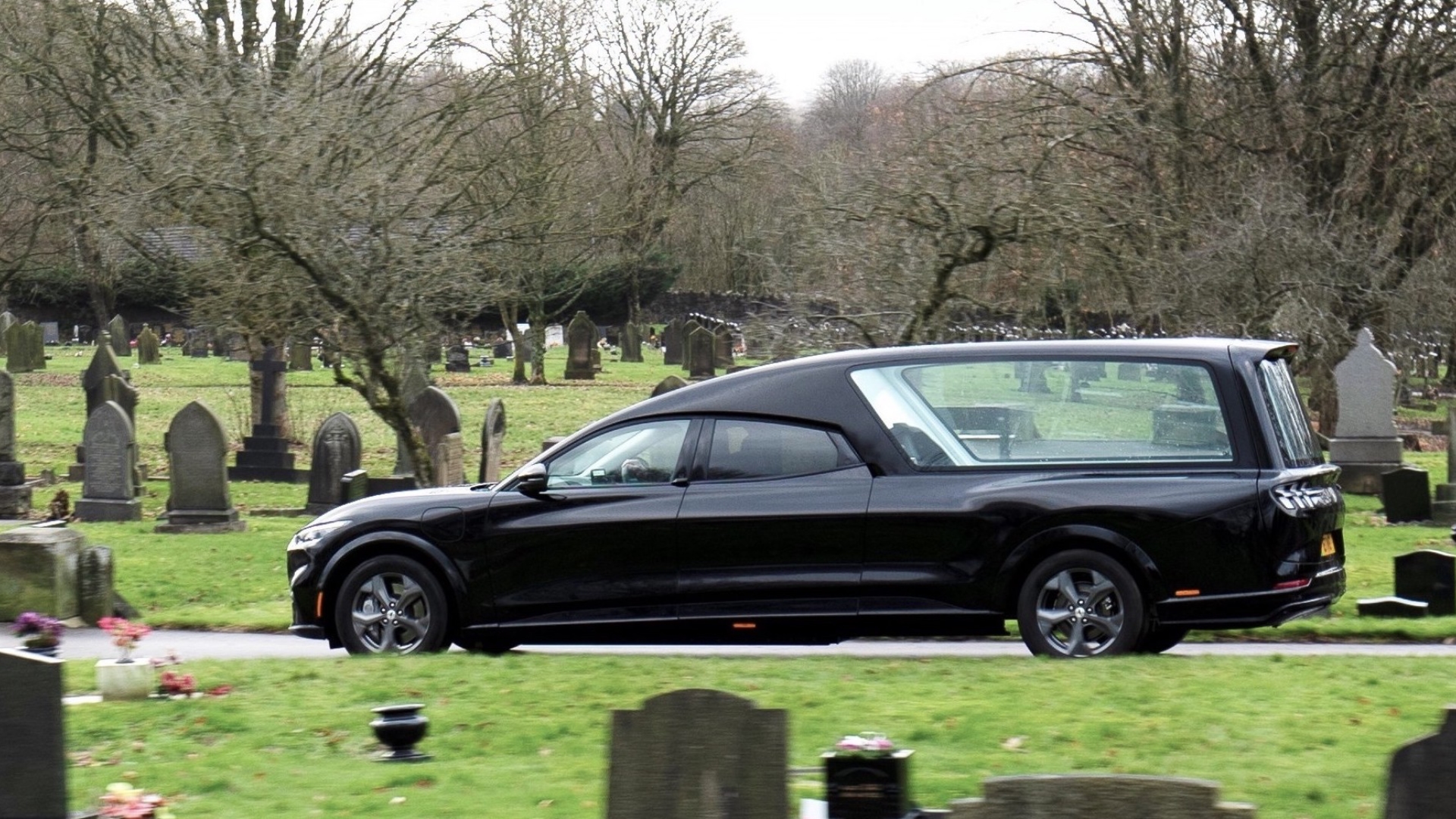
    I found it mentioned in a Top Gear article a few years ago, along with a hearse version

    https://www.topgear.com/car-news/electric/electric-hearse-Mustang-Mach-E

    Untitled Image


  • Registered Users, Registered Users 2 Posts: 5,237 ✭✭✭wassie


    Watched Uber CEO Dara Khosrowshahi's interview and he had a lot of interesting viewpoints.

    Lots of interesting issues that I had never heard nor considered before - worth a watch if you have any interest in autonomous vehicles (av).


  • Advertisement
  • Registered Users, Registered Users 2 Posts: 496 ✭✭Ev fan


    My better half changed her car in the last few days. The 4 Yr old A1 Audi has been traded for a new Yaris Cross. She's in no way anti EV but doesn't fully understand/ trust them yet. It's a pity as she does low mileage doing a lot of short trips pootering about. An Inster or the upcoming ID Polo would have been a good fit. Anyway at least the Cross is a full hybrid and she will be using EV mode for a fair amount of her driving. The long time average for fuel efficiency for the A1 was 8.8l/100km so she should be using a lot less petrol in the new car - hopefully somewhere around 5.5l/100km. The Cross is very comfortable, easier to get in and out of, simpler to drive and has a better view out on the road. 10 year warranty is appealing too if she decides to keep it for longer.


  • Registered Users, Registered Users 2 Posts: 7,512 ✭✭✭MojoMaker


    That's a plug-in or a "self charging" hybrid?


  • Registered Users, Registered Users 2 Posts: 11,079 ✭✭✭✭MJohnston


    "Full" hybrid generally refers to a self-charging one, plus it's Toyota


  • Registered Users, Registered Users 2 Posts: 496 ✭✭Ev fan


    Full hybrid in Toyota case means that the car can be propelled by the electric motor alone for a few km (don't know exactly but assume it's probably 3km max as battery apparently is only .7kWh.) Still handy in city driving/ heavy traffic situations. In MHEV cars propulsion is always by the engine with torque assist by the electric motor. I wish Toyota would come out with a small EV but they're probably hiding behind the solid state battery must be launched 1st excuse.


  • Registered Users, Registered Users 2 Posts: 7,512 ✭✭✭MojoMaker


    Where is the electric motor drawing its power? Separate battery for the hybrid circuit?


  • Registered Users, Registered Users 2, Paid Member Posts: 7,496 ✭✭✭zg3409


    Yes. Mild hybrid is even worse, basically no motor, or a motor so small it cannot drive the car alone. Basically a tiny motor and combined alternator that can charge and discharge the 12 volt battery to give a boost during hard acceleration. It's basically a lie to rebrand an ICE with no real battery on board.


  • Registered Users, Registered Users 2 Posts: 496 ✭✭Ev fan


    And just for a bit of diversion from all the Greenland issues etc. A warning light came on the Born last Friday for the Airbag. It stayed on over several restarts throughout the weekend. Nothing for it but I gave it to the dealer overnight to investigate. The problem was found reasonably quickly as it a disconnected switch under the rear seat for the airbag electrical circuit. The dealer was dubious about it being a valid warranty claim as I admitted I have a dog. The theory goes that when the dog was sitting on the back seat, through paw 🐾 pressure my dog managed to disconnect a solid electrical connection under the rear seat. My dog was in the car for a total of 3 times in the last 12 months. I attach a photo of the Defendant. Answers on a postcard please 😝


  • Registered Users, Registered Users 2 Posts: 496 ✭✭Ev fan


    The Accused - Elsie


  • Moderators, Sports Moderators Posts: 18,873 Mod ✭✭✭✭slave1


  • Advertisement
  • Registered Users, Registered Users 2, Paid Member Posts: 15,612 ✭✭✭✭josip


Advertisement
Advertisement