Advertisement
Help Keep Boards Alive. Support us by going ad free today. See here: https://subscriptions.boards.ie/.
https://www.boards.ie/group/1878-subscribers-forum

Private Group for paid up members of Boards.ie. Join the club.
Hi all, please see this major site announcement: https://www.boards.ie/discussion/2058427594/boards-ie-2026

WFH is dead and buried. Right to WFH bill is pointless

1171820222329

Comments

  • Registered Users, Registered Users 2 Posts: 12,782 ✭✭✭✭Oscar_Madison
    #MEGA MAKE EUROPE GREAT AGAIN


    Totally depends on the job- true- but nature of office work these days tends to be project based with deliverables at end- regular checkin’s are needed to ensure project stays on track - you could complete dozens of smaller shorter projects in the course of a year - all related to a bigger wider project - it’s just sensible modern work organisation that’s all


  • Registered Users, Registered Users 2 Posts: 16,990 ✭✭✭✭Flinty997


    If it was all in system tracking the project(s) a manager would see the rollup at a glance.

    At least if they would if they looked at the system. Often they don't.

    Post edited by Flinty997 on


  • Registered Users, Registered Users 2 Posts: 14,324 ✭✭✭✭LambshankRedemption


    This thread has become 90% of people agreeing with each other and still finding a way to argue.


  • Registered Users, Registered Users 2 Posts: 1,992 ✭✭✭JayRoc


  • Registered Users, Registered Users 2 Posts: 4,088 ✭✭✭KaneToad


    A lot of projection of your self going on in this post?

    You do realise that not everyone is like you/your friends?


  • Advertisement
  • Registered Users, Registered Users 2 Posts: 1,195 ✭✭✭techman1


    no they are arguing with the 10% like myself who are not on board with the consensus here. The consensus here is still only a small section of the overall population given that the vast majority of the workforce do not work from home. Like alot internet forums it becomes an echo chamber.


  • Registered Users, Registered Users 2 Posts: 2,615 ✭✭✭Dr Robert


    Self centered post tbh. Possibly some jealousy at the root of it.

    Also, perhaps your own default is laziness but there's plenty of people who are the opposite.

    Remember, everyone's experience is different. WFH suits some people and not others.

    Managers should know what their employees are working on regardless of where they are, otherwise they are pointless managers.

    WFH is weeding out poor managers, that's for sure.


  • Registered Users, Registered Users 2 Posts: 1,195 ✭✭✭techman1


    I don't know where you are getting that from ? where did I mention my friends in a general discussion about WFH and the downsides, I think its more a case of don't like the message target the messenger. The same thing happened when Denis O Brien criticised WFH and the whole culture around it, he got slated not for his arguments on WFH but about everything else from Esat to being a tax exile.


  • Registered Users, Registered Users 2, Paid Member Posts: 4,480 ✭✭✭TaurenDruid


    He got slated for his arguments, too.

    And also for being a corrupt tax exile ****.

    ===
    boards.ie default cookie settings now include "legitimate interest" for >200 companies, unless you specifically opted out!


  • Registered Users, Registered Users 2 Posts: 4,088 ✭✭✭KaneToad


    "We all know WFH allows way more slacking off of work"

    "long term it's not healthy even for the individual because it limits their social interactions"

    "During COVID we heard that marriage break ups and divorce rose significantly afterwards as the pressure of being stuck together all day with no outlet caused friction."

    "The default option for humans is laziness so if they don't have to do stuff they won't"

    None of your above statements have any resonance with me. It seems to be your personal assessment of you/your friends situation.

    Always find it odd when people argue the importance of the social side of their job. Do that not have meaningful relationships outside of work with people of their choosing?


  • Advertisement
  • Registered Users, Registered Users 2 Posts: 278 ✭✭Tacitus Kilgore DCLXVI


    Why should anyone give a fúck what Denis O'Brien thinks about anything?


  • Registered Users, Registered Users 2 Posts: 16,990 ✭✭✭✭Flinty997


    Quite something when someone thinks "the office" mirrors real life when in fact is satire of dysfunctional office with an inept management.


  • Registered Users, Registered Users 2 Posts: 25,111 ✭✭✭✭lawred2


    I work in tech. The young ones are tech savvy sure. And perfectly capable of using every tool to facilitate remote working.

    However there's definitely more to working life than productivity and churning through tasks. I do think in your twenties and early thirties, the personal interactions help develop more of the person than what's practically necessary to get some tasks done. Plus a lot of genuine friendships come from these years.

    It's different for people in their late thirties and forties working remote today who participated in such workplace realities for years prior to 2020. Yes, some people worked remote. Always been the case. But it was never widespread. And people in their twenties straight out of college social never had such setups.

    Everything evolves but I'm not sure twenty somethings never leaving their rooms is a good thing.


  • Registered Users, Registered Users 2 Posts: 1,195 ✭✭✭techman1


    It's different for people in their late thirties and forties working remote today who participated in such workplace realities for years prior to 2020. Yes, some people worked remote. Always been the case. But it was never widespread. And people in their twenties straight out of college social never had such setups.

    Thats probably the key reason why employers want to end WFH or at least the fully remote variant because it doesn't foster transfer of knowledge. People in their 40s and 50s are conveniently forgetting how they learnt their own skills from older colleagues in the workplace. You hear of how young new hires during Covid were picking up few skills since the knowledge base of the companies were all at home and very difficult to pick up an important skill through a laptop screen especially if the old guy at home is not tech savvy.


  • Moderators, Science, Health & Environment Moderators Posts: 5,762 Mod ✭✭✭✭spacetweek


    We cannot overturn thousands of years of workplace norms as if they were never needed. Only bad things can come of it.


  • Registered Users, Registered Users 2, Paid Member Posts: 4,480 ✭✭✭TaurenDruid


    We have collaboration tools these days. Teams. Zoom. Webex. Slack.

    I can transfer knowledge much better, or receive it so much easier, by screen sharing and watching - even recording! - while talking to the person (or group!), rather than peering over someone's shoulder, as I struggle to read what's on their screen.

    ===
    boards.ie default cookie settings now include "legitimate interest" for >200 companies, unless you specifically opted out!


  • Registered Users, Registered Users 2 Posts: 27,019 ✭✭✭✭Mrs OBumble


    It's easier to transfer technical knowledge and skills, for sure.

    But company commitment, soft skills, cross-team learnings are a whole different thing.


  • Registered Users, Registered Users 2 Posts: 2,615 ✭✭✭Dr Robert


    Good point. Some people take quite a while to get up to speed with business logic/knowledge. That's definitely harder to do over Teams etc.


  • Registered Users, Registered Users 2, Paid Member Posts: 4,480 ✭✭✭TaurenDruid


    Cross-team learnings? I work in IT. I can absolutely train, or be trained, remotely. It happens all the time.

    Actually, the same goes for non-IT training. We've been doing it perfectly well for over five years now.

    ===
    boards.ie default cookie settings now include "legitimate interest" for >200 companies, unless you specifically opted out!


  • Registered Users, Registered Users 2 Posts: 4,143 ✭✭✭Fionn1952


    Disclosure; I'm fully remote, have been since well before Covid, most of the people I manage are in different countries.

    That being said, formal instruction is definitely as easy to facilitate remotely as it ever was in person, but the quick off the cuff asking someone more experienced for a quick look at what you're working on definitely isn't in most companies I've had any dealings with. I think it is very noticeable in the standards of devs who have come out of uni in the remote era.

    I'm a big proponent of remote working (certainly from a selfish perspective), but there is definitely an element of reduced information exchange between giving the person beside you a nudge versus sending a Teams message or meeting invitation.


  • Advertisement
  • Registered Users, Registered Users 2 Posts: 27,019 ✭✭✭✭Mrs OBumble


    Inability to distinguish between formal training and wider learning is an excellent example of exacly what I mean.

    Most learning happens anywhere but a formal setting.


  • Registered Users, Registered Users 2 Posts: 927 ✭✭✭littlefeet


    There is a confluence of issues with this debate. There is a hysterical clinging to the idea that only the tasks matter as long as they do a prescribed set of tasks correctly; that's all that matters. There is a drift to a belief that the employer should be suiting the employee and not the other way around. Some workplaces have become very me-fein, so onboarding or whatever its isn't happening, unless it's a specific, stated task they have to do, a lot of it is cynicism because why bother.

    A relative in their twenties went for their first graduate job, something which I would have thought would be very competitive, considering the career and how well it is paid its tech. They were telling us that a fair few dropped out when they realised it involved weekend work, including Sundays.

    On the other hand, I know someone who can more or less do what they like, provided they do their work and do their two day in the office, so if they want to get a flight Friday afternoon, they work from 6am, or they can get an early flight back and start work in the afternoon. They dont moan about the two days in the office.


  • Registered Users, Registered Users 2 Posts: 22,140 ✭✭✭✭Cyrus


    100% as ive said before to people if social interactions are so unimportant would you have a completely remote relationship with your friends and family as well?

    Of course not,

    Sending college graduates into a work environment and letting them be completely remote isnt going to work out well for them. And if its all about technology and tools and forward thinking why are some of the most innovative companies in the world seeking more time in the office?


  • Registered Users, Registered Users 2 Posts: 1,251 ✭✭✭ledwithhedwith


    I always feel really sorry for people who talk about the importance of the social impact of going into the office. Have they no pals outside of work?


  • Registered Users, Registered Users 2 Posts: 15,397 ✭✭✭✭The Nal


    A lot of these huge companies operate in the exact same way. Google, Microsoft, Dell, HP, Apple, Meta, Amazon, JP Morgan et al. Big open plan offices, teams of 10 or so with a manager and a shared resource like a tech lead or senior broker etc. Much easier to manage in person.

    Agree though its madness having graduates sat in their box room all day. Very damaging.

    That said, with the way traffic (in Dublin) is at the moment its probably healthier than making mental commutes. City is kind of broken transport wise. Ghost buses, full buses, over crowded darts, M50 is bananas.

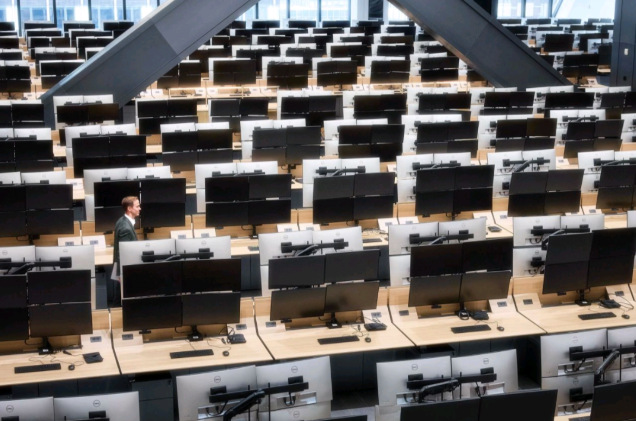
    All to sit in an office like this. JP Morgans new 3 billion building in NYC

    image.png


  • Registered Users, Registered Users 2 Posts: 263 ✭✭HurlingBoy


    I think the most important thing is to allow flexibility and but also have a system where everyone in a company has equality when it comes to WFH flexibility and knows where they stand. Since Covid specific arrangements for certain employee leads to resentment and poor morale. I agree it is really bad for 20 somethings to work fully remote. Building up the softer skills of being able to interact with colleagues is important. The lazy worker will slack off WFH but companies should be able to identify through their metrics and address this. The 30, 40 something with kids needs more flexibility that the 20 something for example and doesn't need to be in the office as much to learn from other people. Maybe a system of remote days per years of service would work e.g 50 days - 1-2 years, 100 days - 3-5 years etc similar to extra holidays that some companies provide per years of service.


  • Moderators, Sports Moderators Posts: 26,777 Mod ✭✭✭✭CramCycle


    We turn them over quite quickly, weekends as we know them now simply did not exist 200 years ago. The 40 hour week was not a thing until the 20th century. Software solutions to project management mean that we now have far less project managers, as good PMs can cover so many more without getting to deep into each individual one. I like working from the office, occasionally I work from home but it is not common. My line manager WFH >50% of the week. Certainly has not affected their interactions with me, and their workload is huge but all gets done.


  • Registered Users, Registered Users 2 Posts: 927 ✭✭✭littlefeet


    That's another version of only the tasks matter and avoiding the real issue, it's not about socialising with work colleagues nowadays days there isn't much of that anyway.


  • Registered Users, Registered Users 2 Posts: 27,019 ✭✭✭✭Mrs OBumble


    Some people have moved to a new city. Some find all their peers have gone travelling. Some are just interested in meeting more people that the limited set of friends from school/college.

    But social aspects aren't only about friends: The workplace has always been important for getting to know people who aren't like you.


  • Advertisement
  • Registered Users, Registered Users 2 Posts: 15,397 ✭✭✭✭The Nal


    And its somewhere around 1 in 5 couples who meet in work. Used to be anyway.

    Not going to meet anyone sat at home in your childhood bedroom.


Advertisement
Advertisement