Advertisement
Help Keep Boards Alive. Support us by going ad free today. See here: https://subscriptions.boards.ie/.
https://www.boards.ie/group/1878-subscribers-forum

Private Group for paid up members of Boards.ie. Join the club.
Hi all, please see this major site announcement: https://www.boards.ie/discussion/2058427594/boards-ie-2026

"Green" policies are destroying this country

1111911201122112411251132

Comments

  • Registered Users, Registered Users 2, Paid Member Posts: 3,838 ✭✭✭Pa ElGrande


    In general media are lazy, they won't turn down free copy. Whinge energy Ireland give then a press release with copy practically written for them, rearrange the words and add their spin, otherwise it looks bad if all print the same content verbatim with their name stuck to it (it's happened before). If you are an environmental correspondent in a news organization, eNGOs, industry groups and government department are going to keep sending you "free" copy, they may even invite you to expenses paid conferences or special expenses paid training seminars. All you have to do is support their narrative, life is easy. Question the narrative, easy copy dries up, you incur shoe leather costs sniffing out your next story or have to cosy up to another lobby group that will supply you "free" copy.

    As an example, RTE's George Lee, environmental correspondent for RTE on ~€180K. His qualifications are in economics, he has the skillset to examine the bullsh!t that industry lobby groups such as WEI send his way, does he do that? no way.

    Let's introduce you to the Oxford Climate Journalism Network, this is run by Reuters, initial funding came from an eNGO called European Climate Foundation, It's a well funded bundling organisation which was founded by US-based Climate Works, which is funded by several billionaire trust funds, notably Hewlett foundation.

    Here are people who work or have worked for Irish media organisations who have been on that climate "jolly".

    • Nora-Íde McAuliffe is the audience editor at The Irish Times.
    • David Labanyi is Head of Audience at The Irish Times.
    • Cáit Caden is a business reporter at Irish Examiner.
    • Niall Sargent is an Investigative Reporter at Noteworthy / Journal Media,
    • Philip Bromwell is digital native content editor at RTÉ News
    • Margaret Donnelly is the Farming Editor at the Irish Independent
    • Kevin Doyle is Group Head of News with the Irish Independent
    • Glenn Mason, RTÉ News, Ireland
    • Rory Tevlin, Irish Independent, Ireland

    In addition RTE have signed on to the Climate Content Pledge, as have Coimisiún na Meán. RTE are a partner of Covering Climate Now. and they have received additional taxpayer funding to cover "climate" and "sustainability" topics.

    In answer to your question, why it is not mentioned: It is difficult to get a man to understand something when his salary depends upon his not understanding it.

    There have been limited coverage in Irish media about problems with the electricity infrastructure, notably the business post, you can also read between the lines in some Engineers Ireland reports and the commissioner for regulation of Utilities (CRU) about the shortcomings in the system. Mostly media is driven by press release, that's why data centers get attention but not the shortcomings of unreliable generation or our dependency on inter-connectors to make up the shortfall.

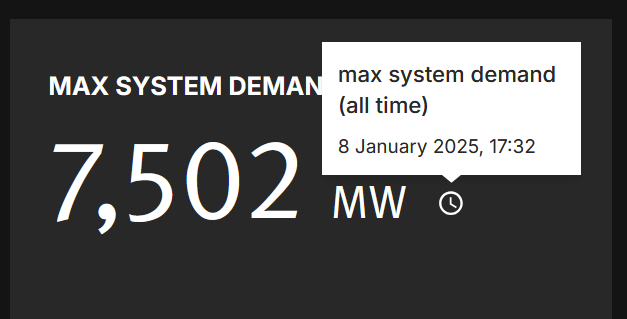
    All island - Peak demand reached 7502 MW on 8 January 2025, at the time there was no solar generation and wind generation was insignificant across multiple countries at once due to the weather system parked over us and the neighbours.
    In order to mange that, they implement demand management, the large consumers re ordered off the grid onto their own generation facilities. Inter-connector prices during this time are eye-watering.

    image.png


    There is also a scenario where there is too much wind and solar generation, this is most likely to occur in the Spring here in Ireland. Eirgrid limit non-synchronous generation to 60%, otherwise the grid can become unstable as happened in Spain earlier this year. Their design target for wind and solar is 70%, the previous minister Eamon Ryan decreed 80% without telling anyone in Eirgrid beforehand.

    Net Zero means we are paying for the destruction of our economy and society in pursuit of an unachievable and pointless policy.


  • Registered Users, Registered Users 2 Posts: 15,042 ✭✭✭✭Red Silurian


    It wasn't just unsustainable, it was completely pointless. We are paying you so you can pay your bill that we increased the price on in the first place!

    We need our electricity grid renationalised if we want consumer prices to fall to sustainable levels, privatisation simply doesn't work for essential services


  • Registered Users, Registered Users 2 Posts: 3,502 ✭✭✭almostover


    Moneypoint isn't closed, my friend works there. They are in the process of moving from coal to alternative fuel sources. It was to be closed but the effect of the Russian invasion of Ukraine on gas prices slowed down that process.


  • Registered Users, Registered Users 2 Posts: 672 ✭✭✭Marcos


    "Here are people who work or have worked for Irish media organisations who have been on that climate "jolly".

    • Nora-Íde McAuliffe is the audience editor at The Irish Times.
    • David Labanyi is Head of Audience at The Irish Times.
    • Cáit Caden is a business reporter at Irish Examiner.
    • Niall Sargent is an Investigative Reporter at Noteworthy / Journal Media,
    • Philip Bromwell is digital native content editor at RTÉ News
    • Margaret Donnelly is the Farming Editor at the Irish Independent
    • Kevin Doyle is Group Head of News with the Irish Independent
    • Glenn Mason, RTÉ News, Ireland
    • Rory Tevlin, Irish Independent, Ireland

    In addition RTE have signed on to the Climate Content Pledge, as have Coimisiún na Meán. RTE are a partner of Covering Climate Now. and they have received additional taxpayer funding to cover "climate" and "sustainability" topics.

    In answer to your question, why it is not mentioned: It is difficult to get a man to understand something when his salary depends upon his not understanding it."


    Niall Sargent. Anything to do with ex leader of the Greens Trevor Sargent? I ask that because Sargent isn't exactly a common surname, and the only public figure with that name I know of is Trevor Sargent.

    When most of us say "social justice" we mean equality under the law opposition to prejudice, discrimination and equal opportunities for all. When Social Justice Activists say "social justice" they mean an emphasis on group identity over the rights of the individual, a rejection of social liberalism, and the assumption that unequal outcomes are always evidence of structural inequalities.

    Andrew Doyle, The New Puritans.


  • Site Banned Posts: 2,753 ✭✭✭thatsdaft


    You right I got mixed up with Tarbort across the really river which is mostly damaged due to fire and being converted to HVO and the news that coal use is to end this summer

    the plan was to shutdown moneypoint in 2025 but Eirgrid convinced em to continue but burning oil not coal for another 4 years from this June

    My point is (ha pun) is that the location is perfect for gas peaker plants due to connectivity, existing industries nearby, and another power plant across the river, as well as estuary which be perfected for lng facilities

    Or stick these plants in Dublin port, close to demand


  • Advertisement
  • Registered Users, Registered Users 2 Posts: 107 ✭✭ultraviolence


    https://www.irishexaminer.com/business/economy/arid-41705048.html

    the climate minister wants to remove the airport cap which will see a doubling of the number of passengers to 60m a year.

    interesting, so is this a way of him telling us that economic growth is more important than reducing emissions? because im not sure how does this fit with the whole net zero agenda😜

    i wonder will the climate green lobby take this to court in an attempt to stop this? they're quite obsessed with taking everything to court in the name of 'emissions'.


  • Registered Users, Registered Users 2, Paid Member Posts: 3,838 ✭✭✭Pa ElGrande


    A minister for climate is a sad King Canute joke on us, I get why it's there, there is money floating around, politicians want a slice of the pie. Irelands climate has not changed in millennia, by the Köppen climate classification (Cfb) it's temperate, with no dry season and warm Summer. When people are talking about climate change they are referring to the change in weather statistics over an arbitrary 30 year time period, this convention was adopted by meteorologists in the early 20th century. Of course weather instrument readings change from minute to minute, day to day within the bounds of Cfb climate classification. They've only been gathering statistics since the late 19th century, meteorology only took off (SIC) with the build out of airports in the 20th century. Nothing exciting in that data, in order to generate headlines they take any anomalies they measure i.e. random noise and tell you the weather is becoming more extreme which contradicts your day to day experience and undermines their credibility.

    In the ~40 years since the United Nations began promoting catastrophic anthropogenic global warming (CAGW) narrative, the climate classification has not changed in Ireland. Even in those remote areas of the planet they like to fixate on, the ice caps are still there, the Polar bears are doing fine, the coral off Australia is fine, the islands that are supposed to be underwater are still there, in fact some such as the Maldives have built more airports. None of the absurd claims the alarmists have made over the decades have come true, these peoples skill at prediction makes Mystic Meg (RIP) look like a scientific genius on a par with Einstein. 40 years on alarmists are reduced to projecting their invalid apocryphal beliefs into the future across the media landscape with the aid of computer models that have no demonstrated skill at prediction.

    What has changed in 40 years? Population has grown, economic output and debt has grown, more people are in employment. In general, over that time more people have escaped poverty globally in 40 years than at anytime in world history.

    In 1987, global population was ~5 billion people, In 2025 it's estimated around 8.2 billion people. There are more of us alive today. In that time Irelands population has gone from ~3.5 million to ~5.4 million. Migration patterns have changed, Native Irish people still migrate in search of better opportunity (lack of affordable housing an cost of living being a significant driver), they are replaced by people from across the world are coming here also seeking economic opportunity. Given that change in population alone, a cap on the airport makes no sense unless there is an ulterior motive . . . cui bono?

    More people must consume more energy, when you look at the consumption of hydrocarbons (coal, oil, natural gas) in those 40 years, with the exception of some temporary economic downturns, more is produced and consumed than every before. What has changed in that time is the migration of many industries from the USA and Europe, primarily to China and South East Asia. While European countries in particular like to point to reduction in hydrocarbon use in their local countries, de-industralisation if a primary factor in this, the hydro-carbons are being burned elsewhere, goods are then imported.

    It's not a sunshine and roses, Debt has multiplied (we need economic growth to make the interest payments), driven by both public and private borrowing. That's a ticking timebomb, every few decades there are sovereign defaults. There is a massive investment bubble in AI at present, that is going to pop eventually. The green new deal bubble has popped and there are sizeable losses to be realized in some of our pension funds. There are major ongoing wars that have not yet reached their conclusion. Behind that there is a realignment of countries interests with China despite it's own internal problems likely to be the beneficiary and their interest in the green new deal is one of supplying the parts and using it to undermine Western governments.

    CAGW narrative has a lot of money riding on it such as Glasgow Financial Alliance for Net Zero, Global Carbon Market, EU Just Transition Fund, Billions in research grants for universities and other direct subsidies in wind, solar and batteries. There is much spent in lobbying to keep that afloat. That brings me back to the ulterior motive question, imposing emissions targets by sector is economic central planning, it is causing the migration of energy intensive industries from the EU to other parts of the globe. No economic growth can be powered by intermittent low density generators that use components that can only be imported from China.

    The greens and their climate lobby sponsors have been unable to produce evidence of loss and damage. In the United States, several of the Democrat run states have been pushing lawsuits against their oil and gas majors, so far unsuccessfully, the intent is gain a new source of tax revenue. In Europe, the groups have focused on "human rights" claims and have succeeded in getting "non-binding" judgements in the IHCR, these are predicated on laws that various EU (and Britain) governments have passed setting out emissions targets goals.

    The major political question in Ireland today is not the Dublin airport cap, it is solving the infrastructure bottlenecks that have built up over the last decade, especially on the east coast of the country, they can either solve the bottlenecks or pursue emissions targets, can't do both,

    Environmentalists are either Malthusian fetishists or they are acting as a front for other vested interests who benefit directly from the status quo. The politics that saw the rise of environmentalism has fallen out of favour among the public in recent years, politicians and vested interests will not willingly let go of the revenue that environmental taxes and subsidies bring in.

    There are currently no political parties in Ireland willing to make the link between current policies built around emissions targets and the costs associated with that. We are already among the highest prices for electricity globally, it gets exponentially more expensive to continue on the current path, a change of direction is about time. The cap at Dublin airport if enforced may become the straw that breaks the camels back becoming the symbol of the infrastructure bottlenecks across electricity, water, transport and housing making it politically untenable.

    Net Zero means we are paying for the destruction of our economy and society in pursuit of an unachievable and pointless policy.


  • Registered Users, Registered Users 2 Posts: 1,427 ✭✭✭MightyMunster


    I thought tourism numbers have collapsed, but the airport is at max capacity and bursting at the seams.

    Where are all the people?

    Doesn't seem to add up


  • Registered Users, Registered Users 2, Paid Member Posts: 3,838 ✭✭✭Pa ElGrande


    Tourists are operating within their budget, and since prices have gone up in Ireland, they are not staying as long. Which probably means the weekend market (Ryanair) is more appealing.

    There are flight connections where Ryanair bring them in but their are transferring to flights to US, Middle East or elsewhere.

    There are internal flights.

    Net Zero means we are paying for the destruction of our economy and society in pursuit of an unachievable and pointless policy.


  • Registered Users, Registered Users 2, Paid Member Posts: 14,413 ✭✭✭✭machiavellianme


    Excellent post but Eirgrid limit the instantaneous SNSP to 75%. I've no idea what the 60% you refer to is, but the 70% (and ridiculous 80%) you mentioned are the annual targets to be produced from renewable sources. There is no limit on these. These are separate from the SNSP and indeed would require the SNSP to be 100% (or more) at times to achieve such annual averages.

    Save boards.ie by subscribing: https://subscriptions.boards.ie/


  • Advertisement
  • Registered Users, Registered Users 2, Paid Member Posts: 3,838 ✭✭✭Pa ElGrande


    You are right, I was using out of date information from a few years ago. The 80% number was a comment by Mark Foley: Eirgrid chief says 80% renewables target ‘a nice surprise’

    Reaching the government’s new target of 80 per cent renewables on the electricity grid will require more than the additional €1 billion in funding outlined last week, the chief executive of Eirgrid has said.

    Mark Foley was speaking to the Business Post at Cop26 after he described the Climate Action Plan’s new 2030 renewables target as “a nice surprise” during an event at the conference.

    Net Zero means we are paying for the destruction of our economy and society in pursuit of an unachievable and pointless policy.


  • Registered Users, Registered Users 2, Paid Member Posts: 3,838 ✭✭✭Pa ElGrande


    RESS 5 is the fifth auction held under the Irish Government’s Renewable Electricity Support Scheme.

    Statistics to note arising from the provisional results, include:

    A total of 33 projects applied to participate in the RESS 5 qualification process. Of these applications, 23 projects qualified and ten projects have been provisionally unsuccessful in the auction.

    The average strike price for the provisionally successful applicants across all projects was €98.81/MWh (up from €96.85/MWh in RESS 4). The average strike price for solar projects was €100.63/MWh (down from €104.76/MWh in RESS 4) and for wind projects was €96.56/MWh (up from €90.47/MWh in RESS 4).

    Of the qualifying projects, 23 bids have been provisionally designated as successful (a combined total capacity of 1079.22MW), consisting of 18 solar projects (with a total capacity of 860.38MW) and 5 onshore wind projects (with a total capacity of 218.84MW).

    For comparison, under the RESS 4 auction which took place in 2024 contracts were offered to 373.8MW of wind farm projects and 959.84MW of solar developments. The average strike price across all projects under RESS 4 was €96.85/MWh.


    Even more expensive electricity on the way for a very long time. Inflation linked as well. Taking capacity factor into account for solar, multiply the “capacity” by 0.1, and wind by about 0.3. Ireland is rated the worst country for solar generation by a world bank report.

    Net Zero means we are paying for the destruction of our economy and society in pursuit of an unachievable and pointless policy.


  • Registered Users, Registered Users 2 Posts: 4,575 ✭✭✭tabby aspreme


    Are more Irish people going abroad due to the the cost of holidays here


  • Registered Users, Registered Users 2 Posts: 490 ✭✭bluedex


    Absolutely 100% they are.

    Looked into taking a break in Mid October for a couple of days. Ireland miles more expnesive than most places, even taking account of flights. Ended up going to Spain, booking cheap flights and a hotel that was about a third the price of Ireland.

    Sorry for going off topic

    Never argue with an idiot. They will only bring you down to their level and beat you with experience.


  • Registered Users, Registered Users 2 Posts: 3,423 ✭✭✭patnor1011


    Interesting reading, it somehow apply to our fantasists and their grand plans. And while last sentence sounds about right I for one do not think anybody will be held accountable but the taxpayer - the way it always was and will be…

    "Politicians from the right and left who bask in the temporary glow of mainstream media approbation for embracing the “renewables” movement will eventually be held to account when the sun sets on the solar economy, and when our tax dollars are gone with the wind. "

    Full article.

    https://realclearwire.com/articles/2025/10/09/wind_solar_projects_can_stick_taxpayers_with_the_tab_coming_and_going_1139865.html


  • Registered Users, Registered Users 2, Paid Member Posts: 3,838 ✭✭✭Pa ElGrande


    Very light on detail. That article is mostly from a lobby group promoting gas, they would say that, wouldn't they. What they miss is, there is a real issue today with solar panels due to the companies that installed panels going bust, many are proprietary tech and are no longer being maintained. Solyndra in the US went bust years ago, many of their panels had to be ripped out or have been left decaying on rooftops. Another essential part that article missed is maintenance costs due large-scale gas turbine and other fossil fuel power plants being forced to turn up or down depending on the availability of wind or solar at a given point in time. These plants are not designed to cycle like this, and it is causing operation and maintenance issues which ultimately leads to greater costs to the consumer.

    Meanwhile in Ireland, Eirgrid have to put in 150 MW reserve power plants, why? Because they cannot build a reliable grid using intermittent energy collectors, and solar & wind that have very poor capacity factors due to the scarcity and variability of wind and light over the course of the day.


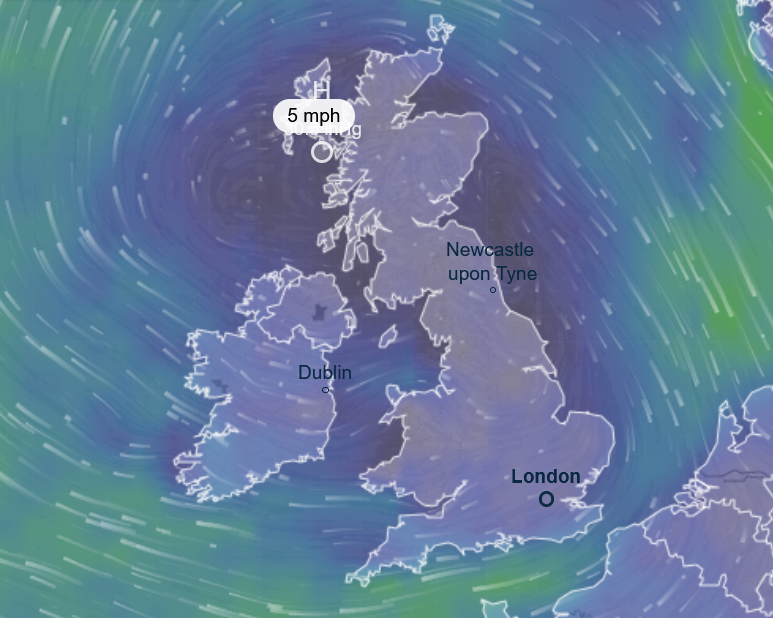
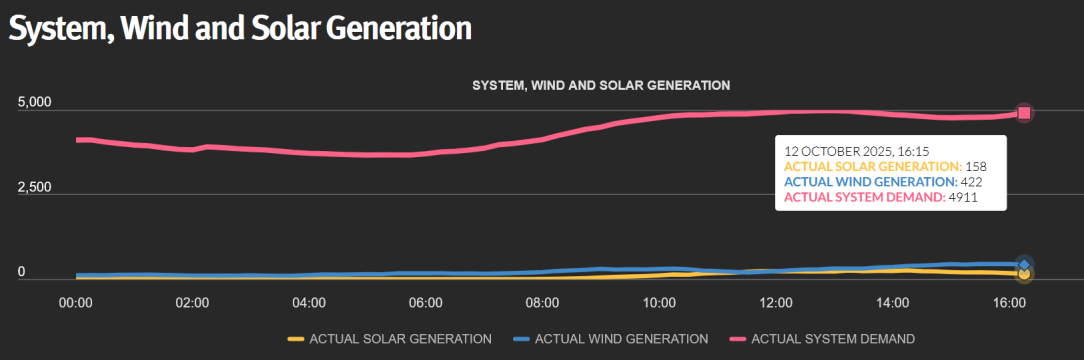
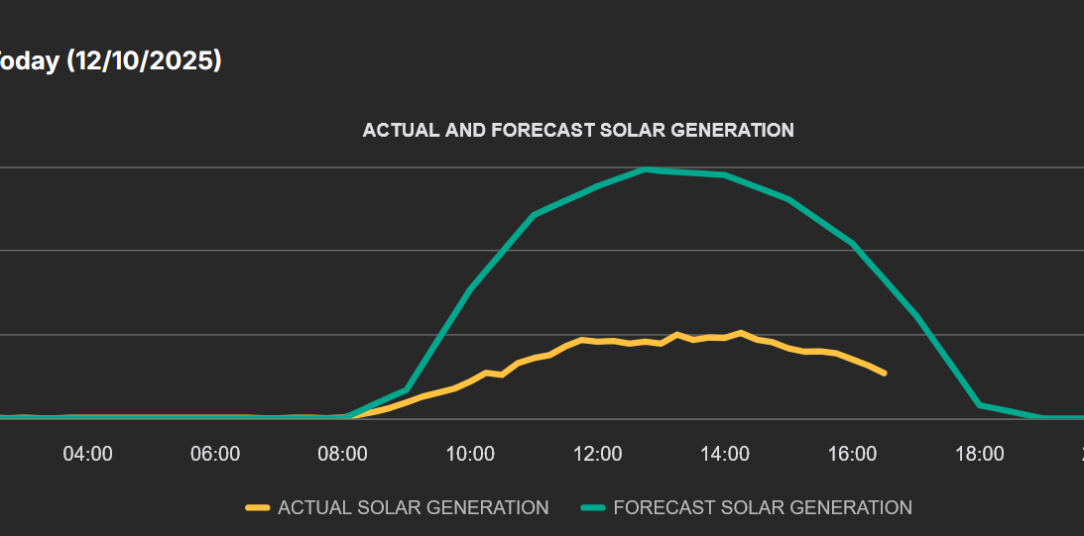
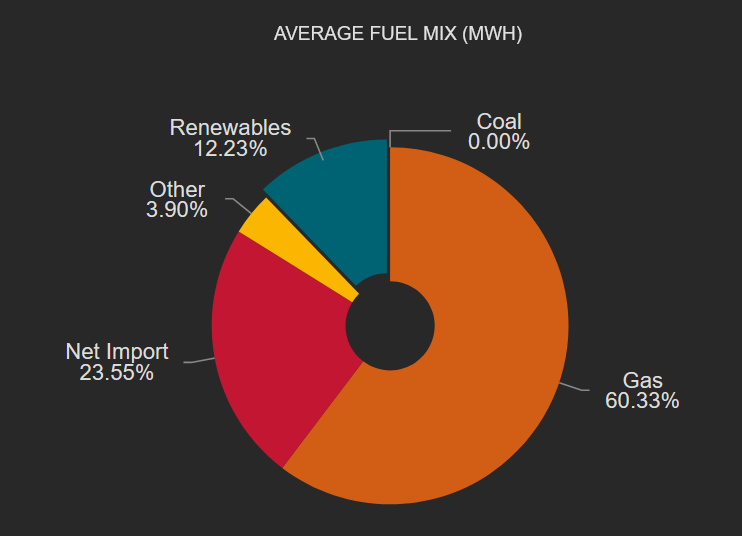
    Speaking of weather dependent generation, there is an anti-cyclone(high pressure) parked over us and the neighbours for a few days and it is cloudy. No wind, no sun, yet the lights still work?

    image.png image.png image.png image.png

    They don't break it from under Renewables, but ~5% generation is hydro.
    Imports from the UK (EMIC, Moyle and Greenlink) are almost 25% of our supply, Most of the gas we burn is transited via the UK. Since the same weather conditions affect the UK, it is fair to say that >80% generation is Gas.

    Meanwhile, our incompetent government (and their so called opposition*) just shoved up everybodys cost of living in the budget. Opposition politicians mostly agree with carbon tax and other environmental taxes.

    Carbon tax to be increased to €71 per tonne of CO2

    Carbon tax is to increase by €7.50 to €71 per tonne of CO2 emitted, which will be applied to auto fuels with effect from tomorrow, and to all other fuels from 1 May 2026.


    Everything moves by diesel . . . . . obviously the cost of food and everything else is going up on the back of the extra carriage and production costs. Nor is there any respite for consumers of electricity, that's gone up as well.


    Irelands current energy policy is a slow motion economic train wreck.

    Net Zero means we are paying for the destruction of our economy and society in pursuit of an unachievable and pointless policy.


  • Registered Users, Registered Users 2, Paid Member Posts: 2,993 ✭✭✭PommieBast


    One thing missed in all of this is peaker plants having horrendously bad efficiency. How much of that 60% gas was CCG?


  • Registered Users, Registered Users 2 Posts: 15,042 ✭✭✭✭Red Silurian


    Ireland is rated the worst country for solar generation by a world bank report.

    To be fair we don't get quite the amount of sunshine as other countries do. But also our wise leaders' solution to the climate crisis is to cut the grants. EVs and solar panels are 2 places we have seen this happen in the last few years

    What I'd like to see is a scheme whereby the govt pay for the panels on the roof of a house and in return take a portion of the generation for the grid, either by using another meter or whatever tech they want to implement. The homeowner get to keep the rest of the electricity generated and effectively gets a small solar panel array for free. We also need to re-nationalise the electricity sector as some of these suppliers, who are actually just billing companies in reality, are taking the piss with their pricing

    Irish tourism numbers have collapsed, but Spanish tourism numbers out of Ireland are rising. While weather might be a small factor I think cost is the biggest one. The Spanish are seeing a decline in British tourism since Brexit so are lowering their prices to compensate while at the same time Irish hoteliers are raising their prices exponentially. I got a week in Benidorm at the start of June last year for about €1,000 for flights transfers and accommodation for our family of 3


  • Registered Users, Registered Users 2 Posts: 2,521 ✭✭✭ginger22


    Why would you want to go to a kip like Benedorm


  • Registered Users, Registered Users 2, Paid Member Posts: 3,838 ✭✭✭Pa ElGrande


    What I'd like to see is a scheme whereby the govt pay for the panels on the roof of a house and in return take a portion of the generation for the grid, either by using another meter or whatever tech they want to implement. The homeowner get to keep the rest of the electricity generated and effectively gets a small solar panel array for free.

    I have a few questions. What problem are you trying to solve?, can your scheme technically achieve this?, what supporting infrastructure is needed? at what price does it represent value for money?

    Such a scheme is not free. For the Irish government to pay Chinese companies for solar panels, the state must raise the revenue from taxation. Solar panels in Ireland can achieve between ~9 to 11% capacity factor. Let's settle on 10% capacity factor. You did not mention batteries - I assume the household buys these as a consumable item.

    The typical Irish household consumes ~4,200 kWh electricity per year. Demand for energy is seasonal, peaks during the Winter when solar output is lowest. Does this represent value for money?

    Consider that domestic solar is feeding into the local low voltage distribution network (nominal 230V single phase) that's possibly connected to a 200 KVA transformer feeding maybe 100 households. If every household has them what is the maximum number of 450W solar panels that can be connected to the local circuit at full output? (power quality problems).

    The current grid is designed to distribute energy in a single direction, from central power stations to end customers. Eirgrid manage the grid, cannot see local domestic solar generation, if it appears to them, domestic solar output shows as a drop in demand. Most domestic electricity consumption happens during evening peak hours (4–7 PM), about 25–40% of total daily household usage, that happens to be when the sun is setting and solar output is dropping, as far as Eirgid is concerned the demand curve is rising much steeper (see duck curve). There are costs associated with managing the daily surge in demand.

    Net Zero means we are paying for the destruction of our economy and society in pursuit of an unachievable and pointless policy.


  • Advertisement
  • Registered Users, Registered Users 2 Posts: 27,887 ✭✭✭✭Larbre34


    How I wish DaCor was here to see this......

    1000043647.jpg


  • Registered Users, Registered Users 2, Paid Member Posts: 3,838 ✭✭✭Pa ElGrande


    The climate quango were told their numbers came out of the back of somewhere . . .

    Darragh O’Brien dismissed their estimates, saying there is no agreed way of calculating penalties and he does not believe the EU would impose them.

    “There’s no formula; there’s no calculation that’s agreed at all,” he said. “This is back of the envelope stuff.”

    source

    Net Zero means we are paying for the destruction of our economy and society in pursuit of an unachievable and pointless policy.


  • Registered Users, Registered Users 2 Posts: 16,601 ✭✭✭✭charlie14


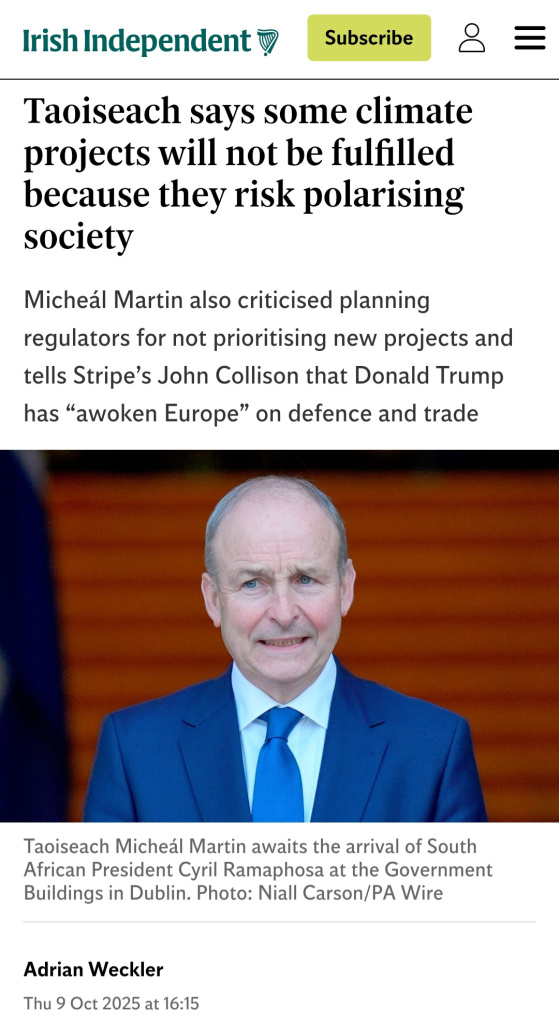
    Interesting article for anyone who still believes the present E.U. greening policies were based on concerns over emissions rather than capitulation to the cult of wind and solar worshippers.


  • Registered Users, Registered Users 2 Posts: 6,577 ✭✭✭creedp


    Interesting article on problems facing the Netherlands electricity distribution grid that could result in the decision to invest in domestic solar panels and battery packs based on a payback period dependant on the current generous export tariffs might not be sustainable for too long more

    And the financial incentive for people who feed their surplus solar electricity into the grid is being reduced to almost nothing. In some cases, people will even have to pay to feed solar power into the grid.

    https://www.bbc.com/news/articles/cn40y9yxkgvo


  • Registered Users, Registered Users 2 Posts: 15,042 ✭✭✭✭Red Silurian


    We don't quite have the same problem here in Ireland. Looking at a recently out of date Wikipedia table we have about 6GW of fossil fuel power plants spread over about 15-20 sites Vs the Netherlands that had 3 sites. Grids everywhere will need to be upgraded to have more green electricity on them but the improvements don't need to be the same everywhere

    The problem I see here is the privatisation of the energy market. Or as some would call it "opening the market up to competition"


  • Registered Users, Registered Users 2 Posts: 16,601 ✭✭✭✭charlie14


    The problem for the Irish grid is not those 15 -20 sites where grid supply is monitored and can be regulated up or down in real time as required. It`s the intermittent supply from over 300 wind farm sites and the 385 solar farm sites that are either in operational or in development.

    There is also the problem that we use alternating current electricity and solar is direct current electricity that will require thousands upon thousands of inverters for those wind farms, let alone the many thousands more that will be required if we are going to be buying solar generated electricity from households. It is generally accepted at this stage the collapse of Spain`s grid was due to inverters.

    Opening up the market to competition has only seen us going from one of the cheapest countries in Europe for electricity to being year on year consistently being one of the three most expensive, the other two being Germany and Denmark. Both lie ourselves very much into all their eggs in the renewables basket


  • Registered Users, Registered Users 2 Posts: 15,042 ✭✭✭✭Red Silurian


    There are ways and means to regulate the power supply from renewables, yes it takes a grid upgrade but we should be looking to do that in any case. I think it's the competition that really killed off any hope of us seeing decent prices


  • Registered Users, Registered Users 2 Posts: 16,601 ✭✭✭✭charlie14


    Problem is with renewables you can only regulate in one direction and that is down. You cannot regulate wind or sun up to fill demand.

    Screenshot 2025-10-17 at 11-32-25 EirGrid Group plc - Smart Grid Dashboard.png

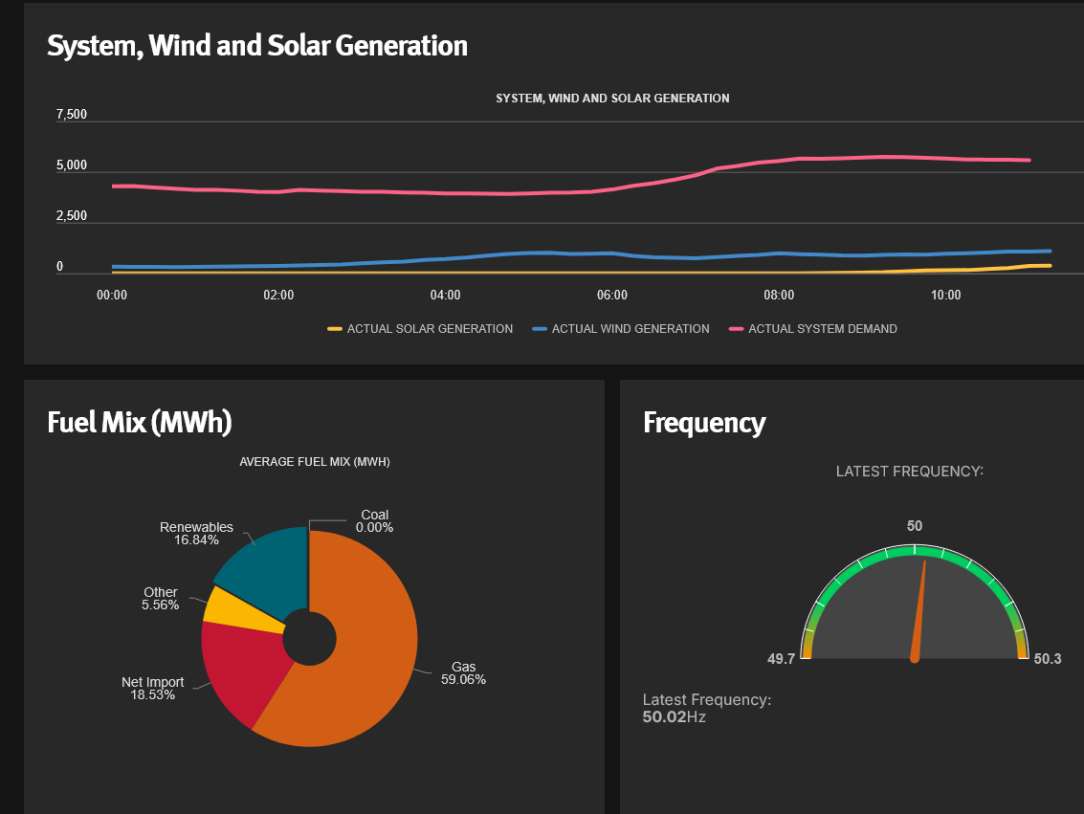
    If you want to have a renewables grid then you would need to increase that 16.84% by a factor of 6. Our current peak demand is over 6GW and we have an installed capacity of ~7GW. To just fill our current demand - never mind our projected demand for 2050 of 14GW - 15GW - with renewables would require 42GW of installed capacity.

    Based on U.K. prices 1GW from offshore wind turbines is now for capital costs alone x€6.4 Bn. The capital cost alone to fulfill just our current demand would be €6.4 x 42 = €269 Bn. and that is just not financially feasible.

    This current plan we are following is getting us nowhere. It has us facing €28 Bn fines in 2030 for emissions where electricity generation accounts for €8.4 Bn of that total. Even if all renewable projects were up and running by 2030. And that included the now scrapped Sceirde Rocks wind farm. It has failed so badly that we are now importing ever increasing levels of electricity attempting to disguise just how badly. Today, for example we are importing - from a country that is itself a net importer, and that is not going to continue - more electricity than renewables are generating.

    What killed us off seeing decent prices for electricity, - and will continue to do so under our current plan - is the marginal pricing policy where we are paying the same price for all components in the generation mix as the most expensive component even if its contribution is minuscule.


  • Registered Users, Registered Users 2 Posts: 15,042 ✭✭✭✭Red Silurian


    Like a lot of issues we can overcome them with a bit of thinking. Improve the grid and increase the number of renewables or even look at nuclear and then all our carbon emissions worries are over

    The marginal pricing policy has to end, no arguments from me on that one, we also need to renationalise the suppliers and generators, having 5 or 6 different companies doing the exact same thing on a for profit basis is utter madness.


  • Advertisement
  • Registered Users, Registered Users 2 Posts: 16,601 ✭✭✭✭charlie14


    I really do not see where there is any scope for a bit of thinking when it comes to renewables. Solar for a grid where on average our capital city is in darkness for 17.5 hours when our demand is highest, would require not just capital investment higher than wind, but also storage which financially is not feasible either. Hydro, we have all we will get already. The only other renewable I have heard as a source is biomethane, but that would require 250,000 acres of grassland to generate 1GW, so that really isn`t feasible either. That just leaves wind, where the costs are bat **** crazy, or nuclear far as I can see.

    Unfortunately the E.U. will not allow us to renationalise and ignore their marginal pricing policy. If they did practically every other country in the E.U. would do the same. Best we can hope for is the scrapping of the marginal pricing policy.

    I would not accuse those 5 or 6 different companies of outright scamming by ensuring there is always gas in the generation mix to guarantee them high prices. But I would find it very difficult to believe that when it comes to their bottom line they are not very much aware off it.


Advertisement
Advertisement