Advertisement
Help Keep Boards Alive. Support us by going ad free today. See here: https://subscriptions.boards.ie/.
https://www.boards.ie/group/1878-subscribers-forum

Private Group for paid up members of Boards.ie. Join the club.
Hi all, please see this major site announcement: https://www.boards.ie/discussion/2058427594/boards-ie-2026

World Professional Association for Transgender Health (WPATH) Files

1535456585965

Comments

  • Registered Users, Registered Users 2, Paid Member Posts: 1,898 ✭✭✭Apiarist


    Thank you for the informative answer. It is a dilemma. A (born male) child of acquaintances has always insisted that he/she is a girl, from the time he/she can articulate the preference, that is from 4-5 years old. There was no family influence, nor do they watch any "trans propaganda" if there is such thing. It seems very unlikely that anything can change this particular child's mind.

    You seems to be well informed on the topic. Do you have any quantitative data? What is the percentage of children who wanted to transition that changed their mind at puberty? If there is no data, are there actual people who came out and said that they changed their minds to transition or is it just a hearsay?


  • Moderators, Science, Health & Environment Moderators Posts: 18,601 Mod ✭✭✭✭CatFromHue


    When was there a follow up with adults who'd taken blockers as kids? One of the biggest problems with the gender industry is that there hasn't been any long term data collected.

    As for desistance rates

    " 80–95% of the prepubertal children with GID will no longer experience a GID in adolescence"

    The Treatment of Adolescent Transsexuals: Changing Insights - Cohen‐Kettenis - 2008 - The Journal of Sexual Medicine - Wiley Online Library

    That's from the Dutch who started the medicalisation of minors.


  • Registered Users, Registered Users 2 Posts: 11,016 ✭✭✭✭volchitsa


    Obviously I can't discuss your friends' child specifically. But at that age, my own nephew (a hyperactive child) used to insist that he could fly, if only he could get a Batman cape. My sister was genuinely quite worried that he would actually jump out of an upstairs window to test that. This is a child who was climbing before he could walk, so it was far from impossible.

    Another child (not his brother) was a puppy, on and off, for weeks or months. Did he believe it? Who knows. He loved (still does love) dogs and wanted to be one. I'm sure the desire to be a puppy was real.

    The point being that nobody took that to be literally true, and that role playing/testing the limits of reality eventually wore off. Little girls who won't wear dresses, or won't wear pink, or little boys who clop around the house in their mother's shoes are only doing the same thing. That wasn't an issue for most parents until recently, and again it generally wore off.

    But there is no theory of child psychology which contains the notion of an inherent gender in a child. It's a recent invention by trans activists.

    In all the work done by actual child psychologists like Piaget or Montessori etc, they never observed a transgender child. If these have always existed, then presumably all theories of child psychology are now for the bin, since all those groundbreaking child psychologists were all so wrong?

    This isn't just about them failing to see something - their theories are about how the child gradually develops a sense of self, including gender. They all say that it is not until adolescence that a child "breaks away" from its parents (or mother, depending on the theory) to develop its own idea of itself, again including gender. That doesn't mean a child can't suffer from gender dysphoria - there are lots of reasons why they may be unhappy with their body. But they aren't actually the opposite sex, and they can't become that sex.

    Do you have any quantitative data? What is the percentage of children who wanted to transition that changed their mind at puberty?

    Well I don't have it all to hand, and don't really have the time to start looking just now. But you could look up information about the Dutch protocol if you're interested, and how/why they started giving puberty blockers experimentally. There's plenty online. But here are a couple that discuss that point:

    Reconsidering Informed Consent for Trans-Identified Children, Adolescents, and Young Adults

    There have been eleven research studies to date indicating a high rate of resolution of gender incongruence in children by late adolescence or young adulthood without medical interventions (Cantor, Citation2020; Ristori & SteensmaCitation2016; Singh et al., Citation2021). An attempt has been made to discount the applicability of this research, suggesting that the studies were based on merely gender non-conforming, rather than truly gender-dysphoric, children (Temple Newhook et al., Citation2018). However, a reanalysis of the data prompted by this critique confirmed the initial finding: Among children meeting the diagnostic criteria for “Gender Identity Disorder” in DSM-IV (currently “Gender Dysphoria in DSM-5), 67% were no longer gender-dysphoric as adults; the rate of natural resolution for gender dysphoria was 93% for children whose gender dysphoria was significant but subthreshold for the DSM diagnosis (Zucker, et al., Citation2018). It should be noted that high resolution of childhood-onset gender dysphoria had been recorded before the practice of social transition of young children was endorsed by the American Academy of Pediatrics (Rafferty et al., Citation2018). It is possible that social transition will predispose a young person to persistence of transgender identity long-term (Zucker, Citation2020).

    (I'm pretty sure that last sentence is not a good thing, by the way - it means it becomes much harder for children who have been allowed to think they were the opposite sex before puberty to then desist during puberty, as would normally happen.)

    I've bolded Thomas Steensma who was the lead researcher who set up the Dutch protocol in case you're interested in looking up the original protocol. He is on record since then as decrying the way other gender clinics have all blindly adopted their experimental protocol without doing their own testing, which is what should normally happen in such a situation:

    Dutch puberty-blocker pioneer:  Stop “blindly adopting our research”

    The Cass report found that the Tavistock's own data showed that over 90% of children prescribed puberty blockers go on to cross sex hormones - even if we take the lowest rate possible for those who weren't given puberty blockers, which is around 2/3 desist and 1/3 don't, that means we go from 33% to 90% - for a treatment that was only intended to give "time to think" - not to identify and treat children diagnosed as needing cross sex hormones. That wasn't the basis on which the treatment was developed in the Netherlands.

    A landmark study of gender medicine is caught in an ethics row


  • Moderators, Social & Fun Moderators Posts: 8,116 Mod ✭✭✭✭circadian


    That's a 17 year old study.

    Here's a follow-up from the same team in 2014.

    https://publications.aap.org/pediatrics/article-abstract/134/4/696/32932/Young-Adult-Psychological-Outcome-After-Puberty

    CONCLUSIONS:

    A clinical protocol of a multidisciplinary team with mental health professionals, physicians, and surgeons, including puberty suppression, followed by cross-sex hormones and gender reassignment surgery, provides gender dysphoric youth who seek gender reassignment from early puberty on, the opportunity to develop into well-functioning young adults.


  • Registered Users, Registered Users 2 Posts: 11,016 ✭✭✭✭volchitsa


    And that's 11 years old, so not a lot better, especially in a domain where things are changing very rapidly, especially the profile of children consulting for gender dysphoria. Maybe more recent studies are available?

    (The Dutch protocol was developed for mainly male children without other mental health issues, expressing gender dysphoria from a young age, but very rapidly was being used elsewhere for a mainly female population with multiple mental health issues,whose gender dysphoria had often appeared at adolescence. So in 2014 - which population were they looking at?)

    Ans: the study I linked to above (Reconsidering informed consent) goes into that in some detail, and shows that the 2014 results were misleading for a number of reasons, including that the scales used to measure improvement in mood were not really applicable. The actual results are far less positive than your abstract suggests.

    In 2014, the Dutch research team published a key longitudinal study of mental health outcomes of 55 youths who completed medical and surgical transition (de Vries et al., Citation2014). The 2014 paper (sometimes referred to as the “Dutch study”) reported that for youth with severe gender dysphoria that started in early childhood and persisted into mid-adolescence, a sequence of puberty blockers, cross-sex hormones, and breast and genital surgeries (including a mandatory removal of the ovaries, uterus and testes), with ongoing extensive psychological support, was associated with positive mental health and overall function 1.5 years post-surgery.

    While the Dutch reported resolution of gender dysphoria post-surgery in study subjects, the reported psychological improvements were quite modest (de Vries et al., Citation2014). Of the 30 psychological measurements reported, nearly half showed no statistically significant improvements, while the changes in the other half were marginally clinically significant at best (Malone, D’Angelo, et al., Citation2021). The scores in anxiety, depression, and anger did not improve. The change in the Children’s Global Assessment Scale, which measures overall function, was one of the most impressive changes—however it too remained in the same range before and after treatment (de Vries et al., Citation2014).

    Problematic discordance between reduced gender dysphoria and lack of meaningful improvements in psychological measures

    The discordance between the marked reduction in gender dysphoria, as measured by the UGDS (Utrecht Gender Dysphoria Scale), and the lack of meaningful changes in psychological function using standard measures, warrants further examination. There are three plausible explanations for this lack of agreement. Any one of these three explanations calls into question the widely assumed notion that the medical interventions significantly improve mental health or lessen or eradicate gender dysphoria.


  • Advertisement
  • Moderators, Social & Fun Moderators Posts: 8,116 Mod ✭✭✭✭circadian


    Is the part in brackets from somewhere or your own assertion? It's unclear.

    I agree that 11 years is old, I merely referenced it as a follow up to an older study. In terms of performing a literature review or analysis this would be well out of range.

    Here's a 2023 study that covers 20 years;
    https://pubmed.ncbi.nlm.nih.gov/36763938/


  • Registered Users, Registered Users 2, Paid Member Posts: 1,898 ✭✭✭Apiarist


    Thanks, though I reject your analogy that gender identity is the same as wanting to be Batman. You say that "an inherent gender" is an recent invention of trans activists. This is demonstrably wrong. There were always variations in gender identity throughout the recorded and oral history. The fact that the child psychology haven't advanced its theoretical understanding enough to categorise variations of gender identities in children is the deficiency of the underfunded science.


  • Moderators, Social & Fun Moderators Posts: 8,116 Mod ✭✭✭✭circadian


    The paper "Reconsidering Informed Consent for Trans-Identified Children, Adolescents, and Young Adults" received funding from Society for Evidence-Based Gender Medicine (SEGM). So, while it raises concerns about the ethics of informed consent, it comes with financially motivated bias.


  • Registered Users, Registered Users 2 Posts: 11,016 ✭✭✭✭volchitsa


    I gave a link that explained in great detail why the 2014 study was not nearly as clearly positive as you claimed. And your 2023 link doesn't say so either:

    Conclusion: 

    Trajectories in diagnostic evaluation and medical treatment in children and adolescents referred for gender dysphoria are diverse. Initiating medical treatment and need for surgical procedures depends on not only personal characteristics but societal and legal factors as well.

    That's a "nothing" conclusion there. Even less positive than the 2014 one.

    I wonder why.


  • Registered Users, Registered Users 2 Posts: 11,016 ✭✭✭✭volchitsa


    The Cass report was damningly clear: the evidence for overall improvement is extremely poor.


  • Advertisement
  • Registered Users, Registered Users 2 Posts: 11,016 ✭✭✭✭volchitsa


    Inherent gender identity in children. As I said.

    If you think that concept is not a recent invention, which of the accepted theories of child psychology describe it please? Just one will do.

    You wanted numbers on rates of desistance with and without puberty blockers. I gave you some. Any comment on those?


  • Moderators, Social & Fun Moderators Posts: 8,116 Mod ✭✭✭✭circadian


    Maybe look at the results instead

    Results:
    A steep increase in referrals was observed over the years. A change in the AMAB:AFAB ratio (assigned male at birth to assigned female at birth) was seen over time, tipping the balance toward AFAB. Age at intake and at start of GnRHa has increased over time. Of possibly eligible adolescents who had their first visit before age 10 years, nearly half started GnRHa vs around two-thirds who had their first visit at or after age 10 years. The proportion starting GnRHa rose only for those first visiting before age 10. Puberty stage at start of GnRHa fluctuated over time. Absence of gender dysphoria diagnosis was the main reason for not starting GnRHa. Very few stopped GnRHa (1.4%), mostly because of remission of gender dysphoria. Age at start of GAH has increased mainly in the most recent years. When a change in law was made in July 2014 no longer requiring gonadectomy to change legal sex, percentages of people undergoing gonadectomy decreased in AMAB and AFAB.

    The Cass Review definitely raised serious and valid concerns, especially about the lack of long-term data, the pace of medical interventions, and the need for more comprehensive mental health assessments. It emphasized a more cautious, evidence-building approach, particularly for youth with complex needs.

    But it’s important to clarify that the report wasn’t a blanket condemnation of gender-affirming care. The report didn’t recommend banning blockers or hormones outright, it called for a better evidence base, regional hubs with multidisciplinary teams, and individualized care rather than a one-size-fits-all model.

    Also, the Cass Review is UK-specific and focused on one model of care. It should be considered alongside the broader body of international clinical guidance, where major health authorities like the Endocrine Society, WPATH, and AAP still support gender-affirming care for carefully assessed youth.


  • Registered Users, Registered Users 2 Posts: 11,016 ✭✭✭✭volchitsa


    The first part describes exactly the problem that I've already raised: the Dutch protocol was developed for one cohort but in practice was being used on a very different cohort, hence its results are not reliable. The link I gave explains in some detail why they are not reliable. You haven't read it apparently, or if you have, are ignoring it.

    Those are not results by the way, they're mostly a description of the criteria for treatment and a summary of the treatments.


  • Moderators, Social & Fun Moderators Posts: 8,116 Mod ✭✭✭✭circadian


    I've read it and also acknowledged the fact that it was funded by SEGM, an organisation that carries out political lobbying and funds papers to further their agenda, papers that are often rebutted by experts in the relevant fields. SEGM is part of a larger group that push misinformation regarding the LGBTQ+ community

    https://www.cambridge.org/core/journals/journal-of-law-medicine-and-ethics/article/antitransgender-medical-expert-industry/25EFFECB8F71CA9A37F9F089E13BC41E

    https://www.splcenter.org/resources/reports/defining-pseudoscience-network/


  • Moderators, Science, Health & Environment Moderators Posts: 18,601 Mod ✭✭✭✭CatFromHue


    Yeah and the reason I posted it, apart from being from the Dutch, is that before either social or medical interventions the vast majority of minors naturally desisted through puberty. This is consistent with other studies that tracked what happened to minors who went through gender distress.

    Once they receive an intervention, either social or medical, the numbers switch the other way. So does the treatment cause the issue that requires the treatment?

    Also on the study you posted I can only read the abstract and it says

    "A total of 55 young transgender adults (22 transwomen and 33 transmen) who had received puberty suppression during adolescence were assessed 3 times: before the start of puberty suppression (mean age, 13.6 years), when cross-sex hormones were introduced (mean age, 16.7 years), and at least 1 year after gender reassignment surgery (mean age, 20.7 years)."

    This isn't long term data. It's also from the Dutch who first started medicalising minors. The methodology they used in the first study that they claimed reduced gender dysphoria and so they claimed as a success highly flawed and hasn't been replicated elsewhere.


  • Registered Users, Registered Users 2, Paid Member Posts: 1,898 ✭✭✭Apiarist


    Thanks, I do have a problem with the numbers that you have selectively quoted. For example. you quoted "Among children meeting the diagnostic criteria for “Gender Identity Disorder” in DSM-IV (currently “Gender Dysphoria in DSM-5), 67%

    were no longer gender-dysphoric as adults"

    On the surface, one may think that this suggests that children who identify as an opposite sex do not want to transition as adults. But the paper actually says that "A recent study reported that the majority of transgender-identifying youth (63%) now have a non-binary identity (Green, DeChants, Price, & Davis, Citation2021)" .

    We can discuss the minutia of the paper and how it manipulates the facts. I especially love how they criticise the Dutch study for not having enough controls. Imagine that, let's take children and not provide them with care, or force care on children that do not need it to have a valid statistic?

    But I am not going to discuss this paper anymore because it is a mess of biased opinions, the authors have not actually did any original research, they have only teased out "questions" from other research and presented them as problems. But that is not a surprise, because the authors of the paper are sponsored by:

    The Society for Evidence-based Gender Medicine

    and who are these people? Is it a research institute? Nope. "The Society for Evidence-Based Gender Medicine (SEGM) is a non-profit organization that is known for its opposition to gender-affirming care for transgender youth and for engaging in political lobbying."

    Well thank you for wasting an hour of my time I spent reading through this drivel.


  • Moderators, Social & Fun Moderators Posts: 8,116 Mod ✭✭✭✭circadian


    This is most likely because older studies (Zucker and Drummond come to mind) included a broad diagnostic criteria including gender nonconforming children, which was no longer an acceptable criteria in later studies.

    https://www.tandfonline.com/doi/abs/10.1080/15532739.2018.1456390

    The 2014 follow up study only includes adolescents who displayed persistent gender dysphoria.

    Finally, that is a post-hoc fallacy. The reason persistence appears higher in those receiving intervention is because only the most persistent cases are eligible under protocols like the Dutch model. Selection bias does not equal causation.


  • Moderators, Science, Health & Environment Moderators Posts: 18,601 Mod ✭✭✭✭CatFromHue


    I can't read that study you linked and it doesn't state what they think is the actual number is for desistance.

    "Conclusion

    The tethering of childhood gender diversity to the framework of “desistance” or “persistence” has stifled advancements in our understanding of children's gender in all its complexity. These follow-up studies fall short in helping us understand what children need. As work begins on the 8th version of the Standards of Care by the World Professional Association for Transgender Health, we call for a more inclusive conceptual framework that takes children's voices seriously. Listening to children's experiences will enable a more comprehensive understanding of the needs of gender-nonconforming children and provide guidance to scientific and lay communities."

    There's a lot of problems here as this reads like a group looking to create work for themselves and ignoring that they're dealing with children.

    The Dutch model isn't that stringent and they get the same numbers taking cross sex hormones after being on the blocker as elsewhere.


  • Registered Users, Registered Users 2 Posts: 25,318 ✭✭✭✭One eyed Jack


    Why not LGBTQ nation? Sure that's the way social media works - film it and tweet it or tiktok it or whatever and @ whoever, that's how these incidents tend to go viral, as they do. Wasn't so much a thing in the 90s when it was men who were paranoid about other men in the bathroom. George Michael had fun with that one though, cracking tune 😁

    They're pretty certain what sex they are, it just appears to be more motivated by an opportunity to humiliate another person for their own… I dunno what you'd call it but there's a word for it. Just being an arsehole basically, like all those truly, truly unfortunate women who are already opposed to men in women's bathrooms who, it has to be said is an incredible coincidence that they just keep running into men in women's bathrooms!

    (you just know that was tongue-in-cheek 😁)

    But honestly it would have been far, far too easy to use this example. It isn't even funny, it's just too stupid! 😒


  • Registered Users, Registered Users 2 Posts: 25,318 ✭✭✭✭One eyed Jack


    I don't see how I proved Mr. Wemmicks point; this is what I was referring to in the article, to make the point about waiting times and how there isn't any sort of queue skipping or whatever going on -

    waiting an average of 100 weeks for a first appointment.

    Now obviously, given the sheer numbers involved, it stands to reason that the waiting list to be seen for a diagnosis of autism would be far longer than that to be seen for a diagnosis of gender dysphoria, and that's not even accounting for the fact that the NHS as a whole is woefully underresourced and underfunded, and has been for decades as a result of the previous Governments cutbacks and failure to invest in a functioning healthcare system. Our own isn't that far behind either -

    And while she acknowledged that there are good CAMHS services in the State – calling out in particular “the excellent and skilled staff” who provide services as the “main CAMHS asset” - she stated: “I cannot currently provide an assurance to all parents or guardians in all parts of Ireland that their children have access to a safe effective, and evidence-based mental health service.”


  • Advertisement
  • Registered Users, Registered Users 2 Posts: 25,318 ✭✭✭✭One eyed Jack


    I've bolded Thomas Steensma who was the lead researcher who set up the Dutch protocol in case you're interested in looking up the original protocol. He is on record since then as decrying the way other gender clinics have all blindly adopted their experimental protocol without doing their own testing, which is what should normally happen in such a situation:

    Minor nitpick, but while the article suggests he was a pioneer and all, Steensma had nothing to do with the original Dutch Protocol. One of the problems with citing sources for this stuff is that one paper can clog up Google like nobody's business, when I know it's not the paper I want, and I know there are several better sources. Unfortunately it's like a needle in a haystack, so for the sake of convenience, I'll provide a history from another author who is biased towards arguing against puberty blockers and transgender medicine, as it were. Normally I try to provide sources that aren't filled with hyperbole and are at least somewhat objective, but for now this will have to do -

    Puberty suppression remained exceptional for some years. By 2000, GnRHa had been administered to only 7 children under the age of 16 (Cohen-Kettenis et al., Citation2000). The new treatment regime was codified at VU Medical Center in Amsterdam, where Cohen-Kettenis was appointed professor of medical psychology in 2002, moving with her clinic. The “Dutch protocol” was published in an influential article in 2006, supported financially by Ferring Pharmaceuticals, the manufacturer of triptorelin (Delemarre-van de Waal & Cohen-Kettenis, Citation2006, p. S137). GnRHa could be administered to transsexuals as young as Tanner stage 2—marked by the first growth of pubic hair and for girls by budding breasts and for boys by growing testicles—as long as they had reached the age of 12. The adolescent would usually then begin “to live permanently in the role of their desired sex” (Delemarre-van de Waal & Cohen-Kettenis, Citation2006, p. S132). After some years of puberty suppression, the youth would start cross-sex hormones at the age of 16 and then surgeries at the age of 18. Eligibility criteria for puberty suppression appeared strict. First, gender dysphoria should have begun early in childhood, and dysphoria should have worsened with the onset of puberty. Second, the patient should be psychologically stable, and not suffer from other mental health problems. Third, the patient should have support from their family. As the protocol was formalized, the number of children undergoing puberty suppression increased markedly. Between 2000 and 2008, GnRHa was prescribed to 111 children, about one per month (de Vries et al., Citation2011). One of them was Valentijn de Hingh, the subject of a television documentary (Nietsch, Citation2007). After a teacher was disconcerted by the boy’s passion for dolls, de Hingh at the age of 5 was diagnosed with gender dysphoria by Cohen-Kettenis (de Hingh, Citation2021). GnRHa was administered from the age of 12 in 2002.

    The Cass report found that the Tavistock's own data showed that over 90% of children prescribed puberty blockers go on to cross sex hormones - even if we take the lowest rate possible for those who weren't given puberty blockers, which is around 2/3 desist and 1/3 don't, that means we go from 33% to 90% - for a treatment that was only intended to give "time to think" - not to identify and treat children diagnosed as needing cross sex hormones. That wasn't the basis on which the treatment was developed in the Netherlands.

    I can't make sense of the math, it's fine though, it doesn't matter - the fact that 90% of children prescribed puberty blockers go on to cross sex hormones isn't remotely unusual, it's not identifying children who need cross sex hormones, it's treating children diagnosed with gender dysphoria that is so severe, it warrants treatment with cross sex hormones once they're at that stage when cross sex hormones can legally be administered. The whole 'time to think' and 'reversible' was for the parents benefit, as a sort of reassurance that all procedures could be reversed if the parent wasn't happy with how the treatment was progressing or had second thoughts and whatever else. The fact that 90% of children initially diagnosed with gender dysphoria (because they meet the criteria), where the dysphoria is alleviated without further medical intervention isn't unusual either, nor does the idea that they are homosexual have anything remotely to do with whether or not they are transgender, or experience any degree of dysphoria or any of the rest of it - homosexuality is not the antonym of transgender. The 'c' word, is the antonym of transgender, and if one wanted, due to people having issues with the idea of gender, swapping in '-sexual', functions in just the same way.


  • Registered Users, Registered Users 2, Paid Member Posts: 8,829 ✭✭✭plodder


    Just on the conflict between different organisations and the Cass review. The Endocrine Society and AAP are US based, rather than having particular global significance. WPATH seems to be fairly well discredited.

    No question, when you look at the AAP and ES guidance, they contradict Cass, and that must be very confusing for parents and GP doctors. Though we shouldn't forget the National Gender Service doctors here, who have been criticised by various posters here and others, but are looking vindicated now, if you take the Cass and European side of the debate.

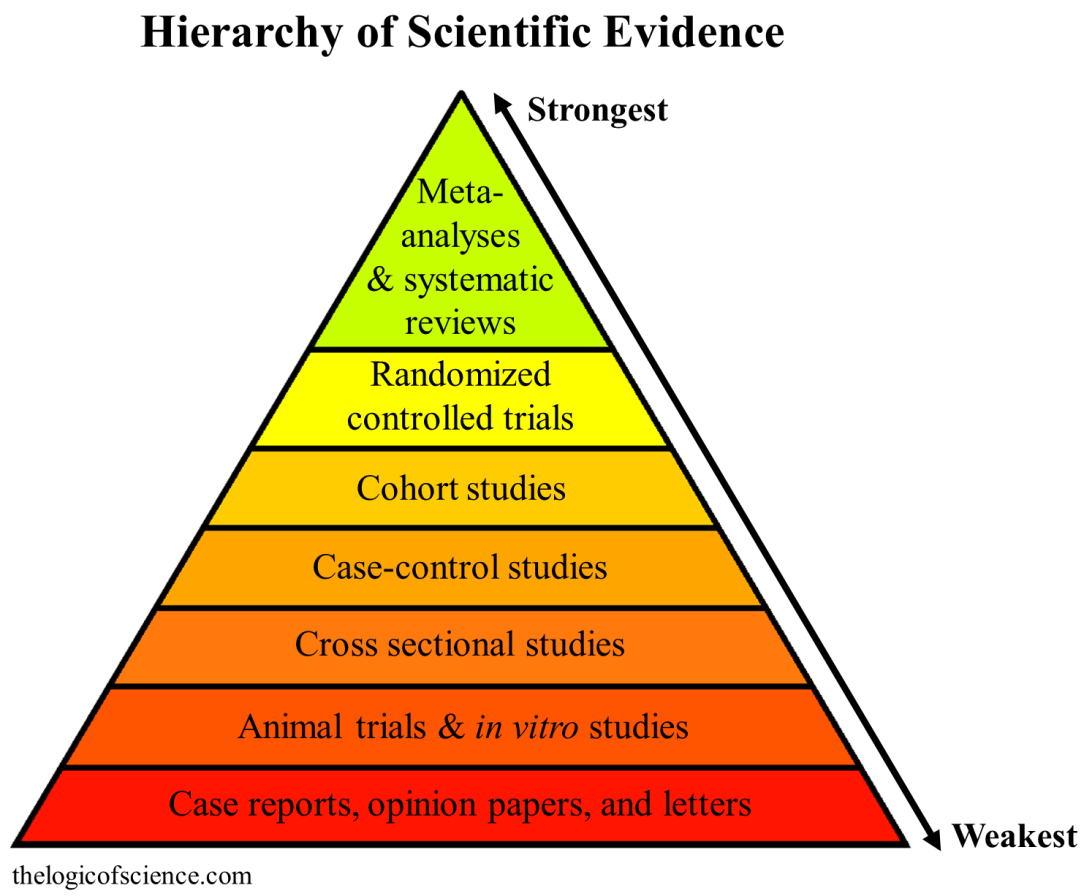
    It seems the AAP has taken a holding position pending the outcome of their own systematic review. I'm not sure that has actually commenced though. But, the Endocrine Society, to me anyway, seem to be misrepresenting Cass, by saying it doesn't contain any original research. As pointed out before, systematic reviews are not original research but are still the top of the pile when it comes to scientific evidence and one of the outcomes of the Cass review was to undermine a number of assumptions that underpin the ES guidance.

    Hierarchy_of_Evidence.png

    “The opposite of 'good' is 'good intentions'”


  • Moderators, Science, Health & Environment Moderators Posts: 18,601 Mod ✭✭✭✭CatFromHue


    Just on the endorsements it looks like there's a lot of circular referencing going on, that many of those organisations didn't do their own evaluations and based their work on what other organisations recommended. These organisations then based their recommendations on what those organisations recommended.

    "The links examined show that early versions of two international guidelines, the Endocrine Society25 and World Professional Association for Transgender Health (WPATH)34 guidelines (specifically the 2009 Endocrine Society guideline48 and WPATH V.7 published in 2012)49 have influenced nearly all the national and regional guidelines identified. The two guidelines also have close links, with WPATH adopting Endocrine Society recommendations in its own guideline and acting as a cosponsor for and providing input on drafts of the Endocrine Society guideline."

    "Although other guidance mostly acknowledges the lack of robust evidence regarding medical treatments for adolescents, some then suggest existing evidence is sufficient to recommend them. Others have instead used a consensus or expert-led approach that results in the same recommendation or have adopted recommendations from the Endocrine Society guideline25 48 or WPATH V.7,49 despite the latter having been published a decade earlier in some cases. These two guidelines are themselves linked through cosponsorship and like other guidelines lack a robust and transparent approach to their development. Although it is not uncommon to adopt an expert consensus-based approach when evidence is limited, it is less common for guideline developers to draw so heavily on other guidelines.11 This relationship may explain why there has until recently been an apparent consensus on key areas of practice for which evidence remains lacking"

    "Most clinical guidance lacks an evidence-based approach and provides limited information about how recommendations were developed. The WPATH and Endocrine Society international guidelines, which like other guidance lack developmental rigour and transparency have, until recently, dominated the development of other guidelines. Healthcare professionals should consider the lack of quality and independence of available guidance when utilising this for practice. Future guidelines should adhere to standards for guideline development and provide greater transparency about how recommendations are developed and links between evidence and recommendations." 

    Clinical guidelines for children and adolescents experiencing gender dysphoria or incongruence: a systematic review of guideline quality (part 1) | Archives of Disease in Childhood

    Just by the way posters on here critical of this whole industry aren't coming in here to be mean. If you have the evidence base then you have the evidence base, what's happening here is that either there isn't an evidence base of it's been spun to show only positives and ignores the negatives. This is all a medical scandal and lets down gender distressed and trans people.


  • Registered Users, Registered Users 2, Paid Member Posts: 2,897 ✭✭✭aero2k


    Very well put. Most pro affirmative care organisations rely on WPATH, and WPATH are entirely discredited based on their own internal communications, as described at the very beginning of the thread.


  • Moderators, Social & Fun Moderators Posts: 8,116 Mod ✭✭✭✭circadian


    You’re right to point out that many guidelines have historically leaned heavily on each other, and that this circularity, especially in early research, can give a false sense of robust consensus. The Cass Review rightly flags this, urging future guidance to be more transparent and evidence-based.

    But that valid critique is often co-opted to discredit trans people or gender-affirming care as a whole which isn’t what Cass or any responsible review recommends. Even Cass affirms that trans identities are real and that care should be respectful, individualized, and non-stigmatizing. While the WPATH research is justifiably scrutinised, that doesn't mean that all of it is now null and void.

    Criticism of weak evidence should lead to better research and care, not blanket suspicion or the rollback of support for those who need it. I'm not pointing the finger at you, but I do feel that there are a lot of people on Boards who reference WPATH, the Endocrine Society, or even Cass as a kind of blunt instrument to imply that all transgender healthcare is suspect, or to suggest that trans identities themselves are a problem.


  • Moderators, Science, Health & Environment Moderators Posts: 18,601 Mod ✭✭✭✭CatFromHue


    I'm not sure how much more research needs to be done into medicalising minors. The so called success comes the Dutch studies and these are both flawed, not suitable to be scaled up to where the industry is now, their results haven't been replicated, and their published results aren't actually that good at all. Of the 70 patients they studied some of their published results were for only 32-55 patients and 1 of the 70 died. I think in total they had 111 patients who took blockers but I don't know what happened to the 41 not part of the 70 they studied. So I'd be of the opinion that a ban on medicalising minors is needed while an investigation of the current research to date is carried out. Anyone who works in the biomedical/pharma industry knows that sometimes we get it wrong, and this looks like one of them.

    When it comes to psychological help that should be given but it should be grounded in reality. A gender non conforming 7 year old is a gender non conforming 7 year old. The starting point here should be that they're 7 and we've a lot of data on how 7 year olds think and view the world which counter social transitioning that kid.

    Pear Joseph puts what a lot of people's worries are here when it comes to minors.


  • Registered Users, Registered Users 2, Paid Member Posts: 8,829 ✭✭✭plodder


    Another nail in the coffin of the affirmative model of trans healthcare

    https://www.irishtimes.com/health/2025/05/18/affirming-hormone-treatment-poses-greater-risk-than-benefit-for-increasing-numbers-says-gender-service-consultant/

    It's interesting how Sinn Fein are getting it in the neck on this issue due to their involvement in government up North, but the government parties here aren't, so far anyway. Louise O'Reilly of SF was asked about it on Radio 1 over the weekend. I'm sure she didn't make up the answer on the spot, but it was remarkably free of the grovelling platitudes and slogans that David Cullinane came out with recently.

    “The opposite of 'good' is 'good intentions'”


  • Moderators, Science, Health & Environment Moderators Posts: 18,601 Mod ✭✭✭✭CatFromHue


    In the North they've had to do something which the govt down here hasn't. The North had to ban puberty blockers as the rest of the UK had. Down here we're not really doing anything. So much so that Donal O'Shea and Paul Moran have taken a case against HIQA over the HSE referring kids to clinics abroad.

    "A legal action seeking a judicial review of the State’s treatment of children with gender identity issues is due to come before the High Court shortly.The action against the Health Information and Quality Authority (Hiqa) is being taken by Prof Donal O’Shea and psychiatrist Dr Paul Moran, a consultant psychiatrist at the National Gender Service (NGS).Court papers were lodged on Friday, almost 18 months after Prof O’Shea and Dr Moran made a formal complaint against the Health Service Executive (HSE) with Hiqa over the HSE’s referral of young people for assessment abroad, saying it posed a risk to these children.The Irish Times understands that the clinicians were prompted to take the High Court action over concerns about the manner in which Hiqa, the health services watchdog, handled their complaint. A letter effectively dismissing it was sent to the doctors almost three months ago.

     Prof O’Shea and Dr Moran – two of the leading experts in the area of transgender healthcare in Ireland – have stressed they are not against the “gender-affirming” model that is typically found overseas but have concerns over its link to an early readiness to begin what could be inappropriate and irreversible medical treatment for patients presenting with gender identity issues.They have advocated for more holistic models of care when it comes to children who are questioning their gender rather than focusing on measures and treatments that are irreversible."

    Doctors initiate legal action over State’s transgender policy – The Irish Times


  • Registered Users, Registered Users 2, Paid Member Posts: 8,829 ✭✭✭plodder


    Fair points. Just to clarify what I meant by "gender affirming". The activist view is that trans healthcare needs to be "depathologised" so that if a child wants puberty blockers or hormones, they should get them and the child's gender is affirmed without question. But, that's not to say that medication is never appropriate. It's up to doctors to make that call assuming an appropriate evidence base exists.

    “The opposite of 'good' is 'good intentions'”


  • Advertisement
  • Registered Users, Registered Users 2 Posts: 11,016 ✭✭✭✭volchitsa


    Over on the Sports thread, @plodder posted a really interesting article by an American Obs-gynae who has shared her increasing misgivings about US gender affirming healthcare.

    https://substack.com/home/post/p-164586786

    This is someone who has done multiple hysterectomies on patients with perfectly healthy reproductive systems who can no longer go along with it. Well worth reading because she’s no transphobe - FWIW she’s a gay woman herself, and like so many of us she started out clearly on the side of transgender people and was giving them what she thought was the best treatment available for them.

    But no longer. And not because she dislikes transgender people - but rather because she has come to realise that WPATH’s guidelines are not what is best for many young women with gender dysphoria. In fact they are positively harmful.

    But of course the minute she expressed any doubts at all, she started getting attacks over her supposed transphobia. No doubts are allowed. At all. It’s 100% acceptance or you may as well be the devil.


Advertisement
Advertisement