Advertisement
Help Keep Boards Alive. Support us by going ad free today. See here: https://subscriptions.boards.ie/.
https://www.boards.ie/group/1878-subscribers-forum

Private Group for paid up members of Boards.ie. Join the club.
Hi all, please see this major site announcement: https://www.boards.ie/discussion/2058427594/boards-ie-2026

Wooden I-joists - Covered Pergola

  • 21-03-2021 10:05PM
    #1
    Registered Users, Registered Users 2 Posts: 2,594 ✭✭✭


    Hi all

    I’m researching methods to build a free standing covered pergola. I want it to be 3m deep and 7m wide with a mono pitched roof from about 2.4m to 3m or so. But I only want two posts (front and back) with an uninterrupted view, as such.

    After doing some initial researching on steel I came across wooden I-joists.

    Has anyone used them? Would you know of technical documents that would guide as to the widest span they come in and what loads they can take.


    Thank you.


«13

Comments

  • Registered Users, Registered Users 2 Posts: 30,525 ✭✭✭✭Lumen


    Do you mean a pavilion?

    Anyway, I'm not understanding the two post idea. You surely don't mean two posts in total, right?


  • Registered Users, Registered Users 2 Posts: 2,594 ✭✭✭karlitob


    Lumen wrote: »
    Do you mean a pavilion?

    Anyway, I'm not understanding the two post idea. You surely don't mean two posts in total, right?

    Yep - a pavilion. Heard it described a few ways but I think you’re right. Pavilion it is.

    And yep - 4 posts. Poorly described above - sorry; not a feat of engineering!!


  • Registered Users, Registered Users 2 Posts: 13,206 ✭✭✭✭Calahonda52


    Plenty out there, are you looking at the osb web or the metal open webs with timber top and bottoms?

    They can be up to 500 mm deep so plenty length/strength, however I would be worried about wind uplift.

    If you don't use noggins then you will need to glue and screw the top sheathing to reduce the risk of buckling.

    “I can’t pay my staff or mortgage with instagram likes”.


  • Registered Users, Registered Users 2 Posts: 30,525 ✭✭✭✭Lumen


    Ah right, so the issue is how to span 7m?

    Would have thought that sistered 2x12s would do it with a lightweight roof, but you'll need to run the calculations.


  • Registered Users, Registered Users 2 Posts: 2,594 ✭✭✭karlitob


    Lumen wrote: »
    Ah right, so the issue is how to span 7m?

    Would have thought that sistered 2x12s would do it with a lightweight roof, but you'll need to run the calculations.

    Thanks for that.

    Where would I find info on how to run those calculations?


    I’m kinda looking for something like the pic - except bigger. In my head, I have a 50 sq m (I know I need planning) covered patio. 11m x 4.5m pitched - 2.4m at back to 3m at front.

    I was thinking of having the shed integrated in - like the pic - at about 3m x 4m (leaving a nice looking eaves all round) - hence my query on spanning 7m.

    For the roof, I’d like to put in some roof lights and i want electrics in there also for lighting and a heater.

    That’s all. Oh - and for cheap but look very expensive!


  • Advertisement
  • Registered Users, Registered Users 2 Posts: 2,594 ✭✭✭karlitob


    Plenty out there, are you looking at the osb web or the metal open webs with timber top and bottoms?

    They can be up to 500 mm deep so plenty length/strength, however I would be worried about wind uplift.

    If you don't use noggins then you will need to glue and screw the top sheathing to reduce the risk of buckling.

    Was thinking osb web. But was wondering about the span across rather than the other way - if that makes sense.

    My next question was how to bridge front and back. Would I use construction framing with noggins.

    How would you prevent uplift?


  • Registered Users, Registered Users 2 Posts: 564 ✭✭✭Fine Cheers


    Almost went with one of these last year until we opted to go completely DIY.
    https://www.tuin.co.uk/Excellent-Modern-Gazebo.html
    Might be of some help. If you delve into the website you should be able to source the entire kit details including all timbers sizes etc.


  • Registered Users, Registered Users 2 Posts: 13,206 ✭✭✭✭Calahonda52


    karlitob wrote: »
    Was thinking osb web. But was wondering about the span across rather than the other way - if that makes sense.

    My next question was how to bridge front and back. Would I use construction framing with noggins.

    How would you prevent uplift?
    Don't follow your framing question.
    The open metal webs would reduce wind resistance, and maybe weather better than OSB, but not uplift so it will need to be well fixed in the ground.

    “I can’t pay my staff or mortgage with instagram likes”.


  • Registered Users, Registered Users 2 Posts: 30,525 ✭✭✭✭Lumen


    karlitob wrote: »
    Thanks for that.

    Where would I find info on how to run those calculations?

    The simplest approach is to consider the structure as being supported by two independent 7m beams.

    Calculate the total mass of the roof (everything except posts), halve it, and put that into a beam deflection calculator.

    If the beam deflects less than 1/300 (23mm) then it can take the dead (static) load.

    Then factor in snow load. That could be another tonne for a foot of snow over 21sqm.

    In reality part of the weight could be transmitted to the posts through the end beams, depending on how you design it.

    The 1/300 deflection is a rough rule of thumb for timber beams, it might be 250 or 360 depending on which applications you're looking at, and other materials (e.g. steel) would have different considerations, but it's a reasonable starting point.

    From a common sense perspective you can see how having more than an inch of deflection in the beam under static load would be undesirable.

    If all this seems too daunting, get an engineer involved. You're looking to build a heavy structure under which people will sit. It has the capacity to seriously injure or kill if it's not built right.


  • Registered Users, Registered Users 2 Posts: 2,594 ✭✭✭karlitob


    Lumen wrote: »
    The simplest approach is to consider the structure as being supported by two independent 7m beams.

    Calculate the total mass of the roof (everything except posts), halve it, and put that into a beam deflection calculator.

    If the beam deflects less than 1/300 (23mm) then it can take the dead (static) load.

    Then factor in snow load. That could be another tonne for a foot of snow over 21sqm.

    In reality part of the weight could be transmitted to the posts through the end beams, depending on how you design it.

    The 1/300 deflection is a rough rule of thumb for timber beams, it might be 250 or 360 depending on which applications you're looking at, and other materials (e.g. steel) would have different considerations, but it's a reasonable starting point.

    From a common sense perspective you can see how having more than an inch of deflection in the beam under static load would be undesirable.

    If all this seems too daunting, get an engineer involved. You're looking to build a heavy structure under which people will sit. It has the capacity to seriously injure or kill if it's not built right.

    Fully agree with you on this point. Doing initial research and of course won’t do anything stupid.

    Thanks.


  • Advertisement
  • Registered Users, Registered Users 2 Posts: 2,594 ✭✭✭karlitob


    The thinking so far.


  • Registered Users, Registered Users 2 Posts: 30,525 ✭✭✭✭Lumen


    karlitob wrote: »
    Fully agree with you on this point. Doing initial research and of course won’t do anything stupid.

    Thanks.

    I quickly ran some numbers and it looks like a 7000x300x88 spruce beam will take about 700kg of load on top of its 31kg weight before it reaches 1/300 (23mm) deflection.

    I used E = 11030 N/Sq. mm (Modulus of Elasticity of spruce).

    I am not an engineer.

    1400kg seems like a lot to play with until you account for the snow. :)

    You could obvs add more lengthways beams to spread the load, but those would need to be supported one way or another.


  • Registered Users, Registered Users 2 Posts: 2,594 ✭✭✭karlitob


    Lumen wrote: »
    I quickly ran some numbers and it looks like a 7000x300x88 spruce beam will take about 700kg of load on top of its 31kg weight before it reaches 1/300 (23mm) deflection.

    I used E = 11030 N/Sq. mm (Modulus of Elasticity of spruce).

    I am not an engineer.

    1400kg seems like a lot to play with until you account for the snow. :)

    You could obvs add more lengthways beams to spread the load, but those would need to be supported one way or another.

    Thank you for that. Very appreciative.

    I think I’m into the realm of getting an engineer (and planning permission).
    - is there a particular engineer should I get. This is a very small job to them I imagine.

    The few issues that I see are:
    - it won’t collapse
    - it won’t blow off


    I know that the shed will provide its own structural support and I don’t want to use a hammer to crack a nutshell either but I think an engineer for this is necessary.

    I also want this to be as DIY as possible. So I presume they could advise as to how that is done. Materials fixings etx.


    Any other comments on the ‘plan’ would be welcomed. Thank you.


  • Registered Users, Registered Users 2 Posts: 30,525 ✭✭✭✭Lumen


    The key question I think is: do you really need an uninterrupted 7m span? That's the one requirement that turns this from a simple DIY job, where you can just use standard size construction timbers and build it like a raised deck, into something that requires special attention.

    This is because if you double the span, you dramatically increase the depth of the beams required, and those max out at 12" (and even those can be hard to source, compared to 9" which are common as muck). You also go beyond the standard lengths of 4.8-5.4m, which then requires either careful sistering of the beams or scarf joints, which are fairly technical.

    Basically spans up to 5m are easy, and past that get tricky.

    The other thing, since wooden I-joists were mentioned, is that they're designed to sit inside a building, not be outside and exposed to the elements. Unprotected OSB will turn into mush when wet, and you don't want mush in a structural element.


  • Registered Users, Registered Users 2 Posts: 2,594 ✭✭✭karlitob


    Lumen wrote: »
    The key question I think is: do you really need an uninterrupted 7m span? That's the one requirement that turns this from a simple DIY job, where you can just use standard size construction timbers and build it like a raised deck, into something that requires special attention.

    This is because if you double the span, you dramatically increase the depth of the beams required, and those max out at 12" (and even those can be hard to source, compared to 9" which are common as muck). You also go beyond the standard lengths of 4.8-5.4m, which then requires either careful sistering of the beams or scarf joints, which are fairly technical.

    Basically spans up to 5m are easy, and past that get tricky.

    The other thing, since wooden I-joists were mentioned, is that they're designed to sit inside a building, not be outside and exposed to the elements. Unprotected OSB will turn into mush when wet, and you don't want mush in a structural element.

    You’re beginning to sound like my wife now - of course I *need* it!

    Only kidding. Ah you’re right. Thanks for dose of reality - will reconsider.

    It’s a boxed in roof with rubber covering so I had wondered would I joists be ok as they would span a longer width (or so I understood).

    The original thinking was steel. 4 uprights. 4 beams across to join each of the posts and one in the middle for the joists to attach to. I’m into the realm of a fabricator there I presume. And outside the diy for dummies.

    Another post kindly put up a gazebo, I think it’s too small, not tall enough and feels very enclosed. I doubt we’d ever go into it. I want something big, open and airy so it’s comfortable to sit in.


    https://www.tuin.co.uk/Excellent-Modern-Gazebo.html


  • Registered Users, Registered Users 2 Posts: 30,525 ✭✭✭✭Lumen


    karlitob wrote: »
    I want something big, open and airy so it’s comfortable to sit in.
    I do understand the compulsive need for light after the winter we've had, but at the same time that mono-pitched pavilion design looks, to my eyes at least, wrong.

    There's an architectural pattern called "sheltering roof" which is worth considering:

    https://santacruzarchitect.wordpress.com/2014/12/10/pattern-language-of-homes-no-117-sheltering-roof/

    This principle is probably one reason why hipped roofs with no ridge tend to be used on pavilions, and hence why this style of hipped roof is called....a Pavilion roof!

    https://en.wikipedia.org/wiki/Hip_roof#Pavilion_roof

    This is easy on the eye....

    atlas-6x3-open_xl.jpg

    https://www.shedfactoryireland.ie/ie/20x11-atlas-open-garden-gazebo.html

    See, if you get the eaves height and overall proportions right, you won't feel like you're sitting in a cave.


  • Registered Users, Registered Users 2 Posts: 30,525 ✭✭✭✭Lumen


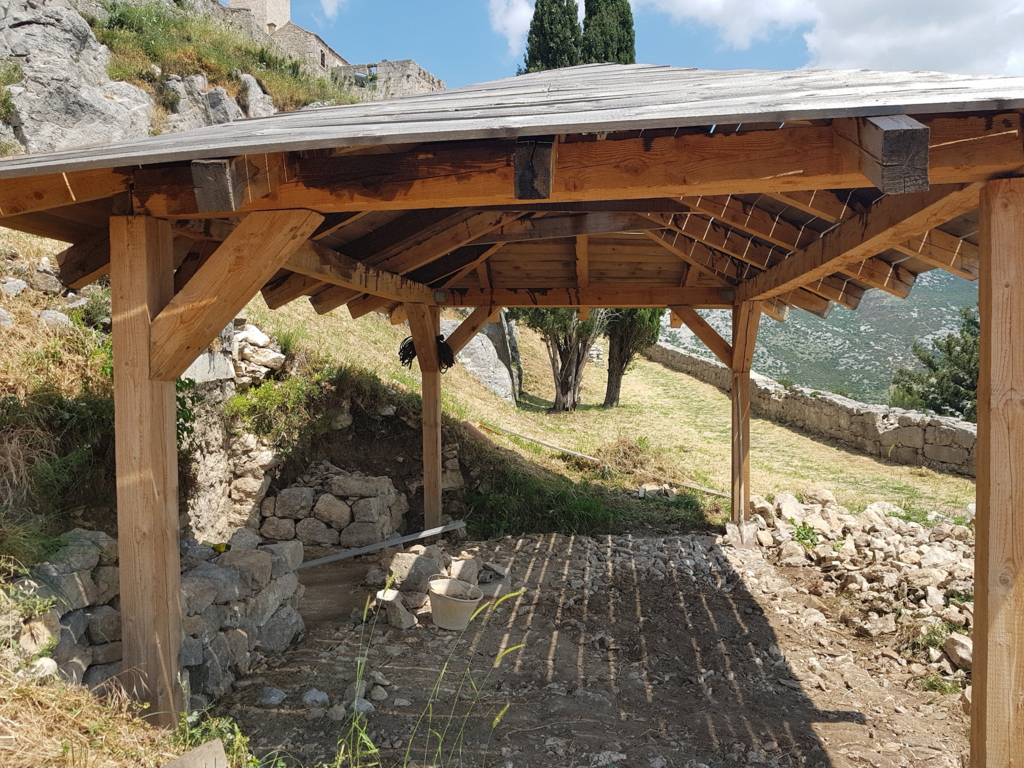
    And some post-and-beam Pavillion porn that I photographed on a holiday in Croatia a few years ago...

    image.png


  • Registered Users, Registered Users 2 Posts: 2,594 ✭✭✭karlitob


    Lumen wrote: »
    I do understand the compulsive need for light after the winter we've had, but at the same time that mono-pitched pavilion design looks, to my eyes at least, wrong.

    There's an architectural pattern called "sheltering roof" which is worth considering:

    https://santacruzarchitect.wordpress.com/2014/12/10/pattern-language-of-homes-no-117-sheltering-roof/

    This principle is probably one reason why hipped roofs with no ridge tend to be used on pavilions, and hence why this style of hipped roof is called....a Pavilion roof!

    https://en.wikipedia.org/wiki/Hip_roof#Pavilion_roof

    This is easy on the eye....

    atlas-6x3-open_xl.jpg

    https://www.shedfactoryireland.ie/ie/20x11-atlas-open-garden-gazebo.html

    See, if you get the eaves height and overall proportions right, you won't feel like you're sitting in a cave.

    This is a very interesting response that I wasn’t expecting. Thank you.

    Will have another genuine review and reconsideration based on your posts. I will always reflect on advice (especially the good stuff you put out!)

    The pavilion you show there - there’s something about it aesthetically that I just don’t like. I think it’s that the eaves aren’t big enough for me. Like slim line houses. They just don’t sit well on my eyeballs.


    I like big for some reason. While it’s too big, this is kinda the thing that - style wise - I was going for. The addition of the shed was afterwards.

    Whatcha reckon to that? Hate it?


  • Registered Users, Registered Users 2 Posts: 30,525 ✭✭✭✭Lumen


    Aha! It's the overhang that makes that work better IMO. And conveniently reduces the spans of the framing.

    Inspiration...?

    https://www.archdaily.com/806722/halle-du-conservatoire-des-mecaniques-patrick-arotcharen-architecte


  • Registered Users, Registered Users 2 Posts: 2,594 ✭✭✭karlitob


    Lumen wrote: »
    Aha! It's the overhang that makes that work better IMO. And conveniently reduces the spans of the framing.

    Inspiration...?

    https://www.archdaily.com/806722/halle-du-conservatoire-des-mecaniques-patrick-arotcharen-architecte


    Exactly!

    With a cover of 11x4.5m i put the uprights in such a way as to have a 750mm overhang all round, which included on the left.

    I had hoped that shed would give sufficient structure and integrity that it would make the beam going from it to the other post easier to consider. In other words, it’s a 6.25m until the upright with a 750mm eave at the otherside of it.

    I made the fascia 300mm and the vertical support 150mm.


    Do you think that changes it a bit?


  • Advertisement
  • Registered Users, Registered Users 2 Posts: 30,525 ✭✭✭✭Lumen


    If you can get the spans down to 6m then Douglas Fir might work.

    https://timberireland.ie/douglas-fir-beams/

    I wouldn't tend to use TI as I think there's better value elsewhere but it gives an idea.

    Douglas Fir is not to everyone's taste colour wise but it's moderately durable and if designed and treated right should last a long time. It's a lot more interesting than standard construction timber anyway.


  • Registered Users, Registered Users 2 Posts: 564 ✭✭✭Fine Cheers


    Following this post with interest. Just wondering if you need the rooflights it it is open on all 4 sides ? Are you going close to a boundary wall ?
    How best can you keep the roof as thin as possible ? Is there any way the timber rafters could be in the same zone as the steel instead of sitting on top ?


  • Registered Users, Registered Users 2 Posts: 2,594 ✭✭✭karlitob


    Lumen wrote: »
    If you can get the spans down to 6m then Douglas Fir might work.

    https://timberireland.ie/douglas-fir-beams/

    I wouldn't tend to use TI as I think there's better value elsewhere but it gives an idea.

    Douglas Fir is not to everyone's taste colour wise but it's moderately durable and if designed and treated right should last a long time. It's a lot more interesting than standard construction timber anyway.

    Thanks for that.

    I was thinking of covering the fascia and possible the shed in a composite clad.

    When I realise that’s too expensive - I do like to paint wood. I do I would likely render the shed part of the structure.


  • Registered Users, Registered Users 2 Posts: 2,594 ✭✭✭karlitob


    DIY KING wrote: »
    Following this post with interest. Just wondering if you need the rooflights it it is open on all 4 sides ? Are you going close to a boundary wall ?
    How best can you keep the roof as thin as possible ? Is there any way the timber rafters could be in the same zone as the steel instead of sitting on top ?

    Don’t get your hopes up. I’m all ideas and no knowledge!

    Pics above I hope might explain better. One side is enclosed as such as it’s the shed. The other sides are open. Boundary wall is about a foot behind. So I’ll need some sort of screen for the back and I was thinking a low wall with hedges / plants on the other side.

    I’ve fixed roof lights in the plan to capture the morning sun.

    A thin roof? Hadn’t thought that far. I want a thick fascia - 300mm or more.

    Timber rafters? Since I’m planning to put a rubber roof on I thought I might get away with ijoists spanning the gap. I had thought the osb on the I joist as no different to osb that I’ll put on the roof? I guess the difference is the osb on the i joists are load bearing.


    Instead of timber I had wondered weather universal beam could be used instead of wood for both the uprights and the span between them? Presume I’m in the arena of a steel fabricator.

    Will do up the other side now and post later.


  • Registered Users, Registered Users 2 Posts: 2,594 ✭✭✭karlitob


    Lumen wrote: »
    The key question I think is: do you really need an uninterrupted 7m span?.

    I’ve just realised that I keep saying 4 uprights but there could be a 100 at the back for all i care. I presume adding a few more at the back can reduce the force of the beam the front for uninterrupted view - I had only thought 4 from a cost perspective.


    Can I ask what at the considerations that it won’t blow away in a gust of wind?


  • Registered Users, Registered Users 2 Posts: 564 ✭✭✭Fine Cheers


  • Registered Users, Registered Users 2 Posts: 2,594 ✭✭✭karlitob


    DIY KING wrote: »

    Now you’re talking.


  • Registered Users, Registered Users 2 Posts: 30,525 ✭✭✭✭Lumen


    karlitob wrote: »
    I’ve just realised that I keep saying 4 uprights but there could be a 100 at the back for all i care. I presume adding a few more at the back can reduce the force of the beam the front for uninterrupted view - I had only thought 4 from a cost perspective.


    Can I ask what at the considerations that it won’t blow away in a gust of wind?

    Adding more uprights at the back will make no difference to beam deformation at the front.

    I don't know much about uplift in monopitched roofs, but a quick Google suggests that it's worse than in double pitched, and regardless of the number of pitches, shallower is worse.

    Bolting the posts to sensibly shaped foundations ought to do the trick.

    That cantilevered steel thing is fantastic, although detail is important or else it'll end up looking like a bus shelter.


  • Registered Users, Registered Users 2, Paid Member Posts: 34,882 ✭✭✭✭listermint


    Without getting carried along too far. What is the actual use case of this.

    I.e you want it covered but don't want to feel closed in, you want the sun but don't want the sun on you. What's the intended use. E.g. if it's raining you won't use it because there is no sun and no heat. If it's sunny is this to block out direct heat.

    If you make it too open it will surely only get partial use.

    I'm just thinking of practical use case based around the constraints of your design.


  • Advertisement
  • Registered Users, Registered Users 2 Posts: 2,594 ✭✭✭karlitob


    listermint wrote: »
    Without getting carried along too far. What is the actual use case of this.

    I.e you want it covered but don't want to feel closed in, you want the sun but don't want the sun on you. What's the intended use. E.g. if it's raining you won't use it because there is no sun and no heat. If it's sunny is this to block out direct heat.

    If you make it too open it will surely only get partial use.

    I'm just thinking of practical use case based around the constraints of your design.


    Thanks for post.
    I’ve thought about this a good bit actually. There’s a few reasons.

    - in the main, I want something that we could use in the cold / light rain. Somewhere you could sit in with a book and a heater on. Somewhere to sit at night with heater and lights on (planning electrics too).
    - in the summer it’s a place to eat as I plan a bbq in there also. As well as a place to sit and read. Im planning a large patio not only under the canopy but also further out into the garden so it feels like a big space.
    - where I plan to put it is where the sunlight directly hits from midday. It wont block the sunlight as such.
    - I want it tall so that you don’t feel hemmed in. There’s just no way we’re going go into something small. We’d feel squashed.
    - I want it open for the same reasons and so as to not block the garden.
    - I want it that size as we have a large garden - 10m x 45m. I think anything smaller might look piddly.
    - I want something that gives height to the garden from a design perspective as a long garden needs height - any room does I suppose from a design point of view.

    - I want it to look expensive, I want it to be cheap and I want - if I can - to do it myself.


    As you can see - very carried away.


Advertisement
Advertisement