Advertisement
Help Keep Boards Alive. Support us by going ad free today. See here: https://subscriptions.boards.ie/.
https://www.boards.ie/group/1878-subscribers-forum

Private Group for paid up members of Boards.ie. Join the club.
Hi all, please see this major site announcement: https://www.boards.ie/discussion/2058427594/boards-ie-2026

Is Irelands neutrality stance in WW2 unfairly criticized? (see Mod note 217)

19899101103104109

Answers

  • Registered Users, Registered Users 2 Posts: 81,061 ✭✭✭✭FrancieBrady


    Not for a single second has Francis put herself in the position of those leading the country at the time without the benefit of the hindsight she abuses routinely.


  • Registered Users, Registered Users 2 Posts: 8,897 ✭✭✭jmcc


    There is also a failure to think. Reposting that map of sinkings in 1941 without realising that the Germans were reading the BAMS traffic and being able to target convoys is an example of this.

    That targeting, more than the unavailability of Irish Treaty Ports, had a direct impact on Allied shipping losses. And Francis McM then claimed that I had no knowledge of the German compromise of the BAMS ciphers when I was the one first mentioned it on the thread.

    There was a mention in a review of Dimbleby's book about the move to northern convoy routes. This put pressure on U-boat supply lines.

    A more intelligent person than Francis McM would have realised that Cobh and Berehaven were closer to France and having U-boats operating from France in or about Irish waters would have shortened U-boat supply lines and made them much more of a threat to Allied shipping especially when the Germans were reading BAMS messages. In that respect, having had access to those Irish Treaty Ports could have been a disaster because the Allies were unaware that their ciphers had been compromised. More U-boats = more torpedoes = more Allied ships sunk.

    Perhaps, like de Valera and Irish neutrality, the Allied naval commanders knew more about their job even without the eighty plus years of hindsight available to Francis McM and reaiised that the Battle of the Atlantic had moved beyond WW1 assumptions.

    Regards…jmcc


  • Registered Users, Registered Users 2 Posts: 8,244 ✭✭✭growleaves


    The surveys that identified Lough Erne as an ideal place to build an airbase were carried out by the British in late 1940.


  • Registered Users, Registered Users 2 Posts: 8,244 ✭✭✭growleaves


    When I was quoting from "That Neutral Island" by Clair Willis earlier in the thread I had to search through the references to give you an exact source because you didn't trust Wills, remember?

    Mate, you haven't read it. Who do you think you're fooling?


  • Registered Users, Registered Users 2 Posts: 5,130 ✭✭✭adaminho


    Interesting quote in Max Hastings book

    It is a remarkable and important statistic that 99 per cent of all ships which sailed from North America to Britain during the war years arrived safely. Even in the bad days of April 1941, for instance, 307 merchantmen sailed in convoy, of which only sixteen were sunk, together with a further eleven unescorted vessels. In June that year, 383 ships made the Atlantic passage, in convoys of which submarines attacked only one, sinking six ships, along with a further twenty-two unescorted merchantmen. In 1942, by far the most alarming year of the U-boat war, 609 ships were sunk in the North Atlantic, a total of some six million tons. So prodigious was American shipbuilding capacity, however, that in the same period the Allies launched 7.1 million tons of ships, increasing their available pool of thirty million tons.

    So it just seemed worse than it was.


  • Advertisement
  • Registered Users, Registered Users 2 Posts: 8,897 ✭✭✭jmcc


    The Allies also reacted to German tactics and had, at various times. compromised the Enigma used by the U-boats. It could have been a lot worse especially without the US as part of the Allies.

    The U- boats had a finite number of torpedoes and once they were expended, the U-boat had to resupply. In that respect, it was a war of numbers and there were not enough U-boats to sink every Allied ship. By using the northern convoy routes, the time between a U-boat firing its last torpedo and resupplying was increased. The resupply U-boats and resupply ships were high priority targets. It was largely the US that was replacing the losses. It could outproduce Germany. Germany simply could not sink Allied ships quickly enough to win. There is a table on Wikipedia of the Allied shipping losses during the Battle of the Atlantic. It also has the numbers of U-boats lost each month.

    Regards…jmcc


  • Registered Users, Registered Users 2 Posts: 6,544 ✭✭✭Francis McM


    I never mentioned FF and I never mentioned Irish men dying for Churchill, so no need to read the rest of your rubbish.

    If Hitler and Nazi party member Hempel got their way and a German victory in Ireland, I wonder would you say that was in Irelands best interest? Do not forget what happened in other neutral countries invaded by Hitler.

    Post edited by Francis McM on


  • Registered Users, Registered Users 2 Posts: 6,544 ✭✭✭Francis McM


    If the Donegal corridor was allowed before 1941 then planes would have been flying out of Co. Fermanagh to patrol the North Atlantic long before then. Flying from Fermanagh to the Atlantic through Donegal meant planes could patrol further in to parts of the Atlantic than if they came from Co. Derry and had to fly around the top of Donegal. Imagine how much further they could have gone, and stayed on station longer, if they took off from our western seaboard.

    Would be interesting to know why Dev allowed the Allies to use the Donegal corridor from 1941 onwards. Was it because

    (a) Roosevelt (although then still officially neutral) wanted them to

    (b) German Condors often flew over Ireland, and the only opposition they met was the occasional letter of protest.

    (c) We had no aircraft capable of intercepting or defending our neutrality"…and the Allies could just have gone ahead and used the corridor anyway

    Or was there a secret deal done between Dev and Churchill because during the war Britain supplied Ireland with essential goods like coal, steel, machinery, and petroleum - and Britain may have insisted on the corridor as a small favour in return?

    Post edited by Francis McM on


  • Registered Users, Registered Users 2 Posts: 6,544 ✭✭✭Francis McM


    In your piece above, you are thinking only in terms of shipping for the treaty ports. I think the Admiralty knew more about shipping in WW2 than you do, and they would have utilised the treaty ports for shipping in WW2 had they been available. As they did in WW1. They were able to estimate Irish neutrality in WW2 cost 5070 British lives.

    A more intelligent person than you would have realised the value of the treaty ports was not just for shipping but could have been for seaplanes in WW2, same as happened in WW1. The Irish Treaty Ports were extensively used and designed to accommodate seaplanes. Cobh for example was exceptionally suitable as a sea plane base.

    During World War I and the interwar period, locations like Cork Harbour (Spike Island) hosted dedicated naval air stations. Over 100 ships were based there too in WW1 to counter the German submarine threat then. The military utilized early seaplanes and flying boats, such as the Curtiss H-16, for extensive anti-submarine and patrol duties to secure Atlantic shipping lanes.

    If you had read some good books on the battle of the Atlantic you would have known that. But you did not, so you don't. You also forget the British successfully protected the treaty ports from submarines in WW1 with physical anti-submarine boom nets and other defences.


  • Registered Users, Registered Users 2 Posts: 8,244 ✭✭✭growleaves


    The aerial surveys determining that flying from Fermanagh would only be effective if a route was taken through Donegal were carried out in late 1940. You need to let that sink in.

    The surveys identified that if planes flew from Fermanagh through south Donegal, north Leitrim and north Sligo the mid-Atlantic gap could be narrowed. DeValera gave permission to use the Donegal Corridor in January 1941. The base at Lough Erne became operational in February 1941.

    Your concept of time and of how events unfolded is muddled.

    Permission to fly over the Donegal corridor was not sought prior to 1941 because the corridor was only identified as a strategic flyover route from Fermanagh around Nov/Dec 1940.


  • Advertisement
  • Registered Users, Registered Users 2 Posts: 22,960 ✭✭✭✭Tony EH


    Jesus, is this junkthread still going…all because one poster keeps posting absolute drivel?

    🤣


  • Registered Users, Registered Users 2 Posts: 6,544 ✭✭✭Francis McM


    Comgrats, you can now use wiki. It was me who corrected another poster on May 30th who claimed that the Donegal corrisor was being used in 1940. I corrected him by saying "The Donegal corridor was not created until 1941. The Germans had sunk over 1100 ships in the Atlantic in 1940 alone."

    With all due respect, you must be really dense if think that it took the Allies until Nov/Dec 40 to identify that flying over Donegal saved them crucial time and fuel, and brought them further in to parts of the Atlantic for longer, therefore helping a little bit - but not at all fully of course - to close the vulnerable mid-Atlantic gap where German U-boats were attacking supply ships. A primary school child could see that. FFs, even the four-engined German Condors were regularly overflying Ireland in 1940 - that is part of the reason Dev had to give in and let those dastardly British overfly Donegal. Because the other side had done it so many times, and because the allies were losing thousands of good men and many ships because of Irish neutrality.

    As it said in the book yesterday "The crews of almost every warship and merchantman that sailed past the Irish coastline in the war years felt a surge of bitterness towards the country which relied on Britain for most of its vital commodities, and all of its fuel, but would not lift a finger to help in its hour of need.”

    Have a look at the map and tell us

    (a) where do you think in N. Ireland would have been the closest place to the blue dots on the map - shipping losses ( to base air planes out of for protection)

    (b) which parts of the island of Ireland were closest to the most dots on the map.

    Untitled Image

    It took until Nov Dec 1940 to identify that says you. lol lol. OMFG. Flying boats / sea planes can operate out of any calm, unobstructed body of water—such as lakes, rivers, and sheltered coastal harbours. They were doing it out of places like Cobh in WW1 against the German submarines in the Atlantic then.

    1000 ships sunk in 1940 alone, with huge loss of life, plus their valuable cargoes. We have not built a single ship in Ireland in the past 4 decades, it is taking us all our time to build a children's hospital. Even though we are slow / not very good at building things in this country (even the National Children's hospital is being done by a Dutch owned firm, and is way behind time and over budget) you can rest assured that given the shipping losses in 1940, the Allies would have copped on to the most direct / quickest routes to their ships.

    A few foreigners recently said they wonder about some aspects of the educational system in this country. Again, look at the map and come up with answers to question a and b.

    Post edited by Francis McM on


  • Registered Users, Registered Users 2 Posts: 8,897 ✭✭✭jmcc


    It is even possible to see the switches from copied and pasted AI slop to the poster's own words based on the abrupt style changes.

    Regards…jmcc


  • Registered Users, Registered Users 2 Posts: 8,897 ✭✭✭jmcc


    AI slop that ignores the basic problems of U-boat supply lines, the effect of northern convoy routes on extending those supply lines and the difficulties of the Germans resupplying those U-boats.

    That hypothetical casualty figure was debunked upthread as not being a British Admiralty figure. It also completely ignores the effect of the Germans reading the BAMS messages on convoy targeting and Allied shipping losses. Even the simple geographical realiy of the distance between Berehaven and Cobh and the U-boat bases in France was ignored.

    Post edited by jmcc on

    Regards…jmcc


  • Registered Users, Registered Users 2 Posts: 8,897 ✭✭✭jmcc


    So the latest diversion is the National Children's Hospital and ship building in Ireland?

    Regards…jmcc


  • Registered Users, Registered Users 2 Posts: 5,130 ✭✭✭adaminho


  • Registered Users, Registered Users 2 Posts: 81,061 ✭✭✭✭FrancieBrady


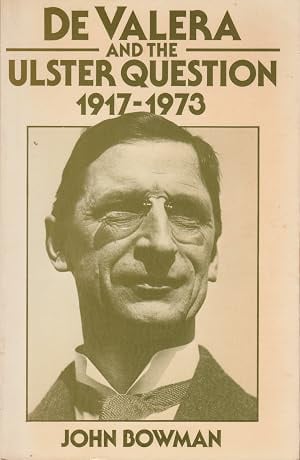
    Changing the subject a bit and wondering does anyone know of any article/books on this particular action.
    Was Dev just objecting for objecting sake to the move to leave to leave the Commonwealth completely and become a Republic in '48, or was it a genuine belief? I know he didn't divide the house and the legislation passed without a vote but he was critical of the move.

    Did he or anyone ever flesh out how they thought it could(membership) be used to help end partition?


  • Registered Users, Registered Users 2 Posts: 5,130 ✭✭✭adaminho


    It seems he wanted a loose association with the Commonwealth for trade purposes.

    Google is recommending this


  • Registered Users, Registered Users 2 Posts: 6,544 ✭✭✭Francis McM


    Rubbish. All were my own words. Except for the quote I put in italics from the book.

    Not surprised you go for the player, not the ball though.


  • Registered Users, Registered Users 2 Posts: 6,544 ✭✭✭Francis McM


    I used the analogies to completely debunk the posters's assertion that " the corridor was only identified as a strategic flyover route from Fermanagh around Nov/Dec 1940. " The allies wanted a more direct route to parts of the Atlantic long before that.


  • Advertisement
  • Registered Users, Registered Users 2, Paid Member Posts: 4,304 ✭✭✭Cyclingtourist


    md32429202572_5b0c2d87-2c72-457a-81f4-37898a27da7e.jpg

    This book will answer your question no doubt. I had a copy once and will have a look and try to find it. May have given it away.

    Pretty easily available still 2nd hand, I know Charlie Byrnes in Galway have it.


  • Registered Users, Registered Users 2 Posts: 8,897 ✭✭✭jmcc


    There may have been customs issues (not quite Brexit but remember that Ireland and the UK had a common currency back then) that influenced some of the thinking on the loose affiliation with the Commonwealth.

    Regards…jmcc


  • Registered Users, Registered Users 2 Posts: 81,061 ✭✭✭✭FrancieBrady


  • Registered Users, Registered Users 2 Posts: 22,960 ✭✭✭✭Tony EH


  • Registered Users, Registered Users 2 Posts: 5,130 ✭✭✭adaminho


  • Registered Users, Registered Users 2 Posts: 22,960 ✭✭✭✭Tony EH


    It's probably the best thing to do with those little Englander types. As we've seen on this thread, when one form of attack has been rendered useless due to its own fallaciousness, another fallacy is brought up. All of these have been refuted time and time again, even during the war.


  • Registered Users, Registered Users 2, Paid Member Posts: 4,304 ✭✭✭Cyclingtourist


    Maybe nations should go to war for unselfish moral reasons but I don't see any instances where they have either in history. recent or distant, or with current conflicts.

    Neutral Ireland (Éire) took the same attitude it would have if it were free to do so in 1914. It may have not been a very moral decision but then Britain and France's declaration of war wasn't a particularly moral one either at the time. The 'good war' construct around WW2 really only developed later on and continued with the heroic images produced post-war in popular media, such as the French resistance movement which was largely myth.


  • Registered Users, Registered Users 2 Posts: 8,897 ✭✭✭jmcc


    In some respects, the dynamics that led to WW1 (German militarisation and a stronger navy becoming a potential threat to the UK which depended largely on marine transport for trade) were repeated before WW2. The Treaty of Versailles imposed some territorial penalties on Germany that almost guaranteed that Germany would try to recover those territories. Had Ireland been independent at the outbreak of WW1, it probably would have opted for neutrality but there might well have been a Unionist component of the population might have wanted to side with the UK.

    Had Home Rule been peacefully implemented, a second order counterfactual might have occurred with a population largely being in favour of Irish neutrality but a political establishment (the Irish Parliamentary Party) being in favour of siding with the UK thus leading to another 1916 and Irish independence.

    Post edited by jmcc on

    Regards…jmcc


  • Registered Users, Registered Users 2 Posts: 22,960 ✭✭✭✭Tony EH


    It's probably been brought up a hundred times already in the thread, but Ireland was in no fit state to get involved in any war. We had no proper standing army, armour, navy or airforce and at the time a threat of invasion by either Germany or Britain was considered real (even if they were only ever paper plans and would never have taken place in actual reality). In fact, if any country was going to invade, it would more likely have been Britain since they already had a presence in our country and it would have meant merely crossing a land border.

    Into the bargain we had, literally, just got rid of one invader less than 20 years previously. An invader we naturally had a reluctance to let back in, regardless of the reason.

    Britain and France's declaration of war wasn't a particularly moral one either at the time.

    Their declaration of war had absolutely nothing to do with morals. Britain declared war because her hegemony was under threat from an emergent Germany. France declared war because they were put in an awkward place by Britain's declaration of war. France took a full six hours of debating before they rowed in behind the British and they only did so because they knew that any war between Britain and Germany was going to involve their country whether they declared war or not.

    They had hoped that the combined strength of a declaration of war by Germany's former WWI enemies would force Hitler to halt his advance in Poland because they knew that he didn't want a war on two fronts. But Hitler just called their bluff.


  • Advertisement
  • Registered Users, Registered Users 2 Posts: 8,897 ✭✭✭jmcc


    There was very little that the UK or France could have done about the German invasion of Poland. The point about Ireland's military has been made repeatedly. The speed at which Germany took over most of mainland Europe and even removed the British Expeditionary Force from mainland Europe may have been a major influence on the policy of Irish neutrality because by early 1940, Germany had successfully invaded most of mainland Europe within a matter of months. There was also a pro-armistice element in British politics that thought that the UK should seek an armistice with Germany and Halifax had approached the Italians to see if there were possible terms.It could all have turned out very differently.

    Regards…jmcc


Advertisement
Advertisement