Advertisement
Help Keep Boards Alive. Support us by going ad free today. See here: https://subscriptions.boards.ie/.
https://www.boards.ie/group/1878-subscribers-forum

Private Group for paid up members of Boards.ie. Join the club.
Hi all, please see this major site announcement: https://www.boards.ie/discussion/2058427594/boards-ie-2026

Nuclear - future for Ireland?

194959698100

Comments

  • Registered Users, Registered Users 2, Paid Member Posts: 15,618 ✭✭✭✭josip


    You'll need a 3rd location to handle either maintenance to either Turlough Hill or Silvermines.

    And a 4th as a failsafe in case 1 was to go down unplanned while another was shut down for maintenance.

    🙂


  • Moderators, Recreation & Hobbies Moderators, Science, Health & Environment Moderators, Technology & Internet Moderators Posts: 98,209 Mod ✭✭✭✭Capt'n Midnight


    If a turbine fails you can still use the others.

    Nuclear has multiple single points of failure and unlike hydro couldn't be backed up by a single gas turbine. Which is the key difference. Having a generator multiples of the size of the next biggest ones means failures are more likely to take down the grid.

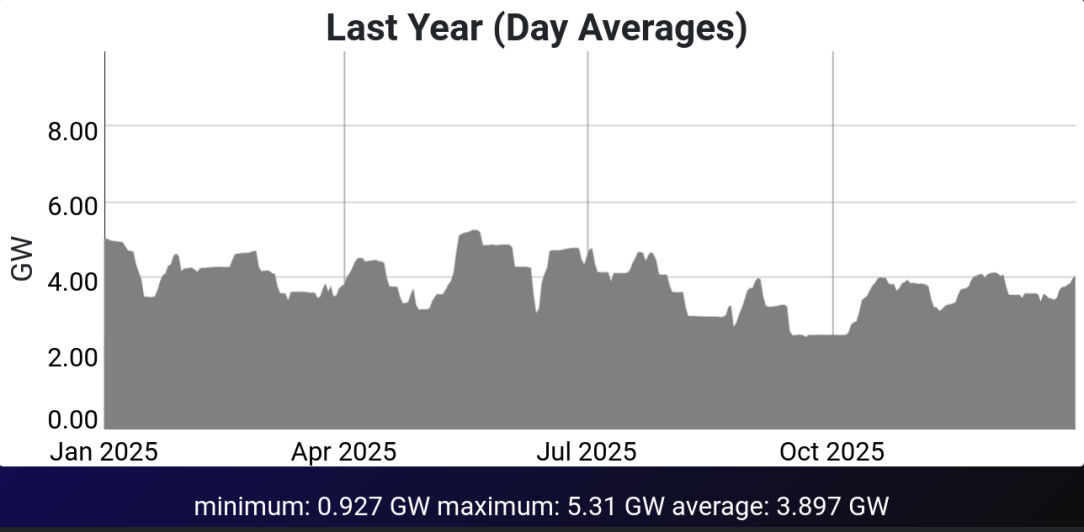
    UK nuclear has has major outages 6 years in the previous 8 years. Backup. Spinning Reserve. Absolute requirements to have nuclear on a grid.

    image.png

    The long minimum in October 2025 was 2.51GW

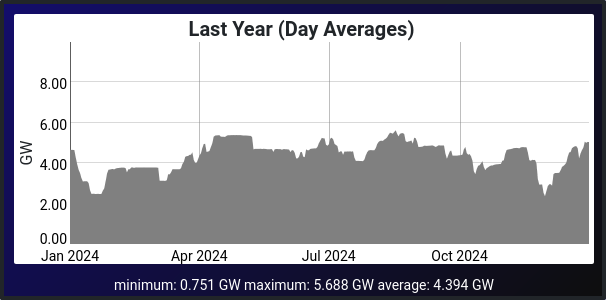
    image.png

    2024

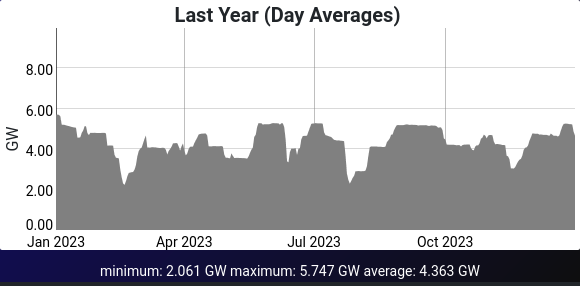
    image.png

    2023

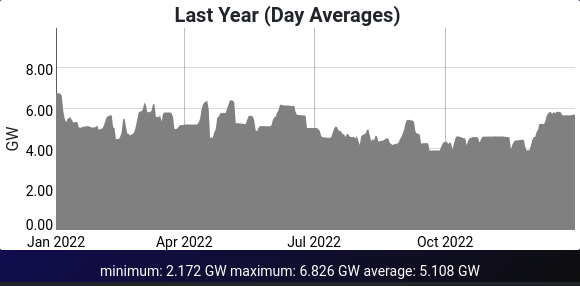
    image.png

    2022 the last OK ish year for UK nuclear but the short peaks indicate something funky going on

    image.png

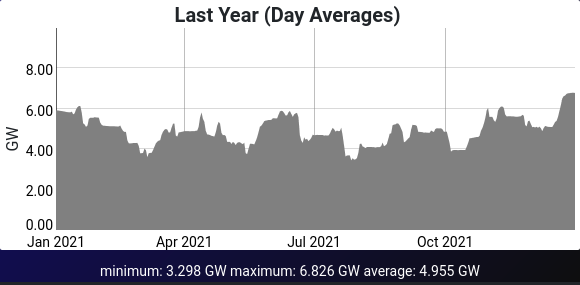
    2021

    image.png

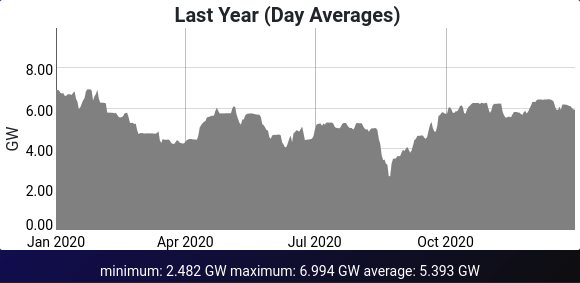
    2020 that minimum represents a lot of plants offline

    image.png

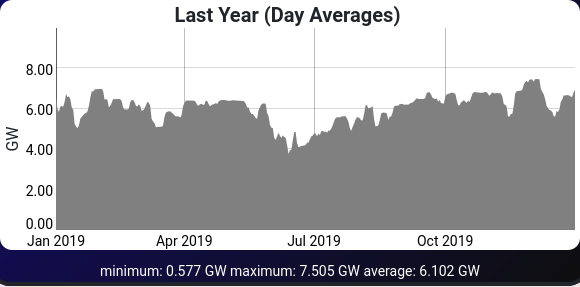
    Min dip about 3.76 / max 7.47

    image.png

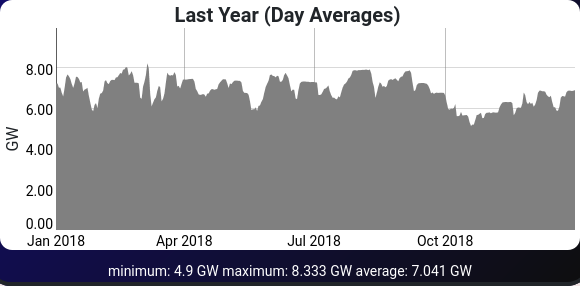
    2018 the other goodish year.


  • Registered Users, Registered Users 2, Paid Member Posts: 9,943 ✭✭✭SeanW


    I do foresee renewables being useful in places where they don't have to worry about winter. There's a lad on YouTube (the Electric Viking) in Australia that has decked out his house in solar panels, storage batteries of every kind, some Chinese EVs in his driveway that he charges off those batteries, and only uses the grid to get free electricity during hours of peak solar production elsewhere when there's a major surplus of energy. And honestly, good for him.

    The problem is that Ireland is not Australia, more broadly in Western Europe, we have this thing called "winter" that doesn't really exist Down Under.

    We have greater energy needs in winter than in summer, while solar panels provide their most energy when it is least needed. In order to exploit our weather, we'd have to carpet bomb ourselves with those ugly, bat killing, bird chomping monstrosities called wind turbines, industrialising our landscape on a level unprecedented in human history. What we'd get for that is a small, expensive supply of unreliable electricity that we know, from past experience, will not be there when it is needed most. For that reason, every wind farm needs to be backed, watt-for-watt, with something else. Plus a healthy margin to prepare for severe and a prolonged winter dunkelflaute.

    What is that "something else?" … That is the multi-billion euro question. And one that you have failed to address.

    https://u24.gov.ua/
    Join NAFO today:

    Help us in helping Ukraine.


  • Registered Users, Registered Users 2, Paid Member Posts: 14,431 ✭✭✭✭machiavellianme


    What rubbish is this? Nuclear would only be able to use what's left of the purple areas? There's no predetermined access for one generation source over another, it's a market based on bids and offers. If nuclear generation is cheaper than alternatives, then it will be in the green and something else will take up the purple areas.

    Save boards.ie by subscribing: https://subscriptions.boards.ie/


  • Registered Users, Registered Users 2 Posts: 26,178 ✭✭✭✭Kermit.de.frog


    I think, particularly after we let green politics contaminate our discourse as happened, we are now the most vulnerable country in Europe to an energy shock. This has been compounded by a suicidal self-imposed ban on exploiting oil and gas in our own territory and a hopeless ideology driven reliance on renewables that is dangerously naive and factually impossible. Wind turbines won't keep the lights on.

    There is no doubt about it we are on the trajectory to South African style "load shedding" where your power will be off for a set number of hours everyday. The reliable generation capacity won't be there.

    If that begins then the anger in this country about the path we've been led down the last 15 years is going to boil over.

    It will be far worse consequences for us then the Germans shutting their nuclear plants.

    That's when the ideology stops and reality kicks in and you'll see power generation and energy extraction of all types top of the agenda. It will be an emergency.

    This is the trajectory we are on.

    We need to exploit everything we have and we do need to have our own nuclear power generation in the medium to long term to really enhance sufficiency and security of supply.

    Post edited by Kermit.de.frog on


  • Advertisement
  • Registered Users, Registered Users 2 Posts: 631 ✭✭✭Aontachtoir


    Realistically, how long would it take to build brand new fossil fuel infrastructure to take advantage of an uncertain and likely limited supply of gas and oil? How much would it cost the state? How much civil service time and energy would have to be poured into this endeavour? We won’t have anything anywhere near ready before this latest fossil fuel crisis ends. 

    And why would all that time, money, and effort not be better spent on establishing renewable energy (+- nuclear) that would have insulate us from the wild swings in global markets and the whims of unstable states to which fossil fuel dependence has so seriously exposed us? Exempt offshore wind farms and their land-side infrastructure from planning just like the LNG terminal, and private companies will build them at scale and speed.

    Fossil fuel dependence is the problem, not the solution. The panic is because of reliance on fossil fuels. The only way to avoid future fossil fuel panics is to aggressively and single-mindedly reduce our reliance. Wasting resources and worsening that reliance by drilling for oil or gas rather than knocking down barriers to renewables is the most self-defeating and unrealistic response to this crisis.


  • Registered Users, Registered Users 2 Posts: 21,881 ✭✭✭✭cnocbui


    Renewables enshrine fossil fuel dependence, they don't free a country from it, the way nuclear energy can.


  • Registered Users, Registered Users 2 Posts: 16,633 ✭✭✭✭charlie14


    I would very much doubt that Eirgrid look on the abysmal emission percentage reductions by 2030 or the ever increasing electricity imports attempting to mask emissions, as well as their highlighting of our lack of energy security, as "going the right way". They may be a state owned body under the Minister for Climate, Energy and the Environment but that doesn`t mean they are numerically illiterate.

    Do you honestly believe that Eirgrid came up with this plan as the only alternative after examining other possibilities when from what we have seen in the past where proposals were only allowed if they complied with Irish Green Party ideology ?

    As far back as 2021 both Eirgrid and the CRU were warning the then Minister Ryan that without LNG our energy security was under threat. Ryan and the greens dragged their heels on that until finally being forced to commission a report by Cambridge Economic Policy Associates (CEPS) that included the inane and bizarre stipulation that it could not recommend a LNG facility in the country. In fairness to CEPS they recognised the stipulation for the idiocy that it was by recommending a floating LNG terminal in November 2023. One year later Ryan and the greens were out of government without him doing anything to comply with that recommendation.

    So do you or anyone else really believe that this 37GW/Hydrogen plan, that appeared under the same Minister, didn`t come without similar restrictions that only proposals in compliance with Irish Green Party ideology were allowed ?

    You post ream after ream of data, stats and minutia as regards nuclear, but bewilderingly you somehow cannot come up with a single figure as to the real capital costs of this plan you favor or what the price of electricity to the consumer would be if it was ever implemented. The more you refuse to do that, the more it shows you know that both are so financially insane that calling it La-La Land economics would not even come close.


  • Moderators, Recreation & Hobbies Moderators, Science, Health & Environment Moderators, Technology & Internet Moderators Posts: 98,209 Mod ✭✭✭✭Capt'n Midnight


    image.png

    The true cost of nuclear must include the additional backup and spinning reserve that's only needed for it. Proper insurance so the state isn't left on the hook and of course decommissioning costs need to be locked in too.

    By the time nuclear arrives all of the existing renewables will be long out of contract. Nuclear can't compete with that.

    The light green areas are when renewables would be producing a surplus. Nuclear can't compete with that.

    And new renewables will only have a few years left, (we'll have 95%+ emissions reduction before nuclear) so even if nuclear was cost competitive at that point in time (ha!) no sane person would lock in when the renewables will be way cheaper shortly.

    Nuclear will need 30+ years of guaranteed demand at a guaranteed price to break even. And as we've seen time and time again nuclear doubling in price after construction starts isn't exactly unheard of. The latest French project is already 40% up and three years late and construction won't start for years.


  • Moderators, Recreation & Hobbies Moderators, Science, Health & Environment Moderators, Technology & Internet Moderators Posts: 98,209 Mod ✭✭✭✭Capt'n Midnight


    How exactly does nuclear meet the greater energy needs in winter ? Dependably ?

    Yes we will have dispatchable generators (gas→biogas etc) to handle short term drops in wind if all else fails No they won't be able to support nuclear for months a time. Because that would blow any emissions savings out of the water.

    I am blue in the face explaining that we'll have fossil gas as a last resort until 2050. Claiming the issue hasn't been addressed is just low. Especially when I'm waiting for someone to explain how we survive nuclear Black Swan events that happen to frequently to ignore.


  • Advertisement
  • Moderators, Recreation & Hobbies Moderators, Science, Health & Environment Moderators, Technology & Internet Moderators Posts: 98,209 Mod ✭✭✭✭Capt'n Midnight


    Spain, the UK, the US , Germany and others didn't reduce coal when they added nuclear.

    Coal was only displaced later by gas. Which in turn is being displaced by renewables.

    Even France has reduced it's emissions by two thirds by embracing renewables.


  • Registered Users, Registered Users 2 Posts: 241 ✭✭Repo101


    The only way we are going Nuclear is if SMRs prove viable. Ultimately the approach should be a mix of renewables + nuclear to ensure energy sustainability but one big reactor doesn't really make sense as it would be way above 10% of grid capacity. If we build one large reactor we would need major grid upgrades as well so it's not just the cost of the reactor, so it's either SMRs or nothing.


  • Moderators, Recreation & Hobbies Moderators, Science, Health & Environment Moderators, Technology & Internet Moderators Posts: 98,209 Mod ✭✭✭✭Capt'n Midnight


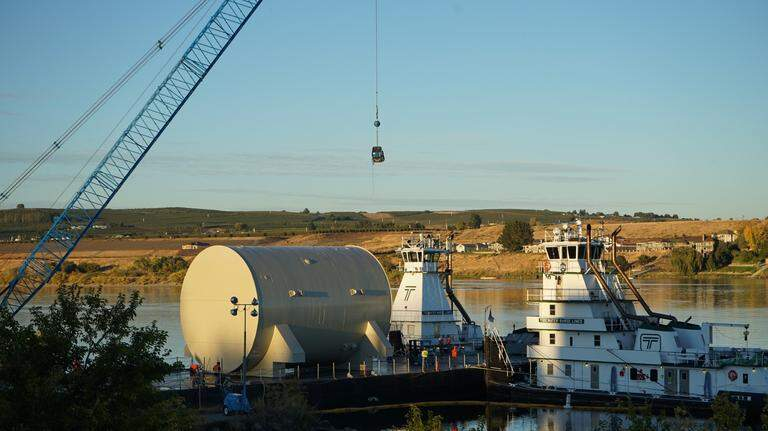
    image.png

    When you are finished with an SMR you can drop it on a barge

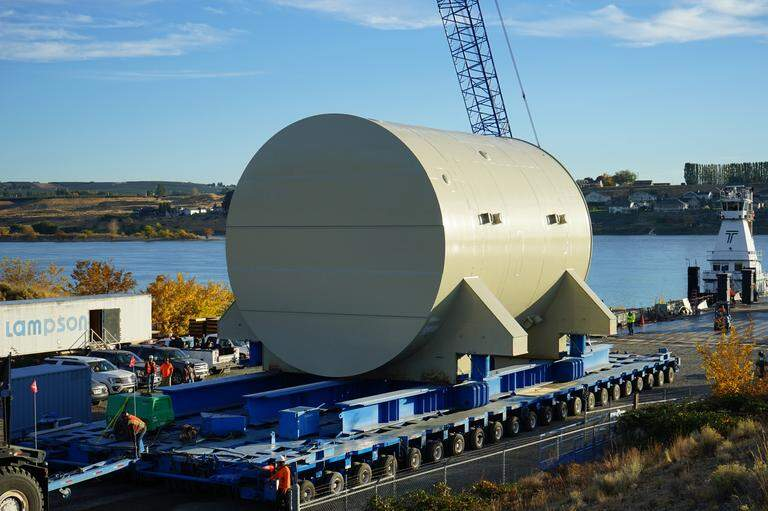
    image.png

    Send it up river

    image.png

    And then send it by road

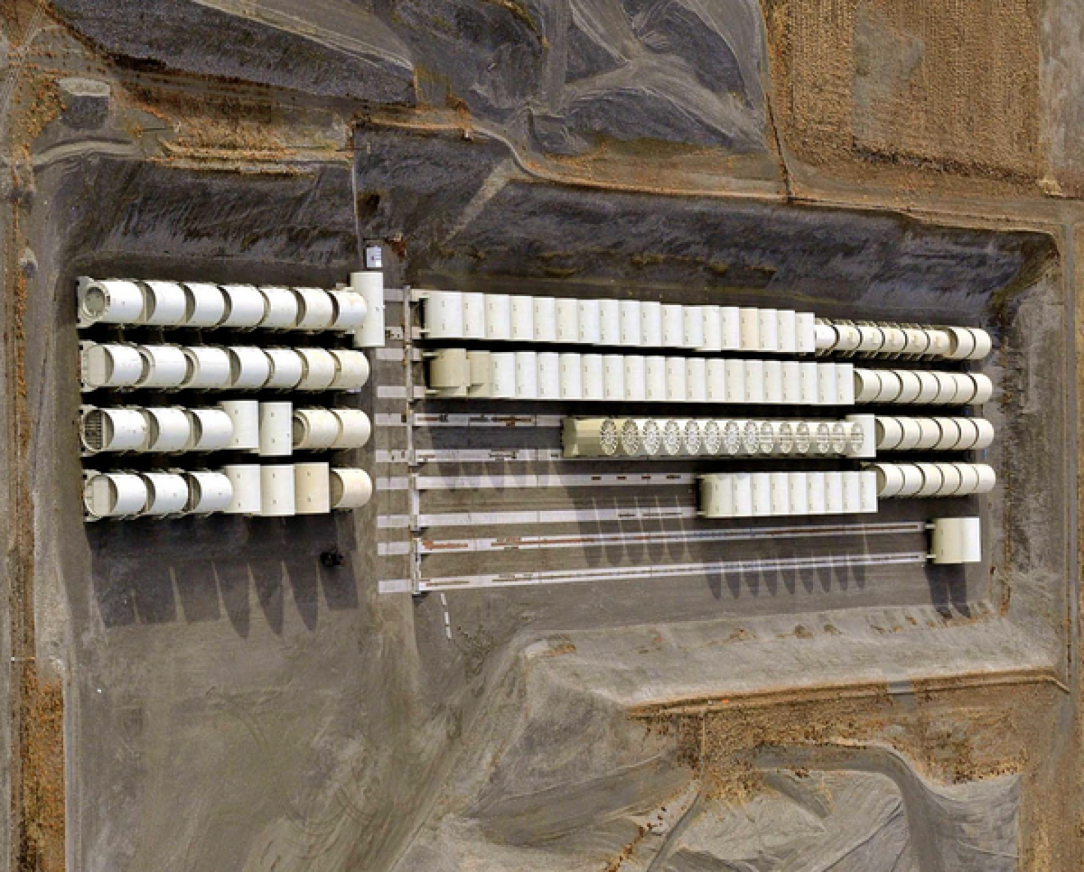
    image.png

    And drop it off in Trench 94.


    We've been doing SMRs for over 70 years, there's nothing new under the sun. They just aren't economic for grid power.


  • Registered Users, Registered Users 2 Posts: 16,633 ✭✭✭✭charlie14


    This present 37GW plan is supposed to fulfill our projected 2050 requirements. Eirgrid estimate ~15.5 GW, Wind Energy Ireland around 50% higher. Eirgrid`s projections do not include AI requirements.

    Finland has the same population as here and their current demand is 15.5 GW. 40% of that demand is provided by nuclear. There appears to be a bit of a misnomer on how much nuclear a grid should carry. The rule of thumb is that no generating unit should generally exceed 10% - 15% of the total system peak demand regardless of what the generation resource is. Not that it should be only 10% -15% of a resource.That applies to every generating unit. Be it nuclear or renewables.

    We do not have a grid problem with nuclear. It`s flowing through our grid every day and more of it will be when the Celtic Interconnector with France becomes operational. Our grid problems are renewables scattered all over the country having to be transported to where the electricity is needed by a grid that was not designed to do so in the first place. It also doesn`t help that solar is direct current generation and we use alternating current so solar also needs huge numbers of inverters to convert DC to AC as well.


  • Registered Users, Registered Users 2 Posts: 16,633 ✭✭✭✭charlie14


    Another load of nonsense.

    France generates 69% of it`s electricity from nuclear, 13% from wind and solar combined and 17% from hydro. France hasn`t added any hydro in over a quarter century.

    French emissions from generation were as negligible in the late 1990s as they are today due to nuclear.


  • Moderators, Recreation & Hobbies Moderators, Science, Health & Environment Moderators, Technology & Internet Moderators Posts: 98,209 Mod ✭✭✭✭Capt'n Midnight


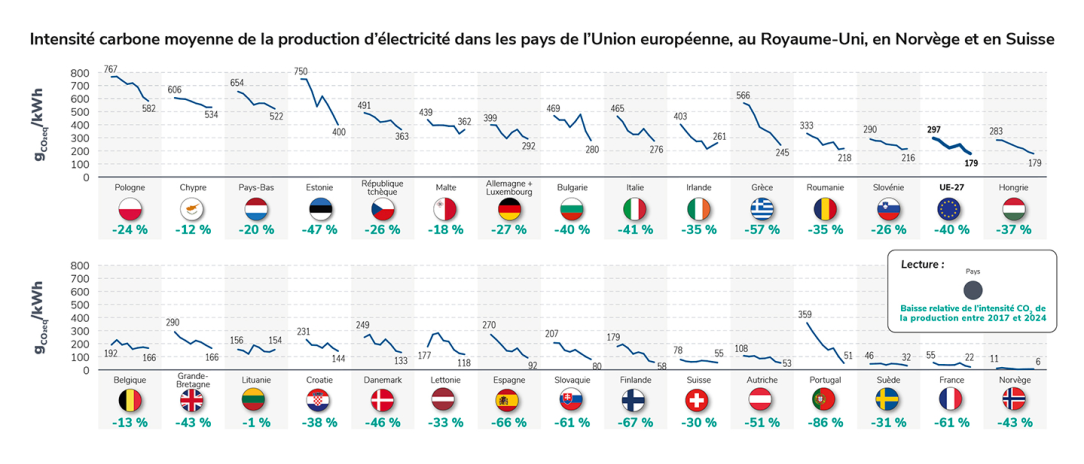
    image.png

    France reduced emissions by 61% by moving from fossil fuel to wind/solar.

    France has only added 0.225GW nuclear since 1997 so it's not that.


  • Registered Users, Registered Users 2, Paid Member Posts: 14,431 ✭✭✭✭machiavellianme


    We already have Moneypoint, it still has the coal burning infrastructure and could probably be reopened in a matter of weeks. Coal isn't reliant on the Straits of Hormuz.

    Save boards.ie by subscribing: https://subscriptions.boards.ie/


  • Registered Users, Registered Users 2, Paid Member Posts: 15,618 ✭✭✭✭josip


    Hasn't Moneypoint already been converted to HFO?


  • Registered Users, Registered Users 2, Paid Member Posts: 14,431 ✭✭✭✭machiavellianme


    It could always do dual fuel. As can almost every other thermal generator in Ireland, as mandated by the grid code. HFO was the backup fuel, now it's the primary. But given the volatility in gas / oil, it should be reconsidered on coal.

    Save boards.ie by subscribing: https://subscriptions.boards.ie/


  • Registered Users, Registered Users 2 Posts: 16,633 ✭✭✭✭charlie14


    Would you ever cop yourself on.

    Your nonsense that the 13% of electricity generated by wind and solar are the reason that France has such low emissions are the same nonsense you were peddling here repeatedly that French electricity exports were due to renewables.

    It had to be pointed out to you that the French renewable companies were buying 100 TWh from French nuclear since 2011, which French nuclear were compelled to sell to them at a rock bottom price of €42 per MWh, when French highest ever net exports of electricity were last year of 92.3 TWh.

    French renewable companies were exporting the grand sum of swa. They were using that cheap nuclear for base load that renewables could not provide. French nuclear was keeping them in business and costing money to do so. 2025 French nuclear exports earned them €5.4 Bn, (€58.50 per MWh). That €58.50/MWh is €40.22/MWh (70%) cheaper than our strike price for offshore wind.

    Had they exported that 100TWh they supplied renewables the total would have been €7.05 Bn. French nuclear subsidized French renewable companies in 2025 to the tune of €1.65 Bn. and have been subsidizing them every year since 2011.


  • Advertisement
  • Registered Users, Registered Users 2 Posts: 16,633 ✭✭✭✭charlie14


    "They just aren`t economic for grid power"

    Quite a statement from somebody that runs off screaming every time they are shown that their own plan isn`t economic for grid power either.

    Pot Kettle Black.


  • Registered Users, Registered Users 2, Paid Member Posts: 14,431 ✭✭✭✭machiavellianme


    To be fair, pot is likely a lot blacker than kettle.

    If for example our electricity needs is 15GW peak in 2050:

    Scenario 1:

    15GW nuclear with 15GW gas backup.

    Pay for energy used, ancillary services and capacity (capital costs etc).

    Scenario 2:

    37GW wind + 5GW solar, with 15GW gas backup.

    Pay for energy used, ancillary services and capital costs. Plus pay for all unused energy from the wind and solar. Suddenly the 15GW system has the same price as a >40GW system.

    Now let's assume that the 15GW gas costs the same in both scenarios.

    Which is likely to be cheaper to build?

    Which is likely to be cheaper to run?

    (baring in mind that the scenario 2 renewable plant are likely to have service lifetimes that are less than half that of nuclear)

    A quick search suggests that 30GW of nuclear is being planned by India for $62bn per reuters last year, converting to euros that's €53bn and doubling, it's €106bn (because everything in Ireland costs at least 4 times that in India).

    https://www.power-technology.com/news/ntpc-nuclear-reactors-india/?cf-view&cf-click

    Another quick search suggests that the 37GW of offshore wind is going to cost at least €131bn in 2024 monies. I've no idea what kind of multiplier to apply to this figure but it's certainly more than 2024 monies if Sceird Rocks (and seemingly Dublin array) have decided to call it a day since. Given their lifespan is likely to be 20-30 years at best (the sea is a cruel mistress), let's at least double it to match the 60 year nuclear lifetime.

    https://m.independent.ie/irish-news/true-cost-of-meeting-states-renewable-energy-targets-much-higher-than-projections-ministers-are-warned/a1838830499.html

    But yeah, the Capt'n is blue in the face telling us anything other than the capital costs of offshore or the curtailment costs we'll be in hock for generations for. It's pretty obvious which one isn't economic for grid power.

    Save boards.ie by subscribing: https://subscriptions.boards.ie/


  • Moderators, Recreation & Hobbies Moderators, Science, Health & Environment Moderators, Technology & Internet Moderators Posts: 98,209 Mod ✭✭✭✭Capt'n Midnight


    The point is that without adding much hydro and almost no nuclear France still reduced electrical production emissions from 55g/KWh to 22g/KWh. Because wind and solar replace fossil fuel.

    It also shows that nuclear alone, even when you have synchronous interconnectors and places like Italy importing any possible surplus like it's going out of fashion, you still can't get to zero carbon.

    Untitled Image

    Again apart from Finland all the emissions drops ion Western European countries were done without additional nuclear. You can even see where some Eastern nuclear plants closed where emissions hit a temporary speed bump.


  • Registered Users, Registered Users 2, Paid Member Posts: 9,943 ✭✭✭SeanW


    France has enormous hydroelectric and pumped hydro capabilities (about 25GW) - which Ireland does not. So that can back solar & wind in France. Even still, by your own numbers, all that the increase in French renewables did was lower an already low number (55g/kwh) to an even lower one (22g/kwh). That's good, no argument there, but the fact remains that nuclear had already long since "broken the back" of the problem.

    As to a strategy that relies on gas for backup, you still haven't explained how we "double down" on renewables, nor answered the many questions about the cost of this by others. You also haven't explained where the gas comes from given that the situation in Europe is dire.

    Ireland has no LNG import terminals, no gas storage capabilities of any kind, and limited domestic resources. More broadly, gas fields in Western and Northern Europe are being drained while exploration within Europe is being blocked by the eco-lobby. Plan B was for Europe to import gas from Vladimir Putin's mafia KGB hell-state - now Russia is waging war on Europe. Plan C was to import LNG from the Middle East, with the naieve assumption that things would never kick off in that part of the world, a dangerous and silly assumption even at the best of times.

    What is Plan D for your "transition fuel?" And what are the economics of keeping a whole load of gas plants on standby just in case we get a severe winter cold-snap/anti-cyclone?

    https://u24.gov.ua/
    Join NAFO today:

    Help us in helping Ukraine.


  • Registered Users, Registered Users 2 Posts: 16,633 ✭✭✭✭charlie14


    Not difficult to see why you avoid comparative figures at all costs.

    2024 Ireland generated 27.4 TWh. Emissions were 226g/KWh with 40% of that generation coming from wind and solar, with 14% of total demand coming from imported nuclear with zero emissions.

    2024 France generated 536.5 TWh. Emissions were 33.5/KWh with 14% of that generation coming from wind and solar and they exported 89 TWh of nuclear with zero emissions

    Where in the realm of sanity does that even suggest that wind and solar are the reason why France has in real terms sfa emissions ?

    It`s actually laughable you pointing to French renewables as being somehow the reason for France having minuscule emissions when the renewables plan you are attempting to promote would still leave us burning at least the same amount of fossil fuels in 2050 we are burning now.


  • Moderators, Recreation & Hobbies Moderators, Science, Health & Environment Moderators, Technology & Internet Moderators Posts: 98,209 Mod ✭✭✭✭Capt'n Midnight


    You are deliberately missing the point that nuclear can't get to zero carbon on it's own.

    Before it could arrive the grid would already be performing better than nuclear could.

    The supports needed for nuclear to meet our 2050 targets would cover renewables doing the same, earlier and with far less risk of project delivery.

    I don't understand your last point. Especially since we are reducing fossil fuel usage as more renewables are added and are actively curtailing renewables because we still have a 75% limit on SNSP.


  • Registered Users, Registered Users 2, Paid Member Posts: 14,431 ✭✭✭✭machiavellianme


    You are deliberately missing the point.

    Today is a windy day, I'm sure you'd agree?

    SNSP is currently 75%.

    What do you think our wind farms are producing?

    What do you think our interconnectors are doing?

    Would it surprise you to see that we are importing almost 500MW at the moment?

    There's 5GW of wind available and only 3GW being used. No doubt you'll blame marginal pricing but that's a farce, the market is not constrained by SNSP. The Irish wind can submit offers the same as anyone else, yet doesn't clear here and we're importing instead. That's after paying nearly €5 per MW imported premium to cover the losses. One word sums up the wind industry here: Greed.

    It also means that although we're paying for the 500MW imports, we will have to also pay for 2GW curtailment. We are literally buying twice and paying for resources we don't need and aren't using. How does that make economic sense?

    Save boards.ie by subscribing: https://subscriptions.boards.ie/


  • Registered Users, Registered Users 2 Posts: 16,633 ✭✭✭✭charlie14


    And you are missing that renewables cannot get to zero emissions either. Even Denmark has recognizes that and are now looking at nuclear.

    The very simple matter you have been running away from constantly is that we will never get anywhere close to zero emissions by 2050, or anytime else, because the plan you favor would leave us bankrupt long before 2050 while still leaving Irish consumers paying the highest prices in the world when they are regularly in the top three highest priced in Europe following a plan that will not even get us to 23% of the 51% required for 2030.

    The last point has been explained to you ad nauseam to be just ignored because it didn`t suit your narrative. Same with turbine prices that were going to drop dramatically, French nuclear would be as low as 40% in 2022, France was only exporting renewables, and your latest that France have bugger all emission due to wind and solar. So go do your own calculations on where a 50/50 split of this 37GW offshore plan would leave us by 2050.


  • Moderators, Recreation & Hobbies Moderators, Science, Health & Environment Moderators, Technology & Internet Moderators Posts: 98,209 Mod ✭✭✭✭Capt'n Midnight


    image.png

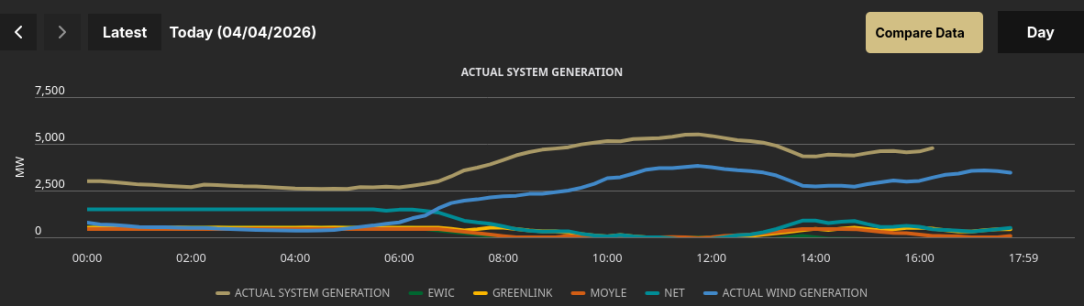
    https://www.smartgriddashboard.com/all/generation/?compareData=interconnection%2Cwindactual

    Wind goes up , imports go down. Our interconnectors can only ramp / down at 10MW/minute unlike those on the continent. So we can't just switch on and off and there will be a good bit of time lag.

    Also windfarms and interconnectors are widely separated. And we have to keep the big high inertia spinning generators on near the cities for voltage control and to provide the current minimum 25% synchronous.

    If we could accommodate 95% SNSP on the grid then we'd be able to use more renewables.


  • Advertisement
  • Registered Users, Registered Users 2, Paid Member Posts: 14,431 ✭✭✭✭machiavellianme


    Nice story, but it has absolutely nothing to do with what I posted.

    Plus windfarms and interconnection is not widely separated. Wind is scheduled based on price and interconnectors are scheduled based on price differences across bidding zone borders (plus losses). In an ideal market, the lowest priced generation is scheduled first. If there's a differential between market areas, the Interconnectors flow from low priced area to high priced area to socialise the prices, ergo, interconnection should be a function of wind price.

    But given we're importing and SNSP treats wind and interconnector imports identically, your last paragraph is pure nonsense. If the SNSP was 95% we could accommodate more interconnectors based on current wind pricing (but unfortunately we also have to compensate the greedy wind farms for the energy they don't deliver too).

    Not sure what point you're making about ramping. Not sure you understand it yourself either. 5MW/min is 300MW/hr on any interconnector. 2 hours have passed since my post, so in theory our interconnectors could be at full export by now and dumping all that extra wind that we don't need on our neighbours. Why are we still importing then?

    Save boards.ie by subscribing: https://subscriptions.boards.ie/


Advertisement
Advertisement