Advertisement
Help Keep Boards Alive. Support us by going ad free today. See here: https://subscriptions.boards.ie/.
https://www.boards.ie/group/1878-subscribers-forum

Private Group for paid up members of Boards.ie. Join the club.
Hi all, please see this major site announcement: https://www.boards.ie/discussion/2058427594/boards-ie-2026

Nuclear - future for Ireland?

1848587899099

Comments

  • Moderators, Recreation & Hobbies Moderators, Science, Health & Environment Moderators, Technology & Internet Moderators Posts: 98,142 Mod ✭✭✭✭Capt'n Midnight


    It was still 16 years from receiving the completed tenders for that specific plant to full commercial operation.

    Here's an analogy - It only takes an hour to fly to London. But you have to be at the airport early and it still takes time to get from the runway to the exit.

    Building the reactor is only one part of the nuclear island, and there's still the rest of the plant, the civils for things like roads and tunnels, the connections, the EIA etc. And it typically takes half a year from grid connection to commercial operation.

    Poland's nuclear power timeline started in 2005. We aren't at that stage yet. We aren't remotely close to that stage yet. By last year Poland had moved along to - A more realistic schedule would be finishing #2 in 2039 and #3 in 2042. In other word's the latest delay (three years) is longer than it takes to construction solar or onshore wind.


  • Moderators, Recreation & Hobbies Moderators, Science, Health & Environment Moderators, Technology & Internet Moderators Posts: 98,142 Mod ✭✭✭✭Capt'n Midnight


    Agreed.

    I'd argue though that you still need the rest of the process. Because you can't consider building until you have all your ducks in a row.

    Though reactor construction times are increasing.

    French NPP's used to take 6-7 years to build for the plants from 1957 to 1980 even though the reactors were getting bigger.

    It starts creeping up to 8 - 9 years for construction starts during the early 1980's

    Later in the 1980's Chooz took 16 years and then Civauz took 14 years so Flamanville at 17 years wasn't an outlier.

    For outliers there's always the US :)

    1942 Chicago Pile 1 took 15 days.

    1943 Hanford B Reactor was 11 months

    1973 Watts Bar 2 took 43 years.

    Once you get to the late 1970's the abandonment for US reactors rate hits 50% so construction times are meaningless.


  • Registered Users, Registered Users 2 Posts: 16,598 ✭✭✭✭charlie14


    You have been on here telling all and sundry that it takes 17 years to build a nuclear plant. Longer if it was for a countries first plant. Korea Electric Power Corporation (KEPCO) have built 4 with a combined capacity of 5.6 GW in a little over 8 years from start of construction to commissioning in a country that previously had none, for a cost of €27.44 Billion. That is €5.21 Billion per GW. One third of the cost of the same from offshore wind at face value, but with further capitalization required during the lifetime of a nuclear plant for offshore turbines, reality is closer to one quarter of the cost.

    There was a poster on here at one stage who said something along the lines of electricity generation being basically simple in that it was just science and engineering, and they were correct to a point. But like any engineering project it also has to be financially feasible.

    You have been campaigning for a 100% grid from renewables generation. Something even the Danes do not believe is achievable. So I see your analogy and raise you a conundrum.

    How do you propose to achieve it at a cost that would not be so insane that it would not just bankrupt the state but also have consumers paying the highest electricity charges on the planet when we are consistently in the top three most expensive in Europe ?


  • Moderators, Recreation & Hobbies Moderators, Science, Health & Environment Moderators, Technology & Internet Moderators Posts: 98,142 Mod ✭✭✭✭Capt'n Midnight


    An aeroplane can fly to London in an hour. But you can't because you have to be at the airport early.

    Fully operational nuclear power plants can't be built here in time to have any meaningful reduction on emissions.

    Besides there's no need to pay all day, every day for a generator whose only niche is dark calm days in winter when I've been pointing out for quite a while that because we can use diminishing amounts of fossil fuel until 2050.

    We have plenty of time to sort out storage and interconnection and more renewables and more types of renewables and demand reduction. We'll have about 3TWh of electricity biomethane too by 2030 so it's almost certain that we'll be using disputable fast reacting gas long after 2050. On top of that other long term storage solutions exist, including energy to fuel.

    No need to pay all day every day for a generator whose only niche is dark calm days in winter. And looking at the actual availability of nuclear from when tenders are issued to shutdown you do need backup. And if you have backup you don't need nuclear.


  • Registered Users, Registered Users 2 Posts: 16,598 ✭✭✭✭charlie14


    No surprise that you have yet again made no attempt to answer what you were asked on how you plan to achieve a 100% renewables grid with what and at at what cost.

    Do you even read what is posted ?

    A few days ago (#post 2550) I showed you that even if by some miracle we did manage to produce 3TWh of methane by 2030, in 2024 we produced 0.075 TWh of bio-methane, - 0.001% of the gas we consumed. That 3TWh , even if we had produced it for last year instead of 2030, would only have represent 0.04% of the gas we consumed for a year where our consumption of gas rose by 2.5%.

    Bio-methane even if we did get to that 3 TWh by 2030 would not even be running to stand still, let alone reduce our consumption of natural gas.

    I have already shown you how and why bio-methane is due to the huge areas of grassland that would be require for electricity generation is as crazy as hydrogen, pumped storage, battery storage, offshore wind farm costs, solar with it`s Winter capacity factor etc. yet you still persist with these hopiums that are so financially and impractical to us ever getting to net zero they are verging on the insane.

    Where did you get the idea that I believe we should have nuclear to make up for the intermittent unreliable nature of renewables ?

    Rather than chasing and throwing good money after bad on an unachievable 100% renewables grid we should be following the French example rather than the German one we have been, which has them in as big a hole as we are on emissions and fines.

    You are increasingly coming across as a crusader that would happily mortgage the country into insolvency while leaving us with the most expensive electricity in the world rather than even consider nuclear. While at the same time being happy to import it to get us out of holes as long as somebody else is doing the heavy lifting.


  • Advertisement
  • Registered Users, Registered Users 2, Paid Member Posts: 1,513 ✭✭✭riddlinrussell


    Where did you get the idea that I believe we should have nuclear to make up for the intermittent unreliable nature of renewables ?

    Ok, what fuel are you proposing that we use alongside Nuclear for any periods where Nuclear needs maintenance?

    Boards is in danger of closing very soon, if it's yer thing, go here (use your boards.ie email!)

    👇️ 👇️


  • Registered Users, Registered Users 2 Posts: 16,598 ✭✭✭✭charlie14


    I also said I believe we should be following the French example which has French generation emissions the lowest in Europe. Rather than the German example which we have been doing.

    France is generating ~70% of its electricity from nuclear and has no problem with fuel during maintenance. Especially as maintenance is scheduled for times of low demand. Along with supplying that 70% domestically they also exported 101.3 TWh which left them with net exports of 89 TWh and a profit of over €5 Billion.

    Maintenance of nuclear plants is scheduled, so unlike renewables their output does not suddenly disappear. And before anyone suggests French nuclear maintenance is only possible due to renewables. Last year 35% of our electricity came from wind/solar. France 12%, and as far As I can see, we are more or less locked into increasing the installed capacity of onshore and solar from the present 6.7 GW to 17GW by 2030.

    If three times our current demand from renewables installed capacity could not cover for maintenance then it is very questionable as to what their benefits are. It`s not as if they have given us reasonably priced electricity or emissions levels that will not see us paying untold billions in fines.

    The percentage of our demand that we have been importing over the last few years has been increasing year on year. Going from 9.5% in 2023 to i4% in 2024. This has been from the U.K. who themselves are net importers so I do not see that continuing unless on a quid pro quo basis. They have nuclear, so I would not see it as inconceivable that had we nuclear we could come to an understanding with both the U.K. and France on scheduling maintenance that would suit everyone.

    There is also the theoretical that we could plan for a 100% nuclear powered grid. The capital costs of offshore are now 3 - 4 times that of nuclear so we could go for that, gold plate all the plants and we would still be quids in compared to the present plan.


  • Moderators, Recreation & Hobbies Moderators, Science, Health & Environment Moderators, Technology & Internet Moderators Posts: 98,142 Mod ✭✭✭✭Capt'n Midnight


    If 3TWh is 0.04% of the gas then we used then we must have used 7,500 TWh ???

    The actual government target is to limit 2030’s total final energy consumption to 121.55 TWh (10.451 Mtoe) – a reduction of 13% on current levels

    Anyway the point is that by 2030 we'll have enough biogas to power through dark calm days. In addition to the diminishing amount of natural gas we can use until 2050.

    image.png

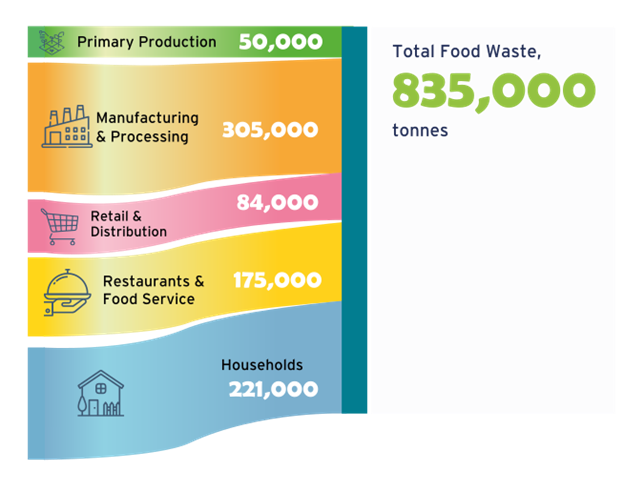
    Lots of food waste , and agricultural waste. Also with the way supermarkets are squeezing suppliers food farming may not be as profitable as renewables on farms.

    Nuclear is not dispatchable. If you ramp it down for too long you have to wait days before you can ramp up unless you use more enriched fuel which brings a host of extra problems and costs. So it can't backup other generators.


  • Moderators, Recreation & Hobbies Moderators, Science, Health & Environment Moderators, Technology & Internet Moderators Posts: 98,142 Mod ✭✭✭✭Capt'n Midnight


    The cost of nuclear is :-

    The cost of nuclear is unknown - because the price for the last few decades has doubled every 10 years. It's going to take at least 3 years to swing public opinion and do the legal challenges and planning. And then it's going to take at least 17 years to tender for , do the contracts, prepare for construction, construction , commission and then build up to full commercial operation. So you are likely looking at a quadrupling of the advertised cost.

    Plus a combination of paying fines / costs of providing low carbon and then zero carbon electricity during that time.

    Plus the ongoing extra cost differential of providing spinning reserve compared to doing so for the second largest generator (400MW) with Nuclear (1,600MW). For example Turlough Hill could provide almost 75% of that 400W. We have nothing to provide the other 1.2GW of high inertial power soon enough other than running 1.8GW of gas turbines at a de-rated (ie inefficient) output of 600MW and then try to ramp up. Having to run gas turbines 24/7 means nuclear isn't green.

    Spin it any way you want the simple truth is that a grid with enough redundancy to handle nuclear in 20 years time could be handling renewables far far sooner.


  • Registered Users, Registered Users 2 Posts: 16,598 ✭✭✭✭charlie14


    You obviously know little or nothing when it comes to farming if you believe farmers are going to sign up to the contracts those snake oil salespeople are offering for grass or slurry for electricity generation which without, bio-methane will not come within miles of providing anything near what would be required for electricity generation.

    Not only have they been stung in the past on willow and culling cattle, but cattle prices have never been higher due to global demand for beef. A demand that is predicted to increase by at least 4% year on year for the foreseeable future. Farmers will be using that grass to raise cattle and the slurry for fertilizing that grass. Especially with limits on the levels of synthetic fertilizers they are now allowed to use.

    Greens have never been great when it comes to numbers, but I would have thought even they would have recognised that when a farmer is raising grass for sale rather than cattle, that having no cattle would mean the farmer would have no slurry either and the quantity and quality of that grass would decrease annually.

    Greenies may not understand it, but if there is one profession that understands the law of diminishing returns perfectly it`s farmers.

    Post edited by charlie14 on


  • Advertisement
  • Registered Users, Registered Users 2 Posts: 16,598 ✭✭✭✭charlie14


    Wake up to the real world. Offshore has priced itself out of the market compared to the cost of recently built nuclear plants and the contract prices recently agreed leave nuclear per GW delivered at a fraction of offshore.

    With the present plan we would be throwing good money after bad on a plan that has clearly failed as well paying fines forever and a day, and having the most expensive electricity on the planet after bankrupting the state in the process.


  • Moderators, Recreation & Hobbies Moderators, Science, Health & Environment Moderators, Technology & Internet Moderators Posts: 98,142 Mod ✭✭✭✭Capt'n Midnight


    Even with government and public support it's still going to take at least 20 years to develop a nuclear plant here from developing requirements, tendering, planning, legal challenges, EIA, site preparation etc. etc. and later on, actual construction , commissioning and later on again commercial operation which teething problems before you can start cherry picking the annual capacity factor where 12 calendar months are nicely covered by an 18 month cycle.

    In the real world our grid won't be able to handle current nuclear offerings without massive and ongoing costs.

    The cost of keeping the lights on for 20 years without using something that removes the need for nuclear. The UK has already trialled 2% green hydrogen. And is looking at 5%. Gas can be used for peaking and storage.

    The cost of low carbon generation and/or fines for 20 years if you can't meet emissions targets.

    The additional costs of providing spinning reserve and backup compared to smaller generators. Can this even be done without increasing emissions since the 2045 target is only 5% and decreasing by 1% a year ?


  • Registered Users, Registered Users 2 Posts: 16,598 ✭✭✭✭charlie14


    …. and we are back to hydrogen. It`s like playing whac-a-mole. How often has it to be shown to you by posters just how insane the idea of hydrogen storage is to compensate for intermittent renewables ?

    The U.K. cfd price for green hydrogen alone is £241 (€278). Twice that of Hinkley C. Which not long ago was your reason why we should not even consider nuclear. For storage and transporting it`s the devil`s own soup. Highly volatile, leaks like a sieve and highly corrosive. Even the company you cite who substituted 2% of hydrogen for natural gas does not appear to have a lot of faith in it when it comes to it being the answer. In July they invested £1.30 Bn. (€1.50 Bn.) of their own money for a 15% stake in Sizewll C.

    Another reason you should take note of that investment is that it means the capital investment for Sizewell C, a 3.2 GW nuclear plant is €10 Bn. Allowing for it`s capacity factor that is €3 Bn. per GW compared to the current U.K. price for offshore of €6.5 Bn. that Orsted recently pulled out of for Hornsea because it was not financially viable. When you factor in their relative lifespans, Hornsea would have required at least two more capital investments which would have left it as near as makes no difference to 3X that of Sizewell.

    Face facts, even if everything else in renewables came on stream by 2030, with Sceirde Rocks gone we would not even make that 23% reduction in emissions that was supposed to be a 51% reduction. There is no way we will reach the emissions target for 2050, or any time in between, with renewables that would not bankrupt the country several times over and still leave us with the worlds most expensive electricity plus paying fines on top until the end of days.

    You have been making predictions here that have fallen one after the other like dominoes. The latest to drop was your prediction that a nuclear plant could not be built in less than 17 years. More for a country that was building it`s first. KEPCO recently built 4 in the UAE, a country that had no prior nuclear plant, in 8 years. If you were to put financial cost to what you are championing I might possibly take your predictions seriously, but at this stage we both know that is not going to happen.


  • Registered Users, Registered Users 2, Paid Member Posts: 1,513 ✭✭✭riddlinrussell


    I just don't share you optimism on how quickly a plant could get through our dead slow and stop planning system, oppositional JRs out the wazoo, and then I'm going to argue, considerably slower and more expensive construction that something built in the UAE, for a variety of workplace safety and general construction wages reasons. I'd like to see it built, but I don't share your rosy opinion on the Irish processes.

    Boards is in danger of closing very soon, if it's yer thing, go here (use your boards.ie email!)

    👇️ 👇️


  • Moderators, Recreation & Hobbies Moderators, Science, Health & Environment Moderators, Technology & Internet Moderators Posts: 98,142 Mod ✭✭✭✭Capt'n Midnight


    The closing date for tenders for Barakah was September 07, 2008 and the 4th reactor only started commercial operation on the 5th of September last year.

    That's almost exactly 16 years from when the suppliers submitted their tenders. Only half that time was spend building reactors. And It doesn't include the time to determine the requirements, or time taken for the suppliers to budget and prepare their submissions.

    And that's in a place where you don't raise your hand to ask questions. Unless you want to be called Lefty.

    Sizewell C for €10Bn ??

    https://www.bbc.co.uk/news/articles/cev03wer0p2o "The total debt and equity comes to over £45bn to allow for a buffer or contingency in case costs overrun." So there's already €52Bn committed.

    This protection is crucial given that the total cost could spiral to as much as £47bn. (€54Bn) No doubt costs will increase further once proper construction actually starts.

    The UK announced their current nuclear program in 2008. "The nuclear industry believes it can get the first new plant on-stream by 2017". (Nope)

    Sizewell-C was announced in 2010. The last Labour government approved eleven locations as suitable for new nuclear plants by 2025 … The government has identified eight sites in England and Wales as suitable for future nuclear power stations. (None competed yet…)


  • Registered Users, Registered Users 2 Posts: 16,598 ✭✭✭✭charlie14


    Far as I can see in two instants there were three fatalities in total during the initial stages of construction when there were 18,000 working on the site. KEPCO brought in a company to asses safety standards and increased the level of mandatory safety courses at that point and as far as I can see there were no further fatalities.

    I doubt very much if wages were the reason for that nuclear plant being one third or less the cost of what wind could have provided. For the critical stages ~9,000 are employed in general and many of these would be highly qualified. How many I have no idea, but there were 2,000 UAE nationals employed, KEPCO would have had substantial numbers of their own people working on that stage and at least three U.S. companies would also have had employees on site. There were also workers from India, how many I do not know, but their salaries in India are on a par with those with similar qualifications in the U.S.

    If nuclear power plants can be built in the UAE for at least a third of the cost of offshore wind then I don`t see that safety standards or wages here would alter that to any great degree. Anything that might would not be due to construction costs but to us not getting our act together.


  • Registered Users, Registered Users 2 Posts: 16,598 ✭✭✭✭charlie14


    That half the time spent building the plant, 8 years, just further shows how wildly inaccurate your predictions are, when according to you for a country building their first nuclear plant it would take 20+years. You have also rather conveniently ignored that they were completed at a fraction of the cost of offshore wind, which you continue to champion, without a single figure to even suggest otherwise.

    That €10 Bn. did seem a low figure to me, but then it was based on the investment from the company you linked, Centrica, announced in July on the 15% stake they had taken in Sizewell C for £1.3 Bn.

    A company incidentally that doesn`t appear to favour your idea of using hydrogen for electricity storage, instead substituting it for a percentage of natural gas for domestic use. Which in itself, even ignoring the strike price, is very questionable when even small percentages have a corrosive effect on gas pipelines. As to the construction cost of Sizewell C, even at £38 Bn. it will be a lot cheaper than offshore wind costing €60 Bn.or more for the same when at least two further capitalisations would be require.


  • Registered Users, Registered Users 2 Posts: 9,127 ✭✭✭Markcheese


    As usual it depends, farmers tend not to change en mass - and then they all do ,

    The idea is that slurry exports would seriously suit intensive livestock farmers- maize , whole crop , and grass clover , all work far better in A/D with slurry ,

    Yes finished cattle prices are crazy high this year - but so were calves , and weanlings are bonkers dear .. it's not all profits ..

    The good thing is it's essentially the same systems - the intensive livestock guys want slurry dealt with ,- tillage guys want to do maize and crops and want slurry - and the less intensive guys grow grass clover , and happily want slurry ..

    All the farm side machinery is already in existence,

    Of course the jury is completely out on whether it's any more that green wash ?? - it's burning a lot of diesel , to make gas ?? ,

    Slava ukraini 🇺🇦


  • Moderators, Recreation & Hobbies Moderators, Science, Health & Environment Moderators, Technology & Internet Moderators Posts: 98,142 Mod ✭✭✭✭Capt'n Midnight


    Did you honestly think Sizewell-C which already has €52Bn allocated is being built for €10Bn ? or €38Bn ?

    There's already a warning of €54Bn so it's already at 90% of the €60Bn you claim offshore wind would cost. It's a both a nuclear power plant and a UK mega project (like HS2) either way the delays and cost overruns are inevitable.

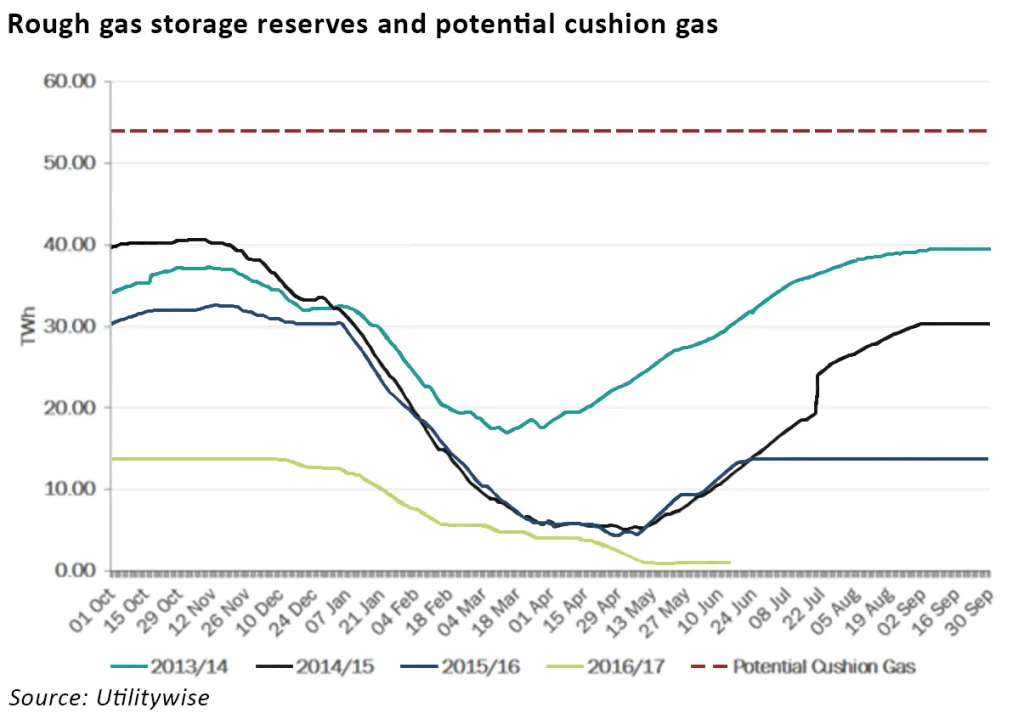
    Centrica own the Rough Storage Facility , and are looking into using for hydrogen storage.

    image.png

    Hydrogen would only have a third of these values, however until the changeover was complete (years away) or by using other hydrogen carriers you still get a lot of that. It's not the only game in town but it's been in use for years. For scale - we only used 39TWh of electricity last year.


  • Registered Users, Registered Users 2 Posts: 16,598 ✭✭✭✭charlie14


    I would have my doubts that A/D is much more than green washing when you consider the acreage of grassland that would need to be harvested and transported to these plants to generate be processed to produce bio-methane to generate electricity. From what I have heard from farmers approached by reps of these companies the seem to have the idea that farmers culled all their cattle and are desperate to sell their grass from the prices and conditions they were offering. Seems the farmers would have to sign contracts in February, before there is any growth, guaranteeing the quantity and quality they would deliver, with penalties if grass was not of the quantity and quality stated in the contract.

    I would not see any great reduction in price for cattle for the foreseeable future with world demand for beef projected to increase. Calves and weanlings are also getting great prices, but I would not see that having much other than a plus for farmers. Dry stock farmers generally do not buy in either using their own cows progeny as replacements, and dairy farmers want to sell off calves as early as they can.

    With the limits on artificial fertilisers and the new methods of spreading slurry that cuts down on run-off I doubt the intensive farmers will have any great problem getting rid of their slurry - and making a few bob as well from it - not just to dry stock farmers but growers of crops.

    Without grass and slurry methane production will never reach any significant level, and even if it did it would require a lot of grass, where as you say, it would be very questionable if it was anything more than green washing.


  • Advertisement
  • Registered Users, Registered Users 2 Posts: 16,598 ✭✭✭✭charlie14


    You are like a magpie chasing after shiny useless objects. The current plan here for green hydrogen, even ignoring its volatility, storage and distribution problems, is financial lunacy.

    The CFD that Orsted walked away from for Hornsea was €98 per MWh. The CFD for green hydrogen in the U.K. is €276. Even if we got the strike price that Orsted walked away from, the strike price here for the consumer when that of greent hydrogen was included would be €98 x 2 + €276 = €472 per MWh. That is over three times the CFD for Hinkley of €148.50.

    How many times do you have to be shown this before the penny drops that even as we are - being scalped on electricity charges with us consistently in the top three in Europe - what you are backing would set a world record for a strike price and sink our economy ?

    The cost of offshore wind are not my figures based on speculation and pulling numbers out of nowhere with nothing to back them up.

    They are based on present U.K. prices - that Orsted walked away from as being non-viable - and the capacity factor of offshore wind turbines being €16 Bn per GW. That has also been shown as the price for wind farms contracts in Taiwan and the U.S. The current Capex for Sizewell C is £38 Bn (€43.6 Bn.). For offshore wind farms that would require at least two more capital investments during their comparative lifetimes where the cost would be, even ignoring inflation, at the very least €60 Bn. 38% (€16.4Bn.) more expensive Every other figure you have quoted is again based on speculation of a contingency plan that those involved in the project do not believe will be needed. It`s not as if contingency plans are unique to nuclear. Corio Generation and the Ontario Teachers Pension Fund I imagine had one to cover their €60.4 million loss due to Sceirde Rocks. As would Orsted and all the other wind companies that walked away from contracts worldwide that were financially non-viable.


  • Moderators, Recreation & Hobbies Moderators, Science, Health & Environment Moderators, Technology & Internet Moderators Posts: 98,142 Mod ✭✭✭✭Capt'n Midnight


    I love the way pro-nuclear people quote a life of 60 years for nuclear when no commercial plant has ever got there vs. 20 years for wind when there's turbines twice that old in use.

    Refurbishing wind turbine can be done relatively cheaply without much effect on the grid vs. France half it's reactors off-line during a gas shortage.

    It doesn't matter what renewables cost today. What matters is what they will cost in 20 years time because that's the earliest point that nuclear could compete.

    You need to tell us how to keep the lights on for at least the next 20 years without renewables.

    Using hydrogen 24/7 is a lot more expensive than only using it when there's no cheaper alternative. When there's renewables or batteries or pumped storage or interconnectors or some of the dwindling emissions budget left it's probably not going to be used. So you are only paying peak prices at the new peak times.

    Nuclear on the other hand you've to pay for all day everyday whether it's needed or not.

    https://www.world-nuclear-news.org/articles/delay-in-flamanville-3-attaining-full-power - back in August it still hadn't got to full power, 8 months after being connected to the grid. 21 years after the Launching of the process for an additional reactor at an existing site.

    It's October and still not at full power but it will be "by the end of Autumn" say the people who keep missing forecasts.


  • Registered Users, Registered Users 2 Posts: 16,598 ✭✭✭✭charlie14


    Why do you keep repeating a lie when you know it`s a lie ?

    It has been pointed out to you before that consumers do not pay for nuclear "all day everyday whether it`s needed or not". They pay, same as they do for renewables, for what they use at the relevant strike price. Unlike green hydrogen which I will get too later.

    As I have said to you before, stop worrying yourself over French nuclear. It`s doing just fine. Generating 70% of what they use and earning them over €5 Bn. a year in profits for the past few years from exports. Even when they were compelled to provide their renewables competitors with up to 30% of their generation at a bargain basement price of €42 per MWh to keep them in business. This year doesn`t look any different other than with ARENH now increased to €70 per MWh from €42 per MWh the likelihood is even higher profits.

    You could also give your head a rest on these convoluted ifs and maybes on green hydrogen. It`s really not that complicated. The plan for offshore wind generation is for 18.5 GW for hydrogen production due to the undependable nature of renewables where they drop to 6% or less for extended periods. That generation we would be paying for whether we used it or not. We would be paying a strike price for that alone over 2.5 times greater than Hinkley C, plus more if we did use it.

    Using batteries instead is even more cuckoo land economics than hydrogen, pumped storage is not just a negative energy exercise, its a one shot deal and it`s done, and for those extended periods when wind is doing nothing all over Europe, the only thing coming through those inter-connectors would be nuclear. And even that would depend if due to demand we could get it when we needed it. Which does not say much for our energy security.

    The reason you haven`t seen 60 yr old nuclear plants is because in the past in general they were only licensed for 40 years, but that is changing with many countries now extending those licenses. Nuclear plants being built nowadays have a lifespan of 60 years at least.

    Nine Mile Point nuclear plant went on line in 1969 and is still going strong with no time set for decommissioning. Beznau, operating also since1969, with it`s license now extended until at least 2033. Pickering operating since 1971 has generated 1 million KWhs to date, and will operate until the end of 2026 after which time it will be refurbished to operate for a further 30 years.

    I haven`t seen much of this refurbishing of wind turbines you keep talking about. Or what it would cost either. Far as I recall didn`t you post on another thread that a Scottish onshore wind farm was being refurbished (Galloway?), which was far from the reality. There was no refurbishing. Not only were the old turbines scrapped with new turbines replacing them, but the concrete bases were also ripped out and replaced as was the road into the site.

    The idea that offshore turbines would be any different I find a bit fanciful with them having operated in an environment that has turned anything we have placed in it into less than scrap. Equinor`s Hywind had be towed from Scotland to Norway for heavy maintenance repairs after just 7 years in operation.


  • Moderators, Recreation & Hobbies Moderators, Science, Health & Environment Moderators, Technology & Internet Moderators Posts: 98,142 Mod ✭✭✭✭Capt'n Midnight


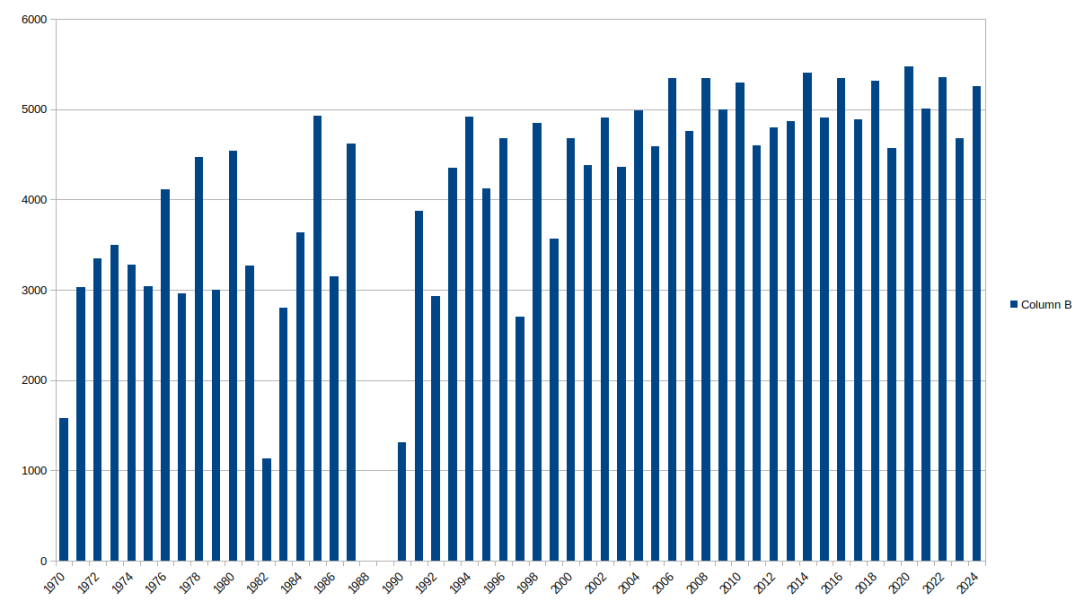
    With nuclear the deeper you dig the worse it looks. Nine Mile Point data from https://pris.iaea.org/PRIS/CountryStatistics/ReactorDetails.aspx?current=607

    Vertical is GWh. Whole year data only, so many outages won't be shown.

    image.png

    Commercial Operation Date 01 Dec, 1969 and it then produced less that half it's average power in 1970 so the first real full year of operation was 1971,

    1969, 1970, 1982,1988, 1989 and 1990 are six years were it more or less failed to deliver anything remotely close to what it should have. Because nuclear isn't anywhere as reliable as claimed. On the Irish grid that would repeated disasters.

    The every second year change in output in more recent years is probably the refuelling cycle, (even then there are noticeable drops) but it shows just how much backup nuclear plants needed even after taking decades to debug.

    And we can't use Gen II plants anymore so there's the whole Gen III learning curve to go through.


  • Registered Users, Registered Users 2 Posts: 16,598 ✭✭✭✭charlie14


    Unlike renewables nuclear can be ramped up and down. Renewables cannot be ramped up so when wind generation drops to 6% or less for extended periods to compensate for that with more renewables - especially in Winter when our demand is at it`s highest - or storage is simply not financially practical no matter the metric.

    For a nuclear plant that has been operating for 55 years, for at least the last 20 the output has been very consistent. For all you know any drops in generation could just be demand related, But even if they were due to refueling, they would have been scheduled unlike renewables which drop off the scale with little or no warning.


  • Registered Users, Registered Users 2 Posts: 9,127 ✭✭✭Markcheese


    I don't think ramping up and down is all that easy or reliable in most nuclear power stations , and restarting after a shut down can be a bit hit and miss ,

    But in general - one of the biggest problems with nuclear is finance- any way you look at it - they're huge projects - that over the life of the design - regulatory approval and build/ commissioning carry huge financial risk -

    Maybe it shouldn't be that way - but it is.

    There's risk and financial Cost in wind as well , but it tends to get broken in to smaller bites where with nuclear it's kind of all or nothing - 99% of a reactor and steam turbine generator isn't much use -

    An awful lot of the back up planned for wind and solar , is also needed for nuclear - so that cost will have to be born either way - and the fact that it's being spent now for our current grid mix - wouldn't prevent it being used for nuclear In the future … same with a lot of the grid strengthening..

    Slava ukraini 🇺🇦


  • Registered Users, Registered Users 2 Posts: 26,177 ✭✭✭✭Kermit.de.frog


    The trajectory we are on will end up in a South Africa situation where the power is off up to 12 hours a day everyday because there is not enough generation.

    That unfortunately is what it will take for governments to wake up.

    Those people promoting wind turbines and the rest of the green nonsense that are driving us to disaster will need to see their own homes go dark before the heads come out of the sand. My god will the hypocrisy be exposed because they'll be the first ones crying (not at themselves of course, they'll blame someone else).

    When you are dealing with cult like ideology those people are not open to logic or reason until the consequences hit them suddenly and hard.


  • Moderators, Recreation & Hobbies Moderators, Science, Health & Environment Moderators, Technology & Internet Moderators Posts: 98,142 Mod ✭✭✭✭Capt'n Midnight


    It's much easier to ramp up when you use more enriched fuel. But it costs more to produce. A lot of the SMR startups were planning to use Russia as their source.

    It's not just that they don't ramp up fast , it's also the extended outages which means you need to provide extended backup which has extended costs.

    https://www.edfenergy.com/energy/power-station/daily-statuses Heysham 1 Reactor 1 hasn't had a good year.

    Should be producing 500MW or thereabouts. But taking it's own sweet time to ramp up after an Automatic trip, even though it had a Refuelling and graphite inspection outage back in February when it was supposed to return to service by 23 March but that slipped to April 3rd by 12/03/2025 however, it was still being listed as a "planned" outage.

    26/09/2025 - Automatically tripped following interruption of electrical supplies Expected return to service date
    October 14 2025

    22/10/2025 - Raising load following outage 377MW

    27/10/2025 - Raising load following outage 396MW


  • Registered Users, Registered Users 2 Posts: 16,598 ✭✭✭✭charlie14


    France has been ramping up and down their reactors for decades. Modern reactors are built to operate in a load following mode where they can adjust their output by 5% per minute. That can also be used if needed for scheduled maintenance and refueling.

    The problem with spending money today is that you will not have it tomorrow or any time in the future to spend on anything else.

    That the cost of offshore wind is now up to twice for what it will deliver compared to nuclear, and that is not going to improve by continuing to spend money on offshore wind. Wind generation will require at least two further massive capital spends in the life time of a nuclear plant. This idea that at the end of its lifespan a wind turbine will continue on indefinitely with just a sticking plaster cost is not happening onshore, so the chances of it working offshore are zero. Some appear to believe that is what re-powering is when they hear these companies using the term. It`s not. It`s the scraping and replacing of turbines, their bases and often the road into the site. It`s a complete new development costing more than the original.

    There is also the fact that continuing as we are - with the highest electricity costs in Europe - that price will would only be a fraction of what this current plan would leave us with. We would also still be paying billions in fines over emissions and no end in sight.

    There is also the real danger that continuing with this plan would kill more people here than climate change would. With the prices we have for electricity there are constant warnings in Winter of people cutting back on heating, especially the elderly. Large increases in electricity charges are not going to help in that.


  • Advertisement
  • Moderators, Recreation & Hobbies Moderators, Science, Health & Environment Moderators, Technology & Internet Moderators Posts: 98,142 Mod ✭✭✭✭Capt'n Midnight


    It's a nuclear power plant in the US. Generally nuclear is for baseload and gas is for demand following. So I doubt it's demand related unless renewables or gas are undermining it's economics.

    Note : Our grid can't spend 25 years supporting nuclear while the operators figure out how to work the thing reliably.

    Nuclear is too big for the Irish grid. What is your plan to prevent cascade failure ? Last year the other reactor on the site tripped. It was a steam issue rather the nuclear. But it took out another power plant too.

    The breaker overheated and caught fire at about 7:20 a.m. Sept. 23 in the turbine hall of Nine Mile 2, causing the plant to shut down automatically. The breaker malfunction caused an electrical disturbance that was detected nearby at the FitzPatrick plant, which also shut down automatically.


Advertisement
Advertisement