Advertisement
Help Keep Boards Alive. Support us by going ad free today. See here: https://subscriptions.boards.ie/.
https://www.boards.ie/group/1878-subscribers-forum

Private Group for paid up members of Boards.ie. Join the club.
Hi all, please see this major site announcement: https://www.boards.ie/discussion/2058427594/boards-ie-2026

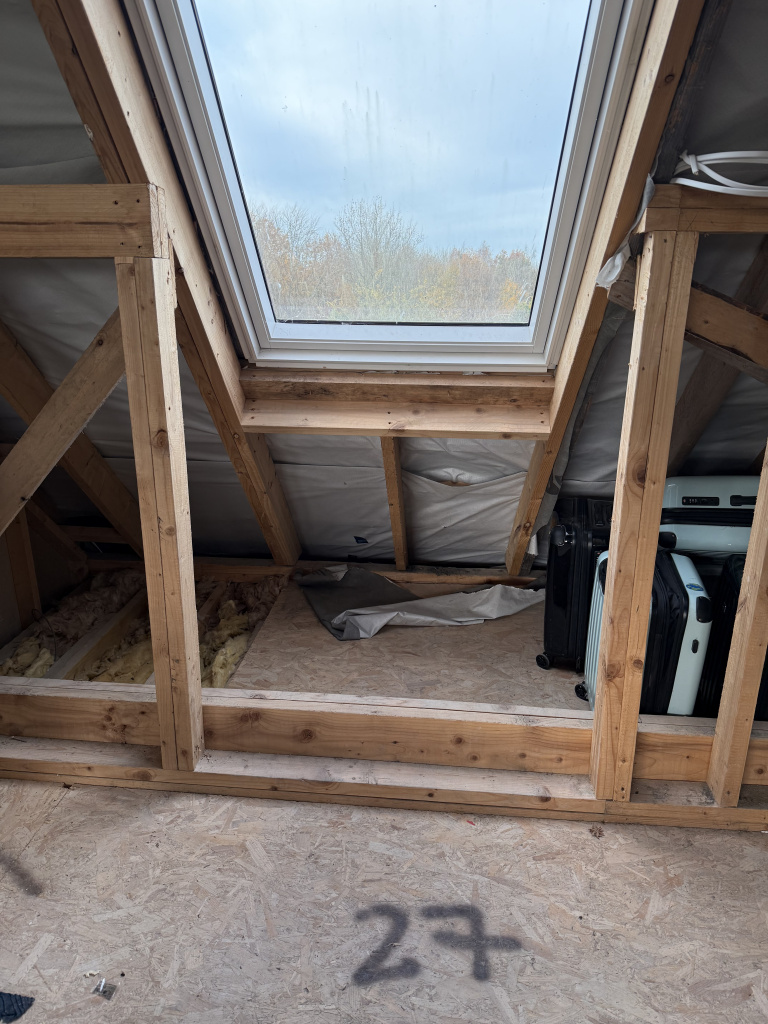
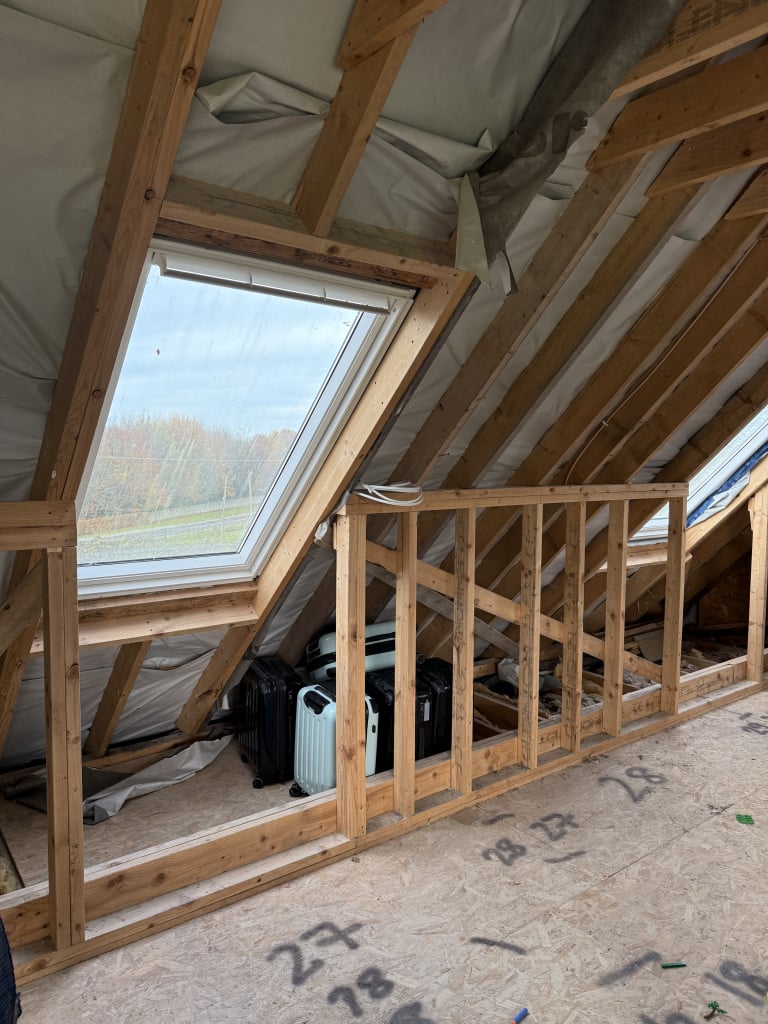
What is this and can it be removed down to floor level

  • 08-11-2025 09:50PM
    #1
    Registered Users, Registered Users 2 Posts: 3,656 ✭✭✭


    we are looking at converting the dormer attic.

    I would like to have the floor below the velux and the main floor to run together. I’m wondering if the timber running along the bottom of the wall and the higher upright timber can be removed to floor level or will that compromise the structure much? I’m trying to figure out what exactly it is doing and what needs to be done to keep it stable if I wanted to remove this timber.

    See images attached. There are 6 more velux windows on this level and will probably want to do the same to other.

    Any advice appreciated.

    IMG_3958.jpeg IMG_3959.jpeg


Comments

  • Registered Users, Registered Users 2, Paid Member Posts: 9,845 ✭✭✭10-10-20


    I'm not sure, looks like a 'binder' to me, but it looks to be an unusual size and L-shaped layout.

    https://www.woodspec.ie/docs/Woodspec%20Final%20-%20Section%20B.pdf

    Can it come out? Nope, it's a critical part of the roof holding the structure together across the complete length of the roof. It's especially important given the high head-space (high pitch) of your roof.


  • Moderators, Home & Garden Moderators, Science, Health & Environment Moderators Posts: 19,636 Mod ✭✭✭✭DOCARCH


    Nope, it's a critical part of the roof holding the structure together across the complete length of the roof. 

    Agreed. It looks (most likely) structural. Before considering altering consult a structural engineer.


  • Registered Users, Registered Users 2 Posts: 30,517 ✭✭✭✭Lumen


    Yeah, but there's no vertical load for it to take. If that pony wall between the windows was loaded vertically it would just collapse inwards.

    It might be transferring perpendicular load across members out of shot, but to me it looks like they just fucked a load of timber in there to act as a backer for the pony wall.

    This is not advice.


  • Registered Users, Registered Users 2 Posts: 6,301 ✭✭✭standardg60


    Agree it looks like a binder, but the floor joists look to be supporting it rather than the other way round.

    OP it may be feasible to install hangers from lower VELUX level to floor joists instead which would bring you further in, but as per usual consult a professional before doing anything.

    Knowledge is learning something, wisdom is learning from it, intelligence thought of it first.


  • Registered Users, Registered Users 2 Posts: 3,656 ✭✭✭paddylonglegs


    thanks for the advice folks. Gives me food for thought and will get in touch with an engineer.

    I’ll put the saw away for another day so… ;)


  • Advertisement
  • Registered Users, Registered Users 2 Posts: 769 ✭✭✭C. Eastwood


    Hi paddylonglegs

    You should retain a Chartered Civil Engineer or a Chartered Structural Engineer for their advice, and take their advice, and have them provide a Certificate of Compliance with the Building Regulations, on completion of the Attic Development.

    This development will be expensive and must be done Correctly.

    You should also get a plan Layout Drawing of the Proposed Attic Rooms – it is easy to alter the lines on a drawing, but expensive to make changes when the Rooms are formed.

    The most important part of any attic conversion /development are the Floor Joists which support all the loading in the Attic conversion including all of the vertical loads from the Rafters/ roof and use.

    It is also vitally important that the ends of the Floor Joists are properly mechanically fixed to the foot of the Rafters, to prevent spreading of the rafters.

    You need to have your Chartered Engineer confirm that the timber Floor Joists (sometimes supported with steel supports) are correctly designed to carry all the loading from the Attic Conversion rooms and use, and that the Floor Joists are correctly mechanically fixed to the Rafters.

    My opinions are as follows;-

    1. In the 2 photos given, -the 2 Nr high vertical timbers behind sole piece of the structural stud partition appear to be 225 x 44 mm.
      1. I cannot not understand why these timbers were installed.
    2. In front of them is the double sole piece of the structural stud partition and they appear to be 2 Nr. 100 x 44 mm timbers.
    3. The Sterling flooring deck, is fitted with staggered Joints on the floor joist, to provide stability and bind the entire floor together, and is providing lateral support.
    4. It is my opinion that these 4 Nr timbers are redundant members in relation to the structural stability of the roof, and can be removed. Your chartered engineer needs to confirmed this to you.
    5. The Velux Rooflights Supports is correctly done with the double trimming rafters at both sides, and the trimmer, and trimmed rafters all appear to be done correctly.
    6. The 100 mm x 44 mm structural stud partition, shown in the photographs, are well constructed, and the rafters are correctly birdsmouthed over these petitions.
      1. However, these structural partitions are only transferring all the loads from the roof/rafters down on to the Floor Joist, which must be designed to support these Point Loads.
      2. To give structural and lateral stability to these Stud partitions, I would recommend fixing 9 mm plywood onto the vertical studs with 50 mm screws at 400 mm centres horizontally and vertically.
      3. The plywood to be fitted with the 1.2 m dimension vertically, and the 2.4 m horizontally, and all edges of the structural plywood are to be fixed on to noggin pieces minimum 75 x 44 fixed between the existing 100 x 44 studs.
        1. Ensure that you seal with Silicone Mastic on top of the existing Floor deck, next to the sole piece of the stud partition, before fixing the plywood onto the stud partition and on top of the mastic. This will prevent any draughts under the skirting boards
      4. I would fix the plywood in place BEFORE cutting out the 4 timbers at the stud partition under the Velux.
    7. Over the years in attic development, I have heard of many complaints about the cold in the attic caused by draughts.
      1. In many attic developments under the skirting board is one of these locations where draughts occur and I have outlined above at c.i. how to prevent this.
      2. You will have draughts coming up between some of the joints of the sterling boards floor deck. Fit an Air Tightness Membrane over the entire floor on top of the floor deck and mastic it to the partition before fitting the skirting boards, and fit the flooring (Laminate or Carpet etc) on top of Underlay on top of the polythene.
        1. Fit a good quality noise reduction acoustic underlay.
      3. All of the Walls and ceilings must also be made airtight by fitting an Air Tightness Membrane, over all the surfaces before slabbing
        1. Only use draught excluding conduit boxes for all electrics.
      4. The other locations which are always causing draughts in attic conversions, is where there is access doors provided into the attic Crawl Spaces.
        1. You’re going to need approximately 8 Nr of these Access Doors for your Crawl Spaces
          1. These could be fitted in the triangular area below the Velux Rooflights. the triangle areas in these locations are structurally sound.
        2. Alternatively, you can remove one of the 100 x 44 vertical studs, and fit the access doors in these locations.
          1. The existing head pieces in the stud partitions are sufficient to span the double space when you remove 1 of the studs.
      5. I usually recommend two different types of Access Doors, the best and most expensive, is to have PVC Window frames with opening sashes, fitted with insulated PVC panels instead of glass, and these will prevent draughts from the attic space. which must be ventilated. On the back of the Insulated Panels bond on 100 mm of Thermal Insulation.
      6. A cheaper form of Crawl Space access doors, is a timber frame built in to the structural stud partitions, on to which you can screw in place, with rubber seals at the edges, and again 100 mm insulation panels can be bonded on to the attic side of the Plywood. It is simple to open these with a cordless screwdriver and these also prevents people from entering the crawl spaces.
        1. These access doors can also be installed in the triangle area under the Velux rooflights.
      7. Or the Triangles opes at the sides the opes under the Velux rooflights can be fitted out with 100 x 44 studs of 75 x 32 studs, on to which I recommend fitting of 10 mm plywood for structural stability.
    8. I do not recommend the use of Hardwall 3mm skim on the plaster board slabs, in attics as it is adding excessive weight which is not necessary.
      1. There are many good craftsmen now available to Tape & Joint the slabbing.
    9. The crawl spaces, and the attic above the Attic Ceiling must be adequately ventilated in compliance with the Building Regulations, to prevent the buildup of Condensation within these spaces.
    10. You must fit solid bridging between the Floor Joist under the sole piece of the Stud partition, the bridging must be fitted on top of the existing ground floor ceiling and come up tight against the 100 x 44 per sole piece of the stud partition, and be fire-stopped, if necessary, this is for Fire Proofing.

    1. See – Government of Ireland – Fire Safety - Loft Conversion Guidelines –

    https://assets.gov.ie/static/documents/loft-conversion-guidelines-2022.pdf

    1. Ventilation of the Attic roof is very important and if not done correctly - may lead to condensation problems within the attic voids/ spaces. Details of the ventilation for attics is given in (TGD) Technical Guidance Document ‘F’ (2019) of the Building Regulations. The link to this is:

    https://assets.gov.ie/static/documents/technical-guidance-document-f-ventilation.pdf

    Ventilation to prevent condensation is shown on this TGD on Page 34 in Diagram 11

    This document on Page 34 in Diagram 11 shows the location of the Thermal Insulation, my advice here is do not under any circumstances fit the Thermal Insulation of the Attic Development between the rafters, except where shown between the rafters on the Diagram 11.

    I also recommend only allowing qualified Craftspersons to carry out the works i.e. qualified Carpenters & Joiners, qualified Plasters and qualified electricians and qualified plumbers. Ask for their National Craft Certificates or Senior Trade Certiicates.

    Good luck with the Development.


  • Registered Users, Registered Users 2 Posts: 13,307 ✭✭✭✭thesandeman


    Posts like this are why Boards needs to stay alive.


  • Registered Users, Registered Users 2 Posts: 40,898 ✭✭✭✭Mellor


    In the 2 photos given, -the 2 Nr high vertical timbers behind sole piece of the structural stud partition appear to be 225 x 44 mm.

    I cannot not understand why these timbers were installed.

    The Sterling flooring deck, is fitted with staggered Joints on the floor joist, to provide stability and bind the entire floor together, and is providing lateral support.

    It is my opinion that these 4 Nr timbers are redundant members in relation to the structural stability of the roof, and can be removed. Your chartered engineer needs to confirmed this to you.

    As a general rule, if you do not understand why something is installed, you should probably avoid making structural recommendations in relation to those elements.

    They can likely be removed, but their function needs to be replace. A matter for the designer/certifier.

    To give structural and lateral stability to these Stud partitions, I would recommend fixing 9 mm plywood onto the vertical studs with 50 mm screws at 400 mm centres horizontally and vertically.

    Plywood for lateral stability is probably not required. It is not unhelpful to have, but this is not structure in design/construction, it's an existing roof structure.

    You must fit solid bridging between the Floor Joist under the sole piece of the Stud partition, the bridging must be fitted on top of the existing ground floor ceiling and come up tight against the 100 x 44 per sole piece of the stud partition, and be fire-stopped, if necessary, this is for Fire Proofing.

    There are many requirements to fire protect a conversion. That's one. Not really relevant to the question in the OP.
    Best to reference them as a whole. Rather than random isolated requirements.


  • Registered Users, Registered Users 2 Posts: 769 ✭✭✭C. Eastwood


    THESANSEMAN. Thank you very much for your kind comment. I appreciate an acknowledgement when I give free valuable expert information to members who request it.

    I also appreciate a word of thanks form the Person whom I gave the advice to, when they requested it.

    I spent many hours preparing expert advice to PADDYLONGLEGS, and am unsure that my advice has been received by PADDYLONGLEGS as I have not received an acknowledgement for same.

    I come on to Boards.ie on and off since 2018, to give expert advice and then my expert advice is criticised immediately usually by the same members most times, so I get exasperated and stop reading Boards.ie for a few years. My history is recorded.

    Recently i came across the BOARDS.IE and saw the very interesting request form PADDYLONGLEGS woh gave a post on 08-11-2025 at 09:50PM, requesting information and was given incorrect information by a few members. I did not offer any disparaging critique of those comments by other members, and therefore only offered advice to PADDYLONGLEGS.

    This time criticism of my very valuable extensive FREE information was given, as usual, in very quick time, which I will only address and explain to PADDYLONGLEGS, I can not understand why the member who posted outlandish faults with my extensive and appropriate advice, did not offer any advice to PADDYLONGLEGS in relation to the query of 08-11-2025 at 09:50PM.

    Kind Regards

    Clint.


  • Registered Users, Registered Users 2 Posts: 3,656 ✭✭✭paddylonglegs


    thank you so much for this information, I really appreciate it and plan to study your comments over the day or so. You really did put a lot of effort into this, and can’t thank you enough.

    Edit: sorry I didn’t get to reply sooner to you! I don’t always get to check back every day so I have just picked this up in the last few minutes! Again, your knowledge and advise is appreciated so much, you really went to so much effort for me.


  • Advertisement
  • Moderators, Home & Garden Moderators, Science, Health & Environment Moderators Posts: 19,636 Mod ✭✭✭✭DOCARCH


    Mod Note: @C. Eastwood Please have read of the forum charter https://www.boards.ie/discussion/2055036302/forum-charter-edited-updated-feb-2014-read-before-posting#latest and Section 1.5. Issues relating to the specification of structural components is prohibited.

    While your post is very detailed, imformative and helpful, to reiteriate the first paragraph of your post, before doing anything, the OP should retain a structural engineer to advise (and take their advice).


  • Registered Users, Registered Users 2 Posts: 40,898 ✭✭✭✭Mellor


    Chastising a poster for not taking you within 24hours is a little childish.

    You open your post with acknowledging that did not understand why these timbers were installed. It's not wise to make structural recommendations for something you do not understand. It is not permitted the website, as it creates a liability for Boards.ie

    You post was very detailed, I'm sure some of it helped. But if you are offering advise on fire protection, it not wise to do so in isolation. For obvious reasons. And, that advice may not have been correct (OP hasn't said if house will be 3 story).

    I'm surprised you disagree with either of those points.


  • Registered Users, Registered Users 2 Posts: 244 ✭✭bfclancy2


    its a bot or just quotes from Chat GPT, best ignored


  • Subscribers, Paid Member Posts: 44,388 ✭✭✭✭sydthebeat


    agreed, thats AI generated gobbledygook, both the initial text and the subsequent one.

    the most important piece of advice was posted in the 3rd post

    Before considering altering consult a structural engineer.


  • Registered Users, Registered Users 2, Paid Member Posts: 4,722 ✭✭✭chooseusername


    AI is bad, but not that bad. At least spelling and grammar would be correct.


  • Registered Users, Registered Users 2 Posts: 769 ✭✭✭C. Eastwood


    paddylonglegs

    Thank you for taking the time to reply in relation to my reply in relation to your request for information. Also, I appreciate your words of Thanks. Absolutely no need to apologise, I myself am also busy and only check into boards.ie on and off. I must also apologise to you for not getting back sooner

    As I have heretofore advised you, you must retain a Chartered Civil Engineer. The Engineer must be in Private Practice and must hold Professional Indemnity Insurance. Do not carry out any works to the roof until you are instructed to do so by your Chartered Engineer. You will require a Certificate of Compliance with the Building Regulations when you go to sell your property, and therefore you need to obtain this Certificate of Compliance from your Engineer for the completed attic development.

    Designing Structural floor joist is covered in 2nd Year Civil Engineering.

    Designing Structural floor joist is covered 3nd in the Building Surveying in DIT.

    Designing Structural floor joist is covered in the syllabus in the course for Qualified Master Craftsmen of Carpentry and Joinery.

    ~~~~~~~~~~~~~~~~~~~~~~~~~~~~~~~~~~~~~~~~~~~~~~~~~~~~~~~~~~~~~~~

    I will address three areas which were highlighted in relation to my guidance, as follows:-

    I cannot not understand why these timbers were installed.

    1. This was certainly not a good choice of wording ????
    2. I fully understand 100% that these timbers are redundant members and are not required there.
    3. The correct wording is as follows. The 4 horizontal timbers below the Velux roof light at floor level, in both of the photographs which you posted, which I have described previously, have absolutely no structural function whatsoever, and can be removed.
    4. Your Engineer will confirm this.

    Designing of the Structural Floor Joists, is a very simple straightforward calculation and takes less than an A4 page of calculations.

    All other timbers in Cut Roofs are given in the Span Tables in the HomeBond House Building Manual (7th edition).

    ~~~~~~~~~~~~~~~~~~~~~~~~~~~~~~~~~~~~~~~~~~~~~~~~~~

    To give structural and lateral stability to these Stud partitions, I would recommend fixing 9 mm plywood onto the vertical studs with 50 mm screws at 400 mm centres horizontally and vertically.

    Your roof is a traditionally Cut Roof (Sawn Roof), and presently there is absolutely no need whatsoever to fit any plywood on any of the Stud Partitions.

    In the lower photograph posted by you IMG – 3959.JPG, on the right-hand side there is a Structural Partition. This partition consists of 2 Nr approximate 100 x 44 mm headpieces which form the Purlin, 7 Nr vertical struts , approximately 400 mm apart, and these are bearing down on top of a double Sole Piece. There must be double vertical struts supports under the double rafters are each side of the Velux window opes.

    On the back of this stud partition is a diagonal brace approximately 100 x 44.

    Cut Attic Development roofs require sufficient Diagonal Bracing and also require Chevron Bracing, to provide structural stability the timbers.

    This structural partition is correctly constructed, and its function is to transfer the loading from the roof Rafters down on to the Structural Floor joist, which in turn must transfer all the loads safely from the rafters, down to the foundations.

    Plywood is not required under any circumstances in this cut timber roof construction. But when the Attic roof space is to be developed for Habitable use, then I recommend fitting the 9 mm plywood or 9 mm OSB.

    The Structural Partition is in the form of a rectangle, which can distort, when all of the extra loading is added for the construction for the completion of the Attic Room’s Development, may slightly distort due to the movement in the roof. If this distortion occurs it will cause cracking of the plasterboard slabs, and could also cause opening of the grouted joints and/or cracking of any Ceramic Tiles fixed on to these partitions/walls.

    When the various Development are carried out in the attic with partitions, water storage tanks, et cetera, these introduced what is known as Eccentric Loading, and this loading may cause distortion in the partition aforementioned, and in the other proposed partitions in the attic development.

    Assume that the aforementioned partition at present is a rectangle, which four equal 90° angles, the eccentric loading may cause distortion of this in to the shape of a Parallelogram, this distortion may be slight and a parallelogram may end up with two angles slightly greater than 90°, and two angles slightly less than 90°. This is what normally leads to cracking of plasterboard slabs and damage to ceramic tiling in Attic developments.

    To prevent this distortion of the load bearing Stud partitions, and to converting it into a load bearing Trussed Partitions, I always ensure that 9 mm plywood is fitted as previously described as follows: -

    1. The 100 mm x 44 mm structural stud partition, shown in the photographs, are well constructed, and the rafters are correctly birdsmouthed over these petitions.
      1. However, these structural partitions are only transferring all the loads from the roof/rafters down on to the Floor Joist, which must be designed to support these Point Loads.
      2. To give structural and lateral stability to these Stud partitions, I would recommend fixing 9 mm Plywood onto the vertical studs with 50 mm screws at 400 mm centres horizontally and vertically.
      3. The plywood to be fitted with the 1.2 m dimension vertically, and the 2.4 m horizontally, and all edges of the structural plywood are to be fixed on to noggin pieces minimum 75 x 44 fixed between the existing 100 x 44 studs.
        1. Ensure that you seal with Silicone Mastic on top of the existing Floor deck, next to the sole piece of the stud partition, before fixing the plywood onto the stud partition and on top of the mastic. This will prevent any draughts under the skirting boards
      4. I would fix the plywood in place BEFORE cutting out the 4 timbers at the stud partition under the Velux.

    9 mm OSB sheeting is also acceptable instead of the 9 mm plywood.

    Timber framed houses have the external wall - inner leaf stud partition, constructed in the form of a structural trussed partition by fixing 9 mm OSB boards on to the stud with nails (factory fixings).

    It will be necessary to fit 12mm plasterboard slabs on top of this OSB sheeting to give 30-minute fire proofing.

    I always specify that 18 mm plywood is fitted to all partitions in all Bathrooms, and that the ceramic tiling is fixed on to this plywood with the correct adhesive, this would prevent any cracking of the ceramic tiling or opening of the grouted joints. The 9 mm OSB is screwed in place first with the 2.4 m length horizontally and fixed with 50 mm screws at 400 c/cs. The 18 mm Plywood is fitted with the 1.2 m width horizontal and fixed with 60 mm screws at 200 c/cs. No plasterboard slabs are fitted in the Bathrooms with this construction.

    Adding the 9 mm OSB Boards as aforementioned, on to these partitions, will prevent any such distortion, and resulting cracking.

    I also previously gave you the following advice: -

    You must fit solid bridging between the Floor Joist under the sole piece of the Stud partition, the bridging must be fitted on top of the existing ground floor ceiling and come up tight against the 100 x 44 per sole piece of the stud partition, and be fire-stopped, if necessary, this is for Fire Proofing.

    It would be impossible for me to explain how to comply with the ‘Technical Guidance Document B FIRE’ for fire-proofing in relation to your attic Development in this forum.

    Your Chartered Civil Engineer will specify how this is to be achieved.

    The reason why I information you in relation to this solid bridging in the location which specified, is simply because, this Solid Bridging can be easily fitted by a Carpenter Joiner, whilst kneeling on the existing floor deck. It is very simple Carpentry. It will also be necessary to remove the floor decking under the Velux Rooflight to fit this Solid Bridging.

    If Plywood or Slabbing is fixed on to the existing stud partitions, before this Solid Bridging is fixed in place, then it will be an extremely very difficult task for a Carpenter to go into the crawl space, measure each individual piece of bridging, cut the bridging and crawl back in on top of the joists and fit the bridging in place. So, ensure that the Solid Bridging is fixed in place before any slabbing or plywood is fixed onto the existing stud partitions.

    I attach a photograph from HomeBond House Building Manual (7th edition), Detail A on Page 190 which demonstrates the location of this Solid Bridging.

    This Solid Bridging is very important for reducing the spread of fire.

    Many Structural Survey Reports for Home Buyers identify that this Fire Proofing bridging has been omitted, and this causes a problem and a delay in the sale of the house.


  • Registered Users, Registered Users 2 Posts: 47,363 ✭✭✭✭muffler


    Dear God!


  • Registered Users, Registered Users 2 Posts: 40,898 ✭✭✭✭Mellor


    Overly long and verbose post is a common traits when presenting an "appeal to authority".

    Designing Structural floor joist is covered in 2nd Year Civil Engineering.

    Designing Structural floor joist is covered 3nd in the Building Surveying in DIT.

    Designing Structural floor joist is covered in the syllabus in the course for Qualified Master Craftsmen of Carpentry and Joinery.

    It also cover in Architectural Technology, and Architecture. But I wouldn’t be asking an Architect, a Surveyor or a Carpentry to carry out those calculations professionally. Nor other "engineers" operating in the market.A civil/structural engineer is the appropriate professional. The others would well be capable, but its a matter of indemnity.

    I cannot not understand why these timbers were installed.

    This was certainly not a good choice of wording ????

    I fully understand 100% that these timbers are redundant members and are not required there.

    The correct wording is as follows. The 4 horizontal timbers below the Velux roof light at floor level, in both of the photographs which you posted, which I have described previously, have absolutely no structural function whatsoever, and can be removed.

    Your Engineer will confirm this.

    Straying a bit close to structural advice here.The member is oversized, could likely be removed (once reviewed by an engineer). But that's not the same as being redundant, and/or having no structural function. The horizontal timbers are providing the function of a binder. 4 are not necessary, but functionally that's what they are doing.Binders provide laterally stability. I assume they are still covered in homebond.

    To give structural and lateral stability to these Stud partitions, I would recommend fixing 9 mm plywood onto the vertical studs with 50 mm screws at 400 mm centres horizontally and vertically.

    Your roof is a traditionally Cut Roof (Sawn Roof), and presently there is absolutely no need whatsoever to fit any plywood on any of the Stud Partitions.

    Kind of ironic to state a lateral stability member has no function. Then recommend sheeting be fitted for lateral stability.

    I would fix the plywood in place BEFORE cutting out the 4 timbers at the stud partition under the Velux.

    Makes sense if the plywood was replacing some functionality of the timbers. Kind of contradicts the absolutely no function claim.

    I also previously gave you the following advice: -

    You must fit solid bridging between the Floor Joist under the sole piece of the Stud partition, the bridging must be fitted on top of the existing ground floor ceiling and come up tight against the 100 x 44 per sole piece of the stud partition, and be fire-stopped, if necessary, this is for Fire Proofing.

    It would be impossible for me to explain how to comply with the ‘Technical Guidance Document B FIRE’ for fire-proofing in relation to your attic Development in this forum.

    Your Chartered Civil Engineer will specify how this is to be achieved.

    Civil/Structural engineers are less likely to have covered fire protection, its architectural consideration. Ditto surveyors. Which is probably one of the reasons attic conversions are often not protected against fire in practise.

    I highlighted "ground floor ceiling" in the above, the fire separation requirements depend on number of stories. OP didn’t asked about fire and didn't give an indication as to what story the attic was on. So making assumptions and advising about fire is prob not the wisely .

    Post edited by Mellor on


  • Registered Users, Registered Users 2, Paid Member Posts: 4,722 ✭✭✭chooseusername


  • Registered Users, Registered Users 2 Posts: 1,465 ✭✭✭dathi


    you should hold on to it you will make a killing at an antique book fair😁


  • Advertisement
Advertisement