Advertisement
Help Keep Boards Alive. Support us by going ad free today. See here: https://subscriptions.boards.ie/.
https://www.boards.ie/group/1878-subscribers-forum

Private Group for paid up members of Boards.ie. Join the club.
Hi all, please see this major site announcement: https://www.boards.ie/discussion/2058427594/boards-ie-2026

Phase Check & Supply Capacity – Need a Second Opinion

  • 13-01-2025 04:12PM
    #1
    Registered Users, Registered Users 2 Posts: 104 ✭✭


    Hi lads,

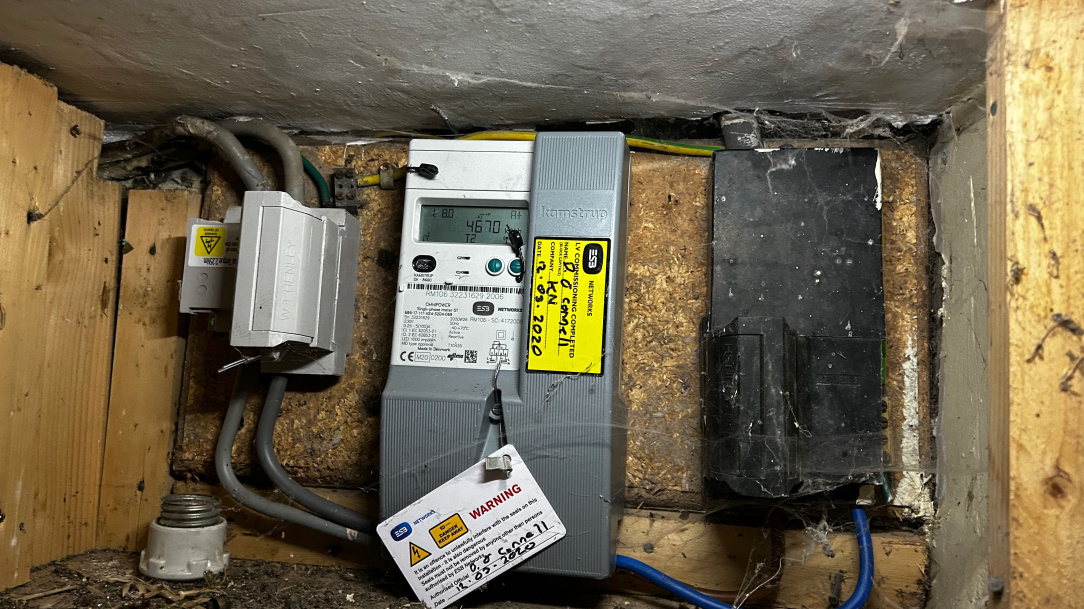
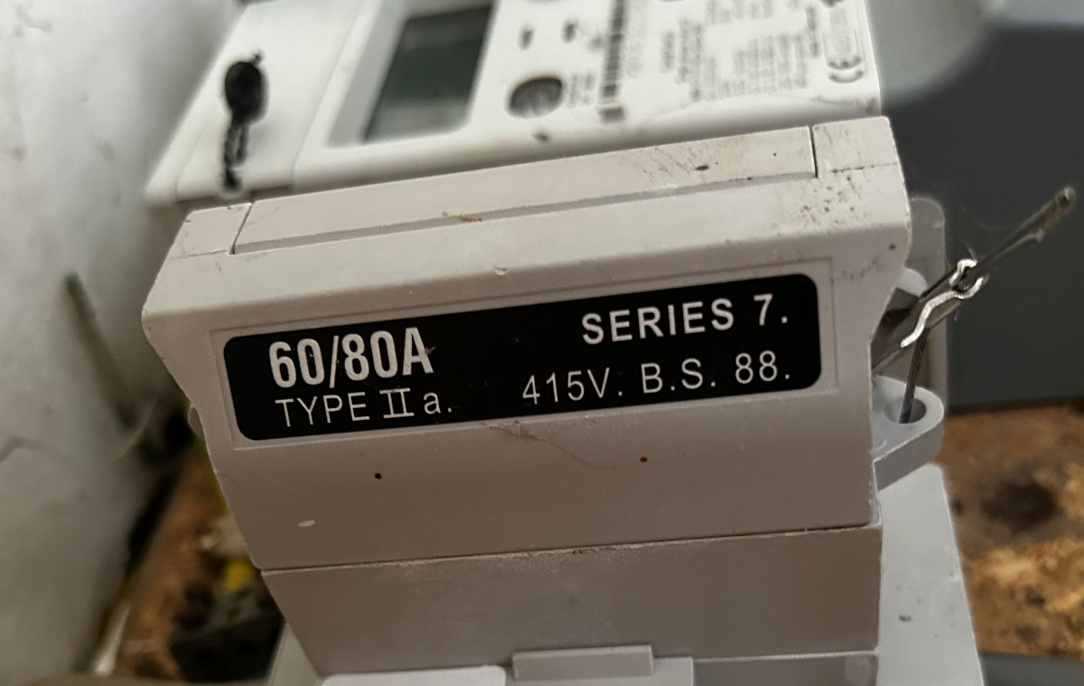
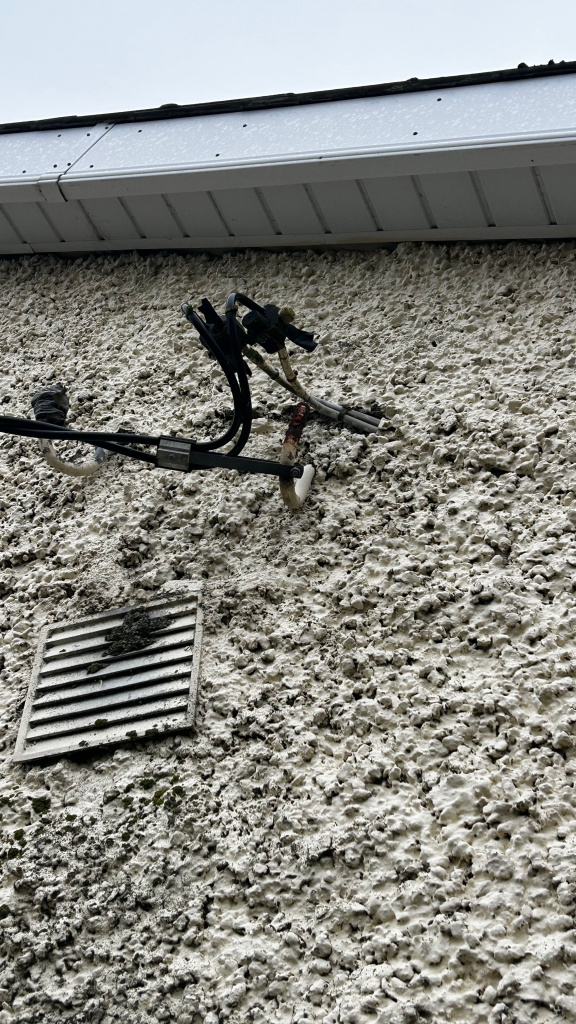
    I'm waiting on a sparky (who’s taking ages to get to me) and a response from my supplier. In the meantime, I was wondering if any of the sparkies here could confirm whether this is a single-phase or two-phase connection? The 415V and 60/80A readings are throwing me off. No clue what the cut-out fuse is rated at.

    Also, am I right in assuming this is TN-C-S

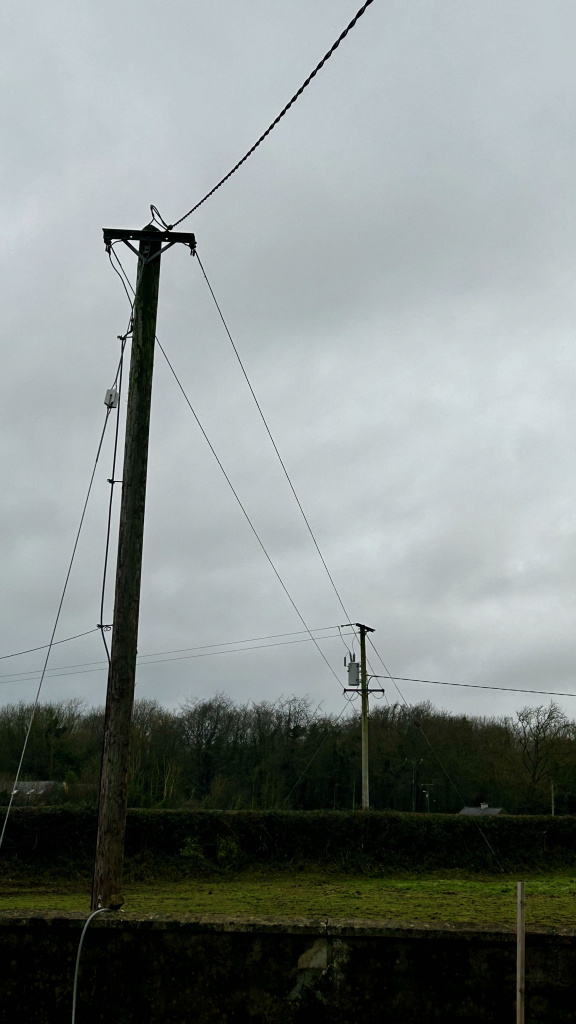
    I'm planning a rewire and want to future-proof it for an EV charger and a decent welder in the garage. I need to know what my actual supply capacity is. I live in the shticks, in an old gaff, and my supply comes from a utility pole with just two cables.

    Just like to understand my situation better to make an educated decisions and investment. 

    Cheers for any insights! 

    P.S.

    Since I have an overhead supply and planing on an EV charger I defo will need to install Surge Protrector in the CU. What's your opinion? I am aware it depends on the regulations and risk assessment. Irish regulations aren't much different to UK afaik since both follow EU ones, right?

    IMG_8103.jpeg IMG_8104.jpeg IMG_8137.jpeg IMG_8138.jpeg IMG_8139.jpeg


Comments

  • Registered Users, Registered Users 2 Posts: 2,246 ✭✭✭Lenar3556


    It’s single phase.
    Most likely 12Kva - A standard domestic supply.

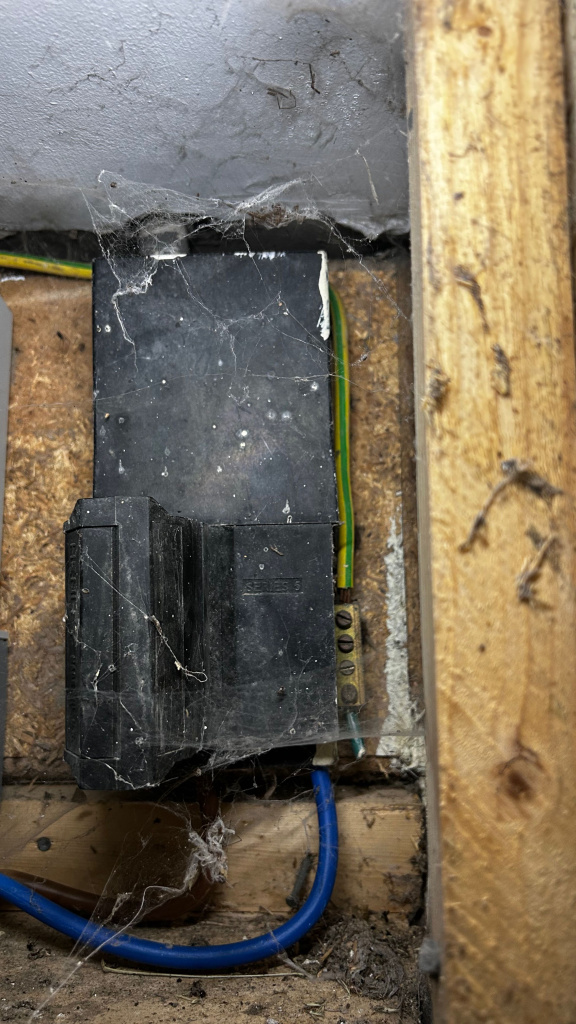
    Yes, looks to be TNC-S. You have a second cut out there one the customer side of the meter, the black one. What is that doing?


  • Registered Users, Registered Users 2 Posts: 104 ✭✭alex_r


    Thanks for replying. Why are they using 415V fuses then? And then which amperage applied to me, 60?

    The second cut out just a consumer unit cut out. But there are no markings or anything so I don't know its rating. Is that DNO's job to upgrade it or replace it? I doubt tho. A sparky can do it as well? I assume he will want to swap tales for new ones anyways.


  • Registered Users, Registered Users 2 Posts: 2,246 ✭✭✭Lenar3556


    The cutout assembly is rated for 415V, but it’s irrelevant really in a single phase arrangement.

    There is probably a 60A fuse in it.

    Might be a bit of tidying required on that before a car charger is connected - looks quite old.


  • Registered Users, Registered Users 2 Posts: 104 ✭✭alex_r


    Oh, you should have seen the CU itself, it’s custom made in a wooden box, quite eclectic and artisan 😆. A plumber once came to disconnect an old boiler and flat-out refused to touch it. The house is very old, so yeah, I can’t wait to rewire it.


    So, 60A is close to the standard 12 kVA, which leaves me with only around 10 kW of usable power. Not much, to be honest. My dryer only takes up to 7 kW, plus a hob up to 7 kW, so there’s not much leeway left for an EV charger.

    I'll need to check with ESB if I can switch to 16kVa. Any idea if there any added costs to that?


  • Registered Users, Registered Users 2 Posts: 2,246 ✭✭✭Lenar3556


    I guessed!

    A 7KW dryer? - That is not helping. Do you need it?

    Would you consider a gas hob?

    Bear in mind that the car charger will have load managment, so can ramp down charging in response to temporary high loads. Switching on an electric shower would be a typical example.

    There is a charge for a 16KVA upgrade. I think it is typically €2k. Even if you don’t decide to go for it, you might be as well install an enhanced consumer unit so you can do it in the future if you got a heat pump for example.


  • Advertisement
  • Registered Users, Registered Users 2 Posts: 104 ✭✭alex_r


    » A 7KW dryer? - That is not helping. Do you need it?

    Yeah condenser dryers aren't the most efficient. I double checked and I exaggerated the numbers, it's 5.7Kw. but it could be the overall consumption for the whole program(attached a pic from the manual). The reason I even bothered to check its power consumption cause one day I had a smart meter plug melted on me and I noticed when we use washing machine and dryer at the same time the extension cable we used was quite unusually hot. The sockets are fine, previous house owners used them for the same washing setup. But we don't even use the cotton program, it's always Mix. The manual also states I need a socket rated at 13 amps (minimum). The max draw is around 75Kw tho when they work together.

    » Would you consider a gas hob?

    Do they do gas over air? If not then it's not an option for a house in the sticks

    »Bear in mind that the car charger will have load managment, so can ramp down charging in response to temporary high loads. Switching on an electric shower would be a typical example

    Yeah I know some chargers are smart. It still feels like 12kVa is so little. We planned to add a shed/workshop where I'd like to use my welder(just a hobby one) and some regular power tools e.g. table saw etc. So yeah defo will plan to upgrade it in the future to 16kVa.

    Did you mean anything particular under an enhanced CU or just future proofed? I was talking to the sparky and I think I want to go with all RCBO's rather than RCD groups(easier to troubleshoot for me if something goes funny) and put in an SPD s well. It's way pricier but will give me less headaches. I don't like them MCB's for the whole house socket ring, go figure what trips the whole group then. And since I have overheard power supply I think it's a requirement to have an SPD and it will also give a piece of mind for when I install an EV charger. For the workshop supply it can be an MCB, cause Im going to have a separate CU there. It's going to be Schneider Easy 9 Plus 20 way CU, so I should have enough room and Mayne a couple slots left spare.

    I was meant to ask btw, isn't the CPC cable in the cutout box too small? Shoudn't it be 16mm? Is it for ESB to sort out?


  • Registered Users, Registered Users 2 Posts: 2,246 ✭✭✭Lenar3556


    I don’t see the data sheet for the dryer, but if it’s 5.7KW it would need an industrial socket. Is it a commercial dryer? If it’s on an ordinary 13A plug it wouldn’t be 5.7KW?

    You could have gas propane cylinder for the hob. Works well, even in a power cut!

    The enhanced consumer is just a higher rated board. 80A or 100A and will be a little larger.

    The main earth cable will be your responsibility. It runs from your consumer unit and joins to the ESB neutral at the cutout.


  • Registered Users, Registered Users 2 Posts: 104 ✭✭alex_r


    Sorry my bad, was late night and forgot to attach it. No it's not industrial. I think I got 7kw from combining dryer and washer. Washer can go up to 2.5Kw as well. I don't believe they draw that all the time I might be reading it wrong. Maybe it's the overall consumption for duration of the program. If that's the case then it doesn't explain why the cable was hot. Either way I plan to put a stronger cable for the washing socket just be safe.

    And that's for washing machine


  • Registered Users, Registered Users 2 Posts: 2,246 ✭✭✭Lenar3556


    Yes, so they are kWh ratings. How much electricity a cycle uses - but it’s over a period of greater than one hour, so it’s not placing that load on the system instantaneously.

    A washing machine and tumble dryer should really be plugged into separate socket outlets. (Not both into one double wall socket) Otherwise there is an overloading risk.


  • Registered Users, Registered Users 2 Posts: 104 ✭✭alex_r


    »You could have gas propane cylinder for the hob. Works well, even in a power cut!

    Ah yeah we could. Gas hobs are nice—we were thinking to go for a range or something. And we might do something like that in the future. For now, it would have to involve breaking the floor(the hob is on an island) hence we went with an electric one and wit the kids sitting around it's safer.

    »The enhanced consumer is just a higher rated board. 80A or 100A and will be a little larger.

    Oh, gotcha. I thought 100A is already standard for new houses. It's what I was going to put anyways. Makes it ready for future 16kVa.


  • Advertisement
  • Registered Users, Registered Users 2 Posts: 104 ✭✭alex_r


    Right makes sense. I had a feeling I am reading it wrong. Thanks for clarifying.

    In terms of separate sockets, do you mean each shoudl be on each own cable as well? Could it be jsut some high rated double socket and a stronger cable, something like 4mm? Boot room is planned to have two circuits one(16A) for hot press(oil boiler, coil, water pump) and second one(20A) for 3 double sockets, one of them is for washing machines. It's all going to be radial wiring and I assume 4mm cable will run to the washing machine socket and from there regular 2.5 each side for regular sockets. Regular sockets gonna be used for an iron, steamer and stuff like that, nothing heavy. How does that sound?


  • Registered Users, Registered Users 2 Posts: 2,246 ✭✭✭Lenar3556


    A double socket is only rated for 13A total across both outlets. A washing machine and tumble dryer will tend to exceed this. So two separate sockets are best.

    2.5mm 20A circuit is still be fine. Just bear in mind it won’t be able to support much else when both Applicances are running.


  • Registered Users, Registered Users 2 Posts: 104 ✭✭alex_r


    Gotcha! Cheers for all your answers and time. Much obliged


Advertisement