sligeach wrote: » Was the blood clotting issue spotted before the vaccine went to market? No, it wasn't. It may be a small proportion of people affected, but it was still missed. That's in its infancy, never mind years down the road.
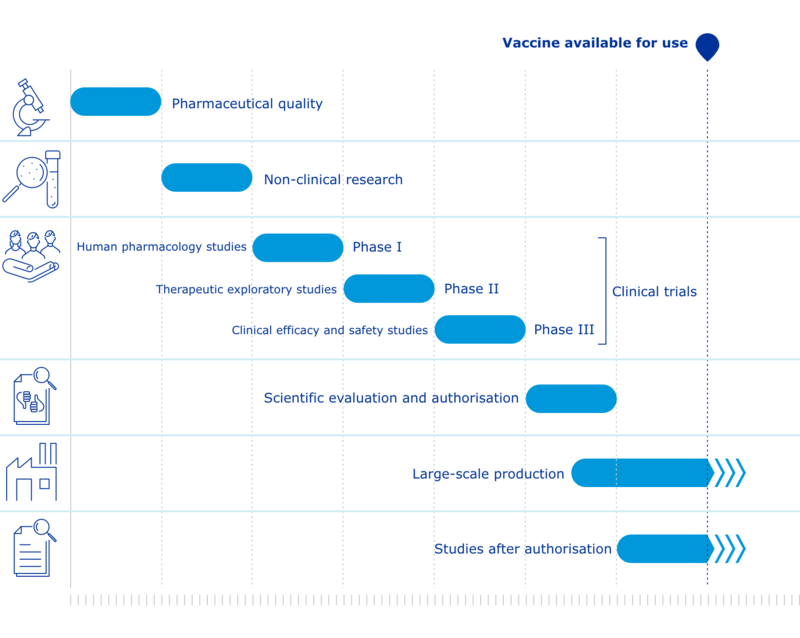
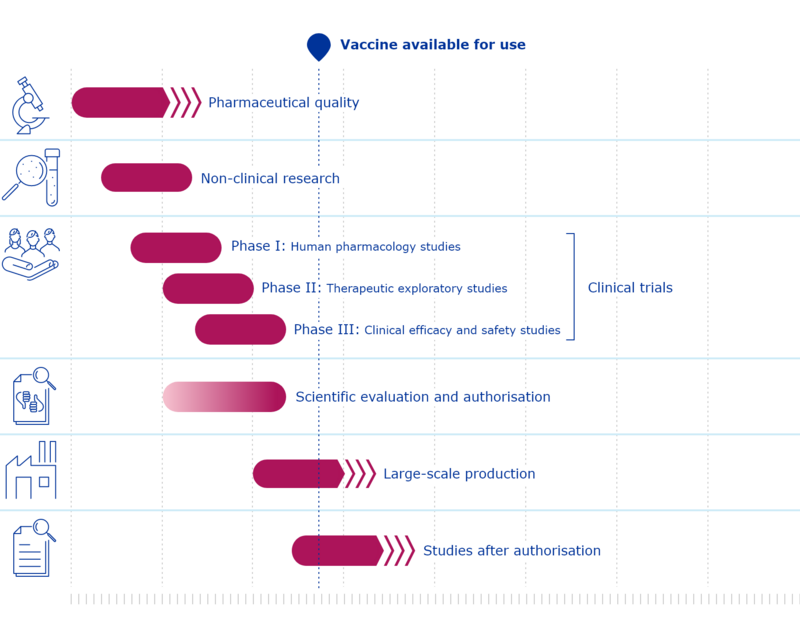
Lumen wrote: » That's disappointingly waffly coming from you. As I understand it the time to market was reduced due to certain steps that are normally done in sequence being parallelised. "Rushed" implies excessive haste, i.e. haste that caused steps to be missed or poorly executed.
Lumen wrote: » Which vaccines have produced side effects that started years after being administered?
Wibbs wrote: » I'm not, but keep banging that drum. And if some have weighed up the societal risks and decided that they personally feel the potential risks of a rushed to market set of vaccines and in the case of the MRNA type never been approved for use in humans before isn't worth the risk to them personally, what do you say to that? Should they be forced to take those vaccines? And remember for those under the age of 65 the mortality rate without vaccines who tested positive for covid demographic since the first case in Ireland is 0.15%. The real figure will be even less. Which by the by is significantly lower than mortality rates for over 65's in "normal" annual influenza season. It is not "killing people of all ages". For those who are over 65 and/or with underlying conditions that leave them more vulnerable the risk/reward equation clearly makes far more sense and we've seen the uptake in that group is very high.
schmoo2k wrote: » That is simply not true and spreading fake news like that is reprehensible IMO.
Stormyteacup wrote: » Are we allowed to ask why the process in other vaccine development was normally done in sequence but done in parallel for this one? I don’t know the answer, and not bothered particularly and have had first mRNA jab, but surely you can understand some people’s concern with departing from the established time to market steps. Maybe accelerated is a better description than rushed.
Stormyteacup wrote: » Are we allowed to ask why the process in other vaccine development was normally done in sequence but done in parallel for this one?.
Stormyteacup wrote: » What mRNA vaccine is in use for humans apart from Covid ones?
astrofool wrote: » It would be unprecedented for a medicine to only start exhibiting further symptoms after a certain amount of time, sure time is used in trials to figure out effects but usually as a way to catch things that might have been missed, the sheer numbers taking the COVID vaccines put this notion to bed, if we were going to see something long term we'd have already seen it (and again with the massive amount of people in the trials).
Sure, but you don't know if you'll be one of those impacted, some of those who have had severe COVID and died have been fit and healthy individuals without any conditions, the % chance is low, but you have no way to tell if you're vulnerable until you catch it (which can also vary with viral load as we've seen with some doctors succumbing to it)
astrofool wrote: » As noted before, vaccines don't make much money for pharma companies, so they are generally developed very slowly with a small budget, the small budget means they only move onto the next step once the previous step has been proven to work. What happened with the coronavirus vaccines was to develop all the possibilities at the same time, thus the "winner" would be found more quickly and moved to the next stage, the actual length of time taken on the winning formula(s) was the same as it would be for any medicine, but by parallelizing and throwing money at all the losers the process could be sped up immeasurably while not compromising on the safety aspects of the medicine. It must also be noted that there has been many loser vaccines that have stopped development, Sanofi had quite a high profile example. It also answers the question of how do we, the human race, achieve great things. The will to do it has to be present ("We choose to go to the Moon") and massive buckets of money/wealth to pay for the resources needed to do so.
Wibbs wrote: » All medicines carry the risk of side effects and some depend on length of time too. Thalidomide is an obvious one that was in the market for a couple of years before being pulled because of birth defects, though is still very much in play for other conditions. Now as a vaccine is a "once off" in essence and not something you're taking on the regular that risk is going to be much lower. The risk isn't just low for young, never mind fit and healthy people, it's monumentally low. If it were a lottery, I'd not be wasting my money buying a ticket or many tickets unless I was over 70 and even then it wouldn't be a sure thing. Now we hear talk of long covid, but if I had a fiver for ever time I heard of someone, almost never directly connected with the teller being reduced from a 25 year old adonis to a wreck for life because of covid... well if I added it to the pile of fivers from those I've heard of, again at a remove who came down with more clots than a National Party meeting after being vaccinated my bank balance would be healthier. I have no doubt after affects of a severe case will be in play. Bad flus can cause heart inflammation for example, but the fear rising over that being widespread will require more testable evidence for me. There's still a lot of signal to noise going on.
During early testing, researchers at the company found that it was virtually impossible to give test animals a lethal dose of the drug (based on the LD50 test). Largely based on this, the drug was deemed to be harmless to humans. Thalidomide was licensed in July 1956 for over-the-counter sale (no doctor’s prescription was needed) in Germany.
schmoo2k wrote: » The mRNA delivery mechanism has been used in FDA approved treatments since 1998, the fact its been used as a traditional "vaccine" is irrelevant as the delivery mechanism is the same as the approved treatments (in fact you could call some of the cancer treatments cancer vaccines if you wanted - its just word play). Now you can say the specific "spike protein(s)" its delivering hasn't been used before, but the mRNA delivery mechanism very much has been. Also worth noting that the scale of the testing for mRNA delivery for Covid was an order of magnitude greater than all the previous approved mRNA treatments combined.
Stormyteacup wrote: » I would take issue with the above as a vaccine is a prophylactic traditionally - not used on those already ill. I’m aware of existing mRNA treatments and future looks bright. However it’s history is treating illnesses already contracted. We know for example that chemotherapy and radiotherapy help cancer patients but that those treatments would never be used on healthy people to prevent cancer. The bar is necessarily set differently for mass administration of treatment to healthy people.
tom1ie wrote: » Why don't you want to take it? Do you not want to protect your fellow humans?
After the immunization program began, the vaccine was associated with an increase in reports of Guillain-Barré Syndrome, which can cause paralysis, respiratory arrest, and death. The immunization program was ended after approximately 25% of the population of the United States had been administered the vaccine.
Pandemrix is an influenza vaccine for influenza pandemics, such as the 2009 flu pandemic. The vaccine was developed by GlaxoSmithKline (GSK) and patented in September 2006. The vaccine was one of the H1N1 vaccines approved for use by the European Commission in September 2009, upon the recommendations of the European Medicines Agency (EMEA) Pandemrix was found to be associated with an increased risk of narcolepsy following investigations by Swedish and Finnish health authorities and had higher rates of adverse events than other vaccines for H1N1. This resulted in several legal cases.
Blut2 wrote: » This has happened with not just "a medicine", but multiple actual flu vaccines. Its nowhere near unprecedented:https://en.wikipedia.org/wiki/1976_swine_flu_outbreak Or more recently:https://en.wikipedia.org/wiki/Pandemrixhttps://en.wikipedia.org/wiki/Pandemrix The odds of serious side effects from any of the corona vaccines emerging in the future are low but they definitely aren't zero. The vaccines have only been in widespread use for 5~ months at this stage, its still very very early to tell.
astrofool wrote: » Sure, but time wasn't a factor in either of those, number of events to identify an issue was, with the COVID vaccines the number of events to analyze is off the scale.
Blut2 wrote: » Time was absolutely a factor in studies being carried out on the effects of the vaccines only after they had entered wide-spread use. And in terms of number of events they vaccinated 25% of the American population for example in 1976 before deciding that vaccine was actually a health risk. We're only at 52% of the population in America done with the current vaccines as of today. So it is a bigger pool of the population for analysis - but not exactly orders of magnitude different.
astrofool wrote: » It would be fair to say at least an order of magnitude greater.
BillyBiggs wrote: » You are beginning to sound like an authority on the pandemic, a virologist/ epidemiologist.
rusty cole wrote: » Im no astrofool fan but im a big science fan and very well read too. He may just be as interested and educated and more even, BUT on the other side of the debate which is his right. Debate him backðŸ˜
323 wrote: » Anyway the poll mentioned "an approved" vaccine? Most of the manufacturers of these vaccines "authorized " for use have not even applied for approval as yet, Pfizer just applied last month.
moonage wrote: » These vaccines shouldn't even be on the market. They could only obtain their emergency use authorisations if there was no effective treatment available. But there was and is one: ivermectin. Ivermectin—a safe, cheap and effective preventative and treatment—had to be suppressed so that the vaccines could come to market. It's immoral and evil.





![Photo of [Deleted User]](https://w1.vanillicon.com/v2/142ca01176d77f407c7f9cf3f95ac61c.svg)


