Bananaleaf wrote: » Not having a go at you at all here, just genuinely trying to understand. I teach from 9 until 4. Let's say 9-3 not including breaks Is your suggestion that I would teach half my students 9-3, deep clean takes place from 3-4 lets say (cleaner does this so I have time for my break then) and then I teach the other half of my classes from 4 until 10pm. Students get the 40mins contact time per subject that they are entitled to, but you would have teachers working double the hrs they are contracted to (and I know you wont like this, but we would be expected to be paid for that!) Or is your suggestion that I would teach half the class for half the time. So, do 9-12 with first half. I lunch for an hr while the place is deep cleaned. Then teach from 1-4pm? No need for any extra pay here for teachers. No additional cost to the state. But you have slashed educational provision for your child in half and they are now receiving 20mins instruction per subject. About enough time to correct the homework, take the register and ask them to pack up! Or is your suggestion that I do either the morning session and another teacher does the evening session? In which case you are looking at doubling the workforce. All those extra teachers (if they could be found) would need to be paid too I'm post-primary by the way. I actually think your suggestion about halving the students and the timetable/day is not bad and I think of worked on it could be a runner. But not with 12hr working days with an hr break in between. That would be unreasonable and I'm sure that isnt what you're suggesting either. But the problem with it is that while I have 15 with me, the other 15 have to be somewhere else in the building with another teacher. Space is going to be a problem. The other 15 wouldnt just be at home waiting to come into my class. Not the way secondary school works anyway Maybe a reduced timetable of sorts - just thinking out loud here but maybe scrap all the non exam classes (wellbeing, IT, sphe) and get rid of all the short course stuff to make it more streamlined. At senior cycle scrap the non exam religion, PE, careers classes. I am aware that this isnt ideal and that you're effectively removing the holistic element of schooling, which isn't good. Another option might be to take a class period a week off some subjects to reduce the timetable somewhat. Just thinking out loud and trying to get a constructive conversation with you going.
lulublue22 wrote: » Honesty I think if we are in a similar position in Sep case wise as we are now than the social distancing option will be scrapped. If the gov want all children to return to education than it will have to. Any other suggestion re splitting numbers will cause huge issues for working parents and employers. I think the dep would be better advised focusing on issuing clear guidelines around increased sanitation , sick leave , children coming to school when ill , provision for immunocompromised children and staff and increased access and turn around of testing for schools. Guidelines around local closures be that class or school should be paramount. The schools need to be opened with a view to keeping them open.
markodaly wrote: » I see I am getting the usual retorts back, with not one answer to my last question. How are they doing it in other countries? Do other countries have full classrooms and keep social distancing? It seems the 1m rule from the HSE is the major stumbling block here, I would suggest that an exemption be given to children (obviously those who are more vulnerable would have to be looked after another way) in a classroom so that children can get back to the normally of a school setting. One could also make use of large halls, gyms and the like, rotate students for larger classes, with some staying at home some days and coming in other days. Teachers and adults could, of course, keep the 1m rule between each other and parents. I did a quick search there and it seems that quite a few countries opened up their schools and have this arrangement. Children it appears are barely affected at all by Covid-19, so are really really really low risk in a classroom.
Riflecreek wrote: » Teachers wear face shields. Kids wear masks and bring hand sanitizer. Accept the risk and quit moaning.
kandr10 wrote: » It has been answered actually. Someone earlier broke it down country by country with several examples of the measures they put in place. What you’re suggesting here has been discussed already on this thread ad nauseum. Perhaps you could read it before spiralling us back to discussions that were had weeks ago?
Bananaleaf wrote: » Yeah, they do indeed. Hmmm, so do you think the distancing would need to just be adhered to by adults rather than children? Not being smart, but is the evidence that exists saying that children are not at risk of contracting the virus or that they do not carry it? Also, at what age does Coronavirus consider them not a child? 16? Just wondering if you could have a situation where two sets of rules would have to apply to two different age groups in post primary. Schools may have to section off 'junior' and 'senior' parts of their building if possible
markodaly wrote: » The solution could be this simple and indeed other countries are following exactly this.
markodaly wrote: » Sorry, but I am not going to trawl through over 5000 posts, most of it just noise, to find pertinent information. If you could link that post though, I would be grateful.
lulublue22 wrote: » I think we are at a stage where we need to live / make accommodation with this virus. There is so much conflicting information that it’s difficult to ascertain what’s the likely outcome. There are now indications that it’s more airborne than was initially thought - there is also talk now of increased asymptomatic transmission. The level of conflicting information is mind boggling. I could see adults being expected to social distance as much as possible but not children. At this stage it needs to be about opening schools while minimising risk. I think testing will be paramount to this and also clear guidelines around such issues as children coming to school sick. Parents and employers will need to row in behind that one.
markodaly wrote: » I did a quick search there and it seems .....
markodaly wrote: » It seems the 1m rule from the HSE is the major stumbling block here, I would suggest that an exemption be given to children (obviously those who are more vulnerable would have to be looked after another way) in a classroom so that children can get back to the normally of a school setting. Teachers and adults could, of course, keep the 1m rule between each other and parents.
Bananaleaf wrote: » Yeah I think you are right about us having to learn to adapt to the situation. For what it's worth, schools are absolutely manky places and I for one want to be back asap so that we can hopefully get the schools kitted out with perspex screens on teachers desks etc ... stuff that would protect us from all the regular cold and flu germs that live in schools. Sometimes I think that if we wernt closed so early in March, all that stuff would be in place already, waiting for our return! Would have been handy
History Queen wrote: » ... if you bothered reading the thread you'd know this was already suggested...
As spring wore on, many other countries began rethinking distancing in schools. The Canadian province of Quebec, which reopened many elementary schools in May with strict distancing, has announced fall plans that allow children to socialize freely in groups of six; each group must stay 1 meter away from other groups of students and 2 meters away from teachers. Although French preschoolers were photographed sitting inside their own recess squares in May, day cares there have now abandoned all distancing rules for children ages 5 and under. Older students are advised to stay at least 1 meter away from others while inside. But outside they can play freely with others in their class. The Netherlands recently announced that anyone under age 17 does not need to distance.
In addition, both countries’ governments considered the equity implications of school closures and reopening. In Finland, according to a news report, the government emphasized that “the right to basic education is a subjective right laid down in the Constitution and belongs equally to everyone.” In Denmark, as secondary students spent much of the term learning remotely, end-of-year assessments were suspended for the school year. The main reason provided for suspending these assessments was to avoid increasing inequality between those students (many of whom are immigrants) who have not been able to get help from school or at home.
markodaly wrote: » To be honest, this type of response smacks of elitism. I am not going to re-read 5500 posts to please you, thank you very much. It is your choice to respond to me or not. You can ignore me, if you want.
markodaly wrote: » On a more sombre note, this article does explain that a childs education is a human right, and by closing schools, both governments and Unions are standing in the way of that right, by not agreeing to openning schools.
deiseindublin wrote: » Jeez, fab idea, that'd be great. Hang on a minute, just double checking, do we get the Dutch budget?
Charles Babbage wrote: » Freedom from infection by a fatal disease is also a right, is it not?
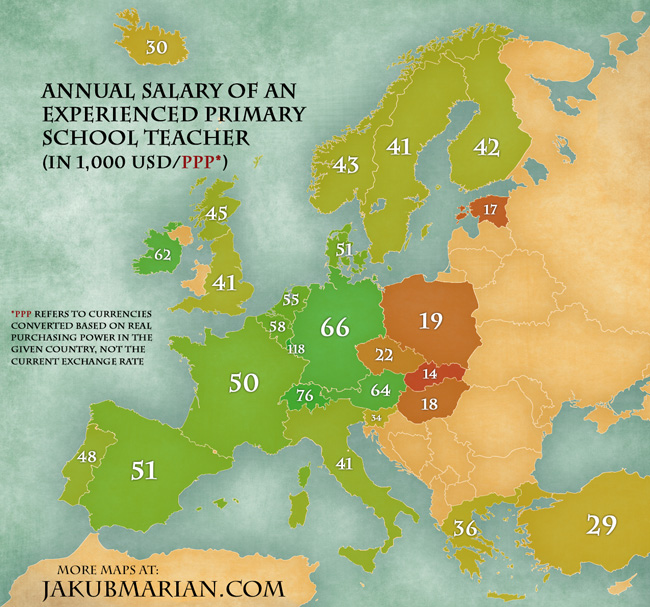
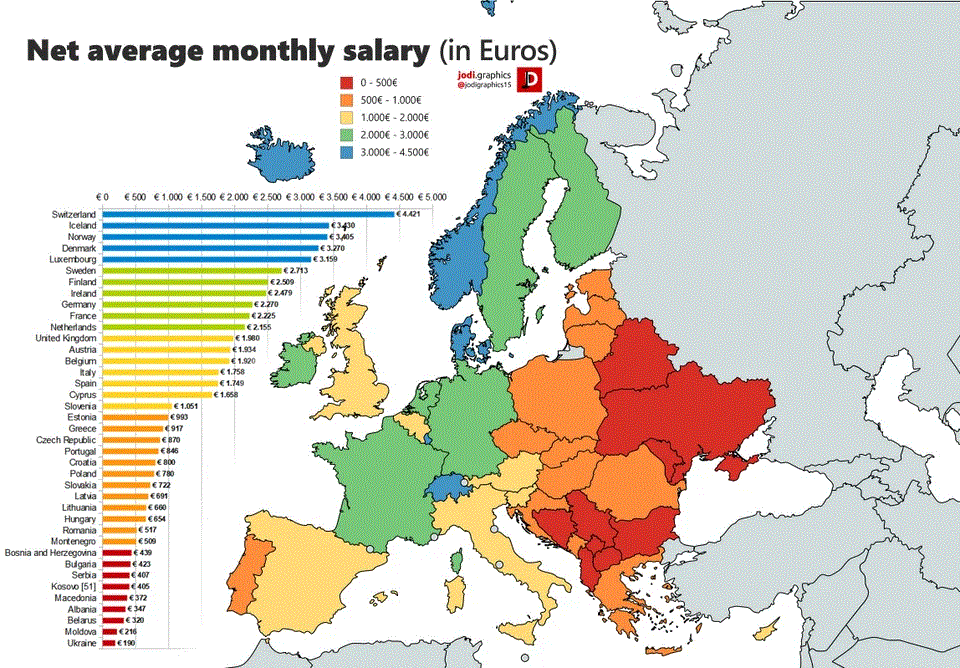
markodaly wrote: » Why do you need all the extra money when there is no need to social distance for the kids? It is pretty much as you are, except for teachers perhaps needing to wear face masks and use some hand sanitizer. But, Ireland appears to pay its teachers more. Maybe we can even up the pay and use the savings for PPE? :P
markodaly wrote: » Why is every post, met with another question about other events? I am genuine here. Is it ever possible to discuss the subject raised?
markodaly wrote: » If that is the case, we should shut down all schools until there is a vaccine. So goodbye school year 2020-2021... I would have thought teachers were made of more hardy stuff.
lulublue22 wrote: » Are you suggesting that a post by one person who hasn't identified as a teacher and hasn’t suggested closing all schools for the next school year but simply pointed out that a school in melbourne is a source of a cluster equates with every single teacher in Ireland being some how weak / afraid to return to school /