Advertisement
If you have a new account but are having problems posting or verifying your account, please email us on hello@boards.ie for help. Thanks :)
Hello all! Please ensure that you are posting a new thread or question in the appropriate forum. The Feedback forum is overwhelmed with questions that are having to be moved elsewhere. If you need help to verify your account contact hello@boards.ie
Atheism/Existence of God Debates (Please Read OP)
Options
-
23-05-2011 12:42pm#1This new 'catch-all' thread will operate similar to the Creationism and Protestant/Catholic Debate threads.
Too many threads are spoilt and dragged off topic when a non-Christian poster demands, "What evidence do you have for God?" While some may enjoy such discussion, it is frequently off-topic and derails discussion of other subjects (the very discussion that is the reason for this Forum's existence).
So, in order to protect the Forum and facilitate on topic discussions, all that stuff now belongs here. Anyone who keeps trying to derail other discussions by demanding evidence for God's existence will be warned, and if those warnings are ignored then swift infractions and bans will ensue.13
Comments
-
Well, this seems like a very original idea, I must say OP.
As for the existence of God, you have to define first what you mean by "God". As this is Christianity Forum I'm going to assume you mean the One Abrahamic God. This is the God who's personified in the Bible. It shouldn't be extremely hard to debate the reality of this particular personification - I think that modern science can tackle this one pretty easily.
However, the God who's personified in the Bible also is said to fills the role of Supreme Being and initiators of Space, time and energy. It is in his apparent role as creator of the universe where both sides of the debate could falter.
It is not beyond the realm of modern science to disprove the interference of this Supreme Being in Earthly affairs or indeed in the overall evolution of what we perceive as reality since "Initiation". It is much more difficult to disprove the existence of an "Initiator"* - if indeed this Initiator is conscious or an actual entity. I believe that there exists a philosophical paradox which renders the case where this "Initiator" exists and the case where the "Initiator" doesn't exists to be both logically flawed.
Such and argument could and will last forever, so I'd expect this to be a very long thread
*By "Initiator" I mean Supreme Being0 -
Question: Who does the burden of proof lie with, those who deny or those who accept the existence of God?0
-
JohnMarston wrote: »Question: Who does the burden of proof lie with, those who deny or those who accept the existence of God?
It either side gave in on that , then they lose by default.
An Atheist can never prove God doesn't exist, and a Theist can never prove he does.0 -
JohnMarston wrote: »Question: Who does the burden of proof lie with, those who deny or those who accept the existence of God?
The burden of proof lies with those who put forward the notion of the existence of a god. I can't see how it can be logically argued that the burden of proof lies with those who don't put forward that notion. If that case is argued it opens up a very large can of worms.
P.S. An atheist doesn't deny the existence of God. He lacks belief in a god. There's a world of difference between both of those sentences.0 -
-JammyDodger- wrote: »The burden of proof lies with those who put forward the notion of the existence of a god. I can't see how it can be logically argued that the burden of proof lies with those who don't put forward that notion. If that case is argued it opens up a very large can of worms.
P.S. An atheist doesn't deny the existence of God. He lacks belief in a god. There's a world of difference between both of those sentences.
Atheism is a little stronger than that. Agnostic atheists like myself, for example, believe there is no God, but accept that our belief might not be true.0 -
Advertisement
-
It either side gave in on that , then they lose by default.
An Atheist can never prove God doesn't exist, and a Theist can never prove he does.
Again it depends what you mean by "God". If it's a "God" that has interfered in the evolution of the Universe from it's beginnings which included the creation of Earth and life and also communication with humans at various points throughout history - then I think we can disprove that. If you are talking about just a God that didn't interfere with the universe after it created it, then it should be a little harder to disprove using scientific knowledge.0 -
JohnMarston wrote: »Question: Who does the burden of proof lie with, those who deny or those who accept the existence of God?
Good question. Both - neither. Christians are called to give an account of why they believe. While that implies dialogue, I don't think that it means we have to "prove" anything.0 -
Killer Pigeon wrote: »Again it depends what you mean by "God". If it's a "God" that has interfered in the evolution of the Universe from it's beginnings which included the creation of Earth and life and also communication with humans at various points throughout history - then I think we can disprove that. If you are talking about just a God that didn't interfere with the universe after it created it, then it should be a little harder to disprove using scientific knowledge.
Given that we are debating this in the Christianity forum - as opposed to the deism forum - I suggest we stick to an orthodox understanding of God, which is to say that God, as revealed in the Bible, is an uncreated being that created the universe, sustains it and interacts with it.
Now if you want to disprove that claim then go ahead.0 -
Atheism is a little stronger than that. Agnostic atheists like myself, for example, believe there is no God, but accept that our belief might not be true.
Well, there are huge and varying degrees of atheism. Weak/strong, positive/negative and implicit/explicit (even agnostic/gnostic, I guess). It's a little bit too complicated and convoluted for my liking. I'd like to think that the basic, ground level of atheism is the lack of belief in a god. If a person wants to express more about that assertion then they can use the above scales (weak/strong, etc.). But yeah, I accept your point.0 -
The burden of proof has to lie with those making the claim. Otherwise, anybody could claim anything. I could claim to have the world's largest collection of air guitars, but it's up to me to prove its bigger than everyone elses.
Religion is like selling an invisible product. The salesman has to prove why you should buy it.0 -
Advertisement
-
I think we need to come up with new terms for this discussion or at least to recognise limitations. We should rule out proof because proof lies solely in the realm of mathematics. The question lies more in terms of probability. What is more probable than the other? Is it more probable that there is a God who has created the world or that the universe came into being of its own accord?
The question seems to lie in these three positions:
1. Theism - It is more likely that there is a God than not. (Christianity and other forms of traditional theism would also argue that certain forms of theism are more probable than others).
2. Agnosticism - God may exist or God may not exist.
3. Atheism - It is less likely that God exists than not exists.
Some atheists would accuse me of leaving out the possibility that an atheist can be to some degree agnostic, or that a theist can be to some degree agnostic, but actually this solution allows for that agnosticism because it is placed in probability. If you think that God's existence is as likely as a fairy at the back of your garden there may be a minuscule degree of agnosticism but it is still fair to say that one still regards the existence of God as being less likely.
We need to focus on the likelihood of God's existence rather than expecting absolute proof. This also means that the reasons will be pointed at showing how the existence of God is more evident than not, or that the non-existence of God is evident. This will mean that both atheists and theists according to the above definition deviate from the full agnostic position that we can't know which of course has no burden of proof but I don't feel that atheists can also claim this as their position does deviate from de-facto agnosticism even if they claim to be agnostic atheists.0 -
There is no irrefutable proof that God does / does not exist.
There cannot be, because if there was it would remove all free will, and we would be nothing but automatons serving God.
Like any loving parent would, God wants us to love him voluntarily, hence our free will to choose to believe or not.
This short life is a test for the next life which is eternal. We cannot have heaven on earth, that would serve no purpose.
At the time of your Judgement you will have no excuses, everything you did and choose in life will be reviewed in front of you.
Hell is self chosen eternal darkness and permanent separation from God and his infinite love for all eternity. The gates of hell are bolted from the inside by the arrogance of ego.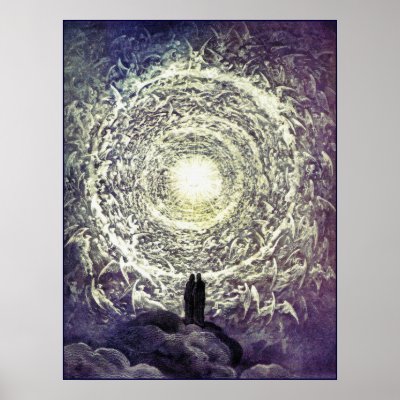 0
0 -
philologos wrote: »I think we need to come up with new terms for this discussion or at least to recognise limitations. We should rule out proof because proof lies solely in the realm of mathematics. The question lies more in terms of probability. What is more probable than the other? Is it more probable that there is a God who has created the world or that the universe came into being of its own accord?
The question seems to lie in these three positions:
1. Theism - It is more likely that there is a God than not. (Christianity and other forms of traditional theism would also argue that certain forms of theism are more probable than others).
2. Agnosticism - God may exist or God may not exist.
3. Atheism - It is less likely that God exists than not exists.
Some atheists would accuse me of leaving out the possibility that an atheist can be to some degree agnostic, or that a theist can be to some degree agnostic, but actually this solution allows for that agnosticism because it is placed in probability. If you think that God's existence is as likely as a fairy at the back of your garden there may be a minuscule degree of agnosticism but it is still fair to say that one still regards the existence of God as being less likely.
We need to focus on the likelihood of God's existence rather than expecting absolute proof. This also means that the reasons will be pointed at showing how the existence of God is more evident than not, or that the non-existence of God is evident. This will mean that both atheists and theists according to the above definition deviate from the full agnostic position that we can't know which of course has no burden of proof but I don't feel that atheists can also claim this as their position does deviate from de-facto agnosticism even if they claim to be agnostic atheists.
It should also be remembered that atheism is a rejection of the claims of theists, not a proclamation about a general unknown entity that may or may not be divine (a general notion of a creator).
Someone saying (not saying you said this) that you cannot demonstrate God doesn't exist and thus atheism is as faith based as theism is missing the point.
You cannot demonstrate a god doesn't exist. You can though demonstrate that humans invent deities and that this is a more likely explanation for why humans believe this stuff than the actual deity existing.
After all it should always be remembered that the only evidence ever presented for the existence of any deity is the testimony of humans who claim to have interacted with said deity.
If you reject these claims as unreliable or false you are de-facto an atheist, without ever having to make any claim positive or negative about the existence of a creator deity.0 -
Like any loving parent would, God wants us to love him voluntarily, hence our free will to choose to believe or not.
I'm sorry, but I've always absolutely hated that analogy. It's grotesque.
Firstly, what do you say to a person who either doesn't or can't love God voluntarily, such as an atheist?
Secondly, and most importantly, if a child doesn't love their parent, that parent wouldn't sentence their child to an eternity of torture for their child's choice. You could call such a parent many, many things, but loving is not one of them.
The type of free will you speak about is analogous to pointing a gun at somebody's head and giving them the choice to do one of two things; if they chose the right choice you let them live, but if they chose the wrong one you shoot them. That's not free will.0 -
It should also be remembered that atheism is a rejection of the claims of theists, not a proclamation about a general unknown entity that may or may not be divine (a general notion of a creator).
Absolutely, but why is one making such a rejection other than a perceived idea that it is less likely that God indeed exists?Someone saying (not saying you said this) that you cannot demonstrate God doesn't exist and thus atheism is as faith based as theism is missing the point.
The terms that I've framed my points in don't require anyone to demonstrate anything. All they require the contributors to do is to provide reason as to why they believe that God is more or indeed less likely.You cannot demonstrate a god doesn't exist. You can though demonstrate that humans invent deities and that this is a more likely explanation for why humans believe this stuff than the actual deity existing.
See above.After all it should always be remembered that the only evidence ever presented for the existence of any deity is the testimony of humans who claim to have interacted with said deity.
Very debatable, but we need to situate reasonable terms for the discussion to be framed in before it can start.If you reject these claims as unreliable or false you are de-facto an atheist, without ever having to make any claim positive or negative about the existence of a creator deity.
If you don't know that puts you in a different situation than accepting that it is more or less likely that God exists. Even "agnostic theism" or "agnostic atheism" make such claims about the likelihood of God's existence. Defacto agnosticism doesn't at least in the terms that I've provided.
We need to provide reasonable terms for this discussion if we are going to have it.0 -
Like any loving parent would, God wants us to love him voluntarily, hence our free will to choose to believe or not.
Most parents don't disappear to an unknown place only to interact with their children occasionally through intermediaries and prophets. :P
The argument that God has done as much as he can to demonstrate his existences without risking our free will doesn't stand up to much scrutiny.
Assuming God exists then he, for what ever reason, produced a world where humans are pretty bad a accurately assessing information through personal assessment and eye witness testimony.
It is some what odd then that he would choose to only reveal himself in such a manner, given that he is contradicting his own "best practices" so to speak.
On the other hand, if God doesn't exist but is instead the invention of humans then this is the only evidence anyone could ever have of his existence.0 -
Barrington wrote: »The burden of proof has to lie with those making the claim. Otherwise, anybody could claim anything. I could claim to have the world's largest collection of air guitars, but it's up to me to prove its bigger than everyone elses.
Religion is like selling an invisible product. The salesman has to prove why you should buy it.
Good answer 0
0 -
-JammyDodger- wrote: »Firstly, what do you say to a person who either doesn't or can't love God voluntarily, such as an atheist?
I say that was their choice, they chose their belief.-JammyDodger- wrote: »Secondly, and most importantly, if a child doesn't love their parent, that parent wouldn't sentence their child to an eternity of torture for their child's choice. You could call such a parent many, many things, but loving is not one of them. The type of free will you speak about is analogous to pointing a gun at somebody's head and giving them the choice to do one of two things; if they chose the right choice you let them live, but if they chose the wrong one you shoot them. That's not free will.
A person who separates themselves from God and chooses eternal darkness instead of eternal light, has choosen it for themselves. As I said the gates of hell are intellectually bolted from the inside by ones own ego.0 -
philologos wrote: »Absolutely, but why is one making such a rejection other than a perceived idea that it is less likely that God indeed exists?
How likely God is to exist is some what irrelevant to whether your religion knows he does and has interacted with him.
The analogy most often used to illustrate this point is the two men standing behind a door. Man one says "I believe their is a tiger behind that door" and the second man says "Don't be silly you couldn't possibly know that"
The first man gives various reasons why he believes the tiger exists, some of them supernatural (the tiger talks to me in my mind) others merely appeals to logic (well you can't prove their isn't a one), all of which are rejected by the second man.
Notice at no point the second man states anything about the likelihood of a tiger being behind the door. That is some what irrelevant to the question of whether the first man knows the tiger exists or not.philologos wrote: »The terms that I've framed my points in don't require anyone to demonstrate anything. All they require the contributors to do is to provide reason as to why they believe that God is more or indeed less likely.
Again though you should appreciate that the likelihood of a creator deity is some what irrelevant to whether humans have interacted with him.
There being a tiger behind the door doesn't mean the man knew there was.
The question of how likely a god is to exist is both rather unknowable and rather irrelevant.
A far more relevant question is how likely is the explanation that humans believe in such beings because they have been actually interacting with them over explanations that don't require their existence, such as hyper agency detection and other mental tricks.philologos wrote: »Very debatable
I mean actual evidence, not just something that may or may not have been produced by a deity depending on whether you already believe in such a being, ie don't answer "the universe cause only a god could produce it" :pac:philologos wrote: »but we need to situate reasonable terms for the discussion to be framed in before it can start.
Agreed, I'm not disagreeing with your post merely expanding upon it.philologos wrote: »If you don't know that puts you in a different situation than accepting that it is more or less likely that God exists. Even "agnostic theism" or "agnostic atheism" make such claims about the likelihood of God's existence.
Again few atheists make claims about the likelihood of the existence of god. Not saying none do, Dawkins has made claims about the likelihood of a creator deity, claims that a lot of atheists rejected as some what groundless.
If you examine the claims they are actually claims about the likelihood of the accuracy of claims by humans about said interaction with these gods. See analogy with tiger behind the door.
This may seem some what pedantic to point this out, but it is actually a rather central point, not least of which because thinking about it highlights some of the unspoken assumptions theists hold (for example the idea that if a god is likely to exist then it is likely to be their god) and expect atheists to follow.0 -
Barrington wrote: »Religion is like selling an invisible product. The salesman has to prove why you should buy it.
A salesman doesn't have to prove anything. He merely presents you, the customer, with reasons why you should by a product.0 -
Advertisement
-
How likely God is to exist is some what irrelevant to whether your religion knows he does and has interacted with him.
We need to look into how likely it is that God can exist before we can discuss as to what nature that God had, or how He related to people. These are subdiscussions to the question that is posed here.The first man gives various reasons why he believes the tiger exists, some of them supernatural (the tiger talks to me in my mind) others merely appeals to logic (well you can't prove their isn't a one), all of which are rejected by the second man.
In fairness these aren't the only reasons that have been posed to you as to how it is likely that God exists and it would be dishonest to claim such. We need to situate how we ant to do this in order to do it properly and effectively.Again though you should appreciate that the likelihood of a creator deity is some what irrelevant to whether humans have interacted with him.
Not at all. It is exactly a prerequisite to further discussion.A far more relevant question is how likely is the explanation that humans believe in such beings because they have been actually interacting with them over explanations that don't require their existence, such as hyper agency detection and other mental tricks.
Which would be changing the current discussion which is equally important.I mean actual evidence, not just something that may or may not have been produced by a deity depending on whether you already believe in such a being, ie don't answer "the universe cause only a god could produce it" :pac:
That's not what I'm suggesting. I'm suggesting looking into what would indicate that God as described in Judeo-Christianity either exists or doesn't exist which is perfectly in keeping with the topic of the discussion. Hence why I have posed the 3 descriptions I have done as a means of framing the discussion.Again few atheists make claims about the likelihood of the existence of god. Not saying none do, Dawkins has made claims about the likelihood of a creator deity, claims that a lot of atheists rejected as some what groundless.
Nearly every one of the new-atheists I have read or heard (E.G Dawkins, Hitchens and Dennett) has made some form of claim to the probability of God's existence.This may seem some what pedantic to point this out, but it is actually a rather central point, not least of which because thinking about it highlights some of the unspoken assumptions theists hold (for example the idea that if a god is likely to exist then it is likely to be their god) and expect atheists to follow.
This is the reason why we need to establish how likely it is for a God to exist before we can look into the particular claims. That's only logical and I think you know this too.0 -
I say that was their choice, they chose their belief.
A person who separates themselves from God and chooses eternal darkness instead of eternal light, has choosen it for themselves. As I said the gates of hell are intellectually bolted from the inside by ones own ego.
Can you understand how it's not really a free choice, though?
As I said before: I can offer you a free choice of two options while holding a gun to your head. If you chose the right one, I let you go. If you chose the wrong one, I shoot you. Yes, I've given you free will to chose for yourself. But, it's in a horribly conniving and sinister way, don't you think?0 -
A person who separates themselves from God and chooses eternal darkness instead of eternal light, has choosen it for themselves. As I said the gates of hell are intellectually bolted from the inside by ones own ego.
I'm pretty sure no one who given a choice would choose eternal darkness in a lake of sulfur.
The only thing an atheist picks is that Christians have not presented a compelling argument for the existence of their deity over any other deity.
This of course means that the atheist won't accept the offer of salvation from Jesus Christ and will be punished for their sinful behavior if it turns out the Christian God is the real one.
But no one chooses eternal darkness. God chooses that for them. Being omnipotent he could have just as easily chosen eternity in another blissful paradise as being what awaits non-believers. The idea of a place separated from God and that this place must be horrible are both rather illogical propositions. God can certainly make such a place, and choose to send people their. But that is his decision, not theirs, such a place does not have to exist as it is described.
But then if the idea of this hellish place wasn't taught to potential believers that wouldn't be much of a motivation to join the religion now, would it 0
0 -
Fanny Cradock wrote: »A salesman doesn't have to prove anything. He merely presents you, the customer, with reasons why you should by a product.
And if those reasons don't stand up to much examination the person won't buy it.
How reasonable would it be then for the salesman to blame the customer for this, rather than himself and his poor reasons?0 -
Most parents don't disappear to an unknown place only to interact with their children occasionally through intermediaries and prophets. :P
Believers see God everywhere, God is a sprit and all beauty and love is God.On the other hand, if God doesn't exist but is instead the invention of humans then this is the only evidence anyone could ever have of his existence.
No, it’s actually perfectly devised, as using your own God given intellect you're free to believe or not, and the freedom of free will remains intact.0 -
Fanny Cradock wrote: »A salesman doesn't have to prove anything. He merely presents you, the customer, with reasons why you should by a product.
But for an invisible product, he has to prove that the product actually exists.
My problem with the whole "God gave us free will and we can choose to believe in him or not", is that I simply cannot believe in something that I don't believe in. For me, there is no choice there. I have never, as an adult or young teenager, decided to stop believing in God. It wasn't a choice, I just do not believe, and have not since I was old enough to really understand both sides of the coin.
I could go to Mass, I could pray at night, I could read the Bible every day, but I still wouldn't believe. Believing in God isn't a choice, you either do or you don't, in my opinion anyway.0 -
On the probability of a "God".
On the agnosticism thing: when philologos tries to show the distinction between atheism and agnosticism he's missing what it actually means to be agnostic. The definition of God in Christianity is so far from fitting with reality that to consider agnosticism a midway point between atheism and theism is nonsense. I'm an agnostic about what I don't know. Evaluating the Christian God using logic and reason, it fails, especially in light of things like free will, incompatible properties and especially things like the physical nature of person hood and our interaction with the physical world or should I say the inescapable position of the human pattern within physical nature.0 -
-
Barrington wrote: »....you either do or you don't, in my opinion anyway.
Or perhaps more like you can or you can't.0 -
Advertisement
-
CerebralCortex wrote: »On the probability of a "God".
On the agnosticism thing: when philologos tries to show the distinction between atheism and agnosticism he's missing what it actually means to be agnostic. The definition of God in Christianity is so far from fitting with reality that to consider agnosticism a midway point between atheism and theism is nonsense. I'm an agnostic about what I don't know. Evaluating the Christian God using logic and reason, it fails, especially in light of things like free will, incompatible properties and especially things like the physical nature of person hood and our interaction with the physical world or should I say the inescapable position of the human pattern within physical nature.
My definitions take into account both agnostic atheism and agnostic theism if you read the post. I knew this issue would come up and I've already discussed it in my post.
I have distinguished de-facto agnosticism from agnostic atheism and agnostic theism because the very fact that you are an agnostic atheist or an agnostic theist means that you regard one as being more likely than the other.0


![[Deleted User]](/applications/dashboard/design/images/defaulticon.png)


This discussion has been closed.
Advertisement