Liamo08 wrote: » If you believe Brendan's confession was what actually happened how do you explain the following: - no blood, DNA or any other evidence from the victim found in the house/garage where she was allegedly raped, strangled, throat slit and shot 10/11 times. I find it incredible to think that these guys could clean up that scene completely and leave not a shred of evidence behind just using some bleach. - Despite searching the house for several days no one was able to spot the key that was just sitting on the ground in one of the rooms. Even if you believe it was behind the cabinet that no one thought to look there for several days seems ridiculous. Also how was there no DNA from the victim on the key? Also no one was able to find the bullet with his DNA until months later despite days of searching the house/garage? - if he burned her body outside his house why did he need to put her into the boot of her car (where her blood was found) to drive her from his garage to the burn pit? - how come no fingerprints were found in the car despite his blood being found there? - did no one see/smell the burning body outside the house or here the multiple rifle shots that were fired in his garage? Just to clarify I've no idea if Steven Avery is guilty or not but if you believe Brendan's account I find it hard to not have huge questions about the evidence backing it up.
bubblypop wrote: » He didn't become a suspect for no reason. Just because the programme makers made you believe he was a good guy didn't mean he was. There was reason to suspect him for the rape & the reason must have been right because the injured party identified him as the culprit. That's police doing their job. It's not them framing someone. Yep, the rape should have been looked at again, before it was. But that was one guy, one guy that ignored a phone call. Not a whole police force setting someone up.
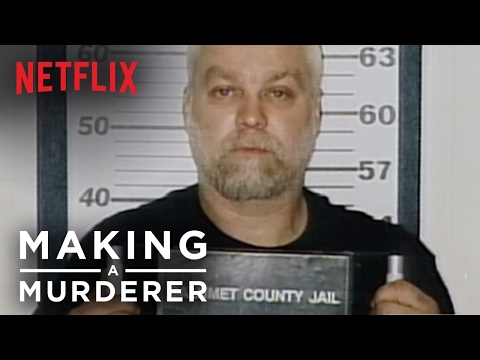
In nearly every interview they've given since the launch of their Netflix true crime sensation Making a Murderer, directors Moira Demos and Laura Ricciardi have struck the same note. They didn't go into the project seeking to exonerate Steven Avery, they say. They have no opinion as to whether or not he killed Teresa Halbach, they say. Their aim is to highlight problems with the US legal system that should give pause even to those who come away from the 10-part documentary believing Avery really did commit the crime for which he is currently imprisoned, they say. The question is not one of guilt or innocence — it's one of prosecutor misconduct and horrible mistreatment of the accused, they say. ~ The effect that binge-watching can have on viewers' response to a TV show is something I first noticed back during the second season of Showtime's Homeland. When it aired, the season was roundly derided for its ludicrous plot twists and bizarre emotional logic, with viewers laughing over, say, a pacemaker being hacked via the internet. What had happened to the sinuous espionage series of season one? Yet I found that viewers who watched Homeland's second season on DVD or on demand had an almost uniformly different experience. In that format, the weird, gonzo plot twists that caused so many weekly viewers to throw up their hands in frustration were reduced from a series of jarring potholes to a bunch of minor bumps in the road. ~ Binge-watching, simply put, wears down our critical faculties. It tends to reduce a series to its most obvious elements, setting aside the considerations of theme or meaning in favor of the most surface-level plot and character stuff. It, in other words, flattens a show. This is not to say you can't perform a critical assessment after a binge-watch — if it did, it would mean I was lying every time I reviewed a TV show after bingeing it. But it does mean that the binge can cause the onset of a sort of vegetative state, where the next episode is always there to welcome you after the previous one ends, and it's all the easier to just keep going. ~ As I argued in 2015, Netflix itself is inventing a new sort of art form, where the length of the story being told is novel, yes, but so is the way in which it's assumed you'll consume it — all at once, in a big pile. This reduces each episode to just another unit, mostly there to mark a natural stopping point rather than anything else. And, indeed, as Netflix's Ted Sarandos told me when I interviewed him for that piece, the streaming service increasingly thinks of its seasons as big, long episodes, a marked change from how TV has traditionally been produced. ~ All of this brings us back to Making a Murderer, which wanted to be about one thing but ended up, in the minds of its many fans (as well as many members of the media), mostly being about whether Avery deserves to be in prison. The numerous other themes that Demos and Ricciardi have talked about — the criticism of media coverage of Avery's case and trial, the examination of prosecution tactics to influence juries, the deep dive into small-town prejudices, the consideration of class in the American judicial system — are all present in the documentary. But they're much easier to miss (or ignore) when you watch all 10 episodes in a weekend (or less). If Making a Murderer had been released on a weekly basis, with the discussion proceeding more slowly than it did under the Netflix model, it would have been easier to tease out all these things in the conversations that sprung up around the show. When consumed all at once over the holiday break, it necessarily became all about Avery and whether he committed the crime.
The Black Oil wrote: » I'll try to stay off my soapbox about my issues with binge shows, so here is Vox's Todd VanDerWerff weighing in on Making a Murderer and some of the reaction towards it.
shakencat wrote: » just finished it there, it is absolutely ridiculous. fuming. i hate all corrupt police, f'in disgraceful.
m1ck007 wrote: . For all the avery doubters out there.
anna080 wrote: Why is his lawyer tweeting half of his potential case to the world?
anna080 wrote: » Why is his lawyer tweeting half of his potential case to the world?
Wompa1 wrote: » Build on the public opinion. The phone thing doesn't seem that solid. But maybe it's an attempt to make sure there's visibility so they get outrage if justice doesn't get done this time.
anna080 wrote: » But she's just giving the prosecution a chance to rally and build their case. Each to their own, but it's not how I would want my lawyer to conduct themsleves.
Wompa1 wrote: » I'm no legal expert but I believe all evidence needs to be submitted prior to the case usually..you can't just introduce evidence without allowing the prosecution of defense to review it first.
Agent Coulson wrote: » Renewed for a second series by Netflix.https://media.netflix.com/en/press-releases/netflix-announces-new-episodes-of-making-a-murderer