BoatMad wrote: » The report in the independent of the ministers statement clearly says that the Giv remains committed to the project and that the spending is 3bn plus an additional 1 bn in associated works
crushproof wrote: » The Irish Times leads with "DART to be extended to Balbriggan by 2022" Says it all, the majority of the public / media / politicians havn't a clue about how critical to Dublin the DU is. And yet they swallow up the usual gombeenism. Why does no one question this? Balbriggan in 2022???? I though it was meant to be 1992.....2002....2012......ARGGHHHH!!
BoatMad wrote: » and for absolutely nothing else
McAlban wrote: » 1982 More Like. Still means I can get the dart from Rush & Lusk now... no wait.... in 7 years I should be able to.
It is a further disappointment to campaigners for the extension in north Wicklow who mounted a 10-year campaign before the electrification of the Greystones line was first announced by the then minister for transport, Mr Michael Lowry, in 1996. The delays stem from a series of setbacks, first in the arrival of DART carriages from Spain, where they are built, and then in corrosion of cable-holders in the tunnels along the cliff-top route.
dRNk SAnTA wrote: » For those too lazy to read the documents, I've put together an image to summarise the "Business Case" report from the NTA. Including maps of each "Alternative". :eek:http://i.imgur.com/vbfVxQA.jpg?1 Are these people, aka professional transport engineers, having a laugh? I feel sick.
Im sure DU isn't dead, just theres no money , just like cross rail
Ren2k7 wrote: » How exactly would that "turnback" work?
murphaph wrote: » It's a made up fake option. You'd have to abandon the TBM which adds a heap of money on to it.
antoinolachtnai wrote: » If you linked to the western line and put a spur to Blanch, I think the business case would start to look a lot more palatable.
McAlban wrote: » Someone else came up with this point earlier either on this thread or another... "Blanchardstown" is already served by Castleknock station which is closer to Blanch than Castleknock. If you mean the wider Blanchardstown conurbation. It is served by Coolmine, Clonsilla and Hansfield Stations. An Area badly in need of electrification I grant you. But If you mean anywhere north of the N3 then I'm afraid never going to happen.
plodder wrote: » One of the options is fewer stations. Seriously?
What was DU supposed to actually do though? Im struggling to see what benefit spending billions upon billions connecting Heuston to the DART stations was supposed to bring compared to whats there already. As long as something is being connected to the airport Im happy.
Thargor wrote: » What was DU supposed to actually do though? Im struggling to see what benefit spending billions upon billions connecting Heuston to the DART stations was supposed to bring compared to whats there already. As long as something is being connected to the airport Im happy.
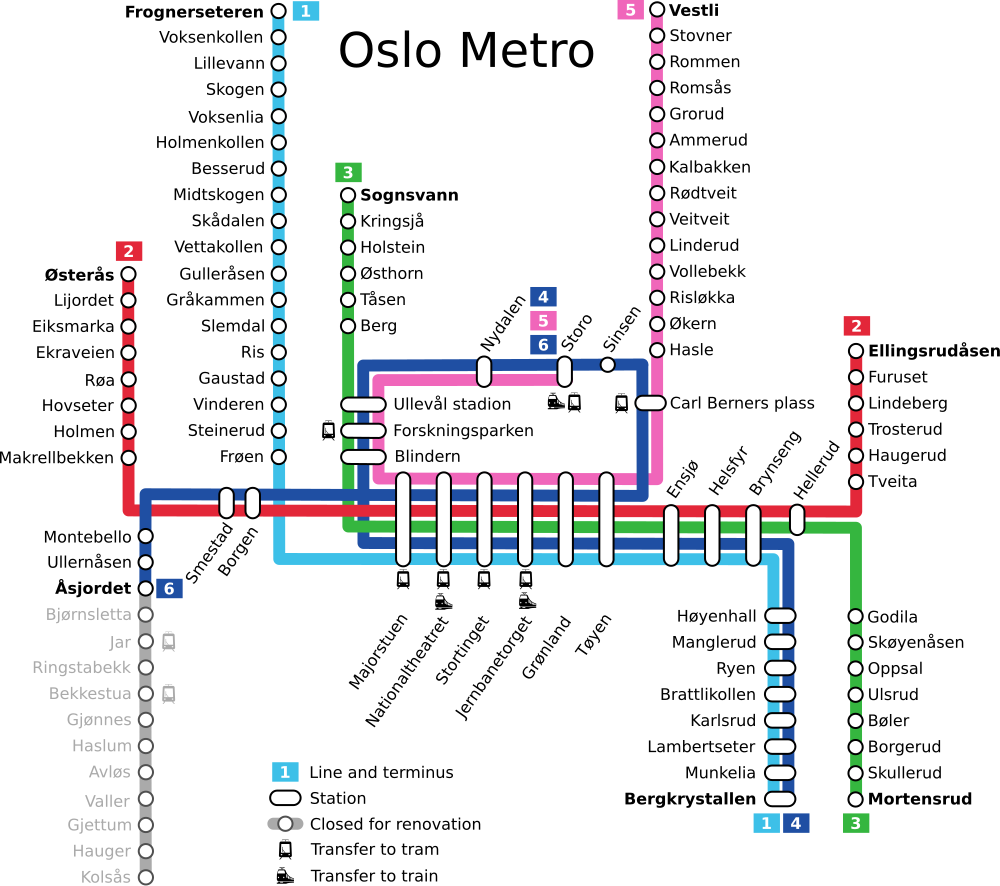
antoinolachtnai wrote: » That is a great parallel to Dublin's needs, but it is nothing like DART Underground. The Oslo tunnel accommodates six routes; DU would only accommodate one.
abitofacomedian wrote: » It actually had many functions:Greater penetration in to city centre destinations. Are you more likely to take public transport if it drops you 25mins walk from your office or 5mins walk. Greater utilisation of existing railway lines. The line into Heuston could easily carry 30,000 passengers an hour, at peak hours it currently carries around a fifth of this. Meanwhile the roads adjacent to it are gridlocked. If the train was made more desirable (via point 1 for example) more people would choose it over driving. By-pass the Connolly bottleneck. Currently the loop line is the only Liffey crossing, and is restricted to just 12 trains per hour per direction. Resignalling can increase that to 19, but then that's the hard limit. DART Underground would have created a new Liffey crossing, with an extra 20 trains per hour per direction capacity. Link up all different public transport lines into a network. We have plenty of high quality public transport lines in Dublin, but they are all of a point to point nature, most journeys are on one line and don't involve transfers. By making it easy to change you greatly increase the possible journeys that can be made. For example, currently a journey from Clondalkin to Howth would involve two changes and around 500m of walking. With DART Underground that would be one change and around 100m walk. Finally it was future proofed, many of the proposed long term public transport plans could use the DART as a backbone. No need for a new path through the city centre, just link up with the tunnel and most major city destinations are 5 mins walk from a station. Look at the Oslo t-ban for example. All of the spiderlegs coming out of the city were all old trainlines and tram routes. In the 80's the central tunnel was built and it all the separate routes were tied in to it to create a network. No matter which line you are on, all the city centre stations are accessible, Jernbantorget is the main railway and bus station, Stortinget is in the middle of the main shopping street and Nationaltheatret is beside most of the main tourist attractions. Trains serve that Central section every 60 seconds are so. The inner high density suburbs also have very frequent trains, as you move to the outer suburbs only two lines serve the station so trains are about every 6 minutes, and further out again only one line serves the station so trains are only every 15mins. Oslo's population is smaller than Dublin's. That was a much longer post than I intended to write. TL:DR DART Underground would have increased the usage on existing train lines, provided capacity for the future and brought more of the city close to high quality public transport. See Oslo for a peer city where a similar tunnel works very well.