gomamochi1 wrote: » We are in a similiar situation however insulation drylining your exterior facing walls is where I would spend the dosh first and replacing windows if needed. No point fitting back boiler stove spending thousands with the heat lashing out the walls!
celtictiger wrote: » Thanks for the advice but this has been done already....exterior walls that is. Windows are okay afaik. Did you install a stove or do the upgrades?
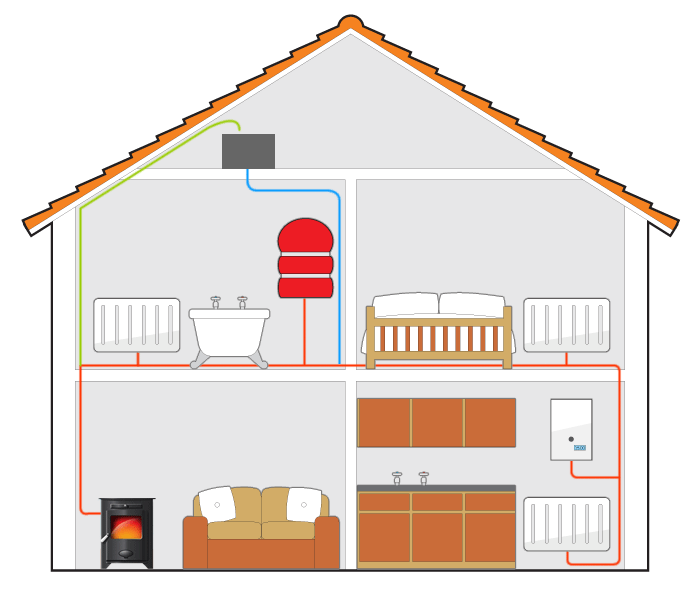
Conor20 wrote: » I've done a good bit of research, and there have been some good Boards.ie posts already which answered most of the questions I've had (here and here, as well as this thread). I have some specific requirements due to the space available however, and it would be great to hear people's perspectives - either if they've done this before, or people with plumbing/building experience they could apply to this situation. The background is that the house is a classic three bed semi. The living room is too small to fit a free standing wood burning stove, so the stove and back boiler will have to be inset into the fireplace. Ideally, it would have the heat output to heat all radiators in the house with no help from the gas boiler (which I will leave plumbed in as a backup, at least until the wood stove proves itself as able to heat the house.. However, the eventual goal is to move to exclusively wood for the radiators and hot water. We have one electric shower which means hot water for showers will be available in the summer when we don't have a need for any other heating). Some other threads have suggested Boru Stoves , and they do indeed stock an inset solid fuel stove and backboiler which seems to fit the bill (4KW output to the room and 11KW output to the hot water loop). The Boru 600ib Insert Boiler Stove seems to fit the bill, coming in around €2250 (from a different retailer, I haven't gotten a quote from Boru yet):) There is some great general information on the plumbing logic when installing backboilers here. For example, a setup like this: I have a few questions about the plumbing and logictics about a setup like this. Namely Will 11KW output of the back boiler provide enough hot water for a classic three bed semi (10 radiators)? How hard is it to actually plumb in the back boiler? Does it need to be plumbed directly to the hot water tank upstairs, or can it just have two pipes which link it to the two closest radiators? The fact that it will inset into the fireplace may mean drilling holes in the fire resistant layer of the fireplace - is this a difficult job which requires expert knowledge, or is it do-able by a DIY warrior? Is an extra pump required in the system? " If this is a vented system then incorporating a stove is relatively simple. If the system is unvented then there are only a few boiler stoves in the market that you can directly link to the system, but you might consider indirectly linking the systems (Type C (http://www.boilerstoves.co.uk/boiler-stove-installation-C.html) and Type D (http://www.boilerstoves.co.uk/boiler-stove-installation-D.html))." How does one find out if their system is vented, and what's the purpose of venting? To release excess heat? Thanks, Conor.
bigdawg wrote: » Hi Stovefan/All. We are looking at installing 2 stoves in our 2,000sq ft insulated dormer. One non-boiler stove in sittingroom (insert or stand out) and one larger boiler stove in Kitchen. About 14 rads in total off the boiler stove - though all may not be needed at same time so 10-12 in reality. We will probably replace our existing tank with a triple coil to allow for future solar if we go that route. Both plumbers that are pitching for the business seem to think that an insert stove would suffice as the main boiler stove in the kitchen but we have some reservations about this. One is that we fear the insert won't throw out enough heat to the rads as the fuel chambers are smaller on them and/or we will be loading it too often. Secondly, we fear that the insert will be in a tight spot and may not have enough room to expand or the costs needed to knock out the existing blockwork may push us towards a stand out stove. I suppose our real question is: are inserts a like-for-like option to a regular standout stove of the same output? We have our doubts and whilst the plumbers are genuine guys, once they do the install its not their issue after that? Whilst the main question is over type of stove (insert or stand out) we are also in a daze over the choice of stoves out there and find it hard to separate them. Currently, we are looking at Stanley, Olymberl, Blacksmith, Mulberry and Firewarm. They all look the same to us with only price differentiating them? Thanks for any input/advice.
jakko86 wrote: » Hi guys I'm currently building and want to put in a double sided "picture" type stove. The 2 I have seen are the scan dsa 12 and the barbas energa tunnel stove, I have external air supply brought to the fireplace and cavity space up chimney to vent to bedroom above. I'm concerned will the stove heat the area well with the kitchen on one side 5.2x4.4 and sitting room on the other 4.3x4.4m the bedroom above is the same size as sitting room. I'm more concerned about heating kitchen and sitting room really but I can't really find any reviews on these types of stoves and wonder how good they are as they are quiet expensive? Any help or advice would be great.
nono2012 wrote: » hi, bit of info on the house, have 16 double rads (need to confirm they are all double), room size is 4.59m X 4.43m.. We are looking for a boiler stove as this is what was in the house we are buying. We also have solar panels on the house. Anyone have any idea what size stove we would need? We have been told all sorts 20-21kw, 25-26kw and as low as 19kw?? We don't want something where we cannot bare the heat in the room but something that will heat the water and rads. O we also have central heating (encase this makes a difference).. thanks
RubyGirl wrote: » I'm getting a boiler inset in for the winter and had one quotation in already, out of the below three stove's which would you recommend as the best: Boru Chieftian Henley AChill Stratford EB16
Twiggynomore wrote: » Hi everyone, I have tried for the last two hours reading through as many of the stove questions and answers and didn't see any that answered all of the questions I have. So I apologise if they have been asked before. We had a chimney fire last January and got the top part of the chimney from the roof up replaced (chimney man said it was too small and against code) he then relined and insulated the chimney. We didn't like the two stoves he wanted us to buy(long story but didn't trust the man) so we got our own in a place I used to work in. The new stove was installed (vented through the back) and the pink fire board installed a few inches behind the stove. Originally we wanted the stove moved further back into the fireplace opening but he had some reason for not wanting to do it. Anyway, he lit the fire in the stove using wood and lighting it with a blow torch so we'd have a nice looking fire before he left the house. All was going well and we were amazed the heat coming from it. Then noticed that the backing was starting to blacken, long story short, our carbon monoxide alarm went off, buckets of water used, 2 fire extinguishers and the fire brigade later the fire in the recess/back of the fireplace was out. It was noted that there was wood and insulation back there that was not fire resistant. We were asked if the contractor had given us a fire certificate and were told he should have. Sooooooooooooo My questions are: Should he have given us a fire certificate when he completed the job? He used normal cement made by Irish Cement, nothing on site or bag that it was fire resistant. Is this normal to use or is fire resistant cement supposed to be used? He also used Evo-Stik mortar Plasticiser? Is this fire resistant? I would like to be able to tell you the name of the insulation he used in the first place, but can't as he brought it in an animal Feed bag. It was thick dirty wooly looking stuff. He told us the following day that the fire resistant insulation was out of stock the day he did it so he used the next best thing! He also used Skimcoat. Don't know if this has anything to do with it. The day he first installed the stove the bottom part where the air intake is, had the part you slide over to close when you want to after the fire is going was missing but we got the part the following day as it was missing when it was delivered. He is trying to claim that it was this that caused the fire and not his installation. He said the stove had no dual draft control system on it. What does this look like or is that what I just described above? He also is claiming that because I had taped over the seals at the window last winter as the breeze was coming in also added to the problem. I noticed in an earlier post that if a stove is being vented from the rear of the stove that the horizontal pipe should not be longer than 6". From a picture I took after the fire brigade took out the stove it looks like it is longer than 6". It also caught my eye in one of the other posts about having an accessible opening for the chimney to be cleaned and there is none on the room side of the stove, so how do we get the chimney cleaned where the chimney sweep can get the soot? Many thanks to anyone that can help me as my stomach has been full of acid from hearing what this person has said when I have pictures showing what products were used. He said he used Fireboard (the pink board?) Veremilate and superwool and all are certified products. Sorry for the long post and hoping I can get some answers.
snodles wrote: » Hunter Herald 14 Boiler Stove..... Wood Burner or Multi Fuel?? We are getting this stove installed on the 10th June and were in the process of ordering the multi fuel option however on speaking to the company we were buying from he has advised us against the multi fuel for the following reasons and wondered if anyone could shed any light on if these are true.... The multi fuel stove is hungry and goes through wood very fast the reason for this is because the wood is sitting on a grate rather than a bed of ash like it would be in the wood burner. The wood burner would allow for an over night burn... for the above reason's The man from the company said that he has a Hunter 14 its on 24/7 from march to October and he only loads it 3 times a day with wood.... how true is this? Our installer has told us not to let anyone talk us out of getting a multi fuel but I don't know what to believe a man who's been selling burners in the family for 40 years or an installer who just installs them??? Coal was never an option or burning because after all said and done we want free heating from wood and paper briquette... we didn't want to start buying coal.... any advice gratefully received. thank you.