Okay, recipe time again, and again going with an American classic, this time meatloaf (yes, I know, we did it before, but this one's different). And as with all recipes, we start with a history lesson. Born Marvin Lee Aday in September 1947.... ah. Right, sorry, wrong notes, give me a second...
FINELY CUT PULP [of pork] IS GROUND WITH THE HEARTS OF WINTER WHEAT AND DILUTED WITH WINE. FLAVOR LIGHTLY WITH PEPPER AND BROTH AND IF YOU LIKE ADD A MODERATE QUANTITY OF [myrtle] BERRIES ALSO CRUSHED, AND AFTER YOU HAVE ADDED CRUSHED NUTS AND PEPPER SHAPE THE FORCEMEAT INTO SMALL ROLLS, WRAP THESE IN CAUL, FRY, AND SERVE WITH WINE GRAVY.
That's
Apicius de re Coquinaria, a 5th century Roman cookbook of sorts, and that does appear to be a kind of meatloaf-ish recipe ("hearts of wheat" refers to very fine wheat flour). Though if you make it, it doesn't so much look like meatloaf as... I dunno, a peanut biscuit made with meat that's gone even more wrong than it sounds?
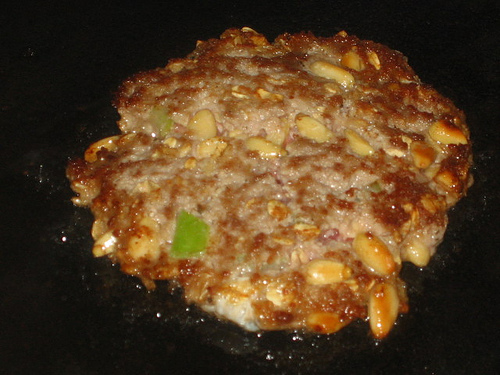 Apicius's meatloaf
But there are recipes from all over the world that are kinds of meatloaf-ish things - Lihamureke in Finland, Hackbraten in Germany, Kofta in most of the middle east, Bobotie in South Africa, and хучмал in Mongolia (and if you can pronounce that, well done...). So if there are so many dishes from so many places, what is "meatloaf" in the American sense and why do we say it's American at all?
Turns out, it's the same answer to both questions. The absolute must-have ingredients in meatloaf are minced meat, filler, and a loaf shape. (Yes, I'm counting the shape as an ingredient, go show me the difference between a bundt pan and an angel food pan if you think shape's irrelevant to the dish :P ). The minced part of the minced meat is the key to the second question - look at that Roman recipe again and you'll note it talks about
finely cut pork, not minced pork. Prior to 1900 or so, cooks took the meat for their meatloafish dishes, put it in a large wooden bowl, took something like a mezzalune and spent a half-hour hacking the meat to tiny tiny bits. Which, given that you don't make mince from prime cuts of meat, wouldn't have been a terribly light job. So while these dishes could stretch out tough meat to feed more people, they weren't really easy to prepare (also, when you cut up a chunk of meat you massively increase its surface area, often by a few thousand times, and that gives a lot more access to the meat to bacteria in the air, so all that hard work prepping the meat had to be done right before cooking).
Then, around 1900, meat grinders began to appear on the market (invented by the man who would go on to invent the first bicycle, and I know there's a joke in there somewhere but I've not found it yet). This happened at the same time that refrigeration began to be used, not so much in homes, but for transporting beef around the US. So suddenly it was easy and fast to buy meat and to grind tougher cuts of meat to tender mince (the grinders were hand-cranked but could mince a pound of meat in about a minute as opposed to about a half-hour of hard work before that). And the various immigrants in the US all had recipes for meatloafish things made with chopped meat, so they adapted and started using mince, and so meatloaf proper was invented as an American dish.
But the reason meatloaf became so popular in the US came twenty years later, when the great depression hit and suddenly meatloaf was a poor person's recipe in the middle of a lot of poor people and it was suddenly being made everywhere. And after the great depression, companies like Heinz and Campbells, who were taking lessons learnt about tinning and food preparation for tins from the first world war and using it to create and dominate markets in things like tinned soup and ketchup, started promoting recipes that could use their products and meatloaf was one of the main contenders. The reduction in the availability of meat during the second world war just secured the popularity of meat loaf again, and it's never really been out of fashion in the US since (it's even had two or three bouts of being considered gourmet fare, but it's recovered every time

).
In Ireland? Yeah, I don't remember ever eating meatloaf growing up, but then I didn't know herbs came in anything other than "mixed" for most of that childhood either. But it doesn't seem to be hugely popular here yet. However, we're all poor now, so maybe that'll change
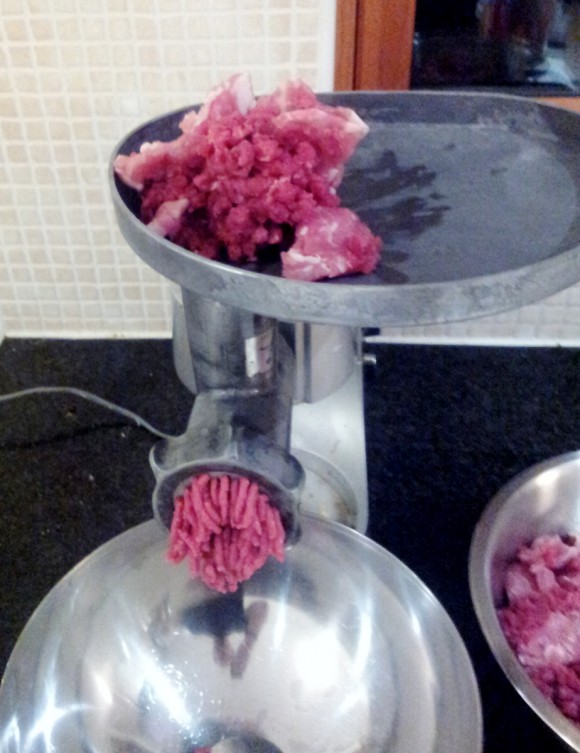
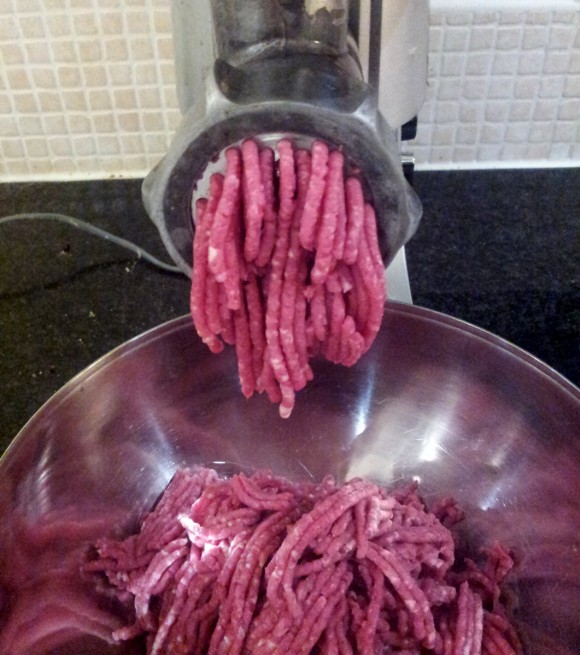
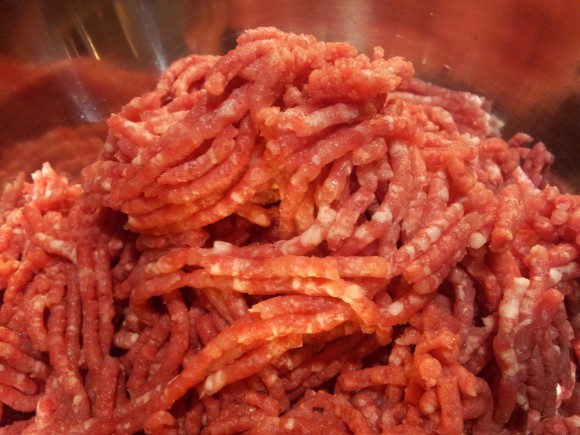
Okay, enough history, on to the food. With a quick pit stop for equipment. See, meatloaf is utterly tied to one piece of kitchen equipment - the mincer (doesn't matter if the butcher used it before you bought the mince, you still needed one to exist to make meatloaf). Most kitchens don't have their own these days. Hey, no big deal, just buy some mince from tesco or whomever if you don't want to spend twenty euro (including P+P) on
a hand mincer on ebay, that's cool. I mean, horse mince is meat too...
:pac:
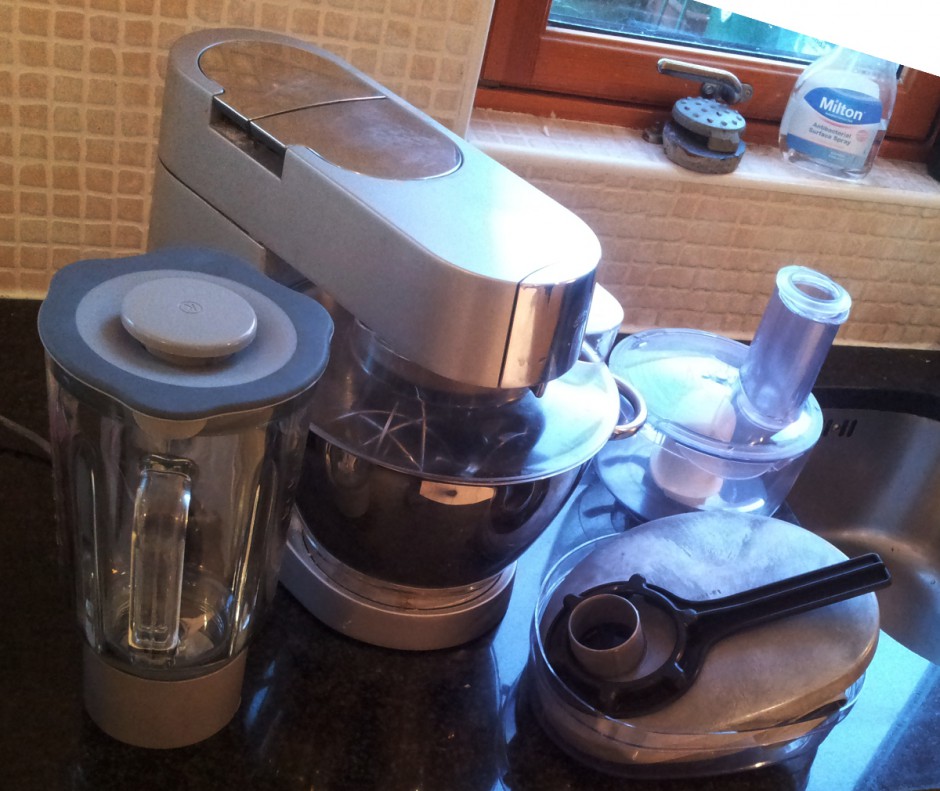
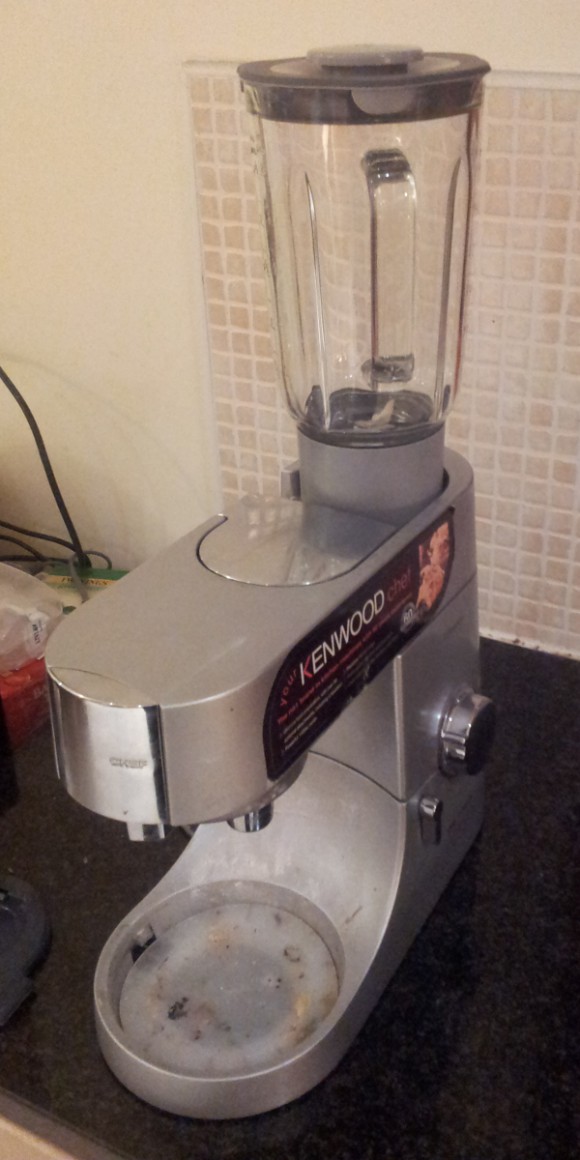
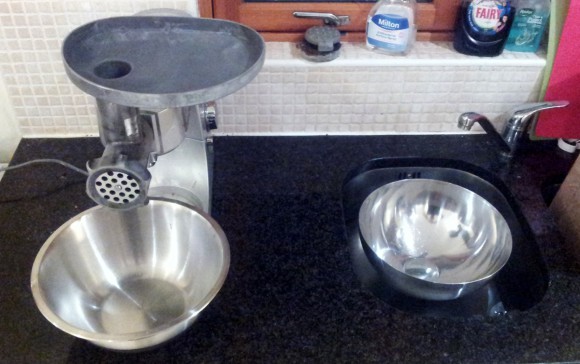
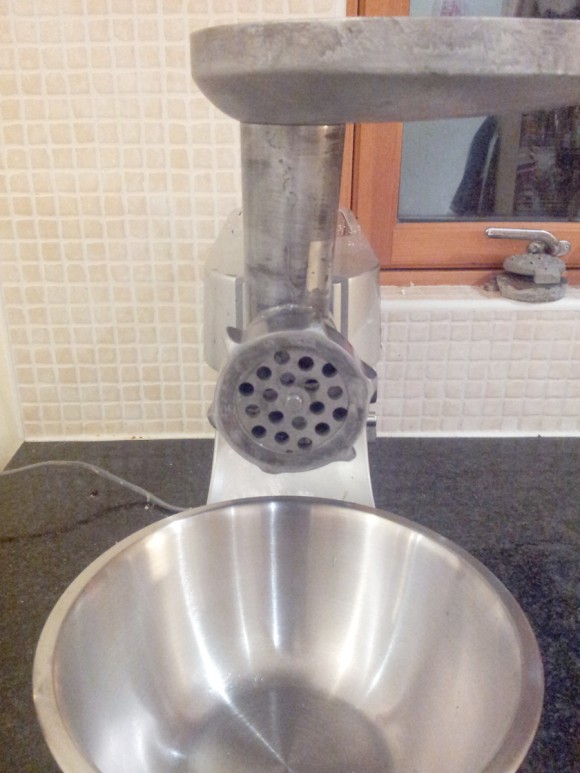
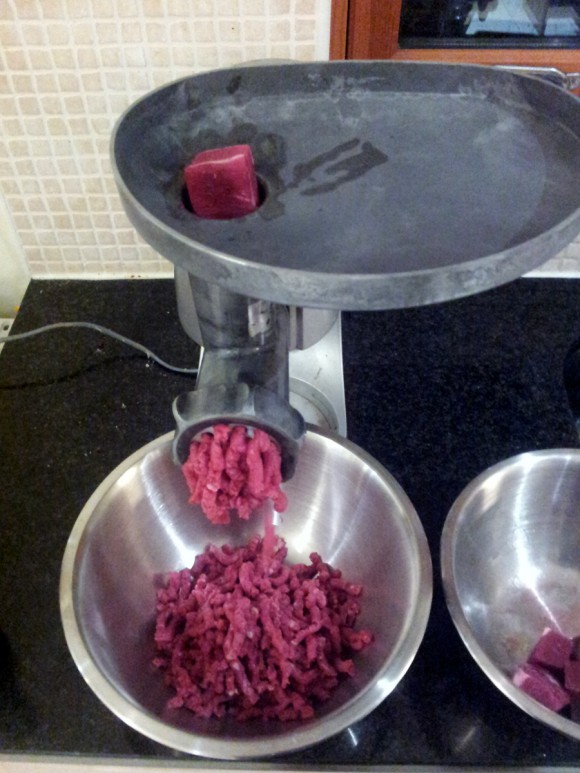
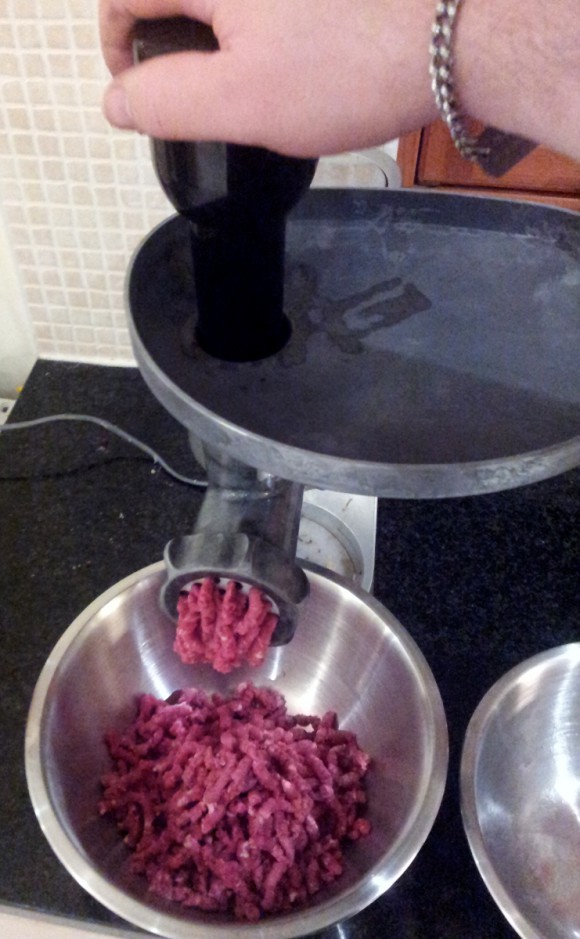
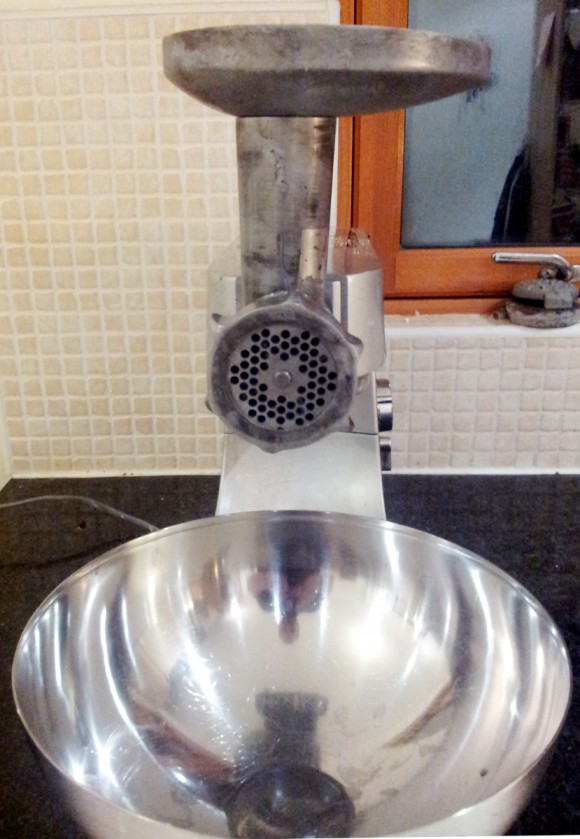
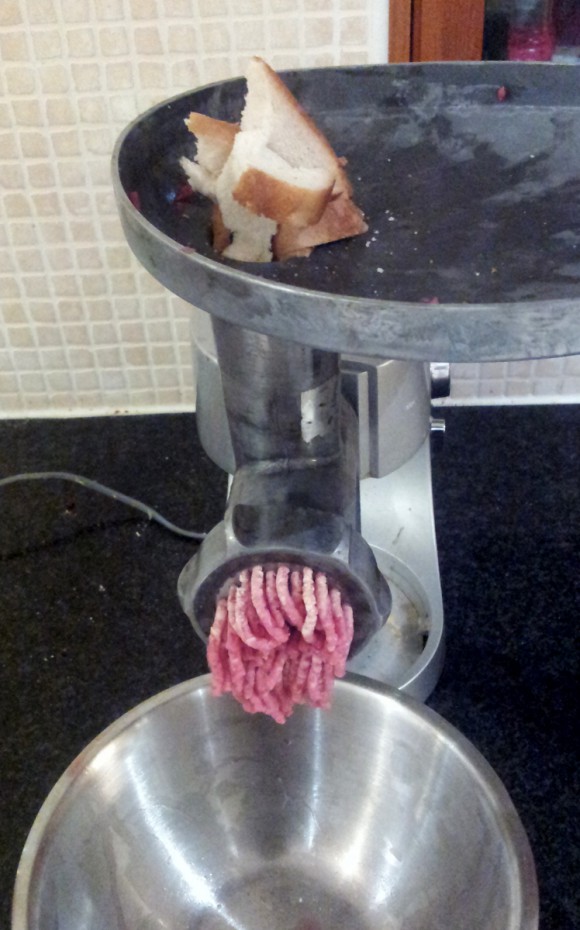
Seriously though, hand mincers haven't changed since 1900. They're cheap, sturdy, useful and fairly small so relatively easy to store. Worth thinking about. In my case, I splurged and bought one as an attachment for my Kenwood Chef. If you have one of those, they're great, but there's a quirk or two - more on that as we go. But for now, kitchen equipment porn:
I'll be using the liquidiser and the food processor for this recipe too, because why not? (Also, we already had
a meatloaf recipe a year or two ago in here, so I'm doing as much from scratch as I can so this isn't some ripoff of that recipe
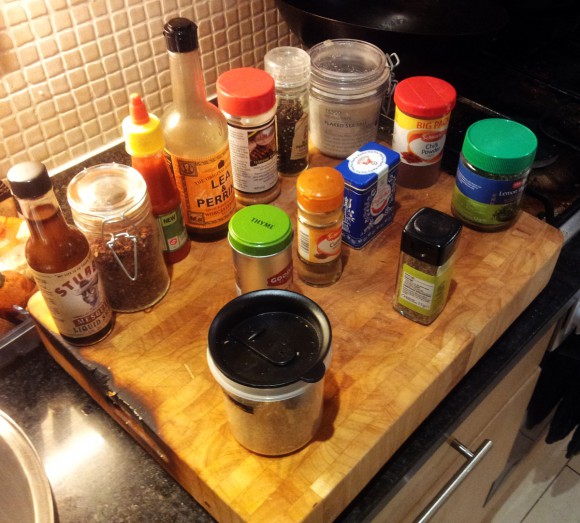
). Okay, now the ingredients. I'm going to take these in two parts (I'll put a shopping list at the end), first the meatloaf itself and then the glaze. So, here's the meatloaf ingredients:
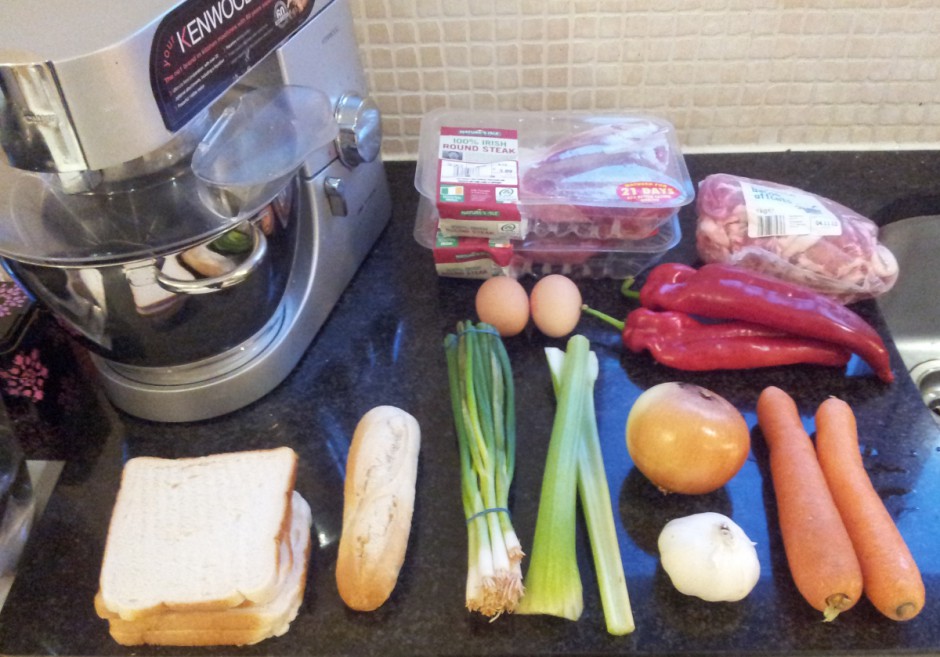
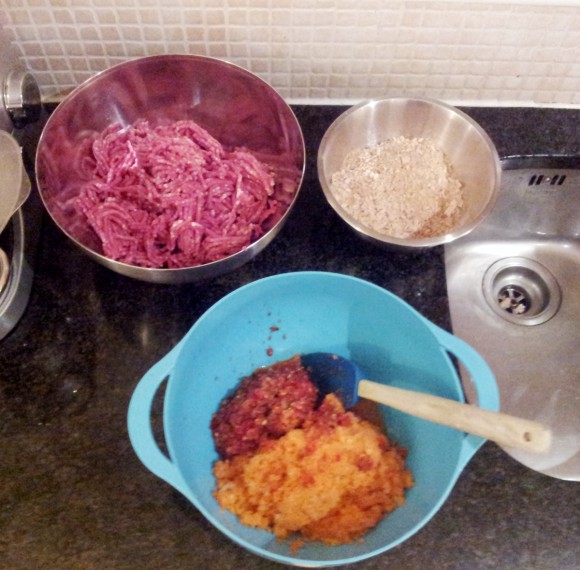
At the back, we have the meat - two round steaks from Aldi, and some bacon offcuts, also from Aldi. The round steak is just nothing fancy, they weigh around 400g each and cost about three to four euro. The bacon offcuts might not be so familiar -- Aldi actually sell those as "bacon offcuts" and they're brilliant because they're cheap, there's usually a nice amount of fat in there for mince, and you're not using a nice rasher for something that really you can do better with trimmings. Sometimes they're offcuts from rashers, sometimes from whole slabs of bacon, either is grand. If you can't find these, just use back bacon or rashers (see the chilli recipe for details on back bacon, if you need details on rashers, you're either not Irish or beyond help). Don't want to use bacon? Got lamb? Pork? Veal? All are good for this, alone or in combination (in much of the US, a 1:1:1 mix of beef, pork and veal is the standard meatloaf mix, but I prefer my 2:1 beef:bacon mix).
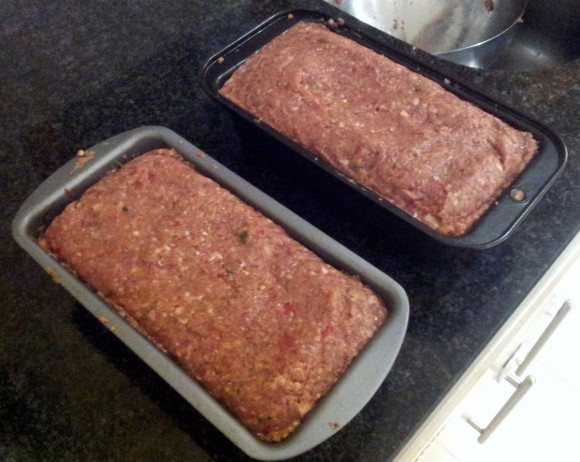
I'm buying everything for this meatloaf from Aldi (bar some of the spices which I had from a shopping run to Tesco - again, this is poor people food, so the idea is not to need a side trip to spend a three figure sum in Fallon&Byrnes or to order something from Outer Mongolia over the internet). In terms of amounts, one steak will generally do one meatloaf which will feed up to six people if you're also doing mashed potatoes; but I generally do a batch of two (which is what we have here) and freeze the uncooked meatloaf (more on that later).
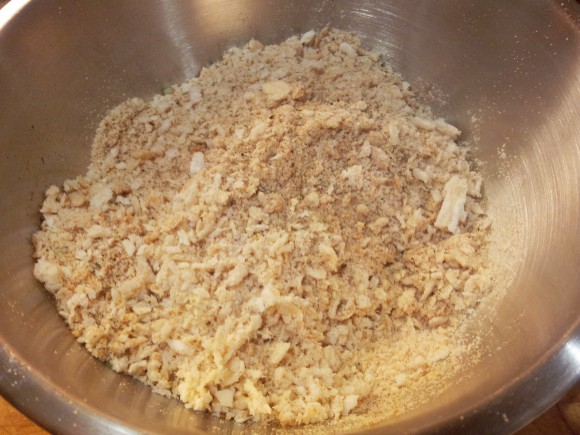
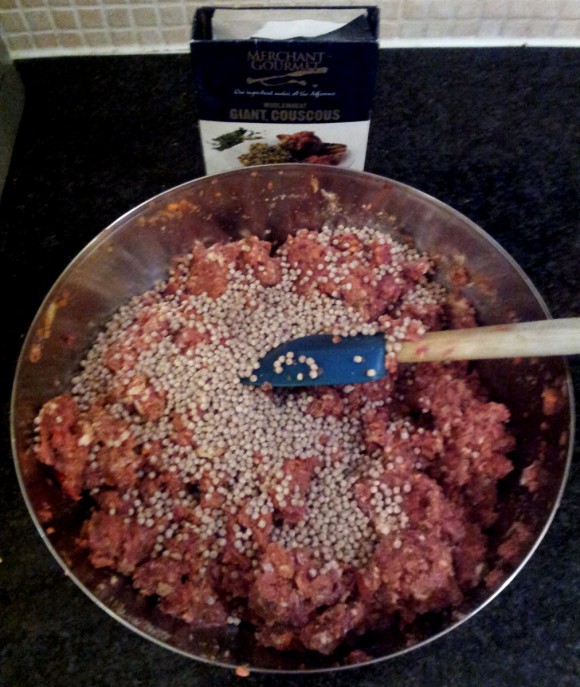
The rest of the ingredients are straightforward - some bread (stale if you have it, the harder the better but avoid mold; if you don't have stale bread, take a few slices of ordinary panloaf bread, about two per steak, and put them in a 100C oven for 15 minutes or until they're dry to the touch and look like really really pale toast - don't actually toast them, you just want to dry them out) to act as the filler along with some spices that I'll get to in a minute, and some couscous that I like to add later on; two eggs to act as a binder (generally one egg per steak); and assorted veggies because they make it taste better.
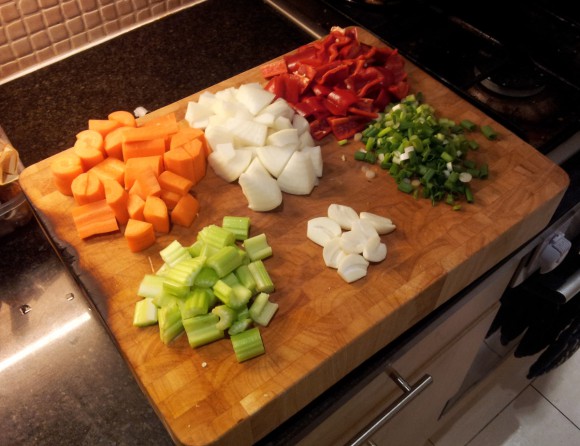
The veggies themselves are something you can vary for taste - I like to start with a normal mix of onions, carrots and celery; then add some garlic, some peppers and some spring onions. But you can use whatever is in the pantry/fridge/shopping bag. Meatloaf is fridge velcro that way, most poor person food is.
Okay, first prep first. Take your meat and put it in the freezer. Now go have a cuppa for at least a half-hour. I just stuck the steaks into the freezer when I got home from the shop and didn't pull them out until the evening I was prepping the meatloaf. Temperature is an issue with mincing - you want everything nice and cold, because then the fat stays solid and gets cut up and distributed evenly through the meat instead of melting and pooling everywhere or partly melting, getting soft and smearing instead of cutting when the mincer hits it. So stick all the meat in the freezer until it's hard; and freezing and defrosting it isn't going to ruin the meal either. I forgot to freeze the bacon while cooking this, and it made things just that bit harder as a result. So don't do that.
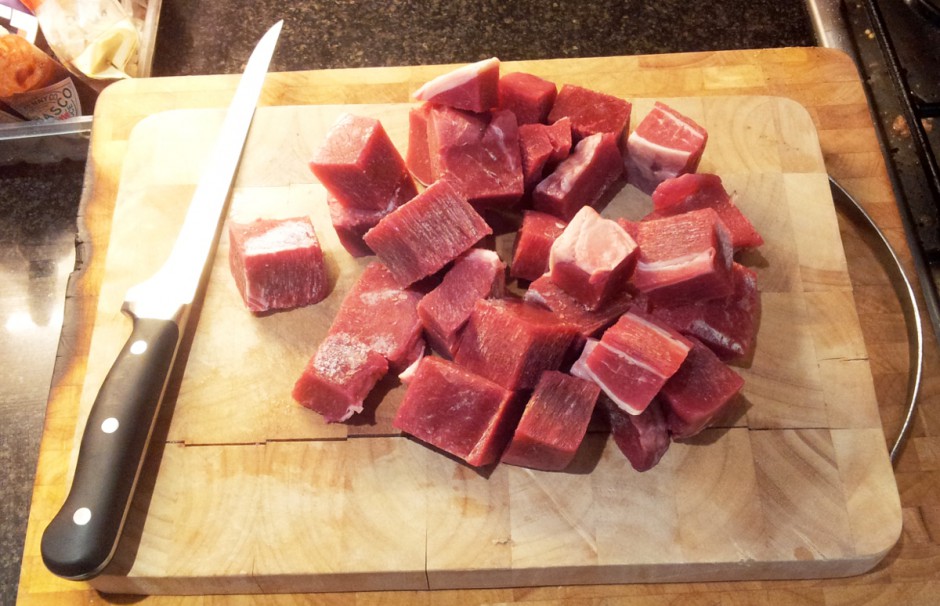
Now take your frozen steaks and a nice sharp knife and trim off anything that's too gnarly (but don't trim off the fat, you want that for the dish), and then cut the steaks into two-inch chunks. Big honking pieces, please.
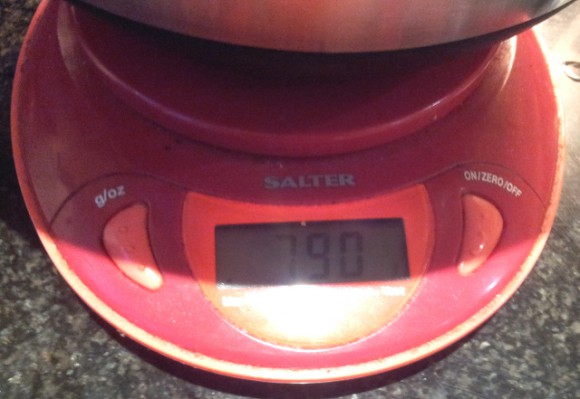
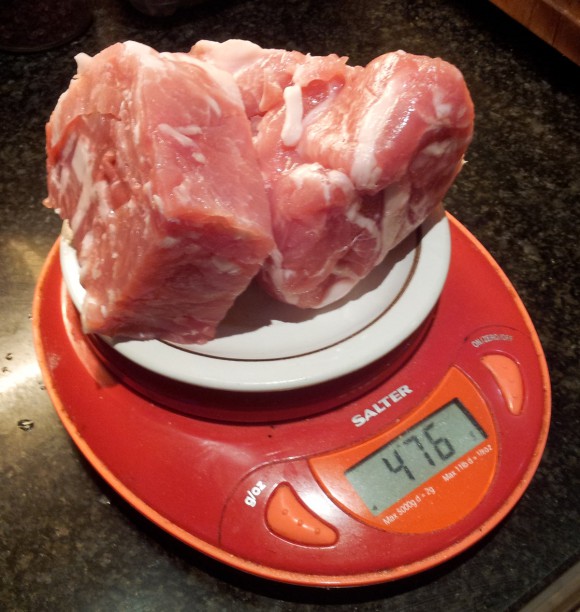
So I have almost 800g of meat here. I want around about a 2:1 beef:bacon ratio in the final mix, but I'm not hugely fussy so I cut off a chunk or two of the bacon offcuts (here I cut too much, but meh, it's bacon, it's all good):
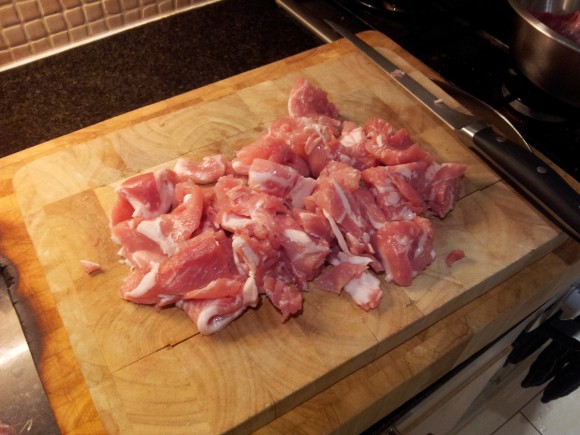
You can see here that this week the offcuts are from rashers (last week it was from solid cuts). No worries, it's all for the mincer anyway. And yeah, it's 8:5 rather than 2:1 but that's okay. Now chop that bacon down to roughly two-inch chunks (very roughly if it's rashers as in this case):
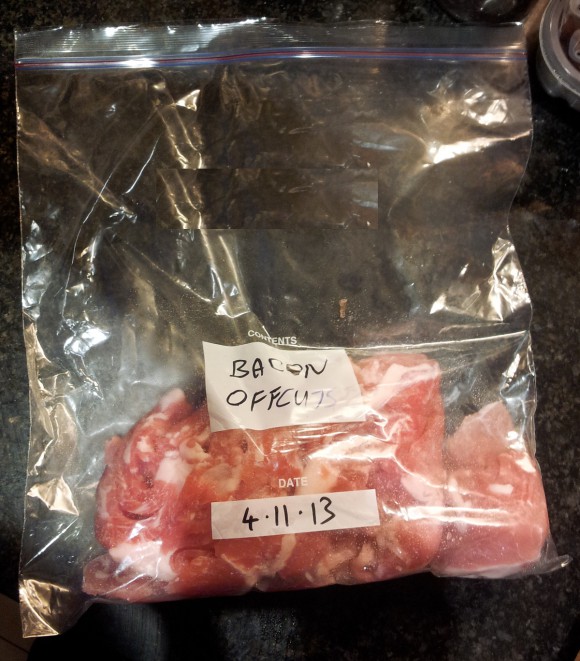
Don't mix the two meats yet, keep the chunks in different bowls please. And if you have any offcuts left over, into the ziptop bag they go and into the freezer with them (it's poor people food, so please, no wasting stuff).
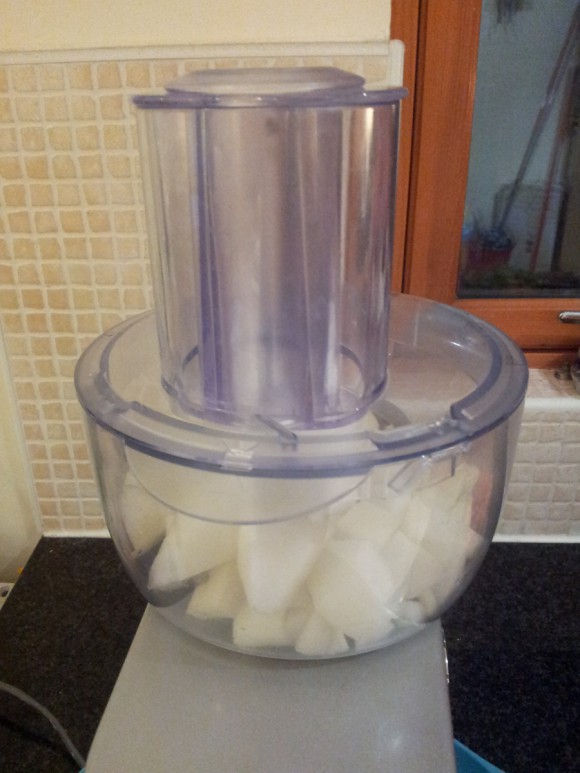
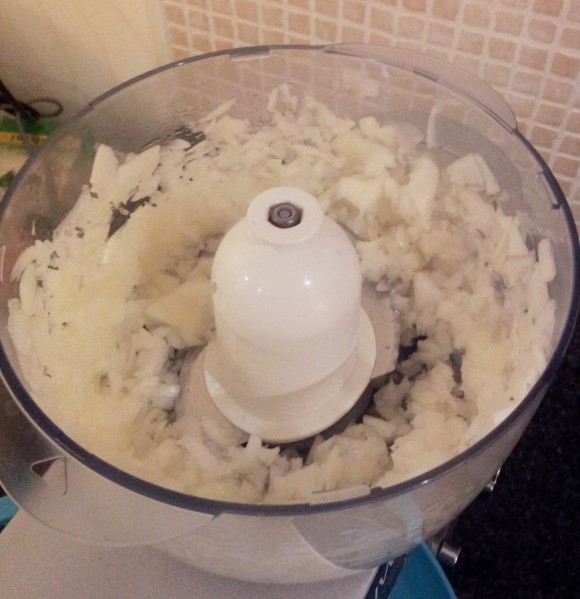
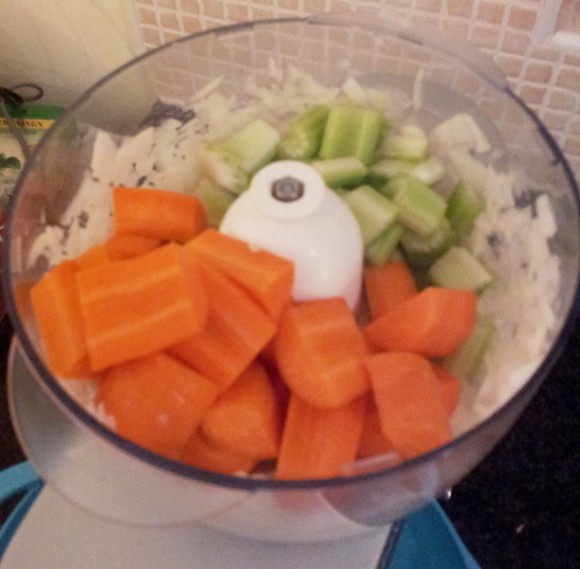
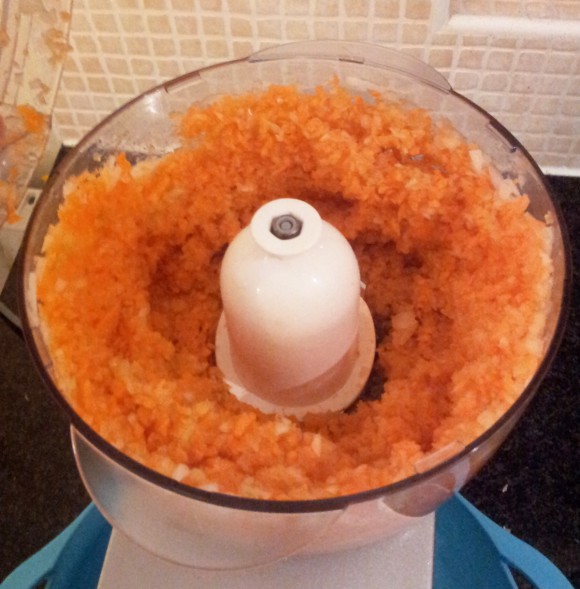
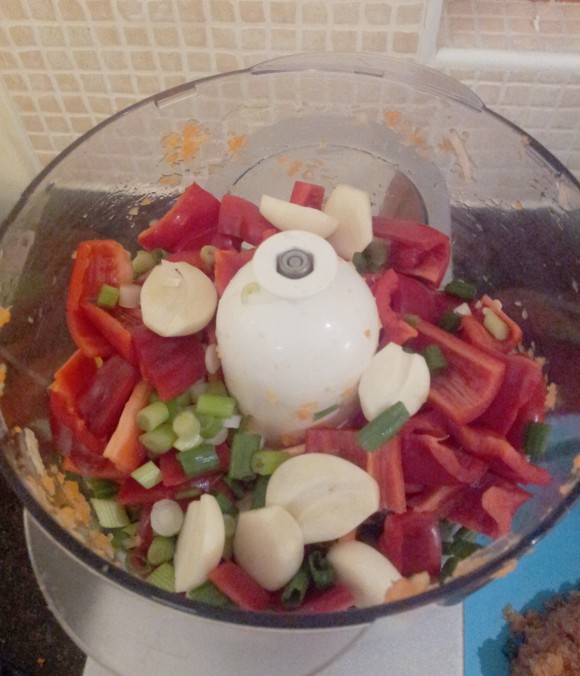
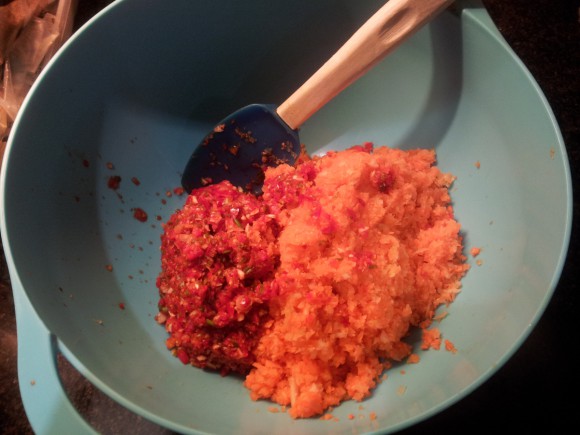
Now, onto the veggies. We don't need to break them down to fine dices or juliennes here, we just need to get them roughly chopped so they'll fit into the food processor better. If you're taking more than five minutes to do all this lot, you're being too prissy about it (though I did take the time to remove the central green bit from the garlic 'cos the sprouts taste a bit bitter).



![Photo of [Deleted User]](https://w7.vanillicon.com/v2/7218841e83b58ddf6174aa940b59b151.svg)


