Trent McCauley is obsessed with making movies. But when his illegal download habit causes his family's Internet to be cut off, he's forced to run away from Bradford to London. Squatting in an East End pub, Trent falls in with a band of activists who introduce him to dumpster diving, graveyard raves and the anarchist girl of his dreams. When a new bill threatens to criminalise Internet creativity, the future looks bleak, but the film industry fat cats--and the MPs they hold in their pocket--haven't reckoned with the power of a gripping movie to change the people's minds...
The craft of writing offers countless potential problems: The story is too long; the story's too short; revising presents a huge hurdle; writer's block is rearing its ugly head. In HELP! FOR WRITERS, Roy Peter Clark presents an "owner's manual" for writers, outlining the seven steps of the writing process, and addressing the 21 most urgent problems that writers face. In his trademark engaging and entertaining style, Clark offers ten short solutions to each problem. Out of ideas? Read posters, billboards, and graffiti. Can't bear to edit yourself? Watch the deleted scenes feature of a DVD, and ask yourself why those scenes were left on the cutting-room floor. HELP! FOR WRITERS offers 210 strategies to guide writers to success.
Tami Hoag is in a class by herself, beloved by readers and critic s alike, with more than 22 million copies of her books in print. California, 1984. Four children, running in the woods behind their school, stumble upon a partially buried female body, eyes and mouth glued shut. Close behind the children is their teacher, Anne Navarre, shocked by this discovery and heartbroken as she witnesses the end of their innocence. What she doesn’t yet realize is that this will mark the end of innocence for an entire community, as the ties that bind families and friends are tested by secrets uncovered in the wake of a serial killer’s escalating activity. Detective Tony Mendez, fresh from a law enforcement course at FBI headquarters, is charged with interpreting those now revealed secrets. He’s using a new technique—profiling—to develop a theory of the case, a strategy that pushes him ever deeper into the lives of the three children, and closer to the young teacher whose interest in recent events becomes as intense as his own. As new victims are found and the media scrutiny of the investigation bears down on them, both Mendez and Navarre are unsure if those who suffer most are the victims themselves—or the family and friends of the killer, blissfully unaware that someone very close to them is a brutal, calculating psychopath.
Philosophers have always enjoyed asking akward and provocative questions. Some of these include: What is the nature of reality? What are human beings really like? What is special about the human mind and consciousness? Are we free to choose who we are and what we do? Can we prove that God exists? Can we be certain about anything at all? What is truth? Does language provide us with a true picture of the world? How should we behave towards each other? Do computers think? Written by Dave Robinson and illustrated by Judy Groves, Introducing Philosophy is a comprehensive and enjoyable graphic guide to philosophical thinking. It examines and explains the key arguments and ideas of all the significant philosophers of the Western world from Heraclitus to Derrida. Lively, accessible and never obscure, it is the perfect introduction for anyone who is intrigued by who philosophers are, and the sort of questions they ask.
Dodger is a tosher - a sewer scavenger living in the squalor of Dickensian London. Everyone who is nobody knows Dodger. Anyone who is anybody doesn't. But when he rescues a young girl from a beating, suddenly everybody wants to know him. And Dodger's tale of skulduggery, dark plans and even darker deeds begins . . .
What is the place of individual choice and consequence in a post-Holocaust world of continuing genocidal ethnic cleansing? Is "identity" now a last-ditch cultural defence of ethnic nationalisms and competing fundamentalisms? In a climate of instant information, free markets and possible ecological disaster, how do we define "rights", self-interest and civic duties? What are the acceptable limits of scientific investigation and genetic engineering, the rights and wrongs of animal rights, euthanasia and civil disobedience?"Introducing Ethics" confronts these dilemmas, tracing the arguments of the great moral thinkers, including Socrates, Plato, Aristotle, Hobbes and Kant, and brings us up to date with postmodern critics.
Logic is the backbone of Western civilization, holding together its systems of philosophy, science and law. Yet despite logic's widely acknowledged importance, it remains an unbroken seal for many, due to its heavy use of jargon and mathematical symbolism.This book follows the historical development of logic, explains the symbols and methods involved and explores the philosophical issues surrounding the topic in an easy-to-follow and friendly manner. It will take you through the influence of logic on scientific method and the various sciences from physics to psychology, and will show you why computers and digital technology are just another case of logic in action.
Our world is, increasingly, a digital one. Over half of the planet’s adult population now spend more of their waking hours ‘plugged in’ than not, whether to the internet, mobile telephony, or other digital media. To email, text, tweet and blog our way through our careers, relationships and even our family lives is now the status quo. But what effect is this need for constant connection really having? For the first time, Tom Chatfield examines what our wired life is really doing to our minds and our culture - and offers practical advice on how we can hope to prosper in a digital century.
Understand Political Philosophy is an in-depth guide to the philosophers and political ideas who have shaped our society. Quickly and easily get to grips with the key thinkers and theories, from Aristotle to Wollstonecraft, from capitalism to utilitarianism. With exploration of contemporary issues and current debates, this book will put political philosophy in the context of the world we live in today.
Will Storr was in the tropical north of Australia, excavating fossils with a celebrity creationist, when he asked himself a simple question. Why don’t facts work? Why, that is, did the obviously intelligent man beside him sincerely believe in Adam and Eve, the Garden of Eden and a six-thousand-year-old Earth, in spite of the evidence against them? It was the start of a journey that would lead Storr all over the world – from Texas to Warsaw to the Outer Hebrides – meeting an extraordinary cast of modern heretics whom he tries his best to understand. He goes on a tour of Holocaust sites with David Irving and a band of neo-Nazis, experiences his own murder during ‘past life regression’ hypnosis, discusses the looming One World Government with iconic climate sceptic Lord Monckton and investigates the tragic life and death of a woman who believed her parents were high priests in a baby-eating cult. Using a unique mix of highly personal memoir, investigative journalism and the latest research from neuroscience and experimental psychology, Storr reveals how the stories we tell ourselves about the world invisibly shape our beliefs, and how the neurological ‘hero maker’ inside us all can so easily lead to self-deception, toxic partisanship and science denial.
Jack McEvoy is a Denver crime reporter with the stickiest assignment of his career. His twin brother, homicide detective Sean McEvoy, was found dead in his car from a self-inflicted bullet wound to the head--an Edgar Allen Poe quote smeared on the windshield. Jack is going to write the story. The problem is that Jack doesn't believe that his brother killed himself, and the more information he uncovers, the more it looks like Sean's death was the work of a serial killer. Jack's research turns up similar cases in cities across the country, and within days, he's sucked into an intense FBI investigation of an Internet pedophile who may also be a cop killer nicknamed the Poet. It's only a matter of time before the Poet kills again, and as Jack and the FBI team struggle to stay ahead of him, the killer moves in, dangerously close. In a break from his Harry Bosch novels--including The Concrete Blonde and The Last Coyote--Edgar-winning novelist Michael Connelly creates a new hero who is a lot greener but no less believable. The Poet will keep readers holding their breath until the very end: the characters are multilayered, the plot compelling, and the denouement a true surprise. Connelly fans will not be disappointed. --Mara Friedman
"What do you think of my fiction book writing?" the aspiring novelist extorted. "Darn," the editor hectored, in turn. "I can not publish your novel! It is full of what we in the business call 'really awful writing.'" "But how shall I absolve this dilemma? I have already read every tome available on how to write well and get published!" The writer tossed his head about, wildly. "It might help," opined the blonde editor, helpfully, "to ponder how NOT to write a novel, so you might avoid the very thing!" Many writing books offer sound advice on how to write well. This is not one of those books. On the contrary, this is a collection of terrible, awkward, and laughably unreadable excerpts that will teach you what to avoid--at all costs--if you ever want your novel published. In "How Not to Write a Novel," authors Howard Mittelmark and Sandra Newman distill their 30 years combined experience in teaching, editing, writing, and reviewing fiction to bring you real advice from the other side of the query letter. Rather than telling you how or what to write, they identify the 200 most common mistakes unconsciously made by writers and teach you to recognize, avoid, and amend them. With hilarious "mis-examples" to demonstrate each manuscript-mangling error, they'll help you troubleshoot your beginnings and endings, bad guys, love interests, style, jokes, perspective, voice, and more. As funny as it is useful, this essential how-NOT-to guide will help you get your manuscript out of the slush pile and into the bookstore.
Another addition to "The World's Greatest Art" series, this intriguing new book covers the folk art of South and North America and aboriginal traditions. The influences section also refers to the many folk traditions throughout the world and offers an intriguing insight into tribal, early and contemporary folk art.
Athletes practice. Musicians practice. As a writer you need to do the same. Whether you have dreams of writing a novel or a memoir or a collection of poems, or you simply want to improve your everyday writing, this innovative book will show you how to build your skills by way of practice. Through playful and purposeful exercises, you'll develop your natural aptitude for communication, strengthening your ability to come up with things to say, and your ability to get those things into the minds (and the hearts) of readers. You'll learn to: Train and develop your writer's powers--creativity, memory, observation, imagination, curiosity, and the subconsciousUnderstand the true nature of the relationship between you and your readersFind your writer's voiceGet required writing projects done so you have more time for the writing you "want" to doAnd much more Empowering and down-to-earth, "How to Be a Writer" gives you the tools you need, and tells you what (and how) to practice so that you can become the writer you want to be.
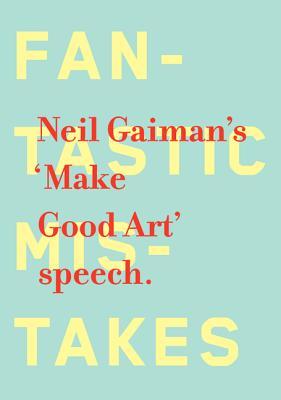
In May 2012, bestselling author Neil Gaiman delivered the commencement address at Philadelphia’s University of the Arts, in which he shared his thoughts about creativity, bravery, and strength. He encouraged the fledgling painters, musicians, writers, and dreamers to break rules and think outside the box. Most of all, he urged them to make good art. The book Make Good Art, designed by renowned graphic artist Chip Kidd, contains the full text of Gaiman’s inspiring speech. Video available here:http://vimeo.com/42372767
'I was 22 years old, a hard-on with a pulse: wretched, vice-ridden, too much to burn and not enough minutes in a hour to do so' The action begins in West Des Moines, Iowa, where Corey Taylor, frontman of heavy metal bands Slipknot and Stone Sour, systematically set about committing each of the Seven Deadly Sins. He has picked fights with douche bags openly brandishing guns. He has set himself on fire at parties and woken up in dumpsters after cocaine binges. He lost his virginity at eleven. He got rich and famous and immersed himself in booze, women, and chaos until one day he realised, suddenly, that he didn't need any of that at all. Now updated with a brand new chapter, Seven Deadly Sins is a brutally honest look at 'a life that could have gone horribly wrong at any turn', and the soul-searching and self-discovery it took to set it right.
Writing a Book is a Journey--don't get lost along the wayWriting a book requires a focus, a sense of knowing and trusting in yourself and your work. And it requires an unflinching commitment to staying the course. "Chapter After Chapter" shows you how to build on your good writing habits, accrue and recognize tiny successes, and turn your dedication to the craft into the book you always knew you could write if you could just stay with it. Heather Sellers, author of "Page After Page," draws on her first-hand experience as a novelist, poet, memoirist, and children's book author to help you prepare for whatever roadblocks you might encounter while writing the book of your dreams. You'll discover how to celebrate the momentum of slow and steady, stay in love with your book project through soggy middles and long revisions, and embrace the nakedness that is creative expression. And you'll realize you've got exactly what it takes to write your book!
As part of the ongoing Dark Horse celebration of Hellboy in 2004, Christopher Golden (author of the Hellboy novels The Lost Army and The Bones of Giants) has brought together a stellar array of talents to further the Hellboy canon. Lavishly illustrated by creator Mike Mignola! Contents: Introduction / Frank Darabont; * The Brotherhood of the Gun / Frank Darabont; * From an Enchanter Fleeing / Peter Crowther; * Down in the Flood / Scott Allie; * Newford Spook Squad / Charles de Lint; * Water Music / David J. Schow; * The Vampire Brief / James L. Cambias; * Unfinished Business / Ed Gorman, Richard Dean Starr; * Saint Hellboy / Tom Piccirilli; * Sleepless in Manhattan / Nancy Kilpatrick; * The Wish Hounds / Sharyn McCrumb; * Act of Mercy / Thomas E. Sniegoski; * The Thrice-named Hill / Graham Joyce; * Of Blood, of Clay / James A. Moore; * A Full and Satisfying Life / Ray Garton; * The Glass Road / Tim Lebbon; * Tasty Teeth / Guillermo del Toro, Matthew Robbins
One glance at Now and Then and it becomes evident that this is not merely a collection of a songwriter's lyrics. The song-poems of this undisputed "bluesologist" triumphantly stand on their own, evoking the rhythm and urgency which have distinguished Gil Scott-Heron's career. This, the first ever collection of his poems to be published in Britain, carries the reader from the global topics of political hypocrisy and the dangers posed by capitalist culture to painfully personal themes and the realities of modern day life. His message is black, political, historically accurate, urgent, uncompromising and mature and as relevant now as it was when he started, back in the early seventies.
Jernal wrote: » How was Bad Pharma?:)
Exploring how fiction works, this manual shows you how you can learn to understand it well enough to crack open any fictional narrative, and, if you like, start creating your own. Have you ever had your heart broken, or broken someone else's heart? Have you ever won an argument but later realized you were wrong? Have you ever tripped in public or spilled wine on someone else's carpet? Have you ever tried to help someone who didn't want to be helped—or even someone who did? Have you ever been in trouble, big or small? Have you ever felt trapped? Have you ever gossiped, felt bad about it, and then found that you've been the subject of gossip yourself? Have you ever basically felt like a chimp in a pair of jeans, caught up in endless drama and with no idea of how the universe works? This is an ode to secret power of stories, and a guide to cracking those powers open.
‘Bad Science’ hilariously exposed the tricks that quacks and journalists use to distort science, becoming a 400,000 copy bestseller. Now Ben Goldacre puts the $600bn global pharmaceutical industry under the microscope. What he reveals is a fascinating, terrifying mess. Doctors and patients need good scientific evidence to make informed decisions. But instead, companies run bad trials on their own drugs, which distort and exaggerate the benefits by design. When these trials produce unflattering results, the data is simply buried. All of this is perfectly legal. In fact, even government regulators withhold vitally important data from the people who need it most. Doctors and patient groups have stood by too, and failed to protect us. Instead, they take money and favours, in a world so fractured that medics and nurses are now educated by the drugs industry. Patients are harmed in huge numbers. Ben Goldacre is Britain’s finest writer on the science behind medicine, and ‘Bad Pharma’ is a clear and witty attack, showing exactly how the science has been distorted, how our systems have been broken, and how easy it would be to fix them.
Mindfulness wrote: » Lol, that's exactly what I was thinking looking at this list! I was reading it thinking "(Cor blimey!) How the hell can anyone read this many books over the course of a month?" Even if I read from 7.30 to 10.00 every night there is no way I could read as fast as you do koth! Have you done a speed reading course or can you recommend a book? Also in terms of the books on writing, I assume you are writing? Is speed reading these books a good idea? How do you take notes?
corblimey wrote: » How on earth are you reading books every 2-3 days?
Insightful, incendiary, outrageously brilliant, such was the man who galvanized American journalism with his radical ideas and gonzo tactics. For over half a century, Hunter S. Thompson devastated his readers with his acerbic wit and uncanny grasp of politics and history. His reign as "The Unabomber of contemporary letters" (Time) is more legendary than ever with Hey Rube. Fear, greed, and action abound in this hilarious, thought-provoking compilation as Thompson doles out searing indictments and uproarious rants while providing commentary on politics, sex, and sports -- at times all in the same column. With an enlightening foreword by ESPN executive editor John Walsh, critics' favorites, and never-before-published columns, Hey Rube follows Thompson through the beginning of the new century, revealing his queasiness over the 2000 election ("rigged and fixed from the start"); his take on professional sports (to improve Major League Baseball "eliminate the pitcher"); and his myriad controversial opinions and brutally honest observations on issues plaguing America -- including the Bush administration and the inequities within the American judicial system. Hey Rube gives us a lasting look at the gonzo journalist in his most organic form -- unbridled, astute, and irreverent.
Separated by thousands of miles, two young women are about to realize their extraordinary powers which will bind their lives together in ways they can't begin to understand. Protecting others. Maintaining order. Being good. These are all important things for Bonnie Braverman, even if she doesn't understand why. Confined to a group home since she survived the car accident that killed both her parents, Bonnie has lived her life until now in self-imposed isolation and silence; but when an opportunity presents itself to help another girl in need, Bonnie has to decide whether to actually use the power she has long suspected she has. Power that frightens her. Across the country, Lola LeFever is inheriting her own power by sending her mother over a cliff...literally. For Lola the only thing that matters is power; getting it, taking it, and eliminating anyone who would get in the way of her pursuit of it. With her mother dead and nothing to hold her back from the world any longer, Lola sets off to test her own powers on anyone unfortunate enough to cross her. And Lola's not afraid of anything. One girl driven to rescue, save, and heal; the other driven to punish, destroy, and kill. And now they're about to meet.
What's more important to a story: a gripping plot or compelling characters? Literary-minded novelists argue in favor of character-based novels while commercial novelists argue in favor of plot-based stories, but the truth of the matter is this: The best fiction is rich in both. Enter "Plot Versus Character." This hands-on guide to creating a well-rounded novel embraces both of these crucial story components. You'll learn to: Create layered characters by considering personality traits, natural attributes, and backgrounds Develop your character's emotional journey and tie it to your plot's inciting incident Construct a three-act story structure that can complement and sustain your character arc Expose character backstory in a manner that accentuates plot points Seamlessly intertwine plot and character to create a compelling page-turner filled with characters to whom readers can't help but relate And much more Filled with helpful examples and friendly instruction, "Plot Versus Character" takes the guesswork out of creating great fiction by giving you the tools you need to inject life into your characters and momentum into your plots.