A fascinating discovery in Co. Roscommon:
https://www.archaeology.org/news/9941-210816-ireland-wooden-idol
That is really brilliant- I would love to see a clearer pic of it full length, it looks really impressive. You would wonder how common carver wooden effigies like this would have been in the pre-Christian era.
There's a link to an article in the Irish Examiner on that page which shows more images of the find. It also states that about a dozen such idols have been found in Ireland to date. There's a lovely example of one on display in the National Museum on Kildare street.
Thanks HM- I looked at the article too, I think I'm going to have to wait the three years to see it upright! There are a couple in the NM and I find them strangely compelling- the lack of expression on the faces is a bit scary.
I can only recall seeing one in the Kingship & Sacrifice exhibition section of the National Museum. That one is rather small looking compared to the recent one found. I think the theory posited in the exhibition is that these idols may have been used as territorial boundary markers. Should be interesting to see what it looks like when fully conserved. As you say, it looks like we'll have to wait several years before we can see it on display. Yeah, you could imagine the fear and anguish a wayward traveller would feel coming face to face with one of these figures in a dank, misty midlands bog!
..
however...
Possible Cursus?
I spotted this linear cropmark on the NMS Historic Environment Viewer today. It's not recorded on the SMR database.
It comprises two parallel linear cropmarks measuring approximately 180 metres in length, and is oriented NW-SE. There may be what looks like a terminus at the SE end, perhaps?
I've checked the historic maps, and it doesn't appear to have been part of a former field boundary.
It lies in tillage in the townland of Tawnrush in south Kildare. Brewel Hill and its associated cursus monument lie approximately 8 kilometres to the E-SE.
It would also appear to be oriented towards the summit of Keadeen. It doesn't have any other prehistoric monuments in close proximity.
The cropmarks are only visible on the Digital Globe satellite imagery of the Historic Environment Viewer, if anyone wants to take a closer look.
That returns a "bad link" error. You don't need to use the image tags any more, just paste the url and press enter at the end of it to embed it.
I think you have a rectilinear enclosure there rather than a linear. There is a return at the western end that runs NNE. Possibly a moated site.
Also visible on Google Earth (04 2011 imagery)
Thanks, Slowburner.
Wishful thinking on my part. Never mind! I'll keep looking 🙂.
Just my opinion. It’s still well worth filling out a monument report form and getting a second opinion. It might not be a cursus monument but it’s still a significant find.
anyone else getting a u/p prompt on the OSI mapviewer?
http://map.geohive.ie/mapviewer.html
Same here at that link and it’s been ‘not secure’ for a while now. Something to do with an outdated certificate or something. Or is it something more sinister?
This link seems ok but it doesn’t have quite the same range of aerial image sources
https://geohive.maps.arcgis.com/apps/webappviewer/index.html?id=9def898f708b47f19a8d8b7088a100c4&fbclid=IwAR3BMS3CI2D56hZHo5-zRZRZ3ljH4YfHdIdPRkg1x4CHTnA16KD_awGkTSs
there is this warning on the main page on osi.ie:
and i found this link further down, but it doesn't seem to have any layers selectable (as well as being exceptionally slow to load):
https://webapps.geohive.ie/mapviewer/index.html
Stone Axehead find
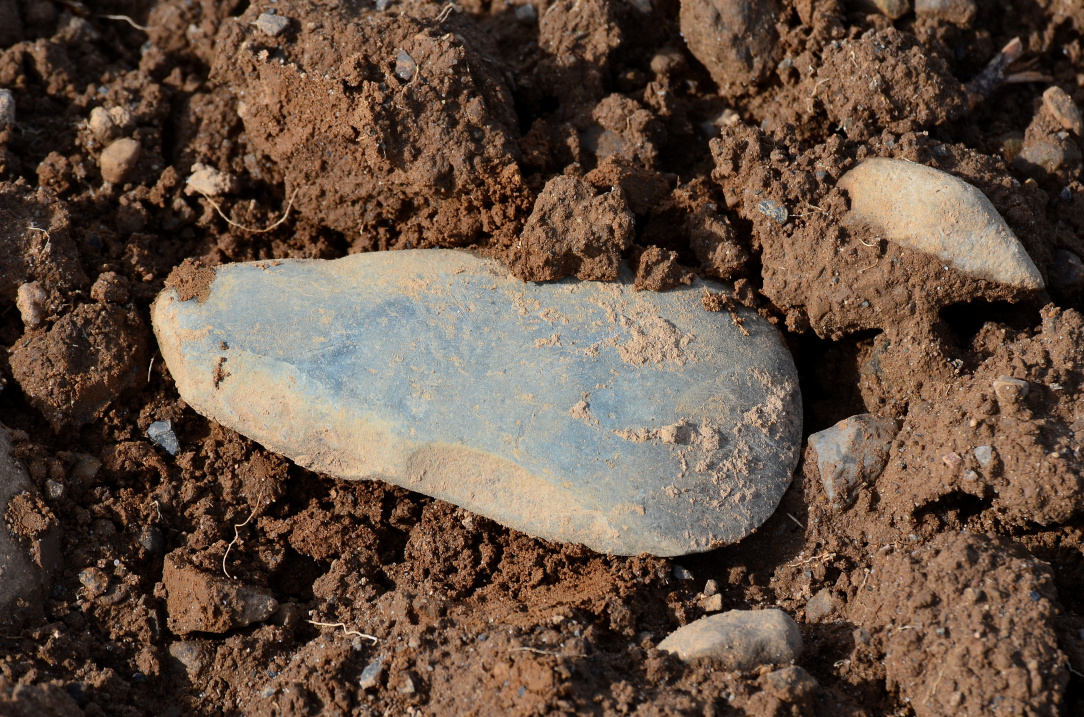
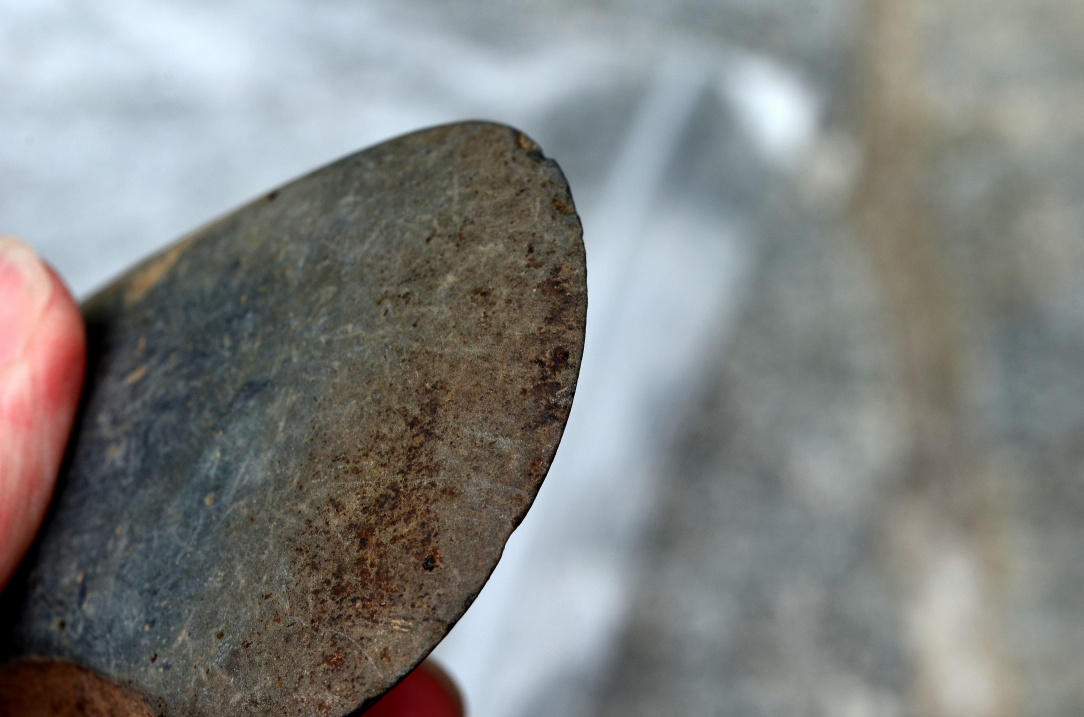
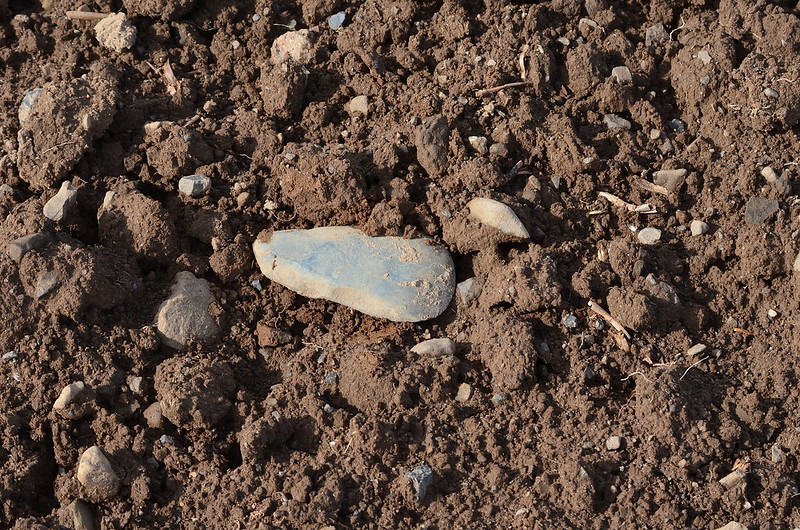
I decided to go field-walking for flint artefacts earlier today in a field close to my home here in south Kildare. It's a site I've found significant numbers of flint artefacts on in the past. The soil was recently ploughed with the stubble having been turned over. It hadn't been seeded yet. Shortly after midday, I spotted this lying on the surface of the ploughsoil:
As one can imagine, it was very exciting. It's the second stone axehead I've found in this particular field. I found the first one way back in 2009. That Neolithic stone axehead is now in the National Museum of Ireland. I'll contact the Duty Officer in the National Museum shortly to report the find.
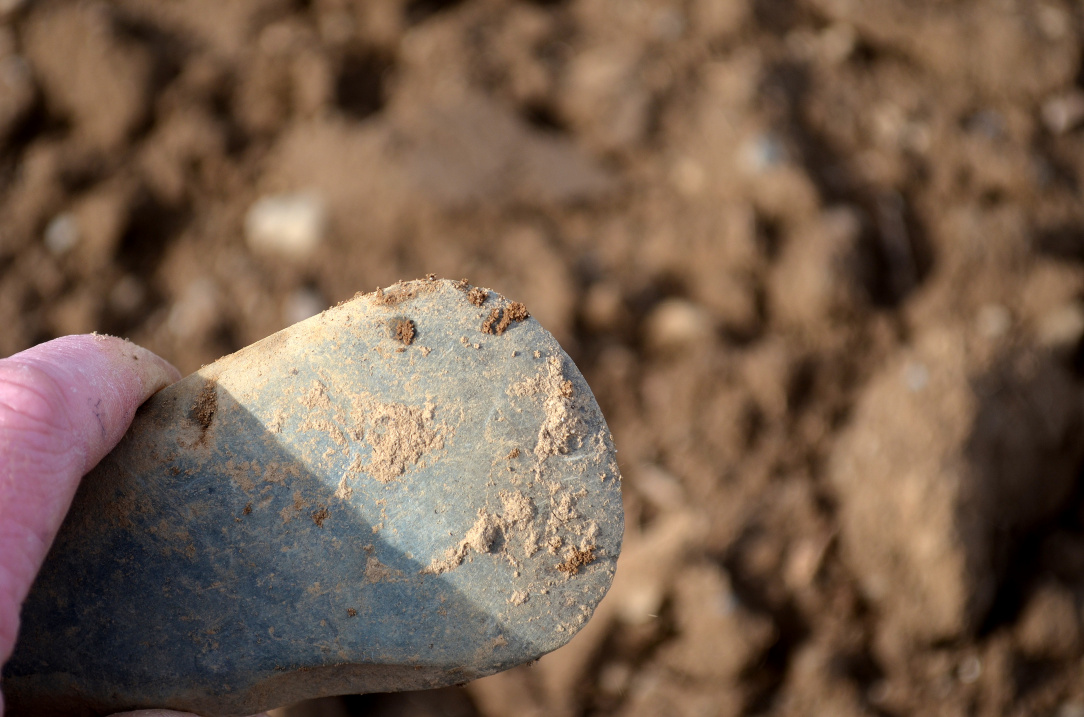
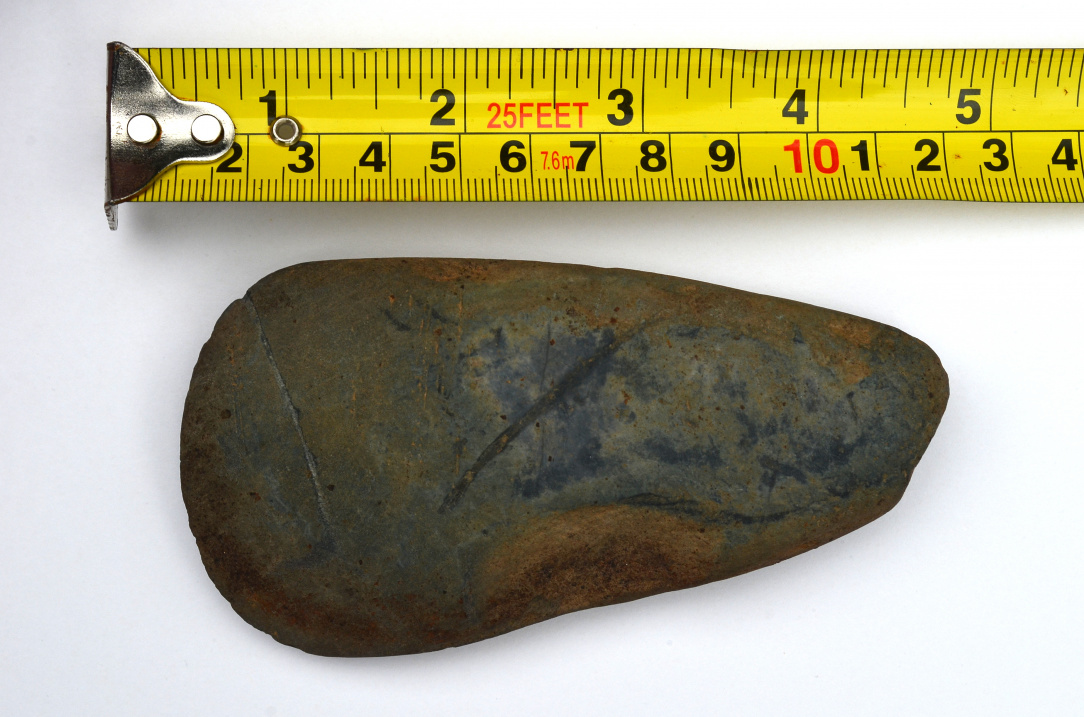
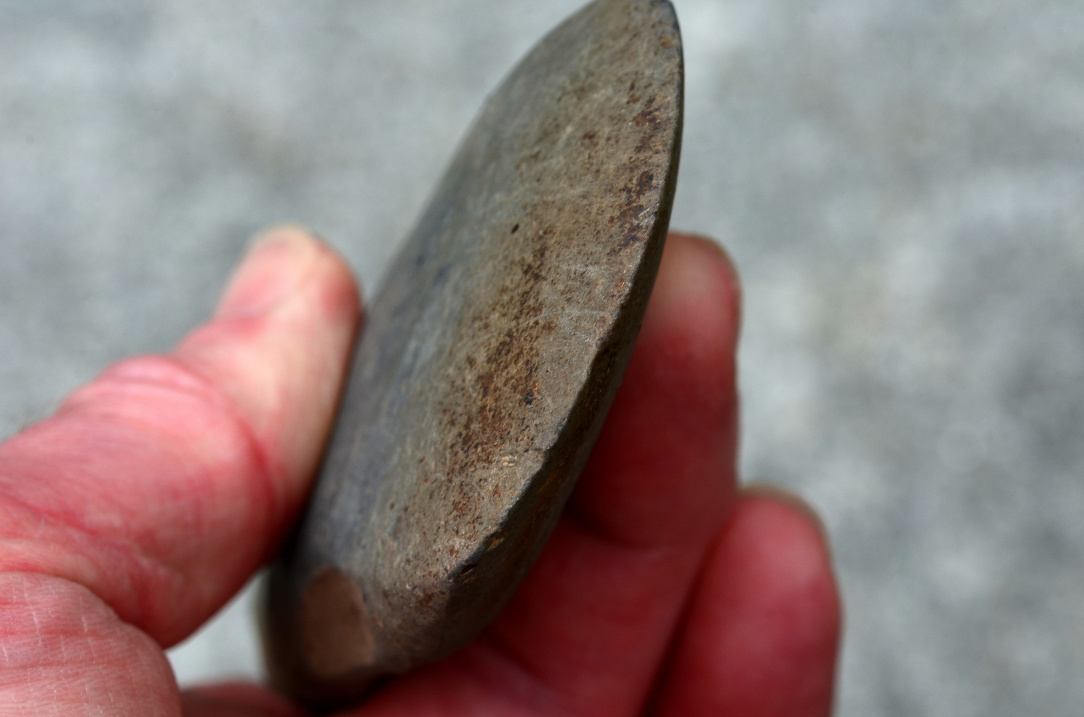
I've attached more images below of the axehead following a clean. The axehead looks darker in some of the images than it actually is. I'm not sure what stone it comprises, but it may be limestone. It measures 109mm. in length. The cutting edge end measures 55mm. wide and it tapers to approximately 20mm. at the butt end.
You may need to edit the links and remove the [img] tags, they're not needed in "new" Boards and are only breaking the links. If you press enter at the end of the corrected URLs, the images will be embedded.
This is the first one:
Thank you, New Home.
Yeah, "new" Boards is a pain in the hole to navigate, hence, why I haven't been around for quite some time.
Great find. Based on the photos, I think it is porphyritic andesite from Lambay Island. Nice to see the knapping scars on the sides and it appears that there is no damage to the cutting edge. Possibly never used.
Well done on the find and it’s great to hear that you will be in touch with the duty officer. It’s a good idea to record the coordinates as accurately as possible and maybe make a few notes on the soil too.
Thanks, slowburner.
There's a few tiny nibbles on the cutting edge. There's a fresh scrape on one face of the axe where it may have been clipped by the plough, but apart from that it's in very good shape.
The plan was to get an email off to the duty officer in Kildare street this evening, but just didn't get round to it. I'll do so tomorrow with a bit of luck, and send all relevant information as you've suggested.
I'm not sure if we'll ever find out if it is porphyritic andesite as you've suggested. Someone on this forum suggested the last axehead I found was dolerite, but I never had that confirmed by the NMI. I believe the ISAP team from UCD used to examine axes that were submitted to the NMI? It would be nice to get a follow-up report following its examination. I hate the thought of just handing it over and not hearing anything about it again.
Any idea what this is? I'm sure its something totally mundane and modern. I'm just curious.
Looks like part of a pipe with a cap on the end.
Thanks!
It looks like an axle pin from a digger bucket or from some kind of agricultural machinery. It is not old.
Oh yeah, that makes sense, thanks!
Just happened to be one on site
While clearing out some soil in our garden to prep for a garden shed I came across a section of a clay pipe.
The engraving is hard to read but we believe it says
THE DUBLIN
FREE TRADE
PROTECTOR
Not sure what this might relate to, if indeed we have read it correctly.
Regardless, happy with my find!
Could it read ‘The Dublin United Trades Association’?
There was a range of pipes associated with Dublin trade unions in the 1880s. Either way, the pipe is from that decade.
Hi all, haven't been on Boards in years, but I am in the process of perhaps reporting some monuments, and I am at the stage where I am either getting carried away and imagining things, or I have a lot of work ahead of me.
So I thought I may post a few shots here if you don't mind, and maybe I can get a few opinions on whether these things are worth reporting?
I have many things, but just to check if anybody's looking, I will start with this simple one: are these pockmarks a natural feature? These are wetlands and I'm pretty sure they are natural, but there are also man made features in that same area so... I think the raised ones on the left are more than likely tree stumps from the forestry. What do you think? Thank you
edit: Also Slowburner, is there someone at the National Monuments Survey that can be contacted in person rather than making multiple reports for things and possibly wasting people's time? Thanks.
Hmm, I'll try have a look later
The pockmarks are probably the result of either stone exploitation or stone removal. Are there surface boulders in nearby fields?
They are very similar to the pockmarks in the landscape pictured below and these I know to be the product of field stone exploitation.
I think Michael Moore might be the person to contact for your area. If not, I am sure he will put you in touch with the right person. I know they had a reshuffle recently