El Tarangu wrote: » This is such a curious, and somewhat chilling statement. If 148 people in Ireland died as a result of any other activity in one year, like in industrial accidents or drowning or housefires, there would be a parliamentary inquiry, and immediate beefing up of safety provisions relating to whatever it is. Car culture is so insidious, and so ingrained within our society, that the fact that it kills 130-140 people each and every year is met with a shrug by many people.
VonLuck wrote: » As was mentioned earlier, the number of people drowning is almost on par with road fatalities at an average of 120 per year. I would say the risk of drowning is significantly higher given that most people either drive or are in the vicinity of moving cars everyday whereas a very small minority are regular swimmers. There are so many riskier activities that you haven't mentioned. Their fatality rate is so low because the number of people partaking in them isn't comparable with car usage, which as you say is so ingrained in our society.
kenmm wrote: » Ye death per participant (for lack of a better word) is low for driving. I don't think 30knoh limits are necessarily due reducing deaths on our roads alone. It's the other benefits that have been mentioned. Pollution of various sorts, more throughput when required, ultimately a reduction in traffic over time etc etc
VonLuck wrote: » I may have missed links to studies etc. previously, but what is the link between lower speeds and reduced pollution? I would have thought pollution would reduce as speed increases to the most efficient speed which I think is around 80kmph.
kenmm wrote: » Ye death per participant (for lack of a better word) is low for driving. I don't think 30knoh limits are necessarily for reducing deaths on our roads alone.
kenmm wrote: » You don't need a study to show traffic is quieter at lower speeds, do you? I'm sure there are some though if you look. I may have missed the posted links regarding emisions. Reduction of traffic would also lead to less pollution. I don't know if the 80kmph is accurate, maybe you could post something, but it unrealistic and had no place in Dublin city centre anyway (outside one or two arterial roads into the city that wouldn't be impacted). Edit to add tho: re emissions: a lower speed I guess would also reduce the amount of acceleration and braking that's required. For ICE those are quite inefficient actions, so I would guess lower speed would smooth that out and lead to fewer emissions. I'm sure there are plenty of studies on this.
MJohnston wrote: » Nah, that’s not the right perspective imo. How many of those deaths while swimming are caused by someone else? That’s the point. There are a large number of non-drivers who are killed by drivers. Speed reductions in a busy city could help prevent a majority of them. Personally I’d rather most of the city centre was entirely car-free, but as it is, a 30kph offers the right balance between safety and practicality.
VonLuck wrote: » I thought you were referring solely to air pollution, not noise pollution seeing as you mentioned quieter. Reduced car numbers will reduce overall pollution, of course. I was thinking more on an individual level. Does a car travelling 30kmph over say 1km emit less pollutants than a car travelling 50kmph over the same distance? I only mentioned 80kmph because that's around the optimum speed so the closer you get the more efficient your fuel usage is. I obviously wasn't suggesting that speed limit in the city.
VonLuck wrote: » Reduced car numbers will reduce overall pollution, of course. I was thinking more on an individual level. Does a car travelling 30kmph over say 1km emit less pollutants than a car travelling 50kmph over the same distance?
VonLuck wrote: » If we're getting technical, if you're on a road you are exposing yourself to a risk which you could avoid if you really wanted to. If you go swimming you are also exposing yourself to a risk. I'm not sure how big of a factor the source of the danger is. I guess it becomes a factor because it's one of the few things society can attempt to mitigate. When you say you want the city centre car free, to what extent would you ideally want this?
magicbastarder wrote: » SeanW, let's say for the sake of argument that your 12 year old daughter/granddaughter/niece decided she wanted to cycle 4km to her school in the suburbs of dublin. you'd be happy with that?
MJohnston wrote: » It benefits to not take such a binary approach to societal improvements - there is a spectrum of events between living and dying. Air pollution, even truly minor amounts, has been shown to cause numerous deleterious health effects.
SeanW wrote: » My first question would be why said child could not use the school bus
SeanW wrote: » My first question would be why said child could not use the school bus - because in countries where education is planned properly there is a system of municipal schools that guarantee places to all students in the municipality so the need for students to make their own way to school is much more limited. In such a country, she would simply take the school bus and that would be the end of the matter. In this country of course, where a child goes to school can be a crap-shoot of school place availability especially in growing Dublin suburbs, so you have students going from here and there to everywhere. Naturally it's much harder to plan a school transport system around that mess - and any issues one has with cycling to school are most likely secondary problems caused by the first. As to the cycling specifically, I understand some routes are better than others in terms of cycle lanes etc. So my answer after "why can't she use the school bus" would be "it depends." You're correct. It's not "binary" - global air quality conventions generally go from "Good" to "Hazardous" based on various indexes. At any rate, pollution has many causes and given the manner in which modern Irish motor vehicles are regulated with regard to environmental standards, it's safe to assume that power plants, incinerators, home heating, what little industry we haven't lost to Asia, occasional Southern/Eastern winds etc are all contributing factors. I find it incredibly difficult to believe that Irish air is causing widespread health problems. Maybe for people that insanely unhealthy with the worst possible case of asthma or something and lives in a hotspot (where pollution might be moderate), but even in those extreme cases their problems could be solved by moving away from the hotspot.
consideration is been given to temporarily reducing vehicular speed limits on many of the routes to 30km per hour, in order to protect the larger numbers of pedestrians, cyclists and vulnerable road users moving around in these areas and on the road carriageway due to Covid-19 travel restrictions and social distancing requirements.
magicbastarder wrote: » because there is no 'school bus' in dublin.
your repeated hearkening back to the fatality figures as if they occur on a similar playing field is misleading. the fatality rates in ireland are lower because active travel is lower. we're going back to the shark filled pool (analogy) again, but that's because you keep talking about fatality rates as if they're the only metric worth talking about.
MJohnston wrote: » Sorry bud, but you need to do some reading on this topic. Here’s a quick starter:https://www.theguardian.com/environment/2019/nov/13/air-pollution-particles-linked-to-brain-cancer-in-new-research?CMP=Share_iOSApp_Other
Regardless, this is a red herring anyway, the speed reductions are happening to reduce more direct dangers:https://www.dublincity.ie/main-menu-services-roads-and-traffic-dublin-city-covid-mobility-programme/reduce-speed-limits
SeanW wrote: » Given how many people - myself included - regularly take to the streets and roads on foot, and feel perfectly safe (at least where motorists are concerned) in so doing, I'm not sure I accept that analogy, but surely fewer people being eaten by sharks is a good thing, no?
SeanW wrote: » Maybe that's the main problem. I post the evidence of global traffic fatalities because it's common for cyclists to condemn Irish motorists as basically being the scum of the universe, so the data and evidence is necessary to provide context. But yes, I consider the fact that people are not dying to be relevant. If I understand your "shark filled pool" analogy correctly, what you are suggesting is that active travel carries inherent risks in all parts of the world (i.e. comparable to swimming in a pool that has at least some sharks, and because more people die in other countries) but it appears to be extra-dangerous in this country (i.e. more sharks in the Irish swimming pool than other countries where there appears to be fewer sharks) so fewer people do it, leading to fewer fatalities than other countries? Given how many people - myself included - regularly take to the streets and roads on foot, and feel perfectly safe (at least where motorists are concerned) in so doing, I'm not sure I accept that analogy, but surely fewer people being eaten by sharks is a good thing, no? Seems a little preliminary and it does not show a large risk. But the article mentions diesel specifically while petrol seems to be less of a concern. Thus even if this study does indicate anything, it should be to encourage drivers to use petrol instead of diesel? It should be noted that the government here promoted diesel cars in 2008 as being better for the climate, but have signaled a volte-face owing to pollution concerns. Long term, as you likely know the government has put a sunset date on all petrol/diesel powered cars: the last will be sold in 2030 and they won't get NCT certificates after 2045. Of course, the social costs of doing this (i.e. putting lots of poor people off the road, because batteries are stupidly expensive) far outweigh any societal benefit, but hey, we have to keep Greta Thunberg happy so **** the poor. It's happening alright, regardless of it being disproportionate, but it is being written about as a "temporary" measure related to "COVID-19" ... and if anyone actually believes that ... I've got a bridge to sell, and it's a bargain. :rolleyes:
SeanW wrote: My first question would be why said child could not use the school bus
MJohnston wrote: » I’m genuinely not sure what the argument against all of this is that you’re making? You accept that it will be safer, right?
El Tarangu wrote: » Why would a child who lives 2 or 3 kms from school need a bus? They would be quicker cycling - and more probably would cycle if the roads were not so dangerous. Because of motorists.
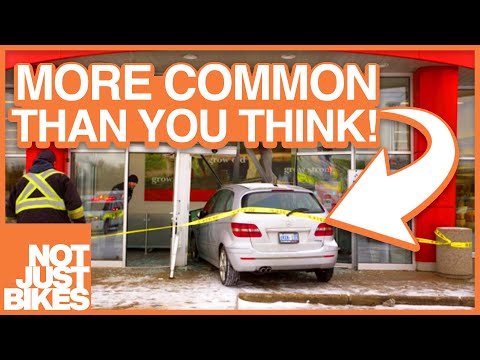
magicbastarder wrote: » https://www.youtube.com/watch?v=Ra_0DgnJ1uQ i'm curious now as to how often cars crash into buildings in ireland. it seems weirdly common in the US and canada, if that video is to be believed. anyway, an interesting message about managing traffic flows and speed.
magicbastarder wrote: » well, it seems that this has been voted down for now. people need more time to think about it or something.
Infini wrote: » An arbitrary enforced limit that more than half of people opposed was never going to pass. The 40km/h on main roads might have made it more accceptable but this was never considered by those advocating 30km/h.