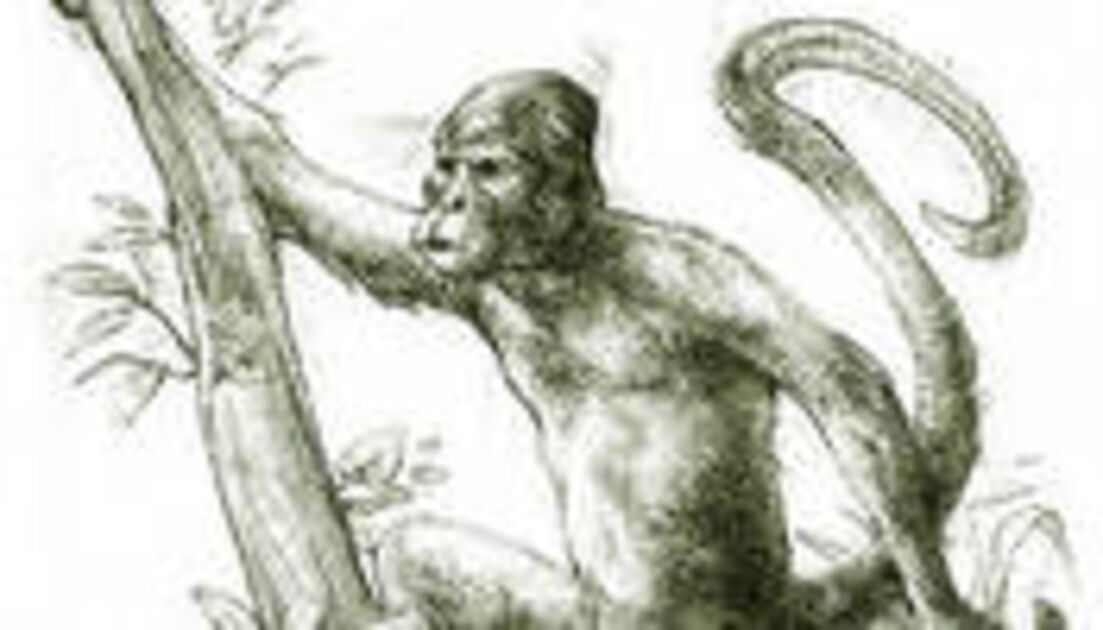
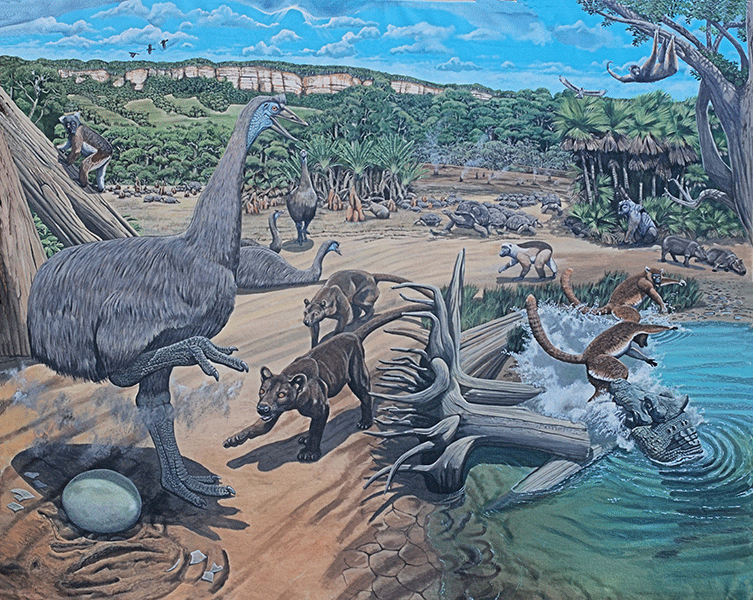
Over 15.000 years ago, what is today Brazil was inhabited by a monkey twice as big as the muriqui or woolly spider monkey, the largest living monkey in the New World. The proof of its existence is based on an almost complete skeleton found in 1992 in a cave in the state of Bahia. The species, named Cartelles coimbrafilhoi[/I], explored the jungle floor like a chimpanzee. At the same time, despite its large size, it could climb trees and swing from the branches as skillfully as its smaller relatives, the Atelidae, which include the howler, spider and woolly monkeys. It probably did not move or behave like any of today's New World monkeys, however. The first descriptions of the fossils (found in 1992) were published in 1996... the first species, named Caipora bambuiorum, was a larger version of today's spider monkey. Although it would've weighed about 20 kg (being twice as large as the spider monkey), C. bambuiorum would've moved in a similar way, able to use both arms and legs and its prehensile tail for arboreal locomotion. The other skeleton was more enigmatic (...) it was first believed to be the same species as a monkey whose remains (a fragmentary femur and an arm bone) were identified in 1836 as the first primate fossil ever found, Protopithecus brasiliensis, mentioned by Charles Darwin in his Origin of Species and estimated in the most recent studies to have weighed up to 24 kg. However, there were slight differences (between the newer remains and those of Protopithecus)... with the newer specimen showing a strange combination of features. The fossil's dentition, although worn, seemed to combine characteristics of two subfamilies, the alouattinae (howler monkeys) and the atelinae (spider monkeys), as did the rest of the skeleton. The species seemed like an amalgamation of these two groups which diverged over 12.9 million years ago. Now an article published this month in the Journal of Human Evolution suggests that the fossils asigned to P. brasiliensis are really a different species.Protopithecus, although fragmentary, would've been similar to a muriqui but twice as big. The newer skeleton belongs to the howler monkey group and has been named Cartelles coimbrafilhoi (...) it would've been between 25 and 28 kg, being the largest of the four large species of monkey that lived in South America during the Pleistocene. The C. coimbrafilhoi would've been 1.67 m from head to tip of the tail and its skull base and jaw are similar to the muriqui's, but most of the skull is more like the howler monkey, even with the same large space that protects the vocal apparatus of these animals, able to produce calls audible from 5 km away. Still, we cannot be sure if Cartelles howled as loudly or even more than its modern relatives, due to the potency of their calls being linked not only to size but also to each species' social habits and environment. The rest of the skeleton is like a spider monkey's, but more robust. The bones' structure suggests strong muscles, adapted to climbing and hanging. The animal was originally thought to be at home in trees but because of its large size was later suggested to have lived in the jungle floor. As a rule, only smaller species can afford to be arboreal due to the risk for a larger animal to fall, but this is not always the case. Most arboreal monkeys of the Old World weigh around 10 kg but the largest arboreal primate, the orangutan, can weigh up to 100 kg. Other than being far smaller than an orangutan, Cartelles also had a long and thick tail to grasp at branches although more studies are needed to determine whether it was as prehensile as that of modern Atelidae's. In any case the bones do suggest that it had largely terrestrial habits (...) it seems likely that it had behavior similar to today's chimpanzees, which are great climbers but spend most of their time on the ground. The four species of large monkey that lived in Brazil- Cartelles coimbrafilhoi, Caipora mamuiorum, Protopithecus brasiliensis and Alouatta mauroi- coexisted with the likes of giant ground sloths and sabertooth tigers and may have gone extinct due to climate change, the larger primates being more vulnerable to extinction (than the smaller ones) independently of cause.
Cástor Cartelle's hypothesis from 20 years ago, that Caipora was similar to a giant spider monkey is not verified; our data indicates this extinct monkey would be a lot more like a giant muriqui (woolly monkey) (...) As for the Cartelles fossil, the analysis reveals surprises; the data does not group clearly with any of the four living genera of Atelidae, but rather fill the morphological void between howler monkeys and spider and woolly monkeys.
The entire linneage of the New World primates, found from northern Argentina to Mexico and the Caribbean, descends from a single group of founders, small African monkeys that traveled across the ancient Atlantic (back then just a third of its current size) on floating rafts of vegetation, about 45 million years ago.
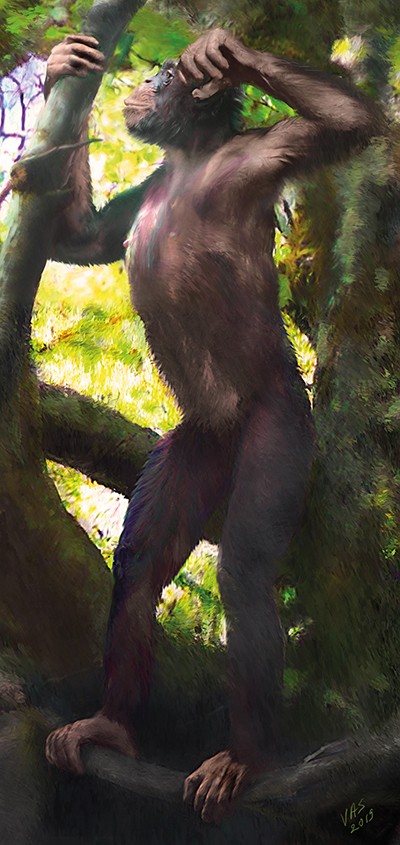
It may have walked along branches and even on the ground some 12 million years ago, pushing back the timeline for bipedal walking, say researchers. he four fossils - of a male, two females and a juvenile - were unearthed in a clay pit in Bavaria between 2015 and 2018. The fossils of Danuvius guggenmosi, which lived 11.62 million years ago, suggest that it was well adapted to both walking upright on two legs as well as using all four limbs while climbing like an ape. These findings suggest that bipedal walking evolved in the trees over 12 million years ago, the researchers said. "Danuvius combines the hindlimb-dominated bipedality of humans with the forelimb-dominated climbing typical of living apes," explained Prof David Begun, a researcher from the University of Toronto. The male has the most complete skeleton, which resembles that of modern-day bonobos. It was about one metre in height and tipped the scales at about 31 kg. Females weighed about 18 kg, less than any great ape alive today.
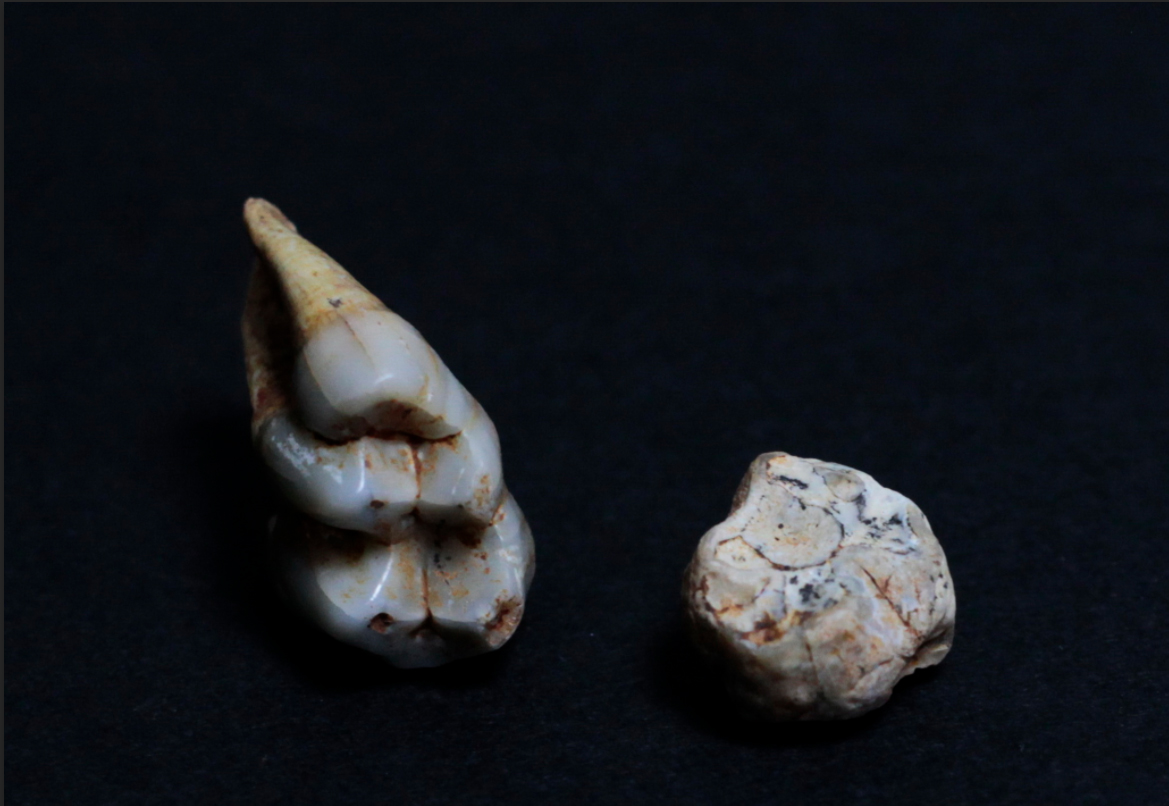
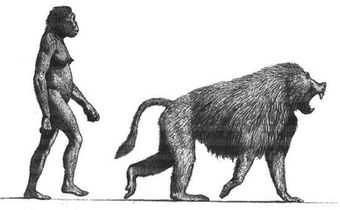
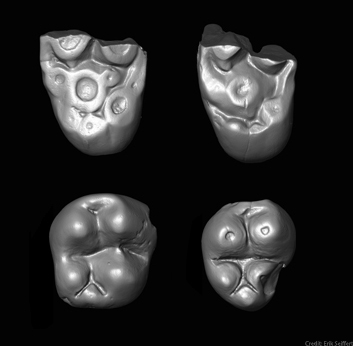
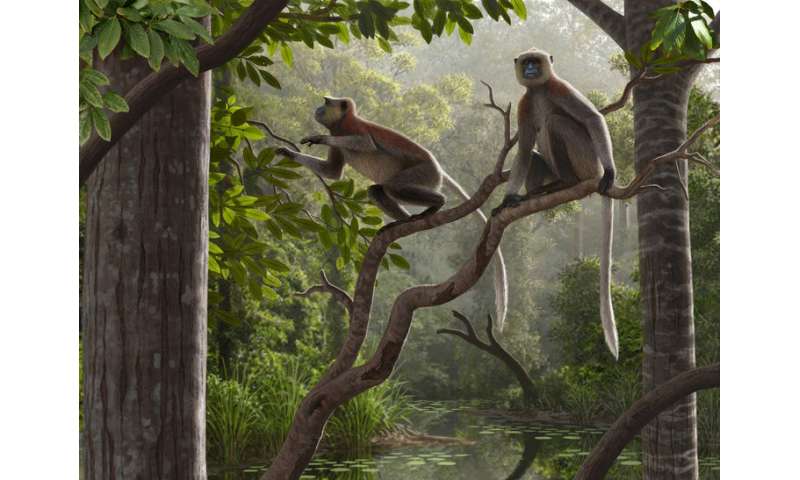
The Cueva Victoria site in Cartagena (Murcia) is the only fossil site in Europe where remains of the baboon Theropithecus oswaldi, which originated in eastern Africa around four million years old, have been found. From the only European remains of this primate, its diet has been analyzed for the first time. The study publish in the Journal of Human Evolution has been made thanks to analysis of dental microwear patterns (...) show differences with Theropithecus gelada, the closest living relative, which feeds on grass and stalks in northern Ethiopia. The Cueva Victoria individuals had a diet more durophagous (hard foods) and similar to that of other primates such as mangabeys (Cercocebus) and mandrills (Mandrillus sphinx) which feed on seeds and hard fruits in forested and semi open habitats. The difference found between the T. oswaldi and T. gelada individuals suggests the specialization we see today (in gelada) could be a derived one that did not exist in fossil forms of the same linneage. Genus Theropithecus spread beyond the Sahara desert from east to north and to the south of the African continent. Its linneage was present also in some parts of Europe and Asia and then became almost extinct around 500.000 years ago. Today it is represented only by one species, Theropithecus gelada. In 1990, a dig directed by paleontologist Josep Gibert found the first fossil at Cueva Victoria, a tooth of Theropithecus oswaldi. This karst cave- formerly a manganese mine- has yielded fossils of a hundred vertebrate species and is one of the few early Pleistocene sites that have yielded hominin remains. Baboon fossils are very rare outside of Africa and have thus far only been found in Ubeidiya (Israel) and Minzapur (India).