The_Scary_Man wrote: » Cheers Punisher, is adding the second Nest stat something I could do myself once the first one is installed?
mcquaim wrote: » Hi folks, I added this thread last week:https://www.boards.ie/vbulletin/showthread.php?t=2058025647 After conversations with various Tado support staff they say they Tado simply isn't compatible with this setup and apart from hard wiring thermostats no other alterations can make it compatible. I'm not overly confident this is fully correct but I just can't get any information so I will return all the Tado stuff to Amazon tomorrow. I just thought on the off chance someone within this thread hadn't seen the one I created and perhaps had any input/thoughts they'd like to add. Cheers, Mac
deezell wrote: » You'd need to look a bit closer at your system. Do you have thermostats? Do the two switches control valves or circulation pumps? Is there a thermostat on the HW cylinder? Does the timer have to be set on for all heating events? And finally, when only heating HW, is there a general pump comes on into the boiler, or is the cylinder heated by convection (gravity flow) from the boiler. Once the general flow diagram mechanics of the system is known, it will be easier to determine which system is nest suited to switch and control the different parts.
flogen wrote: » Has anyone tried adding one or two initially or are the advantages lost when doing that?
GarIT wrote: I've done it and there are huge disadvantages to doing anything other than the whole house. I did it with Tado but it's the same principle. When you cold rooms turns the heat on it will turn the heating on in every room without a smart thermostat to turn it off. You'll find your heat mght be on twice as often as all of your measured rooms might not be cold at the same time causing some unmeasured rooms to overheat. We paid under €700 for the whole house and it's totally worh it.
GarIT wrote: » I've done it and there are huge disadvantages to doing anything other than the whole house. I did it with Tado but it's the same principle. When you cold rooms turns the heat on it will turn the heating on in every room without a smart thermostat to turn it off. You'll find your heat mght be on twice as often as all of your measured rooms might not be cold at the same time causing some unmeasured rooms to overheat. We paid under €700 for the whole house and it's totally worh it.
flogen wrote: » ........Probably a stupid question but did you need to put a TRV on the rad in the room that already has the main thermostat?
lucast2007us wrote: » We're all your radiators ok for the setup or did you need new ones and new pipe work??
flogen wrote: » Thanks, I had a feeling that would be the case. It’s a fair outlay to set up every rad but hopefully there’s eventually a return. At this time of year we’re regularly putting the heat on just to warm the kids’ room, for example. Probably a stupid question but did you need to put a TRV on the rad in the room that already has the main thermostat?
Nokia08 wrote: » Hey Back again Answering the questions here: Do you have thermostats? - I do not. Do the two switches control valves or circulation pumps? - They control Control valves. Does the timer have to be set on for all heating events? -There is a option to have it on or off. So does not have to be timer (in fact we've never used it, its too complicated) Is there a thermostat on the HW cylinder? - No there isn't. And finally, when only heating HW, is there a general pump comes on into the boiler, or is the cylinder heated by convection (gravity flow) from the boiler. - It uses the pump that the boiler works from. Have a specialist coming to give me a overview of what is possible as some complicated wiring may be necessary. But if you have any suggestions always welcome! Thanks again.
dball wrote: » is there any disadvantage to using tado smart tvr's designed for vertical use as horizontal. I would imaging the only difference would be the temperature sensor?
john_doe. wrote: » The other thing that stumps me on this: The drayton( and maybe others) don't tell you the percentage the mechanical actuator on the TRV is open or allow control it manually independent of temperature. I.e set it manually to a percentage. If there is a stove in the mix that is heating the rads, I don't see a way you can control the trvs separately. I.E let's say it's a particularly cold day and have a roaring fire down , like today, the stove is heating the rads on its own with heating off. But if the heating is off via the drayton, the TRVs I would imagine remain in a shut state as they are being told to stay at low temperature,not allowing heat to dissipate to them.
deezell wrote: » No, a Good question. If the main stat is located in a hall or landing, and you only have a few smart TRVs for specific room control, you can still 'balance' your system using the traditional method of adjusting the lockshield valve on each rad. Alternatively ordinary inexpensive mechanical TRVs on the radiators wIll cap their area temperature when these rads are heated as a consequence of a smart TRVs call for heat in another zone. If all zones are controlled by smart TRVs, then it would be in order to have a smart TRV on the radiator in the main stat area, with the main stat set as the measuring device for this TRV. In this arrangement, the main stat calls the boiler for all TRV triggers, while keeping it's own associated TRV closed if the zone is at target temperature.
GarIT wrote: » They need to have the valves that have a pin that is pushed downwards rather than the twisting pin valve. We were getting the radiators replaced anyway. As another poster said you can sort of control them with the regular TRV. We saved a bit by wiring the main stat to the boiler, rather than buying any controller unit (extension kit for Tado). That meant the main stat was in the kitchen. Rather than have the cold kitchen extension heated all day we wanted to turn the heat off in the kitchen at 7pm so added the smart thermostat there too. I couldn't be happier with the usefulness and I assume savings (we got it before moving in so I cant be sure). Upstairs is kept above 14C all night, all downstairs is kept above 10C, I'm up at 6am so heat just my room and the bathroom to 16C by 6, heat just the kitchen to 16C a few mins later, then all off again until 8 am when I heat just the other bedrooms and the kitchen; living rooms and bathroom get heated to 18C from around 9 -10am if anyone is still in the house, bedrooms kept bareable from 12pm to 9pm but not hotter than they need to be, increasing after 9pm, usually the heat from downstairs keeps them warmer than their minimum anyway. I haven't done a full winter in it yet though so may adjust later. I'm a numbers nerd so enjoyed setting a minute by minute schedule for each room individually and saving the maximum amount possible. Getting a smart stat on every radiator was actually cheaper than upgrading to a multizoned system.
john_doe. wrote: » The other thing that stumps me on this: .....I.E let's say it's a particularly cold day and have a roaring fire down , like today, the stove is heating the rads on its own with heating off. But if the heating is off via the drayton, the TRVs I would imagine remain in a shut state as they are being told to stay at low temperature,not allowing heat to dissipate to them.
deezell wrote: » In relation to this last issue, your problem lies in assuming you turn off the heating when firing up the stove. This is the wrong approach. In a combined system of boiler and solid fuel, you leave your CH schedule as normal, so without the stove your system will call the oil/gas boiler. Should you light the stove, the first thing that needs to happen is that the heated stove water will blend with the heated source from the boiler. This is properly achieved using a manifold neutraliser. The second thing that needs to happen is that the stove has a thermostat switch that closes when the stove water heats past a threshold. Prior to this the stove should be heating the HW cylinder or a rad by gravity. When the water heats beyond the demand of either of these, the thermostat closes, the stove pump turns on to send heated water to the manifold/blender, and assuming your CH schedule is operating, the various pumps or valves will open to send this water to the zones. In addition to this, using a relay on the wiring centre/ lex box, the call for heat from the lex to the boiler is interrupted using the same live output from the stove thermostat to open the relay. This means that the various zone pumps and smart TRVs are on and open and calling for heat, but that call will not reach the boiler until the stove dies down and no longer heats the water past the stove thermostat threshold. When this happens, the stove pump turns off, the boiler interrupt relay closes and the call for heat from the various zone stats is reconnected to the boiler which 'takes over' from the stove, until you lash some more logs in. Using this logical design ensures seamless transition from boiler to stove and back. The only additional constraint would be the requirement to have some radiators open in at least one of the pumped zones, and to have this zone pump also triggered directly by the stove stat via the lex box, so that there is always a pumped path for the stove. If the house got so warm that all TRVs, smart or manual, were closed, the stove would only have its gravity feed to lose heat. There should be some spare relays in the lex wiring centre to allow one of the zone pumps to be called by the stove thermostats, regardless of the zone temperature and whither the zone is 'off', and this zone should have some always open rads.
therecklessone wrote: » Sorry if this has been asked before and answered, but I'm boggled eyed trying to get my head around it. We've a dual zone heating system with two Nest Thermostats (upstairs landing, and hallway), but we've a problem with attic insulation meaning a couple of bedrooms lose heat pretty rapidly at night. That should resolve itself in a week or so when we get new insulation fitted in the attic. I'm also hunting draughts at the moment and am finding balancing the heat downstairs difficult. I'd like to be able to shutoff rads based on room temps while still running the downstairs heating zone. Is it possible to use a smart TRV (say a Tado) to shutoff a radiator once the temp gets to a certain point while still using the Nest?
paulgrogan.eu wrote: » ...... 1. How does Tado control the hot water? I understand you need extension kit, but how does this control the hot water? Perhaps I need to install a valve on the pipe to the tank? 2. I've got 15 radiators, so a smart TRV for each is going to be expensive, but I think this is the best way to get the right temp in the most used rooms, rather than relying on a centrally located Thermostat to try and balance the heat. If I was to install Smart TRV's on half of my rads (the most used rooms) and then just go with the normal ones in the other rooms, how well would that work.... P.
deezell wrote: » Also, you can install Tado TRVs as standalone items. They will regulate the room temperature according to a smart schedule but can't call the boiler directly, they will depend on the Nests to be 'on' at the time. Having said that, you can create smart routines, possibly using alexa or IFTTT to respond to a TRV open event and instruct the Nest to fire for a period.
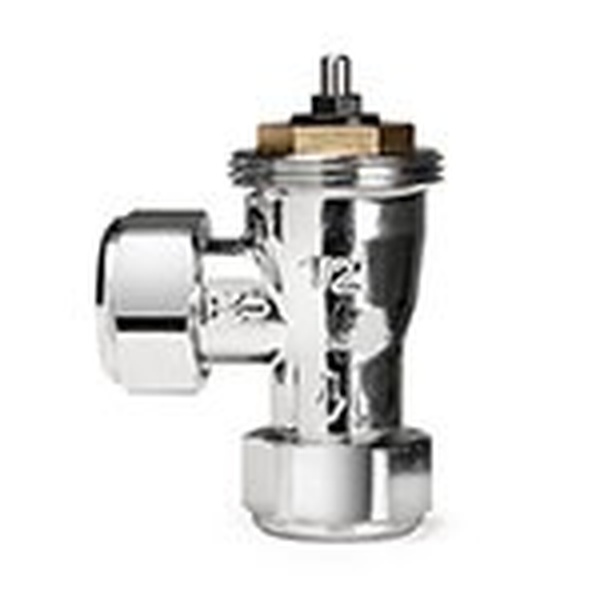
therecklessone wrote: » Thanks for that. I’d though that’s about as good as I can hope for anyway with the Nest stats already in place, and it would suffice for us, but it’s good to hear. The valve I have on the kitchen rad is attached, is that compatible?
![Photo of [Deleted User]](https://w6.vanillicon.com/v2/6b1975299c8e5d4897a60061c4f145b7.svg)