BaZmO* wrote: » This post is the 10,000th post
normanoffside wrote: » The SAN Patricio (St Patrick’s) brigade were a bunch of Irish Immigrants conscripted into the American Army after landing in The US during the famine. Their first job was to fight in the Mexican-American war of 1846 ( during which the Americans took Texas and California from Mexico) but they decided they didn’t like the way the Americans treated their enemy and switched sides to Mexico. They are still massively revered in Mexico with many streets named after them. I’m ashamed to say I only learned about this after a recent trip to Mexico in which a tour guide was telling me all about it on learning I was Irish.https://en.m.wikipedia.org/wiki/Saint_Patrick's_Battalion
New Home wrote: »
New Home wrote: » Wasn't Kal-el Superman?
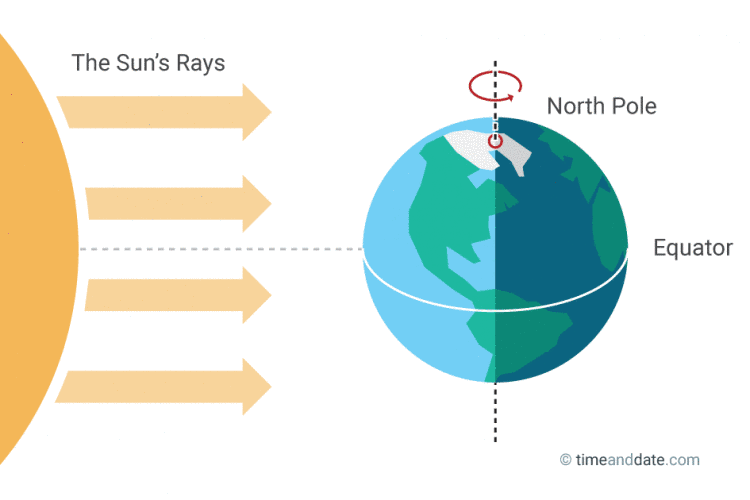
joujoujou wrote: » And 21th of March is one of the most important days to determine what day Easter will be. First Sunday after the first Full Moon occurring on or after 21th of March. So the earliest Easter Sunday is possible on 22th of March, the latest on 25th of April.https://www.timeanddate.com/calendar/determining-easter-date.html
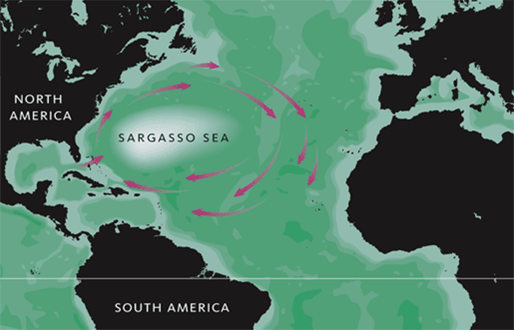
mzungu wrote: » The Sargasso Sea is a region of the North Atlantic Ocean bounded by four currents forming an ocean gyre. Unlike all other regions called seas, it has no land boundaries. It is distinguished from other parts of the Atlantic Ocean by its characteristic brown Sargassum seaweed.
valoren wrote: » The third derivative of position will be Jerk, the rate of change in your acceleration (i.e. the rate of change of the rate of change of the rate of change in your position). This is rarely used and less so are the subsequent derivatives where a little fun was had with naming them
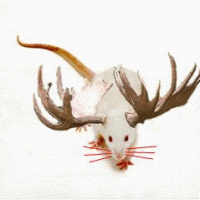
If you think that Cork is known as the Rebel County because of Michael Collins and the Flying Columns of the Old IRA, think again.In what is surely a very Corkonian twist, the city was judged to be rebellious because of its loyalty to (one version of) the British Crown and the dispossessed House of York in the English War of the Roses. When a young and handsome Flemish man called Perkin Warbeck arrived in Cork in 1491, he was proclaimed to be one of the princes in the Tower, the two sons of King Edward IV who had mysteriously disappeared after they were locked up in the Tower of London by Richard III. The merchants and burghers of Cork supported Warbeck (or Richard, Duke of York as he claimed to be) in what became a futile effort to reclaim the throne for the Yorkists. And Cork was thus declared a Rebel county by King Henry VII (who later pardoned Warbeck's Irish supporters, remarking: "I suppose they will crown an ape, next.")
valoren wrote: » The third derivative of position will be Jerk, the rate of change in your acceleration (i.e. the rate of change of the rate of change of the rate of change in your position). This is rarely used
bnt wrote: » Rarely used in an academic context, perhaps, but you've definitely experienced Jerk if you've ever taken public transport in Dublin. Just try to hold on while the driver uses the throttle and brake like they were on/off switches. A colleague of mine at work had to have stitches in her head a few months ago, after a bus driver jabbed the brakes and sent her flying in to the wall. :mad:
Fourier wrote: » Okay I just wanted to say I've read over 40 popular books on quantum physics over the past few months in order to make a recommendation on this thread. I went through them critically for accuracy and minimal sensational bollocks. The best are:Nicolas Gisin: Quantum Chance: Nonlocality, Teleportation and Other Quantum Marvels Terry Rudolph: Q is for Quantum Philip Ball: Beyond Weird Gisin requires some ability with basic algebra, Rudolph requires nothing more than adding and subtracting, Ball is just words. My experience is that different books work for different people. You might not make heads or tails of Rudolph, but Gisin will simply click. Gisin approaches the subject as a scientist (he's one of the best physicists alive), Rudolph as a computer scientist/programmer and Ball like a philosopher and journalist. On average I think most people will prefer Rudolph and that would be my top recommendation. This is because: It is short You come out knowing a decent bit about how QM works in practice He is up front about what is odd about it. I noticed many popular science books shy away from directly saying QM casts doubt on Energy or momentum being real properties of the subatomic world for example, but Rudolph directly says it. He sticks to the majority opinion of most physicists (unlike Ball, see below). It's also the cheapest. However I would keep the other two in mind, Gisin if you don't mind maths and Ball if you do. The reasons I don't have them at the top is that Gisin is a bit math heavy in places for some and Ball I think revels in how confusing QM is at times and some people I lent it to became a bit confused toward the end as multiple paradoxes and alternate minority opinions were piled on. Gisin has a bit about what QM might mean for humanity and free will if you are interested in those topics.
Gloomtastic! wrote: » Three questions: What's in your bedside locker? What's your favourite cheese? Why do you think gravity exists?
mzungu wrote: » Thank you, Fourier. I have noticed, and always appreciated, that in this thread you always go that extra-mile to ensure that those of us with no physics background don't get left behind when it comes to stuff like QM and other hard to grasp concepts. Likewise with reading the books to make a thread recommendation, that's a very kind gesture and thank you for going to the effort. Like I said, it doesn't go unnoticed and it is greatly appreciated.


![Photo of [Deleted User]](https://w1.vanillicon.com/v2/1de30a3af99564ce338f7a27f88f9656.svg)