BaZmO* wrote: » This post is the 10,000th post
Grayson wrote: » Ethiopia has more than egypt too if I remember correctly.
Ipso wrote: » If you want to know what Meath was like 4,000 years ago; visit there today.
GrumpyMe wrote: » That's a bit harsh on Meath! If you are referring to Newgrange in particular you should bring a grain of salt with you.
Feisar wrote: » Giraffes are ruminant, for those that don't know what that means, they chew the cud. That's semi digested stuff from the first stomach.
Professor Moriarty wrote: » Interesting take on that from UNESCO.AuthenticityThe archaeological remains on the site, both above and below ground are wholly authentic.Major excavations have been carried out at Newgrange and Knowth and have been fully published. Many small excavations and surveys have been carried out in the area. The main conservation works have concentrated on the two main passage tombs at Newgrange and Knowth subsequent to the excavations undertaken at these sites. All conservation and restoration work has been carried out by skilled professional staff. At Newgrange, there has been comprehensive anastylosis of the kerbstones and the revetment wall, though the latter has been curtailed to allow access by visitors. The passage roof was completely dismantled to allow the orthostats to be returned to the vertical, with the introduction of reinforcement, and a cowl has been constructed over the chamber area. The cairn itself has been stabilised by means of thin revetments of cairn stones. At Knowth, structures from all periods are being conserved. In some passage tombs outer support walls have been built for the burial chambers, involving the use of modern materials such as cement and plastic. Where such new additions are visible they are clearly distinguished in appearance from original materials, but in other cases they are completely concealed. The restoration work on these monuments, the result of close collaboration between archaeologists and conservation architects, conforms with the principles enunciated in Article 7 of the International Charter for Archaeological Heritage Management of 1990.
GrumpyMe wrote: » I'll see your Unesco and raise the site http://irisharchaeology.ie/2012/12/images-of-newgrange-through-the-ages/ "1967-74: Probably the greatest change seen during these restoration works was the addition of 3 m high quartz wall to the front of the tomb. This addition to the monument was based on M. J. O’Kelly’s interpretation of the excavation results. He had discovered a thick layer of quartz stones spreading out in front of the tomb kerbstones for a distance of approximately 7 m, which he believed represented the remains of a collapsed wall. Thus on his advice a quartz facade was added to the tomb. However, as the quartz wall was deemed too unstable to support the weight of the cairn on its own, a 4 m high, reinforced steel and concrete wall had to be erected behind it. The quartz stones were then embedded into the concrete. Not surprisingly this striking quartz wall caused much debate at the time and the arguments about its authenticity still rage on."
mzungu wrote: » Continuum was a magazine published by an activist group of the same name who denied the existence of HIV/AIDS. The content, as you can imagine, was barmy pseudoscientific waffle. Continuum claimed to be a scientific journal for those who had alternative theories about HIV/AIDS, even though it had no peer review and promoted and advertised alternative therapies such as urinotherapy. AIDS denialists of the time often cited the articles published in this journal as a source of scientific information. The magazine ran from 1992 - 2001. The reason for its cessation was that all three of its editors died from AIDS.
GrumpyMe wrote: » "...reinforced steel and concrete wall had to be erected behind it. The quartz stones were then embedded into the concrete..." "Authentic" 4000 year old rebar and a grain of salt!
However, as the quartz wall was deemed too unstable to support the weight of the cairn on its own, a 4 m high,
Feisar wrote: » Giraffes are ruminant, for those that don't know what that means,
Kat1170 wrote: » What did you expect them to do, build it back up and let it fall down again ???
Professor Moriarty wrote: » Well, doctors differ and patients die. If it's authentic according to UNESCO, then that's good enough for me.
Wibbs wrote: » They've regularly been found wanting in the past PM. Without concrete it wouldn't stay up for a couple of days without falling down. The people who built it in the first place were masters of dry stone construction and no way would they have built such an unstable structure. Basically the chief archaeologist's interpretation was picked out of his arse and because he was the chief and it was Ireland back then most went along with it. It almost certainly looked nothing like that when it was originally in use.
Professor Moriarty wrote: » What isn't in question is that the intrinsic structure itself is authentically 5,200 years old. Which was my original and only point.
New Home wrote: » One of my biggest disappointments was visiting Knossos and realising that most of what I was seeing was a "remake" based on what the owner of the site "archaeologist" assumed it had looked like back in the day.
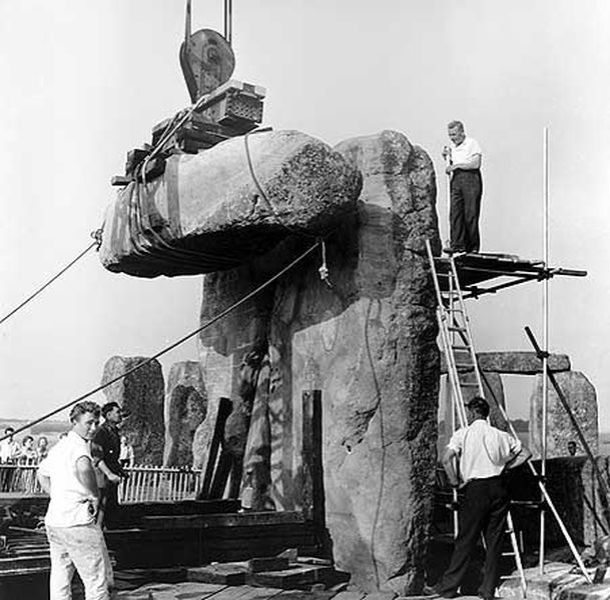
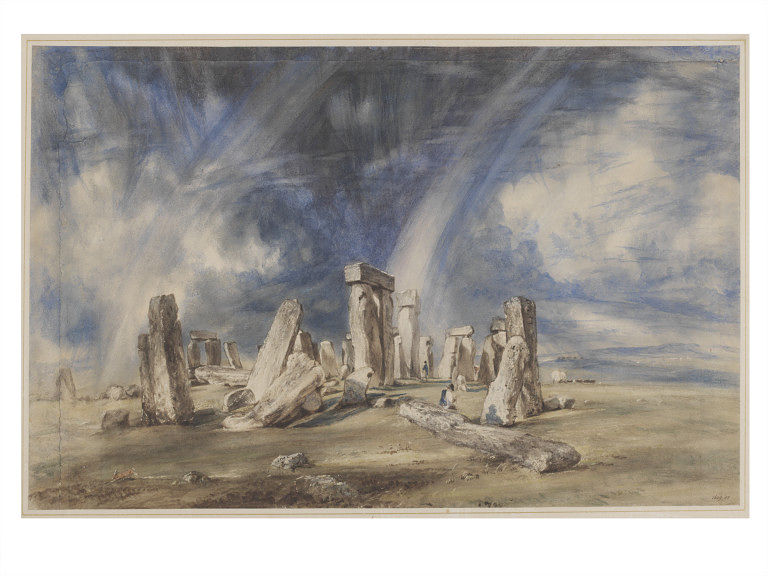
BaZmO* wrote: » I was just about to post about Stonehenge after reading through the comments about Newgrange. I remember reading about it years ago and was shocked. In hindsight, the impressive feat was getting the stones there in the first place rather than the actual placing of the stones on top of each other.
Franz Von Peppercorn wrote: » I really see no problem with this provided the stones were put back to the best expert opinion on where they would have been.