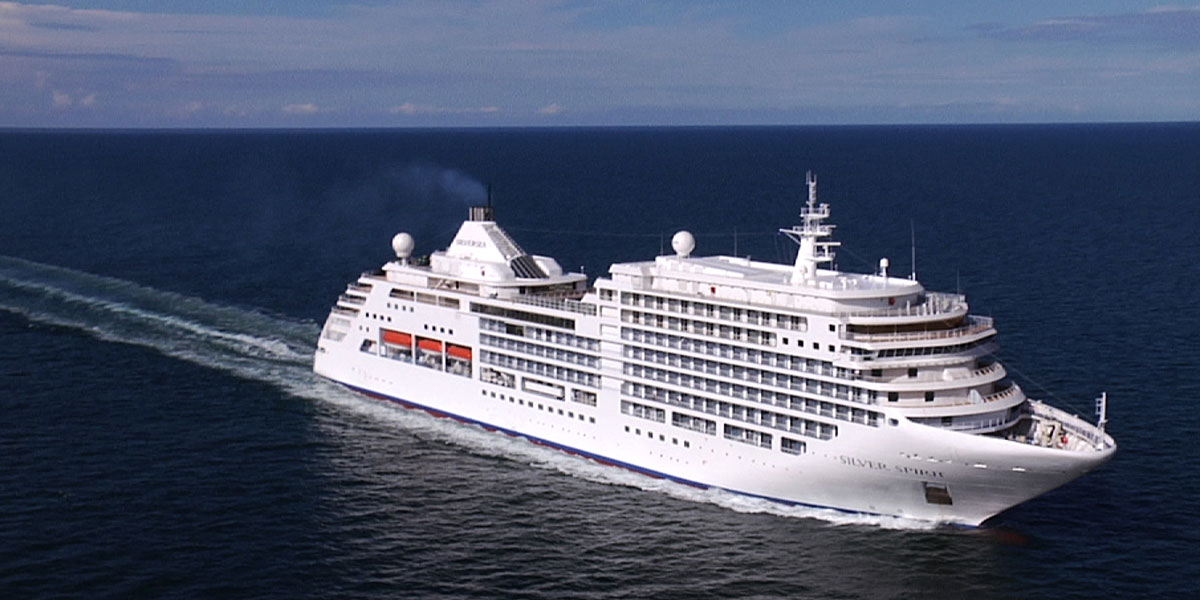
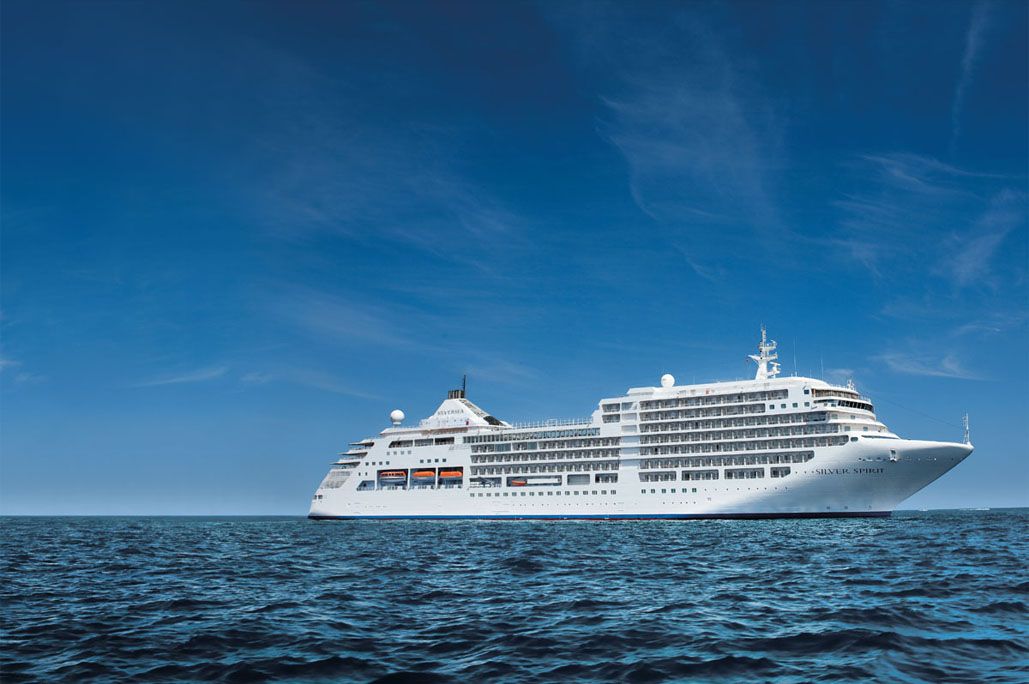
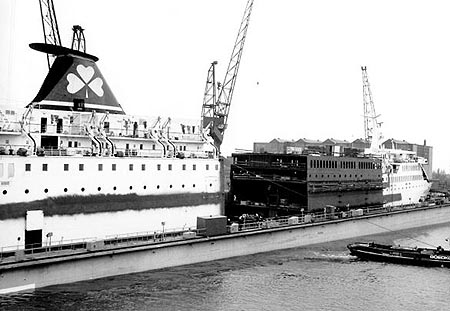
KevRossi wrote: » This is the same ship in 2018. Notice anything different? ... Well it's about 49 foot or almost 17m longer. It was sawn in half and a prepared section was welded into the middle.
KevRossi wrote: » Loose tea leaves don't use plastic
MonkieSocks wrote: » And you can buy Milk for the Tea in Cardboard Cartons rather than those Plastic one's
Chancer3001 wrote: » re: climate change. NASA released a document this week saying the ice in antartica is still increasing... maybe slower than before or whatever...but still
DEFTLEFTHAND wrote: » his casket.
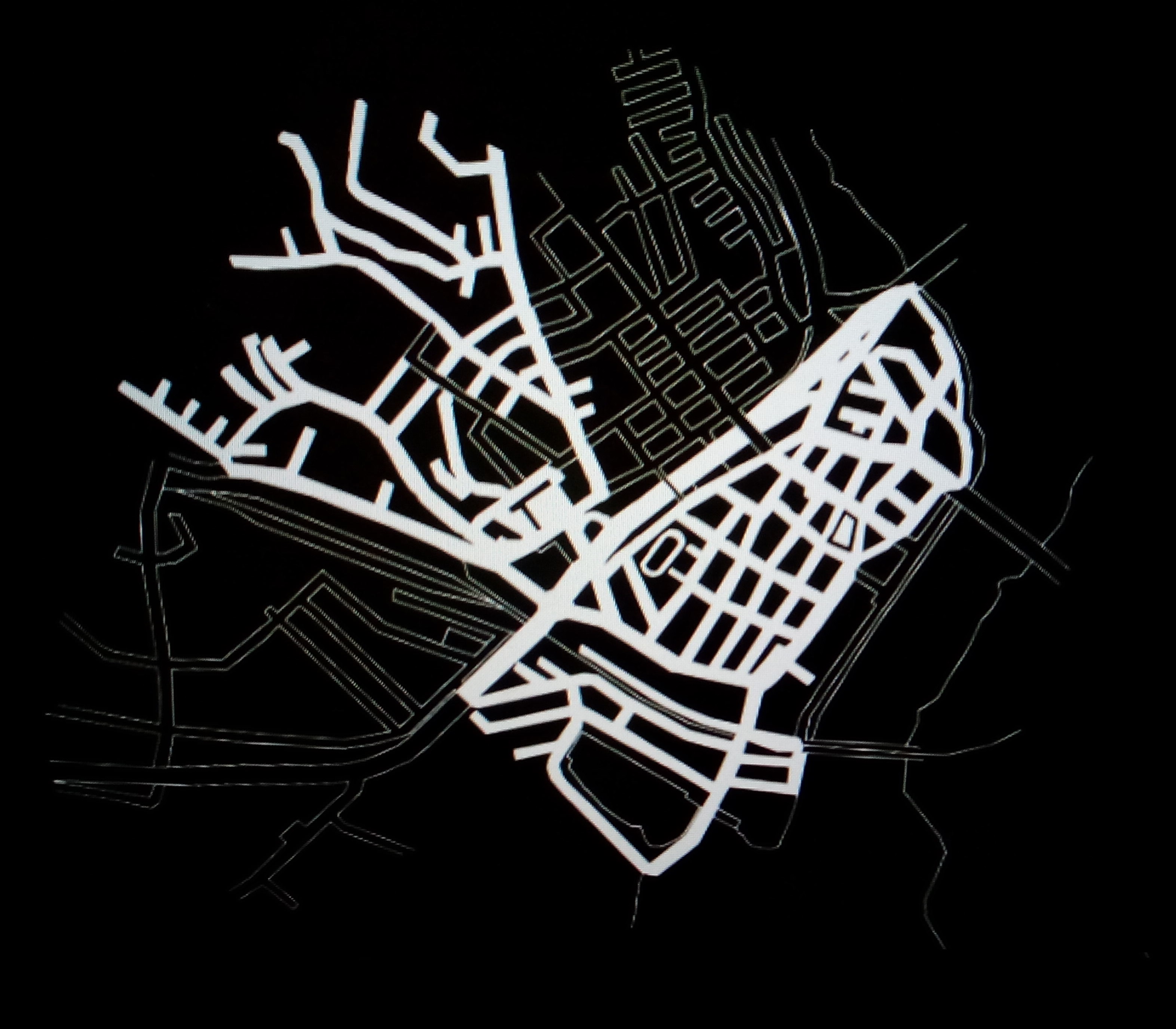
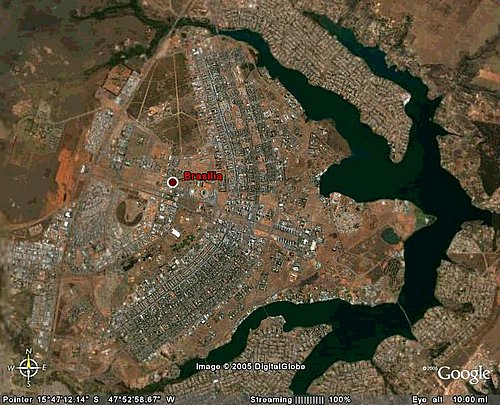
From this altitude, the airplane shape of the city becomes visible. The wings of the airplane are Asa Norte and Asa Sul, designed to accomodate the residents of Brasilia. The cockpit of the airplane is taken by the political center of Brazil; the Three Powers Square occupies the center of the cockpit. From East to West, Brasilia is cut by the Eixo Monumental (Monumental Ax); the red mark is right over Palácio do Buriti, seat of the government of Brasília. From North to South, Brasilia is cut by highways; the central highway, which separates the East from the West zones, is called Eixo Rodoviário (Highway Ax), much better known as Eixão (Big Ax). The large green area is the Lake Paranoá. The lake is cut by a few bridges, the newest and largest of which (bottom right of the map) is Bridge JK.
Try_harder wrote: » Lyons tea is packaged in Manchester same place as PG tips
Ahwell wrote: » Is the factory in Goldenbridge gone?
Water John wrote: » See a report that Yorkshire Tea I think, went more ecofriendly with their tea bags and taking out the plastic, but the customers are complaining that they are falling apart.
retalivity wrote: » Stratford-on-slaney is not on the slaney - the river is about1km away. Things i didnt know before driving through rural wicklow today
Conchir wrote: » Speaking of what future civilisations may find of us, one thing is plastic. Plastic doesn't biodegrade and is very long-lived in the environment. Due to this persistence, plastic has been suggested as a future stratigraphic indicator for the proposed Anthropocene epoch (in a similar way to ice cores and rock formations for older geological epochs and eons). So, future geologists may be looking for layers of plastic on land and in marine cores in order to locate the 20th and 21st centuries. One thing that gets a lot of coverage now is the problem of microplastics. Most of the media coverage is on microbeads, tiny pieces of plastic that are used in facial scrubs and other cosmetics. These are a type of primary microplastic, which is constructed intentionally to be that size. However, there are probably many more secondary microplastic particles in the environment; these originate from larger pieces of plastic, which break down into smaller pieces. While plastic doesn't biodegrade, it can undergo photodegradation, or breakdown by UV rays. That process causes plastic to become brittle, so it can then fall apart into many smaller pieces if it is acted on, say by wind or waves. Plastic photodegradation is very inefficient in water, where the low temperatures lower the rate of the process significantly. Therefore, it is currently thought that the majority of microplastics are formed on beaches, where the combination of sunlight, high temperature, and wave action cause large pieces of plastic to become brittle and break down into microplastics. From there, they are then transported into the water where they can be ingested by marine organisms and enter the food web. As most secondary microplastics form on beaches, ideas like the 2 minute beach clean can really help. Even one piece of plastic removed is potentially thousands of microplastic particles that won't enter the ocean. Microplastic particles have been found in plenty of marine organisms, particularly bivalves such as oysters. The actual pieces of plastic are thought not to have direct effects, but rather it's the additives that leach from the plastic that cause problems. A lot of these additives are classed as endocrine disruptors, meaning they can affect hormones. For example, oysters exposed to polystyrene microparticles have been found to have decreased sperm velocity and egg size, and also had their feeding behaviour affected. Microplastic particles were found in human poop for the first time earlier this year, though it was a very small study and there's been no findings of them having any effects like in marine species. The next step would be evidence of particles entering human bloodstreams via the digestive system; perhaps there will be work published on that soon though! There are many microbead bans in force or in the works around the world, and plastic alternatives are being researched for the future, so hopefully the supply of both primary and secondary microplastics may be reduced. However, it will be extremely difficult to remove the bits already in the environment; most pieces are small enough to be unaffected by conventional water treatment systems. Combine that with their longevity and we'll probably be dealing with the effects of our use of plastic for a very long time.
gozunda wrote: » retalivity wrote: » Stratford-on-slaney is not on the slaney - the river is about1km away. Things i didnt know before driving through rural wicklow today The famous ballad "Weile Weile Waila' about the murder of an infant by its mother includes references to the River "Saile”. It has been suggested that’s this river is a reference to the Poddle river in Dublin. The Poddle river was also known colloquially known as the River Salach (dirty river in Irish). The Poddle is also the river whose peaty, mountain water gaves its name to the Black Pool "Dubh Linn" of Dublin. The Poddle rises in the Cookstown area, north of Tallaght, and flows into the River Liffey in the centre of Dublin. Nowadays, much of the lower course of the Poddle is in a large brick tunnel under the city streets and Dublin Castle, and while access is restricted, it is walkable. The confluence of the Poddle and the Liffey is visible at low tide at a grated opening in the Liffey walls at Wellington Quay
Wossack wrote: » Blackcurrants became very popular in the UK, in part due to a shortage of other vitamin C rich fruit during World War 2. They are able to be grown in the UK, and so via concerted effort by the government at the time, the nations yield and consumption of blackcurrants increased dramatically. During the war in fact, blackcurrant syrup was given free to children under the age of two. Hence the popularity of blackcurrant flavouring there (and here even) Conversely, in the US it was found that blackcurrant shrubs were a vector for a fungus (white pine blister rust), which threatened the massive US logging industry. So currant farming was federally banned in the early 1900s. This ban was changed to a state ban in 1966, but it was only in 2003(!) that New York state lifted the ban, allowing blackcurrants to be farmed - it is still relatively unknown as a flavour there As a result, purple skittles in UK and Ireland are blackcurrant flavoured, and in the US they are grape flavour
gozunda wrote: » The famous ballad "Weile Weile Waila' about the murder of an infant by its mother includes references to the River "Saile”.






![Photo of [Deleted User]](https://wa.vanillicon.com/v2/aa10e3395e82abfb4ce8838ab0faa02f.svg)




![Photo of [Deleted User]](https://w7.vanillicon.com/v2/7eb61b90d43b6a9f2815c2a58d0f497f.svg)





