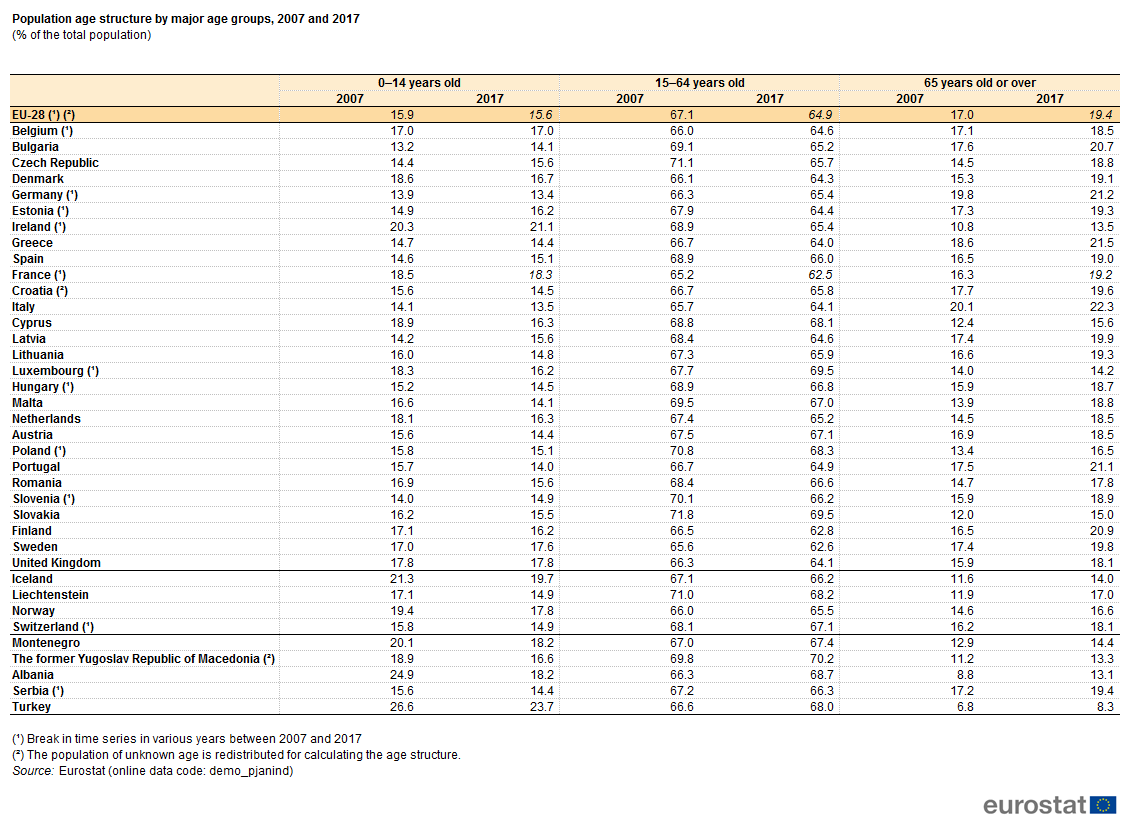
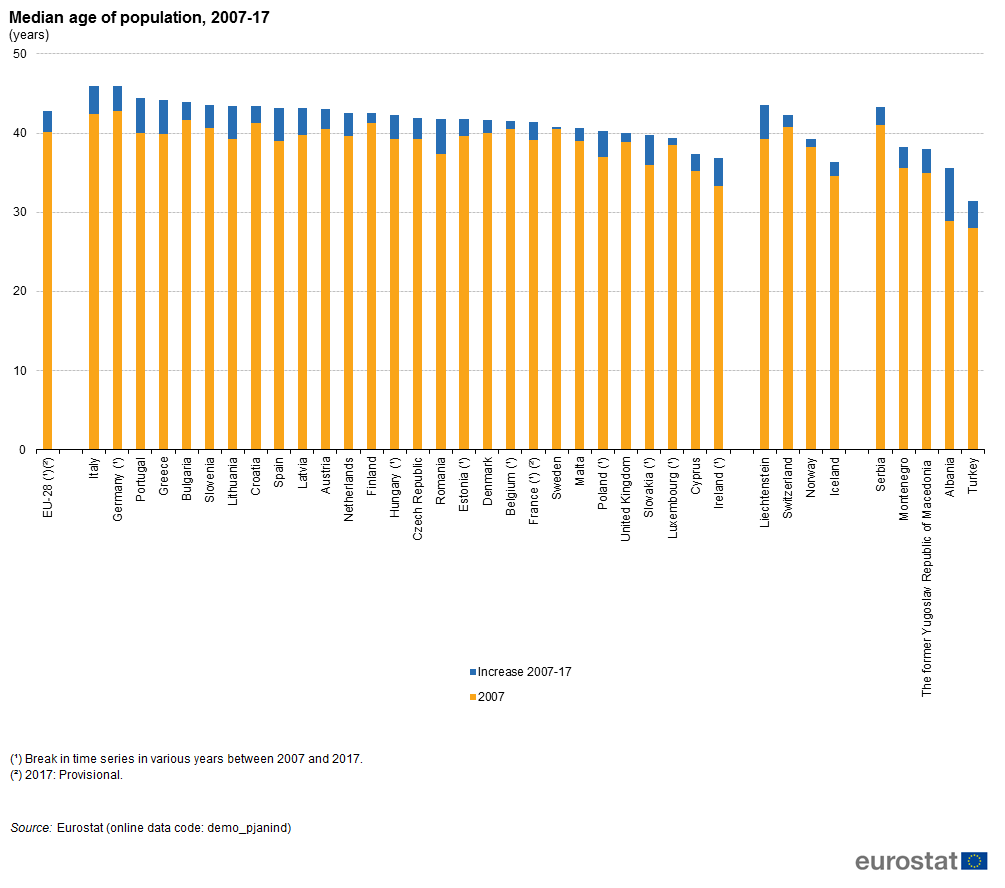
Wanderer78 wrote: » Can anyone point to data to support these claims?
Tell me how wrote: » One thing that I am always intrigued by when discussing circumstances in Ireland is the the number of people who work within a particular area as a portion of the population. In terms of healthcare professionals. The HSE has approximately 102,000 people working for it either directly or indirectly. That is about 1 in 23 of all workers in the country. This means that the "HSE" which we all refer to is made up by friends, partners, family members of a large portion of the country. And yet, everyone knows it doesn't work, but nobody every can identify how their area is overstaffed or they themselves are under utilised. I can understand this to some degree, why would they, turkeys voting for Christmas kind of thing. But it must be an incredibly difficult challenge for any Minster of Health given the behemoth that it is.
Matt Barrett wrote: » That's if you believe it's a problem that can be resolved by people simply amending obvious inefficiencies within their control. I can't see front line staff leaving things as is because they aren't bothered changing current practices. Front line staff and doctors are generally the ones seeking change.
Tell me how wrote: » Well if we got people thinking in this way it mightn't be a bad start. Everyone thinks that there should be change but it should be someone else changing. What hope does the Minister have in such an environment? Particularly a unionised one.
mariaalice wrote: » Its like the welfare debate, HSE covers huge areas the the average person would not consider health care as such, they also fund a large amount of NGO and charities that is why there needs to be better data about what the spending is on, blaming the staff, the unions, the administration is worse that useless.
Matt Barrett wrote: » My point is maybe it's not down to an easy fix some are aware of but unwilling to address as you were suggesting.
Tell me how wrote: » I'm not suggesting an easy fix. In fact, I'm suggesting that given the intricacies of there being so many people and so many structured influences, it is nearly impossible for a Minister for Health to effect change.
Matt Barrett wrote: » Your Turkeys voting for Christmas suggested that people who might see fixes, won't put them forward. While nobody would do themselves out of a job I think it's widely regarded that the system isn't working. Letting people go won't solve that. Only a Minister/Government can. I can see it being so complex it might take some study, but how long? We've had the same issues for decades and now we have a Taoiseach who was formally a health minister. If not now when do we start? If they don't know at this stage maybe it's time they hired professionals or people with an interest in health to look into not lads on their career path having to pay dues by serving as Health Minister for a stint.
Tell me how wrote: » Leo Varadkar isn't the first Taoiseach who had also served as Minister for Health in recent times. Brian Cowan also held both roles. In fact, with the exception of Mary Coughlan who only held the office for a short period, we have had Ministers for Health who have either proven to be quite competent in the political space (Mary Harney, Micheal Martin, Leo, Brian Cowan, Harris) or medical professionals themselves (James Reilly, Leo). I'm not arguing the overall qualities of these individuals but none of them could be described as being completely unaware of the challenge associated with the Health service or have been expected to be completely incapable of improving it. So, why are we where we are? There's been enough studies done.
Matt Barrett wrote: » Well going by the above the question seems to be why are they pretending they don't know what to do and why aren't they doing it? In the case of Harney there were questions over her husbands connections to private health and we had Reilly and his allocation of Clinics. Maybe it's a case of either not wanting to get too deeply involved or only using it for their own advances?
Anita Blow wrote: » Politicians have no incentive to fix the health service. The fixes that would have the biggest impact and need to happen are too politically unpalatable: 1) Cut administrative staff and reinvest that money in frontline staff 2) Close rural hospitals and centralise care in larger urban hospitals 3) Increase bed capacity, requiring substantial investment. The health service just isn't an issue for the general public, as evidence by the fact that both Fine Gael & Fianna Fail along with their health ministers continue to enjoy popular support. Why would either risk their chance of re-election when the general public would rather moan than do anything about the health service?
Tell me how wrote: » I'm less than 45 minutes from two hospitals. Limerick Regional, or Galway Clinic. Leaving aside the fact that the Galway Clinic is private, I've yet to see how closing regional hospitals is helping. I think the focus should be on appropriate care in appropriate location. I was in Limerick A&E at the start of November and a lady came in from Carrigaholt with her daughter. That is a 3 hour round trip just to get even triaged. Is that what it has come to in this country?
CrabRevolution wrote: » That's a bit of a ridiculous point to make. If you live at the end of a sparsely populated peninsula and an enormous estuary separates you and the nearest city, it's not unreasonable to assume you'll be pretty far from any major health facilities. That's the trade off people make to live in these places. Nowhere on earth has the same level of services available in the depths of the countryside as they do in the cities, but that's somehow what we're expected to provide in Ireland?
Wanderer78 wrote: » could this lead to ultimate collapse of our health service? to add another stephen kinsella piece of research, productivity has increased dramatically across most sectors over the last couple of decades, but wage inflation has remained relatively low, him believing the deunionisation of our economies being the main contributor.
Tell me how wrote: » It isn't ridiculous when only a few years ago she wouldn't have had to travel past Ennis. Hence the part of my post appropriate care in appropriate location.
Anita Blow wrote: » And outcomes were likely worse. If you live in an extremely remote tip of a peninsula then a 1.5h journey to a hospital is not unreasonable. There's a reason the EDs were closed. We centralise care in larger hospitals because they have the necessary range of specialities to appropriately treat the proper emergencies. Local injury units can treat the vast majority of the simple complaints in smaller regional hospitals. For example centralisation of our stroke and heart attack care has been fundamental to our massive improvement in outcomes for both of those.
Tell me how wrote: » Hence the part of my post appropriate care in appropriate location.
Tell me how wrote: » I'll try once more.
CrabRevolution wrote: » From my experience in the HSE, I don't think there's actually that much easy fat to be trimmed within the hospitals themselves. I know there's the popular perception out there that you can go into a Hospital and it'll staffed almost entirely by managers and administrative staff but it's not quite true. One hospital I worked in had about 300 beds and 800 staff, and there were maybe only about 15 in roles people would see as useless (even if they're not) e.g. medical records, quality assurance, statistics etc. Most departments have no full time clerical support and might have a secretary for 2 days a week. There was a 7 person senior management team, and maybe another 3-4 more directors of nursing/bed managers etc. If I were to guess, a lot of salaries are spent on the "business" side of the HSE, called HBS or Health Business Services. People who never see a hospital but work in large office buildings (presumably rented at generous expense by the HSE). My job involved dealing a lot with HBS procurement, and you'd regularly have to email 5 different people to move one step you could have done yourself in one phone call to a supplier/contractor/service provider. There's project managers, procurement specialists, tender supervisors, procurement officers etc. You've to run every action up and down the chain of supervisors and officers and get a response from each of them, who'll often just pass it to their secretary and cc you in the email. I'd love to skip the bullsh*t but of course the system is designed so that they control the money so if you don't jump through their hoops you get nothing. I'm told that 10+ years ago when money was flying around, procurement were only involved in large events e.g. new hospitals being kitted out, large expansions, property deals etc. but then the crash happened and they found themselves with nothing to do, so to justify their existence they began asserting that they were in charge of all aspects of buying everything in the HSE. All of this is supposedly in the name of efficiency and fairness for staff and suppliers etc. but I'd say they've spent €100 and wasted hundreds of man hours for every €1 they've saved. Now I know the HSE can't function without a business,accounting, administrative side, but there's no way in hell that that's the way to go about it. That's just one aspect of the HSE I've found to be a bloated mess, I'm sure there's other parallel bodies soaking up money.
![Photo of [Deleted User]](https://w1.vanillicon.com/v2/19a7a778b727ad07a3bbcea8101c61b3.svg)