NoviGlitzko wrote: » The chances of finding the 8 tile in a standard expert game of minesweeper is roughly 1 in 10,000.
New Home wrote: » Maybe that's when people started doubting the expression "Trust me, I'm a doctor!"...
Realt Dearg Sec wrote: » As an English PhD I have an alternative theory on that.
mikhail wrote: » Germ theory didn't really win out until the 1880s. Before that, doctors were so unreliable that they took on the title "doctor" - an academic title meaning teacher - to pretend to respectibility. This is why PhDs are also called doctor, and resent the theft by the quacks and leech-sellers of the title.
doctor (n.) c. 1300, doctour, "Church father," from Old French doctour and directly from Medieval Latin doctor "religious teacher, adviser, scholar," in classical Latin "teacher," agent noun from docere "to show, teach, cause to know," originally "make to appear right," causative of decere "be seemly, fitting," from PIE root *dek- "to take, accept." Meaning "holder of the highest degree in a university, one who has passed all the degrees of a faculty and is thereby empowered to teach the subjects included in it" is from late 14c. Hence "teacher, instructor, learned man; one skilled in a learned profession" (late 14c.). The sense of "medical professional, person duly licensed to practice medicine" (replacing native leech (n.2)) grew gradually out of this from c., 1400, though this use of the word was not common until late 16c. The transitional stage is exemplified in Chaucer's Doctor of phesike (Latin physica came to be used extensively in Medieval Latin for medicina).
doctrine (n.) late 14c., "the body of principles, dogmas, etc., in a religion or field of knowledge," from Old French doctrine (12c.) "teaching, doctrine" and directly from Latin doctrina "a teaching, body of teachings, learning," from doctor "teacher" (see doctor (n.)) + -ina, fem. of -inus, suffix forming fem. abstract nouns (see -ine (1)).
OldRio wrote: » That is some accusation you are putting out.
Caledonia wrote: » Sorry just getting to reply now (re paramedics in DFB) Not something that has been ‘put out’ for the first time. Dont take it from me. An intensive care doctor, who was a paramedic himself, describe on the record the poor clinical skills of Dublin Fire Brigade paramedics below. It makes sense. To me it’s a scandal under the radar in the health service waiting to be found out. From Irish Medical Times: I am writing to you regarding the recent reporting of threatened strike action by members of the Dublin Fire Brigade due to proposed changed to how its Emergency Ambulance resources are controlled and dispatched. As an emeritus advanced paramedic of the National Ambulance Service (NAS) and a medical practitioner working as a specialist anaesthesia trainee with a sub-specialist interest in prehospital medicine, I believe that the Dublin Fire Brigade (DFB) system of its firefighters also operating as paramedics and staffing emergency ambulances to be clinically sub-optimum. Over the past 15 years the educational standards for statutory emergency ambulance personnel has increased dramatically and since 2005 the role has required statutory registration at a minimum of the paramedic level. Paramedic training has moved from a vocational to an educational model at third-level university, and it is envisaged that entry to the profession will be by undertaking a four-year Paramedic Science BSc programme in a similar fashion to other allied health professions, with our advanced paramedics being MSc degree holders. The range of diagnostic tools and therapies that can be performed in the prehospital environment is ever expanding, and our patients are in general older and clinically more complex than they were 20 or 30 years ago. It is for this reason that in the 21st Century we need our ambulance paramedics to be competent and regularly exposed to the correct procedural skill set and have a highly developed clinical acumen and the ability to think critically. The public expectation of the service provided by emergency ambulance personnel has also increased. No longer is it acceptable that we employ individuals to purely convey the sick and injured to emergency departments or cardiac catheterisation labs as rapidly as possible, receiving only basic first aid care en route. As medical practitioners we should expect that our patients are resuscitated appropriately by skilled, educated paramedics and receive ongoing monitoring and analgesia prior to them reaching our hospital doors. The only model capable of achieving this standard of care in Dublin is for the DFB to have a core group of emergency medical service staff who work solely as paramedics or for the provision of paramedic services in the capital to be provide by the National Ambulance Service as it is for the rest of the country. Members of the DFB staff unions will go on record as stating that fire service-based emergency medical service models are the norm in some parts of the US and provide the best standard of care for patients. One such example is King County in Washington State, which has achieved relatively high levels of survival from out-of-hospital cardiac arrest and been considered the benchmark by many services for decades. In this system, the paramedics are dedicated to their prehospital clinical role and do not also work as firefighters, yet the system does utilise firefighters whom respond to life-threatening emergencies such as cardiac arrest and serious trauma to assist paramedic’s on the scene or to commence essential basic care such as CPR prior to their arrival. Similar systems exist within the Fire Department of New York Emergency Medical Service, and I have personally witnessed how City of Houston Paramedics are supported by fire-fighter responders. The Cork City Fire Brigade also operates a similar system in that they are dispatched to assist at serious medical calls, supporting the clinical work of NAS paramedics. This is what we should be striving for in Dublin and indeed across Ireland for the clinical reasons I have outlined above, and also to reduce the financial outlay on the taxpayer with regard to training approximately 800 DFB staff to act as occasional paramedics, when a far more cost-effective programme could be utilised. I would ask all my medical colleagues to consider the above facts prior to supporting the current DFB members ‘Save Dublin’s Ambulance Service’ campaign, which many local politicians have already done. Dr Alan Horan, SHO/ Specialist Anaesthesia Trainee, Cork.
ohnonotgmail wrote: » bit of a leap from that to "appalling" and "putting patients at risk"
mzungu wrote: » A few spooky buried alive tales for halloween!! In 1915, a 30-year-old Essie Dunbar from South Carolina suffered a "fatal" attack of epilepsy. After declaring her dead, doctors placed her body in a coffin and scheduled her funeral for the following day to accommodate her sister, who lived out of town, so she would still be able to pay her respects. But Dunbar's sister didn't travel fast enough; she arrived only to see the last clods of dirt thrown atop the grave. This didn’t sit well with Dunbar’s sister, who wanted to see Essie one last time. She ordered that the body be removed. When the coffin lid was opened, Essie sat up and smiled at all around her. Mourners fled the scene in terror and three ministers standing next to the grave fell in with the shock of it all. One of them broke three ribs.....from being stamped on by the other two trying desperately to get out!! Essie Dunbar lived for another 40 years up until her second and final death in 1955. A separate story now about Frenchman, Angel Hays. In 1937, Hays wrecked his motorcycle, with the impact throwing the young man from his machine headfirst into a brick wall. Hays' face was so disfigured that his parents weren’t allowed to view the body. After locating no pulse, the doctors declared Hays dead, and three days later, he was buried. But because of an investigation helmed by a local insurance company, his body was exhumed two days after the funeral. Much to those at the forensic institute’s surprise, Hays was still warm. He had been in a deep coma and his body’s diminished need for oxygen had kept him alive. After numerous surgeries and some rehabilitation, Hays recovered completely. In fact, he became a French celebrity: People traveled from afar to speak with him, and in the 1970s he went on tour with a (very souped-up) security coffin he invented featuring thick upholstery, a food locker, toilet, and even a library.
RiderOnTheStorm wrote: » Doctor v Vet It takes longer to train a vet. But the first year of training is the same for both. In an emergency, a vet can treat a human. But a doctor can't treat an animal. My friend maintains that a vet is a great asset at a car crash. They can diagnose the patient without asking any questions!
New Home wrote: » On a happier and totally unrelated note, I just discovered that Sergio Leone and Ennio Morricone were classmates! Who knew?!?
Conchir wrote: » 'The Motherland Calls' is a statue in Volgograd (formerly Stalingrad) commemorating the WWII Battle of Stalingrad. When it was built it stood as the tallest statue in the world, 85m from the top of the plinth to the top of the sword. For reference, the Statue of Liberty measured in the same way is just 46m, though overall it would stand 7m taller if pedestals were included.https://i.redd.it/7ubiubledv6z.jpg Comparison without the pedestals.https://z59.d.sdska.ru/2-z59-ef8719a1-04b5-411d-acbe-450d50eb587b.jpg?_906https://s3.pixers.pics/pixers/700/FO/15/34/76/78/700_FO15347678_659cb538183ae29b2c8fd7f1f3f66aa5.jpg
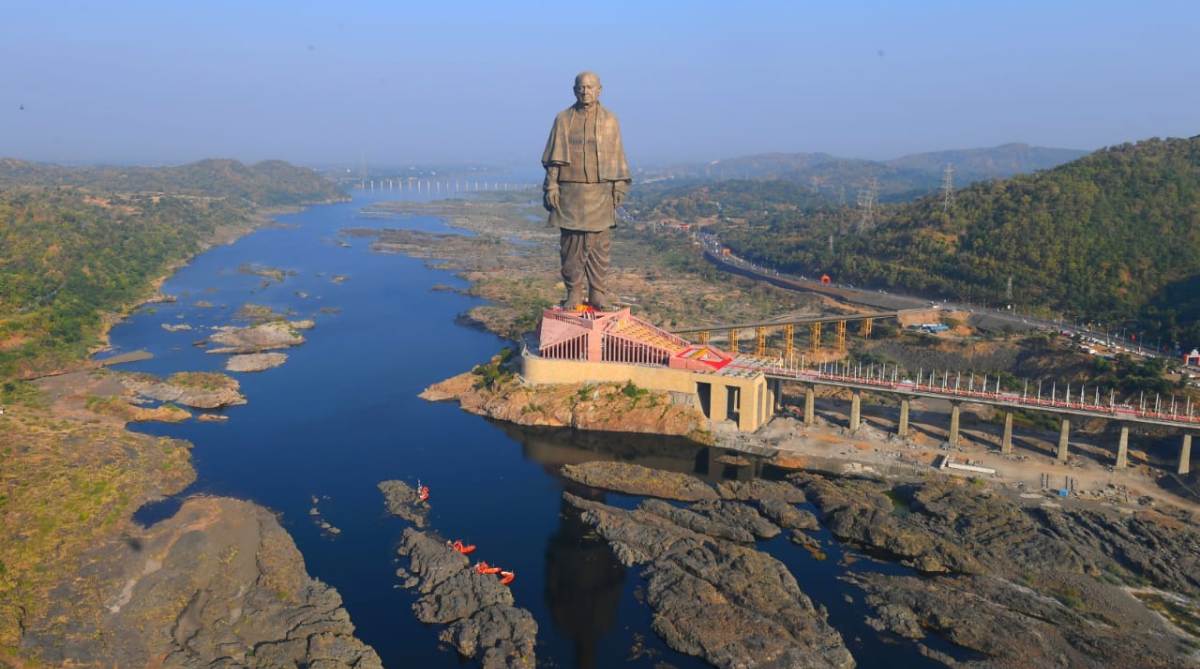
Capt'n Midnight wrote: » That statue cost $430 m. The Indian Mars Orbiter Mission cost $74 m. India is also the first to get to Mars on the first attempt.
Capt'n Midnight wrote: » Nebuchadnezzar II 634 BC - 562 BC





![Photo of [Deleted User]](https://wb.vanillicon.com/v2/bb1b435feca4d036f6db42bb67252c40.svg)