Akrasia wrote: » Sorry Dense, of course the causes of climate change should be totally off topic in a discussion about the causes of climate change. You're totally right
dense wrote: » If you, Akrasia or others wish to advance and discuss reasons for climate change in pre human times there is nothing stopping you from doing so if that is your desire.
Akrasia wrote: » Now lets get back to your questions where you're trying to say that the equivalent energy of 2 million nuclear bombs is insignificant because humans are actually responsible for adding the equivalent of 2 billion nuclear bombs.
dense wrote: » I totally said you and yours are quite free to discuss the causes of pre human climate change: Why pretend I said it was off topic? Still waiting to find out how you have calculated that Ireland has set off the equivalent of 2m nuclear bombs of energy equivalent since 1998 and what "significant" increase in global temperatures you think Ireland's "detonation" of these nuclear bomb equivalents has caused. Will you share your data, calculations, sources and conclusions with us? Then we can have a look at you and your lefty friends proposals on how you'd substitute that alleged 2m Hiroshima bombsworth of energy with an alternative, reliable renewable energy source. I know they're probably all busy scouring property to occupy at the moment, but they seem highly intelligent and should be able to multitask whenever they're not tweeting about the need for a rapid transition to renewable energy and demanding more free stuff.
dense wrote: » I totally said you and yours are quite free to discuss the causes of pre human climate change: Why pretend I said it was off topic?
xckjoo wrote: » Like when you shared with us how you "calculated" 20twh (sic) to be approximately 20,000gwh (sic) by using a website that does the conversion for you? I wouldn't go asking for too much maths if I were you.
Akrasia wrote: » There's no point discussing it with other people, everyone else already accepts that CO2 has been one of the main drivers of climate change now, and before humans arrived. Especially when the other drivers of climate, solar output, orbital eccentricity and changes to albido are easily ruled out as the drivers of current climate change
Detection and attribution The fact that the global mean temperature has increased since the late 19th century and that other trends have been observed does not necessarily mean that an anthropogenic effect on the climate system has been identified. Climate has always varied on all time-scales, so the observed change may be natural.
But what about the data sets used in these analyses? To detect an observed change in the climate system, particularly a change suitable for an attribution study, a data set of sufficient temporal and spatial coverage is necessary. Depending on the climate extreme, there is often a lack of observed climate data to document these events for many parts of the world. If the observations exist they often are not in digital form. Also, although the situation is changing, many countries continue to be reluctant to share them with the research community (Easterling, 2013, Kunkel and Frankson, 2015). As noted above, since the analysis of climate extremes often involves examination of the tails of a statistical distribution, a threshold value may be used to determine the number of observations that exceed that value over time creating a time series of exceedance counts. Data quality can impact the counts if there are a number of erroneous values that are not screened out by quality assurance methods, or if the quality assurance methods, which are often more concerned with mean values, are too rigorous and exclude true values. Additional issues include missing data, especially if those missing data would exceed an established threshold or would affect the calculation of the threshold itself. In terms of global analyses, data may be missing for large regions of the globe resulting in a less than true global analysis (Donat et al., 2013). Finally, if longer term data are available they are often observed at weather observing stations, such as at airports, and may be impacted by issues such as urbanization or less than ideal station siting which may result in lower quality data.
dense wrote: » You seem to be uniquely personally burdened with experiencing "climate change" to a greater degree than is being observed. Nothing detrimental has come from the barely measurable "observed" (and adjusted) c 1°C of warming averaged from sparse measurements around the earth. You really need to stop being so alarmed and calling for urgent knee jerk reactions based on vacuous lefty environmental policy designed to push humanity back to the dark ages whilst harking for a global accord to force you to reduce your own carbon footprint. The UNIPCC is less convinced of this drama than you are:https://www.ipcc.ch/ipccreports/tar/wg1/045.htm
The SAR concluded nevertheless, on the basis of careful analyses, that �the observed change in global mean, annually averaged temperature over the last century is unlikely to be due entirely to natural fluctuations of the climate system�.
In this way the SAR found that �there is evidence of an emerging pattern of climate response to forcing by greenhouse gases and sulphate aerosols in the observed climate record�. Since the SAR new results have become available which tend to support this conclusion. The present status of the detection of climate change and attribution of its causes is assessed in Chapter 12.
The difficulties you have in getting others to be similarly alarmed at what essentially is normal weather ia summarised well in this paper:
Hence, it is often stated in the popular press after a notable extreme weather event that nothing can be said about the role of climate change in that particular event with some caveats that such events can be expected to become more common in the future. This statement is most often patently false. For much can be said about the effect of climate change on many recent extreme weather events in a probabilistic formalism. The rapidly emerging field of Probabilistic Extreme Event Attribution has quantified the effect of climate change on a wide variety of extreme weather (for instance see Peterson et al., 2012, 2013; Herring et al. 2014).
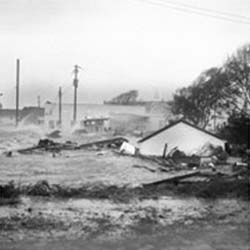
Akrasia wrote: » Interesting study just released says that if it wasn't for global warming, Hurricane Florence would have produced only half as much rain and it would have been 80 kilometers smallerhttps://cpb-us-e1.wpmucdn.com/you.stonybrook.edu/dist/4/945/files/2018/09/climate_change_Florence_0911201800Z_final-262u19i.pdf This is on the basis of physics models and not historical observations.
Parts of North Carolina, New Jersey and South Carolina have been sinking at rates of 8 to 10 inches per century.
We find that, after adjusting for such an estimated number of missing storms, there is a small nominally positive upward trend in tropical storm occurrence from 1878-2006. But statistical tests reveal that this trend is so small, relative to the variability in the series, that it is not significantly distinguishable from zero (Figure 2). Thus the historical tropical storm count record does not provide compelling evidence for a greenhouse warming induced long-term increase.
Once an estimate for likely missing storms is accounted for the increase in tropical storms in the Atlantic since the late-19th Century is not distinguishable from no change.
Atlantic tropical storms lasting more than 2 days have not increased in number. Storms lasting less than two days have increased sharply, but this is likely due to better observations. Figure adapted from Landsea, Vecchi, Bengtsson and Knutson (2009, J. Climate)
When one focuses only on landfalling storms (yellow lines) the nominal trend has been for a decrease.
We have investigated trends in CONUS hurricane activity since 1900 and found no significant trends in landfalling hurricanes, major hurricanes, or normalized damage consistent with what has been found in previous studies.
Analyses show that, although economic losses from weather-related hazards have increased, anthropogenic climate change so far did not have a significant impact on losses from natural disasters. The observed loss increase is caused primarily by increasing exposure and value of capital at risk.
Akrasia wrote: » You are so dishonest. The only reason scientists say they can't attribute individual events to climate change is because the sample size is too small.
dense wrote: » You are now caught up in classic climate change circular reasoning by claiming that the number of extreme weather events caused by global warming is so small that the earth scientists are saying they are having trouble attributing them to global warming.
Akrasia wrote: » By definition extreme events are rare, if they weren't they would be normal weather. Climate change is causing what used to be considered extreme, to now be normal weather.
Abstract It is widely promulgated and believed that human-caused global warming comes with increases in both the intensity and frequency of extreme weather events. A survey of official weather sites and the scientific literature provides strong evidence that the first half of the 20th century had more extreme weather than the second half, when anthropogenic global warming is claimed to have been mainly responsible for observed climate change.
In summary …. it is likely that since 1951 there have been statistically significant increases in the number of heavy precipitation events (e.g., above the 95th percentile) in more regions than there have been statistically significant decreases, but there are strong regional and subregional variations in the trends. In summary, there continues to be a lack of evidence and thus low confidence regarding the sign of trend in the magnitude and/or frequency of floods on a global scale. In summary, the current assessment concludes that there is not enough evidence at present to suggest more than low confidence in a global-scale observed trend in drought or dryness (lack of rainfall) since the middle of the 20th century, due to lack of direct observations, geographical inconsistencies in the trends, and dependencies of inferred trends on the index choice. Current datasets indicate no significant observed trends in global tropical cyclone frequency over the past century and it remains uncertain whether any reported long-term increases in tropical cyclone frequency are robust, after accounting for past changes in observing capabilities. No robust trends in annual numbers of tropical storms, hurricanes and major hurricanes counts have been identified over the past 100 years in the North Atlantic basin. In summary, confidence in large scale changes in the intensity of extreme extratropical cyclones since 1900 is low. There is also low confidence for a clear trend in storminess proxies over the last century due to inconsistencies between studies or lack of long-term data in some parts of the world (particularly in the SH). Likewise, confidence in trends in extreme winds is low, due to quality and consistency issues with analysed data.
dense wrote: » Like when you fell off the wall and everyone laughed at you?
dense wrote: » In other words, link please, because I don't recall using any of those figures nor do I recall you piping up at the time to say my calculations were incorrect. If there is an error in my calculations concerning how much energy fossil fuels supply here and how much renewables do, link to it and then correct it. Actually I'll link to it to save you the trouble and you can check that it's ok.https://www.boards.ie/vbulletin/showpost.php?p=107955400&postcount=490 Heres the online conversion tool to convert 14m tons of oil equivalence to Twhhttp://www.conversion-website.com/energy/ton-of-oil-equivalent-to-terawatt-hour.html Akrasia's new standard unit of 1 Hiroshima bomb isn't included there however, so I'm a little sceptical of you being able to verify their claims about Ireland setting off the equivalent of 2m of them since 1998 and their impact, if any, in degrees of global warming.
dense wrote: » Converting 20twh to gwh gives approximately 20,000gwh according to my calculations, which is just 0.6% of the 3.10m gwh of electricity generated per year.https://www.convertunits.com/from/TWh/to/GWh
xckjoo wrote: » Point being, they're SI units so there's no "calculation" involved. The prefix is only telling you the multiple of the original unit (10 to the power of x). Did you know 10 is approximately ten 1's? Will you give me a €100 note for approximately 10 x €10 notes (give or take a few €10)?
dense wrote: » Is that it? A way to show you couldn't find a fault in what I've calculated: That renewable energy currently supplies just 8Twh of the 163Twh (14Mtoe) of energy consumed annually here. You don't seem to appreciate that demands for a rapid transition off fossil fuels leave an annual 155Twh energy supply gap. That's 95% of the energy this country uses in a year. Where's it going to reliably come from and at what cost?
Coastal areas were also analysed, and to the scientists surprise, coastlines had gained more land - 33,700 sq km (13,000 sq miles) - than they had been lost to water (20,100 sq km or 7,800 sq miles). "We expected that the coast would start to retreat due to sea level rise, but the most surprising thing is that the coasts are growing all over the world," said Dr Baart. "We're (sic) were able to create more land than sea level rise was taking."
dense wrote: » The alleged catastrophic sea level rise is another non issue that the lefties try to exploit in order to wreak energy havoc. Scientists say satellite imagery shows land area "all over the world" is increasing, coinciding with man made global warming.https://www.bbc.com/news/science-environment-37187100In other news from the settled science circus, it is confirmed that windmills can also cause climate change.https://www.bbc.com/news/science-environment-36131442 Climate science, the gift that keeps on giving.
xckjoo wrote: » So you concede that mans actions have an impact on the environment???? Are you just arguing the scale of the issue?
According to the report, one Irish person emits 74 times more carbon dioxide per year than one Ethiopian or Malawian. In Honduras crop yields will fall by at least 10 percent by 2020 and rainfall in Malawi could decrease by up to 25 percent by the end of the century.
New research has found that devastating tsunamis hit the British Isles much more often than previously thought.
dense wrote: » Reverting to subjective descriptions of normal weather is another element of circular reasoning for those trying to convince themselves and others that extreme events are becoming more frequent.https://www.omicsonline.org/open-access/trends-in-extreme-weather-events-since-1900--an-enduring-conundrum-for-wise-policy-advice-2167-0587-1000155.php?aid=69558
dense wrote: » The scale is quite clear. Irish people are responsible for low crop yields in Honduras and a shortage of rain in Malawi.https://www.trocaire.org/news/irelands-emissions-are-charts How you can all say your carbon footprint is too small to bother about is pretty amazing, it's 74 times more than one Ethiopian.
dense wrote: » ‘It is FAR MORE serious than we thought’ Scientists warn tsunamis could hit Britain. Because, as Tom Jones says, "Its not unusual". In what must be a major disappointment to the climate fiction alarmists, the UK media reports on new research which suggests that the British Isles were being hit with extreme weather in the form of tsunamis in the pre industrial period when CO2 levels were much lower than today.https://www.bbc.co.uk/news/amp/uk-scotland-45541721?__twitter_impression=truehttps://www.express.co.uk/news/science/1018801/tsunami-warning-uk-tsunamis-news-landslide-british-geological-survey
Akrasia wrote: » Tsunamis aren't weather dense. They're caused by earthquakes, volcanos or landslides, or even asteroid impacts.
Kelly Brunt, a cryosphere specialist at Goddard Space Flight Center, Greenbelt, Md., and colleagues were able to link the calving of icebergs from the Sulzberger Ice Shelf in Antarctica following the Tohoku Tsunami, which originated with an earthquake off the coast of Japan in March 2011.
Depending on the mass of ice lost and the particular configuration of the water and the fjord into which it surges, these events can also create destructive tsunamis, albeit of a relatively small scale (compared with how big open ocean tsunamis can get).
Akrasia wrote: » MJ Kelly might know a lot about quantum engineering. But he hasn't got a clue about climate science or how to tell good data from propaganda in a politically charged arena full of misinformation
Akrasia wrote: » Well that's the worst paper I've ever seen. I don't know if it was peer reviewed, it couldn't have been, the references aren't even correct. His 'figures' and graphs are unsourced and clearly just collected from climate change denial blogs along with almost all of his other information. These same blogs that have been found manipulating and falsifying graphs on multiple occasions. His references section is a cluster**** of climate denial bogs 'think tanks' like the 'global warming policy foundation' This paper is proof of the programming concept garbage in, garbage out.
Every article submitted to the journal is subjected to strict plagiarism check through our double check process involving software and manual checking. Once article passes through this step, articles are subjected to editorial review for scope, relevance and other standard requirements.Peer review is the major quality maintenance measure for any academic journal. In this process, experts in the relevant fields analyze the scholarly work from every perspective, including its writing, the accuracy of its technical content, its documentation, and its impact on and significance to the discipline. Reviewers play a pivotal role in scholarly publishing, and their valuable opinions certify the quality of the article under consideration. Peer review helps to ratify research, establishing a standard for evaluation within research communities. OMICS journals employ the peer review process in order to maintain academic standards and insure the validity of individual works submitted for publication. In addition, OMICS follows a single-blinded peer review process, to ensure impartial editorial decision-making. Depending on reviewer commentary and recommendations, manuscripts may be sent back to authors for revision. After the assistant editor receives the revised manuscript, it is assigned to the reviewer(s) once again, for approval of changes. But the final decision to publish is made by the Editor-in-Chief. OMICS is following different review strategies for each and every individual journal as per their editorial board guidelines. In general following stages of review process table explains the overall outline, however the respective editor can change the general review policy as per their editorial board members interest as and when required. Majorly, OMICS International staff will do only hosting, PDF formatting and design, communicating review process and there is no control on content and editorial practice of journals as its vary from journal to journal and editor to editor. Most of the OMICS journals content is publishing under creative commons attribution licence, and OMICS is not responsible for content of individual authors and their articles. All the journals articles published under the discretion of respective contributors.
dense wrote: » You're missing a trick here, you need to exploit any catastrophe involving water, flood and destruction and link it to climate change. Be a little inventive, like the climatologists. EG: The Japanese tsunami responsible for calving ice:https://climate.nasa.gov/news/565/japans-tsunami-created-icebergs-in-antarctica/ Calving ice responsible for tsunamis (just leave out the last bit and Joe Public will buy it):https://www.washingtonpost.com/news/energy-environment/wp/2016/06/23/this-melting-greenland-glacier-is-now-producing-terrifying-tsunamis/?utm_term=.6b114976c6a5
dense wrote: » Rajendra K. Pachaur was a railway engineer who didn't have a clue about climate science and it didn't stop him being chairman of the UNIPCC and spreading it's political propaganda, did it?https://en.m.wikipedia.org/wiki/Rajendra_K._Pachauri
Akrasia wrote: » He's not doing any research, he's just overseeing the organisation of this extremely complex publication.