Fourier wrote: » Trust me I get the intuition, but bizarrely it exactly equals 1.
FishOnABike wrote: » Explanation or link? I'm intrigued as I would have thought that it would approach 1 or the limit as the number of decimal places approached infinity would be 1.
gozunda wrote: » Birds excrete 'urine' in the form of urates (uric acids) - which are semi-solid and white in colour and a clear liquid.
Nixonbot wrote: » The problem here is "approached". 0.999... doesn't "approach" anything, it is a static number. The thing is that the number of 9s is infinite. It literally never ends. This one is pretty good:https://www.purplemath.com/modules/howcan1.htm For a layman like myself who forgot all his maths the second I left university
Grayson wrote: » The thing about maths is that it's quite often wrong. Even the basic rules we use are wrong sometimes.
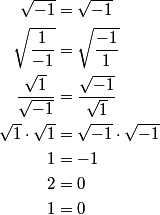
Grayson wrote: » yep, although I didn't see any mention of analysis there. (Upper and lower bounds) A simple way to think of the difference is this, there is a number that you can add to .99999..... that will equal 1. Therefore the two numbers are different. In practical terms you could say they're the same but you're rounding up. You're rounding up by an infinitely tiny amount but you're still rounding up. The thing about maths is that it's quite often wrong. Even the basic rules we use are wrong sometimes. Here's another example. Edit: I pasted that in before reading it properly. I just noticed the mistake in it
Wibbs wrote: » Bird(and bat) poo AKA guano found and mined in large deposits in caves and islands where seabirds roosted for centuries drove 18th and 19th century intensive farming as it was the perfect fertiliser high in phosphates, nitrogen and the like. It was largely replaced by the late 19th and early 20th century chemical industry(mostly centred in Germany) that produced artificial fertilisers. Bat poo guano was occasionally used in the production of explosives because of it's high nitrate content.
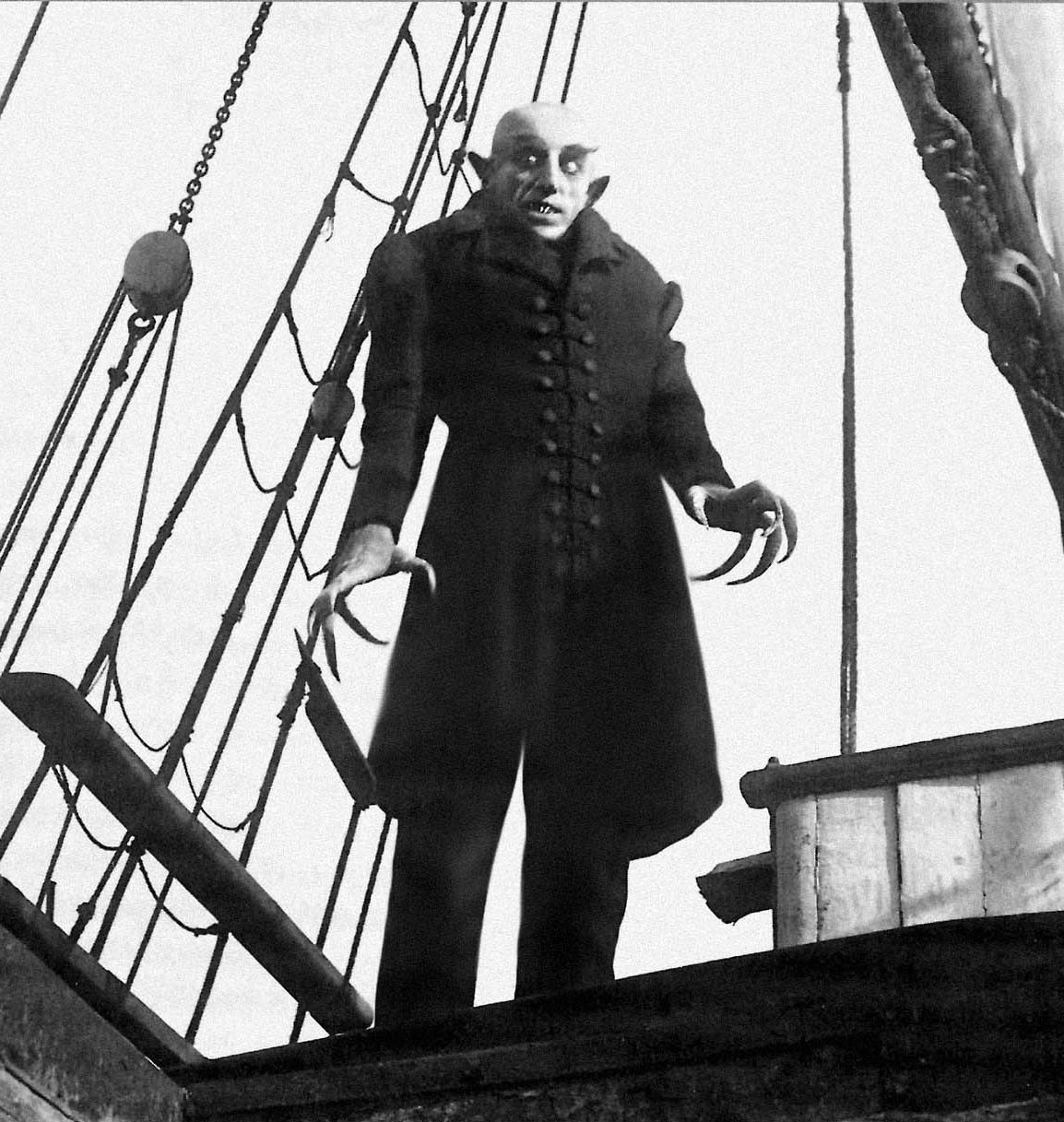
Fourier wrote: » Dracula's real name was Vlad Barabas III. His father, Vlad Barabas II, had joined the Romanian knightly group "The order of the Dragon". For this reason Vlad II was known as Vlad Dragul by his Romanian speaking servants, meaning "Vlad Dragon". His son Vlad III was then nicknamed "Dragon's Vlad", i.e. "the Vlad who was the Dragon's son". However because Vlad's family spoke Bulgarian, unlike their Romanian subjects, they distorted the name so "Dragon's Vlad" came out as Vlad Dracula rather than Vlad Dragului as it would have using Romanian grammar. He also ruled Wallacia in the South of Romania. The family lands never extended into Transylvania in the North. It would be later members of his line who unified the two kingdoms into essentially what we call Romania today. Of course Transylvania has rocky regions with remote castles, so no wonder Stoker picked there. Stoker also wasn't the first Irish writer to make a story out of the Slavic myth of corpse risers. Joseph Sheridan Le Fanu, a descendant of French Huguenots who fled to Dublin, wrote Carmilla. In it Dr. Hesselius (fiction's first occult detective, a prototype for characters like John Constantine) investigates a young woman being preyed on by a vampire. The story was written in the wake of a few travelogues about Slavic countries being published in the English speaking world. These often contained vampire stories. Vampires being hurt by sunlight isn't present in the original Slavic myths except in one rare case, nor in the early Victorian fiction, but was actually introduced by Hollywood movies in the 1920s. In the original Slavic myths, vampires arise when somebody is improperly buried, lived an evil or non Christian life, or being bitten by one of the previous two types. A special type is the Pijavica, a man who committed incest with his mother while alive. He is stronger and faster than other vampires and will attempt to murder his entire extended family. Only this type was vulnerable to sunlight. The Truth About Dracula, Gabriel Ronay (1979) Were-Wolf and Vampire in Romania, Harry A. Senn (1982)
gozunda wrote: » Gunpowder (blackpowder) was traditional made with charcoal, sulphur and saltpeter (potassium nitrate). Saltpeter was used as an oxidizer in blackpowder. Saltpeter was traditionally derived from manure whereby it was mixed with either mortar or wood ashes, and other organic materials such as straw. The heaped material was usually kept under a cover from the rain, kept moist with urine, turned often to accelerate the decomposition, then finally leached with water after approximately one year, to remove the soluble calcium nitrate which was then converted to potassium nitrate by filtering through potash. Other sources included bat guano deposits crystallized from cave walls and then extracted by immersing the guano in water, filtering, and harvesting the crystals in the filtered water. Saltpeter was also used for curing foods and as a pharmaceutical. Traditional recipes for Spiced beef used Saltpeter in the curing process. In the Shetland Islands it is used in the curing of mutton to make "Reestit" mutton, a local delicacy. As a pharmaceutical - potassium nitrate has been used in a number of toothpastes for sensitive teeth. It was also used historically to treat asthma. In Thailand it is used as an ingredient in kidney tablets to relieve the symptoms of cystitis, pyelitis and urethritis.
Ipso wrote: » Were they Szekelys, or was that just added in the book?
sbsquarepants wrote: » Why do you say that? It's quite often wrong when I do it, but I think I'm more culpable than maths itself:D
Fourier wrote: » Vampires being hurt by sunlight isn't present in the original Slavic myths except in one rare case, nor in the early Victorian fiction, but was actually introduced by Hollywood movies in the 1920s.
Wibbs wrote: » They were almost all private purchases, mostly by the officer class as they were an expensive item. About the equivalent of ten weeks wages for the average worker.
RIGOLO wrote: » I just have to post something to move the discussion on from talking a load of guano :-)... The Parker Solar probe will undergo a number of Gravity Assist planetary flybys around Jupiter during its 7 year trip to get to within 3 million miles of the Sun. Whats unusual about these manouveres is that normally NASA has used gravity assist to speed up a rocket , but in this instance they are being used to slow down the probe. You can monitor the progress of the probe here, you will need a 7 year supply of coffee and doughnuts. They deployed the heat shield last week.. very exciting.http://parkersolarprobe.jhuapl.edu/The-Mission/index.php#Where-Is-PSPhttps://blogs.nasa.gov/parkersolarprobe/
lan wrote: » Problems like this aren't actually that unusual, it's to do with how computers store 'decimal' numbers.
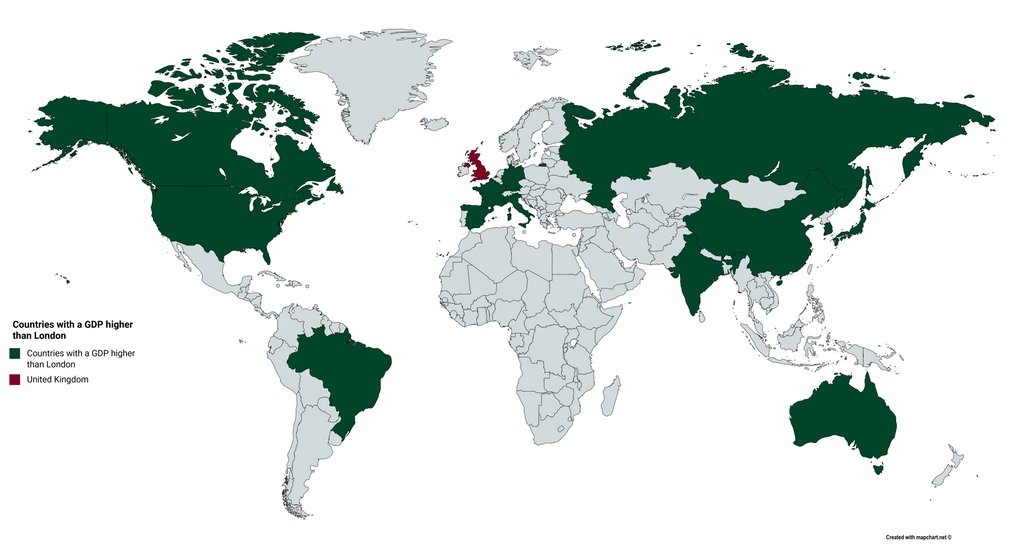
Anders Shy Aircraft wrote: » GDP of a city with so many large companies headquartered there skews statistics. The UK by default should also be green. I also suspect it's based on figures from 2015 or earlier.
Franz Von Peppercorn wrote: » He says this.Without a doubt, life was bad for indentured servants. They were often treated brutally. Not all of them entered servitude willingly. Some were political prisoners. Some were children. I’d call an indentured servant who didn’t enter service willingly a slave. I didn’t think they were paid.
gozunda wrote: » Gunpowder (blackpowder) was traditionally made with charcoal, sulphur and saltpeter (potassium nitrate). Saltpeter was used as an oxidizer in blackpowder.
Capt'n Midnight wrote: » Not in this universe. If our universe was infinitely old and infinitely vast then night sky would not be dark. Because there isn't time or room for all those decimal places it can only approach 1, admittedly very closely.







![Photo of [Deleted User]](https://wb.vanillicon.com/v2/bb1b435feca4d036f6db42bb67252c40.svg)