GarIT wrote: » Lots. Tado tracks your phone and prewarms the house when you are coming home while Netatmo only works off a schedule. Tado checks the forecast so it goes it little heavier or lighter on the heating in the morning depending on what the temperature and sunshine will be like. Tado turns off the heating if it detects an open door or window so it's not wasting heat.
The high horse brigade wrote: » Netatmo has lots of those features, it learns how long the house takes to heat and adjusts depending on local weather, starts earlier on cold mornings etc
keane2097 wrote: » Just looking at a few videos etc online I'm confused as to whether the tado Starter kit linked includes everything needed to remotely/smartly control my boiler or whether the extension kit is needed as well.
deezell wrote: » If you have a single home wall thermostat to control the heating of your home then the starter kit stat will replace this directly. If you have in addition some kind of timer/ controller for your heating then this can be set to always on, and the smart stat will take over the heating timing function. If you have a hot water cylinder and your hot water is heated, (a) only when the heating is on or, (b) according to its own seperate timing on an existing controller, with or without a cylinder thermostat, then your HW will continue to heat in the same manner. If ypur boiler is a combi or direct type HW is supplied on demand directly from the boiler. If you have a timer controlled HW setup and you want this function to be part of the Tado setup you require the extension kit. If your heating is controlled only by timing but without a wall thermostat you can use the extension kit to insert the Tado stat wirelessly into the heating control circuit. HW timing is optional.
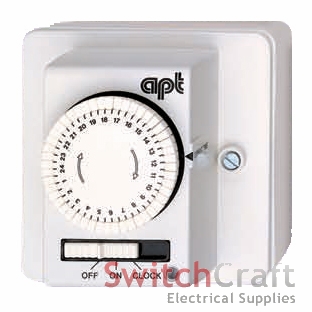
keane2097 wrote: » At the moment our setup is that we have a gas boiler with no thermostat. We have one of these: downstairs that controls the radiators, and another one of them upstairs in the hotpress that controls the hot water. If I'm following you rightly, the tado starter kit would replace the downstairs timer switch yoke and I would be able to control my radiator heating using the app and smart thermostat. My hot water in that scenario would be on the upstairs timer as it is currently. I could then replace the upstairs timer with the tado extension kit and then control the HW via the app and whatever hardware comes with the extender separately?
deezell wrote: » Spot on. Tado stat will be wired directly to the cable from downstairs timer. I'm assuming its in an open location to give a general measurement of room temperature, not in a press or in the utility room. Do this for starters.
deezell wrote: » The ext. Kit can later replace the upstairs HW timer. I'm assuming the HW timer also fires the gas boiler for HW, and is not just a timer for an electric immersion heater. There are many installations out there where the gas only heats the HW cylinder while heating the house, and during the summer people use the immersion. I say this because the ext. kit can't switch enough current to power an immersion element.
deezell wrote: » With the ext kit you can optionally locate the stat wirelessly anywhere, the kit has two relays, the one for heating would need to be connected to where the downstairs timer wires return back to the boiler, so wiring is a little more involved as the ext kit then has to connect to the wires from both timers.
deezell wrote: » Yes, yes and yes. You've got it.
deezell wrote: » Or this for a tenner. Needs to ne able to switch 16A for an immersion element.https://www.amazon.co.uk/Boger-Wireless-Control-Consumption-Measurement/dp/B0769DG75Z Similar query back in post #704 in regard to using a Nest stat.
slayerking wrote: » I looking to replace my existing thermostats with Nests but struggling to find out how to do it given the setup I have. I have an air to water (electricity based) 2 zone heating system controlled by an EPH controls programmer (an R27 2 zone programmer with 2 x CM3 thermostats). Zone 1: downstairs heating Zone 2: upstairs heating We have hot water also but this is not controlled via a visible thermostat, its always hot and apparently how it supposed to be with a2w systems. Theres also a joule cylinder then in the hot press. I know I'll need to wire up the heat link somewhere, possibly where the programmer is and then wire in the thermostats. Has anyone set up a Nest on anything like this?
irishgeo wrote: » ok, what i am planning to do is the following. currently its an oil boiler with 1 zone (whole house) with a 7 day timer. What i want to do is the following. split the house into 3 zones, downstairs , upstairs and hot water. its 2 double rads downstairs and 4 upstairs. I want the hot water in the summer but no rads as we only have an immersion what i am stuck at is the following, the smart thermostat to be used to get all to work . I should add i have a google home so it would be good to link into that. So what do you recommend for the setup i plan to have. getting the SEI grant.
deezell wrote: » irishgeo wrote: » ok, what i am planning to do is the following. currently its an oil boiler with 1 zone (whole house) with a 7 day timer. What i want to do is the following. split the house into 3 zones, downstairs , upstairs and hot water. its 2 double rads downstairs and 4 upstairs. I want the hot water in the summer but no rads as we only have an immersion what i am stuck at is the following, the smart thermostat to be used to get all to work . I should add i have a google home so it would be good to link into that. So what do you recommend for the setup i plan to have. getting the SEI grant. Do you currently have a HW/ CH switch setting on your 7 day timer. Make and model of timer. Is the Oil boiler an indoor model. Does it have HW CH switch on the front? I'm trying to establish if your system has a separate gravity feed to heat the cylinder (upstairs?) without heating any of the radiators. In a typical simple installation the HW cylinder was plumbed from the downstairs boiler though an open gravity loop, with all the radiators fed through a seperate pumped loop. The timer then in general fired the boiler giving HW, and the wall stat turned on the pump to heat the rads, so you could have summer HW only, either by turning down the stat or by throwing a small switch on the timer to HW only, which cut the pump but not the boiler. Is there a wall thermostat downstairs? To get a 3 zoned system from a single zone will require either a fair amount of zone valve plumbing, This may not even be feasable if the existing plumbing is not laid out in seperate loops allowing the insertion of the zone valves. The alternative is to insert smart TRVs on each radiator, which can be grouped into zones and when all closed will allow the boiler to hear HW only. This would satisfy the smart zoning requirements of the seai grant scheme.
irishgeo wrote: » No it doesn't have a HW switch. It's an outdoor firebird boiler. The guy who priced it up for me gave me 3k and told it was possible to zone into 3 zones and told me I didn't need trv on the rads.
deezell wrote: » The boiler has no bearing on the number of zones. This is determined by the number of seperate heating circuits your plumbing is configured with. Is this an existing system or are you just planning it? If you've paid 3k for installation of a new Firebird thats fine, but it has nothing to do with zones, it's just the heat source. Zones require separate pipe runs for each zone, and these are turned on and off by zone valves. 3 required for 3 zones, though you can get away with one less is the HW is always on. If you already have a single zone system with no clear distinction between the pipework for upstairs heating, downstairs and cylinder, then splitting into 3 won't be a trivial plumbing job. Despite the individual cost of smart TRVs it could work out less expensive to use a number of them on the rads, allowing you to have as many zones as there are TRVs, but easily grouped in 2-3 zones. Smart thermostats can't work magic, they can't heat just the downstairs or bedrooms or HW, there have to be valves or pumps to turn on and off the flow to each zone. I'm guessing the 3K didn't include that?
Advanced Heating Controls Upgrade: • Motorised valves to separate heating "zones" within your home, including a completely independent hot water zone • Thermostats (room and cylinder) for automatic control of the heating of each individual zone • 7 day, digital programmer for full heating system with individual zone control. Various timer and "boost" options as standard for each zone • Optional programmers with remote access are available, for full control of your heating system via your computer or Smartphone application • Boiler interlock to prevent unnecessary boiler cycling • Timer with auto shut-off for your immersion heater • Pipe lagging for pipes in your hot-press if required • Electrical bonding of all pipes within your hot-press. This is a safety measure and is carried out as standard with our heating controls packages if needed • Installation fully compliant with relevant Building Regulations and industry best practices
enfant terrible wrote: » Hi deezell, I'm looking to move my Netatmo thermostat from an unheated utility room to my kitchen. Does it matter what thickness core cable I use to extend out to the kitchen? most on ebay seem to be 0.75mmhttps://www.ebay.co.uk/itm/White-Flexible-2-Core-0-75MM-Flex-Cable-x-1M-2M-5M-10M-2192Y-power-lead/141632510582?hash=item20f9f49a76%3Am%3AmGZdSKbYUYITdh9WerAxtZg&var=440785154829&_sop=15&_sacat=0&_nkw=3+core+cable&_from=R40&rt=nc Also does it matter what amp connector block I use? 3A, 6A, 30A etchttps://www.ebay.co.uk/itm/3A-Terminal-Choc-Block-Electrical-Connector-CE-Approved/291532247114?hash=item43e0ad104a%3Ag%3A~~MAAOxy88lRYbxT&LH_PrefLoc=1&_sop=15&_sacat=0&_nkw=connector+block&_from=R40&rt=nc Thanks
deezell wrote: » Thats good enough to switch boilers, pumps and motorised valves. Thermostat contacts generally rated 3a which is plenty. Your connector block can be the same for neatness.
ted1 wrote: » I wouldn’t have thought that Nests would work well with heat pumps
dball wrote: » If i have my smart thermostat set at 21 degrees (Tado) and i call for heat at 22 or above on any radiator with a smart TVR. Will i get the heat or do i need to have the smart thermostat above 21 Thanks
deezell wrote: TRVs will call the boiler via the smart stat regardless of its setting. If the radiators heating the smart stat area are not themselves fitted with TRVs, then this area will be heated though it's temperature target is already achieved, which may result in slight overheating of the main stat zone until the TRVs close and release the call for heat. Ideally all rads would have smart TRVs, to give exact room control, but in the case where you have only a few (or no) TRVs, even temperature is at best a compromise. Heating can be balanced the old fashioned way by trimming non TRV rads with the lockshield valve. This will tend to favour the radiators with TRVs so they close first before the main stat reaches target. If they are closed due to timer settings, (say bedrooms off during the day but living areas heated), then the flow to the non TRV rads is increased when the main stat calls.
![Photo of [Deleted User]](https://w6.vanillicon.com/v2/6b1975299c8e5d4897a60061c4f145b7.svg)