Akrasia wrote: » Me: I think humans should do something about the debris cloud threatening our ability to maintain a satellite infrastructure Dense: How many space debris clean up missions have you launched?? None??? You're such a hypocrite. Don't dare advocate for action until you've already built your own space elevator and started gathering paint fragments from orbit yourself......
Akrasia wrote: » RSS adjusted raw satellite data when we discovered that their orbits were changing and this affected their measurements.
dense wrote: » For absolute clarity, were you part of the team that discovered that the satellites were wonky? If not, why try to make it look as if you had some part in it? You can't take credit for discovering something you didn't discover.
sryanbruen wrote: » Up to April 13th, Edmonton, Canada had 167 consecutive ice days from October 30th (not getting above 0c throughout the day). Its previous record was 166 consecutive ice days from November 2nd to April 16th 1975. I think its records go back to something around 1880. Several April snowfall records have broken in the United States including 11.1 inches of snow at Minneapolis on April 14th which makes it the second snowiest April day on record here. The snow from this storm makes it the snowiest April on record in Minneapolis.https://www.accuweather.com/en/weather-news/photos-minneapolis-endures-second-snowiest-april-day-as-blizzard-rages/70004683 Parts of the first and second week had some of the coldest April conditions ever recorded for parts of the Mid-West. The cold has been widespread. Not sure on the coldest April in 100 years but I wouldn't doubt it given the extent and extreme level of the cold.
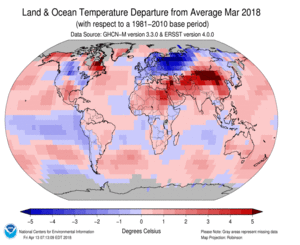
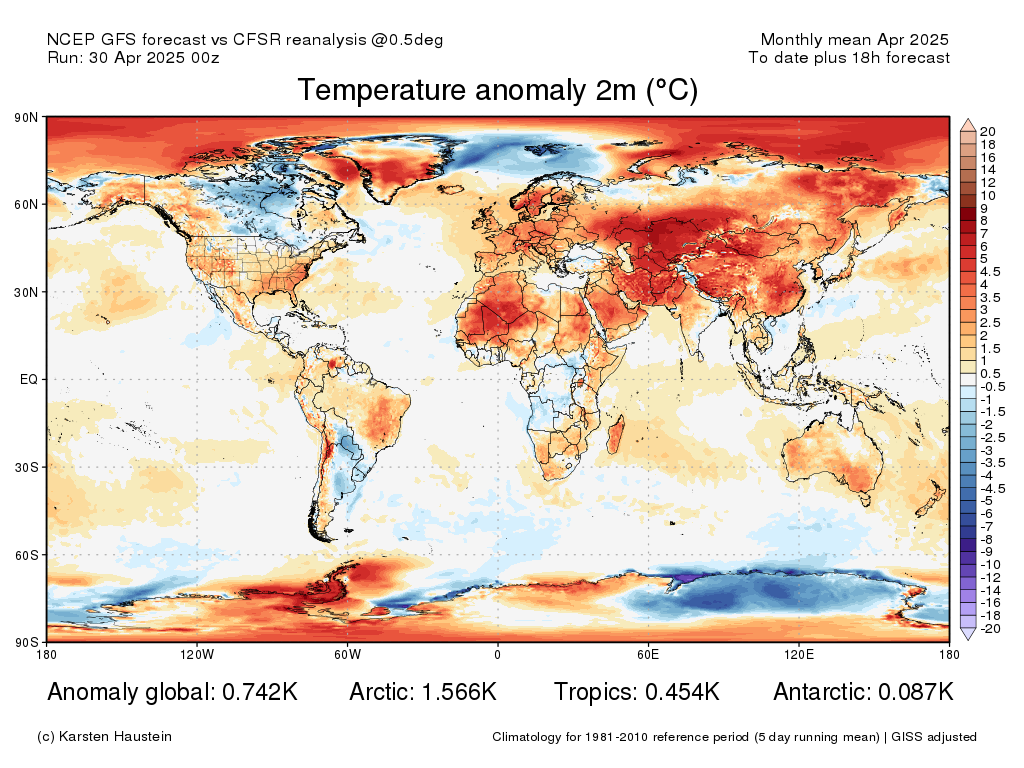
Akrasia wrote: » April figures aren't available yet, but globally, March was warmer than average, The USA and Europe were colder than average.
Akrasia wrote: » You could say that I can help the space debris issue by not launching any cubesats myself. Thats true, but me not making it worse won't help make it better either. Political action on climate change is the solution and individual action is just a panacea. What has made a difference is the way climate change is discussed and reported and public attitudes towards energy policy which put pressure on political systems to implement action and hold governments to account. For a long time on this forum, every thread on climate change turned into a back slapping 'it's a hoax' fest. It takes effort to stand up for the science and to challenge the misinformation and change the public discourse to put climate change on the political agenda. There are plenty of martyrs out there trying to 'lead by a good example' and they turn people off. Look at the distain that the likes of dense has for 'eco warriers', the kinds of people who do all the things that reduce their own carbon footprint, but in the process, alienate people who don't want to change their own lifestyle. The solution to climate change is not to badger people about eating meat or driving their kids to school, or going on holidays or visiting their family abroad. It's changing national energy infrastructure, phasing out coal oil and gas, government subsidies to improve energy efficiency in homes, regulations on industry to force industry to become more energy efficient and less polluting etc. Public policy changes are more effective than individuals talking about how great they are because they're carbon neutral and lecturing everyone else about their own lifestyle. I have never talked about individual carbon footprints on this or other threads on this topic. The only people who do are those who want to 'poison the well'
Gaoth Laidir wrote: » I'm not saying you should grow dreadlocks, stop showering and tie yourself to trees, but if you really want to help the problem you preach about then why not lower your ghc emissions? No need to shout from the rooftops that you're doing it, just quietly make the sacrifices you want everyone else to make, safe in the knowledge that hey, at least you're not contributing to the problem. Why are you not doing it? Don't give me this "one person can't make a difference" nonsense. Like "I'm not going to vote cos what difference will it make?" If everyone said that then elections would be pretty interesting. Hell, even I've been looking at alternatives to fossil fuels, not because I see any major global climate panic but because it's a finite resource that we WILL run out of at some point. There's a cleaner, lower-case option out there which makes pure logical sense. I will look at a hybrid or electrical car when old Betsie here packs it in. I've stopped making unnecessary trips in the car, etc.
Akrasia wrote: » Your point about choosing eco friendly options for purely financial reasons is exactly why I argue for political action.
Akrasia wrote: » Dense, you have an unusual fixation on pronouns. You need to let it go
Akrasia wrote: » You don't know what I have or haven't been doing to reduce my impact. I deliberately haven't talked about it because it's a distraction. Your point about choosing eco friendly options for purely financial reasons is exactly why I argue for political action.
dense wrote: » Sounds like like people are demanding assurances of being financially reimbursed before making any expensive decisions about playing their part in saving the planet. Lord, make me pure, but not yet.
Gaoth Laidir wrote: » Well it's pretty obvious from your replies that you're doing nothing. And where did I say "purely financial reasons"? A deliberate misquote if I ever saw one. You really are desperate at this stage if you try to pull that one. Go back and read what I wrote and quote the reasons I gave.
Akrasia wrote: Its capitalism in action. Incentives drive behaviour. Governments have a duty to incentivise pro-social behaviour. People will switch to carbon neutral activities when it makes sense for them to do so.
Akrasia wrote: » Gaoth, it wasn't a misquote because I wasn't quoting you.
Your point about choosing eco friendly options for purely financial reasons...
My point was that the way to fix the problem is to make the solutions attractive, not to punish and badger people into sacrificing to 'save the planet'. Its capitalism in action. Incentives drive behaviour. Governments have a duty to incentivise pro-social behaviour. People will switch to carbon neutral activities when it makes sense for them to do so.
Gaoth Laidir wrote: » What? How is this... not implying that I said purely for financial reasons?
You're still sliding your way around the direct question of why you're not reducing your own emissions. I don't buy the answer you gave as it's a cop out to say you will make no difference. Whatever about the general population needing incentives/regulations, I'd have thought that such a staunch advocate of reducing emissions would already have your own house in order.
Pa ElGrande wrote: » You missed the bit about extended growing seasons. Last year a cold Spring affected fruit production across Europe and badly impacted wine production. This year is not looking any better and it is the extended cold not warming that has caused problems and shrunk the growing season. We need about 90 days in the Northern hemisphere for the main crops to reach maturity (i.e. convert solar energy and CO2 into food) and be harvested. yields across large geographical areas will be down this year. Hopefully this is not a trend, but on the positive side maybe the increased C02 can help offset the losses due to late planting.Get ready to pay more for wine, as global production hits 60-year low Facilities that process dead farm animals busier than usual Analysis: Plight of tillage farmers may have been buried but impact will be felt'It's getting to the point where tillage farmers are going to have to take some hard decisions' Farm Profit Programme: dealing with an extended winter periodFrustration increases as late spring hits sowingUnited Kingdom - Farmers worry over late sowingLate spring delaying Ukraine barley sowing campaign -analyst Stuck in the starting blocks: Farmers idled by bad weather Jump in food prices highest in nearly four years https://www.youtube.com/watch?v=a3rR7CQe960
Akrasia wrote: » Better get used to it. More extreme weather is a consequence of agw.
Virtually certain that, in most places, there will be more hot and fewer cold temperature extremes as global mean temperatures increase, for events defined as extremes on both daily and seasonal time scales.
It is estimated that 20,275 Brits more than average died between December 1 and March An additional 2,000 deaths more than average were expected due to cold conditions between March 23 and 31, this winter’s average death rates show.
This study shows that it is possible to detect changes occurring in plants using long-term measurements of the isotopic composition of atmospheric CO2. These measurements imply that plants have globally increased their water use efficiency at the leaf level in proportion to the rise in atmospheric CO2 over the past few decades. While the full implications remain to be explored, the results help to quantify the extent to which the biosphere has become less constrained by water stress globally.source
Akrasia wrote: » You said lower cost (or tried to)
I do as much as I can with the resources I have. I've already been accused of preaching and virtue signalling but I'm not advocating for virtue, I'm arguing for political action.
Pa ElGrande wrote: » Not so fast checkout the IPCC AR5 technical summary on page 52. Cold extremes are not part of the narrative of catastrophic anthropogenic global warming (CAGW).
Our inflation of the trace amount of CO2 now present in the atmosphere will not alter the course of life on earth except to possibly save it from eventual starvation through sequestration commonly referred to as the global greening effect.
JCX BXC wrote: » Here's an interesting article that I came across this morning. According to this article by the Irish times, the gulf stream has slowed by 15%>https://www.irishtimes.com/opinion/gulf-stream-slowing-down-is-bad-news-for-ireland-1.3476747?mode=amp I find it quite strange that I've never heard of this occurance before, and would propose that more than 2 research papers need to be presented to be conclusive on this issue. Discuss.
Gaoth Laidir wrote: » Cost was just one of the reasons I used, not the only one, as you made out. This is exactly what I said "Hell, even I've been looking at alternatives to fossil fuels, not because I see any major global climate panic but because it's a finite resource that we WILL run out of at some point. There's a cleaner, lower-cost option out there which makes pure logical sense" Why do you feel the need to lie about it when it's down in black and white for all to see?
It seems to me now at this stage that you're the one actually fixated on cost and only want to change if it doesn't cost you anything. You want to blame everyone else (government, regulators, etc.) for not coming up with some incentive to force you to change. Looks like you really don't care about CO2 levels but are just out to make a quick buck off the hype. Hypocrisy at its finest.
Akrasia wrote: » . . . . Record breaking cold weather is still unlikely because the Arctic is warmer now, so even when polar air gets dragged south, it's likely to be warmer polar air than it would have been a century ago.
Akrasia wrote: » http://www.pnas.org/content/111/34/12331
Akrasia wrote: » CO2 despite being a trace gas, is still one of the main drivers of global climate. We can't double its concentration and not expect consequences. Plants are absorbing some of our extra emissions but nowhere near enough as the CO2 concentration graph continues to edge upwards beyond 400ppm
Pa ElGrande wrote: » The article you linked was published in August 2014 and it starts with the claim that "The recent decade has seen an exceptional number of boreal summer weather extremes, some causing massive damage to society". As far as I can see the major events that have had the most impact on society over that period of time have been the financial panic in 2008 and the ongoing war concentrated in the Middle East but also extending to parts of Africa none of which have anything to do with climate. The biggest natural events that have had an impact on society have been tsunamis (Indian Ocean 2004), (Japan 2011) one of which triggered the Fukushima nuclear disaster. In fact floods and drought have had much less impact in the decade that the can authors claim is caused by c02.
As far as human experience has demonstrated increased CO2 concentrations in the atmosphere continue to be in no way catastrophic and if anything the last few decades coinciding with increasing C02 has seen an overall improvement in global living standards.
Even Tuvalu and the Maldives are still here,
the polar icecaps have not melted away despite the many failed predictions.
Greenland ice is still here and even some glaciers are growing. Heck, firms are even finding commercial uses for the stuff.
The cores reveal that the ice layers became thicker and more frequent beginning in the 1990s, with recent melt levels that are unmatched since at least the year 1550 CE. "The ice core record ends about 450 years ago, so the modern melt rates in these cores are the highest of the whole record that we can see," said Osterberg. "The advantage of the ice cores is that they show us just how unusual it is for Greenland to be melting this fast."https://www.sciencedaily.com/releases/2018/03/180328143303.htm
Oneiric 3 wrote: » Unfortuently, politics and climate change are not 'mutually exclusive' because climate change has become an increasingly political issue. Outside of the science itself, there is plenty of evidence out there that suggest that one's personal political slant (whether one is aware or not of having such a slant) will greatly shape how one feels about the issue.https://www.tandfonline.com/doi/abs/10.1080/09644016.2015.1090371?journalCode=fenp20https://digital.library.adelaide.edu.au/dspace/bitstream/2440/87850/8/02whole.pdfhttps://journals.openedition.org/ejas/10305https://theconversation.com/our-political-beliefs-predict-how-we-feel-about-climate-change-69435 For me, the concept of 'climate change' is aligned very much with class politics, of which is becoming increasingly evident again with the onset of major political movements across the western world over the last few years, but for the sake of others on here who hold no interest in such theorising, I'll stay quiet.
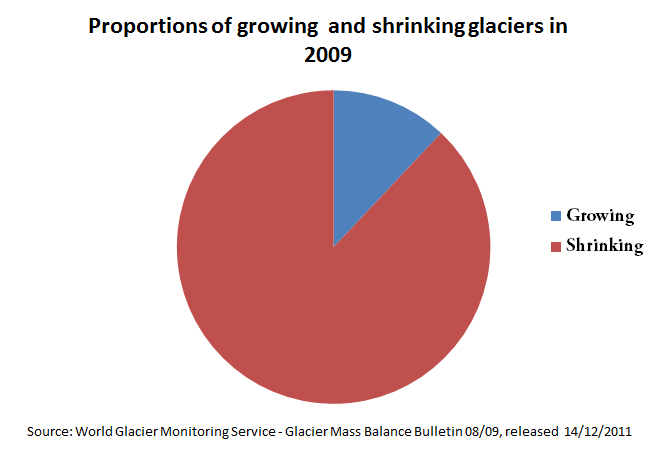
Akrasia wrote: » Well, there was a european heatwave in 2003 that killed up to 70,000 people. https://www.ncbi.nlm.nih.gov/pubmed/18241810 We're at almost 1 degree c of warming and there are damaging consequences already. Climate sensitivity is most likely around 3c, so if we don't reduce our emissions quickly, we'll see the most extreme of todays weather becoming common weather, with the new extreme being events of unprecedented ferocity. Heatwaves in Europe where the temperatures hit 50c are possible by 2100. That would be catastrophic for humans, livestock, and wildlife. The worst impacts of climate change are in the future. More emissions today are committing us to more consequences in the future. There are still plenty of victims of climate change even today, a lot of Puerto Ricans picking up the pieces, Houston Texas has been devastated. Tuvalu was not predicted to completely disappear until well after 2100, recent studies have shown that the islands may be growing as sand is deposited in storms, but that's not much comfort to the people in the coastal cities (that aren't tropical atolls) that face being inundated by rising seas. They're melting faster than most models predicted they would. The vast majority of glaciers are in retreat globally. Greenland is melting faster than ever
The 2017 melt season was less intense than recent years, and was below average melt in the 1981 to 2010 reference period. Surface melting was particularly low in southeastern Greenland. In general, melting was limited to low elevations (below 1500 meters or 4900 feet) along the western and northeastern coastlines. Fewer melt days than average occurred along the Davis Strait and the interior melt pond region along the central western coast. As discussed below, the melt year ended with two significant late melt events in southeastern Greenland. The final 2017 melt event occurred at the end of October, covering the southeastern coast. Overall, the 2017 melt season was the lowest since 1996. Although it began and ended with a few large melt events, the middle of the melt season through mid-July was below average—only briefly picking up intensity late in July through mid-August.
Akrasia wrote: » How does it sound like that?
Would it surprise you to learn the greatest global two-year cooling event of the last century just occurred? From February 2016 to February 2018 (the latest month available) global average temperatures dropped 0.56°C. You have to go back to 1982-84 for the next biggest two-year drop, 0.47°C—also during the global warming era. All the data in this essay come from GISTEMP Team, 2018: GISS Surface Temperature Analysis (GISTEMP). NASA Goddard Institute for Space Studies (dataset accessed 2018-04-11 at https://data.giss.nasa.gov/gistemp/). This is the standard source used in most journalistic reporting of global average temperatures. <snip> My point is that statistical cooling outliers garner no media attention. The global average temperature numbers come out monthly. If they show a new hottest year on record, that's a big story. If they show a big increase over the previous month, or the same month in the previous year, that's a story. If they represent a sequence of warming months or years, that's a story. When they show cooling of any sort—and there have been more cooling months than warming months since anthropogenic warming began—there's no story.