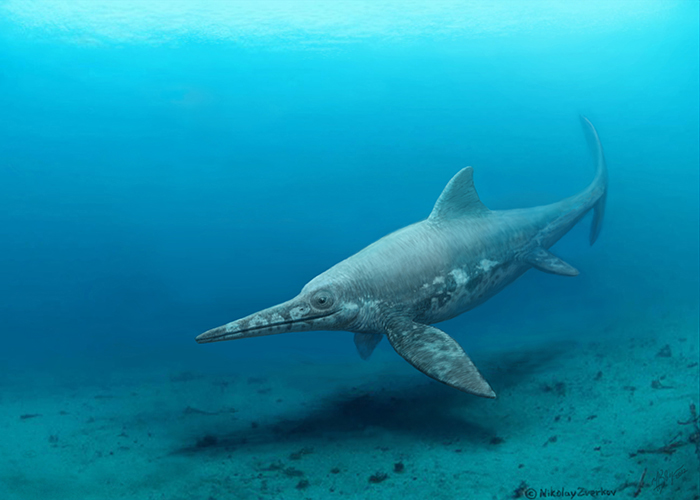
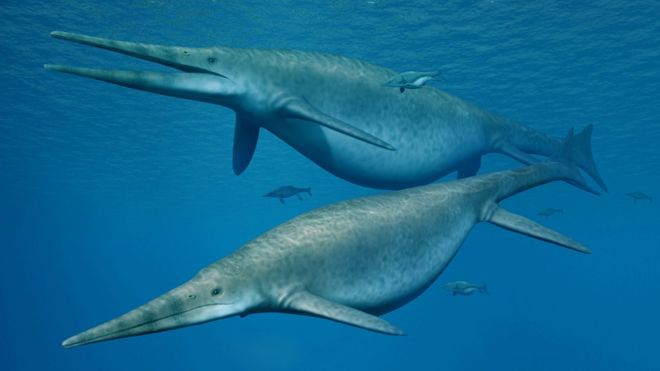
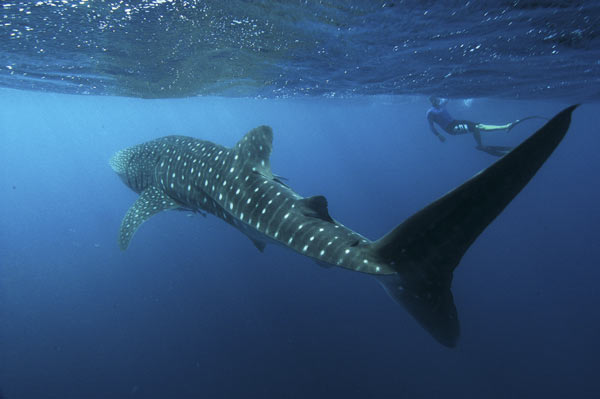
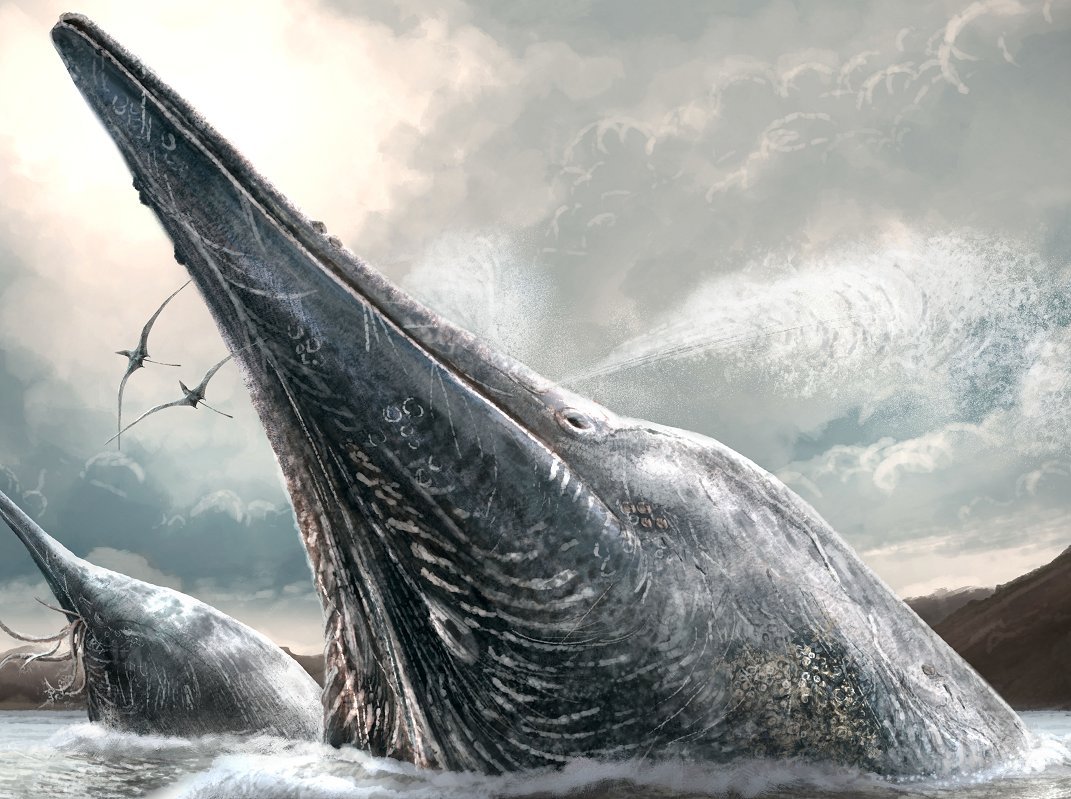
''We were mind blown to think that a sea creature the size of a blue whale was swimming off the English coast about 200 million years ago.''
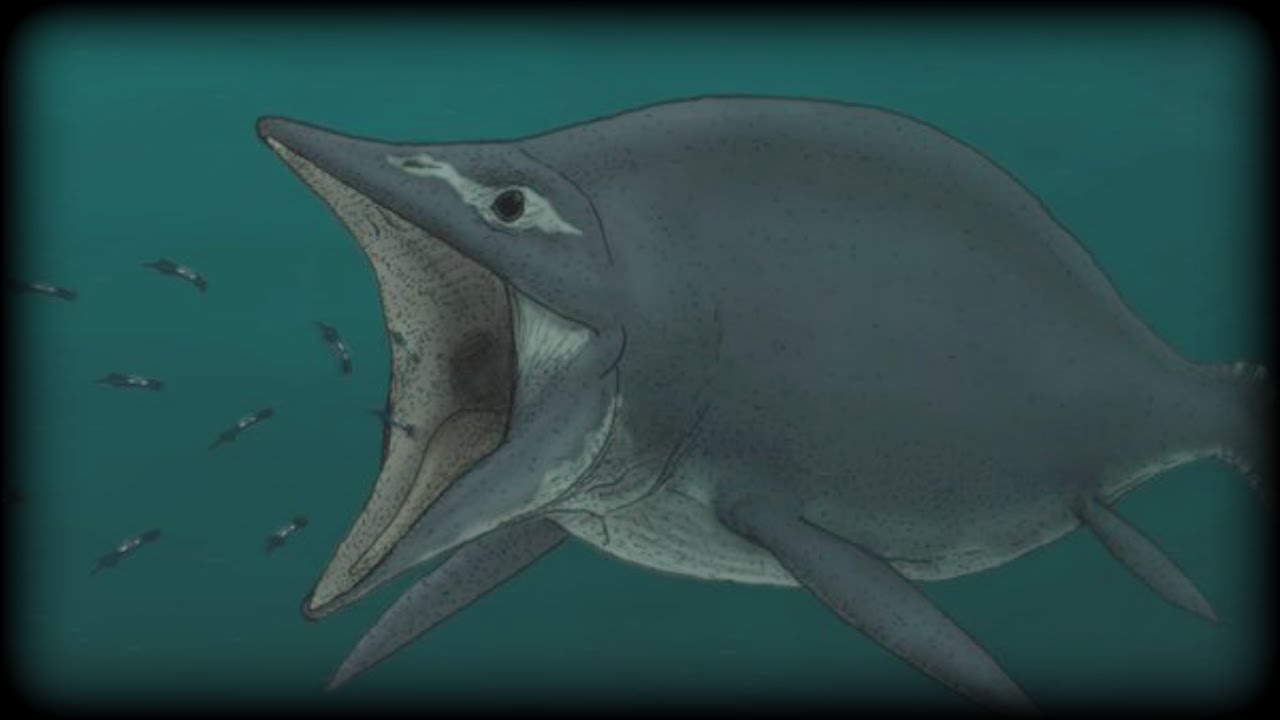
Adam Khor wrote: » Mostly fish and non-armored cephalopods which were probably captured by means of suction, if the similarity between the shastasaurid's toothless jaws* and those of modern beaked whales are anything to go by. Like beaked whales, shastasaurids had features of the skull and jaws (including large foramina) which suggest there was some sort of specialized soft tissue to aid during suction of prey. The jaws also seem adapted to open very forcefully and quickly, rather than snapping quickly as would be expected if they were catching prey like say, crocodiles do. Most interestingly, these short snouted ichthyosaurs also appear to have very small pectoral fins relative to the body which is a feature they share with beaked whales and sperm whales; the small fins reduce drag during deep diving. Last but not least, the size range of different species within genus Shastasaurus appears to be the same as in modern, suction feeding odontocetes (the largest being comparable or even superior in size to the sperm whale). *Juvenile shastasaurs apparently had teeth and lost them as they aged so the little ones probably were catching prey the way other, more typical ichthyosaurs did.
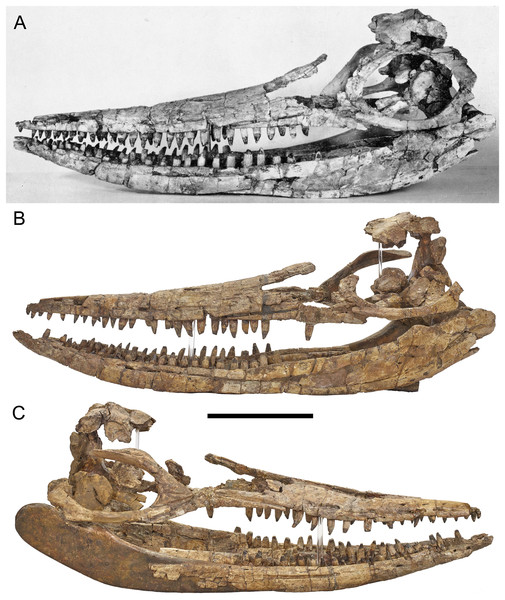
This leaves the Shonisaurus species as the named record holders of ichthyosaur size, and by some margin. Both species are known from substantial remains that allow us to be fairly confident in our body length estimates. We can actually get a lot of data from simply measuring their articulated skeletons. Our best size predictions for these animals shake out to 13-15 m for Sho. popularis (McGowan and Motani 1999) and a whopping 21 m for Sho. sikanniensis (Nicholls and Manabe 2004). Using data from Gutarra et al. (2019), these equate to approximate body masses of 20-30 and 80 tonnes, respectively. The Shonisaurus species were huge animals, among the largest to ever swim the seas.
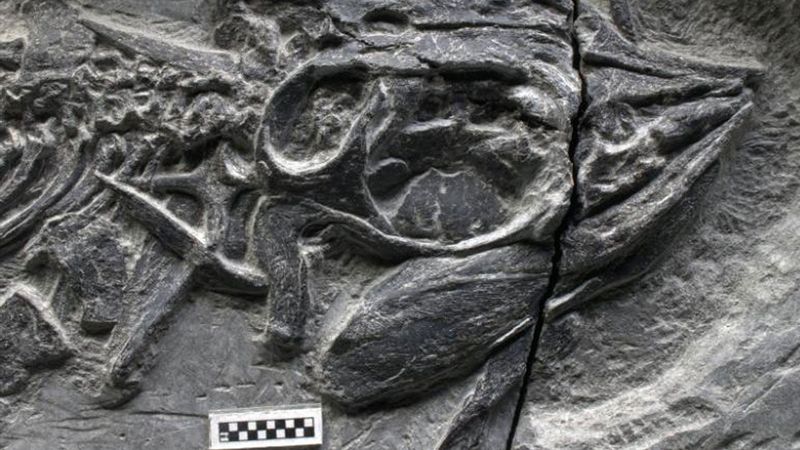
The main specimen (XNGM-WS-50-R4) likely represents the oldest direct record of megafaunal predation by marine tetrapods and also sets the record for the largest prey size of Mesozoic marine reptiles at 4 m (Table 2), which is larger than the previous record of 2.5 m (Everhart, 2004; Konishi et al., 2014). The main specimen (XNGM-WS-50-R4) likely represents the oldest direct record of megafaunal predation by marine tetrapods and also sets the record for the largest prey size of Mesozoic marine reptiles at 4 m (Table 2), which is larger than the previous record of 2.5 m (Everhart, 2004; Konishi et al., 2014). Two questions arise concerning how the individual of Xinpusaurus found its way to the stomach of Guizhouichthyosaurus: was it by predation or scavenging, and, if the latter, were the head and tail detached by the scavenger or through postmortem decay? The answer to the second question is simpler than that for the first. Forensic taphonomy in the marine context has shown that hands and feet are the first to be detached through postmortem decay of human remains at sea, followed by the head and then more proximal parts of the limbs, whereas the vertebral column is the last to disintegrate, being strongly reinforced by extensive connective tissues that take time to decay (Haglund, 1993; Mason et al., 1996). This tendency is expected to have been exaggerated in Xinpusaurus, which likely used its body axis for propulsion, whereas its small limbs were used as rudders without a role of body support; appendicular connective tissues must have been limited relative to those along the axial skeleton, allowing faster decay. Then the presence of at least one manus and some pedal elements in the absence of the head and tail therefore cannot be explained very well by the decay hypothesis. Possibilities of predation versus scavenging merit careful consideration. We conclude that predation is more likely than scavenging for the following reasons. First, marine carrion usually results from partial predation rather than deaths due to other causes (Barrett-Lennard et al., 2011; Britton and Morton, 2004). If a predator other than Guizhouichthyosaurus killed the thalattosaur in question, then it would be strange for the nutritious trunk and limbs to be left intact by the predator. Second, ingestion likely took place at the sea surface where Guizhouichthyosaurus was able to breathe because swallowing of a large food item would have taken a long time, whether the food was ingested in one or a few pieces. This would limit the possibilities of scavenging because marine scavenging usually occurs at the seafloor (Britton and Morton, 2004; Whitehead and Reeves, 2005)—marine carrion usually do not stay afloat at the surface (Haglund, 1993; Mason et al., 1996). In addition, the specimen is from the subtropical region of the warm Middle Triassic period, so the decomposition would have been rapid, further narrowing the window of time when carcass would have been available at the sea surface. Third, marine carrions are rare (Britton and Morton, 2004), especially that of megafauna available within the diving depth of typical air-breathing predators like killer whales (Whitehead and Reeves, 2005) and Guizhouichthyosaurus. Even in the unlikely case of the present bromalite representing scavenged prey, X. xingyiensis would still be on the list of prey actively hunted by Guizhouichthyosaurus. Obligate scavenging by large animals is rare in modern marine ecosystems (Beasley et al., 2012; Wilson and Wolkovich, 2011), instead, marine scavenging is almost always facultative (Britton and Morton, 2004; Hammerschlag et al., 2016). Modern megapredators, such as the great white shark (Carcharodon carcharias) (Tucker et al., 2019), tiger shark (Galeocerado cuvier) (Hammerschlag et al., 2016), and killer whale (O. orca) (Whitehead and Reeves, 2005), are known to scavenge when given opportunities, but they tend to scavenge the carrion of the species that they also hunt. The carrion that they scavenge is derived from predation by the same or another individual, unless it is human caused (Britton and Morton, 2004). The isolated tail specimen (XNGM-WS2011-50-R6) also supports the predation hypothesis. The specimen witnesses, whether it belonged to the prey individual in the bromalite or not, that there was a mechanism to detach the tail of a large thalattosaur while it was intact—decay was probably not involved because the distal part of the tail is still articulated, whereas decay would have detached that region first because there is less connective tissue there. The specimen instead shows that the most proximal vertebra, which would be the last to decay, is halfway detached (Figure 2E). External forces would be necessary to cause such detachment, and it is difficult to find a source outside of a predator. Thus, there was at least a predator that could hunt Xinpusaurus, whereas Guizhouichthyosaurus was the only species larger than the prey in this and coeval localities in the region. Circumstantial evidence suggests that the isolated tail belongs to the prey individual in the bromalite. The tail was only 23 m away from the ichthyosaur specimen on the same rock surface and has a size and completeness that are expected for the lost tail of the prey in the bromalite. Also, as stated above, its preservation suggests that the tail was detached from the body while it was intact. If it is from the prey individual, the predator likely died soon after ingesting the prey, and that may explain the lack of etching of the bone in the bromalite by the stomach acid, as well as the strange detachment of the neck of the predator. Unfortunately, it is impossible to test this hypothesis directly so a clear conclusion cannot be drawn on this issue.