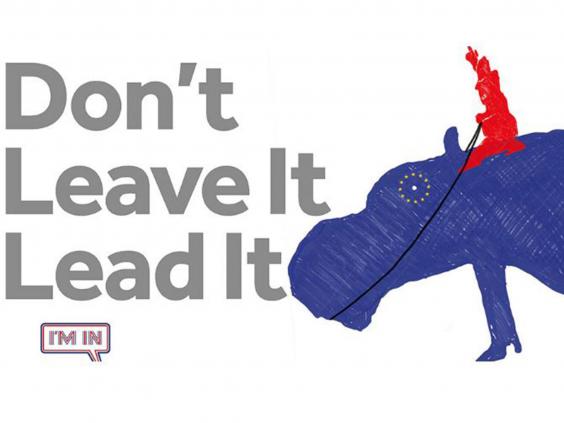
Leroy42 wrote: » I think, in fairness to the UK, that smaller countries find it easier to embrace integration etc. Ireland, for example, has been controlled by other parties for nearly its entire existence. We do not have hang up about control and standing alone that a country with the history of the English do. We can accept that if we weren't part of the EU we would need to part of something, be that the Commonwealth, a US/UK alliance or whatever, and within that we would have little power. For example, I don't think anybody would have any difficultly if we moved to the US$ tomorrow (from a emotional POV I mean). Compare that to the UK connection to their pound. So the EU actually works out pretty well for us (and we have worked hard to help that). Countries like the UK only see them having to give things up. If you take the POV that they are more than capable of doing fine on their own, that they don't need others, then you can understand why it would grate to have to give up just to help other countries.
Sam Russell wrote: » I note you use 'the English' and I suspect that the Scots have a different attitude. Brexit has much greater support in England - possible based around such ideas.
Leroy42 wrote: » I wonder what size of the public do the publications like the Express represent. It is rabidly Anti-EU and pro-brexit. But more than that, everything is painted as either EU punishing the UK or the EU shattering by the threat of Brexit.
Strazdas wrote: » Many millions by the look of things. Hard to put a figure on it but it looks like there are 10-15m Daily Express type Brexiteers in the UK, given that support for it hasn't collapsed in the opinion polls.
The USTR’s biggest concern is the increasing importance to US trade policy of testing, labelling and certification requirements and “sanitary and phytosanitary (SPS) measures”. “The United States remains concerned about a number of measures the EU maintains ostensibly for the purposes of food safety and protecting human, animal, or plant life or health,” the USTR said. These measures “unnecessarily restrict trade without furthering their safety objectives because they are not based on scientific principles, maintained with sufficient scientific evidence, or applied only to the extent necessary”. USTR rails against the burden of EU food labelling as well as restrictions on cosmetics and pesticides.It bemoans the fact that accreditation bodies for product standards must be public and nonprofit, when private American firms could do the job. The document also confirms that the US will effectively push to allow American-produced Cornish pasties or Cumberland sausages by scrapping EU rules around the geographical origins of certain foods.
Nody wrote: » US has published its list of things they want removed
The document also confirms that the US will effectively push to allow American-produced Cornish pasties or Cumberland sausages by scrapping EU rules around the geographical origins of certain foods.
Econ_ wrote: » Your post makes for a nice essay but it unfortunately doesn't refute the point that leave voters were deceived or misinformed. Look at this study done by the Guardian/ICM (5000 Brits were surveyed) On the question 'What impact do you think Brexit will have on your personal finances?' - 64% of all participants said they think it will either have no effect or it will boost their personal finances. Do you think those people are misinformed? And if not, why not?
Sand wrote: » Well, I'd make three minor points and a fourth which is the main one: 1. Only 15% think it will have a positive effect for them as individuals. That's fairly steady across all sub groups too. This is not evidence of widespread naivety. I could equally say 85% of those polled think Brexit will have at best a neutral effect on their finances. 2. Brexit has not happened so its too early to say what the actual effects will be overall, let alone for the 5000 individuals polled. 3. You've not proven the 5000 Brits are representative of the Leave vote. The 64% of participants are not limited to Leave voters. Its an overall sample of British people who are remarkably complacent. Remain voters could be equally as complacent or misinformed about the effect on them and their finances. Certainly *more* people reject a second referendum than voted Remain so Remain voters cant be that worried. 4. Most importantly of all, everything stated above, including your post is irrelevant to the reasons people voted for Brexit. A boost to an individuals own finances simply was not amongst the stated reasons Leave voters chose Brexit. So attempting to correct them on economic rationales is irrelevant. It was not their rationale. Right or wrong, economic outcomes was not a priority for them. Sovereignty, control and rejecting a sense of powerlessness was. The sense of powerlessness is what needs to be addressed. Not continuing the error of the Remain campaign in *only* talking about the economy. It failed before the referendum, its unclear why it will succeed now.
blanch152 wrote: » Some good points in there. Brexit voters believe that the UK can reassume world leadership once free from the EU straitjacket. This has much more than economic dimensions, it also has political and cultural dimensions. Where the Remain campaign failed, and is continuing to fail, is in persuading the UK that leading the world means belonging to the EU.
Sand wrote: » Yes, though the Remain campaign is a product of the deeper issues, which seem to be as much the relationship between England and the UK, as the UK and Europe. Brexit is almost entirely an English driven issue. I'd also hesitate to conflate Brexit voters, and the Brexiteers (Fox, Davis, BoJo, etc) who have seized control of the Brexit agenda. Brexit voters want their country (basically England) back. The Brexiteers who are directing events want some sort of fantastical free trading, globalist, 19th century Empire 2.0 outcome which even they struggle to articulate. The two dreams are wholly opposed. But its the Brexiteers who will get their way. Brexit if anything illustrates the powerlessness that contributed to it.This is why I think Brexit wont solve the underlying dynamic that caused it. They voted for a revolution against globalism, and instead they will get more globalism. There will be more eruptions of rage against the UK ruling classes for as long as they refuse to represent those they claim to rule. To address the sense of powerlessness, the politicians have to start listening.
“The one thing that would provoke loyalist paramilitaries is the present Irish government saying silly things about the border and the constitutional issue. If it looks as though the constitutional arrangements of the agreement, based on the principle of consent, are going to be superseded by so-called ‘special EU status’ then that is going to weaken the union and undermine the very agreement that Dublin says it wants to uphold.”
Leroy42 wrote: » I do understand the desire for the voters to see something done about immigration, and the issues that have developed because of it. I don't think that leaving the EU is the correct way to channel that though. However, I do think that it will have the desired effect. Already we can see that immigration has been effected, certainly the UK, anecdotally, would appear to less welcoming than before. In addition, if the economic predictions come to pass then the downturn in the economy will see less people looking to come to the UK. So from a singular "reduce immigration" POV, leaving the EU may well be considered the right thing to do. IMO, the cost to achieve that is simply too high and there were plenty of other ways to deal with it. In particular, the very people that championed immigration (big business etc) are still in charge and I don't see how they will simply accept that in stead of paying some Romanian the minimum wage for picking fruit they are now going to have to offer living wage and benefits to UK citizens. So I foresee either the jobs moving abroad or other forms of immigration to cover (replace the Romanians with Indians for example).
Strazdas wrote: » Brexit is full of contradictions. Britain wants to be some sort of global trading superpower and yet opt out of international trading standards and regulations and instead put hard borders around the country. None of it makes the slightest bit of sense.
ancapailldorcha wrote: » Now it appears that the Conservatives intend to foist more globalisation on the British people which will not benefit the poorer parts of the country at all. The gulf at the heart of British society is only widening and as Labour and the Conservatives continue to indulge their fringes at the expense of their liberal centrists while the Liberal Democrats remain tainted by their decision to go into coalition with the latter in 2010, it looks set to only expand with no solution in sight.
ancapailldorcha wrote: » O What took me a while to learn is that subverting or cancelling Brexit will not actually solve anything. People in the UK outside the wealthy southeast have little to gain by remaining. Most of the places with high levels of immigration voted to stay with Birmingham being a notable exception. That said, there is a clear gulf not just between left and right but between cosmopolitans and nationalists, haves and have-nots, those with secure, closed shop jobs and those who work in call centres. ....I was home last week and happened to catch a programme on ITV set in Teesside. The people interviewed by Robert Peston were mostly Leave voters and still were.
demfad wrote: » I am astonished you are making this claim: These people will actually be hardest hit by Brexit: Teeside will see a 12% (highly conservatve) hit from hard Brexit. Nissan will certainly go. Any workers protections will go. The remain side are putting valid information out there. The media don't want to know.
ancapailldorcha wrote: » You misunderstand my point. If you're on a zero-hours, minimum wage, no pension job in Teesside, your life isn't going to improve by staying in the EU. It'll almost certainly get worse outside it but it won't improve inside it.
demfad wrote: » It will improve in the EU if the standards of governance improves in the UK.
demfad wrote: » It could also improve if EU work law carried more weight in EU countries.
demfad wrote: » Or if the EU left owned the inevitable imminent global warming world economics as they must, then global trade and financial globalisation would be more quickly deflated. Local trade and global services will be paramount. The UK in EU has potential in this new phase. Even if their life doesn't improve they have 12.5% to gain from the only alternative. Gain and loss is relative. If Brexit does not happen: then there will be a new era in UKs involvement without doubt. This can only be good.
ancapailldorcha wrote: » The Remain campaign contained little in the way of positive messages. The picture above could have been a part of a much stronger campaign but that was not to be.
LeinsterDub wrote: » David says the border we don't want hardened, weren't consulted with about before the vote, was ignored during the vote and is constantly being downplayed by the British and has been back stopped by them will be our fault.https://www.theguardian.com/world/2018/apr/06/david-trimble-ireland-risks-provoking-paramilitaries-over-post-brexit-border
flutered wrote: » as regards immigration, i have read elsewhere that there are now more more vacencys in the nhs that there are members of the armed forces
blanch152 wrote: » A Northern Ireland vote on a deal would solve that, but the problem for nationalists is that an Irish Sea border would be worse for Northern Ireland than a hard border on this island.
Capt'n Midnight wrote: » Just watching Patrick Kielty's program 25,000 troops in NI and the border was still porous. And that's about a third of the current army. The only reason they haven't dumped NI is that Scotland and it's oil and energy might follow suit.
Sand wrote: » I'm not sure that image is even that positive. It's still a transactional relationship, encouraging the UK to see a positive relationship as being one where the UK exploits the rest of Europe. I think a positive message regarding the EU would have focused on the UK's connection to Europe. 'Europe is our home' or similar. I'm not a marketing guru, but defusing the nationalist aspect of Brexit involves accepting people want to return to the stability, which could be represented more by the UK as a European state. Even British nationalists define themselves by feeling superior to the French and the Germans. They couldn't give a damn about the Kenyans or the Nepalese. Even in their nationalistic tendencies, the British define themselves within Europe, not the world. A positive message focusing on the UK as a traditionally European country could have portrayed itself as a the return to the good old days that Brexit voters were misty eyed for. As it is, Brexit has increased the pressures on the UK to become a mere economic zone which is open to business for the entire world. That this rejection of globalism was so alien to Tories and Labour alike demonstrates how great the chasm between the British peoples and their political classes has become.
Capt'n Midnight wrote: » Better the devil you know. The bit that continues to amaze me is that those voters believe that Westminster would treat them better. It's like they've never heard of any of the workers rights that come from the EU, starting with the Working Time Directive.
LeinsterDub wrote: » Why would a Irish Sea border be worse than a hard border? Do you in terms of economics? And of course if you give the Northern Irish a vote the Scots followed by the Welsh and London will want one too.